REVIEW · BUDAPEST
Buda Castle’s Secrets with a Historian
Book on Viator →Operated by Budapest Explorers · Bookable on Viator
Cracking Budapest’s past is easier on Castle Hill. This 2.5-hour tour pairs a historian guide with the biggest hits of the Buda side, and it’s a rare chance to hear the real stories behind the stones. I love the small-group feel (up to 10 people) because you can actually ask questions, and I love going inside Matthias Church where the guide explains what you’re looking at. One possible drawback: a few of the stops have extra admission fees, so your final cost may be a bit higher than the ticket price.
You’ll walk the key locations at a relaxed-but-active pace, moving between stunning viewpoints and power centers that shaped Hungary. I especially like that the itinerary balances postcard views with “wait, what happened here?” moments—like WWII bullet marks you’ll see on a major building outside the route.
Plan on moderate walking and stairs on cobblestones and hills, especially if you’re not used to uneven ground. If you want a super-fast photo sprint, this probably won’t feel intense enough; if you want context, it’s spot on.
In This Review
- Key things to look forward to
- Why a historian guide matters on Castle Hill
- Holy Trinity Column to Fisherman’s Bastion: setting Budapest’s timeline fast
- Matthias Church inside: the stop people remember
- National Archives marks from WWII and the meaning of power
- Castle Hill views by funicular and a statue with teeth
- Buda Castle Royal Palace terrace: the panorama is only half the story
- Fountain of King Matthias: a satisfying finish
- Price and tickets: does $65.31 feel worth it?
- What you get baked in
- What may cost extra
- When to book
- Fitness and comfort
- Who should book this tour (and who might not love it)
- The booking decision: should you do Buda Castle’s Secrets with a Historian?
- FAQ
- How long is the tour?
- What does the tour cost?
- Is the tour offered in English?
- How big is the group?
- What ticket is included in the price?
- Are there extra admission fees for other stops?
- Where do I meet, and where does the tour end?
- Can I cancel for a full refund?
- What’s the physical requirement like?
Key things to look forward to
- Historian-led stories that connect buildings to big events in Hungarian history
- Matthias Church entrance included, with time to look and listen inside
- Castle Hill panoramas from multiple viewpoints, including a funicular ride
- True function talk, especially around Fisherman’s Bastion (it’s not just decoration)
- Power-and-war stops, with a pass by WWII bullet marks on the National Archives building
- Flexible pacing, in a group that stays small enough for real conversation
Why a historian guide matters on Castle Hill
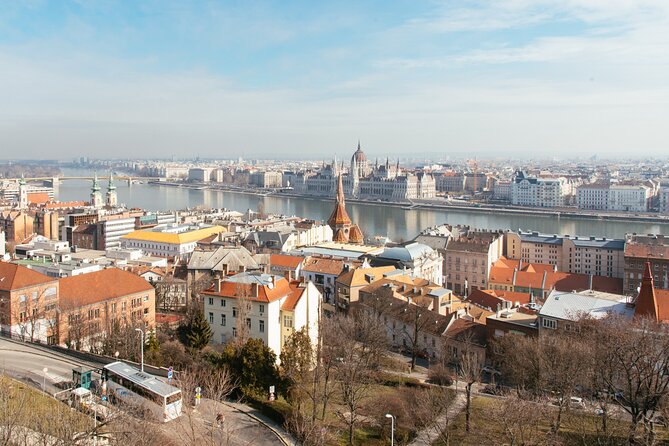
Castle Hill can look like a movie set: palaces, towers, churches, and sweeping views over the Danube. But without context, it’s easy to enjoy the scenery and miss what made this area so tense and so important. That’s why I like this tour’s focus on why each spot exists, not only what it looks like.
The route keeps tying together themes: shifting power in Hungary, Habsburg influence, and the way 20th-century events left physical marks on major civic buildings. You’ll hear legends and traditional stories too, but the guide’s job is to help you separate myth, function, and historical fact—so when you see something ornate, you’ll know what it was meant to do.
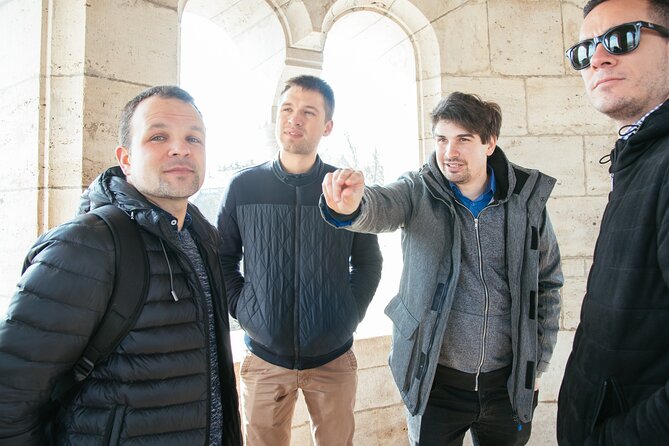
Another big plus: guides here are licensed, and the vibe from past groups is that questions are welcome. People mention guides like Petra, Monika, Judith, and Gabor answering lots of questions without rushing anyone, which is exactly what you want on a short 2.5-hour window.
You can also read our reviews of more tours and experiences in Budapest.



Holy Trinity Column to Fisherman’s Bastion: setting Budapest’s timeline fast

The walk starts at the Holy Trinity Column near Szentháromság u., 1014. This is a smart opener because it puts you in the mindset of Budapest as a layered city—architecture that signals identity, faith, and civic pride. Even early on, the guide connects the location to bigger changes in Hungarian history, so you’re not starting with random facts.
Then you move to Fisherman’s Bastion, one of the most recognizable viewpoints in Budapest. It’s famous for the look, but your guide explains the story and the true function behind the structure. That alone can change how you see it. Instead of treating it like just a lookout terrace, you’ll understand how the area relates to defense and the medieval city layout.
A practical note: Fisherman’s Bastion has admission not included on this tour. You’ll want to check current ticket requirements when you go, so you’re not stuck doing math mid-morning.
Matthias Church inside: the stop people remember
If you want one must-do on this route, it’s the visit inside Matthias Church. The tour includes the entrance ticket, and the pay-off is how much there is to notice once someone points it out. From the outside, Matthias Church is dramatic. Inside, it’s where details click: the guide shares legends and stories tied to what you’re seeing, so the interior doesn’t become just “pretty church walls.”
This is also the kind of stop where a small group helps. With fewer people in the room, you can actually look up at the features you’d otherwise miss—especially while the guide explains what makes this church different from others.
One fun bonus from earlier groups: an organist played a few tunes during the visit on at least one departure, which made the atmosphere extra special. You can’t bank on that every time, but it’s a good reminder that Matthias Church often has a living, musical feel—especially when you’re there with someone who knows what to listen for.
National Archives marks from WWII and the meaning of power
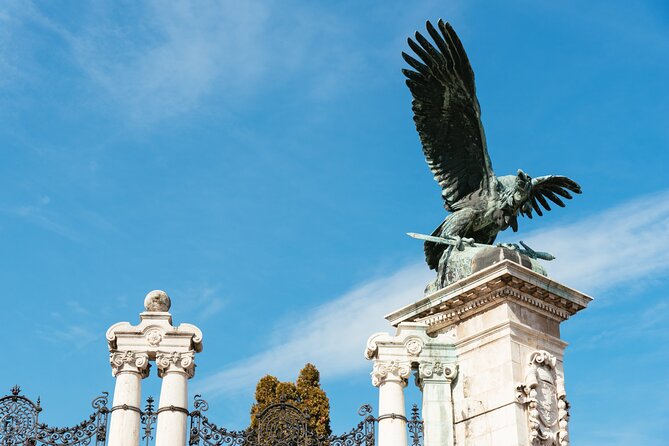
After the church, you’ll pass by the National Archives, a striking building that carries visible scars from the Second World War, including bullet holes. You won’t just see the façade and move on. The guide frames why that matters: these are not abstract “history lessons,” but real physical evidence of conflict and survival.
Then you head toward the Sándor Palace, the Office of the Hungarian President. You don’t go inside (admission isn’t included), but you do stroll along the castle complex’s historic cobblestone lanes and alleys to reach it. This portion works because it shows how the Castle District shifted from medieval city power to modern political power—same hill, different rulers.
Even if you don’t love politics, this stop helps you read the city like a timeline. The guide’s framing makes it easier to see why Budapest feels dramatic: it kept being claimed, contested, repaired, and reinvented.
Castle Hill views by funicular and a statue with teeth
Next comes Buda Hill Funicular. This is short—about 10 minutes in the tour flow—but it’s worth it because you’ll get panoramic views over the Parliament and the Pest side from the top station. On a hill like this, you can either grind uphill or take the funicular and spend your energy looking.
You’ll also learn about Prince Eugene of Savoy’s equestrian statue. This isn’t just “look at a statue.” The guide connects it to a decisive military campaign and explains the long shadow of the Habsburgs in Hungary. It’s one of those stops that clicks because it links Europe-wide power struggles to places you can actually point at on a map.
The best part is how these shorter stops keep momentum. You get context, a view break, and a story boost without turning the tour into nonstop walking.





Buda Castle Royal Palace terrace: the panorama is only half the story

You finish with Buda Castle and the Royal Palace area. Even though admission is not included here, the tour gives you time to appreciate the architecture and then focus on the terrace panorama.
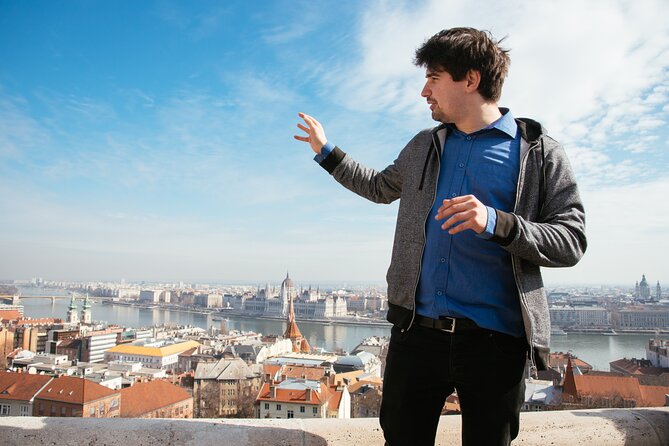
From there, the view stretches across major Budapest landmarks: Margaret’s Island, Parliament, the Chain Bridge, St. Stephen’s Basilica, the Budapest Eye, and Elizabeth Bridge. Yes, it’s postcard stuff. But with a guide, it’s more than that. You understand that this view direction wasn’t random. The Danube corridor and Pest side mattered strategically, culturally, and politically—so standing here feels like reading a story in geography.
The time on this portion is about 20 minutes, which is long enough to enjoy photos and scan the skyline, but not so long that you feel trapped at one spot. If you like to wander a little on your own afterward, this pacing gives you that option.
Fountain of King Matthias: a satisfying finish
The tour ends at the Fountain of King Matthias, back at Szent György u., 1013. It’s a fitting last stop because it ties the day together with a Hungarian king many people care about. The guide shares why King Matthias is a favorite—what he represents in local memory, and why his name keeps showing up around this district.
It also helps that the end point is a place you can easily pivot from. After 2.5 hours on Castle Hill, you’ll be ready for either a café break or another walk through the area without needing to rethink transit or find your way out.
Price and tickets: does $65.31 feel worth it?
At $65.31 per person for about 2 hours 30 minutes, the big question is value. Here’s how I see it.
What you get baked in
- Entry to Matthias Church (included)
- A historian’s guided walkthrough through key sites across the Castle District
- A mobile ticket and an English-speaking guide
- A small group experience, with up to 10 people featured and a maximum of 15 travelers allowed
Matthias Church isn’t a tiny add-on. Getting in with a guided plan—and time inside—can easily make the tour feel like more than just “a walking route with facts.”
What may cost extra
Several major stops list admission as not included, including Fisherman’s Bastion, Sándor Palace, the Buda Hill Funicular, and Buda Castle. That doesn’t make the tour bad—it just means you should be prepared. If you plan to visit those places anyway (and most people do), you’re basically paying for the guide and the efficient route, while covering entry fees separately.
When to book
The average booking window is around 35 days in advance, which tells me this is popular enough that waiting can shrink your options. If you’re traveling in a busy season or want a specific day, booking ahead is smart.
Fitness and comfort
This is labeled for moderate physical fitness. Expect hills, stairs, and uneven surfaces around the castle area. It’s not a crawl, but it also isn’t a fast “see everything in 90 minutes” sprint.
My bottom line: the price makes sense if you value interpretation—having someone translate the city into a timeline and a set of meanings. If you only want a view and don’t care about stories, you’d likely feel better choosing a self-guided plan.
Who should book this tour (and who might not love it)
You’ll probably love it if:
- You want Hungarian history explained in plain language, tied directly to what you’re standing in front of
- You like churches, palaces, and architecture—but you also want the backstory
- You’re the type who asks questions and appreciates time to do it (guides here tend to leave room)
- You prefer a small-group experience over a crowded bus feel
You might not love it if:
- You want a totally free, no-extra-fees day (because some entries and the funicular aren’t included)
- You’re hoping for a super long visit inside each landmark—this tour is built for efficient coverage in a limited time
- You’d rather skip cobblestones and hill walking, since the Castle District rewards comfortable shoes and a steady pace
One of the clearest signals from past groups is satisfaction with pacing and organization. People highlight guides like Rajmund/Raymond, Susanna, and Barinka/Barbara for making the tour feel relaxed while still packing in a lot.
The booking decision: should you do Buda Castle’s Secrets with a Historian?
If you’re visiting Budapest for the first time or you only have a small window on the Buda side, this tour is a strong use of time. You get the essentials—Holy Trinity Column, Fisherman’s Bastion, Matthias Church inside, Castle District viewpoints, and the finish at King Matthias’ fountain—but with a historian’s narrative thread connecting it all.
My advice: book it if you care about context. Bring comfortable shoes, accept that a couple of stops have separate admissions, and go in ready to ask questions. If that sounds like you, this is one of the easiest “worth it” choices you can make on Castle Hill.
FAQ
How long is the tour?
It runs for about 2 hours 30 minutes.
What does the tour cost?
The price is $65.31 per person.
Is the tour offered in English?
Yes, it’s offered in English.
How big is the group?
It’s described as a small-group experience with up to 10 people, and the maximum group size is 15 travelers.
What ticket is included in the price?
The entrance ticket to Matthias Church is included.
Are there extra admission fees for other stops?
Yes. Admission is not included for Fisherman’s Bastion, Sándor Palace, the Buda Hill Funicular, and Buda Castle (while other stops listed as free do not require entry tickets).
Where do I meet, and where does the tour end?
You start at the Holy Trinity Statue (Szentháromság u., 1014) and usually finish at the Fountain of King Matthias (Szent György u., 1013).
Can I cancel for a full refund?
Yes. You can cancel up to 24 hours before the experience starts for a full refund.
What’s the physical requirement like?
The tour is listed as moderate physical fitness. Children must be accompanied by an adult, and service animals are allowed.