Food and history walk together in Budapest. This small-group Budapest experience ties landmarks to the stories behind Hungarian food, then caps it with a hands-on cooking session and a full dinner with a 10-person max guided in English. The one possible drawback is that you’ll spend real time in the kitchen, so it’s less ideal if you want only sightseeing.
I like how the day is built around turning points in Hungary’s past, not just photo stops. You’ll follow a route that connects Ottoman-era traces, the legacy of Budapest’s Jewish community during World War II, and the Austro-Hungarian period’s grand building culture, using those threads to explain why certain flavors and dishes show up. If you’re expecting a quick hit of “taste this, move on,” plan for a slower, more hands-on pace.
In This Review
- Key things I’d bookmark before you go
- A 5-Hour Budapest Walk-Then-Cook Day
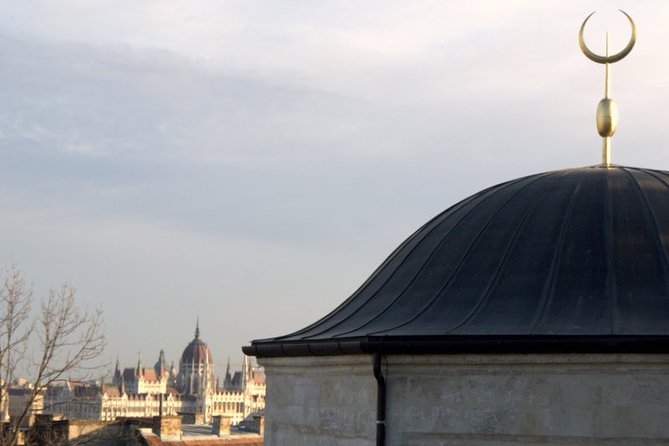
- Gul Baba’s Tomb: Ottoman Echoes in Budapest
- Hungarian Parliament Building and the Austro-Hungarian Thread
- Nagy Zsinagóga: WWII Memory and Community Food Culture
- From Landmarks to the Kitchen: Hands-On Cooking Time
- The Dinner Menu You’ll Actually Eat
- Why the 10-Person Group Size Matters in Budapest
- Price and Value: Is $131.06 Worth It?
- Who This Tour Fits Best
- Should You Book Walk and Cook Budapest?
- FAQ
- How long is the Walk and Cook Budapest tour?
- How many people are in the group?
- What language is the tour offered in?
- Where does the tour start and end?
- What are the main stops during the walk?
- What dishes are included in the sample menu?
- Is this experience a walk and a cooking workshop?
- When will I get confirmation after booking?
Key things I’d bookmark before you go
- A 1.5-hour guided history walk, then a kitchen shift for real cooking time
- Max 10 people, which keeps the group feel friendly and questions actually answered
- Landmarks that match major eras, from Gul Baba’s Tomb to the Parliament Building to Nagy Zsinagóga
- A full sit-down dinner with several Hungarian dishes on the sample menu
- English language guide, with names noted in praise for Kata and Karolina
A 5-Hour Budapest Walk-Then-Cook Day
This is a 5-hour plan in Budapest that mixes walking with cooking, and the order matters. You start with a guided city stroll that runs long enough to get your bearings and understand the historical threads, then you head to the kitchen for a Hungarian cooking workshop. The tour ends back at the meeting point, so you’re not left figuring out your next step.
The group size is capped at 10 travelers, which is a big deal for a day like this. In a small group, it’s easier to ask questions, hear the guide’s explanations clearly, and actually participate in the cooking rather than standing around. For me, that makes the experience feel less like a “bought ticket, follow the crowd” day and more like a guided evening with friends.
Price is listed at $131.06 per person. On paper, that sounds like a lot for a walking tour. But you’re also paying for a hands-on culinary session and a sit-down dinner, not just commentary on the streets. In other words, you’re buying time with an instructor plus the full meal, not only a route and some landmark photos.
One practical note: it’s offered in English and comes with a mobile ticket, and the meeting point is near public transportation. That combo usually makes arrival smoother if you’re hopping between sights on your own schedule.
You can also read our reviews of more tours and experiences in Budapest.


Gul Baba’s Tomb: Ottoman Echoes in Budapest
Stop one is Gul Baba’s Tomb (Gul Baba Turbeje). It’s not just a place to look at from the outside; it’s the first chapter in how the tour links Hungary’s history to what ends up on the table. The tour framing here is about what Ottoman influence left behind, and how those long-term connections show up in culture and food.
What I like about starting here is that it sets context early. You get historical perspective before the route turns to later periods, which helps the whole day feel connected instead of like three unrelated stops. If you like your travel to come with explanations you can remember, this first stop is a strong anchor.
Possible drawback: if you prefer that every stop focuses mostly on architecture details, you may wish you had more time for pure sightseeing here. This tour uses the landmark as a jumping-off point for history-and-food connections, so the emphasis isn’t “every angle, every ornament.”
Hungarian Parliament Building and the Austro-Hungarian Thread
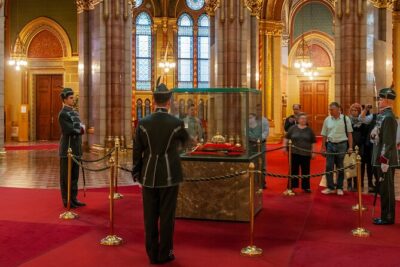
Next up is the Hungarian Parliament Building. This stop shifts you into the Austro-Hungarian era, especially through the theme of what was constructed during that period. In practice, you’ll be listening for how that era’s power, culture, and public life influenced everyday tastes and food traditions.
For food lovers, I find this kind of setup useful. It reframes dishes as part of a bigger story: how different periods shaped Hungarian identity, then how that identity shows up at dinner. Even if you’ve eaten Hungarian food before, this approach can change what you notice when you see the meal in front of you later.
The trade-off is that you’re still in “guided story mode,” not “wandering mode.” If you want a long, slow sit in the area before moving on, you’ll likely feel the pace.
Nagy Zsinagóga: WWII Memory and Community Food Culture
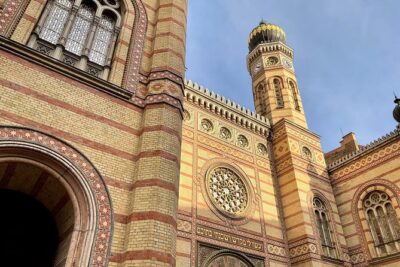
Stop three is the Great/Central Synagogue (Nagy Zsinagóga). This part of the tour is connected to the Jewish experience in Budapest during World War II. The emphasis is on the people and what happened in that time, and then on the way community life and food traditions form part of a city’s memory.
This stop can land differently depending on your own background, but it has one clear travel value: it gives the day emotional weight. Then, when you reach the kitchen later, the food part isn’t floating above the history. It’s connected.
If you’re hoping for strictly light and funny sightseeing, this isn’t that kind of tour. But if you want your food adventure to have meaning behind it, this stop is central to why the day feels more than just a cooking class with a walking intro.
From Landmarks to the Kitchen: Hands-On Cooking Time
After the guided portion (about 1.5 hours), you head to the kitchen for cooking Hungarian dishes. This is where the tour’s premise becomes real: you learn the connections between Hungary’s turbulent history and its food culture, then you carry that learning into the act of cooking.
You’ll cook Hungarian dishes with hints of the influence of each nation connected to those historical links. The exact method isn’t spelled out, but the workshop format tells you that this isn’t a passive tasting class. You’re expected to participate.
In the praise you get for this tour, the names Kata and Karolina come up with gratitude for guiding people around and creating good memories. That matters because a history-and-food day can fall flat if the guide’s storytelling doesn’t connect. Based on the feedback, their job is to make the explanations feel human and the pace feel manageable.
Quick planning tip: since you’re walking first and cooking after, come with comfortable shoes and expect to be on your feet. If you don’t love hands-on work, decide ahead of time whether you’ll be okay trading a bit of free wandering for the chance to actually cook and eat together.



The Dinner Menu You’ll Actually Eat
Dinner is part of the experience, and the sample menu gives you a clear idea of what the sit-down meal might include. Expect a mix of mains and desserts, with classic Hungarian flavors in the spotlight.
Here are the dishes listed for the menu:
- Main: töltött paprika (stuffed peppers)
- Dessert: mákos guba (dumps with poppy seeds)
- Main: roast goose with onion potatoes and braised cabbage
- Dessert: fánk (special donut)
- Main: székelygulyás (goulash soup with sauerkraut)
- Dessert: szilvásgombóc (plum dumplings)
What’s smart about this menu (for value and variety) is that you’re not eating just one “Hungarian signature.” You get multiple styles: stuffed and savory, roast and hearty, then soups, then a dessert sweep. If you’re trying to understand Hungarian food through experience, this menu style gives you enough range to remember what you liked and why.
One consideration: the menu shows quite a few dishes. If you’re the type who gets overwhelmed by long multi-course meals, you might want to eat lightly earlier in the day. The tour already takes most of your afternoon and early evening, so you’ll likely appreciate not overloading your stomach beforehand.
Why the 10-Person Group Size Matters in Budapest
This tour keeps the group at a maximum of 10 travelers, which changes the feel of both the walk and the cooking. In a larger group, history tours can turn into hearing muffled voices while you try to keep up. Here, small-group structure usually means tighter attention to questions and clearer storytelling.
It also matters for the dinner portion. The experience is described as a sit-down dinner in a group setting, so you’re eating together rather than in a chaotic drop-in style. For me, that helps the day stick in your mind as something you did with people, not just something you passed through.
If you’re traveling solo, this is especially useful. Small groups like this can make it easier to chat naturally during breaks and share what you’re learning without feeling like you’re breaking into someone else’s big tour party.
Price and Value: Is $131.06 Worth It?
At $131.06 per person, you’re paying for three things that normally cost separately: guided walking time, a hands-on cooking workshop, and a full dinner. If you booked those elements one by one, you’d likely see the cost add up fast.
The tour’s structure is also efficient. You get multiple major city stops in one day (including Parliament and Nagy Zsinagóga) and still end up in the kitchen afterward. You’re not spending extra travel time hunting down your own cooking class or your own dinner reservation. The itinerary is doing the work for you.
Is it the best deal for everyone? If you’re only interested in one part—like just the history stops or just the meal—then paying for the full package may feel steep. But if you want both, this price is easier to justify.
My “value check” advice: look at how long the experience is (about 5 hours) and what you’re getting inside that window. Here, the length feels aligned with the meal and the workshop rather than padded.
Who This Tour Fits Best
This is a good match if you want a Budapest walking and cooking tour that connects food to real historical context. It works well for:
- Food lovers who want more than a tasting and want to cook something
- People who like their city visits to include background stories
- Travelers who prefer small groups and a sit-down dinner vibe
- Anyone who’s curious about how major eras in Budapest shaped identity and cuisine
It may not be ideal if you:
- Want a lightweight sightseeing-only day
- Don’t want to spend time cooking
- Prefer longer independent time at landmarks without a schedule
If you’re somewhere in the middle—curious, hungry, and okay with a structured day—you’ll probably enjoy it.
Should You Book Walk and Cook Budapest?
If you like the idea of pairing Budapest landmarks with the reasons behind Hungarian food, I think this is a smart booking. The combination of small-group size, a history-driven walk, and a full sit-down dinner with multiple dishes makes it feel like a complete experience rather than two disconnected activities.
I’d say yes especially if you’re excited to cook and you want a guide-led story that ties eras together. The main reason to hesitate is simple: you’re choosing a day that includes hands-on kitchen time, so make sure that’s your kind of travel.
If that sounds like your style, book it and plan to show up ready to learn, cook, and eat.
FAQ
How long is the Walk and Cook Budapest tour?
The duration is approximately 5 hours.
How many people are in the group?
The tour has a maximum of 10 travelers.
What language is the tour offered in?
The tour is offered in English.
Where does the tour start and end?
It starts in Budapest, Hungary, and ends back at the meeting point.
What are the main stops during the walk?
The stops include Gul Baba’s Tomb (Gul Baba Turbeje), the Hungarian Parliament Building, and the Great/Central Synagogue (Nagy Zsinagóga).
What dishes are included in the sample menu?
The sample menu lists töltött paprika, mákos guba, roast goose, fánk, székelygulyás, and szilvásgombóc.
Is this experience a walk and a cooking workshop?
Yes. You do a guided walking tour and then head to the kitchen to cook Hungarian dishes.
When will I get confirmation after booking?
Confirmation is received within 48 hours of booking, subject to availability.