REVIEW · BUDAPEST
Hungary today: a no-taboo conversation
Book on Viator →Operated by Budapest Explorers · Bookable on Viator
Hungary can be a lot to digest, fast. This experience turns the lights on with a straightforward, no-taboo conversation about Hungary’s past 30 years and where things feel headed now, in a relaxed café setting.
I love the focus on real-life questions and honest, back-and-forth dialogue instead of a one-way lecture. The small group size (max 6) also keeps the conversation from turning into a lecture you half-follow.
One possible drawback: if you want mostly sights and photo stops, this won’t scratch that itch. You’re here for politics, economics, and opinions, and you’ll get the most out of it if you come with at least a couple of questions in mind.
In This Review
- Key things that make this experience worth your time
- A No-Taboo Conversation at Bambi Café (Frankel Leó út 2-4)
- How the 90 minutes are paced (and why that matters)
- Stop 1: Bambi Café, where the room sets the mood
- Hungary’s last 30 years: what you’ll talk through first
- Q&A is where you get your real value
- “Honesty and opinions” can be a plus—or a mismatch
- Price and what you’re really buying (around $40.52)
- Who this suits best (and who should skip it)
- Practical details that affect your day
- Should you book Hungary Today: a no-taboo conversation?
- FAQ
- How long is the experience?
- Where do I meet for the tour?
- What is the starting time?
- What topics will we cover?
- Is there time for questions?
- How big is the group?
- What does the ticket include?
- Is free cancellation available?
Key things that make this experience worth your time

- Bambi Café as the setting: a cult café that’s been close to the same since the 1970s
- A politics-and-life conversation, not a slideshow: communism to democracy, plus today’s illiberal democracy debate
- Ask-anything format: after a quick starter, you steer the topic with questions
- Small group cap (6 guests): easier to speak up and keep the pace human
- Mobile ticket: simple entry, no fuss
- Budapest-and-beyond perspective: the host can connect current events to wider context
A No-Taboo Conversation at Bambi Café (Frankel Leó út 2-4)
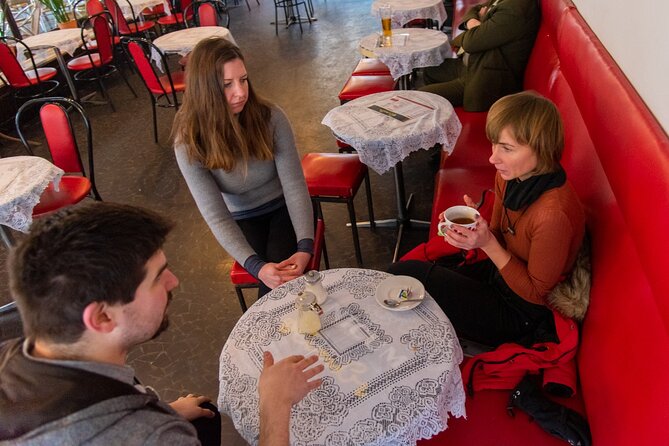
This is the kind of Budapest experience that feels like it belongs to the place, not just to the calendar. You meet at Bambi Café, Frankel Leó út 2-4, 1027 Hungary, and you spend about 1 hour 30 minutes talking with a host who’s willing to answer questions directly. The tone is more “sit down and talk” than “stand in a group and listen.”
The café part matters. Bambi Café is described as a cult stop that’s changed close to none since the 1970s. That steadiness gives the conversation something grounding. You’re discussing modern Hungary, but you’re doing it in a room that carries a slice of the earlier era—without needing a museum ticket to feel the contrast.
You also don’t get stuck with a big group. With a maximum of 6 travelers, it stays conversational. That’s not just about comfort; it affects the quality of what you’ll get. In a small group, you can ask a follow-up instead of watching your question vanish into the crowd.
You can also read our reviews of more tours and experiences in Budapest.



How the 90 minutes are paced (and why that matters)
The format is built in two parts. First, you get an introduction to Hungary’s modern era—focused mainly on historical, economical, and political aspects from roughly the last 30 years. Then the experience shifts into Q&A, where you can ask anything you’ve wanted: controversial politics, the turbulent past, and the uncertain future.
Why this pacing works: it gives you enough context to ask sharper questions. If you’ve only skimmed headlines about Hungary, you’ll likely leave with a better mental framework. If you already know some basics, you’ll still get value because you can steer toward the angles you care about—economy, rights and institutions, or the meaning behind today’s political label illiberal democracy.
It’s also practical that the host explicitly aims to answer questions and keep honesty front and center. You’re not paying for vibes. You’re paying for time with someone who can translate history and current events into plain talk.
Stop 1: Bambi Café, where the room sets the mood
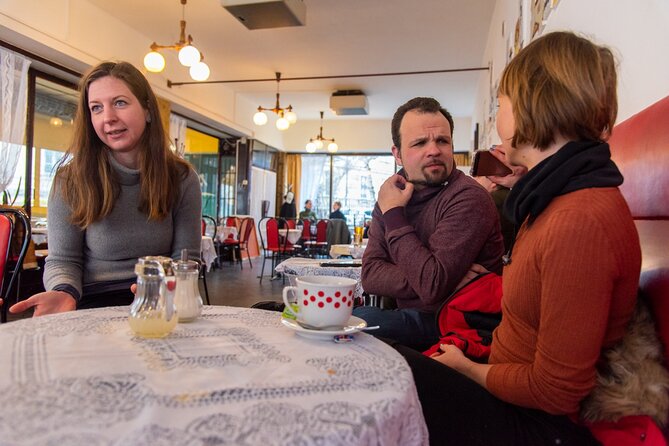
Bambi Café is the only stop. No walking marathon, no constant “move to the next thing” routine. You arrive at 2:00 pm, take your seat, and settle in.
The big draw here is the “close to none since the 1970s” feel. Even if you don’t care about vintage interiors, that detail changes how you experience the conversation. Hungary’s political story—shifting from communism to democracy, then dealing with new claims about what democracy should look like—can feel abstract. A café that has kept its character over decades makes those ideas feel less like a textbook chapter.
Could this be a drawback for some people? Possibly. If you’re hoping for a guided tour that includes landmarks, architecture commentary, or sweeping views, you won’t get that. This experience is intentionally focused: one location, deep conversation.
Hungary’s last 30 years: what you’ll talk through first
The introduction section sets the tone. You’ll cover Hungary’s shift from Communism to democracy, and then you’ll spend time on the creation and use of the concept illiberal democracy in recent years. You can expect the discussion to connect politics to daily life themes, with an emphasis on historical, economical, and political aspects.
What I like about starting here: it reduces confusion. Many people arrive with partial knowledge—snippets about elections, protests, party politics, or foreign policy—without a clear sense of how ideas and institutions changed over time. This intro is meant to fill that gap quickly so your later questions land better.
This also isn’t a sterile “both sides” exercise. The host frames opinions and interpretations as part of the conversation. The goal is honesty, including taking a position on issues. That makes it more useful than a purely neutral summary—especially if you’re trying to understand how Hungarians themselves think about the present.
If you’re on the fence because politics can feel heavy, don’t worry: the experience is designed to be interactive. You’re allowed to ask the uncomfortable questions, and the host’s willingness to answer them is a core selling point.
Q&A is where you get your real value
The second part is the part you’ll remember. After the intro, you ask questions you actually care about—anything from controversial politics to the country’s uncertain future, and even the host’s personal opinions and ideas for change.
This is where the experience earns its “no-taboo” promise, but in a grounded way. It’s not just shock-value hot takes. You’re talking with someone who can connect current debates to the broader story of Hungary’s recent past.
A couple ways to think about this before you go:
- Come with 2–3 question topics you’d genuinely want answered, not just “What’s the vibe?”
- If you’ve been to Budapest before, use that knowledge. You can ask how what you see today relates to what changed politically and economically over the decades.
In the reviews, people highlight that the conversation can run longer than the scheduled time, because it’s engaging and wide-ranging. That makes sense with this format: the host can follow your curiosity and adjust the route of the discussion on the fly.



“Honesty and opinions” can be a plus—or a mismatch
This experience is explicit about sharing the host’s opinion and trying to answer questions directly. For many people, that’s exactly what they want. You don’t just leave with facts. You leave with perspective.
For others, that style might be harder. If you need a strictly neutral guide voice, this won’t be it. But if you travel to understand how people think—especially about the complicated stuff—this is a smart way to spend 90 minutes.
The host’s name comes through in the feedback. People mention hosts like Daniel and Raymond (through the Budapest Explorers team). That matters because it signals consistency: you’re not getting a faceless script. You’re getting a real person guiding a discussion.
Price and what you’re really buying (around $40.52)
At $40.52 per person for about 1 hour 30 minutes, the price is less about “attractions” and more about access to a conversation with a host. In Budapest, you can find plenty of paid walking tours. This is different: you’re paying for time, attention, and a back-and-forth discussion.
Here’s how to judge value for this specific tour:
- If you like asking questions and talking with locals, the cost is reasonable because the time is concentrated (90 minutes, small group).
- If you prefer quiet sightseeing, you might see the price as expensive for what is essentially one café sit-down.
- If you’re short on time but want to understand Hungary beyond the obvious headlines, this format can be efficient.
The fact that you don’t need to add extra entrance fees (the café stop is handled as admission ticket free) supports the idea that you’re paying for the conversation itself, not the building.
Who this suits best (and who should skip it)
This is ideal if you’re:
- Visiting Budapest and want to understand politics and society, not just sights
- Returning to Budapest and looking for a deeper layer than what you got last time
- Traveling with curiosity and you’re willing to ask questions, including ones that might feel uncomfortable
It’s less ideal if you:
- Want a long itinerary with multiple stops
- Hate discussion-based experiences
- Prefer strictly neutral narration
Also, with a maximum of 6 travelers, it works well for couples and small groups. If you’re traveling solo, it can still be great because the group size keeps your voice from getting swallowed.
Practical details that affect your day
You’ll need to plan around the simple logistics. The start time is 2:00 pm, and the activity ends back at the meeting point. You’ll use a mobile ticket, and the meeting place is near public transportation, which helps if your schedule is tight.
You should also know what you’re committing to: this is a sit-down experience at one place. That makes it easier to fit into a busy day, but it means comfy shoes won’t matter much. Bring curiosity and a few prepared questions instead.
If you travel with a service animal, note that service animals are allowed. The experience is also listed as most travelers can participate, which helps if you’re deciding based on general ease.
Should you book Hungary Today: a no-taboo conversation?
If you want Budapest as a living political story—not just a set of photos—this is a strong pick. The best part is the structure: context first, then you steer the discussion with your questions. With a small group and an honest tone, it’s the kind of experience that can turn a complicated country into something you actually understand.
I’d book it if you’re the type who asks why things are happening, not just what’s happening. Skip it if your ideal tour is walking, landmarks, and minimal talk—because here, the point is the conversation.
FAQ
How long is the experience?
It lasts about 1 hour 30 minutes.
Where do I meet for the tour?
You meet at Bambi Café, Frankel Leó út 2-4, 1027 Hungary.
What is the starting time?
The start time is 2:00 pm.
What topics will we cover?
You’ll discuss Hungary’s recent past and present, including the shift from communism to democracy and the concept of illiberal democracy, plus related economic and political issues.
Is there time for questions?
Yes. After an introduction, you can ask anything you want about Hungary, including controversial politics, its turbulent past, the economy, and the future.
How big is the group?
The experience has a maximum of 6 travelers.
What does the ticket include?
The meeting stop is described as admission ticket free, and you’ll receive a mobile ticket for the activity.
Is free cancellation available?
Yes. You can cancel up to 24 hours in advance for a full refund.