REVIEW · BUDAPEST
Budapest By Night Sightseeing Cruise
Book on GetYourGuide →Operated by Mahart Cruises · Bookable on GetYourGuide
Budapest looks different when the lights turn on. I like the fast, low-effort sightseeing of a night cruise that still hits the biggest icons, and I love the river perspective that makes the skyline feel bigger than life. The one catch: it’s a short ride with lots of sights, so if you want super detailed stops, you’ll need to pair this with a daytime walk too.
This trip is a practical add-on to any itinerary. It runs about 50 minutes, with departures from central docks on the Danube (including Vigadó tér Dock 5). You get time to photograph the illuminated buildings, plus a bar onboard for warm or cool drinks depending on the season.
If you’re the type who plans around narration, note that an audio guide isn’t included right now. And because there’s no assigned seating, popular departures can feel crowded on deck.
In This Review
- Key highlights to know before you go
- Why a 50-Minute Danube Night Cruise Works So Well
- Getting On: Vigadó tér Dock 5 and the Central Departure Feel
- The First Glow: Chain Bridge and the Parliament Area Early On
- Fisherman’s Bastion and Matthias Church: What Looks Best From the Water
- Buda Castle, Gellért Hill, and the Thermal-Bath Clues You Can Spot
- Liberty Bridge to MűPA and the National Theatre Curves
- The Whale (Bálna) and the Ride’s Nice Finish Near Vigadó
- Comfort, Deck Layout, and Photo Tips That Actually Matter
- Price and Value: What You’re Paying For (and What You’re Not)
- Should You Book This Budapest By Night Cruise?
- FAQ
- How long is the Budapest by night sightseeing cruise?
- Where does the cruise depart?
- What are the main sights you’ll see?
- Is an audio guide included?
- Is the cruise heated?
- Are drinks and food included?
- Is there a place to use the restroom on board?
- Is the cruise dog-friendly?
- Is smoking allowed on the ship?
- Can I bring an electric wheelchair?
Key highlights to know before you go
- Vigadó tér Dock 5 is right by public transport, so you’re not wasting time getting oriented
- First 15 minutes already show the Parliament area, so you won’t be waiting long for the wow factor
- Heated cruise option in winter months (semi-closed comfort while you watch the lights)
- Photo-friendly upper areas for skyline shots, plus a comfortable indoor option if it’s cold
- Bar onboard means you can buy drinks instead of waiting for a meal service
Why a 50-Minute Danube Night Cruise Works So Well
Night in Budapest is when the city’s architecture stops being background and turns into the main event. This cruise is built for that moment. In just under an hour, you’ll glide past the river’s biggest landmarks, which means you get the feeling of a full “greatest hits” tour without committing to a long day out.
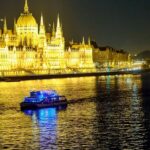
I especially like how the schedule matches how the city lights come alive. Public lights kick in roughly 15 to 20 minutes after sunset, so timing matters. If you go too early, you may see silhouettes instead of glow. If you go just right, you get that smooth transition: sky darkens, buildings light up, and reflections stretch across the Danube. That changing color effect is a big part of why people rave about the timing.
Also, the cruise is centrally located. Starting from Downtown makes it easier to pair with dinner or a pre-cruise stroll along the river. You can treat this as a nightcap to your sightseeing rather than another full tour.
You can also read our reviews of more boat tours in Budapest

Getting On: Vigadó tér Dock 5 and the Central Departure Feel
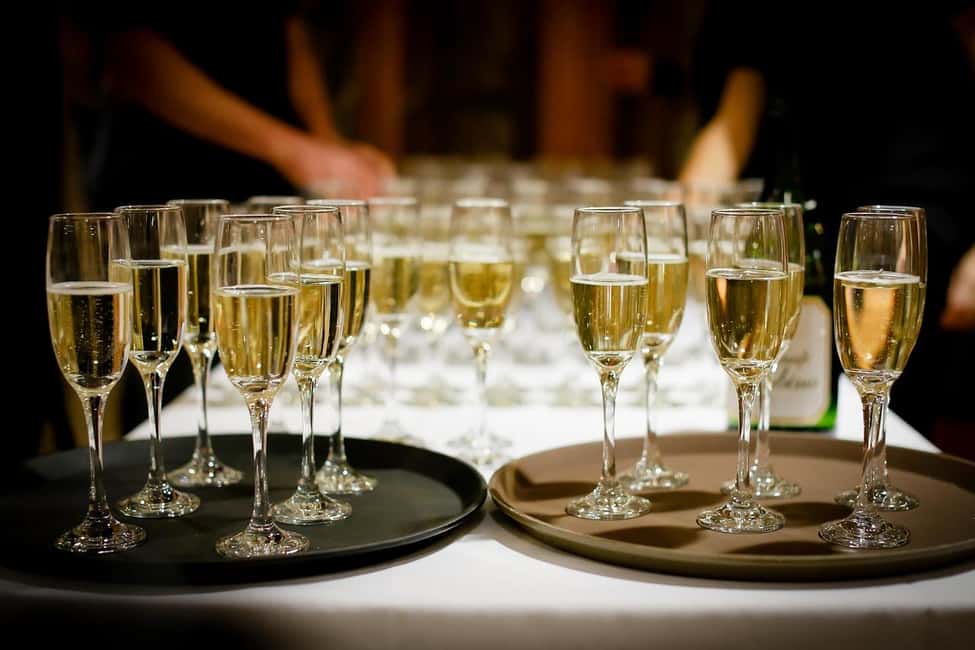
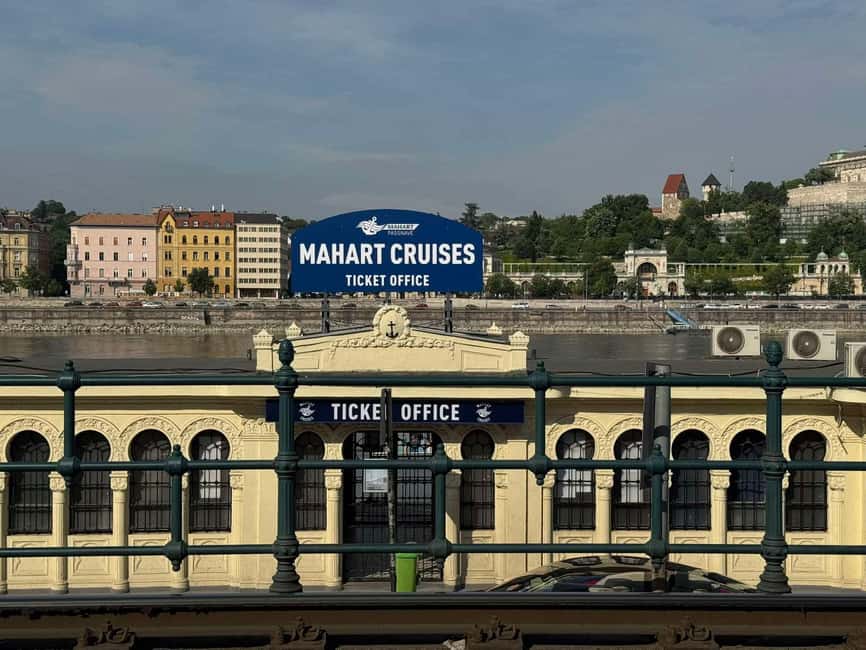
Your meeting point is set up to be simple. The core exchange point is Vigadó tér 5. ponton (Dock 5) on the riverbank, just below the tram 2 stop. That location is helpful because it’s easy to find when you’re already in the city center, and you’re not trying to figure out a bus route after dark.
There’s also a second departure option mentioned: Batthyány tér Dock 1. If you’re staying on the Buda side or near that area, that can save you time. Either way, you’re still on a Danube route that keeps the big sights in play.
One practical thing to know: seats aren’t assigned. People line up and take what they can first. On very popular departures, you may feel the crowd, even if the ship still runs smoothly. Plan to move with the flow, grab a spot, and use the upper deck when you want photos.
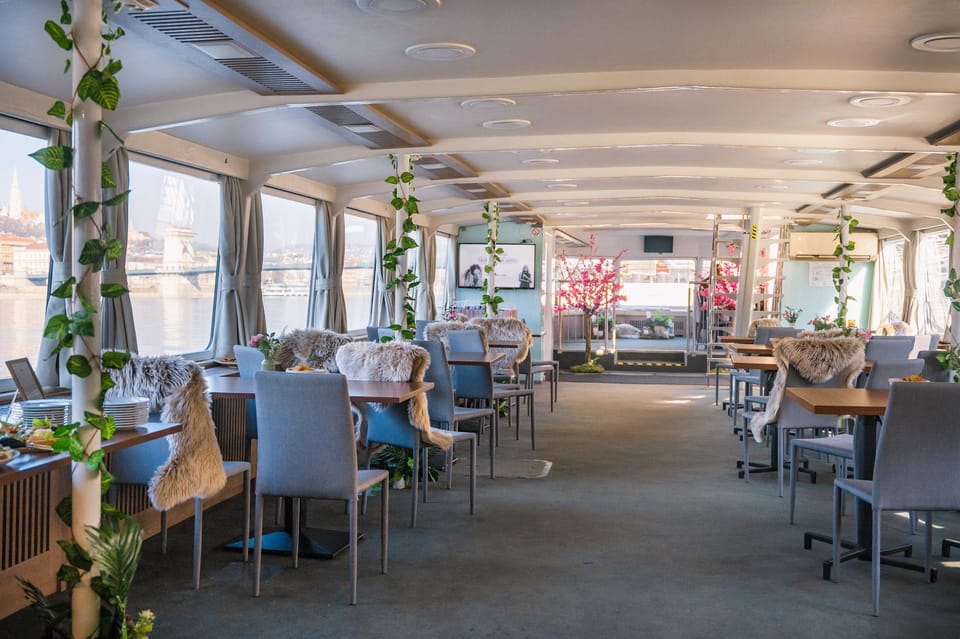
And yes, it’s a semi-closed ship. In the colder months, the cruise is heated from November to April, which makes a big difference when you’re standing out to shoot pictures.
The First Glow: Chain Bridge and the Parliament Area Early On
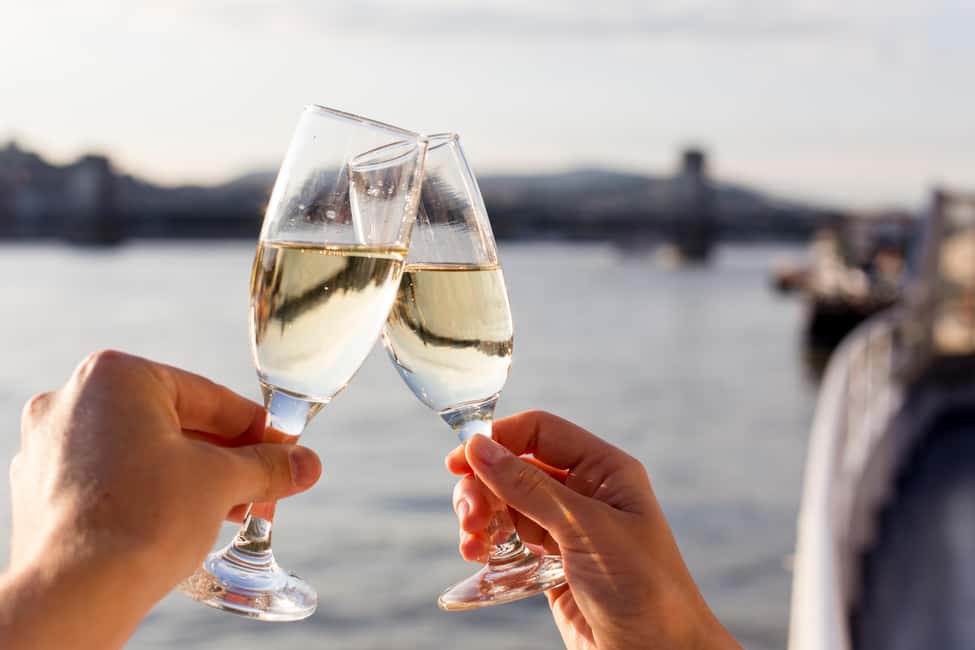
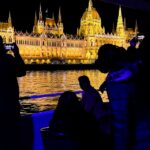
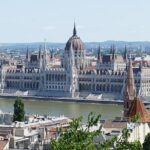
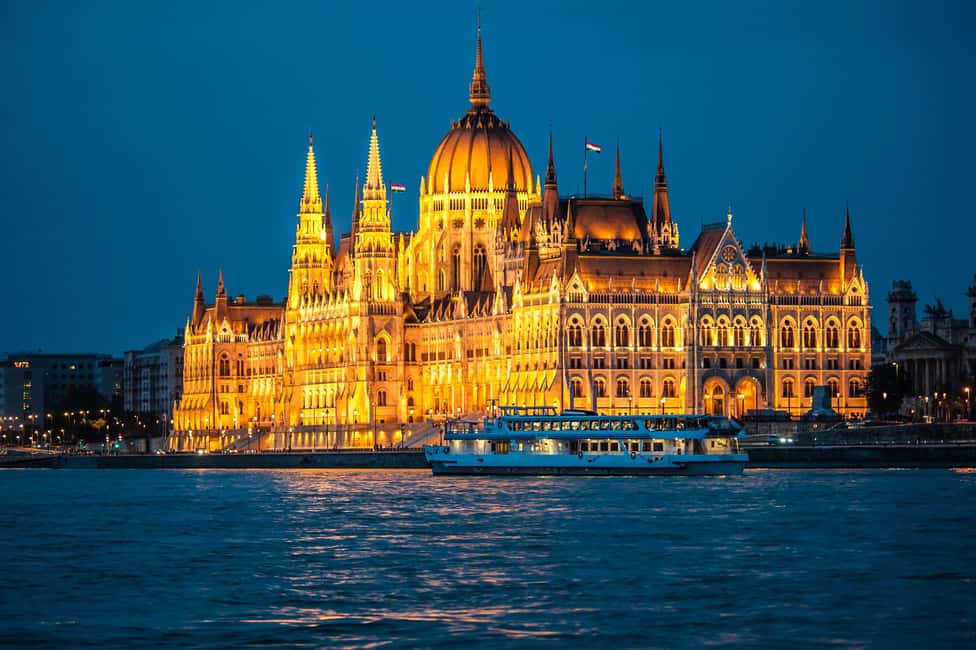
The cruise front-loads the highlights, which is smart. The Parliament building is in view very early—about the first 15 minutes. From the water, the Hungarian Parliament looks even more dramatic than it does from the bank, because the river gives you height, distance, and reflections all at once.
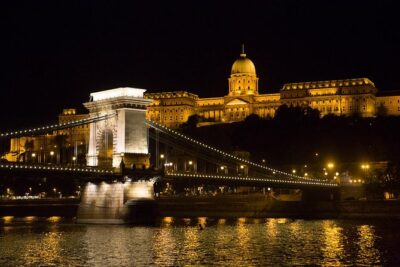
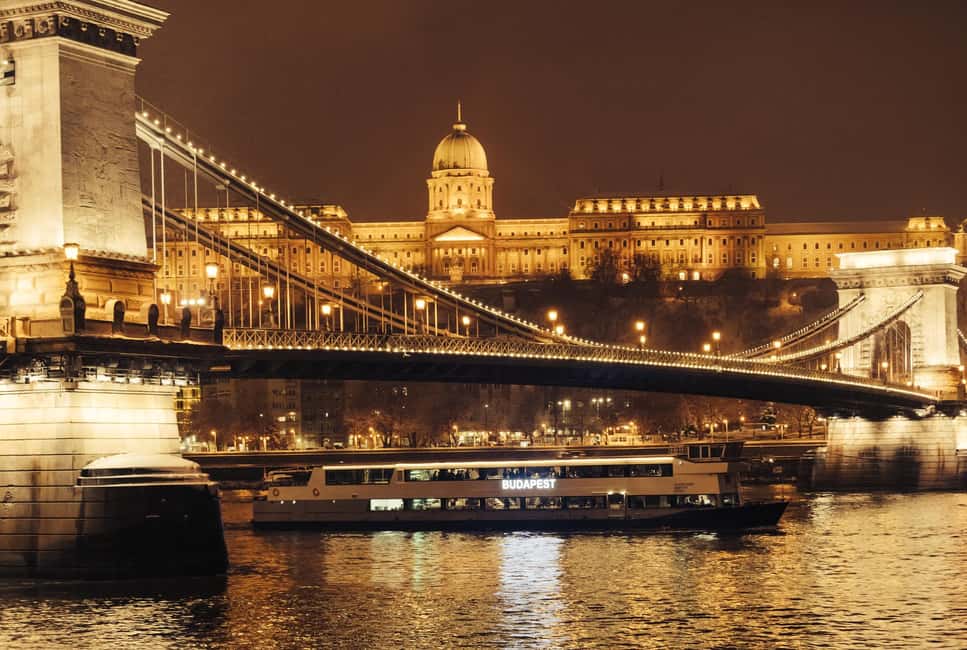
You’ll pass the Chain Bridge, the original kind of connection point that mattered. It opened in 1849 as the first permanent bridge linking Buda and Pest. There’s also a charming local legend tied to the lion statues: people used to believe the lions had no tongues. It’s just a legend, but it’s the kind of story that makes the landmark feel more personal as it rolls by.
For the Parliament itself, remember a few standout facts while you watch it light up. It was completed in 1902 and is described as the third-largest parliament building in the world. It has 690 rooms, and it’s tied to the National Assembly and the Holy Crown of the Hungarian Kingdom. The dome is 96 meters high and linked to the year 896, associated with the Magyars settling in the Carpathian Basin.
If you like architecture and symbolism, you’ll appreciate it more when you already know what you’re looking at. If not, no worries. The night lighting does the selling.
Fisherman’s Bastion and Matthias Church: What Looks Best From the Water
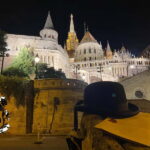
After the Parliament stretch, the route brings you toward the famous hilltop views—especially the Fisherman’s Bastion and Matthias Church. From the river, these look like a carefully staged set: stone details, dramatic angles, and a silhouette effect that’s perfect for night photos.
The Fisherman’s Bastion has a story. It’s named after the fishermen who defended that part of the city walls during the Middle Ages. The seven bastions connect to the idea of the seven Magyar tribes that settled in the Carpathian Basin. Even if you don’t memorize that, the building’s design communicates “importance” instantly, and it reads well in the dark.
Matthias Church is also a powerhouse visual. It dates back to the 13th century and served as the coronation church for Hungarian kings. It was later associated with King Matthias Corvinus, including his marriage to Princess Beatrice of Naples in 1474. When you see it lit against the night, you’ll understand why this church is tied to major moments.
Timing tip: don’t only shoot from one angle. The ship’s slow, steady pace gives you chances to reposition on the deck. Use a quick scan, then wait for the moment when the building lines up with the river reflection.
Buda Castle, Gellért Hill, and the Thermal-Bath Clues You Can Spot
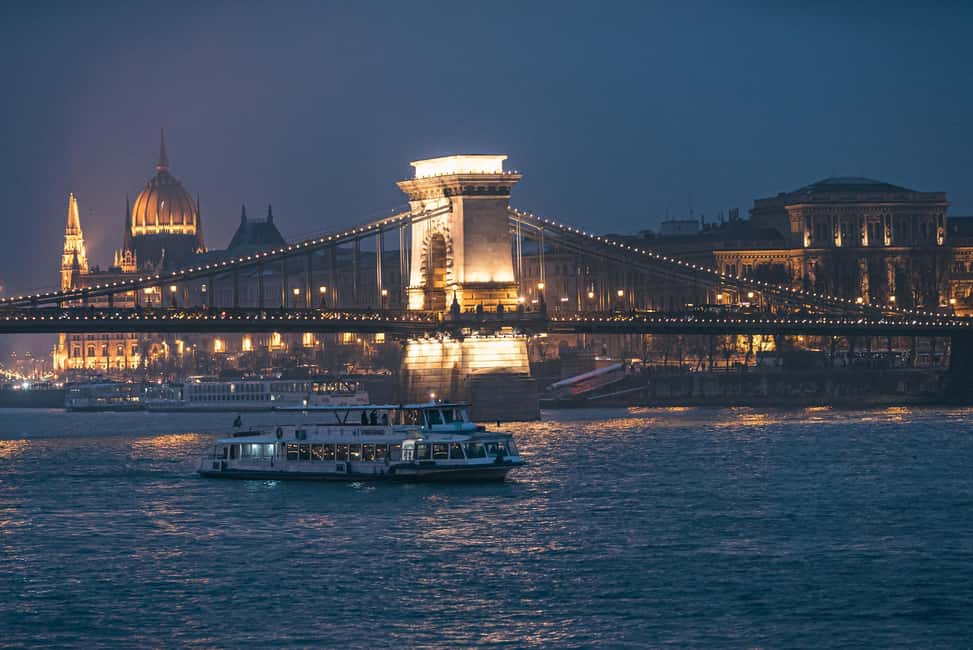
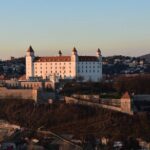
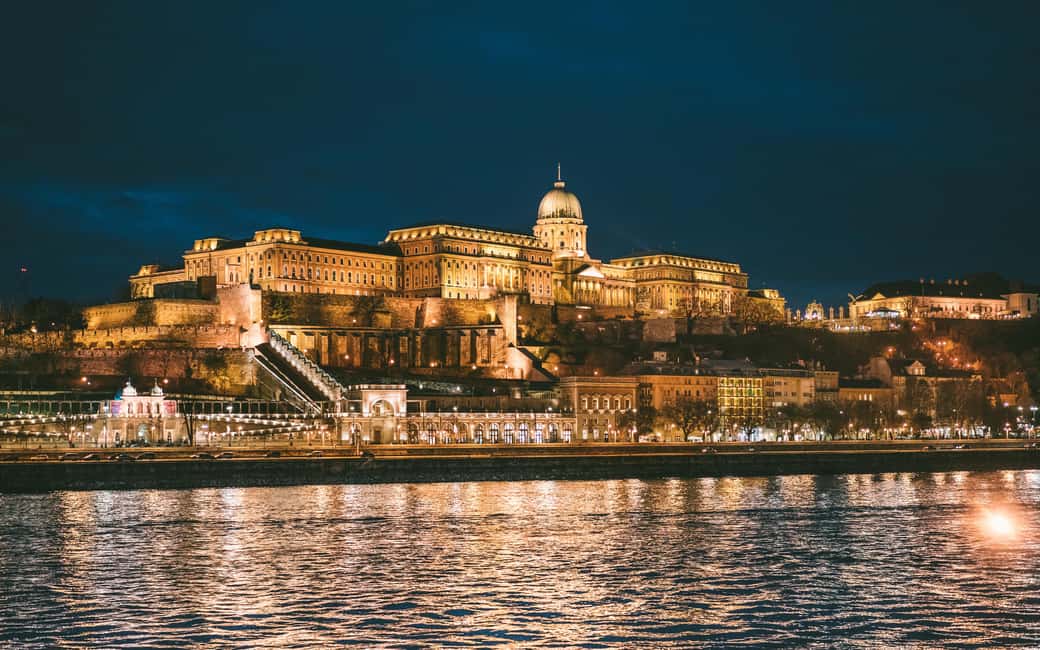
Next comes the long, satisfying arc of the Buda Castle area. The original castle began in the 13th century, while the structure you see today is largely from the 18th century. It also points you toward the culture inside: the Hungarian National Gallery and the Budapest History Museum call it home. In the early 20th century, the last inhabitant listed is Governor Miklós Horthy between the two world wars.
Night matters here because the castle’s shape becomes a set of light and shadow edges. You get less texture than daytime, but you gain atmosphere. It’s a trade-off, and for this kind of river cruise, the atmosphere is the point.
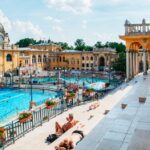
As you pass near Gellért Hill, you’re seeing a stretch tied to story and struggle. Saint Gellért is linked to being thrown to his death from the hill in 1046. The Citadella at the top was built by the Habsburgs after the 1848–49 revolution. If you look closely, the hill area is also associated with two iconic thermal baths at the base: Rudas and Gellért Baths. Even if you don’t go inside, it’s nice to know the names because you’ll recognize them later on foot.
This segment is where you feel the cruise connecting past and present. The river carries the city’s identity, but the banks show how those identities were formed—sometimes joined, sometimes divided, until the city officially became Budapest.
You can also read our reviews of more evening experiences in Budapest

Liberty Bridge to MűPA and the National Theatre Curves
Budapest isn’t just one skyline. It’s a sequence of styles. That’s why this portion of the route feels smooth and satisfying: bridges, then modern cultural buildings, then the city rhythm shifting again.
One of the key connections here is the idea that the river once divided Buda and Pest. In 1873, the towns of Buda, Pest, and Óbuda officially merged into one city: Budapest. Riding the Danube at night makes that merger feel visible. The river becomes the link, not the barrier.
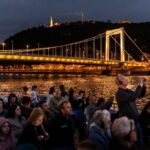
You’ll pass under Liberty Bridge on the way toward cultural landmarks. The route mentions the modern curves of the National Theatre and the Palace of Arts (MÜPA), both cultural hubs for music, opera, and theater. When lit at night, those contemporary shapes feel like an intentional contrast to the older stone behind them.
Nearby, the cruise route also references Corvinus University and the Great Market Hall area. You won’t get a deep look from the boat, but the ship gives you a sense of where locals go for everyday city life versus where visitors usually focus. That balance is one reason night cruises are great for first-timers: they help you mentally map the city.
The Whale (Bálna) and the Ride’s Nice Finish Near Vigadó
As you cruise toward the end, you’ll see Bálna Budapest, often nicknamed the Whale. It’s described as a bold blend of old and new architecture, and it houses shops and exhibitions. Even without stopping, that building acts like a visual bookmark that tells you the city is evolving.
The cruise’s final stretch connects back toward the Vigadó area. You’ll get Vigadó Square views, and the overall ending point is near Vigadó Concert Hall, a 19th-century venue often associated with Budapest’s musical heritage. The ending matters because it helps you land back in an area where you can keep going—rather than feeling stuck in some random waterfront pocket.
This is also the part where you may notice the ship’s “photo rhythm.” The best shots often come right before docking points or when the buildings line up for reflections. If you’re with a group, this is the moment to agree on where you’ll meet at the end so nobody gets swept off during disembark.
And since it’s only about 50 minutes, you’ll still have energy for a short walk afterward. That’s one of the best values of this kind of cruise: it’s a sighting, not a time-sink.
Comfort, Deck Layout, and Photo Tips That Actually Matter
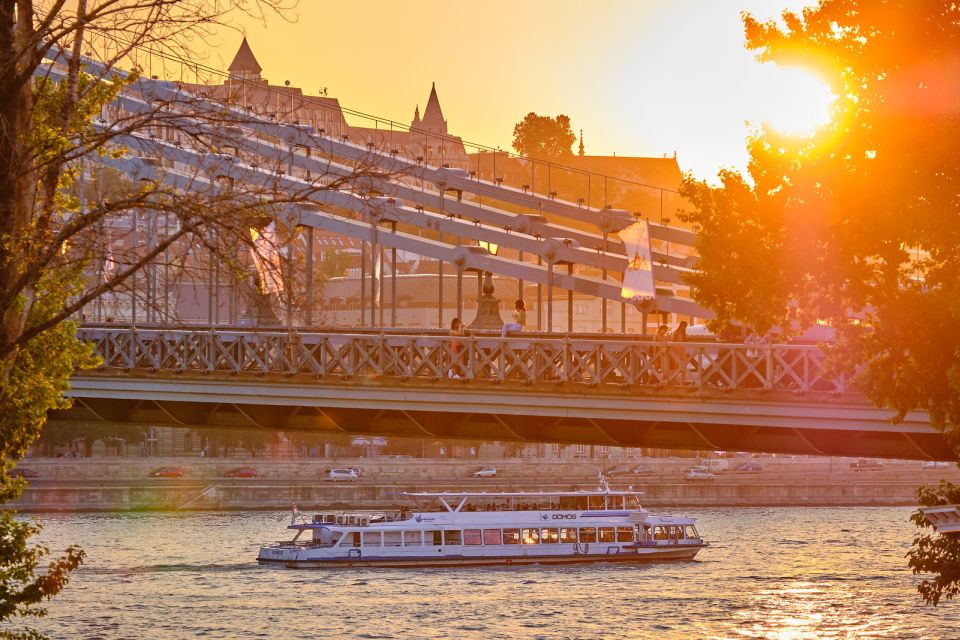
This experience is simple, but a few comfort details can make or break it.
Dress warm. Even when the ship is heated (November to April), outdoor air on deck can still bite. The ship has restrooms onboard, and they’re noted as being on the lower deck at the back of the ship. Smoking is only allowed in the designated area at the back, so don’t expect a smoke-free vibe everywhere—but you also don’t have to endure it on the main areas.
If you’re chasing the best photos, aim to use both levels. There’s a roofed open area on the upper deck, which helps you shoot while staying out of the worst chill. Then when weather turns ugly, move inside. People also mention there’s inside seating available, which is useful when the cold arrives fast.
One more practical note: there’s no seat allocation. Seats are taken in order of arrival. If you arrive late, you might end up standing for stretches. It won’t ruin the cruise, but it does change the feel.
Also, an audio guide isn’t included right now. Some boats still have audio options in other settings, but here you shouldn’t plan on narration as part of the ticket. If you want context for every landmark, save a few facts to your phone before you go, then let the river do the rest.
Price and Value: What You’re Paying For (and What You’re Not)

At about $16 per person and around 50 minutes, this cruise is priced like a practical add-on, not a full-day tour. The value comes from speed and location. You’re seeing multiple “must-see” sights—Parliament, Chain Bridge, Fisherman’s Bastion, Matthias Church, Buda Castle, plus more—without having to travel between viewpoints.
It also helps that the cruise starts from central areas. A Downtown departure means less time commuting, which makes the $16 feel smaller in your day budget. If you’re short on time, this is the kind of ticket that helps you check the major boxes without draining your energy.
What you’re not getting: audio narration and included food. Drinks are available to purchase onboard. In other words, it’s a sightseeing service first, with comfort and drinks as extras.
If you want a big cultural day, use it as the night layer. Do a daytime walk for details, then do this cruise to get the skyline glow. If you only have one day, it can still work as your “fast orientation” tour—because the river route helps you understand where things sit relative to each other.
Should You Book This Budapest By Night Cruise?
I think you should book this if you want easy, iconic Budapest views with minimal planning. The itinerary hits the major landmarks in one pass, and the night lighting plus reflections makes the Danube feel like the best seat in the city.
Book it especially if:
- you like taking photos with low effort
- you want a stress-free way to see Parliament and Buda Castle at night
- you’re traveling during colder months and want a heated ride option
Skip it or adjust expectations if:
- you need an included audio guide for commentary (it’s not included right now)
- you’re very sensitive to crowds on popular departures (no seat allocation means you might work for a spot)
If you get the timing right around sunset-to-lights-on, you’ll get the payoff: the city turning from scenery into spectacle.
FAQ
How long is the Budapest by night sightseeing cruise?
The cruise lasts about 50 minutes.
Where does the cruise depart?
It departs from central Vigadó Dock 5 or Batthyány té Dock 1, depending on the option you book.
What are the main sights you’ll see?
You’ll get views of key landmarks from the river, including the Chain Bridge, Hungarian Parliament Building, Fisherman’s Bastion, Matthias Church, Buda Castle, Gellért Hill area, Liberty Bridge, National Theatre, and Bálna Budapest, with the route ending near Vigadó Square.
Is an audio guide included?
No. The ticket does not include an audio guide right now.
Is the cruise heated?
Yes, the cruise is heated from November until April.
Are drinks and food included?
Food and drinks are not included, but drinks are available to purchase onboard.
Is there a place to use the restroom on board?
Yes. Restrooms are available onboard, on the lower deck at the back of the ship.
Is the cruise dog-friendly?
Yes, the cruise is dog-friendly.
Is smoking allowed on the ship?
Smoking is only permitted in the designated area at the back of the ship.
Can I bring an electric wheelchair?
Electric wheelchairs are not allowed.