Budapest is full of surprises if you know what to hunt. This mini statue hunt turns sightseeing into a scavenger game, with a local guide guiding your eye from tiny details to major landmarks. I love that it mixes Jewish Quarter history with a full cross-city route, and I also like that the pacing can be adjusted to your group. The only real catch: you’re in for a lot of walking, so good shoes matter.
What makes it work is the way the statues act like waypoints. You’re not just staring at buildings—you’re tracking locations that line up with big sights like the New York Café and the Grand Synagogue on one side of the city, then Parliament and St Stephen’s Basilica on the other. In excellent guides like Emi and Andy, the story isn’t tacked on; it’s woven into the route so you leave with places you can actually picture.
The possible drawback is distance. One past group logged about 10 miles, and even if your guide can slow down a bit, you’ll still be moving. If you hate walking, or if your mobility is limited, this may feel like too much for a 4-hour outing.
In This Review
- Key highlights you’ll care about
- Why a mini statue hunt beats a standard sightseeing day
- Starting at Heroes’ Square: your launchpad
- Stop 1 in the Jewish Quarter: mini statues plus major landmarks
- Stop 2 across Budapest: Parliament, St Stephen’s, and the Chain Bridge
- Stop 3 in Buda Castle: the final statue and the view from above
- The price question: is $295 per group good value?
- How much walking is involved, and what you should wear
- What the guide really adds to your day
- Food and breaks: a sweet ending, not a full meal
- Who should book this mini statue hunt
- Quick planning tips before you go
- Should you book it?
- FAQ
- How long does the mini statue hunt take?
- Where does the tour start and end?
- Is hotel or cruise pickup available?
- Is this a private tour?
- What’s included, and what should I arrange myself?
- Can I get a refund if I cancel?
Key highlights you’ll care about
- Private local guide who keeps the hunt moving and connects each statue to landmarks you’ll pass
- Jewish Quarter to Buda Castle route that strings together the city’s most photo-worthy zones
- Crossing the Chain Bridge as part of the “game,” not an afterthought
- Adjusted walking pace when the group needs it, thanks to a flexible guide
- Little treat at the end, so you finish with a sweet reset
- Mobile ticket and a pickup option that reduces hassle before you start
Why a mini statue hunt beats a standard sightseeing day
I’m a fan of tours that make you pay attention. In Budapest, that’s not hard to do—there’s so much craftsmanship in the streetscape—but the statue hunt adds a reason to look closely. Instead of wandering with a vague plan, you get a clear objective: find the mini statues, then learn what each one is pointing at in the bigger story of the city.
I also like the way this format creates a “low-stress” sightseeing flow. You’re not sprinting from viewpoint to viewpoint. You’re moving at a human pace, with your guide giving context while you walk. That matters in Budapest, where one wrong turn can easily waste time, especially around the hills.
And because it’s private (your group only), you can ask questions that actually fit your interests—history, architecture, or just what’s worth eating nearby. That’s where the best guides shine: they don’t treat the walk like a script.
You can also read our reviews of more tours and experiences in Budapest.



Starting at Heroes’ Square: your launchpad
You meet at Heroes’ Square (Hősök tere, 1146). It’s one of those places that instantly tells you you’re in the right city. The setting also helps because it’s easy to orient yourself before you start the route.
If you don’t want to navigate your own way, pickup is offered. Your guide can pick you up at your hotel or cruise terminal, or meet you at an agreed spot. That makes a big difference if you’re juggling luggage, jet lag, or you just want the day to start smoothly.
This tour also runs daily from 8:30 AM to 9:00 PM, so you can generally choose a time that matches the light you want for photos and the energy level of your group. It’s a small thing, but in Budapest, the light and crowd levels can change a lot hour to hour.
Stop 1 in the Jewish Quarter: mini statues plus major landmarks
The Jewish Quarter segment is where the hunt becomes more than playful. You’re finding three more mini statues in a tight, meaningful area, and your guide links their locations to the big landmarks around you.
The payoff here is sight and story together. As you search, you’ll get views of major references like the New York Café and the Grand Synagogue. That’s a great setup, because these are the kinds of places people hear about, but you often see them as standalone stops on other tours. Here, they feel connected to the neighborhood fabric, because your statues help you understand why those landmarks sit where they do in the city.
This part lasts about 1 hour, and since it’s shorter, it’s also the easiest segment to judge early on whether the walking pace is right for your group. If you’re feeling good, you’ll start to enjoy the rhythm. If you’re not, you can adjust immediately with your guide.
Watch-out: The Jewish Quarter involves sidewalks and streets that can feel uneven in spots. That doesn’t mean it’s inaccessible; it just means your shoes should be comfortable enough for a long day of moving.
Stop 2 across Budapest: Parliament, St Stephen’s, and the Chain Bridge
Once you finish the first cluster of statues, the tour shifts from neighborhood storytelling to a wider Budapest snapshot. You’ll keep hunting for the remaining statues downtown, then layer in major civic and religious landmarks along the way.
This is also the segment where the route becomes visually satisfying. You’ll see the Parliament and St Stephen’s Basilica, then cross the Chain Bridge. The bridge is the kind of landmark that people want photos of, but it’s even better when it’s integrated into a route you’re actively following. The “find the next statue” structure keeps you from losing time to indecision.
Stop 2 takes about 2 hours 20 minutes. That’s the long stretch of the tour, so it’s worth thinking about your stamina and hydration here. If you want breaks, this is the time to ask—your guide can typically manage the flow.
One thing I appreciate about this kind of central route: you’re not stuck in one style of scenery. Budapest swings from formal and grand (Parliament and the basilica areas) to river crossing views that give you perspective. Even if you’ve seen these on postcards, the experience feels different when you walk through the city streets and earn those views.
Practical tip: Public transportation tickets aren’t included. Since you’ll be walking through key areas, you usually won’t need to use transit during the tour—but it’s still smart to have a plan for before/after, just in case your schedule requires it.
Stop 3 in Buda Castle: the final statue and the view from above
The last leg moves you into the Castle district, which is exactly where you want to end a hunt. Your energy is spent by then, so the final reward needs to be worth it—and it is.
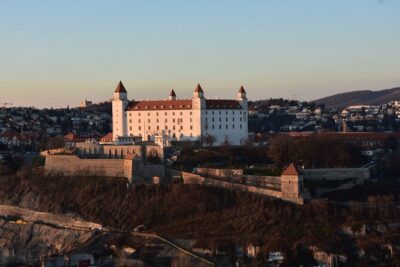
You’ll find the last mini statue, and then you get the cherry on top: a panoramic view from the Buda hills. This is where Budapest opens up. Instead of just learning facts while walking, you finally see the whole city spread out in front of you—river, bridges, rooftops, and all the layers that make Budapest feel like more than one city.
This segment is about 1 hour 30 minutes. Ending here is smart because it gives you room to slow down. You can take photos, pause for a moment, and let the day’s walking make sense through the view.
Consideration: Castle district areas can involve slopes. The tour is still doable for most people, but if you know you struggle with inclines, you’ll feel it more at the end than at the start. Wear shoes that grip.





The price question: is $295 per group good value?
The tour costs $295.01 per group and accommodates up to 15 people. That sounds straightforward, but what matters more is how you use the structure.
First: it’s private, so you’re paying for a local guide who runs your group’s pace. For a family or friends traveling together, that can be a strong value compared with separate tickets for everyone on multiple city tours.
Second: it includes a little treat at the end, plus your guide’s time and interpretation. For a statue hunt, the guide is the product. The route only works because someone tells you what you’re looking at and why it matters.
Third: the tour is designed to cover a lot of major sights—Jewish Quarter landmarks, downtown icons, and the Buda Castle viewpoint—within about 4 hours. When you compare that to the time cost of piecing everything together on your own, the guided format starts to look like a time-saver as well.
My practical bottom line: If your group likes walking and enjoys quirky, specific stories, this pricing can feel fair. If your group hates active sightseeing, you’ll feel less value fast—because the tour’s charm depends on you moving.
How much walking is involved, and what you should wear
You should plan for a lot of walking. One group example logged about 10 miles, which is a useful reality check when you’re looking at a 4-hour duration. Even with guide pacing flexibility, you’re covering ground across districts and climbing into the Castle area.
So: pack for comfort, not looks. I’d prioritize:
- Comfortable walking shoes with good grip
- A water bottle, especially in warm months
- A light layer, since the hills and open areas can shift temperature quickly
- Phone charged, since you’ll need your mobile ticket
One more note: the experience works best in good weather. It requires decent conditions, and if it’s canceled due to weather, you should expect another date or a refund.
What the guide really adds to your day
A statue hunt could be dry if it’s just directions. Here, the best part is the explanation—the way the guide connects each mini statue to the area around it and helps you understand how Budapest’s layers formed.
From past guide performance, the standout trait is clarity. Guides like Emi get praised for linking statue details to the background of landmarks and making you feel like you’re learning a city, not memorizing a list. Guides like Andy get praised for flexibility—adjusting the tour to walking pace and interests, and even tossing in restaurant recommendations.
Even if your guide isn’t one of those names, that style is the expectation: local, story-driven, and practical. That’s what helps you walk away with better mental maps. You’ll know how the districts relate, not just where the famous buildings are.
Food and breaks: a sweet ending, not a full meal
The only food detail included is a little treat at the end. That means you shouldn’t plan the day as a “lunch tour.” I’d think of it as sightseeing first, then you’ll want a meal afterward based on what you feel like and where you are when you finish back at the start point.
If you’re the type who likes to build food stops into the route, this is a good tour to do early enough that you still have energy to eat afterward. Your guide can often point you toward options—past experiences also highlight that guides share restaurant ideas as part of the day.
Who should book this mini statue hunt
I think this tour is a great fit if you:
- Want a fun, interactive way to see key Budapest sights
- Like history and architecture, but prefer learning it while walking rather than sitting in museums
- Are traveling with a group who can handle 10-ish miles of movement
- Appreciate a private guide who can adapt to your pace and questions
It might not be ideal if:
- Your group wants a mostly seated, low-walking plan
- You’re sensitive to hills or uneven streets
- Your goal is only to hit the biggest postcards with minimal time on foot
Quick planning tips before you go
- Start comfortable: Heroes’ Square is a strong launch point, but give yourself time to meet.
- Bring weather gear: the tour depends on decent weather.
- Don’t treat it like a transit tour: public transport tickets aren’t included, and you’ll mostly be moving on foot.
- Plan your shoes for the Castle district: the end is the toughest terrain for many people.
- Use the private nature: ask questions. This tour works best when you engage.
Should you book it?
If you’re choosing between a plain sightseeing walk and something more playful, I’d lean toward booking this. The mini statues give you an easy structure for paying attention, and the route stitches together the Jewish Quarter, downtown icons, and the Buda Castle viewpoint into one smooth day.
Book it if your group enjoys walking, likes specific details, and wants a guide who can explain how Budapest fits together. Skip it only if you know you can’t handle a long walking day—because the payoff is in the hunt, and the hunt requires movement.
If you do book, go in with a mindset of looking closely. Budapest rewards that. And by the time you reach the final view from the Buda hills, you’ll see why this “mini” idea lands so big.
FAQ
How long does the mini statue hunt take?
It runs for about 4 hours total.
Where does the tour start and end?
It starts at Heroes’ Square (Hősök tere, 1146 Hungary) and ends back at the same meeting point.
Is hotel or cruise pickup available?
Yes. Pickup is offered, and the guide picks you up at your hotel, cruise terminal, or at an agreed location.
Is this a private tour?
Yes. It’s private, and only your group participates.
What’s included, and what should I arrange myself?
Included are a private local guide and a little treat at the end. Public transportation tickets are not included.
Can I get a refund if I cancel?
Yes. You can cancel up to 24 hours in advance for a full refund.