REVIEW · BUDAPEST
Walk to recent and aged spiritual sanctuaries near Budapest
Book on GetYourGuide →Operated by EvezzVelem · Bookable on GetYourGuide
Spiritual Hungary, on foot and in story. I love the Startrail walk to the Church of Pilis, where wood-carved Hungarian history replaces the usual Via Crucis stops, and I also love the quiet weight of the Paulian Monastery ruins tied to St. Paul. The only catch: you’ll do moderate walking, and the optional lookout hike will feel like work if you’re not used to hills.
This is a private, English-led day trip run from central Hungary by EvezzVelem, with pickup either in Budapest or Solymár. It runs about 5 hours, includes car transport plus entrances, and asks you to bring your own water and snacks for the outdoor parts.
In This Review
- Key takeaways
- From Budapest to Pilis: timing, pickup, and how the day flows
- Startrail up to the Church of Pilis: a station walk for Hungarian questions
- Church of Pilis: new spirituality with ancient vibes and big panoramas
- Paulian Monastery ruins in Budaszentlőrinci: where St. Paul’s remains mattered
- The short walk back to the car: don’t treat the day as fully driving
- Lunch time: grab street food, then keep going
- Kaán Károly-kilátó: optional 30 minutes of uphill reward
- Zsolt and the Hungarian identity thread: language, religion, and questions
- Price and what you actually get for $127
- Who should book this spiritual walk (and who shouldn’t)
- Should you book this day trip? My decision guide
- FAQ
- What is the duration of this experience?
- Where are the pickup and drop-off locations?
- Is it a private tour and what language is it in?
- What is included in the price?
- Are meals included?
- Is the lookout tower hike included?
- What should I bring for the walking parts?
- Who is this tour not suitable for?
Key takeaways
- Startrail’s station-style wood carvings tell Hungarian origin stories in a way you can walk through.
- Church of Pilis views land right over the valley, so your faith lesson comes with a panorama.
- Paulian monastery ruins at Budaszentlőrinci пálos kolostor connect to St. Paul’s remains and centuries of the pálos order.
- Zsolt’s language-and-belief thread ties runes, origins, and religion changes to what Hungary is now.
- Optional Kaán Károly-kilátó hike is short but not flat: 2.2 km round trip with about 110 m up and down.
From Budapest to Pilis: timing, pickup, and how the day flows
This trip is built for people who want more than a quick look out a window. You start with a hotel pickup in Budapest or Solymár. Parking can be tricky, so you’re asked to wait outside your place about 5 minutes before the set pickup time. The car is a red Citroën Xsara Picasso, which you’ll spot if you look down the street.
The day is about 5 hours total, and the pace is outdoors-first. That matters because you’re not just driving between two points. You’ll walk a fair bit, then walk again in shorter bursts around the ruins and possibly up to a viewpoint.
At a practical level, I like that the plan gives you a built-in decision point. After the monastery ruins, you have the option to go for the viewpoint hike based on how you feel and what the weather is doing. If the sky is clear, that choice can feel easy.
And yes, you should expect some uneven ground and uphill sections. Bring comfortable shoes and plan to take it slow on the climbs, especially in cooler months.
You can also read our reviews of more tours and experiences in Budapest.



Startrail up to the Church of Pilis: a station walk for Hungarian questions
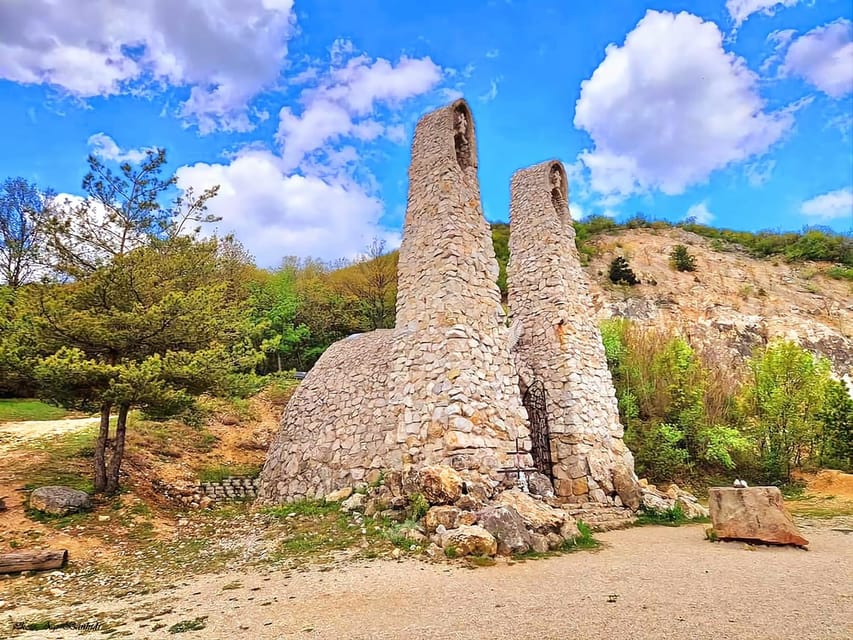
The heart of the experience starts with a walk called Startrail. You’ll head toward the Church of Pilis (Pilisi Boldogasszony-kápolna), a modern church with serious valley views.
What makes Startrail different from a normal nature stroll is that it’s structured. It’s described as similar to the stations of Christ, but instead of focusing on Jesus’ last way, this route uses wood-carved figures tied to Hungarian history. In other words: you’re walking through a lesson.
The guide doesn’t treat these stops like random trivia. You’ll hear big questions that people still argue about:
- Where the Hungarians fit in the story—are Hungarians the descendants of Attila’s Huns?
- When Hungarians arrived in today’s Hungary
- What the Magyars were
- How Hungarian language is different from other European languages
- What runic scripts may have looked like
You don’t need to be a history nerd to enjoy this part. The questions are framed in a way that feels conversational. The walk format helps too, because you can absorb it step by step instead of sitting inside a museum.
Church of Pilis: new spirituality with ancient vibes and big panoramas
Once you’re at the church, the mood shifts from the walk’s storytelling to a more open, reflective experience. The church is newly built, but you’re told to feel the ancient vibes connected with the older monastery ruins in the area.
The Church of Pilis stop isn’t only about architecture. It’s also about how belief changes over time. You’ll hear about a unique Hungarian mix of spiritual currents that includes native shamanism, Christianity, and Hinduism, with references to esoteric teachings. Then the story turns to how beliefs were reshaped by major historical forces like Catholicism, Protestantism, Communism, and other influences.
That might sound heavy, but it’s presented as a timeline of identity. The point is not to crown one religion as the correct answer. The point is to show how layers of faith can live side by side in a place like Pilis—and how that affects what spirituality looks like today.
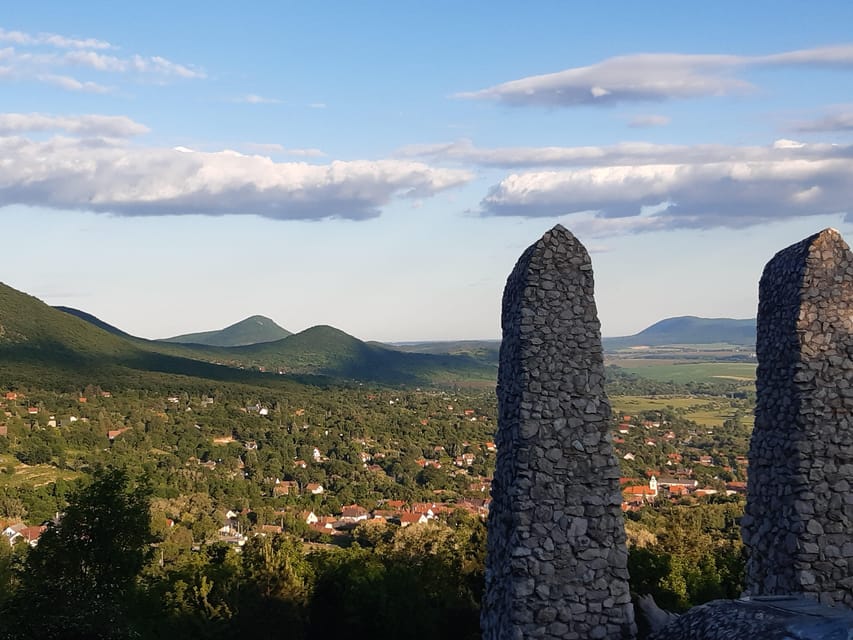
And then there are the views. The Church of Pilis location puts you in a spot where you can look across a valley. Even if you’re not the type to get sentimental in churches, the sightlines help you understand why people built sacred places here in the first place.
For quick planning: the church has a strong reputation online, with a Google rating of 4.9 from about 348 visitors, so you’re in good company.
Paulian Monastery ruins in Budaszentlőrinci: where St. Paul’s remains mattered
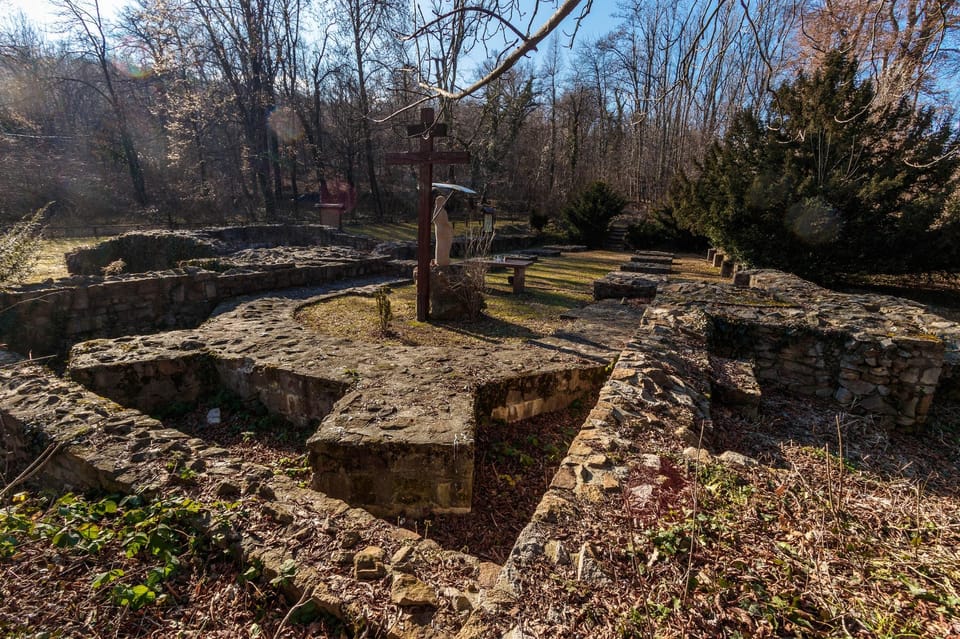
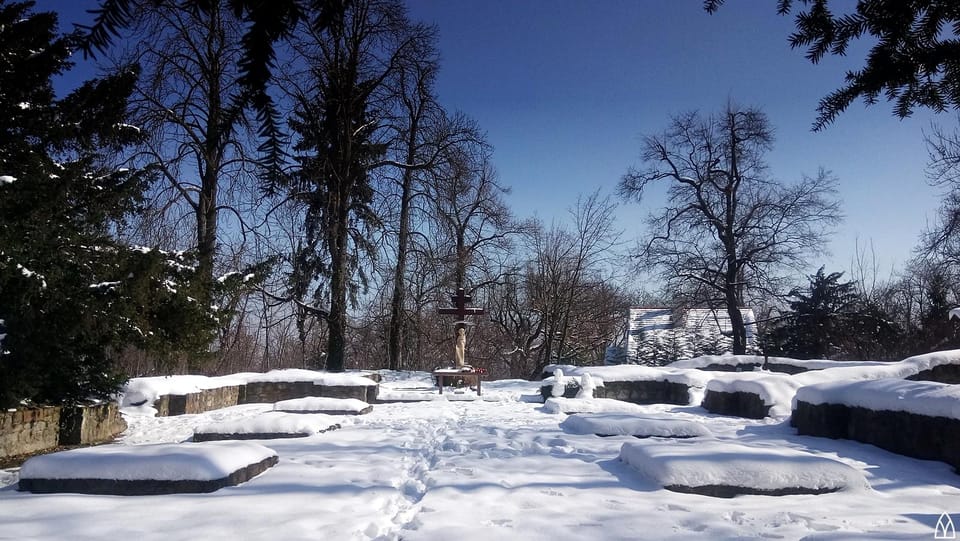
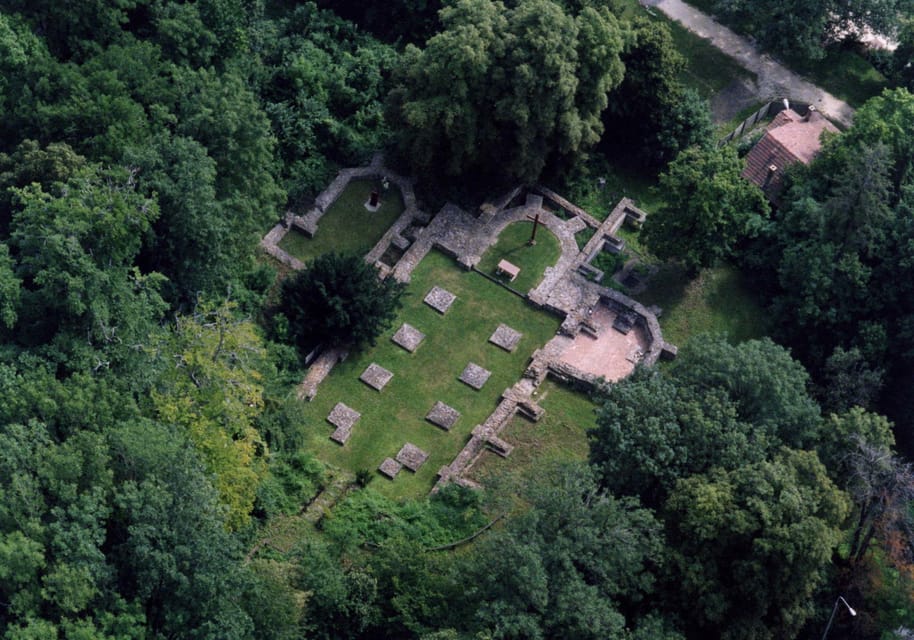
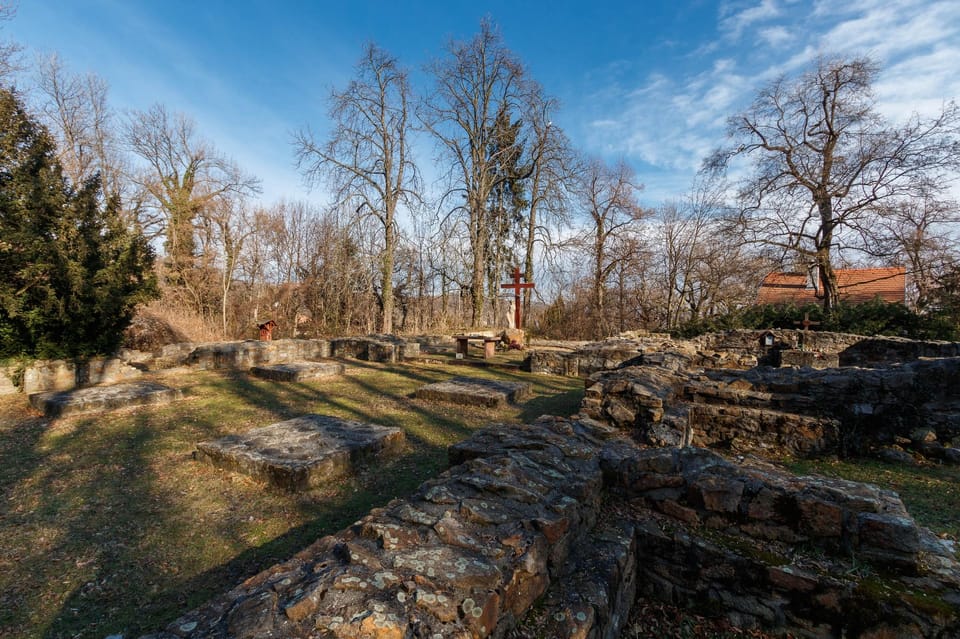
After the church, you head back down to the car for a short drive (about 30 minutes) to the Paulian Monastery ruins in Budaszentlőrinci—called Budaszentlőrinci pálos kolostor.
This is the part I’d circle if you want atmosphere. The ruins are the remains of a monastery built around 1300. The dramatic claim here is that the place held the remains of St. Paul. The ruins also gained reputation due to miraculous healings, and the monastic community was active for over two centuries until the Ottomans invaded the country.
You don’t rush this stop. There’s time to stroll through the ruins and take in the feel. In the best moments, it’s not about facts—it’s about silence and scale. Stone and ground that have been through centuries don’t need a script.
One review favorite was the altar-stone, so if you’re someone who likes to focus on a single object rather than scanning every wall, put that on your mental to-do list the moment you arrive.
This site is also well rated online: 4.7 on Google from about 121 visitors. That’s not a huge number, which can be a good thing. It suggests the experience is more about the place than about constant crowds.
The short walk back to the car: don’t treat the day as fully driving
A small practical detail matters here. The church area includes a short walking segment that adds up quickly if you’re wearing the wrong shoes.
After absorbing the church and views, you’ll walk back to the car. The walk described is about 1.5 km round trip. It’s not long, but it’s enough to remind you this is not a sit-and-stare tour.
If you’re the type to overpack layers, fine. But don’t overpack shoes that don’t grip well. Even a light walk becomes annoying if the ground is slippery.
Also keep water in mind. You’re outside for much of the day, and you’ll want the option to sip between stops.



Lunch time: grab street food, then keep going
Midway through the day, you get a 45-minute lunch break with a chance to pick up street food and local snacks. Meals and drinks are not included, so you pay for what you choose.
I like this kind of break because it prevents the common tour problem: everyone hungry, everyone grumpy, and nobody enjoying the next site. Here, you have a clear window to refuel and use the restroom.
One popular choice mentioned is langos, a classic Hungarian street food. If you want something easy to eat quickly, that fits the vibe of the day—handy, filling, and fast.
Whatever you pick, plan to pair lunch with water or tea if it’s available nearby. You’ll be happier for the viewpoint portion afterward.
Kaán Károly-kilátó: optional 30 minutes of uphill reward
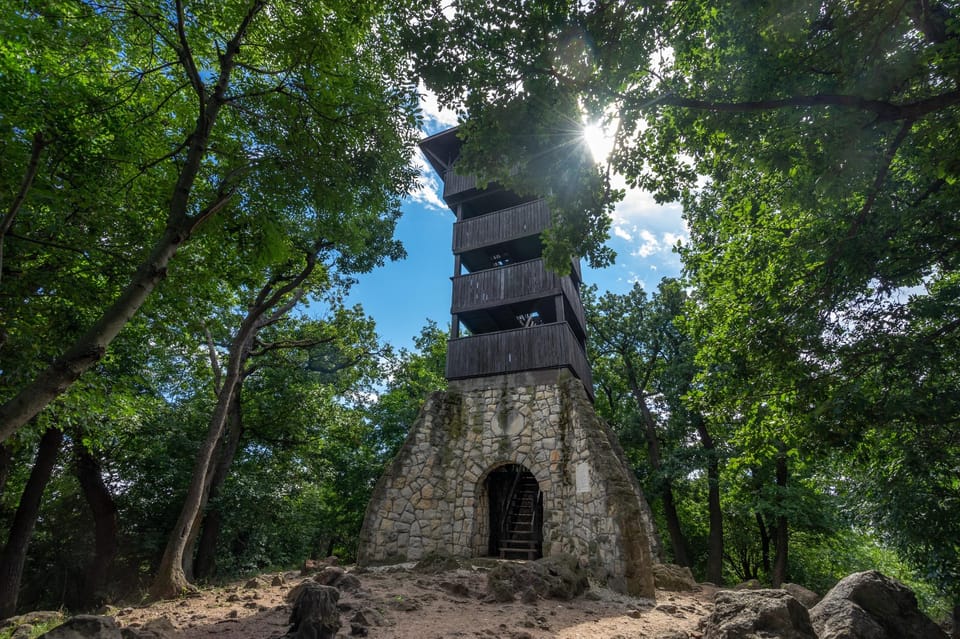
After lunch and the ruins, the day may include a short hike to Kaán Károly-kilátó, the lookout tower.
This hike is optional and free with the same fee. If you skipped it entirely, you still get the main spiritual and historical portion. But if you’re even mildly curious about views, this is the kind of effort that pays you back fast.
Here’s the practical math:
- You’ll walk about 1.1 km to the viewpoint.
- Total distance is about 2.2 km including the return.
- Expect around 110 m of elevation up and down.
- It’s roughly 30 minutes at a medium effort.
The reward is why people do it. From the tower you can see mountains on one side and the city on the other. Visibility can get impressive. In one case, visibility was later checked and measured at about 52 km on a map, which tells you that on clear days, the view is the main event.
The tower itself has a strong online rating: 4.8 from about 1,448 visitors. That suggests the climb is worth it for most people, as long as you’re comfortable with steps and uneven paths.
If your legs are tired after the ruins, make the call on the spot. The tour is designed so you don’t feel forced.
Zsolt and the Hungarian identity thread: language, religion, and questions
The guide experience is a big part of why this trip works. The program’s guide is named Zsolt, and the tour description highlights his work as an author of books tied to Hungarian linguistic exploration.
What I’d pay attention to is how he connects the stops into one conversation. Instead of history as dates on a board, you get history as questions:
- What language clues might say about origins
- What scripts and symbols might hint at early identity
- How religious practice shifts under politics and ideology
- What “present-day Hungary” means in lived belief
He’s also described as friendly, entertaining, and experienced, with international visitors across 57 countries mentioned. That matters because it usually means the guide knows how to explain complex topics in plain language.
If you enjoy tours where the guide has a point of view and can answer follow-up questions, this is your kind of day. If you want only neutral museum-style facts and zero personal interpretation, you might find the spiritual + linguistic angle a bit much. But if you like to think while you walk, it’s the best part.
And yes, you’re told the walk’s carved wooden figures cover key Hungarian identity questions, so you don’t just get scenery—you get a theme you can hold onto.
Price and what you actually get for $127

At $127 per person, this isn’t a bargain coach tour, but it also isn’t priced like a luxury private driver for a full day with no activities. You’re paying for the combination that makes it feel like a real experience:
- Private group format
- Professional English guide (Zsolt)
- Round-trip car transport from pickup points
- Entrance to the Church of Pilis
- Entrance to the Paulian monastery ruins
- A day structured around walking and guided interpretation
What you don’t get for that price is just as important. Meals and drinks are not included, so you should plan to budget for lunch and water.
Is it good value? For me, it comes down to this: you’re not just visiting two sites. You’re getting a guided narrative connecting present-day spirituality, medieval monastic life, and Hungarian identity questions. If that’s your interest, $127 for 5 hours with transport and entrances can feel fair.
If you only want views and don’t care about history, religion, or language questions, you could probably do it cheaper by hiring a driver or going by public transport. But you’d lose the thread that makes the walk memorable.
Who should book this spiritual walk (and who shouldn’t)
This tour makes the most sense for you if you:
- Like walking tours with a story, not just photo stops
- Want a mix of religion, history, and language
- Enjoy ruins and can handle uneven outdoor ground
- Want optional viewpoint time without committing too early
It’s not ideal if you:
- Have mobility impairments or use a wheelchair
- Weigh over 331 lbs (150 kg)
- Need a very low-walking day
- Are traveling with a baby under 1 year
Also, it’s worth knowing that alcohol isn’t allowed and nudity isn’t allowed. So keep it low-key and respectful—this is a sacred-sites day.
Should you book this day trip? My decision guide
Book it if you want to move beyond Budapest’s postcard version of Hungary. The best part is that you’re not just seeing old stones and new churches—you’re walking through questions about belief and identity that still matter.
I’d especially recommend it on a day with decent weather. Clear air boosts the odds of a strong view from Kaán Károly-kilátó, and good light makes the ruins and church grounds feel more alive.
Skip it if you hate moderate walking or you want a strictly factual history tour with no spiritual framing. You’ll get that here, but it’s braided with religion and language ideas, and the guide’s personal storytelling is part of the point.
FAQ
What is the duration of this experience?
It lasts about 5 hours in total.
Where are the pickup and drop-off locations?
Pickup is available in Budapest or Solymár, and drop-off is also in Solymár or Budapest.
Is it a private tour and what language is it in?
Yes, it’s a private group, and the live guide speaks English.
What is included in the price?
The price includes a professional guide, transportation by car, entrance to the Church of Pilis, and entrance to the Paulian monastery ruins.
Are meals included?
No. Meals and drinks are not included, though there is time for lunch and street food during the day.
Is the lookout tower hike included?
It’s optional. You can add the short hike to Kaán Károly-kilátó, and it’s described as free with the same fee. The walk is about 1.1 km one way (2.2 km round trip) with about 110 m of elevation up and down.
What should I bring for the walking parts?
Bring comfortable walking shoes, a camera, snacks, water, and weather-appropriate outdoor clothing.
Who is this tour not suitable for?
It isn’t suitable for people with mobility impairments, wheelchair users, people over 331 lbs (150 kg), or babies under 1 year.