REVIEW · BUDAPEST
Budapest: Aeropark Admission Ticket
Book on GetYourGuide →Operated by Légiközlekedési Kulturális Központ · Bookable on GetYourGuide
Tiny planes, big stories.
This Aeropark stop in Vecsés turns Hungarian aviation into something you can see up close: big aircraft outside, hands-on science-and-technology exhibits, and cockpit time where you pretend you’re flying an imaginary route. I like that it’s not just looking at planes behind glass. You actually walk around the aircraft fleet and get a feel for what pilots dealt with.
I especially love the mix of Malév-era aircraft and the large airplanes tied to the communist era. You’ll see the evolution of Hungarian aviation over the past 60 years, including Tupolevs from the former national air fleet, with models that still fly today. There’s also a very practical angle here—how tough flying used to be, and how much it meant when air travel was a luxury for many.
One thing to consider: you’re going to make your own way to Vecsés (no hotel pickup). If you hate transit planning, this may take a bit more effort than city sightseeing.
In This Review
- Key takeaways before you go
- Finding Vecsés and Repülőmúzeum without wasting time
- What 60 years of Hungarian aviation feels like in 90 minutes
- The outdoor Aeropark walk: seeing communist-era giants up close
- Malév and Tupolevs: the airline story behind the metal
- Cockpit role-play: the moment that turns facts into memory
- Interactive exhibits: science and aviation in plain language
- Guided option with a pilot: real anecdotes, not just facts
- Simulator on weekends: small add-on, easy decision
- Price and time: is $9 good value for a 1.5-hour visit?
- Who this Aeropark visit is best for
- Book or skip: my call
- FAQ
- Where is the meeting point for the Aeropark admission ticket?
- How long does the visit take?
- How much does the admission ticket cost?
- Is hotel pickup or drop-off included?
- Is the flight simulator included?
- How do I get there by public transportation?
- Is the attraction wheelchair accessible?
Key takeaways before you go
- Open-air Aeropark setting near Budapest Airport makes aircraft easy to appreciate up close
- Malév aircraft and Tupolevs show how Hungarian civil aviation evolved over 60 years
- Cockpit access and pilot role-play are the moments most people remember
- Optional guided tour with a pilot brings real in-air anecdotes to the planes
- Flight simulator is weekend-only and costs €2 extra when available
Finding Vecsés and Repülőmúzeum without wasting time
Budapest’s aviation museum day starts with getting to Vecsés, not with getting to a famous city landmark. The meeting point is Vecsés, Repülőmúzeum, 2220 Hungary. Plan for an easy, low-stress start: you have just 1.5 hours, so arriving on time matters.
If you’re using public transportation, take bus 200E all the way to the terminus: Budapest Airport Terminal 2B. Stay on the bus, then get off at the first stop after the terminus, which is called Repülőmúzeum. It’s a straightforward ride, but the “stay on until the first stop after” detail is worth following exactly.
You’ll also be glad to know the site is wheelchair accessible, so you can plan a smoother route through the outdoor area if mobility is a concern.
You can also read our reviews of more tours and experiences in Budapest



What 60 years of Hungarian aviation feels like in 90 minutes
The Aeropark is built around an idea that works for both curious adults and kids: take aviation history out of textbooks and put it back into metal and mechanics. The goal is to show technology, science, and the way Hungarian aviation changed over roughly six decades.
With a 1.5-hour visit, you’ll want to treat this like a focused sampler, not a slow museum marathon. You’ll spend most of your time outside and around the aircraft, then connect the dots with the interactive exhibits and the cockpit experience.
If you’re the type who likes context—how a fleet, a country, and a political era shaped what planes were available—this stop is a good fit. You’re not just looking at aviation as a series of cool objects. You’re seeing aviation as a changing system.
The outdoor Aeropark walk: seeing communist-era giants up close
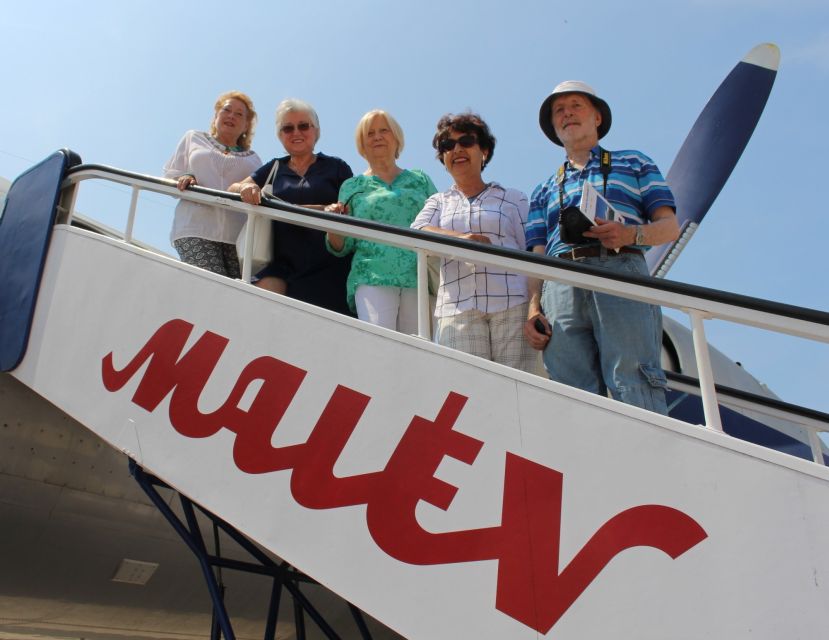
The open-air setting is half the value here. When you walk through the Aeropark, you’re not limited to one angle or one distance. You can approach aircraft, read their scale, and understand why certain planes were built for specific jobs.
You’ll get a chance to discover the largest airplanes of the communist era, which is exactly the kind of detail that makes aircraft history feel real. Big machines like these aren’t simply oversized. They reflect the aviation priorities and industrial thinking of their time—capacity, range, and the operational realities of that era.
While you’re walking around, keep an eye out for how the fleet connects to the broader evolution of Hungarian aviation. The experience is designed as a timeline through interactive exhibits, so it helps to pause briefly and connect what you see outdoors with what you learn inside the museum elements.
Practical tip: wear shoes you don’t mind getting used on uneven outdoor surfaces. The experience is outdoors-first, so comfortable walking gear pays off.
Malév and Tupolevs: the airline story behind the metal
One of the most compelling parts of the Aeropark is the connection to Malév, Hungary’s former national air fleet. This is where the planes stop being random shapes and start becoming part of a real national story.
You’ll see Tupolevs tied to Malév, including models that still fly today. That detail matters. It links the past to the present, reminding you that some aviation tech has a long operational life—even when the political and commercial context changes.
This part also helps explain why aviation history here isn’t just about technology. Flying isn’t only about aircraft. It’s about the people who used them, the routes they served, and the constraints of the era that shaped what was possible.
If you like aircraft history but you also care about culture and society, this is a sweet spot. You’re getting a science-and-technology museum experience with an aviation foundation that feels grounded.
Cockpit role-play: the moment that turns facts into memory
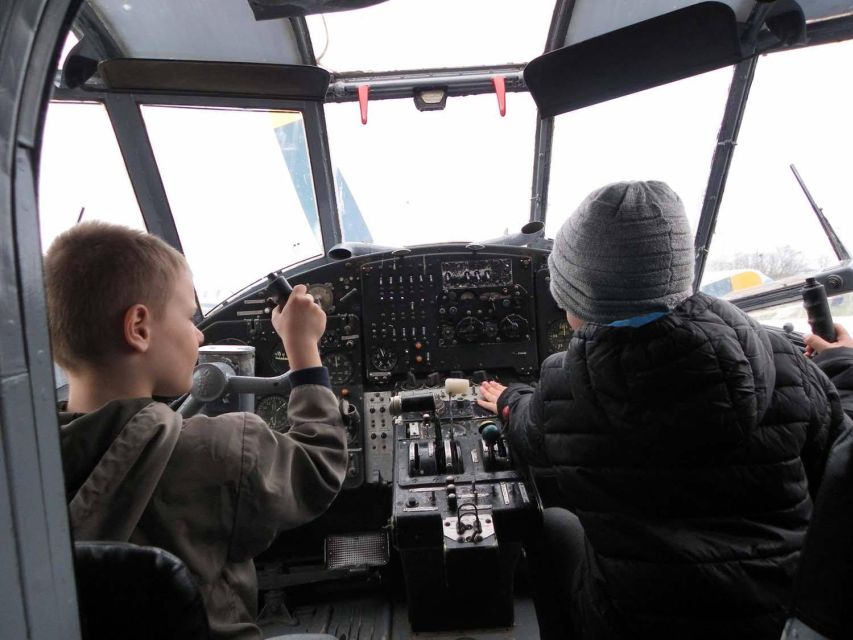
The cockpit experience is the big “I get it” moment. You’ll climb into the cockpit and pretend you’re the pilot, with time to explore what it feels like to be seated where the crew would sit. There’s also a playful element: you’ll fly across the imaginary globe, which is a fun way to connect the aircraft you’re standing near with the idea of real-world navigation and travel.
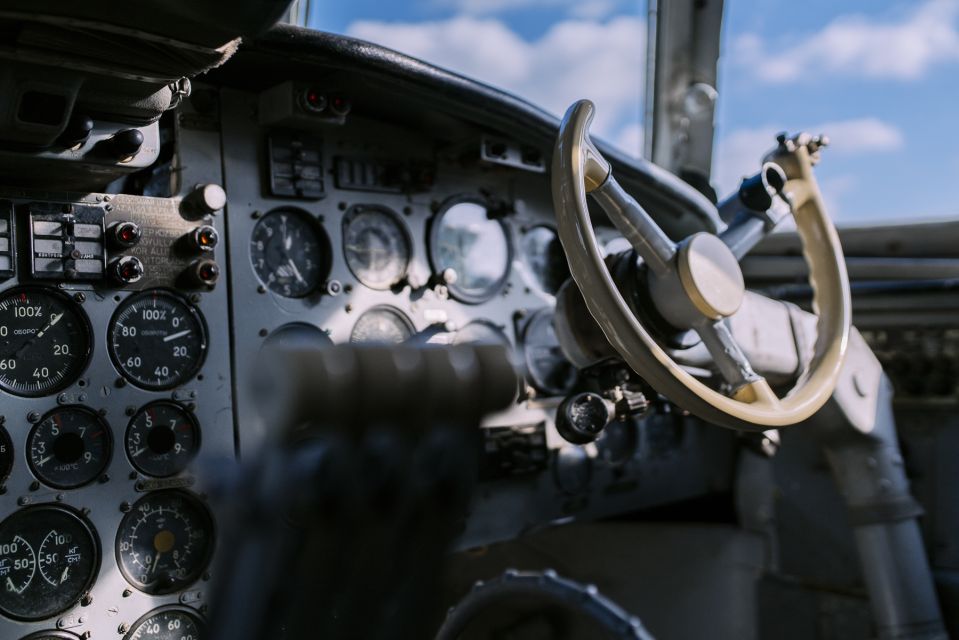
Why this works: aviation history can be abstract if it stays on labels. But when you sit in the cockpit, you instantly understand why cockpit design, access, and instruments mattered. Even without a full technical explanation in your lap, you can sense what pilots dealt with—visual focus, workload, and the physical layout of flying.
I also like that this moment is attractive for families. Even if you’re not deeply technical, the cockpit makes the experience feel immediate. Kids often remember this part most, simply because it feels like an activity, not a lecture.
Time-saver tip: don’t wait until the end to do the cockpit. If you’re running tight, choose the cockpit moment early so you’re not stuck choosing between aircraft photos and your main attraction.





Interactive exhibits: science and aviation in plain language
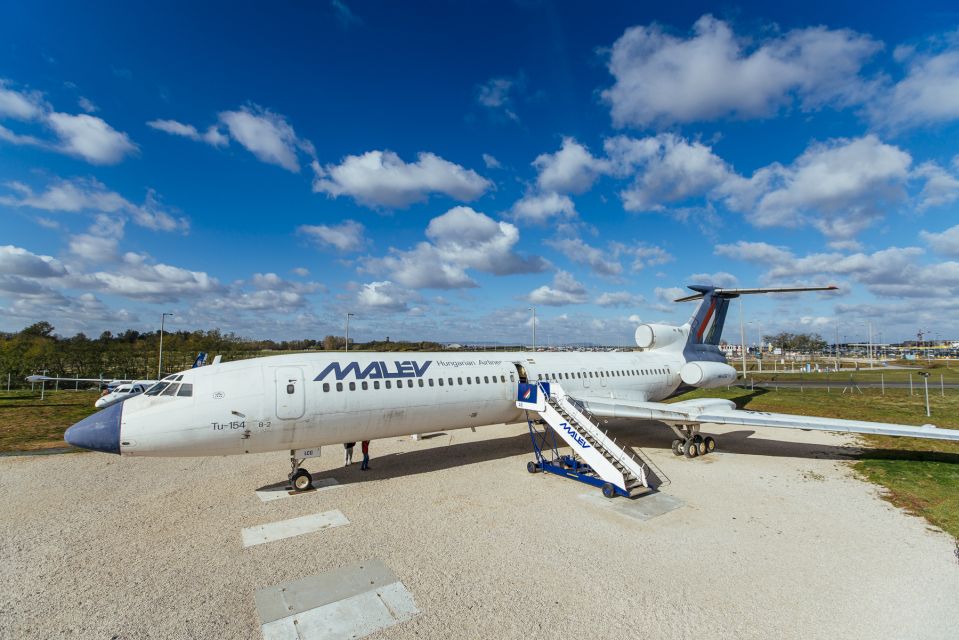
Besides aircraft, the Aeropark focuses on interactive exhibits tied to technology and science. The aim is to help you understand the evolution of Hungarian aviation and what made flying challenging.
You’ll learn how difficult flying could be just a few years ago, when air travel was still a luxury for many. That’s not a random historical note. It changes how you interpret everything you see: planes aren’t only machines. They’re part of an access story—who could fly, how travel worked, and what it took to make the journey happen.
Even if you’re not an aviation nerd, this is a smart approach. It gives you context so you don’t feel like you’re just walking between parked giants. You’ll leave with a clearer sense of why the fleet looked the way it did.
Guided option with a pilot: real anecdotes, not just facts
There’s an optional guided tour with a pilot. This is worth considering if you want more than the basic self-guided flow.
With the pilot option, you explore the museum with someone who has flown the planes on display, and you hear anecdotes from their days in the air. That kind of perspective turns “aircraft history” into “how it felt,” which is exactly what many museums lack.
I’d choose this version if you:
- want storytelling that connects the aircraft to real-world flying,
- enjoy aviation but don’t want to read your way through it,
- like asking questions and getting straight answers from someone with experience.
If you’re mainly there for outdoor aircraft spotting and cockpit time, the standard admission ticket may be enough. But if you can afford the guided approach, it typically boosts the meaning of the visit.
Simulator on weekends: small add-on, easy decision
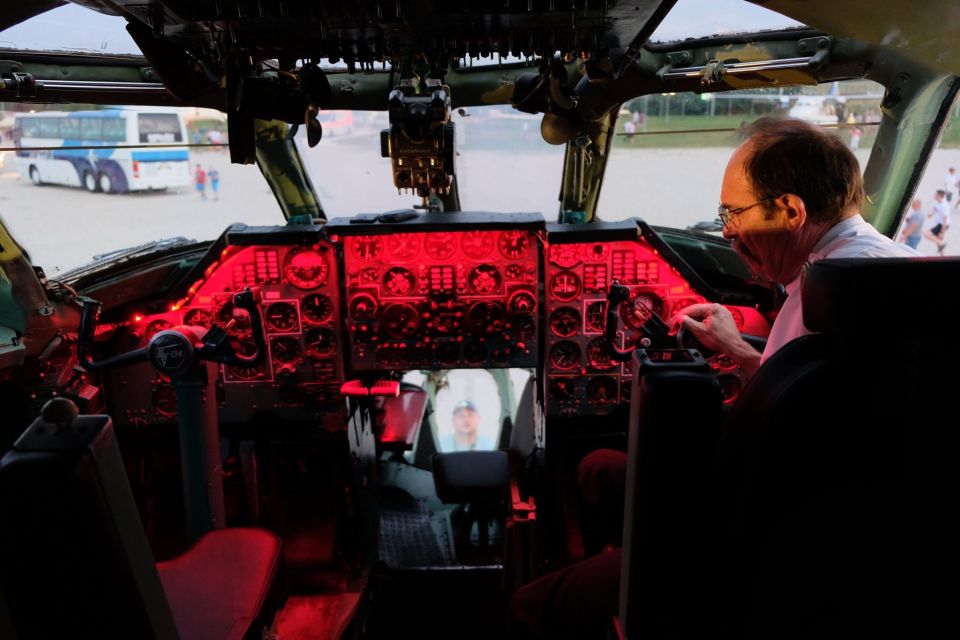
The flight simulator is not included with the admission ticket. It’s only in service during Saturday and Sunday, and it costs an additional €2.
Think of the simulator as a bonus, not the core event. The main experiences are the open-air museum walk and cockpit time, which are included in your ticket. If you’re visiting on a weekend and you enjoy hands-on tech, paying the small extra fee can add fun, especially for families.
If you’re visiting on a weekday, don’t plan around it. Use that time instead to focus on the aircraft and cockpit.
Price and time: is $9 good value for a 1.5-hour visit?
At $9 per person, this is a value-heavy experience—especially because you’re not just paying for entry. Your ticket gives you access to an outdoor aircraft museum experience, interactive exhibits, and cockpit role-play.
The visit is also short on purpose: 1.5 hours is enough to get the scale of the fleet, make time for the cockpit, and absorb the science-and-aviation context. If you try to stretch it into a full-day plan, it can feel like you rushed. But as a focused stop, it works.
The only meaningful cost add-on mentioned is the simulator fee on weekends (€2). So, for most people, budgeting stays simple.
Who this Aeropark visit is best for
This is one of those tours that fits a wide range of travelers if you match your expectations.
Great for:
- families with kids who want hands-on moments (especially cockpit time),
- aviation fans who want a concentrated look at Hungarian aircraft and Malév-era history,
- anyone who likes science and technology museums but wants it connected to real aircraft.
Less ideal for:
- people who want a huge museum campus and multiple hours of indoor exhibits,
- anyone who hates outdoor walking or needs strict taxi-based logistics (since you must reach Vecsés yourself).
If you’re doing a day near the airport area, this is a smart way to turn transit-adjacent time into something memorable.
Book or skip: my call
I’d book this admission ticket if you want a high-impact aircraft experience for very little time and money. The cockpit role-play and the outdoor Aeropark setting make it more than a passive museum visit, and the Malév/Tupolev focus gives it a distinctly Hungarian angle.
I’d be more cautious if you dislike transit planning, because there’s no hotel pickup. Also, if you’re hoping for a long, deep museum day, the 1.5-hour duration may feel short.
If you’re choosing between a “quick plane fix” and “serious aircraft research,” this leans toward the first. And that’s exactly why it’s such good value.
FAQ
Where is the meeting point for the Aeropark admission ticket?
The meeting point is Vecsés, Repülőmúzeum, 2220 Hungary.
How long does the visit take?
The duration is 1.5 hours.
How much does the admission ticket cost?
The price is $9 per person.
Is hotel pickup or drop-off included?
No. Hotel pickup or drop-off is not included.
Is the flight simulator included?
No. The simulator is not included, and it’s only in service on Saturday and Sunday for an additional €2.
How do I get there by public transportation?
Take bus 200E to the terminus at Budapest Airport Terminal 2B. Stay on the bus, then get off at the first stop after the terminus, named Repülőmúzeum.
Is the attraction wheelchair accessible?
Yes, the experience is wheelchair accessible.