
REVIEW · BUDAPEST
Budapest City Segway / Sightseeing Tours Buda+Pest
Book on Viator →Operated by ABC Segway Tours Budapest · Bookable on Viator
Budapest from a Segway feels like cheating. You glide fast, get guided history, and still have time for photos at major stops. The route stitches together Buda and Pest so you get the big picture without spending your day in lines and on slow sidewalks.
What I like most is the easy training first, so you’re not wrestling the Segway while the group is staring at you. I also really appreciate how the guides keep it moving while still answering questions; names that came up in the reviews include Erik, Alex, Raed, Shapal, and Fouchs Ari, and they’re repeatedly praised for making people feel safe.
One possible drawback: many stops are brief, about 5 minutes each, so it’s not the tour for deep museum time. If you want to go inside places like the Parliament building or the major museums, you’ll likely need to plan a separate visit.
In This Review
- Key points before you book
- Learning the Segway without losing time
- Buda highlights: Military views, Fisherman’s Bastion, and castle scenery
- To the river crossing: Chain Bridge and Parliament from the road
- St. Stephen’s Basilica and Andrássy Avenue: elegant Budapest on a roll
- Elisabeth Bridge, Margaret Island, and parks where the city cools off
- Ferris wheel and the market: easy wins for photos and snacks
- Castle, hills, and the big panorama loop on Gellért Hill
- Memorial stops: Shoes on the Danube Bank and the House of Terror
- Price and what you’re actually buying for $47.18
- A few smart tips so your ride feels effortless
- Who this tour is best for (and who should skip it)
- Should you book this Segway tour?
- FAQ
- How long is the Budapest City Segway sightseeing tour?
- Where does the tour start and end?
- How much does it cost?
- What language is the tour offered in?
- Do I need prior Segway experience?
- Are helmets provided?
- What are the child requirements?
- How big is the group?
- Is free cancellation available?
Key points before you book
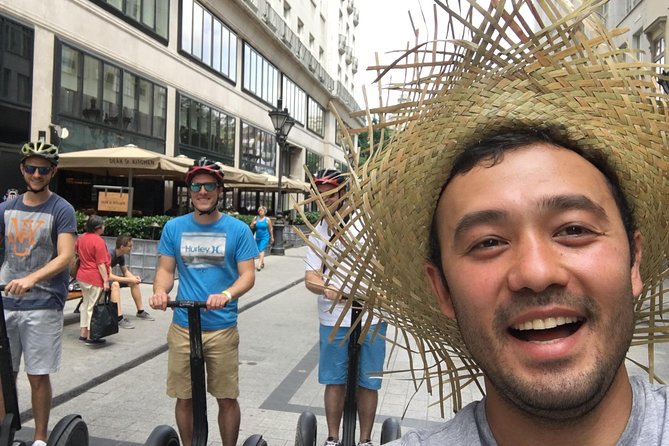
- 15–20 minute Segway training so beginners can get confident quickly
- Helmets included (compulsory) for a safer-feeling ride
- A guide with live commentary and frequent photo stops at major landmarks
- Route built around stops across Buda and Pest, including Chain Bridge and Buda Castle areas
- Short sightseeing bursts (roughly 5 minutes at each listed stop), ideal for orientation
- Small group size (max 14), which tends to make the experience smoother
Learning the Segway without losing time
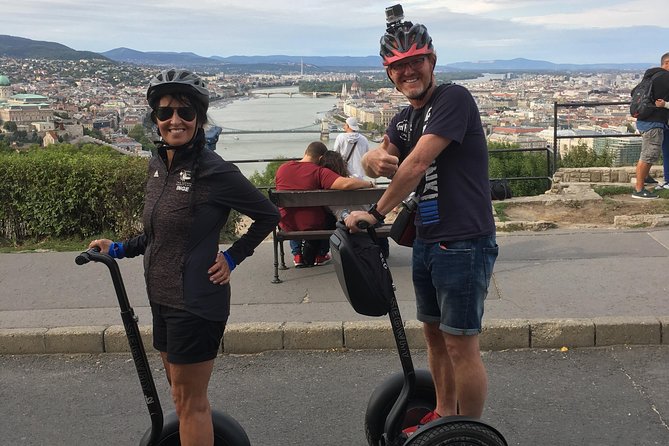
This tour starts with real training, not just a quick demo. You’ll get instruction for around 15 to 20 minutes, plus a helmet that’s included in the price. Most people can participate, and the reviews point out that the ride feels manageable fast once you’re shown what to do.
Segways have a learning curve, but the guides seem to focus on confidence and control. Several reviews mention that first-timers felt safe and that extra help was available when needed. One detail I’d take seriously: you’ll move faster when you’re decisive, so don’t overthink the controls once you’re rolling.
A practical note: the tour mentions rain gear and gloves if needed. That’s smart for Budapest, where weather can change quickly. Wear layers, and bring something you can move in. If you get cold, you’ll at least have the option to use what the team provides.
You can also read our reviews of more city tours in Budapest



Buda highlights: Military views, Fisherman’s Bastion, and castle scenery
Once you’re comfortable, the tour swings into classic Buda territory. Early on, you stop at the Museum of Military History area. Even if you don’t go inside, the point is orientation: you’re learning how Buda sits above the river and how the city’s defenses and history shaped the landscape.
Next comes Fisherman’s Bastion, one of those places that looks like a postcard even before you start walking. The value here is timing and viewpoint. On a Segway, you’re not spending your day climbing stairs and squeezing through crowds. You get a quick stop to take in the Danube views and capture the skyline.
From there, you move toward Buda Castle, the Hungarian kings’ historic palace complex. This is where Budapest feels royal and layered. The tour gives you just enough time to see the scale of the castle area and understand why it’s such a focal point for the city story. Then you’re off again—because the whole idea is to cover ground efficiently.
If your route includes Matthias Church during the sweep, pay attention to the character of the building from the outside. Even a brief look gives you a sense of how Buda’s religious and cultural layers stack up over time.
To the river crossing: Chain Bridge and Parliament from the road
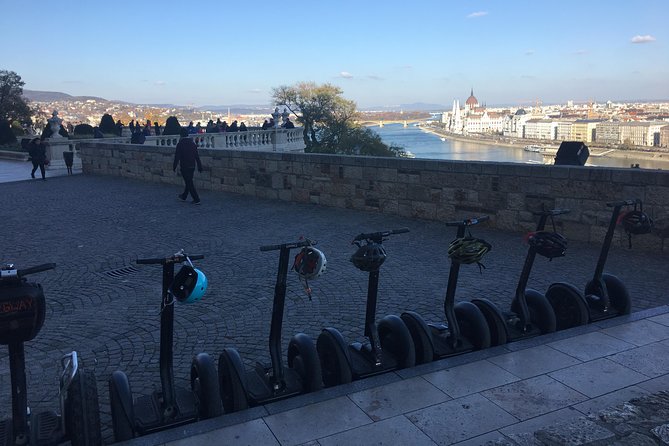
The standout “wow” moments in Budapest usually involve the river, and this tour is built to hit them. You’ll pass by the Chain Bridge area, including the lion statues. From the bridge zone, you get a clear view of how the city is split—and how the bridges stitch it back together.
Then it’s time for Hungarian Parliament Building viewing. This landmark is massive, and it’s hard to appreciate its scale from one slow street corner. A guided Segway stop helps here: you can reposition quickly for better sightlines instead of walking a mile just to find a good angle.
A lot of visitors love to take their time with Parliament. This tour won’t replace that. Think of it as the “set your bearings” stop. You’ll come away knowing where everything is, which makes a later return much easier if you decide you want more time.
St. Stephen’s Basilica and Andrássy Avenue: elegant Budapest on a roll
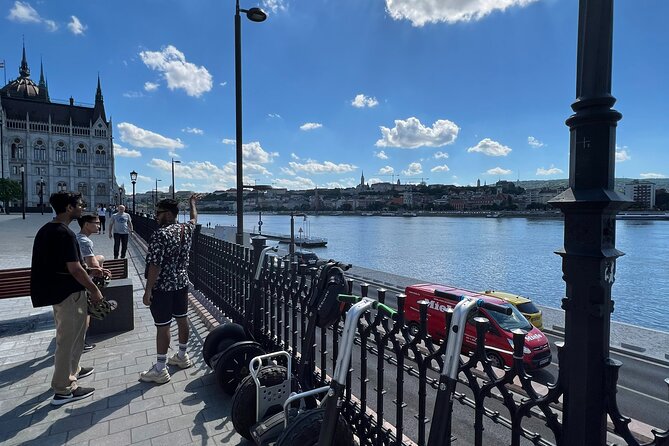
After the Danube-side landmarks, the tour shifts toward grand architecture and city boulevards. St. Stephen’s Basilica (named for Hungary’s first king, Stephen) is a great visual anchor. Even a short stop works because you’re learning what to look for: the basilica as both a religious center and a symbol of Hungary’s long timeline.
Then you’ll ride along Andrássy Avenue, described in the tour info as elegant and upscale, with art nouveau buildings and the feel of a major European boulevard. This matters for your experience because it changes the tempo. You’re not constantly climbing hills or scanning river views. You’re moving through a more urban, street-life side of Budapest, which helps you understand the city isn’t only about monuments—it’s also about everyday style.
If the tour includes the Hungarian State Opera House stop, you’ll get a chance to see why the building draws attention even when you don’t go inside. From outside, you still get the sense of grand design meant to impress.
Elisabeth Bridge, Margaret Island, and parks where the city cools off
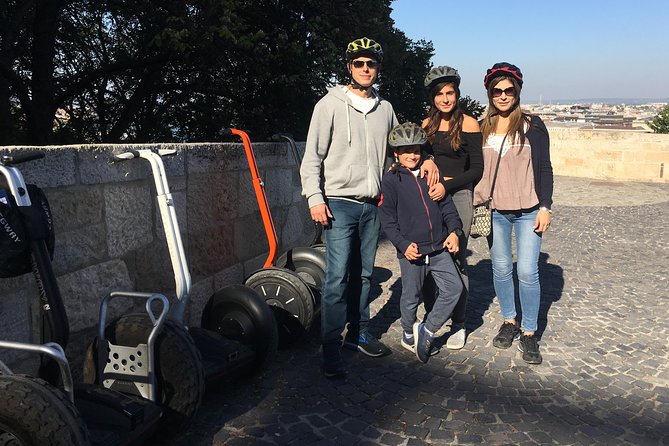
Budapest has a talent for mixing serious history with breathing space. You’ll likely pass Elisabeth Bridge and head toward the quieter feel of Margaret Island. This is where the city’s vibe softens: trees, open views, and the sense that you’re no longer just marching between icons.
The tour then continues toward Margaret Bridge. These bridge stops are more than photo breaks. They teach you how Budapest’s geography works—where the river channels the movement, and how the island parks create a pause between districts.
And yes, the tour includes time at Széchenyi Baths and Pool. Even if you’re not planning to soak right then, the bath complex is a Budapest personality trait. It’s also a useful landmark for planning later. You’ll see where it sits and how it fits into the city layout, which helps if you want to book your own time slot at another point.






Ferris wheel and the market: easy wins for photos and snacks
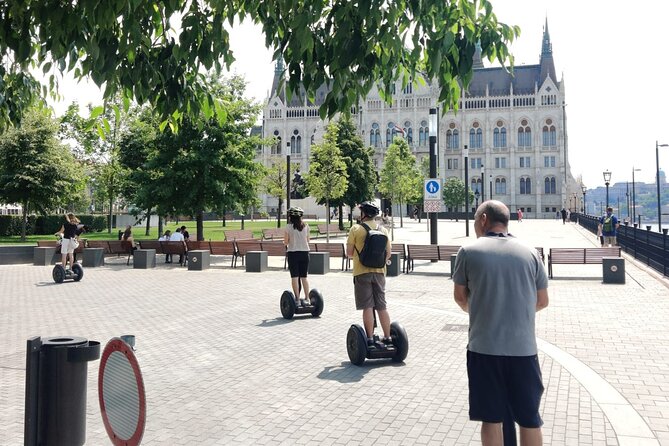
One of the smartest parts of the itinerary is that it doesn’t only aim at monuments. You’ll have a chance to stop near the Ferris Wheel of Budapest (Budapest Eye), giving you a bright, modern contrast to all the older stone and domes. It’s a good orientation point: from here you can imagine how the skyline would look from above, then decide if you want that view later.
Next is Central Market Hall. A market stop is valuable even during a quick segment because it gives you practical context for Budapest food and souvenirs. You’ll know where the market is and what the space feels like, which helps if you plan a longer visit during another day.
If you want food, keep expectations realistic. A Segway tour stop is usually about position and photos, not a long shopping marathon. But you’ll get enough to decide what you’d like to do after you’ve left the Segway.
Castle, hills, and the big panorama loop on Gellért Hill

As the tour presses toward Buda’s height, you’ll hit Gellért Hill and the Gellért Hill Cave. A hill stop can sound like a minor detail until you feel the view opportunities. On Segway, you can cover the steep “big picture” moments without doing a full hike.
Then the route climbs toward Citadella, a fortress on Gellért Hill with strong panoramic views over Budapest. This is one of the best uses of Segway power: the viewpoint payoff is big, and you aren’t spending your energy just getting there. The tour info also highlights a World War II history museum component and the viewpoint itself, so you’re not only looking—you’re placing the scenery into a historical context.
If you’ve done other city tours that focus only on buildings, you’ll appreciate this part for showing how geography and conflict shaped the city. It’s the same city, but from a higher, more strategic angle.
Memorial stops: Shoes on the Danube Bank and the House of Terror
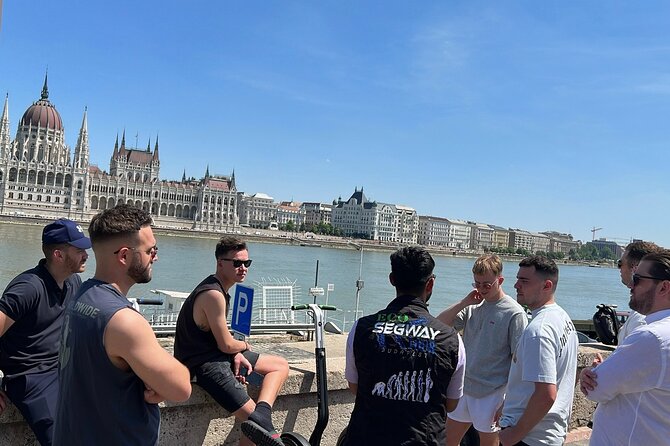
Budapest doesn’t shy away from painful history, and this tour includes major memorial content. You’ll stop at the Shoes on the Danube Bank, which is a stark memorial. Even a brief visit can hit hard because it forces you to slow down for a moment and connect the riverfront to what happened here.
The tour also lists stops at the House of Terror and the Hungarian National Museum areas. The important practical truth: this Segway experience is designed for seeing and understanding quickly, not for reading every caption for an hour. So use these stops to learn what you want to revisit later. If something grabs you—especially within 20th-century history—this tour can be the spark that tells you where to go deeper on your own.
Price and what you’re actually buying for $47.18
At about $47.18 per person, the value comes from what’s bundled, not just the distance. You’re paying for a guided experience with Segway use, helmets, and a training session that helps beginners get through the first learning curve. You’re also paying for live commentary and the “best spots” photo and video support.
The inclusion of photo/video matters more than you might think. Budapest is a city where the best angles often take a second try. If the guide helps you get the shot while you’re focused on riding, you save time and frustration. Reviews back this up with praise for helpful photos.
Group size also affects value. With a maximum of 14 travelers, you tend to get smoother instruction and fewer long waits. And since most of the tour is built around quick stops, you don’t burn a full day just getting from one site to the next.
One note on expectations: gratuities aren’t included, and coffee or tea isn’t included either. That’s normal. Just budget for small extras if you plan to linger afterward.
A few smart tips so your ride feels effortless
Here’s how to make the most of it when the tour is moving fast:
- Arrive ready to practice controls. If you can follow directions with a calm brain, the training time becomes a confidence boost instead of a stress test.
- Bring layers. The tour can include cold stops and quick photo moments. Even if the provider offers rain gear and gloves when needed, your comfort still matters.
- Use the guide’s history like a map. The stops are short, so ask one or two questions that connect the sights to the bigger story. Guides like Raed and Erik were repeatedly praised for staying helpful and engaging.
- Plan your deeper visits after the Segway. If any place stands out—baths, museums, or memorials—use the Segway as orientation, then return on your schedule.
Who this tour is best for (and who should skip it)
This is ideal if you want a fast, guided overview and you don’t want to spend your day doing steep stairs, long walks, or crowd dodging. It’s also a nice family option when kids meet the requirements: children must weigh at least 35 kg and be at least 8 years old.
It’s also great for couples or solo travelers who want a structured route but don’t want the rigid, stop-and-wait feeling of some group tours. Reviews repeatedly highlight the ease of mastering the Segways and the guides’ safety focus, which is exactly what you want on a first-timer activity.
You might choose something else if you want long, slow museum time. This experience is more about getting the big sights and learning the context quickly than spending hours inside buildings.
Should you book this Segway tour?
I’d book it if you’re in Budapest for a short time and you want a hit list with context. The combination of quick Segway training, a professional guide, and stops at major landmarks like Fisherman’s Bastion, Chain Bridge, St. Stephen’s Basilica, Heroes’ Square, and Gellért Hill makes it a strong first-day—or second-day—plan.
I’d hesitate if you’re the type who needs lots of quiet time at each place. The tour is designed for movement, and the short stop format means you’ll likely want follow-up visits anyway.
If you like the idea of getting your bearings fast, riding in a small group, and letting the guide handle the route while you enjoy the city on two wheels, this one earns its reputation.
FAQ
How long is the Budapest City Segway sightseeing tour?
The duration is listed as approximately 1 to 5 hours, depending on the option you choose. The Segway training normally lasts between 15 and 20 minutes.
Where does the tour start and end?
The meeting point is Budapest, Zoltán u. 11, 1054 Hungary. The tour ends back at the meeting point.
How much does it cost?
The price is $47.18 per person.
What language is the tour offered in?
The tour is offered in English.
Do I need prior Segway experience?
No. The tour includes a training session and notes that most travelers can participate.
Are helmets provided?
Yes. Helmets are compulsory and included in the price.
What are the child requirements?
Children must be at least 8 years old and weigh at least 35 kg.
How big is the group?
The tour has a maximum of 14 travelers.
Is free cancellation available?
Yes. You can cancel for free up to 24 hours in advance for a full refund. If you cancel less than 24 hours before the start time, the amount paid is not refunded.