REVIEW · BUDAPEST
Budapest: Big Bus Hop-On Hop-Off Tour & Danube River Cruise
Book on GetYourGuide →Operated by Big Bus Budapest · Bookable on GetYourGuide
Budapest clicks into place fast with this pass. I like the simple way the buses cover big sights like the Hungarian Parliament Building and Margaret Bridge, and I like that your ticket also includes a Danube River Cruise plus a guided Pest walk. One thing to plan for: audio and boarding can be hit or miss when it’s crowded, and the step up onto the bus may feel awkward.
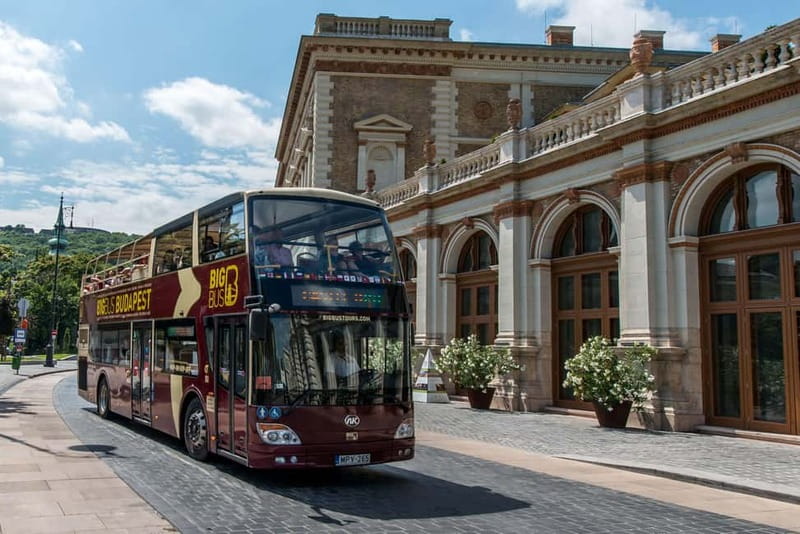
This is a classic “get your bearings” combo in one ticket: hop on and off at 27 numbered stops, then add a 1-hour cruise and a 1-hour walking tour so you’re not stuck only looking out a window. In hot months the buses run air-conditioned, and in winter they’re heated, which makes a big difference in comfort.
The value is strongest if you’re trying to see the top sights without building an exact itinerary. If you want total independence but hate structured timing, the included cruise’s time window and the fixed walking-tour start may feel a little limiting.
In This Review
- Key things I’d focus on before you go
- The Big Bus deal: why this combo works in Budapest
- Stop-by-stop: St. Stephen’s Basilica to Parliament (and the bridges that frame the views)
- Pest’s big landmarks and “easy to explore from here” stops
- The café-and-shopping stops that keep Pest feeling real
- The bridges and “river edge” viewpoints toward Buda
- Buda Castle and the Danube’s postcard stretch
- The payoff: Parliament at river level
- The 1-hour Pest walking tour: Shoes on the Danube Bank to Chain Bridge
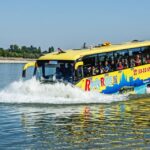
- Danube River cruise (11:00am–5:00pm): Parliament, National Theatre, Chain Bridge, and Royal Palace
- Audio commentary in 16 languages: how to get more from every ride
- Price and logistics: where the value comes from (and where it can wobble)
- Who should buy the Big Bus Budapest + Danube combo?
- Should you book this Budapest bus and Danube combo?
- FAQ
- What’s included with the Big Bus Budapest ticket?
- How long is the Danube River cruise, and when can I take it?
- When does the guided walking tour start?
- Where do I meet to redeem or join the tours?
- Is audio commentary provided on the bus?
- Is the tour wheelchair accessible?
Key things I’d focus on before you go
- Hop-on hop-off convenience across both banks means you can choose when to linger near views.
- Danube cruise included with your ticket gives you the best angles of Parliament and the Castle area from the water.
- A guided 1-hour walk in Pest adds context that the bus stops can’t explain.
- Audio in 16 languages helps you follow along even if you’re juggling multiple stops.
- Most stops are landmark-adjacent, so you’re not stuck commuting between far-flung areas.
- Crowds can affect comfort and sound, so build in a little flexibility.
The Big Bus deal: why this combo works in Budapest

Budapest can feel like two cities stacked on top of each other. The Danube splits the scene: Pest stretches across the flatter eastern side with grand avenues and busy squares, while Buda climbs into Castle Hill with sweeping river views.
This ticket tackles that split the practical way. You get an open-top bus with hop-on freedom, so you can build a route around your energy level. Then you get two “best-view” upgrades that do the heavy lifting for you: a guided walk in Pest and a 1-hour cruise on the Danube. Put together, it’s a fast path to seeing the musts while still leaving space for detours—like deciding you want more time at the thermal baths or a longer stop near Váci Street.
Also, the bus is designed for comfort. In summer it’s air-conditioned, and in winter it’s heated. That matters when you’re waiting for the next bus or riding between stops.
You can also read our reviews of more boat tours in Budapest



Stop-by-stop: St. Stephen’s Basilica to Parliament (and the bridges that frame the views)
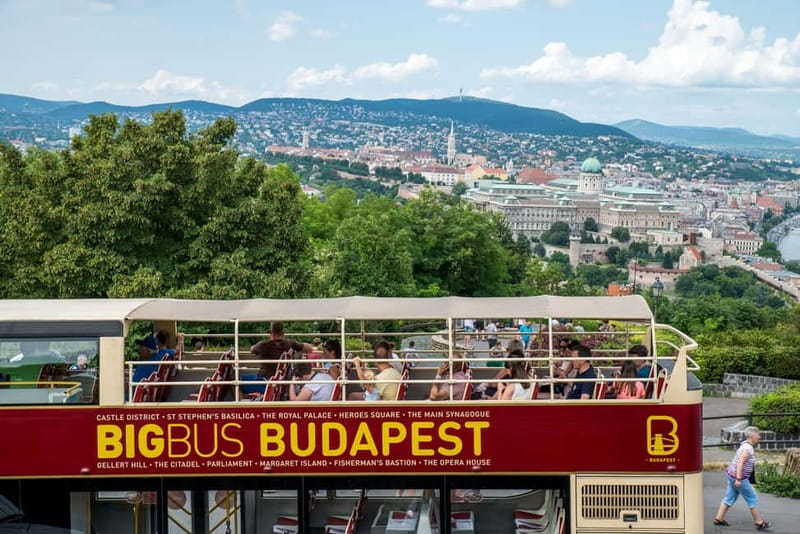
Your meeting point is József Attila u. 24, and you’ll present your booking confirmation to staff either at the Big Bus office or with a crew member on-board. From there, the main sweep of the route is built around the central landmarks people come to Budapest for.
Here’s how the stops shape the day:
Pest’s big landmarks and “easy to explore from here” stops
- St. Stephen’s Basilica (pass by): Even from the bus, you’ll get the silhouette of one of the city’s most recognizable churches. If you want photos, this is a good place to hop off early and catch the façade from different angles.
- Chain Bridge (pass by): This is a must-see for first-timers. The bridge also works as a visual divider—on one side you feel the buzz of Pest; on the other you’re pointed toward the Castle view.
- Gresham Palace (pass by): A good “downtown Budapest” marker. It’s a helpful stop to orient yourself to the area around Deák Ferenc tér.
- Deák Ferenc tér (pass by): Think of this as a hub. If you want to re-route on the fly, this stop is handy because it’s central to getting around.
- Dohány Street Synagogue (pass by): One of the city’s landmark religious buildings. The bus keeps it easy to spot, but if you care about architecture, you’ll likely want extra time off-bus.
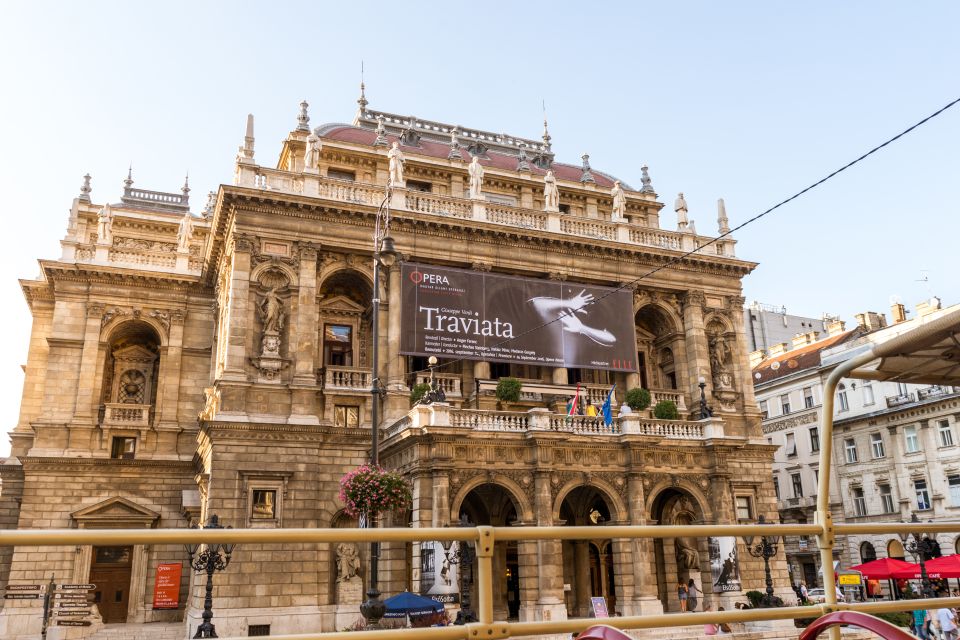
- Hungarian State Opera House (pass by): Another stop where the bus gives you a good look from the street. Even if you don’t schedule a performance, it helps you place Andrassy Avenue in your mental map.
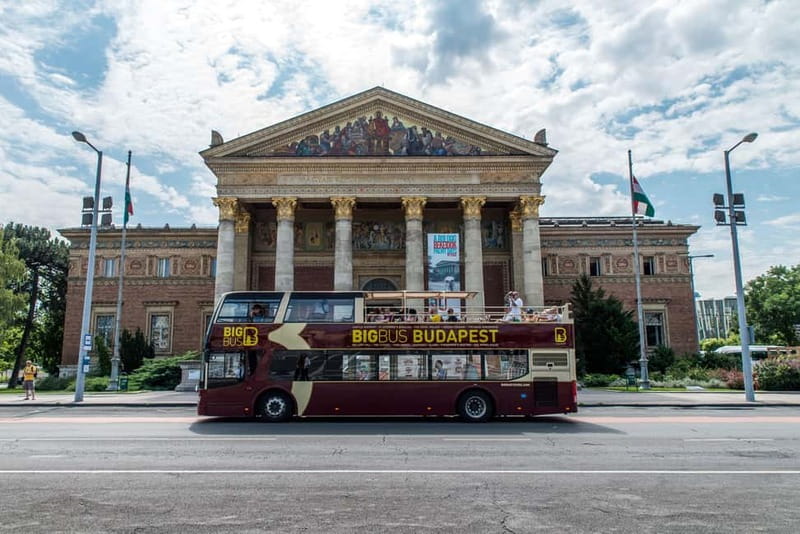
- Heroes’ Square (pass by): You’ll see it as a grand city monument moment. If you’re into statues, symbolism, or wide open plazas, plan a longer break here.
- Széchenyi Thermal Bath (pass by): Perfect for deciding if you want to swap sightseeing time for a soak. The stop is close enough that you can pop out for a quick look, then return later if you’re unsure.
- Museum of Fine Arts (pass by): Great for anyone who likes museum buildings even if you don’t go inside. It’s also useful for connecting where you are to the city’s larger cultural axis.
- Budapest Zoo and Botanical Garden (pass by): This is more of a “green space and family option” stop. If you’re traveling with kids, it’s convenient; if you’re not, you may use it as a break from the monuments.
- Keleti (Budapest-Keleti) (pass by): A major rail area. Even if you don’t plan to ride trains, it’s useful as a waypoint because the surrounding neighborhood is more “local transit reality” than tourist centerpiece.
The café-and-shopping stops that keep Pest feeling real
- New York Palace Café (pass by): Even if you don’t go in, the stop helps you connect Budapest’s grand old-world interiors to the streets around them.
- Astoria (pass by): Another practical orientation point. If you’re tired of climbing, Astoria can be a relief stop because it sits in the middle of the city’s daily rhythm.
- Váci Street (pass by): This is your go-to for walking a shopping-and-streetlife corridor. It also gives you a change of pace after the big monument views.
The bridges and “river edge” viewpoints toward Buda
- Elizabeth Bridge (pass by): It’s a second bridge taste besides Chain Bridge. If you’re trying to compare angles, this one helps you see how different bridges frame the river.
- Gellért Baths (pass by): A strong landmark for anyone thinking about baths. The bus stop makes it easy to match the baths to your own schedule, since you can decide quickly if you want to commit later.





Buda Castle and the Danube’s postcard stretch
- Buda Castle (pass by): The big one. Even if you don’t have time for the full castle complex, seeing it from the bus helps you understand why everyone takes photos from the river.
- Margaret Bridge (pass by): This bridge links zones and also gives you that “Budapest from above the waterline” feeling. If you’re photo-obsessed, this is a great place to stop and reset your framing.
- Margaret Island (pass by): When you want a breath of greenery without leaving the city’s center, this stop points you toward a more relaxed stretch along the river.
The payoff: Parliament at river level
- Hungarian Parliament Building (pass by): This is the signature view stop on the loop. Even if you’ve seen photos, the scale hits differently when you’re actually near the Danube corridor.
- Arrive back at József Attila u. 24: The route closes right where you started, which makes it easier to plan meals and transport.
Practical tip: use the bus like a sightseeing timer. If you see a stop that looks like a place you’ll want more time, hop off the first time you pass it. Otherwise you can end up doing “photo-only runs” while you’re still hungry for deeper exploration.
The 1-hour Pest walking tour: Shoes on the Danube Bank to Chain Bridge

The included guided walk is a fast way to add meaning to the landmarks you’ve already spotted from the bus. It runs in English only and lasts one hour.
The walk starts at 1:00 PM from Stop #1: Basilica (Red Route) and ends at Stop #2, by the Chain Bridge. Before you join, you redeem your ticket with Big Bus staff.
What you’ll cover on foot is the part the bus can’t fully explain: you’ll get a closer look at the Shoes on the Danube Bank memorial sculpture, plus the Parliament area, and you’ll walk through shopping-and-street sections like Váci Fashion Street and the Promenade.
I like this structure because it turns a sightseeing day into something more grounded. The bus helps you see what’s where. The walk helps you understand why certain spots matter.
One more thought: guides like Hicam and Claudia have a knack for keeping the pace up and the landmarks clear, which is exactly what you want in an hour-long format. If you’re even a little curious about what you’re looking at, this walk is the “connect-the-dots” piece.
Danube River cruise (11:00am–5:00pm): Parliament, National Theatre, Chain Bridge, and Royal Palace
Your ticket includes a 1-hour Danube River Cruise, but there’s a scheduling constraint: you can only take the cruise between 11:00am and 5:00pm. It’s valid for the duration of your hop-on ticket, so you can pick the best day if you buy a 2- or 3-day pass.
You also need to redeem your ticket with Big Bus staff before joining the cruise.
From the water, Budapest changes its personality. Instead of monuments being “something you point at,” they become a connected panorama. The cruise is timed to give you unique angles of:
- the Parliament Building
- the National Theatre
- the Chain Bridge
- the Royal Palace
That river perspective is one of the best uses of a short trip day, because it saves you from trying to recreate those viewpoints on foot. And since it’s included, you’re not juggling extra ticket purchases while you’re already planning your day.
One note to manage expectations: the cruise narration can be hard to hear in some situations, especially if you’re seated among dining chairs or if there’s no easy way to listen quietly. If you’re sensitive to audio quality, just treat the boat time as a scenery session first, narration second.
Audio commentary in 16 languages: how to get more from every ride
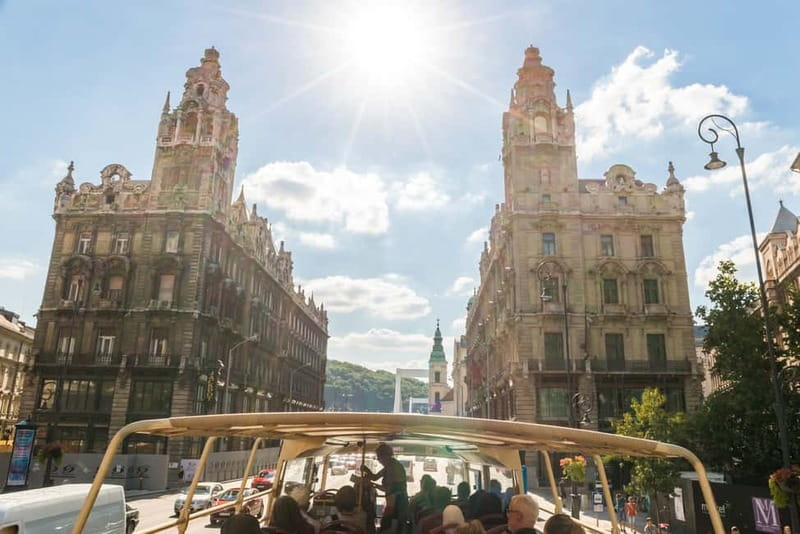
The bus includes digital audio commentary in 16 languages, including English, Spanish, French, German, Italian, Portuguese, Polish, Russian, Arabic, Hebrew, Greek, Swedish, Dutch, Turkish, Korean, and Hungarian.
In theory, it’s perfect: you’re moving, you’re not staring at a guidebook, and you can follow along at your own pace. In practice, sound quality can vary. Some audio tracks can feel fast or keep playing as you arrive at a stop, so you might miss the clean “wait, look now” moment.
Here’s what works well:
- If you care about a specific landmark, watch the street view as the bus approaches, then use the audio as confirmation.
- If the audio sounds unclear, don’t fight it. Focus on window photos and save your deeper reading for later, when you can slow down.
Also, the open-top design is a win for photos, but check the condition of the viewing surfaces if you’re trying to shoot through plastic window covers. Blurry photos can come from dirty or scratched coverings, and that’s frustrating when you’ve picked a great angle.
Price and logistics: where the value comes from (and where it can wobble)

At about $40 per person, this ticket is trying to solve a common problem in Budapest: you want the big sights, plus a Danube experience, but you don’t want to plan a dozen separate bookings.
The value comes from bundling three things:
- a hop-on hop-off bus ticket for 1, 2, or 3 days
- a 1-hour Danube cruise
- a 1-hour guided walking tour in Pest
Even if you only use the bus to get bearings and then do 1–2 targeted stops in detail, the cruise and walk are usually what push the total experience from good to worth it.
Where things can wobble:
- Boarding can be tight in peak times, so you may need to wait for the next bus if it’s at capacity.
- Finding the stop can take a bit of patience at first, even though stops are numbered and the route is easy to follow once you’re oriented.
- The cruise is limited to 11:00am–5:00pm, so if your perfect day is built around an early morning plan, you’ll need to flex.
One logistical detail that saves time: the walking tour and cruise require redemption with staff, so don’t wait until the last second. Show up at the start point with time to find the staff member and exchange your confirmation.
If you like flexibility, this style of ticket typically fits well with the idea of reserving and paying later and changing plans without panic. Just remember the main on-the-day constraint is the cruise time window.
Who should buy the Big Bus Budapest + Danube combo?
This is a strong fit if:
- you’re visiting Budapest for a short stay and want a “big overview” quickly
- you don’t want to coordinate transport between key sights
- you like the freedom of hop-on hop-off but also want one guided experience for context
- you want easy landmark access along both the Pest side and the Buda/Castle area
It’s less ideal if:
- you’re extremely sensitive to audio clarity and you hate anything that feels loosely narrated
- you plan to avoid schedules entirely (the walking tour starts at 1:00 PM and the cruise has the 11:00am–5:00pm window)
And if mobility is a concern, note that the tour is listed as wheelchair accessible, but the bus boarding can involve a step up. If that affects you, plan to get to the stop a little early and be prepared that you might need extra patience.
Should you book this Budapest bus and Danube combo?
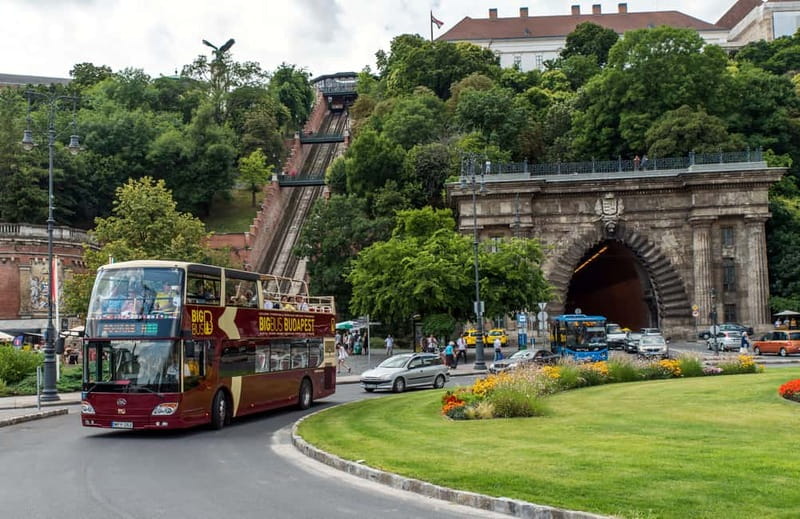
Yes, I think you should book it if you want a practical Budapest “starter kit.” The bus route puts you close to the main landmarks, the included Danube cruise gives you the best river angles of Parliament and the Castle area, and the guided Pest walk connects the stops into something more than photos.
Book it especially if you’re doing 2 days or less and you want to stop guessing. You’ll get your bearings fast, then you can spend your best time in the places that pulled you in.
Skip or reconsider if you already know you’ll only visit a couple sights, or if you’d rather spend that money on individual tours with stricter control over timing and audio.
If you’re on the fence, this is one of those Budapest purchases that often pays off simply because it reduces decision fatigue. In a city where the viewpoints are scattered by the river, that’s real value.
FAQ
What’s included with the Big Bus Budapest ticket?
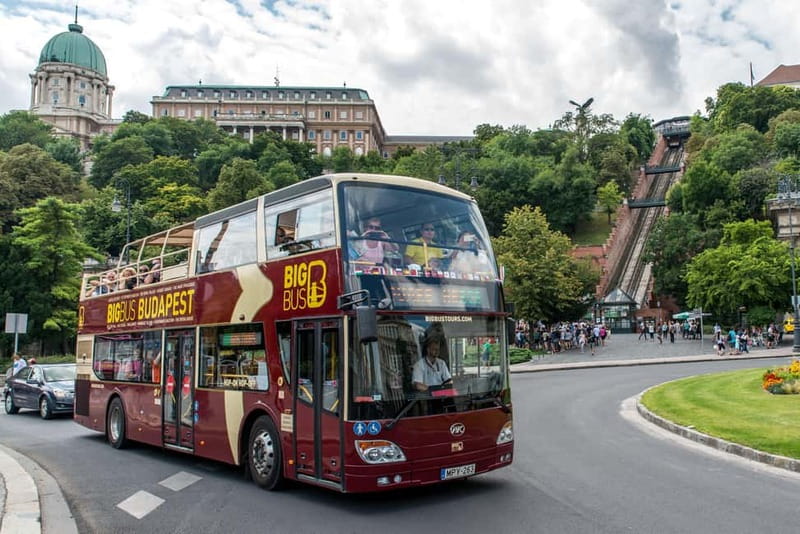
The ticket includes a hop-on hop-off bus ticket valid for 1, 2, or 3 days (depending on your option), digital audio commentary in 16 languages, a 1-hour Danube River cruise, and a guided 1-hour walking tour.
How long is the Danube River cruise, and when can I take it?
The Danube River cruise is 1 hour. It can only be taken between 11:00am and 5:00pm, and it’s valid during the duration of your hop-on hop-off ticket.
When does the guided walking tour start?
The guided 1-hour walking tour begins at 1:00 PM from Stop #1: Basilica (Red Route) and ends at Stop #2 by the Chain Bridge.
Where do I meet to redeem or join the tours?
You should present your booking confirmation to a Big Bus Tours staff member at the Big Bus Budapest office or with a staff member on-board the bus at the meeting point on József Attila u. 24.
Is audio commentary provided on the bus?
Yes. The bus includes digital audio commentary in 16 languages.
Is the tour wheelchair accessible?
Yes, it is listed as wheelchair accessible.