REVIEW · BUDAPEST
Budapest: City Sightseeing Hop-On Hop-Off Bus Tour & Extras
Book on GetYourGuide →Operated by City Sightseeing Europe · Bookable on GetYourGuide
Budapest is split by a river, so planning matters. This City Sightseeing hop-on hop-off bus helps you stitch together Pest and Buda in a way that feels easy, not rushed. You get a flexible pass, audio commentary in 15 languages, and stops right by major landmarks.
What I like most is the freedom to ride, hop off, and reset when your feet need a break. You can also pair the bus with a 1-hour guided walking tour that covers the spots the bus can’t reach well, so you still get the context behind the big sights.
One consideration: the bus loop has a clear schedule, with the last departure from Stop 1 at 5pm, and a couple of stops listed as temporarily closed (Astoria). If you want late-night wandering everywhere, plan a backup route or be ready to walk a bit.
In This Review
- Key takeaways before you ride
- How the 24–72 hour pass keeps Budapest from feeling like a sprint
- Red Route basics: start at St Stephen’s Basilica and build your own day
- Parliament Building and the Danube viewpoints from Stop 20 and beyond
- St Stephen’s Basilica, Chain Bridge, and the Pest highlights you’ll keep returning to
- Andrássy and Heroes’ Square: the grand boulevard moment
- Dohány Street: the Jewish Synagogue and why this stop is more than a photo stop
- Gellért Square, Castle Garden, and getting the best Buda views without climbing everything
- Chain Bridge back to Buda: Margaret Bridge and Batthyány Square as easy breaks
- The 11am walking tour: the one piece that turns buses into understanding
- Audio guide in 15 languages: when it works, it’s magic
- Extras and the Danube cruise: nice bonus, but check your date
- Price and value: why $41 can be fair in Budapest
- Practical details that affect your day more than you think
- Who should book this Budapest hop-on hop-off bus tour?
- Should you book this tour? My take
Key takeaways before you ride

- 24, 48, or 72 hours of hop-on flexibility across 20 stops
- A built-in walking tour at 11am that adds human context where the bus can’t
- Audio guide in 15 languages so you’re not stuck guessing what you’re looking at
- Parliament, St Stephen’s Basilica, Chain Bridge, Dohány Street: the headline sights are covered
- The red route is timed (9am to 5pm from Stop 1), so evening plans may need thought
How the 24–72 hour pass keeps Budapest from feeling like a sprint
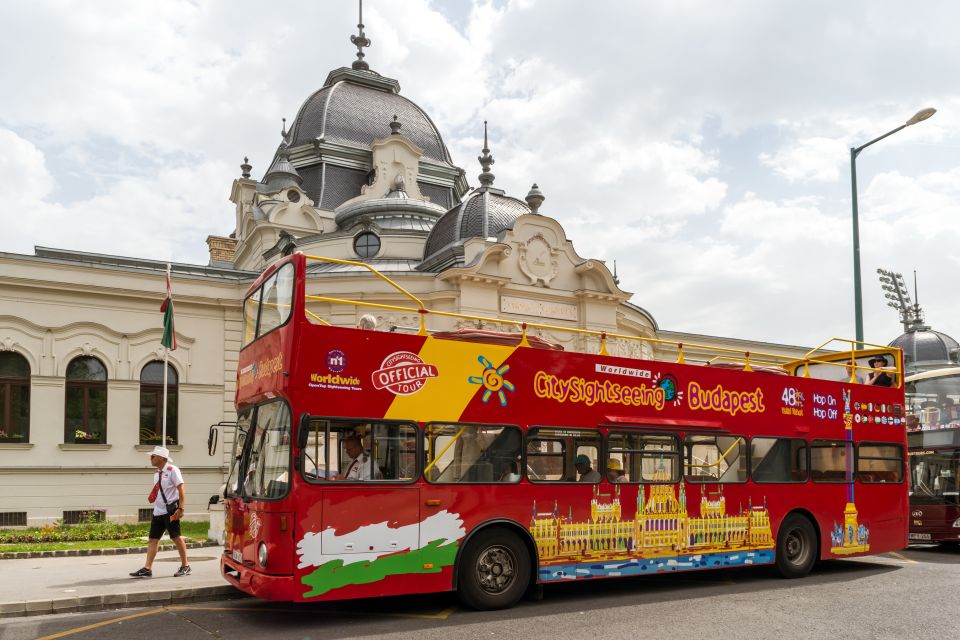
Budapest is gorgeous, but it’s also hilly, spread out, and easy to misjudge distances. This pass is designed for the real way most people travel: you do the main loop, then return to the places that grab you.
Your hop-on window is based on choosing 24, 48, or 72 hours, so you can treat it like city transportation for part of your trip. In practice, that means you can start with a full circuit to get your bearings, then use the next day (or extra hours) to focus on fewer sights without feeling behind.
The route itself takes about 90 minutes per full loop, and buses run roughly every 10–20 minutes. That frequency is what makes hop-on hop-off work in a city like Budapest, where you’ll pause for photos, peek into courtyards, and accidentally spend 15 minutes looking at architecture you didn’t plan to study.
You can also read our reviews of more city tours in Budapest



Red Route basics: start at St Stephen’s Basilica and build your own day
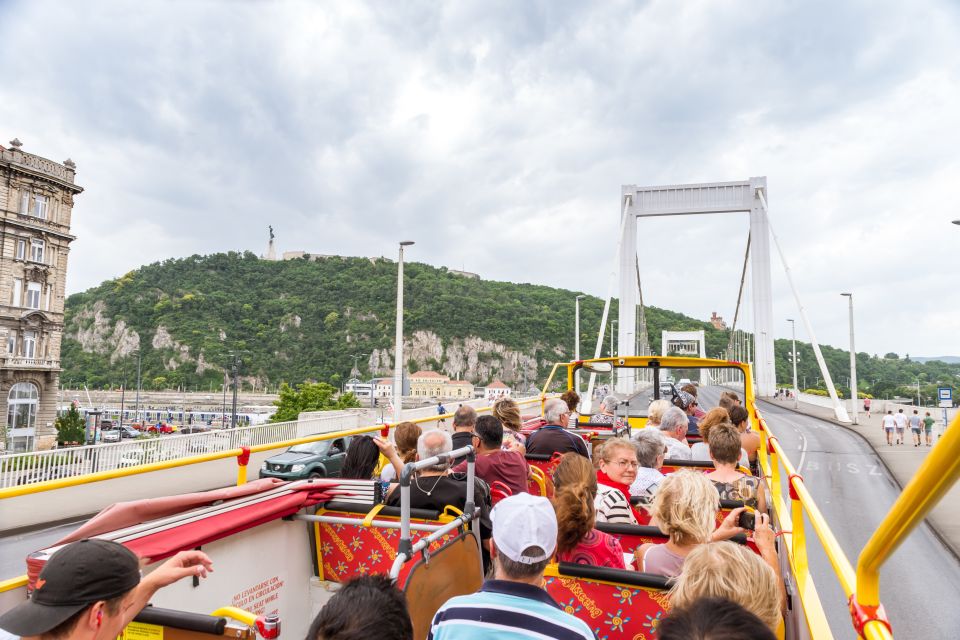
The red route is the backbone of this tour. It starts at Stop 1 (St Stephen’s Basilica), with the first departure at 9am and the last departure at 5pm from Stop 1. Each loop is about 90 minutes, so you can ride once, then hop around for the rest of your day.
If you’re doing this for the first time in Budapest, I recommend a simple strategy: ride the loop once without rushing to get your map in your head. Then, on the second loop, pick a couple of stops to explore deeper and save the rest for next time.
Also note: the Astoria stops are marked temporarily closed (Stop 5 and Stop 12). It’s not a deal-breaker, but it does mean your timing may shift if you were aiming for those points.
Parliament Building and the Danube viewpoints from Stop 20 and beyond

Budapest’s most dramatic political landmark is the Hungarian Parliament Building, and it’s covered by the route at Stop 20 (Parliament). Even if you don’t go inside (tickets aren’t included), you’ll still get the best part for first-timers: the view, the scale, and the building’s Gothic Revival façade.
This is also a good place to understand how Budapest works visually. The river ties everything together, but the architecture changes fast as you move across the water. If you time it right, you’ll see the Parliament area as both a daytime landmark and an evening photo subject.
One more smart pairing: the guided walking tour includes the Parliament area and the Shoes on the Danube Bank. That combo helps you connect the big landmark you see from the bus with the human history you feel close up on foot.
St Stephen’s Basilica, Chain Bridge, and the Pest highlights you’ll keep returning to
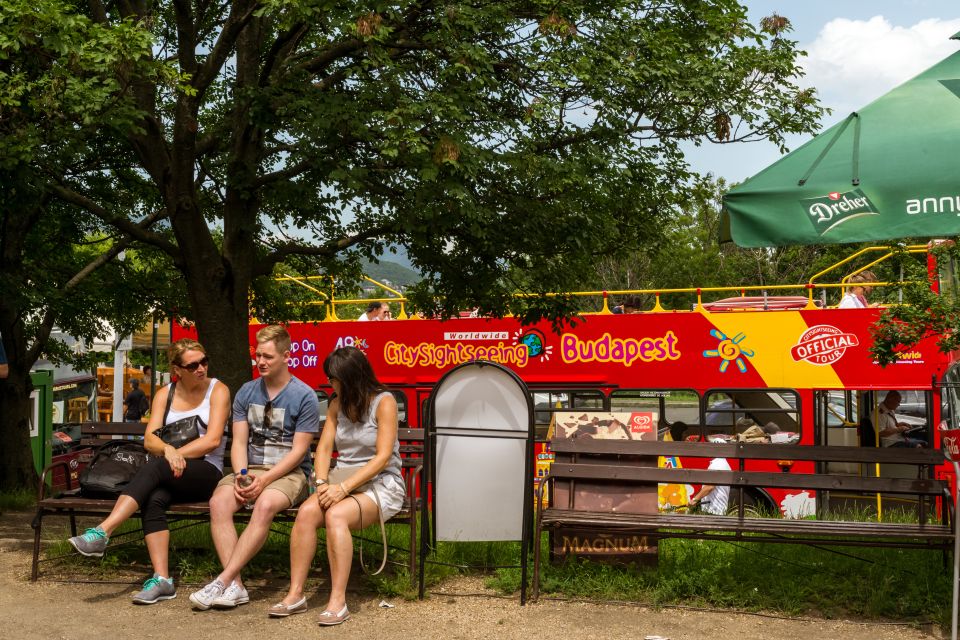
The route starts with Stop 1: St Stephen’s Basilica, and that’s a smart lead-in because it’s one of the most recognizable churches in the city. It also sets you up for the central Pest walk-and-photo zone that tourists love, which is where your day usually expands.
From there, Stop 2: Chain Bridge (Pest) is your shortcut to the classic Budapest image. Chain Bridge isn’t just a bridge. It’s a visual divider between river scenery on one side and the grand boulevard feel on the other.
Two other Pest-focused stops worth targeting:
- Stop 6: Andrassy Avenue for the elegant boulevard look and major landmark streetscape
- Stop 7: Hungarian State Opera House if you want a formal, big-city cultural vibe right in the middle of sightseeing
If you like shopping or want an easy place to regroup, Stop 19: WestEnd Shopping Centre is also convenient as a midway reset point.
Andrássy and Heroes’ Square: the grand boulevard moment
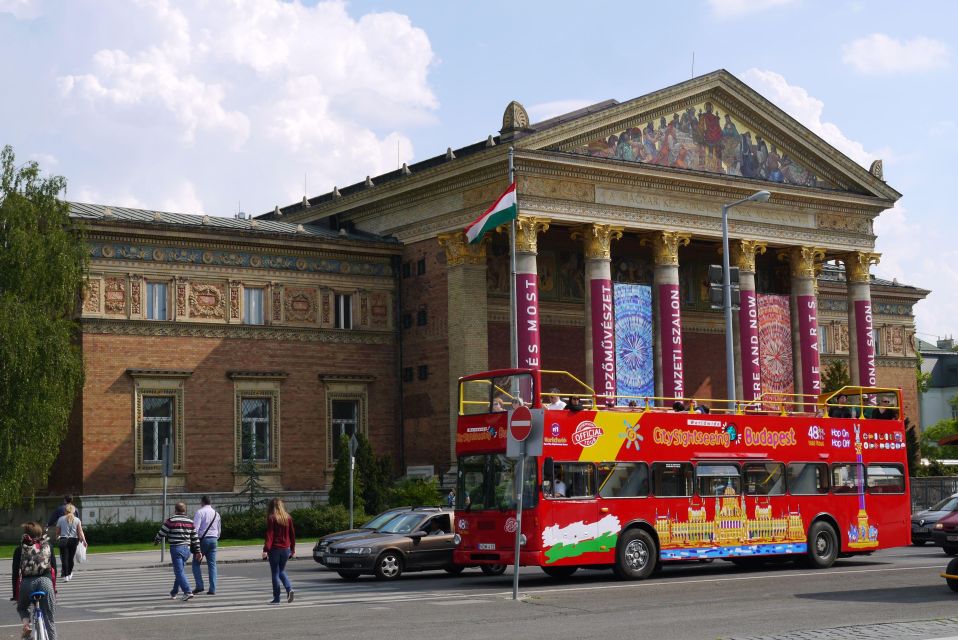
Budapest loves big perspective shots. Two stops deliver that feeling quickly: Stop 6 (Andrassy Avenue) and Stop 9 (Heroes’ Square).
Heroes’ Square works well when you want something other than churches and bridges. It gives you a monument-heavy viewpoint and a classic “you are in a European capital” moment. From there, you can continue onward on the bus or plan a walk depending on the weather and your energy.
If you’re the type who likes to understand a city’s story through its monuments, you’ll appreciate how this route uses major civic points, not only tourist-only sites.






Dohány Street: the Jewish Synagogue and why this stop is more than a photo stop
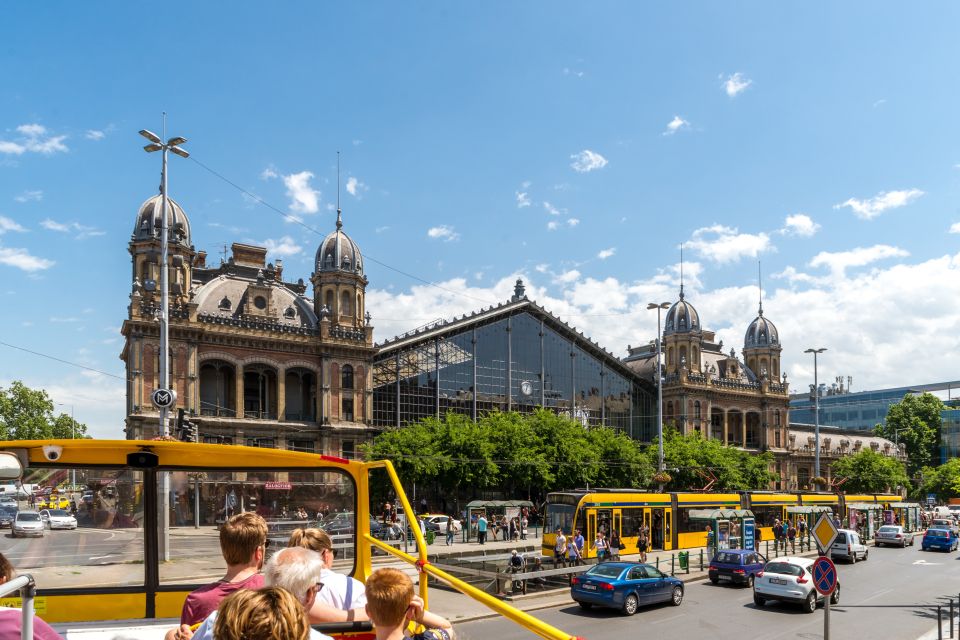
On the red route you’ll hit Stop 4: Dohany Street Synagogue. This is one of Budapest’s most important cultural areas, and it’s also where sightseeing becomes more meaningful.
The tour’s description focuses on the Jewish Synagogue, Memorial, and Museum on Dohány Street. Tickets to the attractions are not included, but the bus gets you to the right neighborhood so you can choose which buildings you want to enter.
This is also a stop that rewards timing. If you arrive when there’s daylight and fewer lines, you’ll have an easier time taking in the streetscape and planning your museum time without feeling rushed.
Gellért Square, Castle Garden, and getting the best Buda views without climbing everything
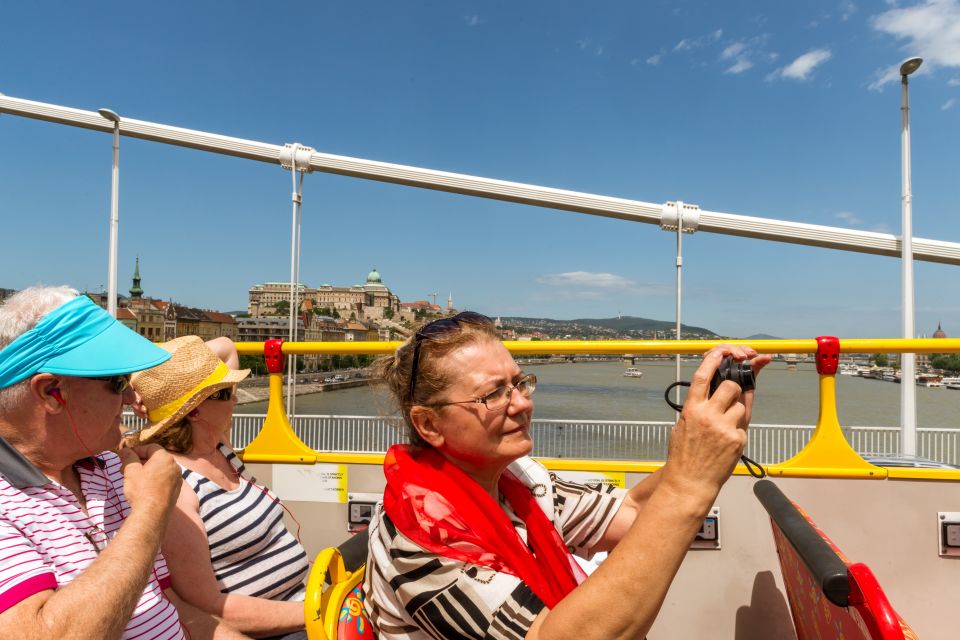
Buda is where Budapest gets dramatic, and the bus helps you see it without doing a full-on hike day. On the red route you’ll find Stop 14: Gellert Square and Stop 15: Castle Garden.
Gellert Square is your practical jumping-off point for the hill-and-fortress mood near the Citadel area. Even if you don’t climb all the way up, you’ll still get that postcard look that makes Buda famous.
Castle Garden (Stop 15) is another useful anchor. It puts you close to the Castle District feel, where you’ll run into more stairs, more viewpoints, and more time-consuming walking. If your goal is the big panoramic viewpoints, you might still need extra time or local transport for the upper areas beyond where the bus drops you, but you’ll be positioned correctly.
Then there’s Stop 16: Funicular. If you’d rather use a shortcut than earn a calf workout, this is the logical connection point for getting between levels in the Castle District.
Chain Bridge back to Buda: Margaret Bridge and Batthyány Square as easy breaks
Once you’ve started crossing the river, you’ll notice how the city’s texture changes. The route includes:
- Stop 18: Margaret Bridge (Buda)
- Stop 17: Batthyany Square
These stops can be helpful on days when you want scenery without committing to an all-day walking loop. Margaret Bridge is a “moving viewpoint” stop—great for photos and for resetting your plan. Batthyány Square can feel like a calmer, more local-feeling pivot point between the major sights.
The 11am walking tour: the one piece that turns buses into understanding
The walking tour is where this experience becomes more than a ride. It starts daily at 11am from Szent Istvan ter 1, 1051, Hungary, and it lasts about 1 hour.
What it covers is intentionally “hard to reach from the bus”:
- St Stephen Basilica
- Parliament
- Shoes on the Danube Bank
- Váci Fashion Street
- Danube Promenade
Because of that, the walk fills in the gaps. From the bus you’ll see the architecture. On foot, you learn the why and you pick up the details that make the sights hit harder.
Language note: the tour is narrated in English only. If you’re comfortable in English, it’s one of the best value adds in the whole package because you’re paying for time and expertise, not just transportation.
Guide names people praised include Claudia, Joan, Rebecca, and Souvar. If you happen to land with one of them, you’ll likely get a lively pace and clear explanations that help you connect the river, politics, and everyday streets.
Audio guide in 15 languages: when it works, it’s magic
The bus includes an audio guide in 15 languages, including English, French, German, Italian, Spanish, Russian, Hebrew, Arabic, Polish, Portuguese, Turkish, Chinese, Hungarian, Greek, Finnish, Japanese.
The big advantage is control. You can listen at your own speed, replay a point of interest, and stay focused even when you’re tired. It also means you can travel with friends who want different levels of detail without having to stop and explain everything manually.
One caution from real-world experience: the bus environment (wind, bus noise, and crowded seating) can make spoken live-guide moments harder to catch over time. The audio guide is the safer bet for consistent clarity.
Extras and the Danube cruise: nice bonus, but check your date
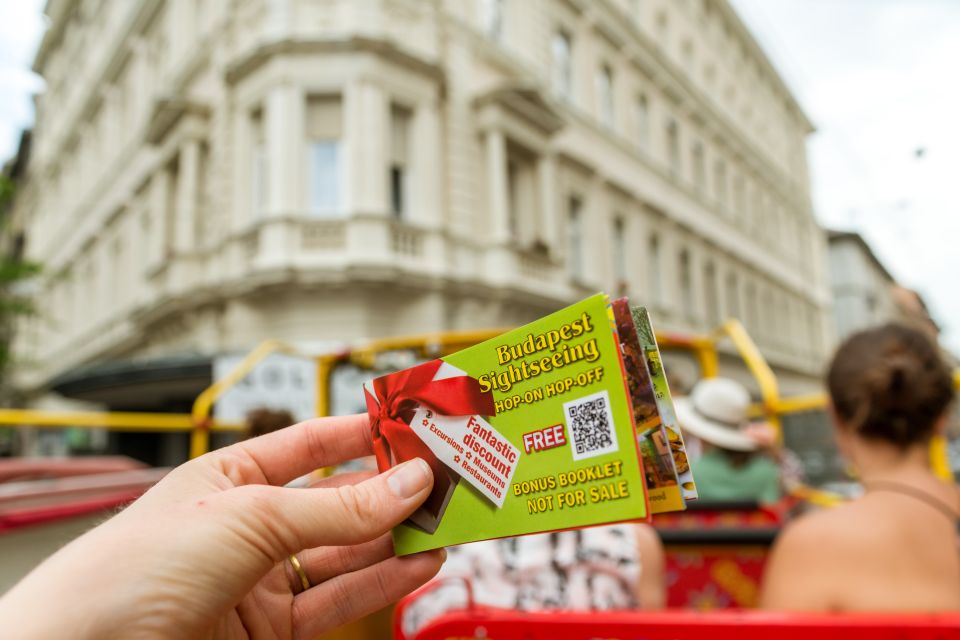
This ticket has a discount booklet included and, depending on timing, a Danube boat cruise is often part of the package. There is an important date note: from Wednesday 10th December, the boat tour is no longer included in the ticket.
If your cruise isn’t included on your travel date, the info says you can still buy a boat ticket for a reduced HUF amount if you show your bus ticket at the boat departure point (and bookings made before that date are honored with the boat tour).
So treat the cruise as a bonus, not a guarantee for every date. When it is included, the payoff is strong: the river view gives you a different scale for Budapest, and it’s a break from sitting in traffic or walking steep streets.
Also, one rider called out extras on a cruise departure like unlimited Prosecco, so if you’re into that sort of thing, you may find the experience feels more like a fun event than a basic transit boat.
Price and value: why $41 can be fair in Budapest
At about $41 per person, this isn’t the cheapest way to see Budapest. But it usually makes sense when you compare it to the cost of individual paid transport and the time you save trying to fit everything into a limited schedule.
You’re paying for:
- a multi-day pass (based on 24/48/72 hours)
- audio commentary
- access to 20 strategic stops
- a guided walking tour
- a discount booklet for select attractions
If you only ride once and never hop off to explore, you’ll feel the cost more. If you do the sensible tourist thing—ride the full loop once, then choose 2–4 stops to go deeper—you’re using what you paid for.
One smart move: consider the 48 or 72-hour option if you’re staying more than one calendar day. People often use a longer pass as a transportation layer, not just sightseeing, and that’s when the value starts to feel obvious.
Practical details that affect your day more than you think
A few operational details matter because Budapest plans can get ruined by one bad assumption.
First, the red route frequency is good during the day, but the day ends. With the last departure at 5pm from Stop 1, you might need to plan a different way back if you want to keep exploring after that.
Second, visibility can vary. Some buses can have roof coverings, and that can affect how easy it is to see and photograph certain angles. If photos matter, you might prefer seats that give you a better sightline to major landmarks.
Third, if you’re using the walking tour, don’t leave it to guesswork. The meeting point is specified, and one common mistake is missing the start because it wasn’t obvious where to stand.
Finally, not all buses feel identical. Some riders noted that certain buses didn’t feel properly air-conditioned even when expected. If you travel in warmer months, consider that as part of comfort planning.
Who should book this Budapest hop-on hop-off bus tour?
This tour fits you well if:
- you’re in Budapest for 1–3 days and want a clear framework
- you like freedom to hop off when something grabs you
- you want your sightseeing to include both big landmarks and a guided explanation via the walking tour
- you’d rather pay once for transport support than keep recalculating routes all day
It might be less ideal if:
- you want only the “deep” historic sites inside major buildings and would rather do those with a focused museum-heavy plan
- you’re aiming to cover late-night neighborhoods without any schedule limits (the red route has a cut-off)
If you’re traveling with mixed interests—one person wants architecture, another wants museums—this works because the bus keeps everyone moving while you choose your own level of exploration.
Should you book this tour? My take
Book it if you want a fast, low-stress way to cover the key Budapest must-sees and you’re okay mixing sightseeing with a bit of planning. The combo of hop-on hop-off plus the 11am walking tour makes it feel like more than a bus ticket.
Don’t book it blindly if you’re set on very specific entrances or very late evening plans. In that case, consider pairing this with a timed visit to the sites that require advance tickets, and plan your after-5pm return route before the day gets away from you.
If you want the simplest setup for a first trip, this is a practical choice: ride the loop, hop where you care, use the walk to understand what you’re looking at, then return to your favorite views. Budapest rewards that approach.