REVIEW · BUDAPEST
Cinematic Virtual Reality City Tour in a Russian Jeep
Book on Viator →Operated by BUDTOURS · Bookable on Viator
Budapest, but with time travel built in. This Russian Jeep VR city tour mixes real stops with 2D cinematic video so you can watch landmark moments from the past right where you stand. I like that it’s not only photo stops, and it’s clearly designed to be fun and easy to follow for a short visit.
Two things I really like: the 2D VR headset moments at major sights, and the combo of in-person English guidance plus audio context that makes each place click. One thing to consider: tickets for Matthias Church aren’t included, and the VR format isn’t recommended if you have epilepsy.
In This Review
- Key highlights at a glance
- A Russian Jeep + VR Headset: why this tour feels different
- Price and value: what $3 includes (and why it’s a bargain)
- How the 2-hour flow fits into your Budapest day
- Stop 1: Castle Garden Bazaar at the Buda Castle complex
- Stop 2: Széchenyi Chain Bridge and the story behind the statues
- Stop 3: Fisherman’s Bastion views (and the one admission caveat)
- Stop 4: Matthias Church—one ticket you might want to add
- Castle Quarter and Buda Castle: UNESCO area with VR time scenes
- Parliament Building pass-by: neo-Gothic power, plus VR context
- St. Stephen’s Basilica: the tall landmark you’ll keep spotting
- Andrássy Avenue: UNESCO boulevard with culture bookmarks
- Hungarian State Opera House: architecture outside, history inside VR
- The House of Terror pass-by: a serious stop in a fast route
- Heroes’ Square: the Millennium Monument moment
- New York Palace and the coffee break option
- Blaha Lujza tér and Ferenciek Square: where VR hits hardest
- Erzsébet Bridge in VR: the closing payoff you’ll think about later
- Is this the right Budapest tour for you?
- FAQ
- What is the duration of the Cinematic VR City Tour?
- How much does the tour cost?
- Do you get hotel pickup and drop-off?
- What’s included with the tour besides the VR?
- Is Matthias Church admission included?
- Are there any health or safety considerations?
- What kind of experience is used at each landmark?
- Is the tour private or shared?
- Can I cancel for a full refund?
Key highlights at a glance
- Russian Jeep rides that feel like part of the sightseeing, not just transportation
- Cinematic 2D VR at real landmarks like Chain Bridge and the Parliament area
- Good value for a short, private 2-hour outing, with hotel pickup and drop-off
- Friendly personal guidance in English, plus audio storytelling while you watch the VR
- Comfort touches like bottled water, and hot tea in winter
- A route that covers both classic views and “story squares” across Buda and Pest
A Russian Jeep + VR Headset: why this tour feels different
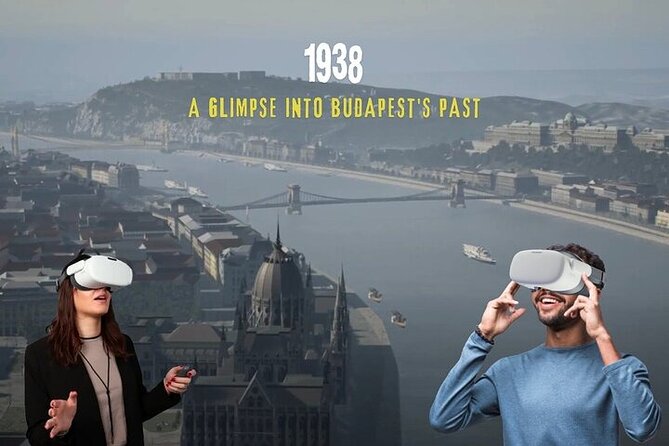
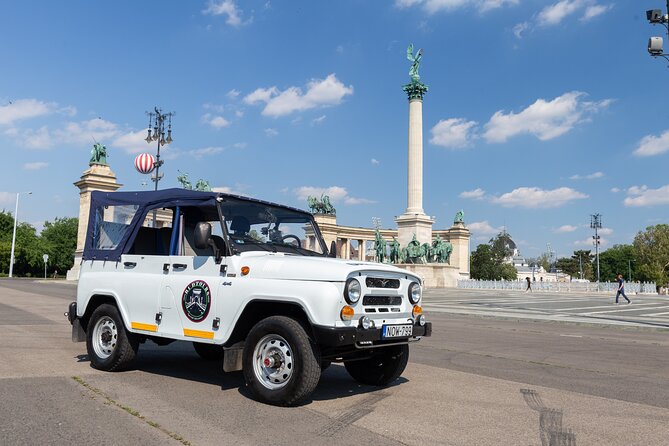
Most Budapest tours are either walking marathons or bus “look but don’t touch” routes. This one turns the middle part—getting between sights—into an experience by using a Russian Jeep-style ride. Then it adds a headset layer, so you’re not just staring at buildings; you’re watching scenes tied to them.
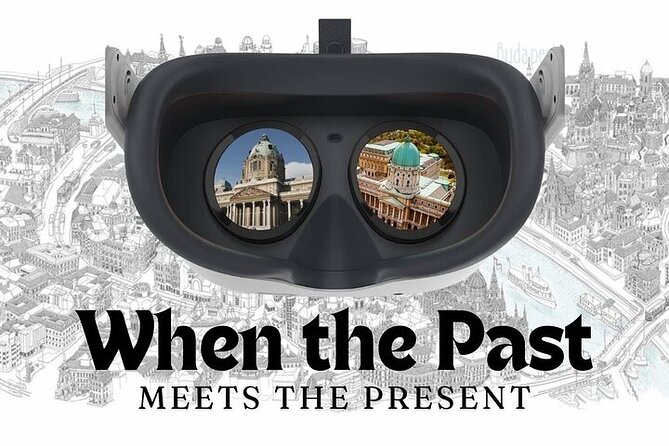
What makes it work is the timing. You get quick landmark stops, then you put on the headset and watch what the place looked like during key moments. That structure is ideal if you only have a couple hours and you want quick orientation without spending the whole day sorting out tickets and transit.
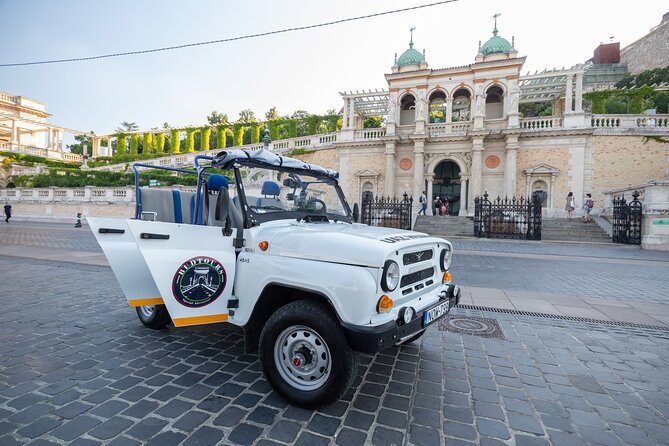
And yes, the vehicle matters. In the reviews, the Jeep/UAZ ride shows up as a memorable detail, including how attentive and playful the driver can be—so expect more than silent transport.
You can also read our reviews of more city tours in Budapest



Price and value: what $3 includes (and why it’s a bargain)
At $3, the first question is obvious: what’s missing? The key is that the tour price is really covering the core experience: private transport, hotel pickup/drop-off, VR gear, and an in-person English guide. You also get bottled water, and in winter time, hot tea. That’s the stuff that typically costs real money on full-day tours.
Your “payoff” is also efficient. You’re spending about two hours hitting famous areas across the city, and you’re getting an extra layer of context through VR video at the landmarks. If you’ve ever felt like Budapest guidebooks explain too much but show too little, the VR format is a smart fix.
The one clear extra cost is Matthias Church admission, which isn’t included. If you want to go inside that church, budget for the ticket separately.
How the 2-hour flow fits into your Budapest day
This is a private tour/activity, meaning it’s just your group. That matters because you’re not stuck waiting for slow walkers or competing with other groups for a headset moment.
Pickup is offered, and the tour includes drop-off, so you can treat it like a “guided circuit” rather than a self-planned route. The tour also comes with a mobile ticket and is said to be near public transportation, which is helpful if you need a backup plan.
Practical tip: wear comfortable shoes even though you’re not walking all day. Some stops are short, but you’ll still step out for views, photos, and VR headset moments.
Stop 1: Castle Garden Bazaar at the Buda Castle complex
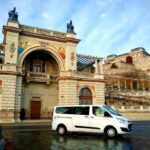
You start on Castle Hill, with the Buda Castle complex as your backdrop. The Castle Garden Bazaar is described as Neo-Renaissance and set up as a cultural hotspot now, with things like exhibitions and concerts or dance shows when available.
This first stop is short—about three minutes—and admission is free. That brevity is a feature, not a flaw. It’s a quick “get your bearings” intro to the Castle Quarter vibe, and it sets the stage for the bigger landmarks you’ll see right after.
What to do here: use this moment for orientation. Look for angles where you can later spot the bridge, the river, and the main castle views from the right height.
Stop 2: Széchenyi Chain Bridge and the story behind the statues
Next comes the Széchenyi Chain Bridge, Budapest’s showpiece for linking Buda and Pest over the Danube. It’s named after Count István Széchenyi, and the bridge was a marvel of engineering in its day—something you can still sense just by standing there.
This stop is about five minutes, and admission is free. The VR part is the main event here: you’re set up to watch the bridge’s dramatic history through the headset, so the landmark becomes more than a postcard.
If you’re short on time, this is one of the most efficient stops in the whole route. You get a famous landmark plus “what it used to mean” content without paying for a long museum visit.


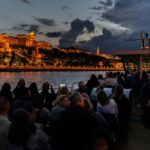

Stop 3: Fisherman’s Bastion views (and the one admission caveat)
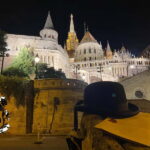
Fisherman’s Bastion is where Budapest starts looking like a classic film set. It’s known for panoramic views, and it has that “ancient” look even though it was built in the early 20th century to celebrate Hungary’s 1000th birthday.
You’ll have around 15 minutes here, and again, admission is free for the area generally. But there’s an important detail: only the upper level requires an admission fee. So if you’re mainly there for the viewpoint, you can focus on what you can enjoy without paying extra.
What I like about this stop is that it gives your eyes a break. After VR and quick passages, you get a proper viewpoint moment—perfect for photos and for understanding how Buda’s hills relate to the river and the city.
Stop 4: Matthias Church—one ticket you might want to add
Matthias Church is described as one of Europe’s most unique churches, with an interior mix that includes oriental flair and romantic historicism. From the outside and inside, the style blend is part of the appeal, topped with Neo-Gothic elements.
The stop time is about 15 minutes, but admission isn’t included. That’s the main “watch your wallet” item in the itinerary. If you want the full experience, plan to pay the church ticket separately.
What to expect: this is the kind of place where the details matter, especially the interior design. If you’re the type who likes to pause and look closely, this stop can become your standout religious building moment of the day.
Castle Quarter and Buda Castle: UNESCO area with VR time scenes
From the church area, you shift into the heart of the Castle Quarter and the Buda Castle palace complex. This UNESCO World Heritage Site is described as a blend of Medieval, Baroque, and Neoclassical styles, with historic houses and churches around you.
The key here is how the VR is used. Instead of only seeing the modern complex, the headset experience is meant to transport you back so you can “witness the castle’s grand history come to life.” Even if you’ve read about Budapest before, this format tends to make the sequence of changes easier to remember.
This stop is valuable because it helps you understand why Castle Hill matters. It’s not just pretty architecture; it’s the city’s identity zone. You’re seeing the stage where power, culture, and change all happened.
Parliament Building pass-by: neo-Gothic power, plus VR context
In Pest, you get the Hungarian Parliament Building by Kossuth Square by the Danube. It’s described as Hungary’s National Assembly headquarters and the country’s largest building since construction, with a neo-Gothic design that’s made to be seen from multiple angles.
This is a shorter pass—about five minutes—and admission isn’t included. The VR experience is the storytelling engine here, aimed at showing the building’s fascinating past.
What’s useful for you: even a short stop here can help you connect the skyline. If you’re going to spend time later around the river, you’ll recognize the Parliament instantly, and you’ll have context for why it’s such a symbol.
St. Stephen’s Basilica: the tall landmark you’ll keep spotting
St. Stephen’s Basilica is another major Pest landmark. It honors Hungary’s first king and is listed as the third largest church in Hungary and the tallest in Budapest, also noted as World Heritage Site status.
The tour description suggests you pass by, so don’t expect a long visit here. Still, this works in a route like this because it lets you place it in your mental map while you travel between key zones.
If you’re visiting later on your own, this is the moment to make a note. The Basilica’s profile is one of the easiest to identify from across the city.
Andrássy Avenue: UNESCO boulevard with culture bookmarks
Andrássy Avenue is where Budapest looks elegant and planned, lined with Neo-Renaissance buildings. It’s also UNESCO World Heritage Site area, and it’s described as a lively corridor with upscale boutiques, cozy cafes, and elegant restaurants.
You’ll have about 15 minutes here, with a lot of “future exploring” potential. The avenue is also tied to cultural institutions like the State Opera House, the Zoltán Kodály Memorial Museum, the Hungarian University of Fine Arts, and the Ferenc Hopp Museum of East Asian Arts.
This part of the tour is valuable because it gives you a different feel than Castle Hill. It’s more urban, more stylish, and it helps you understand that Budapest isn’t only churches and viewpoints—there’s theatre, learning, and city life built into the architecture.
Hungarian State Opera House: architecture outside, history inside VR
The Hungarian State Opera House is one of the standout façades on Andrássy út. It’s described as neo-Renaissance with a symmetrical design and statues of composers on the façade. Inside, the tour notes marble sphinxes, frescoes, and gold accents.
This stop is short—about five minutes—and admission isn’t included. But the VR experience is the key part, aimed at stepping back into the opera house’s golden age.
Even if you don’t go inside on this tour, you’ll likely leave with enough visual memory to want to return. The exterior design is dramatic, and the VR context helps you connect the building to the role opera played in Hungarian cultural life.
The House of Terror pass-by: a serious stop in a fast route
At 60 Andrássy Avenue, you pass the House of Terror, described as a museum and memorial tied to 20th-century struggles under fascist and communist regimes. It’s dedicated to the suffering of people who were imprisoned, interrogated, tortured, or lost their lives in the building.
This isn’t a “happy photo” stop, and that’s exactly why it matters. Even a pass-by helps you place a major historical site in your route instead of treating it like an optional side trip.
Given the tour’s VR focus and short time slots elsewhere, keep your expectations realistic here. You may not get the full museum experience during this circuit, but you will understand what it is.
Heroes’ Square: the Millennium Monument moment
Hősök tere is where Budapest flexes its symbolism. The focus is the Millennium Monument, which includes statues of important Hungarian leaders and the Seven Chieftains of the Magyars. You’ll also find it at the end of Andrássy Avenue, near City Park.
You get about 15 minutes here. Admission is free, so it’s a low-cost, high-impact stop for understanding how the city commemorates its story.
If you’re the type who likes to read a square like a puzzle, this is one to slow down on. The statues are meant to be interpreted, and having even a short time here helps you remember it.
New York Palace and the coffee break option
There’s a stop listed for New York Palace, a cafe with a reputation for being named cafe of the year several times. It’s also a very recognizable, photogenic building, which makes it a natural break point in a two-hour tour.
This is a “grab-and-go” style moment rather than a meal. Still, it’s useful because the tour is filled with viewpoints and headset sessions, and a quick drink can reset your energy for the last part.
Blaha Lujza tér and Ferenciek Square: where VR hits hardest
Blaha Lujza Square is one of the city’s busiest spots, named after the beloved actress Blaha Lujza. Historically, it’s connected to the National Theatre, and the tour uses VR to transform the area by showing the space in earlier National Theatre days.
This stop is about five minutes, and admission is free. Even at that short time scale, the VR story is meant to make the square feel like a place with a timeline, not only foot traffic.
Then you shift to Ferenciek Square, where you’ll find Paris Garden and the Klotild Palace, which belonged to the royal family. The VR experience here is meant to show the square in its former glory, helping you connect the ornate past to today’s street-level scene.
If you like history that feels “on the street” instead of inside a museum, these are likely the stops you’ll remember most.
Erzsébet Bridge in VR: the closing payoff you’ll think about later
The last VR feature centers on the old Erzsébet Bridge, Budapest’s pride from 1903 to 1945. The bridge was built between 1898 and 1903, held a world record in its category for 25 years, and stayed the Danube record-holder for 70 years.
This is the kind of detail that makes you look at the city differently afterward. Even if you pass over a modern bridge later, you’ll remember that this stretch of the Danube has been a headline for engineering and change for decades.
It also works as a final “button” on the tour. You’ve seen Castle Hill, bridges, churches, boulevards, and memorial squares—then VR ties it together by focusing on a symbol of connection across the river.
Is this the right Budapest tour for you?
Book this if you want a short, private circuit that mixes iconic sights with story-driven VR moments. It’s especially good when you like the idea of understanding Budapest quickly—without turning your day into a stack of ticket lines.
You might skip it if you’re only interested in deep museum time or you want long entry visits to major interiors. Also, if you have epilepsy, the tour is noted as not recommended for travelers suffering from epilepsy, so you’ll want an alternative.
If you do book, bring practical expectations: some stops are brief pass-by moments, and only a few places involve additional admissions. The value is in the structure—VR at strategic locations—combined with a friendly English guide and the Jeep ride vibe that shows up in the reviews again and again.
FAQ
What is the duration of the Cinematic VR City Tour?
The tour lasts about 2 hours.
How much does the tour cost?
The price listed is $3.
Do you get hotel pickup and drop-off?
Yes. Hotel pickup and drop-off are included.
What’s included with the tour besides the VR?
The tour includes private transportation, a VR headset/virtual reality gear, an informative friendly private guide for a more personalised experience, and an in-person English guide. Bottled water is included, and in winter hot tea is included.
Is Matthias Church admission included?
No. Entry/admission for Matthias Church is not included.
Are there any health or safety considerations?
The tour is not recommended for travelers suffering from epilepsy. Service animals are allowed.
What kind of experience is used at each landmark?
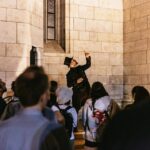
At each stop, you use a VR headset to watch cinematic 2D video that relates to Budapest’s past, with historical audio guidance.
Is the tour private or shared?
It’s a private tour/activity, so only your group participates.
Can I cancel for a full refund?
Yes. Free cancellation is offered if you cancel at least 24 hours in advance for a full refund.