REVIEW · BUDAPEST
Budapest Castle Walk
Book on Viator →Operated by Taste Hungary · Bookable on Viator
Buda Castle tells stories on every step. This 3-hour Budapest Castle Walk threads medieval, Ottoman, Habsburg, and WWII history through UNESCO cobbles, gardens, palaces, and big Danube views. Two things I especially liked: you get an organized route with photo breaks and questions, and the tour includes Matthias Church entrance plus a coffee stop.
I also like the way the guide ties the neighborhood together, not just point-to-point sightseeing. You’ll see how Buda’s royal court (starting in the 1300s), the multi-national mix over the centuries, and the city’s Jewish community all fit into what you’re looking at today. And you’ll finish with that classic hilltop panorama energy from Fisherman’s Bastion and nearby viewpoints.
One practical drawback: the tour time should be clear before you go, because one past booking issue was that there wasn’t enough information shown at purchase about the exact schedule. So I’d double-check your confirmation details (and keep an eye on your mobile ticket) so you meet the guide at the right moment.
In This Review
- Key points I’d prioritize
- Why This 3-Hour Castle Walk Works Better Than Solo Wandering
- Price, Group Size, and What You Really Get for $125
- Where You Start: Zero Kilometre Stone to the Castle Hill Loop
- The Cobblestone Map in Your Head: How the Story Follows the Street
- Stop 1: Fisherman’s Bastion Views With a History of Neighborhood Power
- Stop 2: St. Matthias Church—Entrance Included, and WWII Is Not Skipped
- Stop 3: National Széchenyi Library—The Golden Age and the Rebuild Cycle
- Castle Garden and the President’s Address—Living in Old Stones
- Várkert Bazaar and Danube-Edge Restored Views
- The Coffee Break That Keeps the Walk Human
- WWII Bunker Stop: A Heavy Moment in a Photo-Friendly Tour
- What It’s Like to Walk With a Guide (and Why the Order Helps)
- Best For Who
- A Quick Reality Check: Accessibility and Comfort
- Booking Timing and Confirmation: Don’t Leave This to Chance
- Should You Book the Budapest Castle Walk?
- FAQ
- What’s the duration of the Budapest Castle Walk?
- Where does the tour start and end?
- Is the Matthias Church ticket included?
- What’s the group size?
- What’s included in the price, and what isn’t?
- Is the tour available year-round?
Key points I’d prioritize
- Matthias Church + entrance included, with time to notice the interior and the multi-colored tiled roof
- World War II stop, including a WWII bunker and how the 1945 siege changed the streets
- Fisherman’s Bastion viewpoints, with a hill-shaped street layout and big Danube panoramas
- Jewish history focus, including old street and synagogue site context in the district
- Coffee/drink break included, so the walk doesn’t turn into a pure endurance test
- Small groups (max 8) with options for private or a larger group
Why This 3-Hour Castle Walk Works Better Than Solo Wandering
Budapest’s Buda Castle district is the kind of place where you can wander for hours and still feel like you only saw the surface. This walk is built to prevent that. In about 3 hours, you cover the highest-impact areas on the hill—places you’d likely hit anyway—then you get the story thread that makes them click.
The biggest value is that the guide connects different eras you’ll otherwise treat as separate chapters. You’ll move from the medieval period (when settlement and royal presence began around the 1200s and court life kicked in later) into Ottoman and Habsburg influence, then into the modern scars of the Siege of Budapest in 1945. That timeline matters because it explains why the buildings look the way they do, and why the district feels layered rather than “one style forever.”
Also, the pacing is realistic for a hillside. You’ll have short stops for photos and questions, and a coffee break in the middle, so you don’t just gulp architecture while climbing uneven cobbles.
You can also read our reviews of more tours and experiences in Budapest.



Price, Group Size, and What You Really Get for $125
At $125 per person for a 3-hour walk, this is not a “cheap-and-cheerful” add-on. But when you break it down, the price starts looking fair for what’s included.
You get:
- An English-speaking local guide
- A structured route with multiple photo breaks
- A coffee or drink stop during the tour
- Entrance to St. Matthias Church included
- A small-group format with a maximum of 8 travelers (and you can go larger only if you choose that option, or go private)
The included Matthias Church ticket is the most concrete “price lever” here. The coffee and the guide’s time are the rest. If you’re traveling with someone who likes history but also wants the views, this is the kind of tour that can replace buying a couple of tickets and figuring out the route on your own—especially if you’re short on time.
One more value point: meeting the guide near the Zero Kilometre Stone at Clark Ádám tér sets you up to walk the hill in the right direction, instead of starting in the middle and backtracking.
Where You Start: Zero Kilometre Stone to the Castle Hill Loop
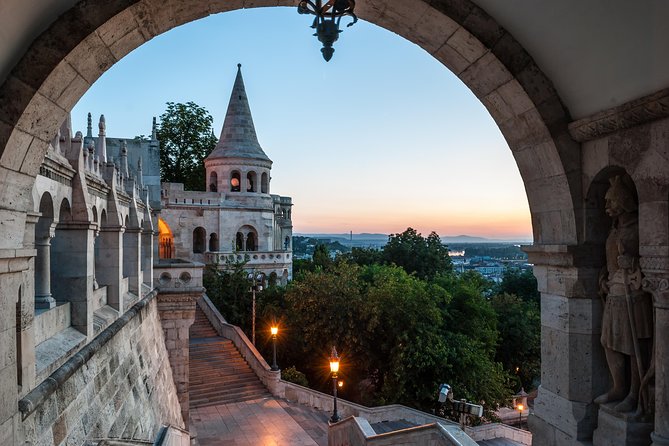
The tour starts at Zero Kilometre Stone, Clark Ádám tér (1013) with a start time of 3:00 pm. You’ll also be told to meet near the Royal Palace area, and that makes sense—this is all about getting onto the Castle hill efficiently.
Why this matters: Buda Castle streets bend with the hill, and the most important stops aren’t arranged in a straight line. Starting in the correct zone helps you hit the best viewpoints and landmarks without spending your 3 hours circling cobbled lanes.
The tour ends at Matthias Church (Mátyás Templom, Szentháromság tér 2) in central Buda. So if you like the idea of finishing at a major landmark (rather than getting dropped somewhere random), this route is set up for that.
The Cobblestone Map in Your Head: How the Story Follows the Street

Before you even reach the big monuments, the guide sets up a mental map of what you’re walking through. This is one of those tours where the “where” is half the experience.
You’ll hear how:
- The neighborhood’s street plan follows the hill’s shape
- The area traces back to medieval settlement around the 1200s
- Royal court life became central later (starting in the 1300s)
- Multiple empires and populations left visible marks—medieval ruins, baroque and Gothic architecture, and later reconstruction
That framing helps you notice details you’d normally miss: the way a courtyard opens, how a statue sits in relation to a palace façade, and why some sections feel restored or rebuilt rather than original.
Stop 1: Fisherman’s Bastion Views With a History of Neighborhood Power
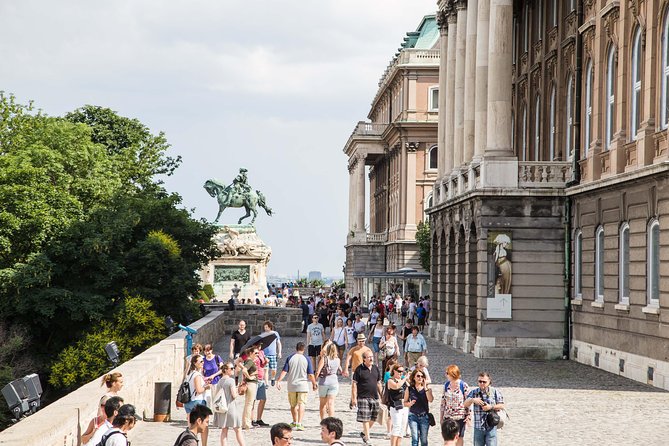
You’ll begin at Fisherman’s Bastion, a viewpoint that instantly shows you why people fall for this hill. The streets around it curve with the slope, and the guide will point out how this area has seen action for centuries.
What makes this stop more than a postcard:
- The guide places the area in a long timeline, referencing royal residence roots from the mid-1200s era.
- You’ll get context on the periods that shaped the district, with special emphasis on the Jewish population that once lived here.
- You’ll hear how different eras changed the neighborhood’s role—royalty, empire, and later trauma.
Time on this first stop is about 10 minutes, and that’s enough. You’re there for orientation, viewpoints, and story setup—not to stand around.
Practical tip: wear decent walking shoes. Buda’s Castle area is cobbled, and you’re moving uphill and downhill on irregular ground.



Stop 2: St. Matthias Church—Entrance Included, and WWII Is Not Skipped
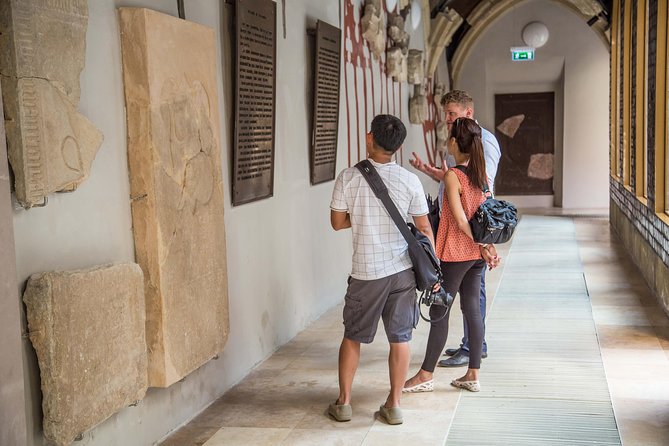
Next up is Matthias Church (St. Matthias Church), where the tour gets real in the best way: you don’t just get pretty architecture; you get the human consequences of conflict.
You’ll spend about 20 minutes here, and entrance is included. The guide focuses on:
- How the church fits into Hungarian royal coronation history (many Hungarian kings were crowned here)
- The look of the interior and the multi-colored tiled roof
- World War II impacts, including how the Siege of Budapest in 1945 brought heavy destruction when German and Russian forces met in the streets around the neighborhood
This is also where the tour’s “guided meaning” pays off. Matthias Church is a top attraction, sure—but hearing how the area was demolished and then rebuilt helps you read the district differently afterward.
One caution: this is a religious site and a key landmark, so expect the vibe to be more formal than a typical outdoor viewpoint stop.
Stop 3: National Széchenyi Library—The Golden Age and the Rebuild Cycle

You’ll then move to the National Széchenyi Library for a 10-minute stop. This is one of those “quick but worth it” moments that makes the walking route feel curated.
The guide explains how the royal court sparked a long golden age, and why the neighborhood looks the way it does today even though it was rebuilt multiple times. World War II rebuilding is a central point—extensive damage meant later construction left a different mark than what came before.
If you’ve ever walked past an old building and wondered why it doesn’t feel fully original, this kind of explanation helps. It’s not just trivia; it tells you what you’re seeing: layers, interruptions, and restoration.
Castle Garden and the President’s Address—Living in Old Stones
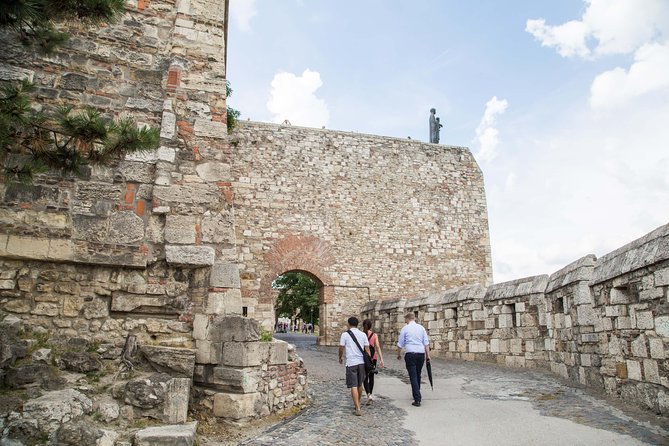
After the library, you’ll stop at Castle Garden, another short 10-minute segment that changes the mood from monumental to lived-in.
Here, the tour talks about how:
- The Hungarian president has residence nearby (making this area a real-world address, not just a museum zone)
- There are regular citizens living in old buildings
- The district has witnessed so much history while still functioning as a residential area
This part works well if you like the idea that history isn’t only behind barriers. You get a sense that Buda Castle is both a heritage stage and a working neighborhood.
Várkert Bazaar and Danube-Edge Restored Views
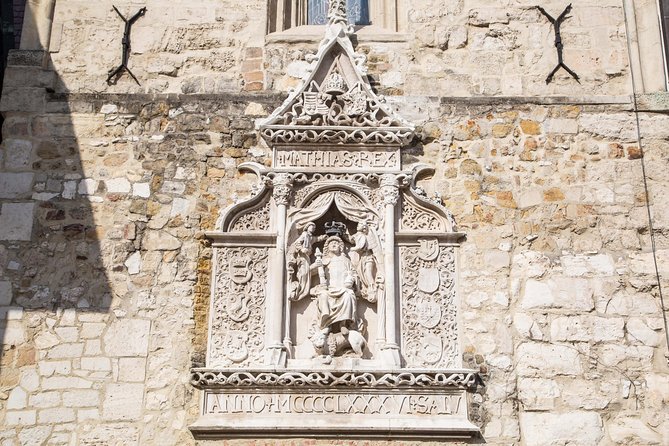
You’ll also spend time in the area near Várkert Bazaar by the Danube. Even if the itinerary calls out the other stops more directly, this Danube-side segment is part of what makes the walk feel like more than churches and courtyards.
The district here is described as restored and neo-Renaissance, and it’s a great place for a breather. You’ll catch stellar city-and-river panoramas that help connect the hill to the wider Budapest map.
If you’re the type who always wants one “big view” before the walking tires you out, this is it.
The Coffee Break That Keeps the Walk Human
Sometime during the tour, you’ll take a coffee break. The tour includes one coffee/drink, and you can also expect coffee and/or tea.
This isn’t just a perk. It makes the pacing realistic for a 3-hour loop in a district that involves hillside steps and cobbled ground. It also gives you a natural reset point for questions—often when you’re ready to ask why certain features exist, or what happened during a particular era.
One small scheduling note: it can stretch longer than 3 hours if you have someplace to go, so tell your guide at the start if you’re on a tight schedule.
WWII Bunker Stop: A Heavy Moment in a Photo-Friendly Tour
The tour includes a WWII bunker stop and explains the Siege of Budapest. This is where the walk shifts from sightseeing into remembrance.
You’ll hear how the neighborhood experienced huge devastation when opposing forces fought through streets in 1945. This matters because the Castle district didn’t simply “change over time.” It was ruptured, rebuilt, and reinterpreted.
It’s also a good example of why this tour is worth doing with a guide. Without context, the bunker would just be another structure. With context, it becomes part of a bigger story you can track across the rest of what you see.
What It’s Like to Walk With a Guide (and Why the Order Helps)
The tour is set up so you don’t just bounce between highlights. It goes:
- Viewpoint and context first (Fisherman’s Bastion)
- Signature landmark plus key historical turning points (Matthias Church)
- Architectural and institutional context that explains reconstruction (National Széchenyi Library)
- Residential and civic feel to end the “heritage stage” idea (Castle Garden)
- Plus Danube-side scenery and restored areas (including Várkert Bazaar)
- Coffee break timed for energy and questions
- WWII stop to ground the story in real events
That order matters. Seeing Matthias after you get the broader district framing makes it feel less like a stop and more like a chapter.
Best For Who
This tour is a great fit if:
- You want a history-guided walk rather than a checklist
- You like UNESCO districts but want more than an “old stones, nice view” vibe
- You care about how WWII impacted Budapest’s built environment
- You enjoy religious architecture and want the political story behind it
It’s also a solid choice if you don’t want to plan museum stops. The tour includes Matthias Church entrance, but it explicitly doesn’t include other museum entrances, so you’re mostly doing guided sights rather than bundling museum time.
If you’re someone who gets bored by long lectures, you’ll likely still enjoy it because the route is broken into short segments with photos and questions.
A Quick Reality Check: Accessibility and Comfort
The tour is on a hillside with cobbled streets. That’s not ideal for people who need smooth pavement, and it’s not described as having specific accessibility features in the info provided. If mobility is a concern, consider checking in with the provider ahead of time.
Also, the tour is “most travelers can participate,” which is reassuring, but it’s still a walking tour—plan for shoes and stamina.
Booking Timing and Confirmation: Don’t Leave This to Chance
This is a popular slot: it’s often booked about 85 days in advance on average. If you’re traveling in peak season, book early.
And because there was at least one real booking hiccup reported where the purchase page didn’t make the timing clear enough, I strongly recommend:
- Verify the start time shown in your confirmation for your date
- Make sure you can access your mobile ticket
- Arrive early enough to be at the meeting point before the guide starts moving
That small bit of prep saves stress.
Should You Book the Budapest Castle Walk?
If you want a smart way to see the Buda Castle district in 3 hours, with the story stitched through key landmarks, this tour is a good buy. The Matthias Church entrance included and the mix of viewpoints, architecture, Jewish community context, and WWII impact make it more than basic sightseeing.
Skip it only if you:
- Want a mostly museum-heavy day (this tour includes church entrance but not museums)
- Prefer independent wandering with zero structure
- Are sensitive to walking on cobbles and hillside terrain
For most first-timers—or even repeat visitors who want a clearer historical thread—this walk earns its place in your schedule.
FAQ
What’s the duration of the Budapest Castle Walk?
It runs for about 3 hours. The information notes it may stretch longer than 3 hours if you’re not in a rush, so it’s smart to mention your plans at the start.
Where does the tour start and end?
You start at the Zero Kilometre Stone near Clark Ádám tér in Budapest and you end at Matthias Church at Szentháromság tér.
Is the Matthias Church ticket included?
Yes. Entrance to St. Matthias Church is included, and the tour also includes a coffee or drink break during the walk.
What’s the group size?
It’s a small-group tour with a minimum of 2 guests and a maximum of 8. There’s also an option for a private tour and an option for larger groups.
What’s included in the price, and what isn’t?
Included: an English-speaking guide, coffee/tea with a coffee break, and entrance to Matthias Church. Not included: entrance to museums.
Is the tour available year-round?
Yes, it runs year-round.