REVIEW · BUDAPEST
Budapest Jewish Heritage Memorial Walking Tour & Synagogue Entry
Book on Viator →Operated by Hungária Koncert Kft · Bookable on Viator
Budapest hides Jewish stories in plain sight. This small-group walk strings together synagogues, museums, and memorial sites with English narration and included entry.
I especially like that you start at Dohány Street Synagogue and get an interior visit (not just photos outside). I also love the guided stop at the Hungarian Jewish Museum and Archives, where you see Jewish life through art and everyday objects, plus a dedicated Holocaust commemoration room.
One thing to consider: the pacing can include more sitting and listening than you might expect, so if you’re itching to walk every minute, manage your energy for a couple indoor blocks.
In This Review
- Key highlights worth your time
- Entering Dohány Street Synagogue on a timed 3-hour plan
- Hungarian Jewish Museum and Archives: art, everyday life, and a Holocaust room
- WWII memory in the open air: Wallenberg, ghetto streets, and Heroes’ Temple
- The Grand Tour choice: more synagogues, more memorials, more time needed
- Kosher dessert and the Carmel 10% discount after you finish walking
- Price and logistics: what $83.44 actually buys you
- Who should book Essential vs Grand?
- How to get the most out of the tour (without ruining your day)
- Should you book this Budapest Jewish Heritage tour?
- FAQ
- How long is the Budapest Jewish Heritage Memorial Walking Tour?
- What does the tour cost?
- Where do I meet the guide, and when does the tour start?
- Is the tour in English, and how big is the group?
- What tickets or entrances are included?
- Does the tour include hotel pickup and drop-off?
- Is there free cancellation?
Key highlights worth your time
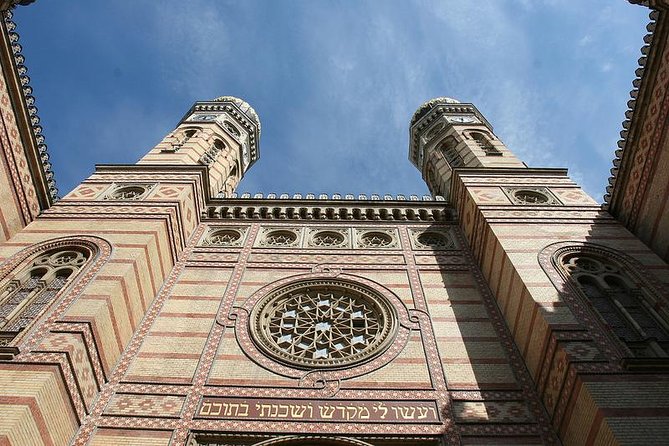
- Interior access at Dohány Street Synagogue with major historical context
- Hungarian Jewish Museum and Archives guided visit plus Holocaust commemoration
- Essential route mix of WWII memory and neighborhood walking in the Jewish Quarter
- Grand Tour add-ons including the Carl Lutz memorial area and Kazinczy Street Synagogue entry
- Optional kosher dessert or a 10% off dinner plan at Carmel after the tour
- Maximum 15 people so questions (and real conversation) still happen
Entering Dohány Street Synagogue on a timed 3-hour plan
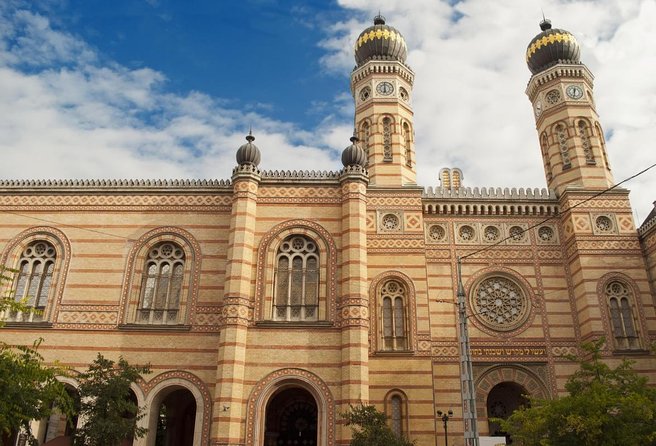
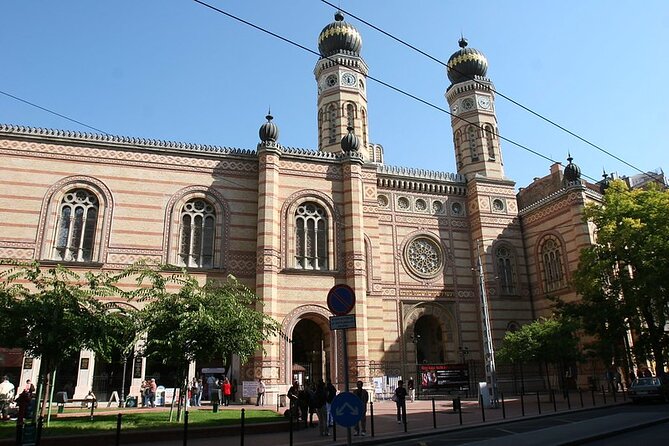
Your tour meeting point is at Dohány Street Synagogue (Dohány u. 2, 1074). The vibe here matters: it’s not a casual “look and move on” stop. You gather with your small group and guide, then begin with the big moment—an interior visit to the synagogue.
Why this first? Because it sets the tone for everything else you’ll walk through. Dohány Street Synagogue is described as the largest in Europe, and the scale of the space makes the historical story feel concrete, not abstract. You’ll also get a guided framing for what you’re seeing, instead of wandering around with only guidebooks in your hands.
One practical note from the real-world experience side: some people find the synagogue portion to involve more listening while seated than they expect. If you’re the type who gets antsy indoors, bring that up to yourself in advance—plan for a couple of “standstill” chunks, and save your walking energy for later streets and memorial areas.
Also, expect the end location to be different from where you started. That’s common for neighborhood walks, but it does help to know you’ll be able to continue on with the rest of your day without doubling back.
You can also read our reviews of more walking tours in Budapest


Hungarian Jewish Museum and Archives: art, everyday life, and a Holocaust room
After Dohány Street Synagogue, the route shifts to the Hungarian Jewish Museum and Archives. You get a local guided tour here and about 45 minutes inside, so it’s enough time to actually absorb what’s on display without feeling rushed through everything.
This stop is important for two reasons. First, the museum doesn’t only focus on tragedy. It also shows Jewish heritage through art from Hungary and Eastern Europe, and through how Judaism shows up in holidays and daily routines. That matters because Budapest’s story is not only one chapter.
Second, there is a separate room commemorating the Hungarian Holocaust. If emotional weight affects your pace, be ready for that. It’s not the kind of museum visit where you can skim and move on quickly—you’ll want to stay with it for a few minutes, even if you keep your head down and read slowly.
In terms of value, this is a big reason the tour price feels fair. Museum entry plus guided interpretation for this length of time is exactly the kind of “you’d pay anyway” value that makes a guided package worth it.
WWII memory in the open air: Wallenberg, ghetto streets, and Heroes’ Temple
From the synagogue and museum, the Essential route heads into outdoor, neighborhood memory—walkable blocks where history becomes geography.
You’ll visit the Raoul Wallenberg Holocaust Memorial Park. Wallenberg is credited with saving the lives of thousands in the Jewish community, and the park’s purpose is to keep that story present, not buried. The transition from museum artifacts to outdoor memorial space often makes the narrative land harder.
Then you pass through the old Jewish Quarter, including its WWII-era ghetto context. This is where the tour earns its “walking” label. You’re not just reading about a neighborhood—you’re seeing the area and being told how it changed under pressure.
The route also includes Heroes’ Temple, a site paying homage to lives lost during World War I. That’s a useful reminder that Jewish history in Hungary includes more than the Holocaust. You’re seeing layers—religious life, community memory, and the way wars ripple outward into a specific community’s story.
A gentle heads-up: this section can feel sobering. If you like your sightseeing with a bit of emotional distance, consider pacing yourself—take a moment before each memorial stop so you can actually absorb it without rushing your feelings.
The Grand Tour choice: more synagogues, more memorials, more time needed
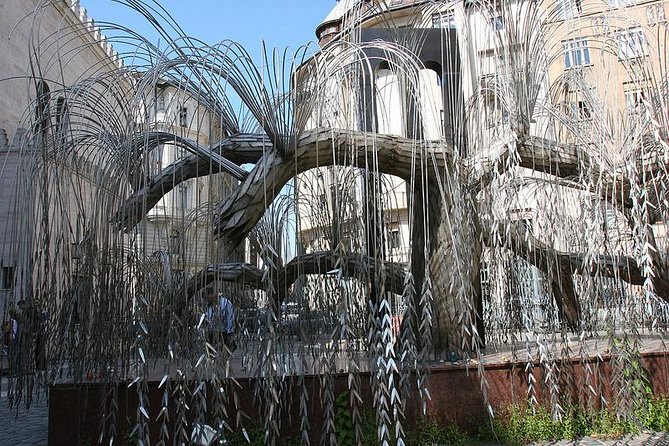
If you choose the Grand Tour option, the tour continues after the Essential route highlights. That extra time is where the itinerary becomes more “greatest hits” across the Jewish story in Budapest.
One stop is a pass by Gozsdu Udvar, described as a thriving passage. It’s a quick window into how the area functions today—people, commerce, and daily movement—right next to the heavier WWII context you’ve been walking through.
Then comes the Carl Lutz Memorial Park, tied to another major figure during WWII who helped save Jewish lives. Like Wallenberg, Lutz’s name is a way to connect individual action to a community-sized outcome.
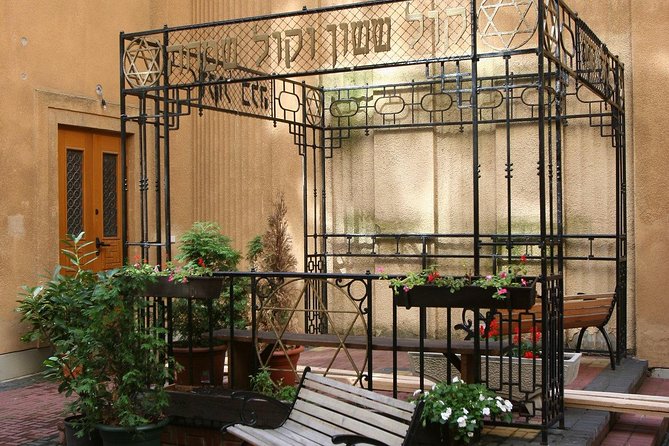
The Grand Tour also adds Kazinczy Street Synagogue with entry. This is presented as the main synagogue of the Hungarian Orthodox Jewry and is built in art-nouveau style, with a focus on what’s operating today (not only what existed back then). Having time inside here adds variety after Dohány Street Synagogue—the stories differ, and the experience feels less repetitive.
For some people, the Grand Tour is the better match because it reduces the sense of sampling. You get more locations, more architectural variety, and more memorial references before the tour ends.
Kosher dessert and the Carmel 10% discount after you finish walking
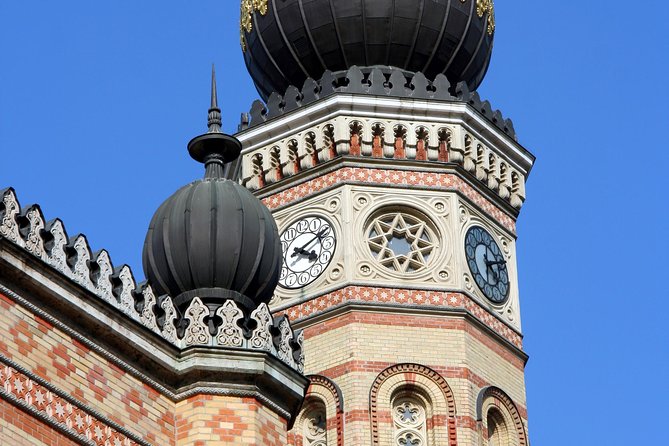
One of the nicer “don’t overthink it” parts of this tour is the food plan. At the end, you get two choices on the Grand Tour: accept an invitation to have cake in the glatt kosher Fröhlich confectionery, or take a 10% discount at the glatt kosher Carmel restaurant for later that evening.
That’s a smart way to handle timing. You don’t have to stop the walk to hunt down a place to eat right then. You can also treat it like a built-in excuse to try kosher-style comfort food—without needing to research on your own.
Even if you don’t make it into Carmel right away, the discount is a clear bonus. It also helps justify the extra cost of the longer option (if you’re comparing “short tour vs full tour” in your head).
In one account, there was also a quick Judaica shop stop on the extended route where someone found items like tefillin. That’s not something you should assume every time, but it fits the overall flow: you’re not only learning the story—you’re seeing tangible religious culture.
You can also read our reviews of more historical tours in Budapest





Price and logistics: what $83.44 actually buys you
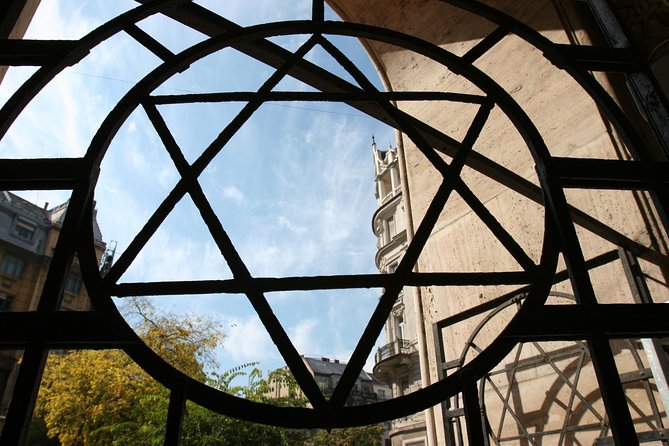
The tour costs $83.44 per person and runs about 3 hours for the Essential option. It’s listed as booked, on average, around 53 days in advance, which usually means schedules fill and popular departure times get snagged.
You’re getting a mix of paid-entry value and guided interpretation. The included elements you can count on: the guide, entrance to the Great Synagogue (Dohány Street Synagogue), and (on the Grand Tour) entrance to Kazinczy Street Synagogue. On top of that, the museum stop includes a guided visit as part of the experience flow.
Group size is capped at 15 travelers, which is a real advantage here. Jewish heritage sites can raise questions fast—about community life, historic events, and what’s practiced today. Smaller groups make it more likely your guide can answer in context instead of racing past your questions.
Logistics are also straightforward: it’s in English, you get a mobile ticket, and it’s near public transportation. No hotel pickup, so you’ll meet at the synagogue and start walking from there like a normal neighborhood day.
Is it “worth it”? For many people, yes—because the combo of synagogue + museum guidance saves you from piecing it together on your own. If you’re only looking for quick exterior photos, you might feel it’s priced for learning rather than wandering. If you want story, structure, and context, this is a solid deal.
Who should book Essential vs Grand?
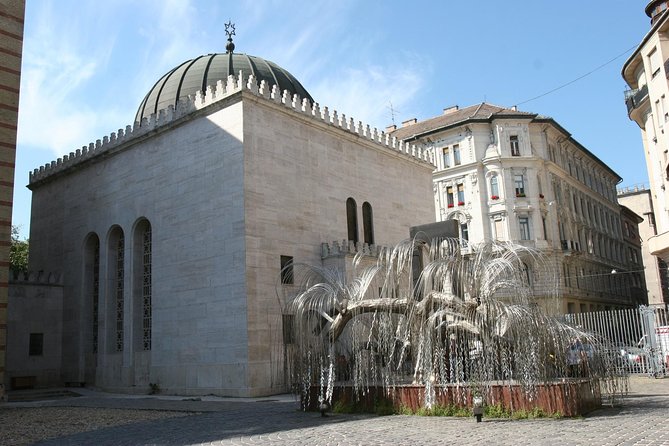
Pick Essential if you want the best concentration of the big sites in around three hours. It’s ideal for first-timers who want: Dohány Street Synagogue interior, the Hungarian Jewish Museum and Archives guided time, then the WWII memorial and Jewish Quarter walking pieces.
Pick Grand if you’re in Budapest for a longer stretch and you want more stops before you stop thinking about what you learned. The extra synagogue entry at Kazinczy Street Synagogue, the added memorial time related to Carl Lutz, plus the kosher dessert/restaurant option makes the extended day feel like a fuller picture instead of a sampler.
Also, if you care about asking questions—especially anything that goes beyond dates and into how community life worked—lean toward the option that gives your guide more room to talk.
How to get the most out of the tour (without ruining your day)
This is one of those tours where good preparation helps you enjoy it more, even if the content is intense.
First: wear comfortable shoes. You’ll be walking through neighborhoods and between sites, and even short transit gaps can add up over 3 hours.
Second: bring the right mindset. The museum includes Holocaust commemoration, and the outdoor memorial stops are designed to be reflective. You’ll enjoy the experience more if you allow time to pause, not just snap photos and move on.
Third: if you’re sensitive to long indoor listening, plan to stay patient through the seated parts—then let yourself move more during the street sections. Think of it as a rhythm: indoor interpretation, outdoor memory.
Finally: use your guide’s strength. Feedback highlights guides like Benjamin (often called Benji), as well as Barbara, Daniel, Barbie, and Turo, for engaging storytelling and clear explanations. If your guide is good at conversation, you’ll get more out of the experience by asking one or two focused questions as you go.
Should you book this Budapest Jewish Heritage tour?
Book it if you want a guided, small-group way to understand Budapest’s Jewish heritage through real sites—not just passing by buildings. The tour’s value comes from the combo of included entry, a guided museum visit, and a route that connects synagogue life to WWII memory and community survival stories.
Skip it (or at least think twice) if you mostly want nonstop walking and minimal seated time. The flow includes listening inside major sites, and that can feel like a lot if you’re expecting a purely on-the-move street tour.
If you’re balancing your Budapest schedule, this is a strong “learning anchor” day: you’ll come away with names like Raoul Wallenberg and Carl Lutz, plus a better sense of how the Jewish Quarter’s past sits right under today’s streets.
FAQ
How long is the Budapest Jewish Heritage Memorial Walking Tour?
The Essential option runs for about 3 hours.
What does the tour cost?
The price is $83.44 per person.
Where do I meet the guide, and when does the tour start?
The tour starts at Dohány Street Synagogue (Dohány u. 2, 1074). The start time is 10:00 am.
Is the tour in English, and how big is the group?
The tour is offered in English. The maximum group size is 15 travelers.
What tickets or entrances are included?
Entrance to the Great Synagogue (Dohány Street Synagogue) is included. Entrance to Kazinczy Street Synagogue is included with the Grand Tour option. A guided visit to the Hungarian Jewish Museum and Archives is part of the tour flow.
Does the tour include hotel pickup and drop-off?
Hotel pickup and drop-off are not included. The activity ends in a different location from where it starts.
Is there free cancellation?
Yes, free cancellation is available up to 24 hours before the experience start time for a full refund.