REVIEW · BUDAPEST
Budapest: Organ Concert in St. Stephen’s Basilica
Book on GetYourGuide →Operated by Hungaria Koncert Ltd. · Bookable on GetYourGuide
Cathedral acoustics make Bach feel alive. This Budapest organ concert in St. Stephen’s Basilica mixes big-boned organ music with award-winning vocals from Kolos Kováts and a flute moment by Eleonóra Krusic; I love how the sound fills the room and how the program moves across eras instead of repeating the same mood. One drawback to plan for: ticket categories control your view and closeness, since rows range from near-front to farther back.
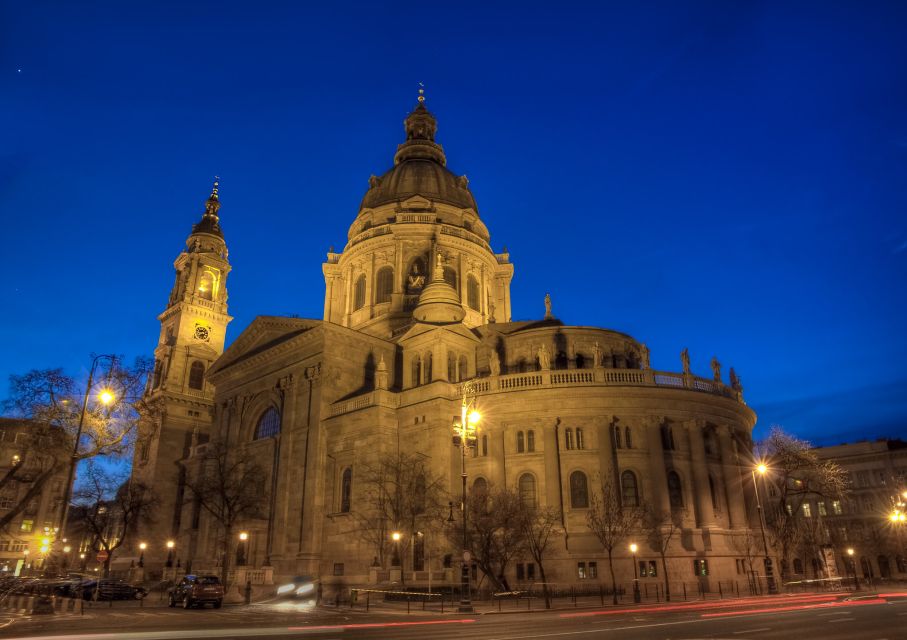
St. Stephen’s Basilica is a showpiece in itself, a neo-classical landmark where the music lands inside the building rather than being an add-on. Kováts is the vocal centerpiece for the arias, and his credentials are serious: he received the Liszt Ferenc Prize, Merit of Art, and the Kossuth Prize, which you can feel in how confidently the lines are shaped. Miklos Teleki also appears in the program billing, giving the concert extra authority beyond a one-performer setup.
You’ll meet at 19:40 at the basilica, so give yourself time to get seated before the first notes start. Tickets are split into three categories by row: I covers rows 1 to 6, II covers rows 7 to 16, and III covers rows 17 to 26, which matters if you care about seeing the performers clearly as well as hearing them well.
In This Review
- Key highlights you’ll actually notice
- Why St. Stephen’s Basilica is the perfect organ room
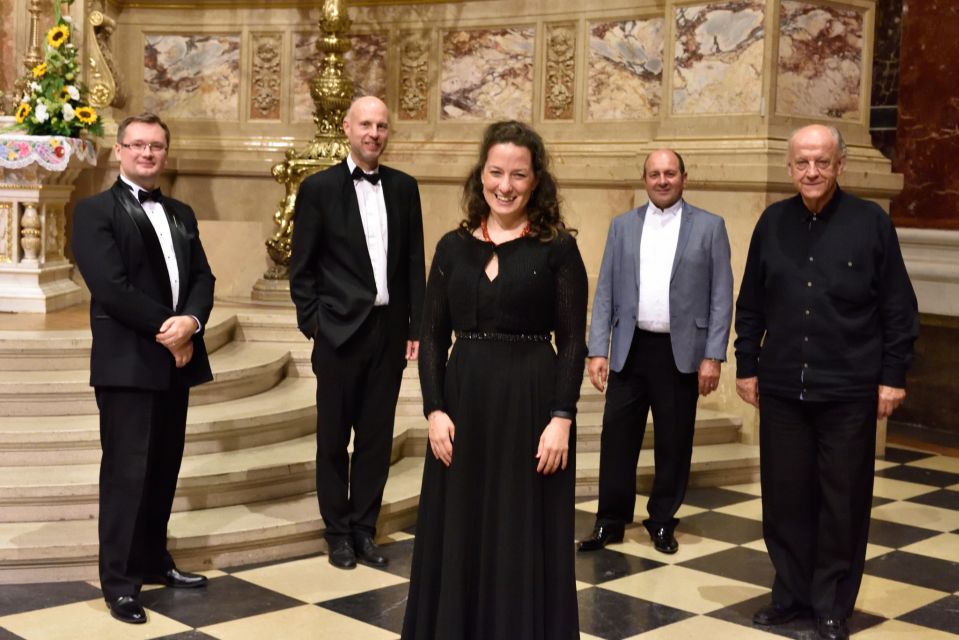
- Meet the performers: Kolos Kováts, Miklos Teleki, and Eleonóra Krusic
- The concert program, piece by piece
- Ticket categories and seating rows: where you’ll sit (and what it means)
- Timing and meeting point: arriving at 19:40
- What’s included, what’s not, and who this fits best
- Should you book this Budapest organ concert?
- FAQ
- Where is the concert held?
- What time should I arrive?
- Who performs at the organ concert?
- What vocal parts are included?
- What pieces are included in the program?
- Are tickets included?
- Are pick-up and drop-off included?
- What do the ticket categories mean?
- Who is the experience provider?
Key highlights you’ll actually notice
- St. Stephen’s Basilica is the stage, not just the backdrop, so the building becomes part of the music
- Kolos Kováts performs the arias, bringing a major Hungarian concert and oratorio pedigree
- Eleonóra Krusic adds flute color to the program, giving your ears a lighter line inside the darker organ sound
- A program that spans Mozart, Stradella, Albinoni, Liszt, Saint-Saëns, Verdi, and Bach in one sitting
- Three ticket categories (rows 1–6, 7–16, 17–26) let you choose how close you want to be
- Provided by Hungaria Koncert Ltd., a straightforward ticketed concert setup with no included transport
Why St. Stephen’s Basilica is the perfect organ room

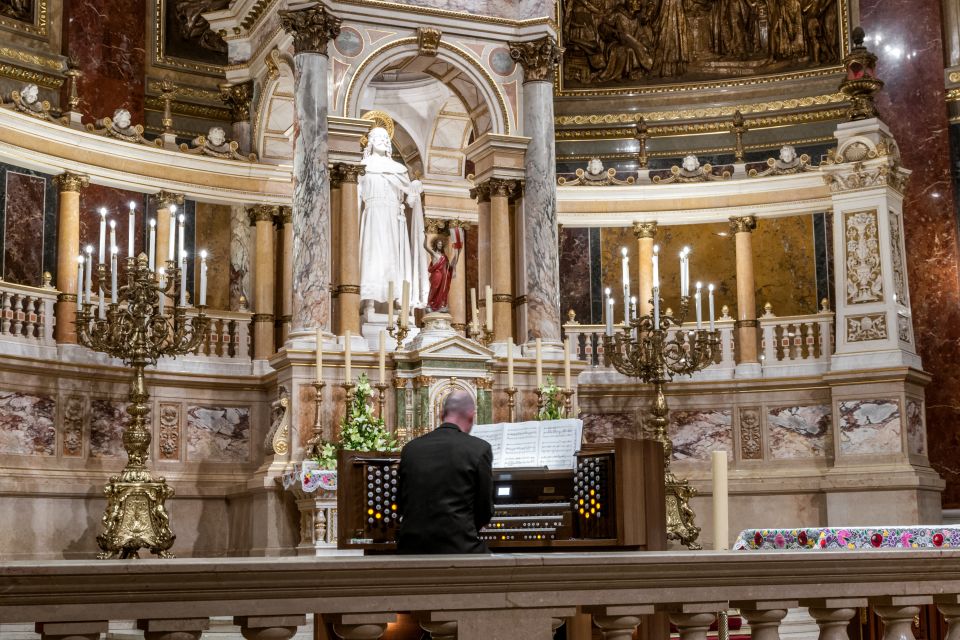
You come to Budapest for a lot of landmarks. Here, the venue does more than look impressive. St. Stephen’s Basilica is a neo-classical showstopper, and it works like a natural instrument: the hall helps shape long notes, smooth phrasing, and those big bursts of sound that make organ music feel physical.
That matters because this concert isn’t just background music. It’s built around pieces that rely on line and space. Mozart’s Fantasie in F minor K 506 is all about dramatic contrast and control, and it benefits when the hall carries both quiet detail and sharper edges. Bach’s contributions later in the program also make sense here, since his writing rewards clarity in the way themes enter, overlap, and resolve.
If you like concerts where the room has a personality, this is one of the best ways to hear that in central Budapest. You’re not traveling between venues. You’re staying put while the music goes from lyrical to dramatic to technically showy.
You can also read our reviews of more tours and experiences in Budapest


Meet the performers: Kolos Kováts, Miklos Teleki, and Eleonóra Krusic

The star vocal presence here is Kolos Kováts, who performs the arias in the program. His recognition isn’t marketing fluff from the outside of Hungary either. He received major Hungarian honors, including the Liszt Ferenc Prize, Merit of Art, and the Kossuth Prize. That kind of track record usually translates into more than volume: it points to disciplined musical phrasing, strong pitch control, and an ability to shape a text-driven line.
You’ll also see Miklos Teleki named in the performance lineup. Even if your musical ear hasn’t clocked his work yet, it’s reassuring to have a second named professional in the program rather than a concert built around one person only.
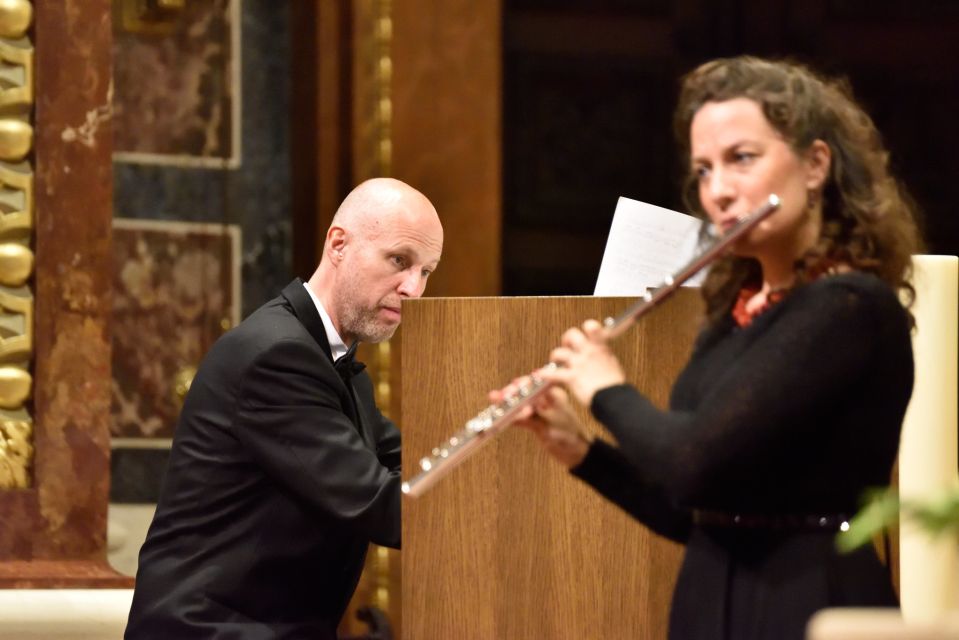
The flute slot is by Eleonóra Krusic. The data notes she’s played many times in Hungary and abroad in recent years and also in multiple orchestras. Practically, that means the flute part likely feels integrated and grown-up, not like a quick extra. In an organ concert, a flute can sound almost like a different color pencil: lighter, more agile, and great at cutting through thick harmony when the program needs contrast.
The concert program, piece by piece
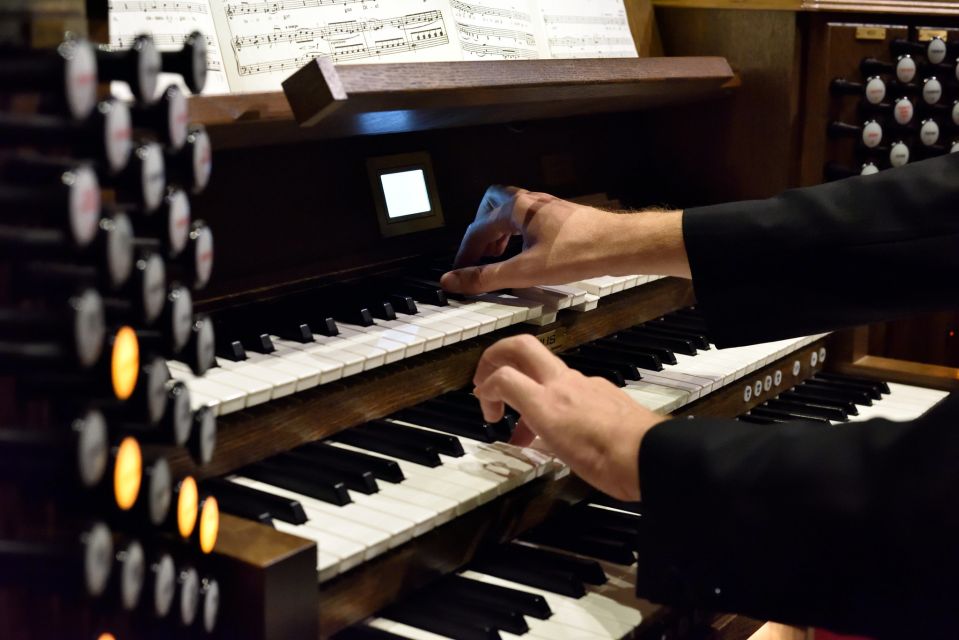
What makes this program feel intentional is the way it balances drama, devotion, and virtuosity. You get familiar names like Mozart, Bach, and Verdi, then you also get older Baroque-era composers such as Stradella and Albinoni, plus a Liszt and Saint-Saëns connection that lands in a Romantic spiritual lane.
Here’s what’s on the bill:
- Mozart: Fantaisie in F minor K 506
This is the opener energy you want if you enjoy tension and release. The title tells you it is not a tidy dance suite. It’s more about mood shifts and musical storytelling in one sweep.
- Stradella: Pietà Signore
This is one of the vocal-leaning moments. Stradella’s writing often sounds prayerful and direct, which fits the aria focus of Kolos Kováts.
- Albinoni: Adagio
Expect a slower breath of sound. Even when it is short, the point is usually to change the emotional temperature so the next movement hits with more weight.
- Liszt (with Saint-Saëns): Legend in A major (St. Francis of Assisi’s Sermon to the Birds)
This title alone signals a lighter, more imagistic side. The combination of Liszt and the Saint-Saëns phrasing is a clue that the concert is willing to go beyond strict sacred organ moods into something with narrative sparkle.
- Verdi: Prayer of Fiesco from Simone Boccanegra
Another aria-style moment. Verdi’s prayer writing often lands in the sweet spot between drama and restraint, which is ideal when a voice has strong control.
- Bach: Polonaise, Minuet and Badinerie from Suite in B minor BWV 1067
These are dance forms with personality. They’re not just “famous Bach.” They’re also a good way to hear how the performance handles rhythm and articulation in a room that amplifies sound.
- Bach: Toccata and Fugue in D minor BWV 565
This is the kind of closer that tends to leave you blinking at the ceiling. It’s all momentum: bold gestures, intricate patterning, and that satisfying inevitability when the fugue locks into place.
Now add the human variables. The concert information specifies arias by Kolos Kováts, and it also includes a flute performance by Eleonóra Krusic. That tells you the program isn’t only organ sound in every moment. You should expect the texture to change, with vocal lines and flute color breaking up the density that organ can bring when everything gets full volume.
Ticket categories and seating rows: where you’ll sit (and what it means)
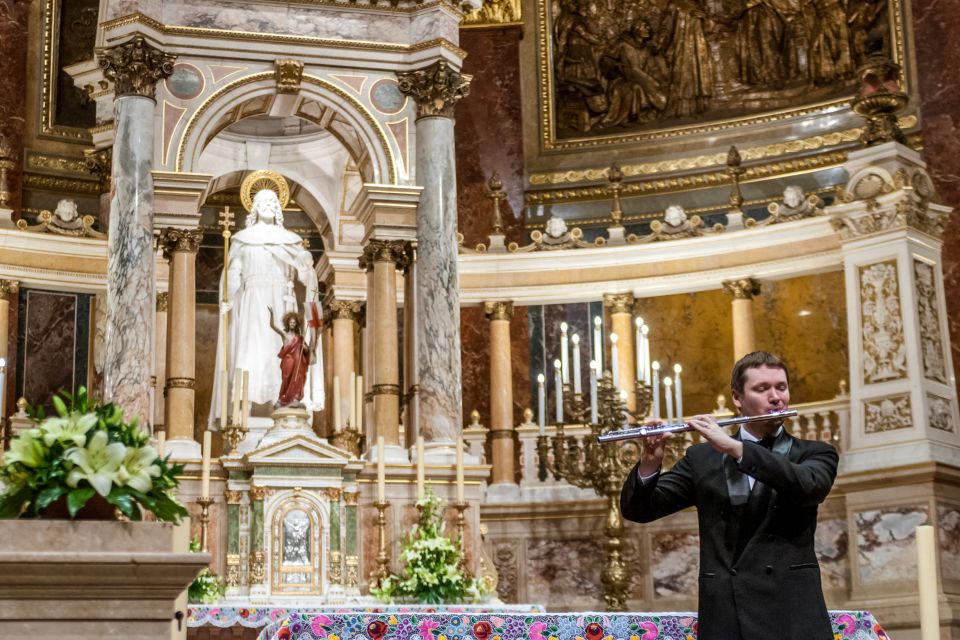
Your ticket choice is the most concrete decision you’ll make for this concert. There are three categories, each tied directly to where you’ll be seated:
- Category I: rows 1 to 6
- Category II: rows 7 to 16
- Category III: rows 17 to 26
If you’re the type who cares about seeing performers clearly, Category I is the obvious pick since it keeps you closer. But even if you choose II or III, don’t assume you’re stuck with a compromised experience. Organ music depends less on close-up facial expression and more on how the hall shapes sound. Still, you’ll get a different kind of experience when you’re farther back: more of the building, less of the performers’ physical cues.
My practical suggestion: if you’re attending as a “main event” evening, lean toward the front rows. If this is one stop in a packed Budapest day, Category II can be a sensible middle ground because it balances closeness with flexibility. Category III is fine when hearing is your priority and you can live with less visual detail.
Timing and meeting point: arriving at 19:40
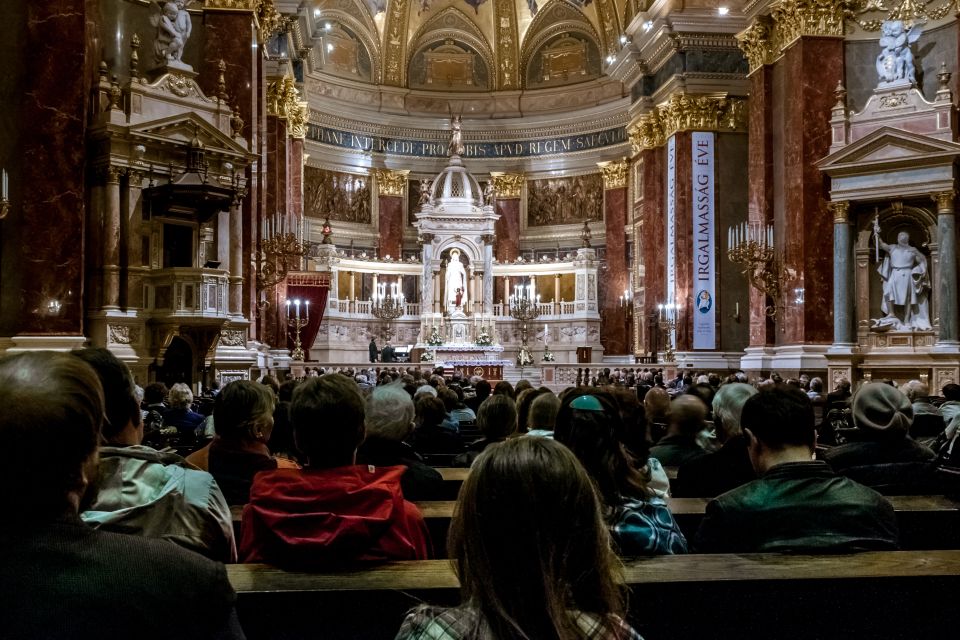
This is a ticketed concert format, so timing is about being seated before the music starts. The meeting point is St. Stephen’s Basilica at 19:40. Build your evening around that fixed time.
Because pickup and drop-off are not included, you’ll be responsible for getting yourself to the basilica on your own. The good news: meeting at the venue itself usually keeps things simple. You’re not tracking down a bus or switching transport modes mid-evening. Just go, find your seating category, and let the building do the work.
If you like your evenings to be efficient, this fits well. It’s one organized cultural stop with a defined start time and a clear musical lineup.



What’s included, what’s not, and who this fits best
What’s included is straightforward: concert tickets. Nothing else is built into the package.
What’s not included is also clear: pick-up and drop-off. If you’re staying outside central Budapest, you’ll want to plan how you’ll reach the basilica by your own route and then get back afterward.
So who is this for?
- You should book this if you want a high-quality Budapest night centered on music, not sightseeing-by-photo.
- It’s a strong choice if you enjoy both Baroque and Romantic-era touches. The program spans Mozart, Stradella, Albinoni, Liszt/Saint-Saëns, Verdi, and Bach in one sitting.
- It also works well if you’re specifically curious about hearing vocal arias and flute alongside organ, since Kováts and Krusic are explicitly part of the performance.
If you’re only in Budapest for a short time, this can be a smart “one venue, many eras” way to experience the city’s classical side without spending your evening in transit.
Should you book this Budapest organ concert?
I’d book it if you want a serious concert in a famous room with performers who bring real credentials. The big selling points are the setting—St. Stephen’s Basilica—and the way the program is balanced between famous names and style variety, with arias by Kolos Kováts and flute by Eleonóra Krusic.
Skip it only if you know you need a lot of hands-on guidance or explanation during the concert, because this is essentially a ticketed performance: you show up, you sit, you listen. It’s not described as a guided tour with extra commentary. Also, if your ideal experience requires being very close, prioritize Category I since the row ranges matter.
FAQ
Where is the concert held?
The concert takes place at St. Stephen’s Basilica in Budapest.
What time should I arrive?
Please come to St. Stephen’s Basilica at 19:40.
Who performs at the organ concert?
The program includes performances by Miklos Teleki and Kolos Kováts, and a flute performance by Eleonóra Krusic.
What vocal parts are included?
The arias of the program are performed by Kolos Kováts.
What pieces are included in the program?
The program includes Mozart Fantasie in F minor K 506, Stradella Pietà Signore, Albinoni Adagio, Liszt Ferenc and Camille Saint-Saëns Legend in A major (St. Francis of Assisi’s Sermon to the Birds), Verdi Prayer of Fiesco from Simone Boccanegra, Bach Polonaise Minuet and Badinerie from Suite in B minor BWV 1067, and Bach Toccata and Fugue in D minor BWV 565.
Are tickets included?
Yes. Concert tickets are included.
Are pick-up and drop-off included?
No. Pick-up and drop-off are not included, though they are available at an additional cost.
What do the ticket categories mean?
Ticket categories are based on seating rows: Category I is rows 1 to 6, Category II is rows 7 to 16, and Category III is rows 17 to 26.
Who is the experience provider?
The experience provider is Hungaria Koncert Ltd.