Budapest’s Castle Hill has a built-in wow factor. This Buda Castle walk strings together Gothic rooftops, Danube viewpoints, monuments, and a proper pastry stop, guided in English by professionals. You’ll also move at a human pace with a max of 10 people and mobile tickets.
I especially like two things. First, the route hits major sights fast, with time to actually look up close and take photos outside—Matthias Church and Fisherman’s Bastion are the big payoff. Second, I love the Ruszwurm stop for Hungarian sweets like Dobos torta and krémes, because it breaks up the walking in a satisfying, local way.
The main drawback: Castle Hill means hills and steps. If it’s scorching hot or pouring rain, that 2-hour plan can feel tougher than it sounds.
In This Review
- Key things I’d plan around
- Why this Buda Castle Hill walk fits a tight schedule
- Matthias Church: Gothic Revival drama and photo time outside
- Fisherman’s Bastion: neo-Gothic views without the long wait
- Holy Trinity Square and the plague memorial you can’t ignore
- Ruszwurm Confectionery: the pastry break that makes the tour feel local
- András Hadik’s horse statue and a quick lucky ritual
- Setany Promenade and the softer side of residential Castle Hill
- Sandor Palace and Karmelita Monastery: power centers with changing roles
- Buda Hill Funicular and Királyi Lovarda: movement and restored space
- Matthias Fountain and the Royal Palace area: where the story keeps going
- What the guides do that you feel on the street
- Price and logistics: how to plan so it feels easy
- Who should book this Buda Castle walk
- Should you book it?
- FAQ
- How long is the Buda Castle Tour?
- What does the tour cost?
- Is the tour offered in English?
- How large is the group?
- Do I get a mobile ticket?
- Is Matthias Church admission included?
- Are other stops like Fisherman’s Bastion free?
- Does the tour enter Hospital in the Rock?
- Where does the tour start and end?
- Can I cancel for a refund?
Key things I’d plan around
- Small group (max 10): easier questions and a less chaotic pace on crowded viewpoints.
- Panorama time at Fisherman’s Bastion: the fairy-tale terraces get real time, not just a stop-and-go glance.
- Matthias Church exterior focus: you’ll photograph outside; admission ticket is not included.
- Food stop that feels earned: Ruszwurm has a long local pedigree since 1827.
- More than royal sights: plague memorial, presidential and prime-minister office areas, and quieter streets.
- Short ride option nearby: the historic Buda Hill Funicular (operating since 1870) is part of the route area.
Why this Buda Castle Hill walk fits a tight schedule
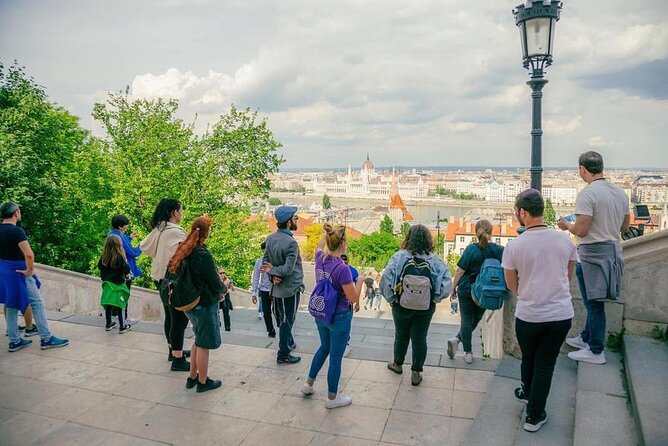
This is a 2-hour guided walk that covers the highlights of Buda Castle District without turning into a museum marathon. The pace matters here: most stops are short, usually 5–15 minutes, which keeps you moving while still giving you moments to take photos, orient yourself, and connect the sights to the bigger story of Hungary’s royal and political life.
The group size is capped at 10 travelers, which I find makes the experience feel more personal. You’re less likely to get stuck behind the crowd at viewpoints, and guides can actually keep track of everyone’s questions.
Price-wise, at $3.63 per person, it’s priced like a budget walking tour, but you still get a professional guide, plus local recommendations for restaurants, bars, and museums. The trade-off is that not every single monument entry is included—Matthias Church admission is specifically not included—so you’re getting a guided “best-of” walk rather than full ticketed access.
You can also read our reviews of more tours and experiences in Budapest.



Matthias Church: Gothic Revival drama and photo time outside
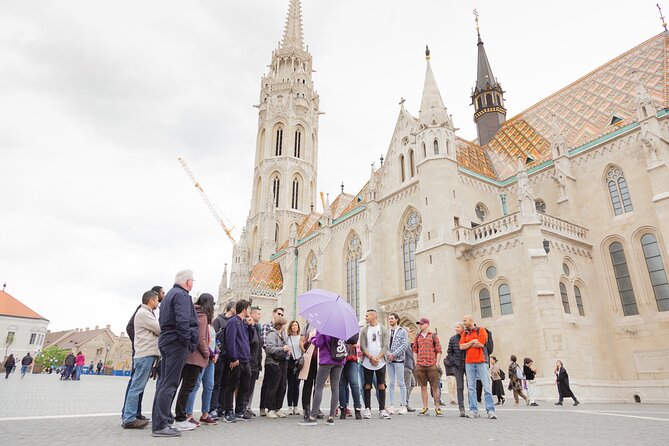
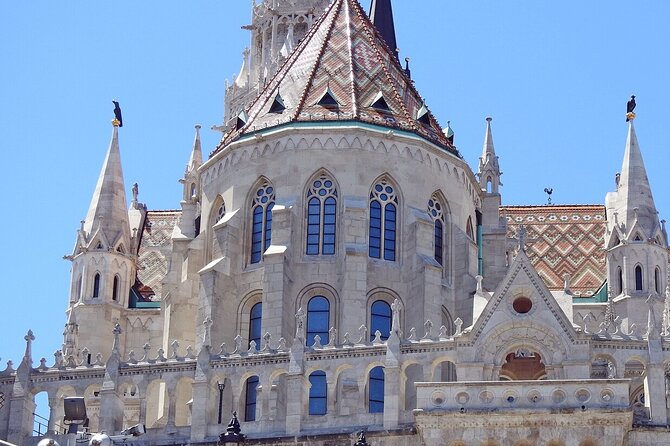
Matthias Church is one of those buildings where you feel the architecture before you even read about it. The roof tiles, the spires, and the overall Gothic Revival look are built to pull your eyes upward, and this stop is designed around that. You’ll spend around 15 minutes, with photos taken outside, plus explanations about its royal and artistic connections.
One key practical note: Matthias Church admission is not included. If you want to go inside and linger over frescoes or interior details, plan to budget for that separate entry on the day—or choose to keep it exterior-only and save time for the viewpoints and nearby stops.
If you’re the kind of person who likes to photograph façades and understand what you’re seeing (not just point and click), this stop works well. You’ll leave with a stronger sense of why the church matters, rather than just a pretty building in your phone gallery.
Fisherman’s Bastion: neo-Gothic views without the long wait
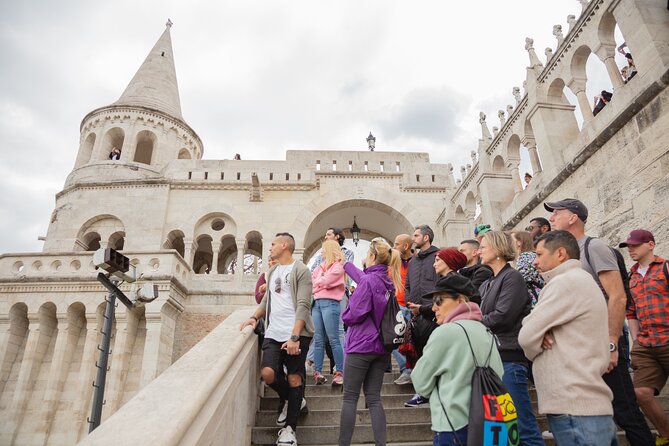
Fisherman’s Bastion is Budapest’s fairy-tale terrace, built for perspective. Expect neo-Gothic and neo-Romanesque design cues—turrets, arches, and the curved pathways that make the whole place feel staged like a storybook set. The best part is the view: you get Danube-and-city skyline panoramas that make the climb feel worth it.
This stop is about 15 minutes, and it’s marked as free to access for the tour timing. That’s important because it means the money and energy you spend goes into the guiding and timing, not into one more entry ticket.
If you want a practical tip: treat this as your photo anchor. After this, everything else feels more connected—monuments make more sense when you’ve already gotten your bearings and your skyline picture in mind.
Holy Trinity Square and the plague memorial you can’t ignore
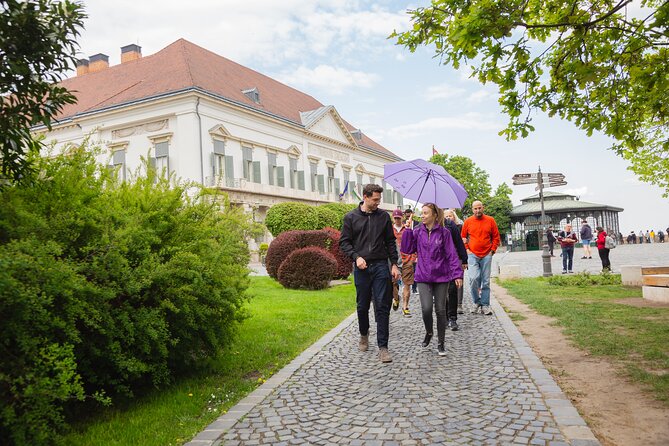
Right around Trinity Square, you’ll see the Holy Trinity Column, a tall monument tied to an 18th-century plague ending. It’s the kind of structure that’s hard to fully appreciate without a guide’s context, because the symbolism isn’t obvious at first glance—you notice the carvings and height, but the meaning clicks faster when someone explains what the monument commemorates.
You’ll have a short 5 minutes here, plus quick time to take in the iconic building(s) around Holy Trinity Square. This isn’t a “dwell for an hour” stop, but it’s a strong moment in the walk because it shifts the mood from royal power to public memory.
It’s also a good reminder that Budapest’s Castle District isn’t only about kings and palaces. It holds the darker moments too, and the stone tells those stories if you know what to look for.
Ruszwurm Confectionery: the pastry break that makes the tour feel local
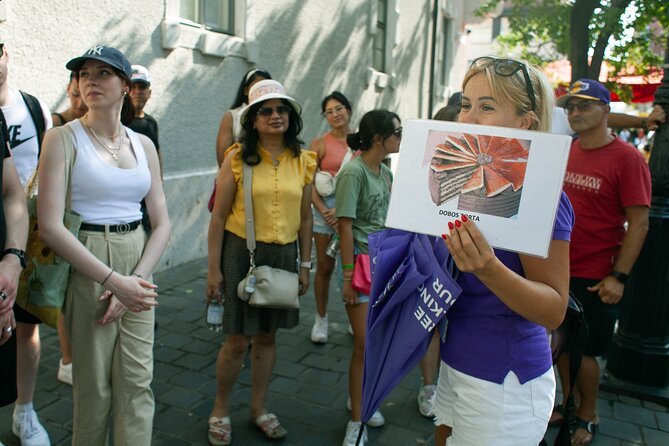
After the monuments, you get a genuine palate reset at Ruszwurm Confectionery, a pastry shop that’s been delighting people since 1827. The stop is around 10 minutes, marked as free, and it’s one of the most enjoyable breaks in any Castle District walk because it’s not just a “grab something quick” moment.
This is where you can try classic Hungarian cakes like Dobos torta and krémes. If you like desserts that feel traditional rather than trend-driven, this is the kind of stop you’ll appreciate even if you’re not “big on sweets.” You’ll also get a sense of why locals kept coming long after newer places opened.
I like that the guide doesn’t just point at the shop and move on. In practice, these tours often come with helpful recommendations about what to order and where else to go afterward—use the pastry break as your chance to ask for bar and restaurant suggestions while your energy is still okay.





András Hadik’s horse statue and a quick lucky ritual
You’ll pass by the Statue of Mounted Andras Hadik for about 5 minutes. The story here is fun: András Hadik was a legendary Hungarian soldier and Maria Theresa’s favorite general. The statue also comes with a quirky tradition—touching the horse’s shiny bronze is said to bring good luck.
This stop is short, but it’s memorable for two reasons. One, it connects you to a specific person instead of keeping the walk abstract. Two, the superstition gives you something light and human to do in an area that can otherwise feel very formal and monumental.
If you like these small rituals, this is your chance. If you don’t, you can still enjoy the history without participating in the tradition.
Setany Promenade and the softer side of residential Castle Hill
Not every stop in this tour is meant to look “touristy.” Around Arpad Toth Promenade (Setany), you’ll get a glimpse into the residential side of the Castle Hill area. This is about getting texture—seeing that this district isn’t only museums and monuments.
You’ll also hear and see stories connected to the Hospital in the Rock area, though you won’t enter the site. The plan is to pass by while the guide explains what it is, so you still get the context without turning the walk into a separate-ticket visit.
Then there’s time for a quieter, maze-like portion of Castle Hill—think labyrinth-style streets and corners that make you slow down just enough to feel the district’s layout. These bits matter because they break the walking into more than just “stop at landmark, repeat.”
Sandor Palace and Karmelita Monastery: power centers with changing roles
The tour touches two major institutions tied to Hungary’s leadership, and both are interesting precisely because their identities aren’t one-note.
First is Sandor Palace, the official residence of Hungary’s President. You’ll hear that it’s named after its original owner, Count Sándor Móricz, known as the Devil’s Rider for daring equestrian stunts. That detail makes the palace feel less like a distant symbol and more like a place with roots in real stories.
Then you’ll see Karmelita Kolostor (Carmelite Monastery). The building has been repurposed multiple times: it started as a monastery, later served as a theater and concert hall, and today it houses the Hungarian Prime Minister’s Office. In a short window, it shows how architecture survives by changing jobs.
These stops are marked as free and brief, but they give you a useful lens: Budapest’s Castle District is not frozen in the past. It keeps getting new roles while the walls stay.
Buda Hill Funicular and Királyi Lovarda: movement and restored space
At Buda Hill Funicular, you’ll be in the presence of a transport system with deep roots—it’s been operating since 1870 and it connects the Chain Bridge area to the Castle District. Even if you’re not obsessed with transit history, it’s a smart part of the walk because it explains why this hill area is so readable and reachable.
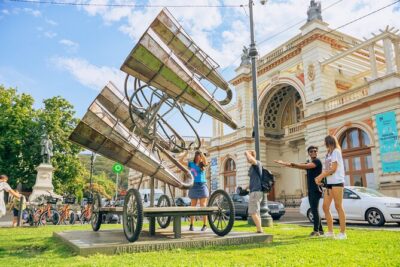
Next, you’ll see Kiralyi Lovarda, the Riding Hall in Buda Castle. This one is fascinating because it’s a restored structure with origins as a royal equestrian facility. You get to see how functional buildings evolve over time, especially in places where tourism usually focuses only on the big palaces.
If you’re traveling with someone who loves practical details, these are good stops. They add variety: less “look up at stone,” more “notice how people moved and used spaces.”
Matthias Fountain and the Royal Palace area: where the story keeps going
You’ll finish with iconic sights closer to the heart of Castle Hill. The Fountain of King Matthias is a Baroque-style monument dedicated to King Matthias Corvinus. You’ll see the central sculpture of the king riding a horse, tied to symbolism of power and flourishing during his 15th-century reign.
Then you arrive at Buda Castle, the Royal Palace area. It’s where multiple museums sit, including the Hungarian National Gallery, Budapest History Museum, and the National Library. The tour time is around 15 minutes, which is enough to get oriented at the palace complex and understand what’s there, even if you don’t have time for deep museum visits in one go.
Practical reality: if you want to go inside any museum, you may need separate tickets and extra time. But even if you don’t, the walk gives you a solid foundation so your next hour of exploring feels more purposeful.
What the guides do that you feel on the street
The tour is led by professional guides, and that shows in how the explanations land while you’re walking. The most loved guides in this route tend to bring history with a human tone—humor, quick storytelling, and making sure everyone stays part of the group.
In the wild, I’ve seen guides like Sou, Nacho, Ignacio, Sophie, and Bayler praised for exactly that: mixing facts with wit, keeping the mood light, and offering local recommendations that go beyond the monuments. People also mention getting through tough weather with strong pacing and a focus on safety, whether it’s torrential downpour or scorching heat.
So if you want a tour that’s more than a lecture, this one fits. The guide is the difference between sightseeing and actually understanding what you’re looking at.
Price and logistics: how to plan so it feels easy
At $3.63 per person, this tour is priced extremely low for a guided walk with a small group and a pass through major Castle District sites. Where you’ll notice the limits is admissions: Matthias Church ticket isn’t included, while many other stops are marked as free to access for the tour time.
Tips aren’t included, so if this is your style of tour, plan to bring a little extra for your guide.
Also, plan for the hill. Wear shoes that can handle uneven stone and steps. Bring water if it’s warm. If it’s rainy, bring a compact umbrella or rain jacket; Castle District weather can shift quickly.
For meeting points, you’ll start at Szentháromság tér (1014 Hungary) and end at Buda Castle, Szent György tér (1014 Hungary) near the National Gallery entrance. It’s near public transportation, which helps if you want to add time afterward without doing extra navigation.
Who should book this Buda Castle walk
This tour is a strong fit if you want:
- a quick orientation to Castle District sights and their meaning
- panoramic views at Fisherman’s Bastion without overpaying for access
- a break that includes real local dessert at Ruszwurm
- an English guide in a group capped at 10
It’s less ideal if you want to spend lots of time inside museums, or if hills and steps are a major problem for you. While most people can participate, this area rewards people who can comfortably walk and climb.
Should you book it?
Yes, I think you should book it if your goal is to get the Castle District’s big moments in a compact, guided format: Matthias Church outside, Fisherman’s Bastion viewpoints, plague memorial symbolism, presidential and prime-minister palace areas, and a classic Budapest pastry stop.
Skip it (or pair it with extra time elsewhere) if you’re traveling purely for museum time or you need a fully ticketed, inside-access tour. Otherwise, this is a well-paced way to understand what you’re seeing on Buda Hill fast, with guide support that keeps it fun even when the weather changes.
FAQ
How long is the Buda Castle Tour?
It runs for about 2 hours.
What does the tour cost?
The price is listed as $3.63 per person.
Is the tour offered in English?
Yes, it’s offered in English.
How large is the group?
This experience has a maximum of 10 travelers.
Do I get a mobile ticket?
Yes, it includes a mobile ticket.
Is Matthias Church admission included?
No. Matthias Church admission ticket is not included.
Are other stops like Fisherman’s Bastion free?
Fisherman’s Bastion is marked as free for the tour stop.
Does the tour enter Hospital in the Rock?
No. The tour does not enter the Hospital in the Rock; it’s passed by while the guide explains it.
Where does the tour start and end?
It starts at Budapest, Szentháromság tér, 1014 and ends at Buda Castle, Szent György tér, 1014 near the National Gallery entrance.
Can I cancel for a refund?
Yes. Free cancellation is available if you cancel up to 24 hours in advance of the experience start time.