REVIEW · BUDAPEST
Budapest Bike Tour with Hungarian Goulash
Book on Viator →Operated by Budapest Bike Breeze · Bookable on Viator
Four hours on a bike is the fast way to grasp Budapest. This tour strings together the big sights across Pest and Buda with a stop for traditional Hungarian goulash, all at an easy, mostly flat pace led by a local guide. I like that the route is designed around cycling infrastructure, so you spend more time looking up at landmarks than dodging stress.
Two highlights really land: the Andrássy Avenue UNESCO corridor with the State Opera House and Heroes’ Square, and then the food break that turns the sightseeing loop into a real meal (vegetarian is available). The main thing to think about is comfort: you do need to ride confidently with the group, and the tour can run a bit longer if people move slower, stop for photos, or ask lots of questions.
In This Review
- Key things to know before you pedal
- Price and value: where the $42.93 goes
- How the ride feels: pace, bike comfort, and group flow
- The meeting point experience: start smooth, not stressed
- Stop-by-stop: what you see and why it matters
- Elizabeth Square to Andrassy Avenue: orientation on a UNESCO boulevard
- Hungarian State Opera: grand façade and practical context
- Heroes’ Square and City Park: big monuments, then fairy-tale scenery
- Vajdahunyad Castle lake and Széchenyi Baths area: the thermal-bath postcard
- House of Music Hungary: quick culture stop in the park
- House of Terror Museum: powerful, and ticketed separately
- St. Stephen’s Basilica and Szabadság ter: religious roots and Soviet-era memory
- Hungarian Parliament Building: architecture scale and the Holy Crown
- Chain Bridge panoramas and the Castle District: where the Danube views land
- Castle Garden: restored terraces and a calmer pause before food
- Hungarian goulash lunch: your included reward stop
- What I’d do next after this tour
- Who should book this (and who might skip it)
- Should you book the Budapest Bike Tour with Hungarian Goulash?
- FAQ
- How long is the Budapest bike tour with goulash?
- Where does the tour start and end?
- What time does the tour begin?
- What’s included in the price?
- Is the Hungarian goulash meal vegetarian-friendly?
- Do I need to buy tickets for the stops?
- What kind of bike is provided, and can I get an e-bike?
- Can I cancel for a full refund?
Key things to know before you pedal
- Small group max (12 people) helps the guide keep everyone together at city pace
- Hybrid 21-speed bikes are provided; e-bikes are available as an extra
- Mostly flat route with bike lanes, built for an easy sightseeing ride
- Landmark sequence is efficient: Opera, Heroes’ Square, Vajdahunyad Castle, Széchenyi Baths area, Basilica, Parliament
- Hungarian goulash break is included, plus water refreshments
- House of Terror Museum ticket is not included, so plan for that separate cost
Price and value: where the $42.93 goes
At about $42.93 per person for roughly four hours, this tour is a strong deal if you want a guided overview without lining up for lots of separate logistics. You’re getting a local guide, a provided bike and helmet, water refreshments, and the main food event: Hungarian goulash at an open-air restaurant.
The value gets even clearer because several stops are major landmarks you’d otherwise spend your day piecing together on your own. You do see places where you can later decide whether to return for longer visits, but you’re not paying for every entry in the schedule.
The one extra cost you should expect is the House of Terror Museum, since admission is not included. If you care about that part of twentieth-century Hungarian history, it’s worth budgeting in advance so you don’t get stuck mid-itinerary.
You can also read our reviews of more cycling tours in Budapest

How the ride feels: pace, bike comfort, and group flow
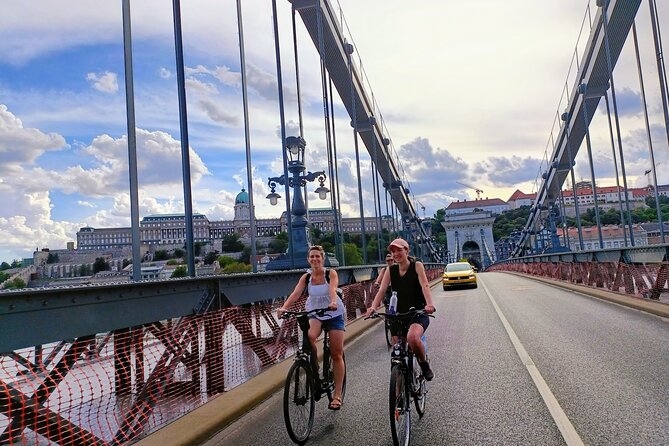
This is built for an easy ride. The route uses bike lanes and stays mainly flat, which matters in Budapest where walking-only plans can feel like a workout. The group size cap (12) helps, and the included hybrid, 21-speed bike means most people can find a comfortable gear.
You’ll also get a basic safety overview right at the start, and then you head out with the guide setting the tempo. One practical detail: helmets are provided, and the tour notes that they’re not compulsory—but I’d still wear one because Budapest traffic can be busy even when lanes exist.
The other real-world factor is time. The tour is listed as about four hours including prep, so it should finish around 14:00, but it can run a bit long when people take more photos, ride slower, or ask more questions. That’s not a dealbreaker; it’s just the tradeoff for sightseeing with time to look around.
The meeting point experience: start smooth, not stressed
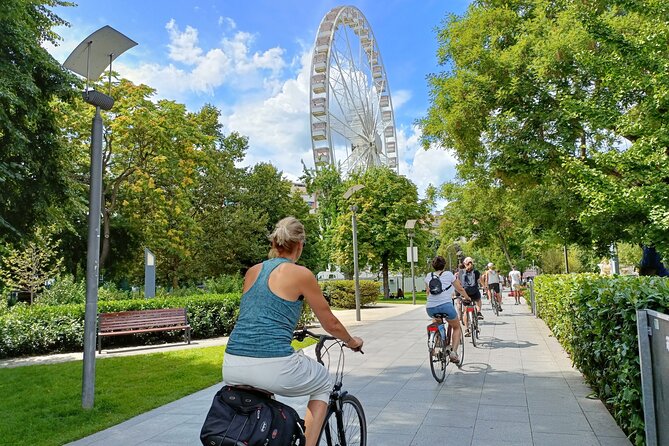
You meet at Rumbach Sebestyén u. 10, 1075 Hungary, with the tour starting at 10:00 am and returning you to the same place. Before the city portion begins, you pick up bikes and helmets and get a quick intro.
This prep time sounds small, but it’s where you get set up for the ride: bike fit, helmet, and the guide’s rules of the road for a group cycling through real streets. It’s also where you get the “we’re moving together” mindset that makes the rest of the tour feel easier.
Stop-by-stop: what you see and why it matters
Elizabeth Square to Andrassy Avenue: orientation on a UNESCO boulevard
You kick off with a quick stop at Elizabeth Square, where you get a sense of the area around the Budapest Eye Ferris wheel and the Danube Fountain. Even if you don’t plan to go inside those attractions, this orientation helps you understand how the city layers its modern landmarks onto older structure.
Then comes Andrássy Avenue, one of Budapest’s prestige boulevards and a UNESCO World Heritage site. This is a standout part of the tour because you’re riding rather than standing still, so the architecture flows past you in a way that feels quick but not rushed. You also get context for what you’re seeing, including the area’s cultural importance.





Hungarian State Opera: grand façade and practical context
At the Hungarian State Opera House, you pause briefly at the neo-Renaissance building known for ornamentation and excellent acoustics. You’ll also hear how this area connects to Hungarian music and why Andrássy Avenue is such a signature street.
A neat practical detail: the tour calls out that this corridor is linked to the first subway line on the continent. It’s a reminder that Budapest didn’t just build beautiful monuments; it also built systems that moved people early.
Heroes’ Square and City Park: big monuments, then fairy-tale scenery
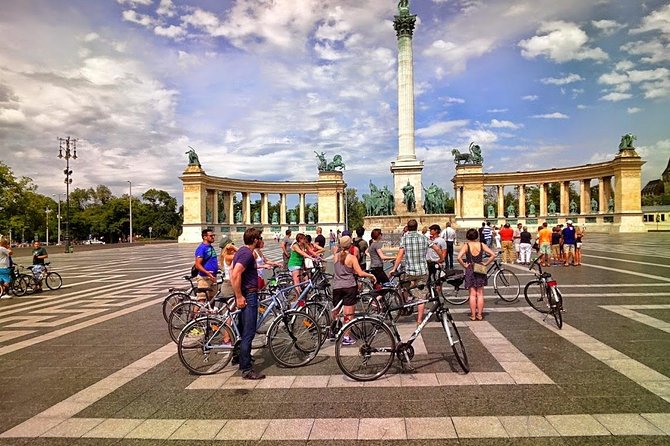
Heroes’ Square is the kind of place that instantly tells you you’re in a national-symbol zone. Here, you see the Millennium Monument and learn about Hungarian history through the statues of key historical figures, including references tied to the seven Magyar chieftains.
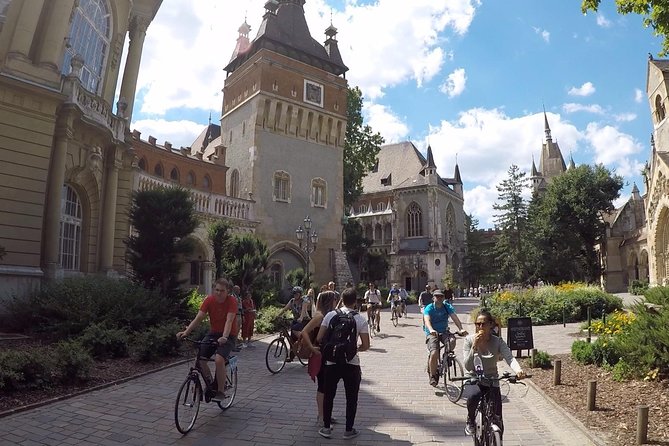
From there, you move toward City Park (Varosliget) and the area around Vajdahunyad Castle. This is one of the stops that tends to feel like a postcard. The tour frames it around Hungarian architecture, including how the castle showcases different architectural styles tied to the country’s history, and it notes that the castle houses the Museum of Hungarian Agriculture.
If you like visual variety, you’ll appreciate the quick switch from monumental stone to the park setting.
Vajdahunyad Castle lake and Széchenyi Baths area: the thermal-bath postcard
In City Park, you also get a look at the lake that surrounds Vajdahunyad Castle. A fun detail included in the tour notes: in winter, this area becomes one of Budapest’s scenic ice-rink spots.
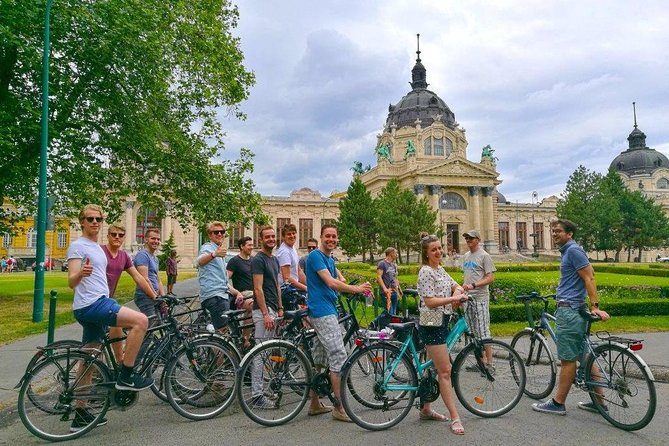
Next up, you reach the Széchenyi Baths area. The tour highlights the cupola and frames it around Hungarian bathing culture, while mentioning the complex’s Neo-Baroque look and that it dates to 1908. You’ll stop long enough to see the setting and take in the thermal pool vibe, but this is not presented as a full soak-and-relax session.
The practical takeaway: this is an ideal stop if you want to recognize Széchenyi from the outside and get your bearings for a future return when you decide whether to book a bath ticket.
House of Music Hungary: quick culture stop in the park
You pass through House of Music Hungary, a cultural venue in City Park that mixes music history with interactive-style exhibitions. The stop is short, so treat it like a taste—enough to know it’s there and get ideas for later.
House of Terror Museum: powerful, and ticketed separately
Then you hit the emotional center of the route: House of Terror Museum. The tour explains the building’s role as former Gestapo and Communist secret police headquarters, and you’ll also see a piece of the Berlin Wall referenced as part of the museum experience.
This stop is the one where tickets matter, since admission is not included. If that museum topic is important to you, plan to factor in the entry time and ticket cost so it doesn’t feel rushed when you get there.
St. Stephen’s Basilica and Szabadság ter: religious roots and Soviet-era memory
At St. Stephen’s Basilica, you get a guided look at the origins and religions tied to Hungarians, plus a focus on the holy right hand. Even if you’re not going deep into theology, this is a major Budapest landmark, and it helps connect the city’s public identity to its spiritual references.
Then you cycle through Szabadság ter, which the tour frames around a remaining Soviet army memorial. The area has historic buildings and monuments, but the point of the stop is less about lingering and more about understanding what Budapest chose to remember after major political shifts.
Hungarian Parliament Building: architecture scale and the Holy Crown
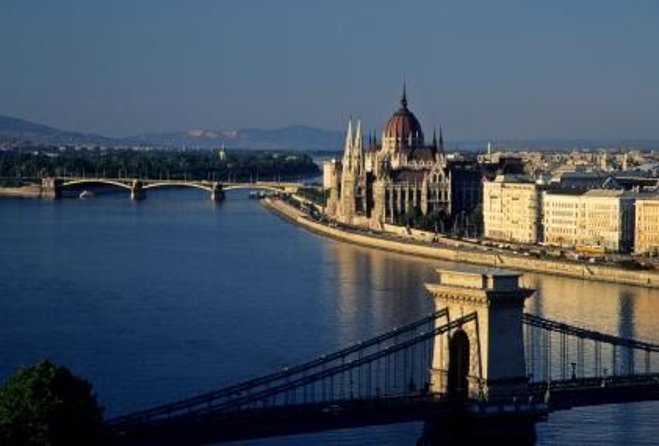
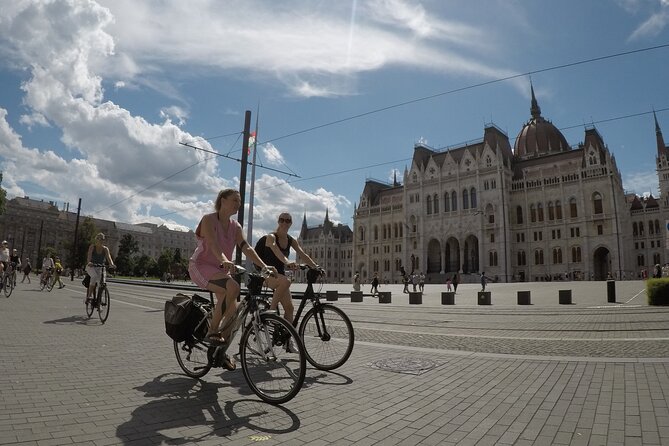
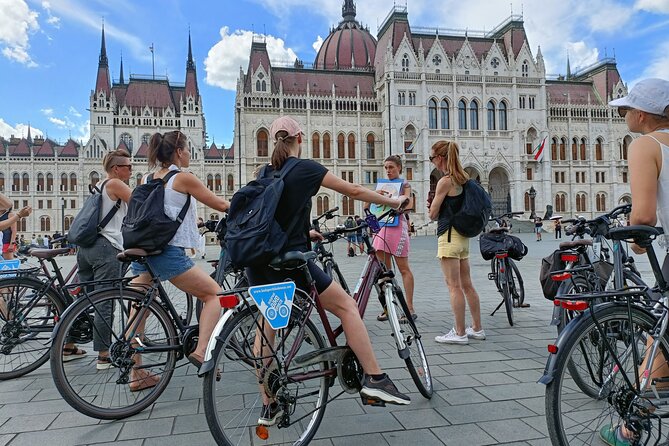
Budapest’s ride reaches its big civic centerpiece at the Hungarian Parliament Building. The tour notes it’s neo-Gothic, tied to the National Assembly, and associated with the Holy Crown of Hungary. You’ll also hear why it’s described as the third largest Parliament building in the world.
This stop works well from a bike perspective because you can take in the building’s scale while the guide gives you the “why it matters” angle. It also sets you up for a future visit if you want to step inside later.
Chain Bridge panoramas and the Castle District: where the Danube views land
As you cross the Chain Bridge, you get the architecture sweep of Parliament from another angle. The tour also builds in panoramic views over the Danube and Buda, plus guidance on what to explore on the Buda side.
Then you start heading toward the Buda Castle District, another UNESCO area. This is where the tour shifts from landmarks to place-making: the guide connects the area’s historical and political importance to what you can see from streets and viewpoints.
Castle Garden: restored terraces and a calmer pause before food
In the Castle Garden area, you get a short stop in a restored neo-Renaissance park. The focus here is on the Buda Castle and Royal palace context, plus the feel of terraces, fountains, and easy walkways.
This is a nice “reset” moment before the final payoff: the meal.
Hungarian goulash lunch: your included reward stop
The last piece of the experience is simple and effective: after cycling, you head to an open-air restaurant and get a hot bowl of Hungarian goulash. The tour includes this food, and it’s not treated like a snack—this is the energy you need for the ride back.
Vegetarian meal is available, which is helpful if you don’t eat meat. Based on the way the goulash stop gets described in practice, it’s also a practical break that keeps the rest of the sightseeing from feeling like a long string of photos.
What I’d do next after this tour
This bike tour is a fast map of where to spend more time later. If you’re planning a multi-day Budapest trip, I’d use this as your orientation day: pick two or three places that truly grabbed you and return on foot or with a dedicated ticketed visit.
For example, if the Parliament exterior impressed you, plan to come back when you can slow down. If House of Terror is on your list, treat this day as your entry point and then decide whether you want more guided context elsewhere.
And if you’re already set on thermal baths, the Széchenyi stop gives you the visual cue you need to decide whether you want to book an actual bathing session.
Who should book this (and who might skip it)
This tour fits best if you want:
- A guided overview of major Budapest landmarks in a single morning-to-early-afternoon window
- An easy ride where bike lanes reduce stress
- The included goulash meal so you’re not hunting for lunch while sightseeing
- A plan that works well as a first look if you’re new to the city
It’s less ideal if:
- You don’t feel comfortable riding and staying together at street pace
- You’re traveling with young kids, since it’s not recommended for children under 10
- You know you want long, unhurried museum time, because some stops are brief by design
Should you book the Budapest Bike Tour with Hungarian Goulash?
Book it if you like the idea of getting your bearings fast, seeing Budapest’s top highlights in one loop, and ending with a proper meal instead of a hurried sandwich. For around $43, the mix of guided storytelling, included bike gear, and the Hungarian goulash stop is a practical value package, especially if you’re short on time.
Skip it if you’re the type who wants to spend a full day inside fewer sites. This works because it keeps moving, so it’s best when you plan to return later for deeper dives of the places that hook you.
FAQ
How long is the Budapest bike tour with goulash?
The tour runs for about 4 hours (including preparation). It typically ends around 14:00, but it may run a bit longer due to unexpected things or the group’s pace.
Where does the tour start and end?
It starts at Budapest, Rumbach Sebestyén u. 10, 1075 Hungary and ends back at the same meeting point.
What time does the tour begin?
The start time listed is 10:00 am.
What’s included in the price?
Included are the local guide, a hybrid 21-speed bike, a helmet, Hungarian speciality food (goulash), and water refreshments.
Is the Hungarian goulash meal vegetarian-friendly?
Vegetarian meal is available.
Do I need to buy tickets for the stops?
Most stops are listed as free, but the House of Terror Museum admission is not included.
What kind of bike is provided, and can I get an e-bike?
You’ll use a hybrid, 21-speed quality bike. E-bikes can be booked as an extra.
Can I cancel for a full refund?
Yes. Free cancellation is available if you cancel at least 24 hours before the experience’s start time.