REVIEW · BUDAPEST
Chimney Cake Workshop Budapest Downtown – Kürtőskalács Class
Book on Viator →Operated by Hungarian Horizons · Bookable on Viator
A warm cinnamon smell and a hands-on class beat a food tour. This Kürtőskalács workshop is a practical way to learn the dough and rolling technique behind Hungary’s famous chimney cakes, with a small group and take-home results. I especially like the step-by-step setup in the bakery, and I love that you make three cakes so you can try different coatings—plus you leave with a printed recipe and a certificate. You’ll likely meet friendly hosts like Mira or Tabitha, and the class moves at a pace that keeps you baking, not watching.
The only real drawback: the workshop runs in a basement with a staircase, and it can feel fast-paced (some people clocked it at under the stated time). If you’re traveling with a stroller, a baby, or anyone with limited mobility, plan ahead—there’s no mention of a cushy seated setup.
In This Review
- Key Points to Know Before You Go
- Downtown Budapest Meets a Chimney Cake “Laboratory”
- Where to Meet Kató Néni Finomságai and How to Get Downstairs
- Inside the Class: Rolling Dough Like You Mean It
- Making Three Kürtőskalács (and Not Just One)
- Baking, Then Picking: The Moment Your Cakes Are Ready
- How Long It Takes (and Why It Can Feel Rushed)
- After the Workshop: Coffee or Tea With Your Takeaway
- Price and Value: Is $38.71 Worth It?
- Quick Tips to Get Great Results (Even as a Beginner)
- Who Should Book This Kürtőskalács Workshop?
- Should You Book This Chimney Cake Class?
- FAQ
- How many chimney cakes will I make?
- What flavors can I roll the chimney cakes in?
- What language is the class taught in?
- How long does the workshop last?
- Where do I meet the guide?
- Is the workshop suitable for young kids or babies?
- Is there a mobile ticket?
Key Points to Know Before You Go
- Central meeting point near St Stephen’s Basilica, easy to reach by public transport
- Small group (max 12), so the leader can help at your station
- Three Kürtőskalács made and baked, with coatings you choose at the end
- Downstairs bakery lab under the chimney cake shop, so expect a real working space
- Takeaway package included: paper bag(s), printed recipe, and a certificate
- Allergy note: if you have serious food allergies, don’t assume eating is safe—ask clearly
Downtown Budapest Meets a Chimney Cake “Laboratory”
This experience is built around one delicious goal: making Kürtőskalács—Hungary’s iconic sweet street food—without the guesswork. You don’t just sample pastries and call it a day. You work the dough steps, learn how to handle it on the turning molds, and then bake your own cakes right there in the shop.
What makes it especially appealing is how “small-cooking-class” it feels. The group is capped at 12 travelers, which matters because chimney cakes require timing. Too much time with the wrong heat, too little attention during rolling, and the result changes. In this format, you’re not competing for instructions.
And yes, it’s in a real bakery environment. A few people were surprised by that—because the workshop takes place downstairs, behind the counter area—so it’s helpful to know what you’re walking into. If you love authentic food processes, that’s a plus.
You can also read our reviews of more tours and experiences in Budapest


Where to Meet Kató Néni Finomságai and How to Get Downstairs

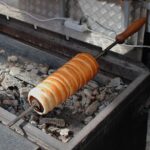
You’ll meet at Kató Néni Finomságai Downtown Budapest, Október 6. u. 6, 1051 Hungary. It’s in the city center, and reviews consistently mention it’s convenient for anyone staying around St Stephen’s Basilica.
From there, the workshop happens just under the chimney cake shop. Expect to go downstairs via a staircase behind the counter. It’s not described as a wide, theater-style classroom; think more like a compact prep and baking space.
Two practical takeaways for your day:
- Arrive on time. The session is short and the leader needs everyone ready to start together.
- Plan for standing and stairs if mobility is a concern. One review specifically flagged a steep staircase and limited seating, though staff assistance was mentioned.
If you’re the type who likes a smooth start, this is still very manageable—but showing up late can make the whole class feel rushed.
Inside the Class: Rolling Dough Like You Mean It
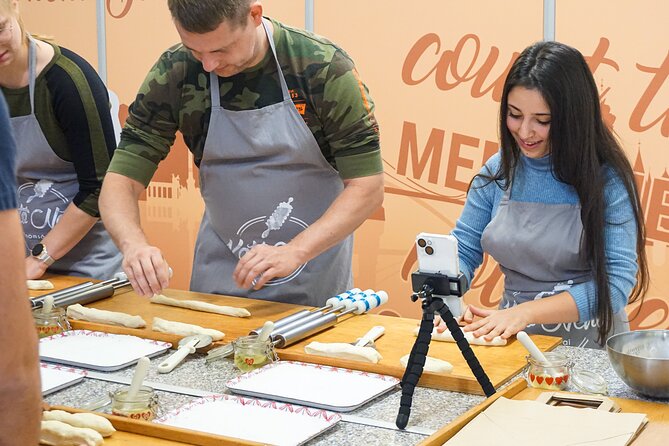
Once everyone is gathered, the leaders walk you through what to do and how to do it. The workshop is described as hands-on, with leaders who have long experience making chimney cakes. You’ll get explanations for both the “why” and the “how”: how the dough is made, how to work it, and the technique tricks that help you repeat the process at home.
You typically start with prepared dough rather than making everything from scratch. That’s a smart design for a 1 hour 15 minutes (approx.) class—because it lets you focus on the key chimney cake steps that tourists usually miss.
Then comes the part that turns your kitchen effort into your personal flavor:
- you roll your cake in coatings like cinnamon, coconut, or sugar
- you work with the molds/structure so the cake bakes into that classic shape
This “coatings” system is simple and fun. It’s also useful for you: you can compare results across three cakes, and you’ll remember what you did because each one has a different finish.
Making Three Kürtőskalács (and Not Just One)
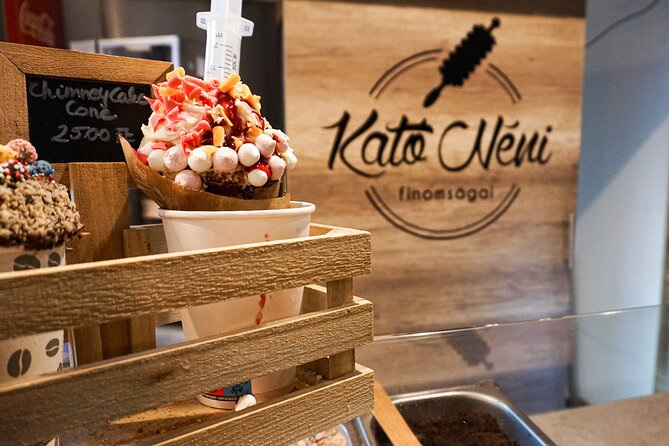
The biggest value driver here is that you make three chimney cakes. That’s not just a bigger souvenir. It changes how you learn.
Instead of getting one shot, you get a chance to improve:
- Cake #1 teaches you the rhythm of rolling and handling
- Cake #2 helps you correct small mistakes
- Cake #3 is where many people land on the best-looking, best-textured result
Reviews mention that the quality often improves across the three cakes. That’s exactly what you want from a beginner-friendly workshop: practice inside a short session.
You also get a choice of flavors for rolling. The usual options listed are simple sugar, coconut, and cinnamon. Not every class ingredient list is guaranteed to vary, so treat this as the standard menu and be ready to confirm on the day if you’re picky.
Baking, Then Picking: The Moment Your Cakes Are Ready
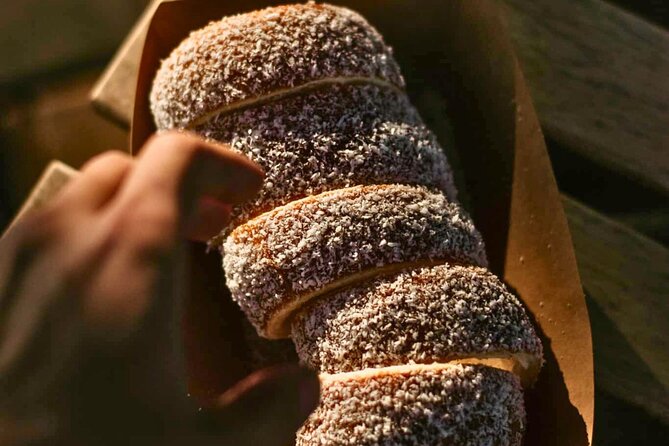
After the rolling steps, your cakes are baked on the molds. The class is set up so you’re not waiting around. You’re working at a station while the oven timing does its thing.
When your cakes are ready, you’re given paper bags to take them away. This is one of those small logistics details that makes a difference: you’re leaving with a sweet snack that won’t turn into a mess in your day bag.
You’ll also receive:
- a printed recipe (so you can actually try again at home)
- a certificate from the host (yes, it’s a bit cute, and people genuinely enjoy it)
Some hosts also take a moment for photos—so if you like documenting the process, you’re not stuck constantly posing while trying to bake.
You can also read our reviews of more tours and experiences in Budapest




How Long It Takes (and Why It Can Feel Rushed)
The workshop runs about 1 hour 15 minutes. But multiple reviews mention it can feel faster than expected, with some people reporting closer to 25–60 minutes depending on flow that day.
Why does that happen? Likely because it’s a compact kitchen setup in a small shop. If the group starts late, or if the schedule is tight, the instructor may push through steps quickly so everyone still gets all three cakes baked.
So here’s the advice that helps you enjoy it:
- Don’t plan a tight schedule afterward. Give yourself buffer time.
- If you prefer lots of background and slow storytelling, you might want to balance this with another stop where you can read or listen at leisure.
A few people asked for more history. In this format, the emphasis is technique and making the cakes—not long lectures.
After the Workshop: Coffee or Tea With Your Takeaway
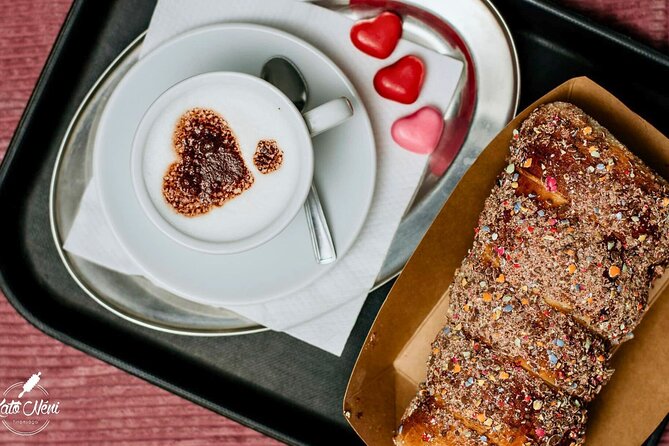
When the baking work is done, you can order coffee or tea and enjoy your Kürtőskalács at the tables of the chimney cake shop. That’s a nice payoff because you get to eat while the experience is still fresh in your mind.
It also helps you troubleshoot your own success. If one cake came out better, you’ll notice it immediately: crispness, sweetness distribution, and how the coating behaves as it cools.
Price and Value: Is $38.71 Worth It?
At $38.71 per person, you’re not paying for a casual dessert tasting. You’re paying for:
- a small-group hands-on class
- experienced guidance while you roll and bake
- three finished Kürtőskalács (plus a bag to take them home)
- a printed recipe and certificate
In plain terms: you’re buying a skill-building food experience where the output is edible. If you like learning through doing, the price starts to make sense fast—because you’re taking home more than one cookie-like item.
That said, a couple of reviews called it overpriced or underwhelming. Those concerns often come down to the delivery (rushed pace, less enthusiasm, or weaker taste). If you’re sensitive to service energy, read the class as a practical workshop, not a theatrical show.
If you go in expecting a short, efficient baking session and you value take-home results, it’s easier to feel like you got your money’s worth.
Quick Tips to Get Great Results (Even as a Beginner)
You don’t need to be a confident baker. This class is designed for people who want to learn without complicated equipment. Still, a few practical moves help:
- Watch the rolling technique closely before you copy it at your station. The rolling step is where your final texture gets decided.
- Commit to the coating choice (cinnamon, coconut, or sugar) and don’t overthink it. The fun is comparing the three cakes.
- Go with an appetite. You’ll likely want to taste your best one right away after baking.
- Ask about allergies early and clearly. If you have a serious allergy (like a nut allergy), don’t assume the workshop is safe for eating. One account notes the chef warned that inquiries may not reflect the kitchen reality and that allergies may not be safe if the allergen is airborne. You might still participate in making, but you may not be able to eat what you make.
Also, consider this: the best time to enjoy a fast class is when you’re not stressed about timing. If you’re the type who hates “go, go, go,” this may feel like a sprint.
Who Should Book This Kürtőskalács Workshop?
This works well for:
- couples and small friend groups who want a hands-on activity in central Budapest
- travelers who want to learn a repeatable dessert technique, not just buy a pastry
- anyone staying near St Stephen’s Basilica who wants an easy, walk-in-friendly neighborhood plan
It may not be ideal for:
- families with babies (there’s no secure place to leave a baby mentioned)
- kids under 7 years (not recommended)
- people with mobility issues due to the downstairs staircase and limited seating
- anyone who needs long, storytelling-heavy cultural explanation—this is more technique than lecture
Should You Book This Chimney Cake Class?
If you want a fun, practical Budapest food activity and you like the idea of taking home what you made, I think this is a strong bet. The combination of small group size, three baked Kürtőskalács, and a takeaway kit (paper bags, recipe, certificate) is exactly what turns this from a novelty into a real experience.
Book it if you’re excited to roll dough, bake on molds, and learn the steps you can actually recreate later. Skip it if you’re looking for a slow pace, lots of history, or barrier-free accessibility.
FAQ
How many chimney cakes will I make?
You’ll make three Kürtőskalács in the workshop.
What flavors can I roll the chimney cakes in?
The available coatings are typically simple sugar, coconut, and cinnamon.
What language is the class taught in?
The workshop is offered in English.
How long does the workshop last?
It runs about 1 hour 15 minutes (approx.).
Where do I meet the guide?
You meet at Kató Néni Finomságai Downtown Budapest, Október 6. u. 6, 1051 Hungary.
Is the workshop suitable for young kids or babies?
It’s not recommended for families with babies due to no secure place to leave the baby. It’s also not recommended for kids under 7 years.
Is there a mobile ticket?
Yes, the workshop includes a mobile ticket, and it’s near public transportation.
If you want, tell me your travel dates and where you’re staying in Budapest, and I’ll suggest a smooth plan around this class (what to do right before and after so the timing feels easy).