REVIEW · BUDAPEST
Explore Budapest from the Local’s Perspective – Public Transportation Tour
Book on Viator →Operated by Fungarian · Bookable on Viator
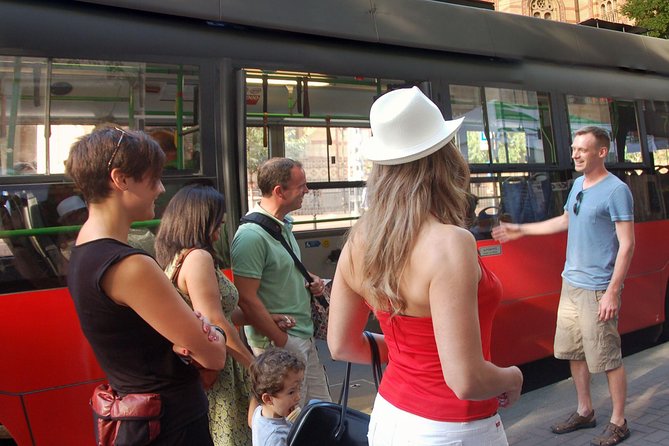
Budapest makes sense with a transit coach. In 3 hours, you get a 24-hour public-transport pass and a guided route that hits big sights like Heroes’ Square and Buda Castle. I love that you try five different transportation options, so you stop guessing and start moving. One possible drawback: the pace is built for orientation and movement, not slow, all-day museum time.
I also like that the guide explains what to do, not just what you’re looking at. When I rode with Miklós, the focus stayed practical: how to read lines, where transfers happen, and how to plan a smooth route the same day. Pickup from your accommodation plus a route map and a Rider’s Booklet makes the experience feel like a shortcut to understanding the city.
You’ll connect the grand boulevards and iconic bridges with real transport hubs, from Andrássy Avenue through Deák Ferenc tér, then up toward Gellért Hill for the skyline view. Expect a lot of “oh right, this is how Budapest works” moments—many of them on trams.
In This Review
- Key things you’ll notice on this Budapest public transportation tour
- Why learning Budapest by public transport changes everything
- The value of the 24-hour transit pass (and the “know-how” you get)
- Andrássy Avenue and Heroes’ Square: grand boulevards, fast context
- City Park stops: Vajdahunyad Castle and the fine-art zone
- Margaret Bridge and the ring-road tram lines: learn the rhythm of the city
- Nyugati Station to Deák Ferenc tér: where transfers become simple
- Buda Castle area, Gellért Station design, and thermal-bath scenery
- Liberty Bridge to Gellért Hill: the payoff view you’ll plan around later
- Kálvin Square: finishing with another major hub
- Transportation lessons you can use right away after the tour
- Price, what’s included, and what costs extra
- Who this Budapest transit tour is best for
- Should you book this public transportation tour?
- FAQ
- How long is the Budapest public transportation tour?
- Does the tour include pickup from my accommodation?
- Is the tour offered in English?
- Do I get a public transportation pass?
- What’s included besides the guide?
- Are food and drinks included?
- Will I ride different types of transportation?
- Is this a private tour?
- Can I cancel for free?
- What should I do if I need help planning routes during my trip?
Key things you’ll notice on this Budapest public transportation tour
- 24-hour pass you can keep using right after the tour
- Five transport modes so you understand how the system fits together
- Route map + Rider’s Booklet for confident follow-up planning
- Transport hubs with purpose (Nyugati, Deák Ferenc tér) instead of random sightseeing stops
- Iconic Danube moments around Margaret Bridge, Liberty Bridge, and the Gellért Hill viewpoint
Why learning Budapest by public transport changes everything
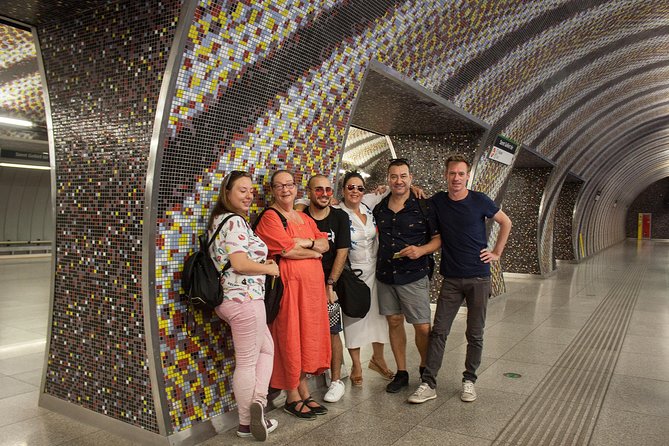
Budapest is one of Europe’s easiest capitals to move through—once you understand the pattern. This tour is built around that idea. You’re not just seeing landmarks; you’re learning how the city’s transit threads them together.
That matters because many first-time visitors waste time doing the mental math: Which line goes where? Where do I switch? How do I avoid walking back across the river? A guided day built around public transport turns those questions into simple actions.
It’s also a smart way to cover ground. In about three hours, you can touch both sides of the river, get a feel for major districts, and still leave with a plan for the rest of your stay.
You can also read our reviews of more tours and experiences in Budapest.



The value of the 24-hour transit pass (and the “know-how” you get)

The ticket package is the big reason this tour feels like good value. You’re not paying just for walking and photos—you’re getting a 24-hour pass for public transportation that you can use afterward.
Then you get the support tools: a map of the route, a Rider’s Booklet (a manual for Budapest public transport), and a small set of extras like a notebook and souvenir pen. That combination helps you avoid the usual problem after sightseeing tours: you go home impressed, but you still don’t know how to ride the city.
You’ll also get a mobile ticket, which is useful in practice because it keeps the pass handy. If you’re staying more than a day, that pass can pay for itself quickly—especially if you plan to use trams and metro instead of relying on taxis.
The tour is offered in English, and it’s a private experience for your group. That usually means the guide can slow down for questions, which is exactly when transit lessons matter most.
Andrássy Avenue and Heroes’ Square: grand boulevards, fast context
Andrássy Avenue is a boulevard with real personality: lined with Neo-renaissance mansions and townhouses, and recognized as a World Heritage Site. It’s also a major shopping and café corridor, with theatres, embassies, and luxury boutiques along the way.
The guide’s job here is to give you the “read” of the street. You’re not just passing buildings; you’re learning what makes this corridor so important in the city’s story and how it connects to the rest of Budapest’s layout.
Then you hit Heroes’ Square, one of the city’s key landmark points. The statue complex is the headline, featuring the Seven chieftains of the Magyars and other Hungarian leaders. You’ll also hear about the Memorial Stone of Heroes, which people often incorrectly call the Tomb of the Unknown Soldier—useful correction, and it saves you from confusion later.
You’ll spend about 15 minutes here. That’s not long enough for deep museum wandering, but it’s perfect for orientation: you’ll understand why this square matters before you move on.
City Park stops: Vajdahunyad Castle and the fine-art zone
Next you’re in City Park, where the setting shifts from monumental squares to something more strollable. Vajdahunyad Castle is the star stop in this area. It was built in 1896 for the Millennial Exhibition celebrating 1,000 years since the Hungarian Conquest of the Carpathian Basin.
The interesting detail is the design. The castle copies landmark buildings from across the Kingdom of Hungary, with special emphasis on Hunyad Castle in Transylvania (now in Romania). Today, it houses the Museum of Hungarian Agriculture, which is described as the biggest agricultural museum in Europe.
This is a great stop if you like architecture and “why it’s here.” If you’re expecting a true fortress experience with lots of time inside, manage expectations. The stop is short, so you’ll focus on the exterior and the quick context rather than going deep into exhibits.
Right nearby is the Museum of Fine Arts, facing the Palace of Art. The building dates to 1900–1906 in an eclectic-neoclassical style, designed by Albert Schickedanz and Fülöp Herzog. It’s home to more than 100,000 pieces of international art, covering European art across periods (not only Hungarian works).
Across the square sits the Budapest Hall of Art, a contemporary museum in a historic building. It hosts temporary exhibits, and it includes a bookshop, library, and the Műcsarnok Café with views over Heroes’ Square.
If you love museums, you’ll probably want to come back later under your own steam. If you don’t, that’s okay—the area itself is worth seeing, and the guide helps you identify what’s what so you can choose your next move.
You may also pass the City Park Ice Rink. It opened in 1870 and is described as the largest and one of the oldest ice rinks in Europe. Even if it’s not operational in your season, it’s a fun detail that adds texture to the park.
Margaret Bridge and the ring-road tram lines: learn the rhythm of the city
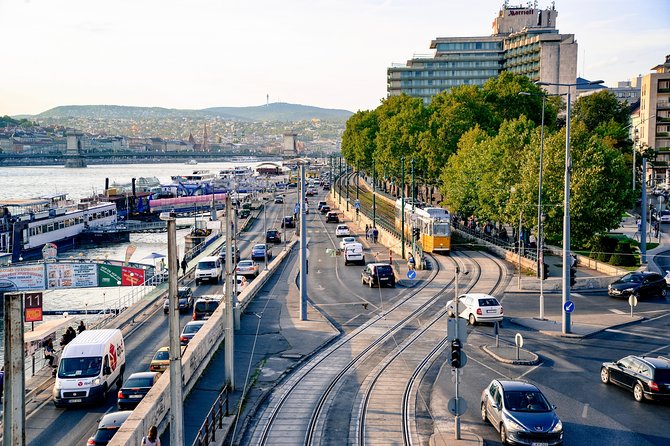
From the Heroes’ Square area, the tour starts connecting you to Budapest’s transport rhythm. A key transfer point is Jászai Mari tér, a spacious hub at the foot of the Margaret Bridge. The square also has social energy, so it doesn’t feel like a sterile transit stop.
Then you get Margaret Bridge itself, a three-way bridge linking Buda and Pest across the Danube and tying Margaret Island to both banks. It’s the second-northernmost and second-oldest public bridge in Budapest. That’s one of those facts you’ll remember because it changes how you think about the city’s geography.
Here’s where the “locals perspective” really shows. Budapest’s ring road—Nagykörút—runs with some of the busiest tram service in the world (the legend is that it’s the busiest). The trams run up to every 15 minutes, and during rush hours the interval drops to about every 2 minutes.
Why you’ll care: once you understand the ring-road pattern, you’ll be able to move cross-town without always going through the most crowded downtown areas. It’s also a reminder that the city isn’t just sightseeing spots. It’s a working system, and it’s built to keep people moving all day.





Nyugati Station to Deák Ferenc tér: where transfers become simple
If you want one feeling after this tour, it’s confidence at junctions. Nyugati pályaudvar (Western Railway Station) is one of Budapest’s three main terminals. It’s on the Pest side, and it’s connected by tram lines 4 and 6 and the M3 metro line.
The surrounding area is a busy meeting point, with restaurants, bars, and a lot of shopping. This is where you’ll start to see how Budapest handles movement between train travel and everyday city travel.
Then you reach Deák Ferenc Square, named for Ferenc Deák, often described as the Wise Man of the Nation. It’s a major transport junction where three metro lines converge under the square. Trams 47 and 49 also originate here, along with several bus lines.
This is a key stop because it teaches you the logic of transfers. After a tour like this, you’re less likely to panic when you see a map with many lines. You’ll know that Deák Ferenc tér is one of the places the city intentionally funnels connections.
Next you visit Elizabeth Square, a park next to Deák Ferenc tér that’s popular with younger crowds. The square is also known for late-evening gatherings, with alcoholic beverages sold around the grassy areas. Even if you’re not here for nightlife, it’s useful to see where people actually hang out after a day of riding the rails.
Buda Castle area, Gellért Station design, and thermal-bath scenery
On the Buda side, the tour focuses on viewpoints and big visual anchors. You’ll spend time near the Buda Castle area, and the tour description notes the option to explore with the funicular, linked to the idea of travel up from Gellért Hill.
Even with limited time, this area is where Budapest starts feeling dramatic. You get that classic skyline approach, plus the sense that the city is built in layers. The guide route also includes top attractions like the Chain Bridge and the Royal Palace area, which helps you place those icons in the bigger city picture.
You’ll also stop at Szent Gellért Square, near the Gellért Hill area. The station design is water-themed: waves of the Danube are represented in wavy benches, with a small fountain and pond decoration near the entrance. It’s a small stop, but it’s the kind of detail you remember because the city uses transit spaces like public art.
The tour includes the Gellért Thermal Baths and Swimming Pool complex (Gellért fürdő) as a stop near Hotel Gellért. You might not have time to go inside during this walking-and-riding format, but seeing it helps you understand the neighborhood’s draw and why people plan full day bath visits.
Liberty Bridge to Gellért Hill: the payoff view you’ll plan around later
To reach more of the hill-and-view area, the tour walks across Liberty Bridge (Szabadság hid). This bridge is a direct route to the foot of Gellért Hill, giving you a clean visual “transition” from city movement to panorama.
Then comes Gellért Hill itself, at about 235 meters above the Danube. It’s described as one of Budapest’s best panorama points. The hill is named after Bishop Gellért, who arrived around 1000 AD to help convert Hungarians to Christianity. There’s also a legend that resisting pagans rolled him down the hill in a barrel into the Danube in 1046.
That story is exactly the kind of local context that makes a view feel connected to the city, not just scenic. When you finish the hill segment, you’ll know what direction to aim for if you want similar photos later without wandering.
You’ll also be in a position to keep using transit after the tour. The day is structured so the route teaches you the shortcuts you’ll need for the rest of your itinerary.
Kálvin Square: finishing with another major hub
The last city-center connection point on your route is Kálvin Square (Kálvin tér). It’s a major square and intersection named after the French Protestant Reformer John Calvin, with a large Reformed Church nearby.
It’s also a transport hub with tram, bus, and trolleybus routes. The Hungarian National Museum is near Kálvin tér, which gives the square extra purpose if you want to branch out afterward.
Finishing here makes sense. You’re leaving the tour with another “grid point” to use. Budapest is easier when you can bounce between squares and hubs instead of building routes from scratch.
Transportation lessons you can use right away after the tour
The best part of a transit-focused tour is what happens the next morning. If you do this well, you’ll stop relying on random luck and start using the system like a regular.
Here’s what you’ll likely find most useful:
- How to plan a route from real transfer points like Deák Ferenc tér and Nyugati instead of guessing
- How different transport modes fit together for short jumps and longer rides
- How to read the day’s movement patterns around busy tram corridors and ring-road service
- How to turn the 24-hour pass into actual travel time, not just a souvenir ticket
One more practical perk: the guide experience includes help beyond the standard route. In one case, the guide supported airport departure planning and helping get to a needed destination. That’s a sign the guide isn’t just reciting facts—they’re solving problems.
So if you’re the kind of person who hates wasting time on day-one logistics, this tour works in your favor.
Price, what’s included, and what costs extra
At $118.58 per person for about 3 hours, the price is fair when you look at what you get. A guided city tour plus a transit pass for the full next day would be expensive by itself in many cities.
Here, the value stacks:
- Local guide
- 24-hour public-transport pass
- Map showing the route
- Rider’s Booklet manual
- Notebook and souvenir pen
- Mobile ticket
What’s not included is food and drinks. That’s normal, and it keeps the tour flexible. The day can run without needing you to stop for meals, but you’ll want to plan your own breaks around the areas you pass.
The tour also mentions group discounts, which can help if you’re traveling with friends and want to keep costs down without losing the “small-group with a guide” advantage.
Who this Budapest transit tour is best for
This tour fits best if you want a strong start and you’re willing to walk a bit between rides. It’s also a good choice if you like practical learning—how to use public transportation efficiently—rather than only collecting monuments.
It’ll suit you if you’re:
- On a short trip and want fast orientation
- Planning to use trams and metro during your stay
- Confident enough to move around on your own after the guide shows you the ropes
It may not be ideal if you want long museum time or if you hate walking between stops. This is a smart route for movement and understanding, not a slow cultural crawl with hours inside venues.
Should you book this public transportation tour?
If you’re visiting Budapest for the first time and you want to stop feeling lost, I think this is worth booking. The combination of a 24-hour transit pass, a route map, and a guide who focuses on how to use the system is what makes it more than sightseeing.
Book it if you want to learn Budapest in a way you can repeat—especially the big junctions like Deák Ferenc tér and Nyugati, and the rhythm of tram travel around the ring road. Skip it only if your main goal is deep museum time or you prefer a strictly walking-only itinerary.
FAQ
How long is the Budapest public transportation tour?
It’s about 3 hours.
Does the tour include pickup from my accommodation?
Yes. Pickup is offered, and you’ll need to provide your address in the requirements box.
Is the tour offered in English?
Yes, it’s offered in English.
Do I get a public transportation pass?
Yes. You receive a 24-hour pass for public transportation.
What’s included besides the guide?
Included items are a notebook, souvenir pen, a map showing the route, a Rider’s Booklet (manual for Budapest public transport), and the local guide. A mobile ticket is also included.
Are food and drinks included?
No, food and drinks are not included.
Will I ride different types of transportation?
Yes. The tour is designed to let you experience five different means of transportation during the route.
Is this a private tour?
Yes. Only your group participates.
Can I cancel for free?
Free cancellation is available up to 24 hours in advance of the experience start time for a full refund.
What should I do if I need help planning routes during my trip?
You can ask the guide during the tour, and in at least one case the guide helped with airport departure planning and getting to a destination needed after the tour.