REVIEW · BUDAPEST
Memento Park Entrance Ticket
Book on Viator →Operated by Memento Park · Bookable on Viator
Cold stone still talks. Memento Park turns 20th-century propaganda sculpture into an open-air history lesson, all under one ticket. You’ll walk among 42 pieces of art from Hungary’s Communist period (1945 to 1989), including towering figures meant to project power.
I especially like the sheer variety: you’re not just seeing one style or one message. The park also gives you memorable close-ups, like the 6-meter-tall Liberation Army Soldier with a hammer-and-sickle flag and a machine-pistol shape hanging at the neck. It’s the kind of statue that forces you to look, then look again.
One thing to consider: the park sits about 20 minutes drive outside central Budapest. If you’re short on time or hate planning transport, you’ll feel that travel time quickly, even though the visit is flexible.
In This Review
- Key Things You’ll Notice at Memento Park
- What Memento Park Is Really About (and What You’ll See)
- Soviet-style symbolism in real scale
- The Liberation Army Soldier: The Statue That Anchors the Visit
- How to look at it without getting stuck in politics
- The Big Names: Lenin, Marx, Engels, and the Labor-Movement Crowd
- Why the selection matters
- Allegorical Monuments: Hungarian-Soviet Friendship and Liberation
- A practical way to approach them
- Planning Your Time: 45 Minutes to 2.5 Hours
- What you should wear and bring
- Ticket Value: Why an $11.41 Entrance Ticket Can Be Worth It
- Timing note: booking ahead
- Getting There From Budapest: The 20-Minute Reality
- A smart way to pair it with the rest of your Budapest day
- Who Should Book This Ticket (and Who Might Skip)
- Should You Book This Ticket?
- FAQ
- What is the Memento Park entrance ticket in Budapest?
- How much does the ticket cost?
- How long will I spend at the park?
- Is the ticket mobile?
- What are the opening hours?
- Where should I go?
- How far in advance do people typically book?
- Is confirmation provided after booking?
- What is the cancellation policy?
Key Things You’ll Notice at Memento Park
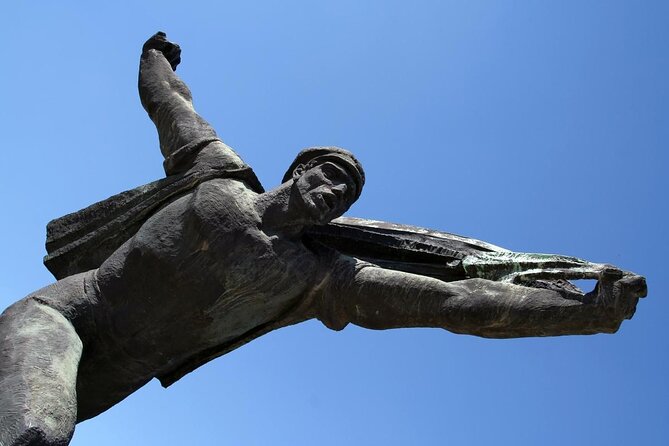
- 42 Communist-era sculptures displayed outdoors, dated from 1945 to 1989
- Giant “hero” statues like Lenin, Marx, Engels, Béla Kun, and others from the labor and Red Army world
- Allegorical monuments such as Hungarian-Soviet Friendship and Liberation
- The standout Liberation Army Soldier statue, including its details and former placement on Gellért Hill
- A visit you can shape around your pace, since the time range runs from 45 minutes to 2.5 hours
What Memento Park Is Really About (and What You’ll See)
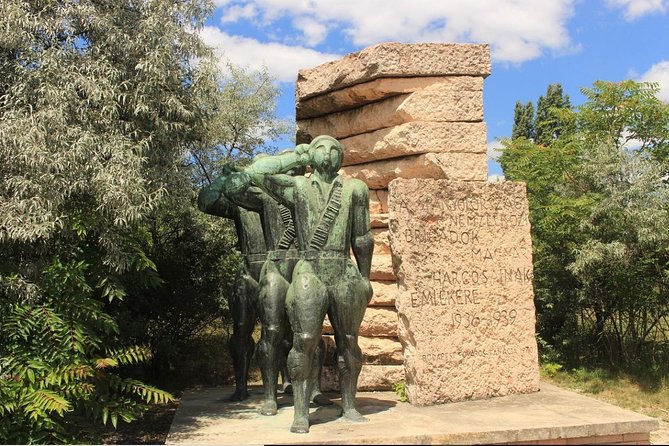
Memento Park is not a museum of tidy, behind-glass facts. It’s sculpture—big, blunt, and meant to be seen from far away—now arranged as a place to think about how power tried to look permanent.
The core of your visit is simple: the park displays 42 Communist-era artworks connected to the period from 1945 to 1989. You’ll see major allegorical themes made into monuments, plus famous names carved into stone or metal. The effect is less like reading and more like standing in the middle of a propaganda poster that got turned to stone.
You can also read our reviews of more tours and experiences in Budapest



Soviet-style symbolism in real scale
This is where size matters. Many of the figures were designed to dominate a skyline. In the park, you’ll notice how the same themes show up again and again: workers and fighters, big ideological leaders, and “friendship” framed as liberation or unity.
That’s why it feels educational even if you’re not a serious history buff. You get to see the visual language of the era—how messages were built to be loud, not subtle.
The Liberation Army Soldier: The Statue That Anchors the Visit
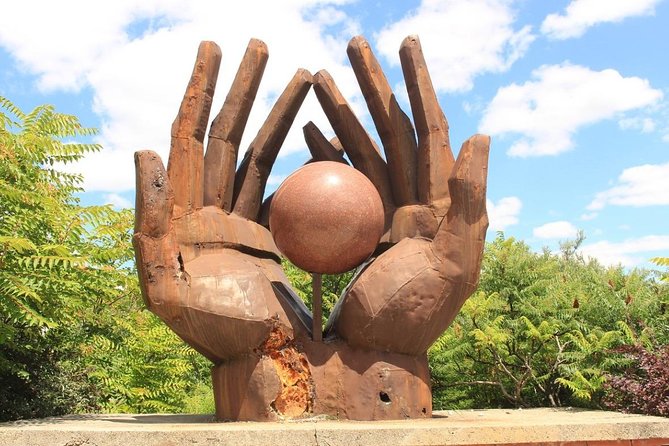
If you only remember one thing, make it the Liberation Army Soldier. This is the statue that people often point out because it combines scale with very specific iconography.
It’s a 6-meter-tall Soviet soldier figure with an intense stare, holding a hammer-and-sickle flag while a cartridge-disc machine pistol hangs around the neck. The contrast is striking: the figure is both “heroic” in posture and oddly heavy-handed in how it carries symbols of force.
The most interesting detail for your mental map: this statue once stood on top of Gellért Hill in central Budapest. That means your brain may try to compare it to the city you already walked—same symbolism, different setting.
How to look at it without getting stuck in politics
You don’t have to love or hate any ideology to appreciate the craftsmanship and impact. What you can do instead is watch for the mechanics of persuasion:
- posture meant to project authority
- facial expression designed to feel unblinking
- objects meant to signal control and power
That’s the value here. You leave with more than trivia—you leave with better “reading skills” for how public messages are constructed.
The Big Names: Lenin, Marx, Engels, and the Labor-Movement Crowd
Besides the allegory and the soldier statues, the park includes figures tied to the wider Communist story in Hungary and beyond. You’ll encounter names that shaped the era’s public messaging, including Lenin, Marx, Engels, and Béla Kun, plus others listed among the park’s figures.
You also see statues tied to the labor movement and Red Army iconography. The point isn’t to treat these as sacred. It’s to show how a political system tried to make its key figures feel eternal—larger than life, literally.





Why the selection matters
The park isn’t showing you random sculptures. It’s arranging recognizable symbols from the Communist world. That’s useful if you’re trying to understand what was displayed in public space and how strongly it influenced the environment.
You’ll also notice figures tied to specific roles and stories of the period—so even if you don’t know every name, you can still connect the pattern: leadership, military strength, and workers as a united front.
Allegorical Monuments: Hungarian-Soviet Friendship and Liberation
The park also includes major themed monuments—big statements meant to summarize relationships and justify outcomes. Among the displayed works are allegorical monuments of Hungarian-Soviet Friendship and Liberation.
These are the pieces that can feel the most “message-forward.” They aren’t trying to be neutral. Instead, they’re presenting an interpretation of history in sculpture form—built for a viewer standing in front of them, not for a quiet conversation.
A practical way to approach them
When you face allegorical work, give yourself one rule: don’t rush. These pieces reward slow looking because the meaning often sits in how the figures are arranged—who appears strong, who appears guided, and what “friendship” or “liberation” is supposed to look like.
If you’re short on time, pick one allegory and spend extra minutes there. You’ll understand the logic faster than hopping from statue to statue without letting your brain adjust.
Planning Your Time: 45 Minutes to 2.5 Hours
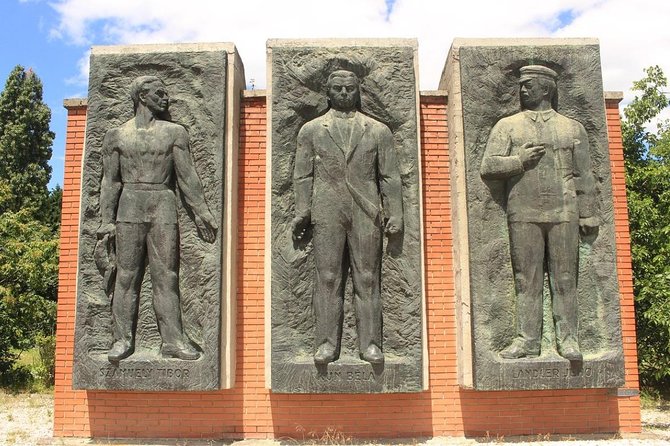
Your visit can run anywhere from 45 minutes to about 2.5 hours. That range matters because this park isn’t built like a one-stop punch. It rewards choice.
If you’re tight on time, go straight for the best-known statue (Liberation Army Soldier), then pick two themes: one allegory (like Hungarian-Soviet Friendship or Liberation) and one cluster of “big name” leaders (Lenin/Marx/Engels and nearby figures). That gives you a clear story without turning the walk into a checklist.
If you have more time, slow down. The park is spread out enough that you’ll want to let your eyes rest between clusters. By the time you reach the end, you’ll notice repetition in the messages—power saying the same things in different forms.
What you should wear and bring
This is an outdoor experience, so wear comfortable shoes. Bring a water bottle if you’re visiting in warm weather. And if you plan to stay longer than an hour, plan for a quick break when your legs ask for it.
Ticket Value: Why an $11.41 Entrance Ticket Can Be Worth It
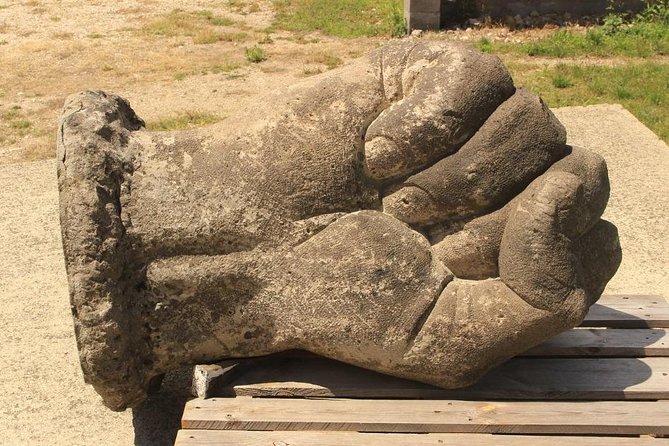
The entrance ticket price is $11.41 per person, and an admission ticket is included with this experience. That’s not a “cheap enough to forget” price, but it is a fair one for what you actually get: a focused set of Communist-era artworks presented in full outdoor scale.
What makes the value feel real is the combination of:
- recognition (you’ll recognize many names and symbols)
- scale (giant statues change how you process the message)
- flexibility (45 minutes to 2.5 hours means you can match your interests)
Also, the ticket is a mobile ticket, which saves time at the entrance and keeps things simple.
Timing note: booking ahead
On average, this is booked about 24 days in advance. That doesn’t mean you need to rush, but it does suggest the park is a popular add-on for people visiting Budapest with a history angle. If you’re traveling in busy periods, I’d lock it in sooner rather than later.
Getting There From Budapest: The 20-Minute Reality
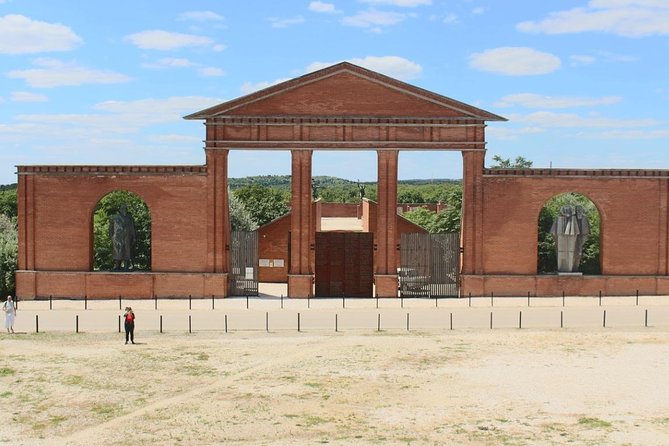
Memento Park is about 20 minutes drive outside of Budapest. That distance sounds short on paper, but it changes the feel of the day. It’s not a quick walk-from-the-hotel stop; you’ll treat it like a dedicated detour.
The good news: it’s near public transportation, so you’re not locked into private transport. If you like using transit, this kind of outing fits well into a half-day plan.
A smart way to pair it with the rest of your Budapest day
Because the Liberation Army Soldier statue once stood on Gellért Hill, it pairs naturally with your general Budapest sightseeing. If you already plan to pass through that area, you’ll get an extra layer of meaning by comparing the old and new context.
Who Should Book This Ticket (and Who Might Skip)
Memento Park is ideal if you:
- like understanding how cities communicate through monuments
- want to see major Communist-era symbols in real scale
- enjoy history that’s visible, not just explained
It’s also a good fit if you prefer a do-it-at-your-pace visit. Your time window can stretch from 45 minutes to 2.5 hours, so you can adjust based on how much you’re reading and looking.
You might skip it if you:
- want only famous landmarks and nothing “heavy” or ideological
- are very pressed for time and hate transit planning
- prefer guided narration for every stop (this ticket is an entrance experience, and the visit experience itself is primarily about walking the grounds)
Should You Book This Ticket?
Yes, if you’re curious about Budapest’s past and you like learning through what you can actually see. For $11.41, you get 42 Communist-era sculptures and a standout statue with major context—the Liberation Army Soldier, tied to Gellért Hill.
Skip it only if the travel outside the center is going to feel like too much hassle for your schedule. If you can spare a half-day to an afternoon, this is one of those experiences that gives you a clear visual takeaway long after you leave the park.
FAQ
What is the Memento Park entrance ticket in Budapest?
It’s an admission ticket for Memento Park, with an included entry for one person in Budapest, Hungary.
How much does the ticket cost?
The price is listed as $11.41 per person.
How long will I spend at the park?
Plan for about 45 minutes to 2 hours 30 minutes.
Is the ticket mobile?
Yes, the ticket is provided as a mobile ticket.
What are the opening hours?
The listed opening hours are Monday through Sunday from 10:00 AM to 4:00 PM.
Where should I go?
You’ll go to Memento Park near public transportation.
How far in advance do people typically book?
On average, it’s booked about 24 days in advance.
Is confirmation provided after booking?
Yes, confirmation will be received at the time of booking.
What is the cancellation policy?
Free cancellation is available up to 24 hours in advance for a full refund. If you cancel less than 24 hours before the start time, the amount paid is not refunded.