REVIEW · BUDAPEST
Jewish Heritage in Hungary with a Historian
Book on Viator →Operated by Budapest Explorers · Bookable on Viator
Budapest’s Jewish story is told street by street. This 2.5-hour walk is interesting because it links visible landmarks with the people who lived there, from medieval Pest to modern memory. I love the small group feel and the historian-led narrative, which keeps the story human instead of textbook. One thing to note: you mostly see synagogues from the outside, and the Great/Central synagogue interior isn’t part of the tour.
You’ll also get a practical, easy route through key streets like Rumbach, Kazinczy, and around Dohány. And yes, you’ll taste a real local favorite with Flódni at Solinfo Café, included in the price. For 10:00 am starts and a compact walking plan, this is strong value at $64.71 per person.
In This Review
- Key points to know before you go
- A 2.5-hour Jewish heritage walk built for small groups
- Erzsébet tér: from medieval market square to a key Pest landmark
- Raoul Wallenberg’s statue: rescue, diplomacy, and moral courage
- Szimpla Kert and Gozsdu Udvar: how the city changed around the community
- Kazinczy Street Synagogue: Orthodox Jewish community context
- Great/Central Synagogue (Nagy Zsinagóga): why not going inside still works
- Solinfo Café and Flódni: food as a history cue
- Price and value at about $64.71
- Who should book, and who might want a different option
- Tips to make the walk smoother
- Should you book Jewish Heritage in Hungary with a Historian?
- FAQ
- How long is the tour?
- What language is the tour offered in?
- What’s included in the price?
- Is a mobile ticket provided?
- Where does the tour start and end?
- Do I need synagogue entry tickets?
- Do you visit the inside of the Great/Central Synagogue?
- How large is the group?
- Is free cancellation available?
Key points to know before you go
- Historian guide in English: the focus stays on context, not just facts.
- Max 10 guests: easier to ask questions and keep pace.
- Synagogue sights without a long indoor queue: you get the meaning first, then you look.
- Szimpla Kert and Gozsdu Udvar stops: you see how Jewish culture and city life blend over time.
- Flódni included at Solinfo Café: food break built into the route.
- Two synagogue stops with entry not included: plan for outside viewing for the Great/Central one.
A 2.5-hour Jewish heritage walk built for small groups
This tour is built for people who want more than a quick stop-and-photo loop. With a maximum group size of 10 and a total time of about 2 hours 30 minutes, you get a slower pace than the usual big-bus style experience. It’s also scheduled to start at 10:00 am, so you can still enjoy the rest of your day in Budapest without rushing.
Meeting point is at the Kempinski Hotel Corvinus Budapest on Erzsébet tér (Erzsébet tér 7-8, 1051). The walk ends outside the Dohány Street Synagogue area on Wesselényi utca 1 (1077). You’ll receive a mobile ticket, and the route is near public transportation, which helps if you’re building the day around tram and metro lines.
This is a good fit if you like street-level history: seeing how one square, one statue, and one café connect to centuries of Jewish life in Hungary. It’s also a good choice if you’re the type who asks questions and wants straight answers. Some of the guides who have led this tour include Andrea, Gabor, Barbi, Noémi, and András, and their common thread is patient, question-friendly storytelling that doesn’t dodge difficult parts of the past.
You can also read our reviews of more historical tours in Budapest



Erzsébet tér: from medieval market square to a key Pest landmark
The walk begins at Erzsébet tér, a medieval market square that’s become one of the main squares of Pest. Even if you’ve never studied Hungarian history, you’ll recognize the logic of it: markets pull people in, and when communities grow, culture grows with them.
Your stop here is brief—about 20 minutes—and admission isn’t required. Think of it as your “mental map” moment. You look at the square, hear how Pest developed, and get a framework for what you’ll see later on streets tied to Jewish life. The best part of this kind of opening is that it keeps later stops from feeling random. The city doesn’t read like a list of attractions; it reads like one story.
Practical tip: use this early time to ask how the guide wants you to connect the dots. A good historian will often give you a timeline you can carry into the rest of the walk.
Raoul Wallenberg’s statue: rescue, diplomacy, and moral courage
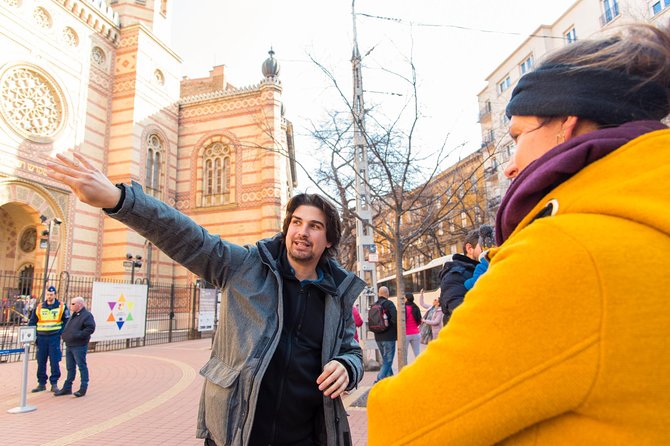
Next up is a statue of Raoul Wallenberg. This is one of those city moments where a name carries real weight. You get about 10 minutes here, and it’s admission free.
Wallenberg matters because his story sits at the intersection of institutions and individuals—diplomacy used as a life-saving tool. In a tour like this, that theme is valuable: it shows Jewish history in Hungary isn’t only about what happened to people; it also includes what some allies did, and how moral action can show up in paperwork, travel, and authority.
If you’re worried a tour like this will focus only on the darkest chapter, you’ll likely be relieved. The way the guides tend to frame events is broader than the usual shorthand, with attention to longer time periods and the full range of Jewish life.
Szimpla Kert and Gozsdu Udvar: how the city changed around the community
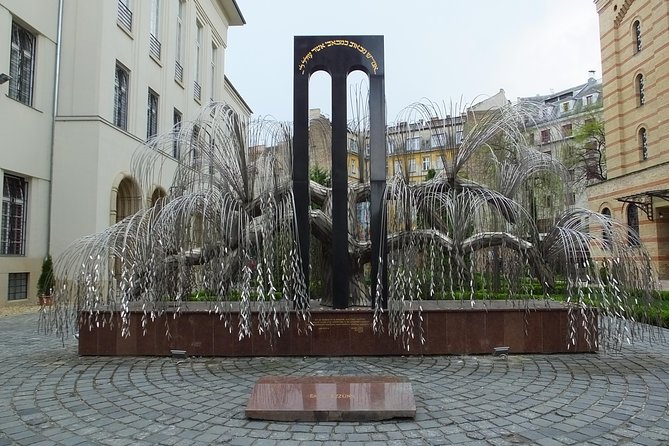
Then you shift into a different kind of scene: Szimpla Kert, the ruin bar that helped kick off Budapest’s whole ruin-bar trend. You spend about 20 minutes here, and it’s admission free.
This stop is more than a cool-looking bar. It’s a lesson in reuse. Buildings and neighborhoods that once had one function can gain a new life without losing their layers. When a historian guides you through a place like this, you start seeing the city as a set of “before and after” moments, not just a present-day snapshot.
You’ll also stop at Gozsdu Udvar, one of Budapest’s most international streets, with about 10 minutes here and no admission required. This is the place to notice the contrast: how quickly a city can feel global and modern, while still sitting on older foundations. The guide’s job is to help you read that contrast as continuity, not contradiction.
Small warning, in a good way: because these are active street and café/bar areas, you’ll likely want to keep your phone away for a minute and listen first. The story lands better when you’re not bouncing between photos and trivia.
Kazinczy Street Synagogue: Orthodox Jewish community context
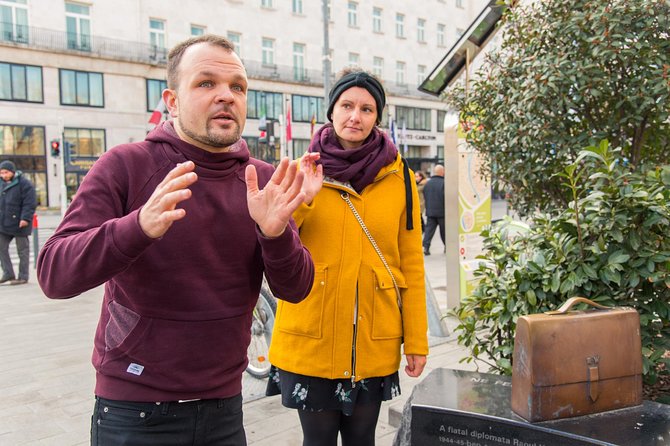
At Kazinczy Street Synagogue, you get about 20 minutes. Admission isn’t included, so plan to treat this stop as an exterior-and-explanation moment unless you already have your own ticket.
This is a useful stop because it gives you a sense of the Orthodox Jewish community and how religious life takes shape in a city neighborhood. Even without an indoor visit, hearing how a community organizes itself—ritual, institutions, and communal needs—helps you understand why synagogues are not only architecture. They’re community infrastructure.
This is also where I like to mentally check myself: it’s easy to reduce Jewish heritage in Hungary to big events in the 20th century. A stop like Kazinczy Street gives you a reminder that daily life mattered, and that communities had structure long before modern crises.






Great/Central Synagogue (Nagy Zsinagóga): why not going inside still works
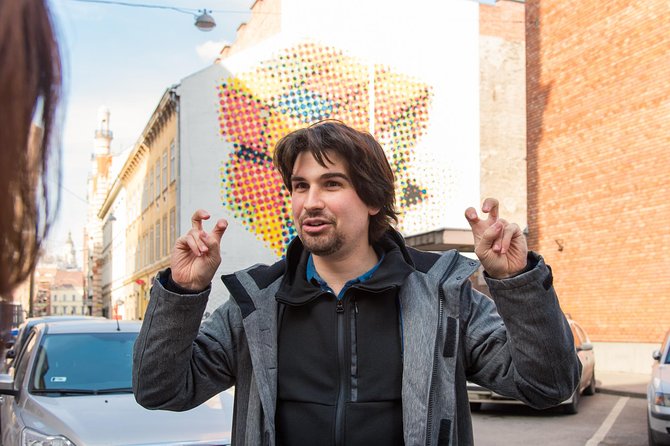
You’ll also pass the Great/Central Synagogue, known as Nagy Zsinagóga. This is often described as Europe’s largest synagogue, with historical connotations tied to roughly the last 200 years. Admission isn’t included, and importantly, you do not visit the synagogue interior.
That might sound like a drawback if you came hoping for an indoor look. But with a historian guiding you, the value shifts. You can focus on what the building symbolizes in the city and how its scale and prominence reflect the community’s public presence. You still get the “why,” even if you don’t get the “walk inside.”
You’ll likely end up appreciating this approach if you like context-heavy travel. Inside visits can be powerful, but they’re also time-consuming, and they don’t always give you a clear timeline beforehand. This tour builds the timeline outside first, so when you look at the exterior, it means more.
If you want indoor viewing: make sure you plan separately for synagogue interiors, since this tour explicitly doesn’t include the Great/Central inside visit.
Solinfo Café and Flódni: food as a history cue
One of the best practical surprises is Solinfo Café. You spend about 20 minutes here, and admission is included—meaning your tasting is part of the experience, not an extra purchase you have to remember later.
You try Flódni, a Hungarian Jewish cake many people love, Jews and non-Jews alike. It’s a smart ending stop because food anchors the story. When you taste something like Flódni, you get a small, edible thread connecting generations. It turns history into something you can carry, not just something you heard.
It’s also a welcome reset after synagogue areas and street walking. You get a chance to sit, breathe, and ask the guide a final question while the story is still fresh.
Food tip: if you’re sensitive to sweetness or you eat slowly, take a moment to pace yourself. It’s included, so you won’t be stuck scrounging for the right item while the group moves on.
Price and value at about $64.71
At $64.71 per person, this tour doesn’t feel cheap—but it also doesn’t feel inflated. Here’s what you’re actually buying:
- a historian guide in English
- a 2.5-hour route with multiple major sights (Erzsébet tér, Wallenberg, Szimpla Kert, Gozsdu Udvar, and synagogue-area stops)
- a small group cap of 10
- Flódni included at Solinfo Café
For many visitors, the biggest value is the guide’s framing. A historian can turn streets into connections and buildings into meaning. Without that, a self-guided walk through Budapest’s Jewish Quarter can feel like a series of impressive sites with missing glue.
One consideration: because synagogue entry tickets aren’t included for Kazinczy Street and the Great/Central synagogue, you might spend more if you want indoor access elsewhere. But for people who prefer learning first and walking gently, the way the tour is structured can be a good match.
Who should book, and who might want a different option
This tour is ideal if you:
- want Jewish heritage explained clearly by a historian guide
- prefer small groups where questions are welcome
- like mixing major sites with everyday Budapest stops like ruin bars and international streets
- enjoy ending with a food stop that’s actually local
You might choose something else if you:
- want guaranteed indoor time inside the Great/Central synagogue
- expect all synagogue entries to be included in the price
- dislike walking in city streets around active squares and café areas
Tips to make the walk smoother
A few practical moves will help you get more out of the tour:
- Dress for walking and weather. Even though the route is compact, Budapest weather changes fast.
- Bring a few questions. The guides (like Andrea, Gabor, Barbi, Noémi, and András) tend to respond well when you ask for clarification or examples.
- Expect outside viewing for the big synagogue area. Focus on the symbolism, the timeline, and the “why here” explanations.
- If you’re into photography, listen first, then shoot. The story adds meaning to what you capture.
Should you book Jewish Heritage in Hungary with a Historian?
If you want a meaningful Budapest walk that treats Jewish heritage as more than a single tragic chapter, book it. The mix of key stops—Erzsébet tér, Raoul Wallenberg’s statue, Szimpla Kert, Kazinczy Street synagogue area, and the Great/Central synagogue exterior—works well because it keeps the story anchored in real places.
I’d especially recommend it for first-timers to the Jewish Quarter who want a clear timeline and a guide who can answer questions without rushing. The included Flódni at Solinfo Café is a nice bonus that makes the experience feel personal and memorable.
Just go in knowing the Great/Central synagogue interior isn’t part of the plan. If that matters most to you, pair this tour with separate time for indoor visits.
FAQ
How long is the tour?
It runs for about 2 hours 30 minutes.
What language is the tour offered in?
The tour is offered in English.
What’s included in the price?
The price includes the historian-guided experience plus Flódni at Solinfo Café.
Is a mobile ticket provided?
Yes, you’ll have a mobile ticket.
Where does the tour start and end?
It starts at Kempinski Hotel Corvinus Budapest on Erzsébet tér 7-8 (1051) and ends outside Dohány Street Synagogue on Wesselényi utca 1 (1077).
Do I need synagogue entry tickets?
Admission is not included for Kazinczy Street Synagogue and for the Great/Central Synagogue. Other stops listed are admission free.
Do you visit the inside of the Great/Central Synagogue?
No. The tour does not include visiting the Great/Central Synagogue inside.
How large is the group?
The group size is capped at a maximum of 10 travelers.
Is free cancellation available?
Yes. You can cancel for a full refund up to 24 hours in advance of the experience start time.