REVIEW · BUDAPEST
Private Walking Tour in The Jewish District Budapest
Book on Viator →Operated by Snurk.Travel · Bookable on Viator
Budapest’s Jewish District moves fast. In about 2.5 hours, you’ll walk through major synagogues, hear stories tied to Zionism and the Holocaust, and end at Shoes on the Danube for a final moment that lands. This is a private, English-language tour with your own guide, Benjamin, and a route designed to show not just the past, but also how people live in District VII today.
What I like most is the way Benjamin tells the story. You get that mix of heart-warming, comic, and tragic threads, and he actively encourages questions instead of rushing you past the hard parts. Second, the route has real variety: you’re not stuck only in historic buildings. You’ll also step into the culture of the area, including a stop at Szimpla Kert and a practical visit to a kosher market.
One consideration: synagogue access may mean extra cost. Tickets for Dohány Street Synagogue and the other synagogues are not included (and prices can run roughly €12–€45 per person), so budget for that up front.
In This Review
- Key highlights you’ll remember
- A 2.5-hour private route through the Jewish District
- Why Zionism, the Holocaust, and daily Jewish life all fit together
- Dohány Street Synagogue: starting with Europe’s biggest
- Rumbach Street Synagogue: Moorish-style architecture with a comeback story
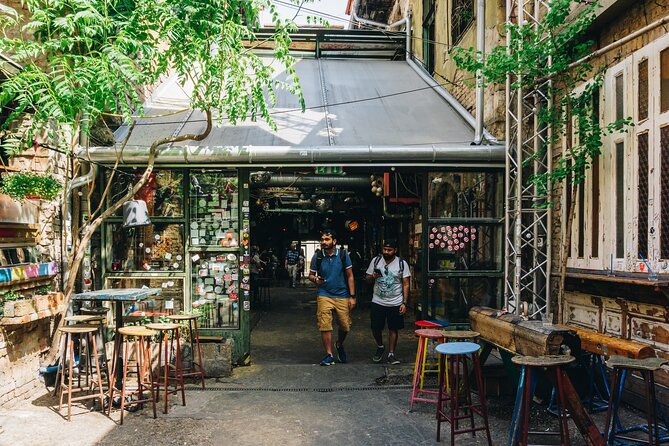
- Szimpla Kert: ruin pub culture inside a changing neighborhood
- Wesselényi utca 21 and Kazinczy u. 55: streets with built-in stories
- Kóser Piac (Kosher Market): Shabbat essentials in a small shop
- District VII and a closing moment at Shoes on the Danube
- Price and value: $228.29 plus synagogue tickets
- Who should book this private Jewish District tour
- Should you book this tour?
- FAQ
- How long is the private walking tour?
- What does the price include?
- Are synagogue tickets included?
- Is this tour private or shared?
- What language is the tour offered in?
- Where do I meet and where does it end?
- Is admission required for all stops?
- What if I need to cancel?
- Is the tour suitable for most people?
Key highlights you’ll remember
- Dohány Street Synagogue as your starting anchor: Europe’s biggest, and the second in the world
- Rumbach Street Synagogue: Moorish-style architecture, renovated after 60 years abandoned
- Stories with range: heart-warming, comic, and tragic moments guided by Benjamin
- Past meets present: you’ll see the district as it looks and works today
- Jewish life on the street: kosher market stop for Shabbat and holiday essentials
- Culture stop at Szimpla Kert: a classic ruin pub experience in the middle of history
A 2.5-hour private route through the Jewish District
This tour is built for a focused walk. You’re out for about 2 hours 30 minutes, and it’s a true private setup, meaning it’s only your group. That matters, because the whole experience depends on conversation—your guide can slow down, answer questions, and tailor the pacing to your interests.
You meet at Dob u. 1, 1072 Hungary, and the walk finishes at Shoes on the Danube Bank, 1054 Hungary. The route is near public transportation, so you’re not stuck worrying about getting to the start. The end point is also a useful way to link your day: once you’re finished here, you can keep walking along the river without needing a new plan.
Most people can participate, so it’s not framed as a hardcore hike. Just wear comfortable shoes. When you’re walking between multiple sights—synagogues, streets, and a couple of quick stops—your feet will do most of the work, not your brain.
You can also read our reviews of more walking tours in Budapest



Why Zionism, the Holocaust, and daily Jewish life all fit together
The Jewish District in Budapest isn’t just a museum walk. This tour is designed to connect three things that are often treated separately: the origins of Zionism, the impact of the Holocaust, and what Jewish life looks like today.
That blend is the key value. You’ll hear the origins of Zionism and how different streams of Judaism fit together, including what it’s like to be Orthodox today. You’ll also get context for how the area’s identity has changed over time—what people carried with them, what survived, and what reshaped itself into modern routines.
This also helps you understand why certain stops are placed where they are. When you go from a major synagogue to a neighborhood street, you’re seeing the physical geography of community: worship spaces, everyday commerce, and social spaces that grew around local life.
Dohány Street Synagogue: starting with Europe’s biggest
Your first stop is Dohány Street Synagogue (about 30 minutes). This is the big one: it’s the biggest synagogue in Europe and the second in the world. It’s also described as different from many “standard” synagogues, which is exactly what you want as a first moment of the tour.
Why this starting point works: it gives you a scale reference fast. Once you’ve got that sense of significance, the rest of the walk makes more sense—smaller structures, neighborhood streets, and the district’s shifting layers of identity.
A practical note: admission for Dohány Street Synagogue is not included. The tour provides the guided visit time, but you should plan for extra spending if you want to go inside. The stated synagogue ticket range is roughly €12–€45 per person, so check your expectations before you go.
Rumbach Street Synagogue: Moorish-style architecture with a comeback story
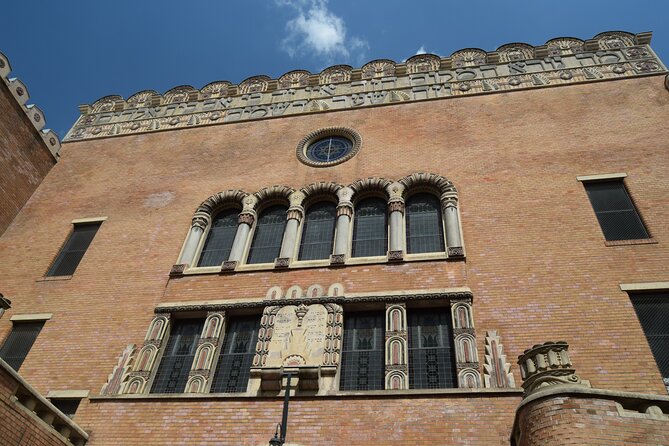
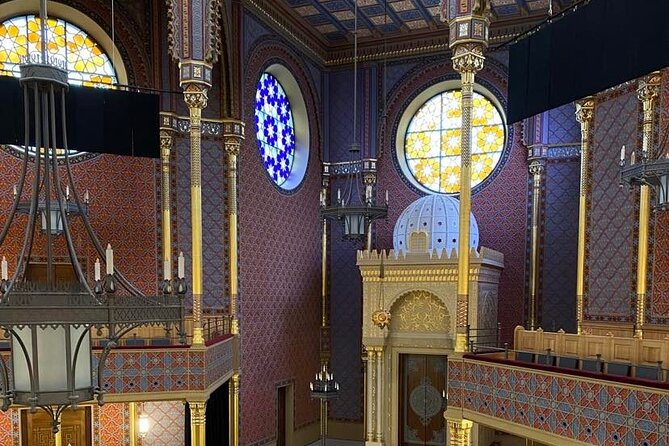
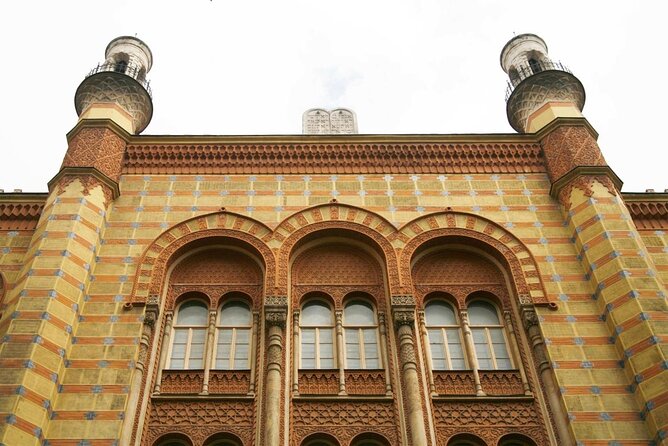
Next is Rumbach Street Synagogue (around 15 minutes). This stop is short, but it carries a strong message: it was recently renovated after 60 years of being abandoned, and the building is known for Moorish-style architecture.
Even if you only spend a short window here, the architecture is the point. It gives you visual contrast from the first synagogue stop, and the renovation story explains how the district has tried to reclaim and repair what time and history left behind.
Like Dohány Street, admission isn’t included here. So treat this as a quick guided orientation and a chance to take in the building’s character—then plan ticket time separately if interior access is part of what you want most.
Szimpla Kert: ruin pub culture inside a changing neighborhood
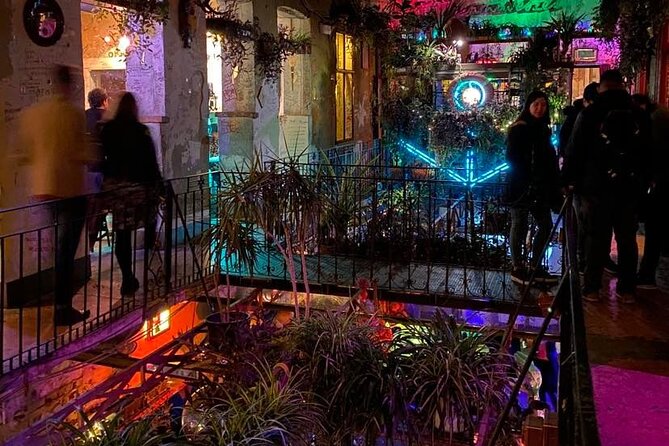
After the synagogues, you head to Szimpla Kert (about 15 minutes, with free admission). This is where the tour shifts tone from sacred space to social space.
Szimpla Kert is tied to Budapest’s ruin pub culture. The experience is described as unforgettable once you enter. That’s a good way to think about this stop: you’re not coming here for religious education. You’re coming here to see how the district’s atmosphere has evolved into something livable, creative, and tourist-visible—without erasing the heavier history you just learned.
One advantage for you: this kind of stop helps keep the walking tour from becoming too heavy. You’ll still be processing the serious parts, but you’ll also get a real sense of how the area breathes today.
You can also read our reviews of more private tours in Budapest





Wesselényi utca 21 and Kazinczy u. 55: streets with built-in stories

Two of the quick stops are street-based: Wesselényi utca 21 (about 15 minutes, free) and Kazinczy u. 55 (about 15 minutes, free).
At Wesselényi utca 21, you walk through the historic Jewish Quarter and get guided context about what you’re seeing around you. This is one of those moments where a guide makes the difference. Streets can look like ordinary city blocks until someone helps you connect them to community memory.
Then you move to Kazinczy u. 55, a two-story building that’s said to carry mystery. The façade is presented as something that reveals secrets—so expect the guide to point out details you likely wouldn’t notice on your own.
These stops are short, but that’s part of the design. They keep you moving while still giving you enough interpretive cues to feel like you’re walking with a local historian instead of following a checklist.
Kóser Piac (Kosher Market): Shabbat essentials in a small shop
The stop at Kóser Piac / Kosher Market is brief (about 15 minutes) but feels practical, not just symbolic. It’s described as a small shop where you can find necessities to celebrate Shabbat or other Jewish holidays.
This matters because it answers a question many people have: what does religion look like when it’s not in a synagogue? You’ll get a feel for how community traditions show up in everyday shopping and preparation.
It also adds balance to the tour. After architecture, memorial weight, and big historical themes, you end up seeing how practice becomes routine. That contrast is one reason this tour stands out as more than a one-note heritage walk.
District VII and a closing moment at Shoes on the Danube
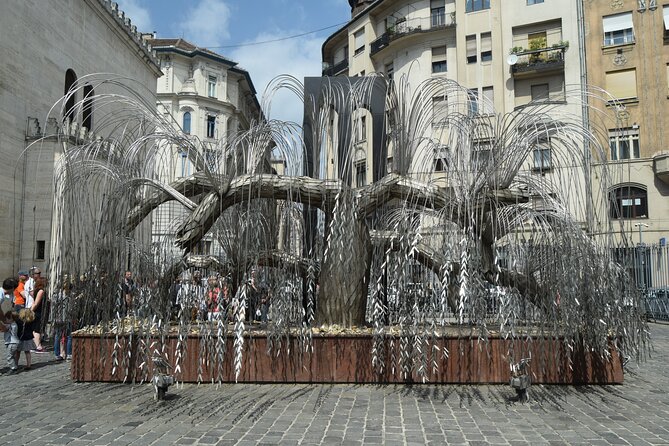
The walk continues into the wider District VII / Jewish Quarter (free admission). At this stage, the tour has built a ladder for your understanding: major religious landmarks first, then neighborhood texture, then day-to-day Jewish life cues, then the district as a whole.
Finally, the tour ends at Shoes on the Danube Bank. Even if you only stand there briefly, ending here changes the emotional tone of the trip. It’s a deliberate final stop, and it gives you space to connect the human cost of history with the places you’ve been walking through.
If you’re the kind of person who likes to carry your experiences into the next activity, this ending location is also convenient. You can keep exploring along the river afterward without needing a new transfer plan.
Price and value: $228.29 plus synagogue tickets
The price is $228.29 per person, for a private walking tour with a guide included. On paper, it’s not a budget add-on, so I look at what you’re actually buying.
You’re paying for:
- a private guide (Benjamin) who can adapt pacing and answer questions
- a structured 2.5-hour route that mixes synagogues, neighborhood streets, and daily-life stops
- an experience offered in English, with a mobile ticket for convenience
- group discounts (so if you’re traveling with friends, your per-person value can improve)
Now add what’s not included: synagogue tickets. The stated range is roughly €12–€45 per person. That doesn’t make the tour “cheap,” but it does keep the base price from pretending everything is included. For value, the question is simple: do you want guided access and interpretation across multiple Jewish sites and community-linked stops? If yes, the guide component is doing real work for your time.
Also note the tour is booked ahead on average around 30 days in advance. If your dates are fixed, don’t wait until the last minute just because it’s a walking tour.
Who should book this private Jewish District tour
This tour is a strong fit if you want more than photos. You’ll enjoy it if you care about how history connects to real neighborhoods, and if you like hearing stories that include both tragic and lighter human moments.
It’s also a good match if you:
- want to understand the origins of Zionism and how the Holocaust shaped Jewish communities
- are curious about how different branches of Judaism show up today, including Orthodox life
- like having a guide point out what you’d otherwise miss on street-level stops
If your main goal is only to see interiors inside every synagogue no matter what, you may want to plan extra time and confirm your comfort with paying for admission separately. Synagogues can involve ticket steps, and interior access can vary by day.
Should you book this tour?
I’d book it if you want a guided walk that treats the Jewish District as lived history, not just sightseeing. The mix of big landmarks (Dohány Street and Rumbach), neighborhood interpretation (Wesselényi utca 21 and Kazinczy u. 55), and everyday-life context (Kosher Market) makes the story feel whole.
Skip or consider a different option if you have a very limited budget for attractions. With synagogue admissions running about €12–€45 per person on top of the tour price, your total cost can climb fast. Also, if you hate walking for 2.5 hours through a city neighborhood, this might feel like more effort than reward.
FAQ
How long is the private walking tour?
It runs for approximately 2 hours 30 minutes.
What does the price include?
The tour price includes a guide. It does not include tickets to Dohány Street Synagogue or the other synagogues.
Are synagogue tickets included?
No. Admission tickets for Dohány Street Synagogue and other synagogues are not included, and the listed ticket range is about €12–€45 per person.
Is this tour private or shared?
It’s private. Only your group participates.
What language is the tour offered in?
The tour is offered in English.
Where do I meet and where does it end?
You meet at Dob u. 1, 1072 Hungary, and the tour ends at Shoes on the Danube Bank, 1054 Hungary.
Is admission required for all stops?
Not all stops have paid admission. For example, Szimpla Kert and several street/market stops are listed as free, while synagogues require separate tickets.
What if I need to cancel?
Free cancellation is available up to 24 hours in advance for a full refund.
Is the tour suitable for most people?
The info states most travelers can participate.