REVIEW · BUDAPEST
Budapest Jewish Heritage: Synagogues, Shoes, Secrets & Flódni
Book on Viator →Operated by Fungarian · Bookable on Viator
Synagogues, trauma, and pastry all in one walk. This Jewish Heritage tour strings together Budapest’s biggest synagogue, two very different neighborhood houses of prayer, and WWII reminders in a tight, human story-line. I especially love pairing the Great Synagogue architecture with what your guide explains about what happened to Hungarian Jewry, and I like that it ends with an actual flódni instead of a vague food suggestion. One heads-up: synagogue entrances are generally not included, so you’ll want to budget extra time/money for tickets.
A standout here is the guide: you get an expert Jewish guide with a historian’s approach, plus the feel of a private group. The route is built for meaning, not checkboxes—so you’re not just walking past buildings, you’re getting context at each stop, from Herzl Square through the former ghetto area. The serious memorial stops can be heavy, so it helps to come with a little emotional bandwidth.
If you want a tour that moves at a comfortable pace and keeps questions welcome, this fits well. It also uses practical touches—hotel pickup and a mobile ticket—so you spend less time wrangling transport and more time focusing on what you’re seeing. The main consideration is expectations: if you’re specifically hunting for detailed “how people tried to protect themselves” stories, you may find the emphasis stays broader on heritage and wartime context.
In This Review
- Key things you’ll notice on this Budapest Jewish Heritage tour
- From Herzl Square into the Jewish Quarter’s WWII map
- Nagy Zsinagoga on Dohány Street: architecture plus what the community faced
- Rumbach Street Synagogue: Otto Wagner’s secession-era “moderate Conservative” style
- Carl Lutz Memorial: a diplomat name you’ll remember
- Kazinczy Street Orthodox Synagogue: art nouveau color and Miksa Róth glass
- Shoes on the Danube Bank: why the memorial uses such specific horror
- Tracing the ghetto wall section: what’s left in the heart of Budapest
- Flódni at the end: the sweet reset that still fits the theme
- Price and value: what you’re paying for, and what you still may need
- Who should book this Jewish heritage walk in Budapest
- When it might not be your best match
- Should you book this Budapest Jewish Heritage: Synagogues, Shoes, Secrets & Flódni?
- FAQ
- How long is the Budapest Jewish Heritage tour?
- Where does the tour start and end?
- Is pickup offered?
- Is this a private tour?
- Are entrance tickets included for the synagogues?
- What language is the tour offered in?
- What’s included besides the guide?
- Do I need to buy a public transportation ticket?
Key things you’ll notice on this Budapest Jewish Heritage tour
- Great Synagogue (Nagy Zsinagoga): why it’s the largest in Europe (3,000 seats) and how it connects to Neolog Judaism
- Otto Wagner’s Rumbach Synagogue: Moorish-Mix exterior style and a proud, restored interior
- Carl Lutz Memorial: the Swiss diplomat linked to saving tens of thousands in Budapest
- Shoes on the Danube Bank: the WWII memorial unveiled on April 16, 2005, tied to victims murdered at the riverbank
- A surviving ghetto wall section: what’s left in the heart of Budapest and what it signifies
- Flódni to finish: a traditional Jewish pastry that brings the theme back to everyday life
From Herzl Square into the Jewish Quarter’s WWII map
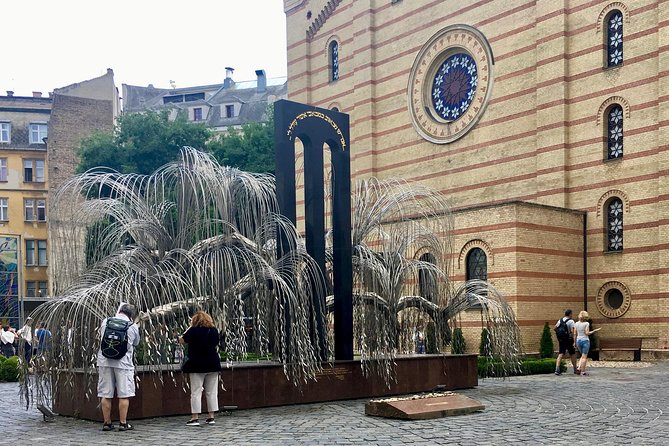
The tour starts at Dohány u. 1 (near the Great Synagogue area), and you begin walking from Herzl Square into the Jewish Quarter. The key thing here is the framing: your guide sets you up to understand the 1944 ghetto experience while you’re still fresh and orientated.
This is the part of the day where you’ll benefit most from good shoes and patience. Streets in this area are walkable, but the stops are spaced so you can absorb stories as you go—then connect the dots later. If you’re the type who likes to ask questions, this route is built to handle that.
You can also read our reviews of more historical tours in Budapest



Nagy Zsinagoga on Dohány Street: architecture plus what the community faced
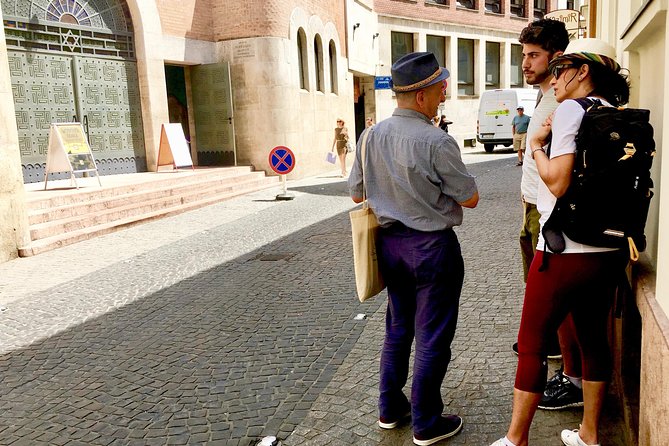
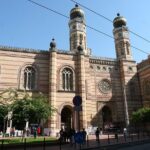
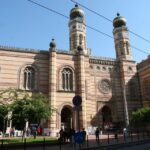
The first major landmark is the Dohány Street Synagogue, also called the Great Synagogue (Nagy Zsinagoga). It’s not a small “look and move on” stop: it’s the largest synagogue in Europe, seating about 3,000 people, and it served as a center for Neolog Judaism.
What makes this stop more than sightseeing is the way your guide connects architectural features to the lived reality of Hungarian Jewry. You’ll also hear about the fate of Hungarian Jews during WWII, plus how many internationally known figures were Hungarian Jews. It’s a reminder that this community wasn’t just a “historical topic”—it shaped arts, science, and public life before the catastrophe.
Ticket note: the synagogue admission ticket is not included. Plan for that so you don’t end up stuck outside waiting while others purchase or look for the entry process.
Rumbach Street Synagogue: Otto Wagner’s secession-era “moderate Conservative” style
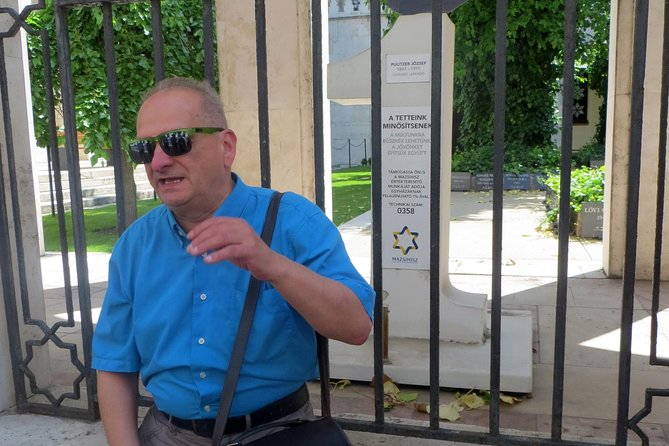
Next is the Rumbach Street Synagogue in the 7th district, built in 1872 by Austrian Secessionist architect Otto Wagner. This one is often a surprise because the area has a few different-looking sanctuaries, and this uses a distinctive style compared to the Great Synagogue.
Your guide points out how the community served here was “moderate Conservative,” and you get a chance to notice the design choices that reflect that identity. You’ll also be able to enjoy the interior after a long-overdue facelift—meaning the details don’t feel faded or forgotten when you see them.
Why this stop matters for your day: it prevents the tour from becoming one single-note story about “synagogues as symbols.” Instead, you see how different branches and communities expressed themselves in real buildings.
Ticket note: admission for this stop is not included as well.
Carl Lutz Memorial: a diplomat name you’ll remember
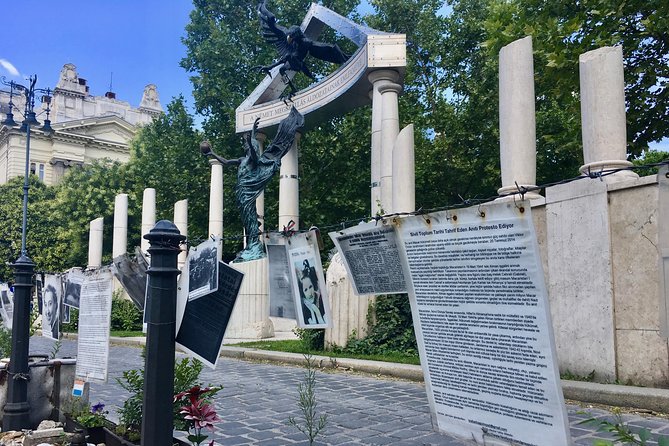
Then you step into a quieter but important memory stop: the Carl Lutz Memorial. Your guide explains how Swiss diplomat Carl Lutz helped save tens of thousands of Jews in Budapest from persecution and deportation.
This is a smart break in the itinerary. After heavier sights, it gives you a concrete individual story—one that highlights that not every life was only defined by what was taken away. It also helps you understand Budapest as a place where international connections mattered.
Good news: this memorial stop has no admission cost listed.
Kazinczy Street Orthodox Synagogue: art nouveau color and Miksa Róth glass
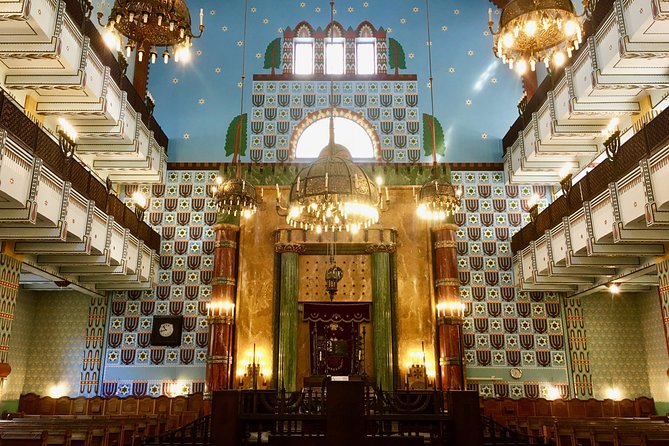
In a side street you’ll find an Orthodox synagogue on Kazinczy Street, built in 1913 with late Art Nouveau touches. The building uses bright colors throughout, so it doesn’t feel cold or purely monumental.
One of the standout details is the ceiling stained-glass windows designed by Miksa Róth. It’s the kind of thing you might miss if you were rushing, which is exactly why the guided approach works here: your eyes start knowing where to look.
This stop rounds out the theme nicely. You’ve already seen the Great Synagogue’s role in Neolog life, and you’ve seen Wagner’s Rumbach design tied to a different community. Now you get Orthodox identity with a very “modern for its time” feel.
Ticket note: admission isn’t included for this stop either.






Shoes on the Danube Bank: why the memorial uses such specific horror
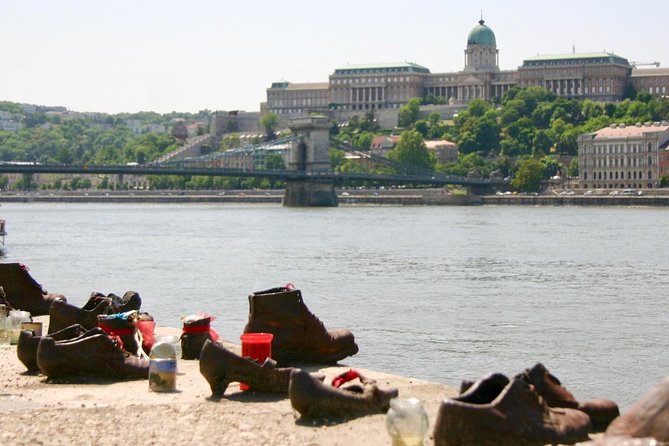
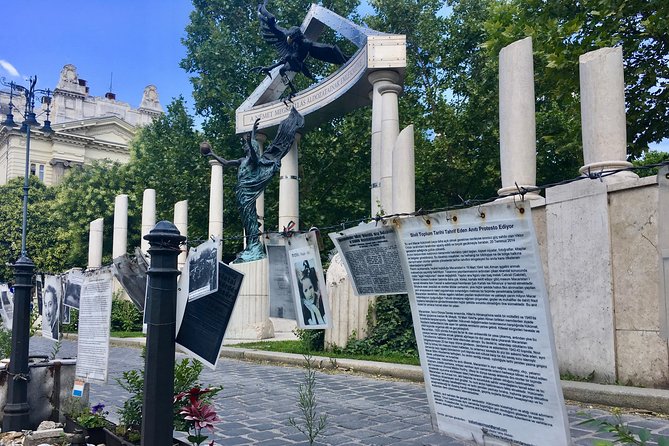
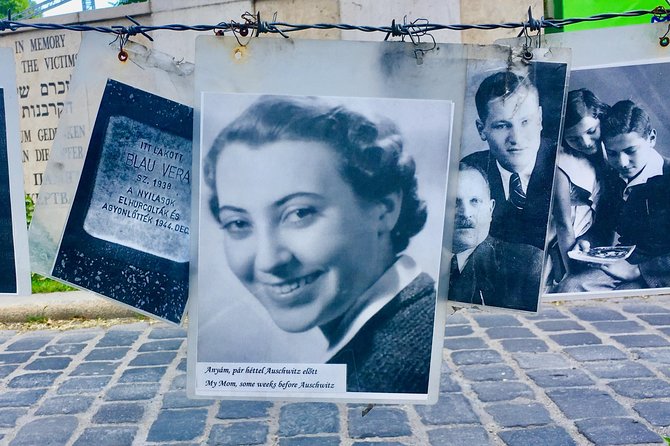
Then you reach the memorial that most people in Budapest will recognize: Shoes on the Danube Bank. Here, you pay respects at the sculpture unveiled on April 16, 2005, built to remember Jewish victims murdered at this site during WWII.
Your guide gives the key context: people were forced to remove their shoes before being shot at the riverbank, and their bodies were carried away by the Danube. The memorial’s approach is deliberately simple—just shoes—so your brain has to do the rest. It can feel brutal in a quiet way, which is why I’d treat this stop with extra attention and extra time for your own thoughts.
Good to know: the admission ticket is listed as included for this stop.
Tracing the ghetto wall section: what’s left in the heart of Budapest
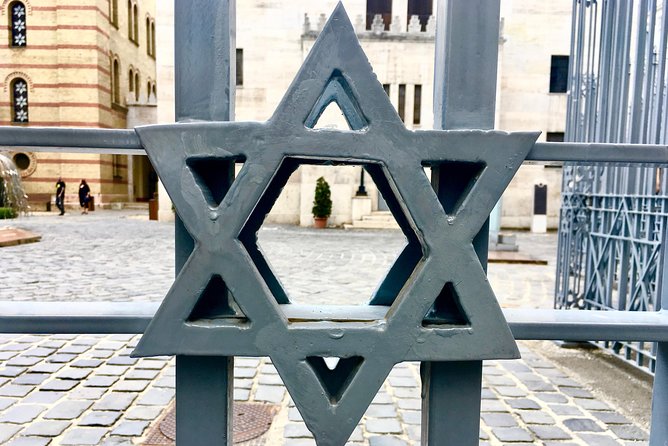
Toward the end, you focus on what remains in the city fabric: Budapest’s Jewish Quarter and the story of the WWII ghetto. Your guide explains that Jews were herded into a ghetto, and that a small section of the ghetto’s wall still stands.
You won’t see a “whole ghetto district” the way you might imagine it from history books. Instead, you see how the past is partly erased, and partly preserved in small physical clues. That’s exactly what makes this stop valuable: it teaches you how to read the city for the truth it refuses to forget.
This is also where questions can matter a lot. If you’re trying to understand how ordinary life was forced into a confined system, ask your guide what people did day-to-day and how the ghetto experience changed over time.
This stop is free and built as a story-focused segment, not just a photo stop.
Flódni at the end: the sweet reset that still fits the theme
The tour closes with a bite of history in food form: flódni, a traditional Jewish pastry. This isn’t added as a random snack. It ties back to what Jewish life looked like before it was interrupted, and it gives your brain something grounding after the memorial stops.
You’ll finish in about 20 minutes, so you’re not rushed to grab something and run. Expect it to feel like a small exhale, not a victory lap.
Also, your tour includes the dessert as part of the experience, so you don’t need to make a separate plan or find the pastry on your own.
Price and value: what you’re paying for, and what you still may need
At $102.95 per person for roughly 2 hours 45 minutes, the big value is not the synagogues as standalone entries. The value is the guided connection: how the tour strings together community identity, different synagogue styles, and wartime reminders into one coherent walk.
Here’s the practical breakdown of what’s included:
- A genuine Jewish guide and a historian-style approach
- Hotel pickup
- The flódni snack at the end
- A mobile ticket
- Group discounts are offered
- The Shoes memorial stop has admission listed as included
And here’s what’s not included:
- Entrance tickets to the synagogues
- A public transportation ticket
So the smartest way to budget is: assume you’ll likely pay extra for synagogue entry. The upside is that you’re not paying for entrances you may not need; the guide can focus on what matters while you choose the level of time you want inside each building.
Timing tip: since it’s a walk with multiple stops, you’ll enjoy it more if you don’t pack another big attraction right after. Give yourself a little buffer so the heavier parts of the story can land.
Who should book this Jewish heritage walk in Budapest
This tour fits people who want:
- Jewish history tied to real buildings, not only plaques
- A route that covers multiple synagogue styles in one go
- WWII remembrance stops like Shoes on the Danube and a ghetto wall remnant
- A guide who can handle both facts and questions in a respectful way
I also think it’s a strong match if you’re Jewish, Hungarian, or have family connections to the region, because several guides in this program share personal perspective on what the story means now. For example, you may hear reflections on identity shaped by both Holocaust and later Soviet-era experiences—stories that help explain why heritage stays alive.
When it might not be your best match
If you come expecting a detailed, step-by-step account of survival tactics and specific incidents of protection, you might feel the focus is broader than you want. This tour is designed around Jewish heritage and the historical arc, so it tends to explain context and meaning more than it tries to be a forensic account of resistance.
Also, if you’re short on time and only want the Great Synagogue, you’d spend less money on a simpler plan. But if you want the whole neighborhood story—synagogues plus the riverbank memorial and the ghetto area—this route has the advantage.
Should you book this Budapest Jewish Heritage: Synagogues, Shoes, Secrets & Flódni?
Book it if you want a guided walk that treats Budapest like a living history book. You’ll get the big iconic stop, but you’ll also see the smaller sanctuaries and hear why different communities shaped different kinds of spaces. Ending with flódni makes the day feel human again, not only heavy.
Skip or pair it with something else if you know you want a deeper Holocaust-resistance or survival-focused session. Also, double-check synagogue entry expectations so the “not included” tickets don’t surprise you in the middle of the walk.
FAQ
How long is the Budapest Jewish Heritage tour?
It runs about 2 hours 45 minutes (approx.).
Where does the tour start and end?
It starts at Budapest, Dohány u. 1, 1074 Hungary, and ends back at the meeting point.
Is pickup offered?
Yes. Hotel pickup is included.
Is this a private tour?
Yes. It’s listed as private, so only your group participates.
Are entrance tickets included for the synagogues?
No. Entrance tickets are not included, though Shoes on the Danube Bank is listed as admission included.
What language is the tour offered in?
The tour is offered in English.
What’s included besides the guide?
You get hotel pickup and a historian guide. The tour also includes a snack ending with flódni.
Do I need to buy a public transportation ticket?
A public transportation ticket is not included.