REVIEW · BUDAPEST
Budapest Historical Sightseeing – Free Walking Tour
Book on Viator →Operated by Perfect European Tours - Budapest FREE Walking Tours. · Bookable on Viator
Budapest history can feel heavy, but this walk makes it legible. This Budapest Historical Sightseeing – Free Walking Tour is built for first-timers: you get a tight orientation of key sights on the Pest side, plus the backstory that explains why the city looks the way it does.
I especially like the tip-based value and the fact that the route mixes big monuments with street-level details you’d otherwise miss. You also get lots of practical local context for how Budapest works today. One drawback: it’s a lot of walking for about 2.5 hours, and if you have mobility limits, you’ll want to plan carefully.
I also like how the tour leans into real themes—communism, culture, and the long memory of the Danube—without turning into a lecture-only slog. In the guide pool, names like Peter, Victoria, and Elizabeth come up often for clear English and strong storytelling, sometimes with extra photo notes to help things click. Still, on busy days and near major landmarks, hearing can be tough in a bigger group, so it helps to stay close to the guide.
In This Review
- Key things that make this tour work
- Price, pace, and what you’re really paying for
- Where you start: Kálvin tér and the yellow-guide vibe
- Stop-by-stop: what you see and why it matters
- 1) Hungarian National Museum gardens and the turul bird
- 2) Kalvin Square: a practical pause named for John Calvin
- 3) Unger’s House courtyard and Miklós Ybl’s style mash-up
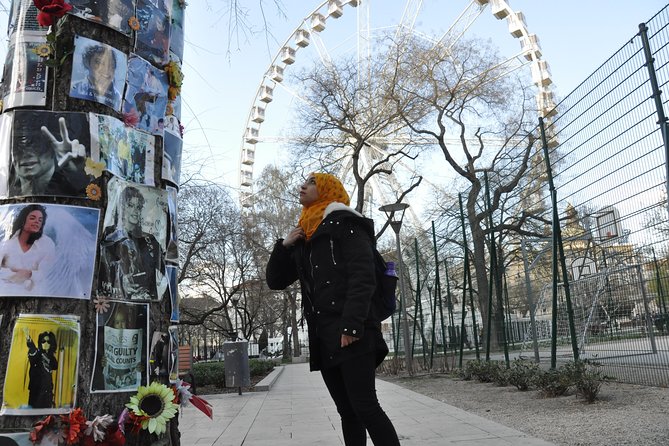
- 4) Elizabeth Square and the Budapest Eye
- 5) Danubius Hotel Astoria: French Empire elegance and pop-culture history
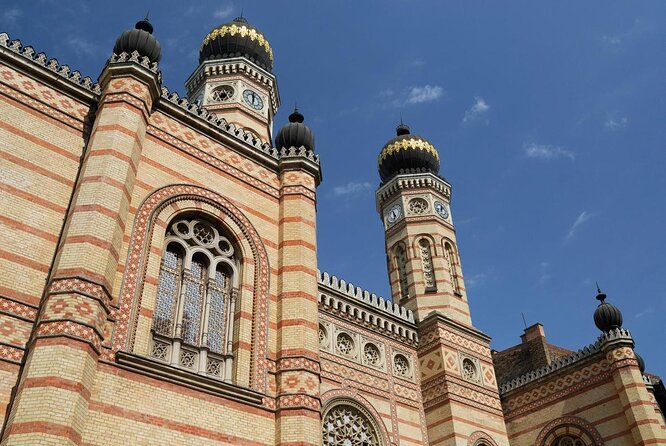
- 6) Through the Jewish Quarter: from community to ghetto to today
- 7) St. Stephen’s Basilica: outside views and the first king
- 8) Szabadság tér (Liberty Square) and the communist memorial
- 9) Stock Exchange Palace: a big building you can’t ignore
- 10) Ronald Reagan and George H. W. Bush statues: Cold War symbolism in plain sight
- 11) Hungarian Parliament Building: neo-gothic drama plus Danube views
- 12) Fisherman’s Bastion views from the Pest side
- 13) Széchenyi Lánchíd: Chain Bridge and its reconstruction story
- 14) Shoes on the Danube Bank: 60 pairs, Holocaust memory in silence
- Guide quality: what makes it feel “worth it”
- What about food, toilets, and staying comfortable?
- Who this tour is for (and who should pick something else)
- Should you book Budapest Historical Sightseeing?
- FAQ
- How long is the Budapest Historical Sightseeing free walking tour?
- How much does it cost?
- Where do I meet and where does the tour end?
- Is the tour offered in English?
- Is coffee or food included?
- Are there toilet stops, and do they cost money?
- Are dogs allowed on the tour?
Key things that make this tour work
- A communist-to-modern culture storyline that connects squares, buildings, and monuments in a way that feels meaningful.
- A Pest-focused route that helps you map the city quickly, with stops like Parliament, Liberty Square, and the Danube bank.
- Great street-level architecture moments such as Unger’s House and the Astoria building on the way to the center.
- Powerful Holocaust memorial storytelling at Shoes on the Danube Bank, built around the “60 pairs of shoes” detail.
- Danube views without the stress of trying to juggle multiple sightseeing tickets early on.
- Guides who often bring humor and clarity, with clear English and lots of answering-the-questions energy.
Price, pace, and what you’re really paying for
This tour is priced as a low-cost option (listed at $3.63 per person), and the model is essentially minimal fee plus tips. That’s a big part of the appeal if you’re traveling on a budget, but it also changes the vibe: you’re buying a guide’s time and effort, not an “included attraction day.”
Expect roughly 2 hours 30 minutes on your feet, and the tour guide is in charge of keeping you moving between stops. The route is designed for most people, but there’s a clear warning: it’s not recommended if you can’t comfortably walk around 3 miles. Budapest cobblestones can slow you down, and the walk will feel longer if you stop often on your own.
The tour operates best with good weather, and the “conditions” part matters because you’ll stand outside at multiple stops. Even a cold day can turn into a tough day if you’re underdressed. The tour itself doesn’t provide food, so you’ll also want to handle your own snacks and drinks.
You can also read our reviews of more walking tours in Budapest


Where you start: Kálvin tér and the yellow-guide vibe
You meet at OTP Bank, Budapest, Kálvin tér 12–13 (1085). The guidance is straightforward: the guides wear yellow, so you can spot them fast. The square area gives you a place to sit and some shelter if weather turns, which is a small thing—but it makes the tour feel smoother.
Kálvin tér is also a smart starting point because it anchors the day in real urban Budapest, not just postcard scenery. You’ll get a short orientation right away and then shift into the history thread.
If you want the best experience, do what the tour is built for: show up early in your visit. This type of orientation walk is most useful when you haven’t already wandered yourself into a confusing loop of streets.
Stop-by-stop: what you see and why it matters
1) Hungarian National Museum gardens and the turul bird
You begin with a look in the gardens of the Hungarian National Museum. It’s not about going inside; it’s about seeing the story around the museum. You’ll spot the statue of the mythical turul bird and hear about the museum collections and its founder.
This is also where the tour starts linking past political shockwaves to later city identity. You’ll hear about the 1948 uprising, which helps explain why “history” in Budapest isn’t just old stuff—it’s part of how people talk about the present.
There’s also a note about the VIII district (District VIII) and its connection to grand palaces—basically a reminder that Budapest’s “tough” stories don’t erase the places where beauty and wealth once lived.
What to watch for: stand where you can look over the garden space calmly. This stop sets the tone, so don’t rush your listening.
2) Kalvin Square: a practical pause named for John Calvin
Next is Kalvin Square, with the guide meeting at 12 Kalvin ter. The square is tied to French Protestant Reformer John Calvin. You’ll also get a quick feel for local movement—where people sit, and where you can duck into shelter.
This stop is short, but it’s useful because it’s a breathing point before the more emotionally heavy parts later. It’s the “okay, now we’re moving” moment.
You can also read our reviews of more historical tours in Budapest



3) Unger’s House courtyard and Miklós Ybl’s style mash-up
You’ll pass Unger’s House and focus on its courtyard and architecture. This is the stop where you learn to look at buildings instead of just walking past them.
The design is credited to Miklós Ybl, and what makes it special is the mix of styles—Byzantine, Gothic, Moorish, Renaissance, and Romantic. That’s a lot of labels for one building, but the point is simple: Budapest architecture reflects layers of ambition, trade, and changing tastes.
Why it’s worth caring: when you understand this mixing, the city stops looking random. You start seeing how the city absorbed influences over time.
4) Elizabeth Square and the Budapest Eye
At Elizabeth Square, you’ll see the Budapest Eye and get a bit of history about the square. The guide also points out where the more fun, modern side of the city shows up—bars and nightlife nearby.
This is one of those stops that balances weight with relief. After the political storyline ramps up later, it helps to have a moment where you’re also noticing how locals live now.
5) Danubius Hotel Astoria: French Empire elegance and pop-culture history
You’ll pass the grand Danubius Hotel Astoria—described as French Empire style. The interesting part here is how the building connects to international culture, not only local politics.
The tour notes that it attracted international stars and was tied to cinematic productions, including the Josephine Baker Story, directed by Brian Gibson. Even if you’re not a film buff, this helps you see Astoria as part of Budapest’s “cosmopolitan” side, not just an old hotel façade.
6) Through the Jewish Quarter: from community to ghetto to today
After the Astoria area, the walk shifts through the Jewish Quarter. You’ll get the historical arc: a vibrant Jewish community, then the dark reality of a ghetto in World War II, and then the more recent era where the neighborhood became home to artists, students, independent shops, designers, and bars.
This stop is important because it’s not only tragedy. It’s also renewal, which is what makes the neighborhood feel alive now rather than frozen in history.
7) St. Stephen’s Basilica: outside views and the first king
At St. Stephen’s Basilica (Szent István Bazilika), you stay outside. You’ll learn why it’s named after Hungary’s first king, St. Stephen.
Basilicas can sometimes feel like “one more church.” Here it’s treated as a landmark with political and national meaning, which makes it more than just a photo stop.
8) Szabadság tér (Liberty Square) and the communist memorial
Next comes Szabadság tér / Liberty Square, with time to see the communist memorial. This is a clear “theme payoff” stop. Earlier you learned how political events shaped the country’s story; here you see the physical mark left behind.
This isn’t a comfy stop. It’s meant to make you think, and it’s okay to let the silence sit for a moment.
9) Stock Exchange Palace: a big building you can’t ignore
You then look at the Stock Exchange Palace. The tour description calls it the largest privately owned historic landmark in Budapest, at 50,000 m². You’ll spend a short time here, enough to register its scale.
If you love architecture, you’ll want to slow down slightly. If you don’t, just use this stop to connect how power and money shaped the city as much as politics did.
10) Ronald Reagan and George H. W. Bush statues: Cold War symbolism in plain sight
You’ll spot the Ronald Reagan statue, with a quick explanation of why it shows him walking away from Parliament and how Bush is positioned in relation.
These statues are a neat way to make Cold War history feel less abstract. You’re not reading a timeline—you’re seeing how politics left a physical footprint.
11) Hungarian Parliament Building: neo-gothic drama plus Danube views
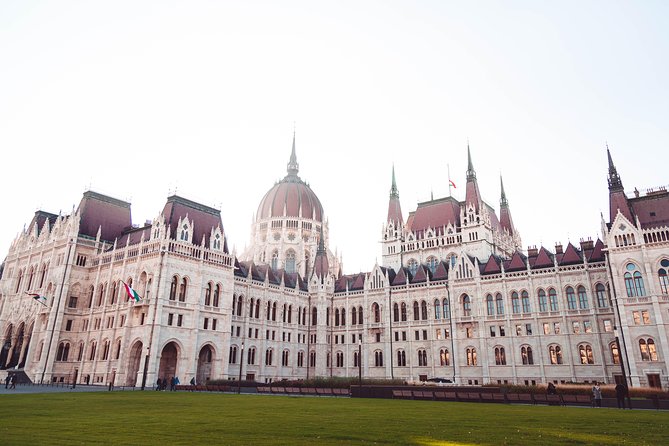
You stand outside the Hungarian Parliament Building. The description highlights the building’s electric/neo-gothic look and the view over the Danube.
You’ll also hear about other notable buildings around the square, including the chocolate museum, a former ministry of Justice, and the agricultural museum. Even if you don’t go inside, this helps you understand why this area feels like Budapest’s civic center.
Practical note: this is one of the busiest areas of the day. If it feels loud and hard to hear, move closer to your guide.
12) Fisherman’s Bastion views from the Pest side
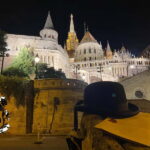
You’ll see Fisherman’s Bastion and get context for the castle area from the Pest side. The tour also points out St. Matthias Church with its colored tiled roof and the Hungarian National Palace from afar.
The route continues with viewpoints toward St. Margit’s Island and Gellért Hill. Even though you don’t climb in here, these sightlines help you understand the Danube’s geography and how the city’s two sides “face” each other.
13) Széchenyi Lánchíd: Chain Bridge and its reconstruction story
Near the end, you reach Széchenyi Lánchíd (Chain Bridge). You’ll hear about the bridge’s history and reconstruction.
This is a smart finale because it ties together everything you’ve seen: national identity on land, and the Danube as the dividing-and-connecting line through it all.
14) Shoes on the Danube Bank: 60 pairs, Holocaust memory in silence
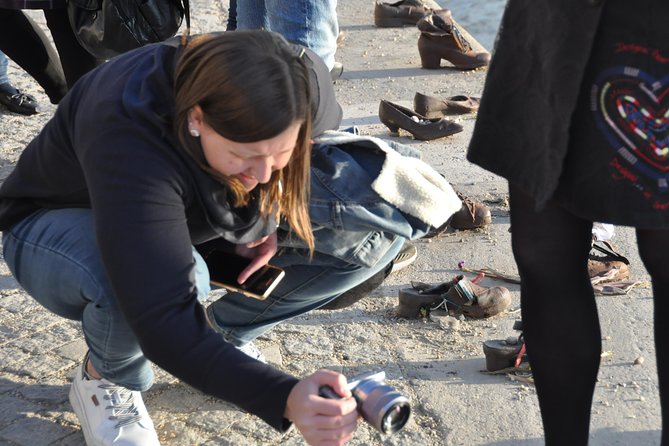
Finally, you arrive at Shoes on the Danube Bank. The tour description is specific: the memorial features 60 pairs of shoes dedicated to Holocaust victims, shown as if they were lined up and shot along the banks.
This stop doesn’t try to soften the moment. It’s one of those places where your brain goes quiet, and that’s the point.
Guide quality: what makes it feel “worth it”
A free or low-fee walking tour lives and dies by the guide. Here, many of the standout stories revolve around guides like Peter, Victoria, and Elizabeth.
What you can reasonably hope for based on the descriptions:
- Clear English and explanations that connect themes, not just facts.
- Humor mixed with serious tone. That balance makes the tougher topics easier to absorb.
- Extra structure: for example, one guide (Victoria) was noted as bringing a notebook with photos to help you visualize what’s being discussed.
- Practical help, not only history—help with how to move around and where to eat or drink at reasonable prices.
One caution from experience patterns: if your group becomes too big or the area is too crowded, hearing can drop. The fix is simple: don’t hang back. Keep close enough to catch words, not just gestures.
What about food, toilets, and staying comfortable?
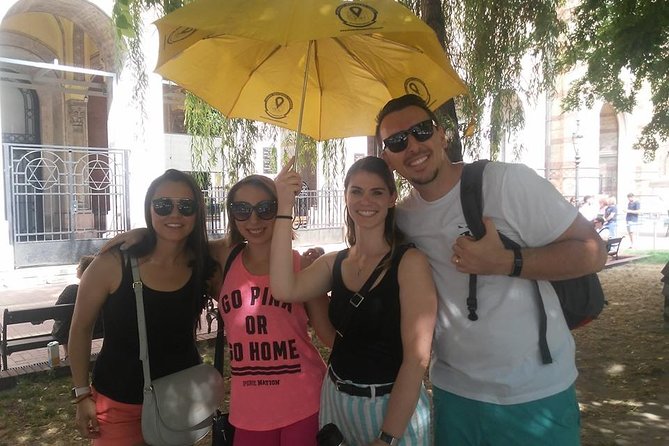
There’s no coffee or tea included, and the tour doesn’t serve food/drink. You’ll get a short 5-minute break for buying drinks and using the toilet, but it’s not a “café break” experience.
Toilets cost money—100 HUF to 500 HUF is the range listed. And guides can’t carry guest luggage or equipment, so travel light if you can.
Comfort tips that actually matter in Budapest:
- Bring water.
- Plan for cold or hot weather: the tour suggests sunscreen and umbrellas or warm jackets, depending on the day.
- Wear comfortable shoes. This is a cobblestone-friendly city, and you’ll feel it.
One more thing: there’s no hearing induction loop offered, so if you rely on that, plan accordingly.
Who this tour is for (and who should pick something else)

This tour is best for you if:
- You want a first-visit orientation that connects major sights to the story behind them.
- You like history with emotional weight, not just pretty buildings.
- You’re happy walking and taking short photo stops.
You may want to skip or switch to a shorter route if:
- You struggle with walking distances (the guidance points to not being recommended for those unable to walk about 3 miles).
- You hate outdoor standing in changing weather.
- You’re sensitive to crowded, noisy landmarks where hearing might be harder.
As for pets: dogs are not permitted on this tour (guide dogs are allowed with required official papers). Service animals are allowed.
Should you book Budapest Historical Sightseeing?
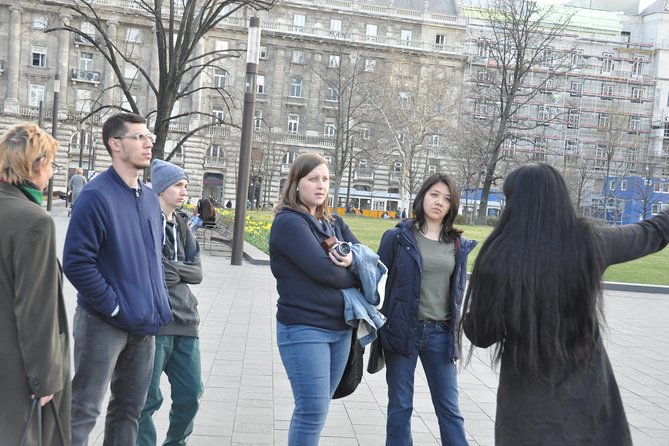
Yes—if you’re the kind of traveler who likes to understand what you’re seeing, this is a strong buy for the money. A 4.9 rating with a 97% recommendation rate tells you the model works when the guide is on, and the route hits the big “why Budapest feels like Budapest” stops: Parliament, Liberty Square, the Jewish Quarter, and the Danube memorials.
I’d book it early in your trip. You’ll come away with your bearings fast, plus a framework that helps you enjoy other neighborhoods later without feeling lost.
Just go in with the right expectations:
- It’s a serious, outdoor walk, not a ticketed museum binge.
- Bring warm layers if it’s cold and expect real walking time.
- Bring tip money. This tour is built on tips, and guides are the real product.
If you want a quieter experience, consider that group size can reach up to 50. In that case, you’ll get the best outcome by staying close and listening for what the guide is pointing out in the moment.
FAQ
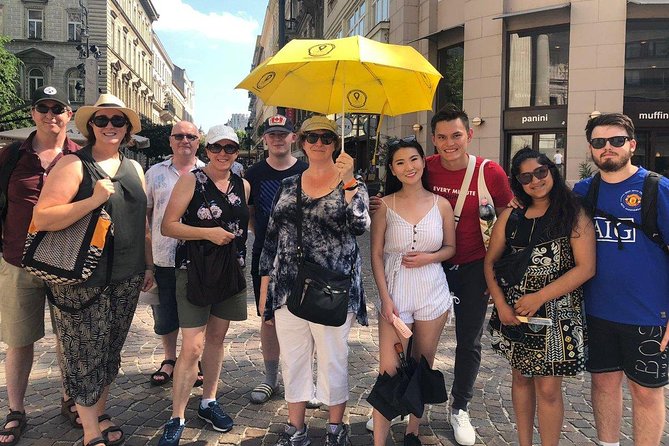
How long is the Budapest Historical Sightseeing free walking tour?
It runs about 2 hours 30 minutes.
How much does it cost?
The listed price is $3.63 per person, and the experience is designed as a low-fee, tips-based walking tour.
Where do I meet and where does the tour end?
You start at OTP Bank, Budapest, Kálvin tér 12–13 (1085). You finish at Id. Antall József rkp. 1, 1052, near Lanchid (the Chain Bridge).
Is the tour offered in English?
Yes. The tour is offered in English.
Is coffee or food included?
No. Coffee and/or tea are not included, and no food/drink is served. There is a short break to buy drinks and use the toilet.
Are there toilet stops, and do they cost money?
A short break includes time for toilets, and public toilet use can cost 100 HUF to 500 HUF.
Are dogs allowed on the tour?
Dogs are not permitted, but guide dogs are allowed if the owner carries the required official papers. Service animals are allowed.