REVIEW · BUDAPEST
Budapest: The WWII Siege of Buda Castle & Bomb Shelter Tour
Book on GetYourGuide →Operated by Buda Castle Walks · Bookable on GetYourGuide
A walk through the Buda Castle caves hits hard. This English guided tour turns the Siege of Budapest into a real place you can stand in, with stories traced to diaries and memoirs as you go underground. I love that it mixes street-level context with time in authentic WWII shelters, not just a lecture. I also love the pace: 90 minutes is long enough to make sense of the siege, but short enough to stay focused.
The main consideration is physical and mental: you’ll face steep stairs, narrow corridors, and tight tunnels. If you’re claustrophobic or have mobility limitations, this one is not for you.
Hear the siege story through diaries and survivor accounts.
Visit an underground bomb shelter and a cellar area in the cave system.
See how 52 days of siege shaped civilian survival in the palace district.
Expect a mix of outdoor streets and dim, illuminated underground spaces.
Come prepared for cold caves (about 12°C / 54°F) and cobblestones.
Guides like Rita, Jonas, Kopp, and Balacsz are praised for detail and energy.
In This Review
- Meeting at Dísz Square: Finding Your Tour on Castle Hill
- Úri Street and the Palace District Walk: Why the Streets Matter
- The Budai Vár-barlang Cave Walk: Cold Tunnels and Real Tight Space
- Exploring the Cellar and Authentic WWII Bomb Shelter
- Lovas Way: Siege Stories That Connect Above Ground to Underworld Rooms
- Wrapping Up at Szentháromság Square: What You’ll Remember After 90 Minutes
- Price and Value: Is $24 Worth It for a WWII Cave Tour?
- Weather, Timing, and What to Bring so You Don’t Freeze or Fuss
- Who Should Book, and Who Should Skip the Buda Castle Cave Tour
- Should You Book This WWII Siege of Buda Castle Tour?
- FAQ
- Where does the tour start?
- How long is the tour?
- Is the tour in English?
- Does the tour run in bad weather?
- Is the tour suitable for children?
- Is it cold underground?
- Is the tour accessible for people with mobility issues or claustrophobia?
Meeting at Dísz Square: Finding Your Tour on Castle Hill
The tour starts at De la Motte–B.-Palace, Dísz tér 15 (Dísz Square 15), right by the big green gate next to the Posta building. The easiest way to spot your group is to look for the guide holding a turquoise umbrella with the Buda Castle Walks logo.
Arriving early matters. The walk starts promptly at the scheduled time, and the tour cannot wait for latecomers. If you’re coming by taxi, foot, or public transit, I’d build in a few extra minutes to find the meeting point without stress.
One helpful bonus: use the on-site visit planner for real-time traffic and closures in the palace district. It’s built for exactly the kind of day when cobbled streets and construction can change your walking route. I like anything that keeps you from wandering in circles on Castle Hill.
Úri Street and the Palace District Walk: Why the Streets Matter
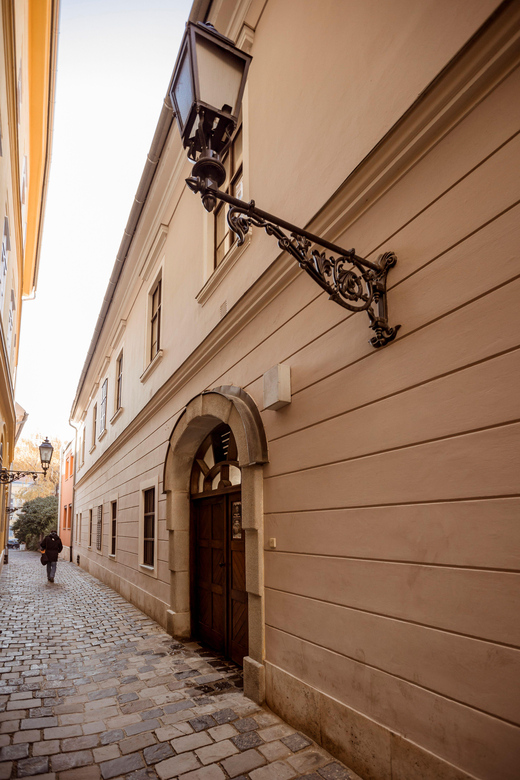
Before you go underground, you start above ground in the palace district, with a guided walk on Úri Street. This section is more than a warm-up. It sets the stage for why Buda Castle mattered in WWII, and why civilians and soldiers ended up seeking shelter under the same historic quarter they normally visited for views and palaces.
You’ll walk through the area with a story threaded through it: the Soviet Red Army encircled German-occupied Budapest on Christmas Eve 1944, and the 52-day siege began. That timeline is the backbone of the tour, and it lands better when you first see where people lived, stored goods, and tried to survive.
If you’re the type who likes to understand context before facts, this above-ground part is a gift. You’re not just walking for exercise. You’re building mental geography so the underground spaces later feel connected, not random.
You can also read our reviews of more tours and experiences in Budapest.



The Budai Vár-barlang Cave Walk: Cold Tunnels and Real Tight Space
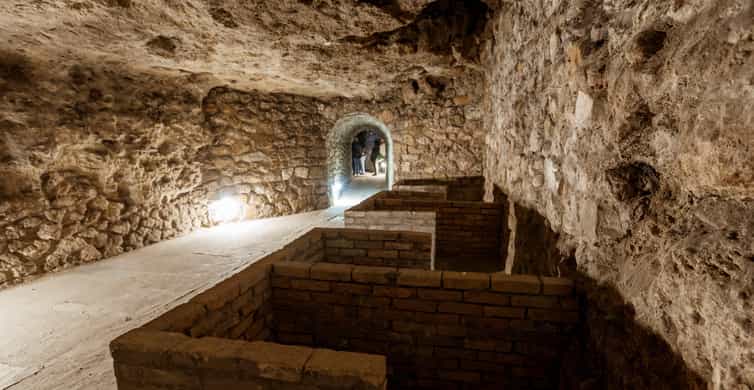
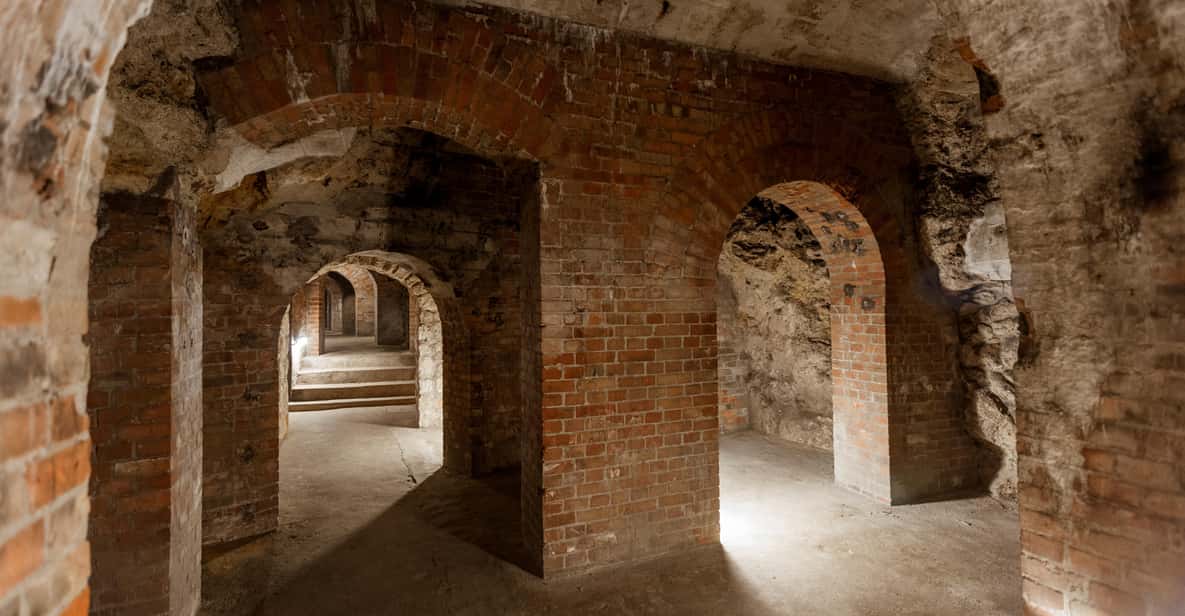
Your underground highlight is the Budai Vár-barlang (Vár-barlangi séták), with about 35 minutes spent in the cave system. This is where the tour shifts from historical overview to lived atmosphere.
The temperature stays around 12°C (54°F) in the cellar and the cave areas all year. That means you’ll want layers, even in summer. Comfort matters down here, because you’ll be moving through dim, illuminated spaces with uneven surfaces.
You also need to know the physical reality in advance. The route winds through cobbled streets and then into the cave network with steep stairs and narrow corridors. Reviews flag that the tunnels can feel claustrophobic, so this isn’t a casual “look but don’t touch” stop. It’s a guided passage where the space itself supports the story.
Guides often keep things understandable. Several guide names come up in feedback, including Jonas and Kopp, praised for clear explanations and keeping people engaged. That’s important underground, because there’s not much room to “catch up” if you lose the thread.
Exploring the Cellar and Authentic WWII Bomb Shelter
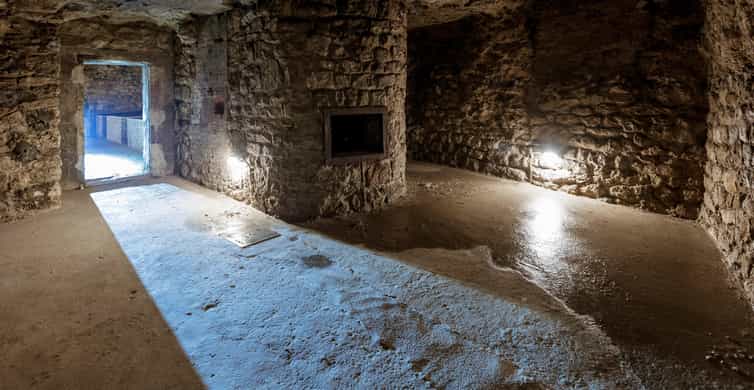
The tour isn’t just about caves in general. The point is specific: you visit a cellar of an old dwelling house and an authentic Second World War bomb shelter inside the system beneath this historic district.
This is the difference between reading about a siege and understanding what it felt like. In a bomb shelter, you’re dealing with shelter design as survival math: how people get in, how they breathe, where they store what matters, and what happens when darkness, cold, and overcrowding turn normal time into an endless wait.
The tour focuses on why people ended up there. Tens of thousands sought refuge in Buda Castle during the siege—German and Hungarian soldiers, the wounded, and civilians. The experience is framed around the common terror of death, but also the human urge to preserve life, possessions, and the treasures connected to the Royal Palace.
I appreciate that the story includes hardship beyond bombs. The tour describes cold, lack of water and food, darkness, overcrowding, and diseases. Those details are grim, but they’re also the reason the siege is often compared to Stalingrad: the suffering came from sustained encirclement, not a single moment.
Lovas Way: Siege Stories That Connect Above Ground to Underworld Rooms
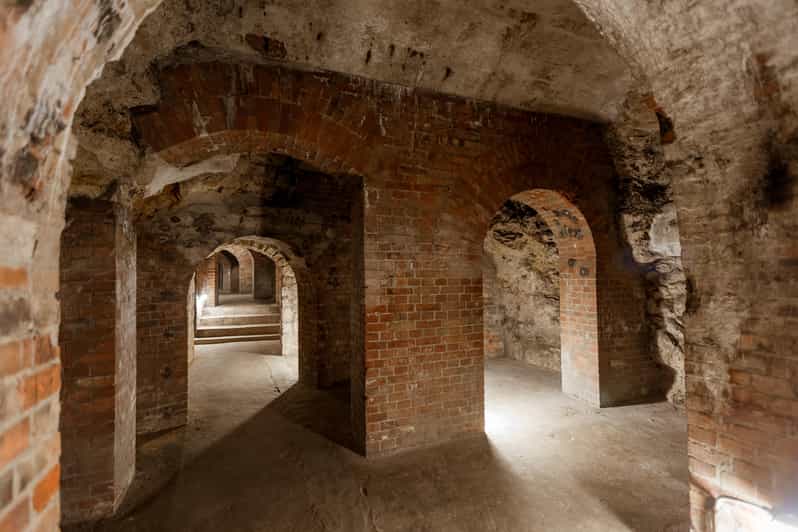
After the caves, you continue with guided time on Lovas Way. This is where you stitch together what you saw underground with what you’re standing in above ground.
You’ll keep following the siege story in a way that feels chronological: the encirclement starts, the 52 days drag on, and survival depends on underground spaces that were never meant to become the center of a city’s life. By the time you reach this stage of the walk, you’re no longer asking just what happened. You’re asking how a place designed for everyday living became an emergency shelter system.
Some feedback mentions that guides point out remaining traces of the siege in the area, such as bullet holes, secret doorways in buildings, and ventilation shafts rising from public shelters. Even if you don’t spot everything yourself, having a guide train your eyes changes how you see the district afterward. It turns a sightseeing stop into a place with evidence.
Wrapping Up at Szentháromság Square: What You’ll Remember After 90 Minutes
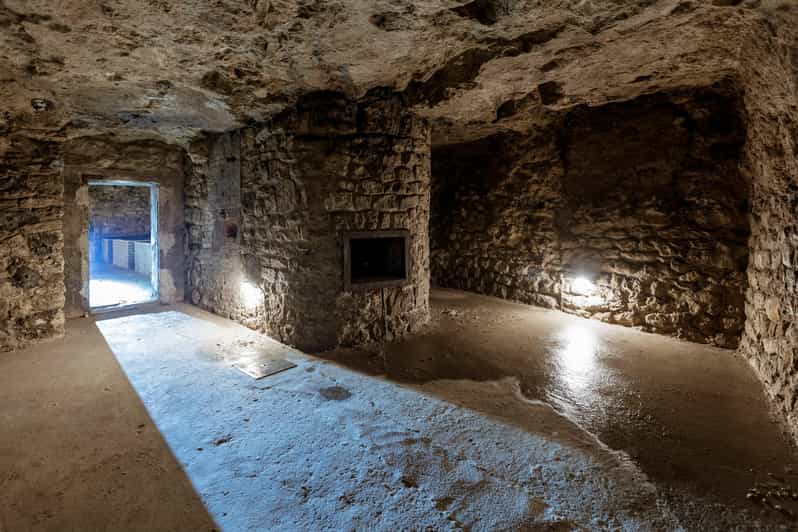
The tour finishes at Szentháromság tér (Szentháromság Square). It’s a satisfying end point because it puts you back into open-air space after moving through enclosed underground areas.
This matters emotionally. Several people describe the tour as sad and difficult, but also meaningful once you understand what underground shelter demanded. That’s the kind of historical experience that can stay with you after you leave the caves, especially because the tour connects stories of survival to actual physical spaces.
From a practical angle, 90 minutes is the sweet spot. If you can handle stairs and tight spaces, you get a concentrated, guided dose of WWII siege history without a half-day commitment. One reviewer notes it as the perfect length, and I agree with the logic: enough time to build understanding, not enough time to numb it.





Price and Value: Is $24 Worth It for a WWII Cave Tour?
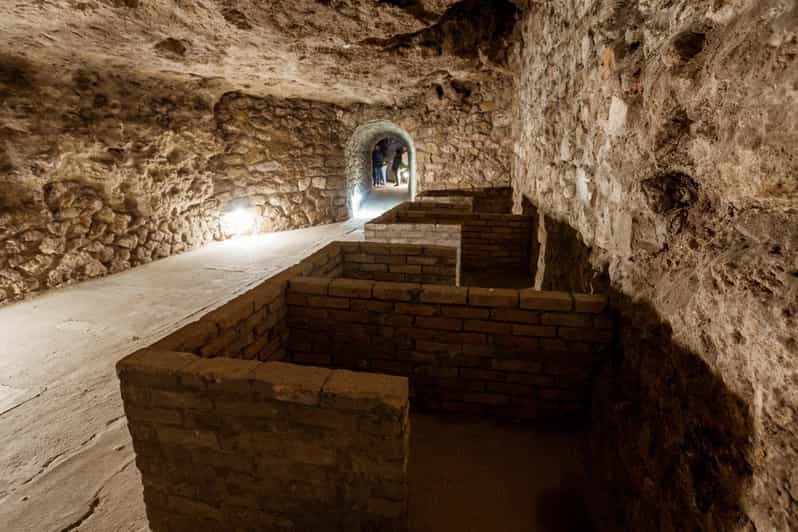
At $24 per person for about 1.5 hours, this isn’t expensive for what you’re getting. You’re paying for three things that usually cost more separately: guided interpretation in English, a structured walk through the palace district, and access to underground WWII spaces (cellar areas plus an authentic bomb shelter and cave system).
The value gets better because the tour is both outdoor and indoor. Many “walking history” tours stay above ground. Here, the story is partly told by the environment itself: cold caves, narrow corridors, and the feeling of moving through a shelter designed for people waiting out danger.
Also, the small details show care for the experience. Some reviews mention personal headphones, which is a real quality-of-life upgrade when you’re in dark or crowded spots. Clear audio means you can follow the facts without straining.
If you’re on a tight Budapest schedule, this tour is a strong use of time because it delivers a specific, memorable topic: the WWII siege of Buda Castle and how underground shelter shaped survival.
Weather, Timing, and What to Bring so You Don’t Freeze or Fuss
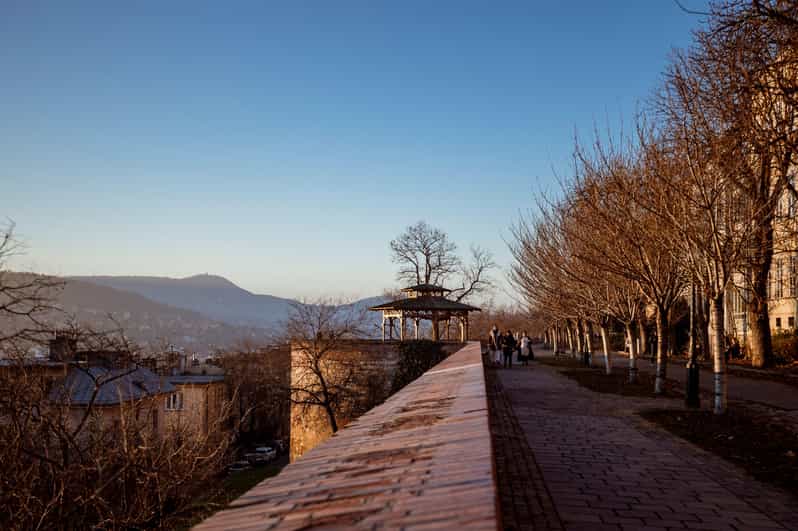
This tour runs in all weather conditions. Rain doesn’t cancel it; it changes the feel of the surfaces. You’ll be moving on cobbled streets and through areas that can be wet, and you’ll likely use stairs—sometimes steep ones.
Bring:
- Comfortable shoes (you’ll want grip)
- Warm clothing (you’ll be in about 12°C / 54°F underground)
- Water and a snack (90 minutes passes quickly)
- Layers so you can adjust as you go from outdoor sun to underground cold
Plan to arrive with enough time to settle your bearings. One review mentioned the start point can be tricky to find due to building work in the area, so I’d treat the meeting point like an important appointment, not a casual stroll.
Who Should Book, and Who Should Skip the Buda Castle Cave Tour
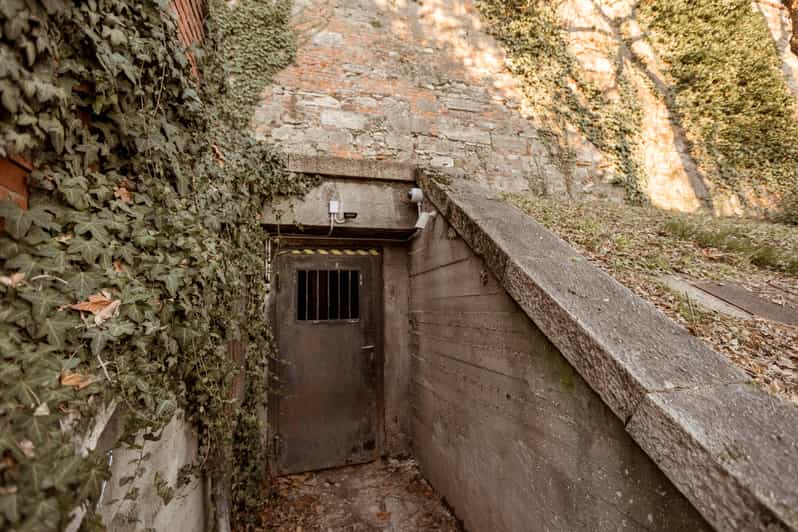
This tour is recommended for ages 14 and up, and it’s not suitable for children under 14. It also isn’t suitable for wheelchair users, people with mobility impairments, or anyone with claustrophobia.
If you’re comfortable with enclosed spaces, enjoy WWII history, and like walking tours with a strong guided narrative, you’ll likely love this format. The best fit is someone who wants more than dates and names. You want a reason the siege story is compared to Stalingrad, and you want that reason to be physical, not abstract.
English-language delivery is live guided. Several reviews highlight how guides keep people engaged with details about what happened before, during, and after WWII in Budapest. Guide names you may hear include Rita, Jonas, Kopp, and Balacsz, and the common thread is a passion for making the history understandable.
If you’re sensitive to emotional topics, consider your own threshold. Some people describe it as emotionally difficult. That’s not a reason to avoid it, but it is a cue to go in with eyes open.
Should You Book This WWII Siege of Buda Castle Tour?
I’d book it if you want an unforgettable, place-based understanding of Budapest in WWII. The combo of above-ground context plus time in underground shelters gives you more than a sightseeing story—you get the siege story as a lived space.
I’d skip it if tight tunnels or steep stairs would make you uncomfortable. The physical setup is part of the experience, and the tour explicitly isn’t designed for mobility limitations or claustrophobia.
If you’re deciding between “a quick castle walk” and something with substance, this leans hard into substance. For $24 and 90 minutes, it’s one of the more focused ways to connect Budapest’s historic palace district to what it endured during the 52-day siege.
FAQ
Where does the tour start?
You meet at De la Motte–B.-Palace, Dísz tér 15 (Dísz Square 15), next to the Posta building at the big green gate. Look for a colleague with a turquoise umbrella and the Buda Castle Walks logo.
How long is the tour?
The duration is 90 minutes (about 1.5 hours), and the program starts promptly at the time shown when you check availability.
Is the tour in English?
Yes. The tour is guided in English.
Does the tour run in bad weather?
Yes. It runs in all weather conditions, including rain.
Is the tour suitable for children?
It is recommended for ages 14 and upwards. Children under 14 are not suitable.
Is it cold underground?
Yes. The cellar and Buda Castle Cave are about 12°C (54°F) all year, so dress in layers.
Is the tour accessible for people with mobility issues or claustrophobia?
No. It isn’t suitable for wheelchair users, people with mobility impairments, or people with claustrophobia. The route includes steep stairs, narrow corridors, and cobbled, sometimes wet surfaces.