REVIEW · BUDAPEST
Half day Budapest city tour by car / minivan
Book on Viator →Operated by Private Sightseeing Tours in Budapest and in Hungary · Bookable on Viator
Budapest can feel like a lot at once. This half-day private city drive is a fast, comfortable way to get your bearings and see the highlights without burning your whole day. It’s built for first-timers, time-pressured travelers, and anyone who wants the city’s story clearly, stop-by-stop.
I love the private door-to-door setup, because it removes the hassle of buses, transfers, and long waits. I also love how this tour uses short, efficient stops—enough time for photos and key context, not so long that you fall behind your schedule.
One thing to consider: this is a “see a lot” plan, so a few spots involve extra tickets if you want to go inside certain churches or viewpoints. If you’re hoping for slow museum time, you’ll probably want a longer add-on day.
In This Review
- Key Highlights You’ll Notice Right Away
- How a 4-Hour Private Drive Gets You Oriented Fast
- Pickup and Comfort: Why Private Makes This Feel Effortless
- Price and Value: When $141.56 Actually Feels Like a Deal
- Andrássy Avenue to Heroes’ Square: Budapest’s Grand Entrance
- City Park Snapshot: Vajdahunyad Castle and the House of Music Hungary
- Thermal Bath Stops Without the Full-Day Commitment
- Opera House, Basilicas, and the Power Centers in Pest
- Danube Icons: Margit Bridge, Zero Kilometre Stone, and Chain Bridge
- Castle District Views: Matthias Church, Fisherman’s Bastion, and Citadel
- How Much Walking and Ticket Pressure to Expect
- Flexibility: How Guides Help You Get Your Priorities Right
- Who Should Book This (and Who Should Add Another Day)
- Final Verdict: Book This If You Want a Smart First Pass
- FAQ
- How long is the Budapest city tour?
- Is this tour private?
- What is the price per person?
- Does the tour include pickup?
- What language is the tour in?
- Is bottled water and air-conditioned transportation included?
- Do I need to pay extra for any sights?
- Are there different start times available?
- Is free cancellation available?
Key Highlights You’ll Notice Right Away
- Door-to-door pickup in a car/minivan means you start sightseeing without transit stress
- Air-conditioned comfort helps a lot when Budapest is hot, sunny, or chilly
- Tight photo stops with real explanations keep the drive from feeling like a checklist
- Danube crossings plus Castle District views give you the classic skyline angles fast
- Two thermal bath stops (Széchenyi and St. Gellért) let you judge the vibe without committing all day
- Highly rated private guiding often means thoughtful Q&A and a flexible rhythm
How a 4-Hour Private Drive Gets You Oriented Fast
If you’ve only got a half day in Budapest, this kind of tour is a practical win. You’re covering big stretches—Pest and Buda, the grand boulevards, the river landmarks—without the time penalty of hopping between multiple public routes.
The format matters: you’ll be in a car for the long connects and on your feet only in short bursts. That’s a big deal in a city with hills, bridges, and lots of traffic lights. You get the feel of Budapest’s layout quickly: wide avenues in Pest, dramatic views from Buda, and the Danube acting like the city’s main stage.
You can also read our reviews of more city tours in Budapest



Pickup and Comfort: Why Private Makes This Feel Effortless

This tour runs as a private experience, so it’s just your group. That changes the whole vibe—no crowd herding, no rushing to match someone else’s pace, and less waiting around.
Pickup is offered from any hotel or accommodation in Budapest, and the vehicle is air-conditioned. You also get bottled water, which sounds small until you’re doing photo stops in summer heat or just walking a little longer than expected.
Guides are working in English, and the experience uses mobile tickets. In real-life terms, that usually means fewer headaches right before you start.
Price and Value: When $141.56 Actually Feels Like a Deal

At $141.56 per person, you’re paying for three things that add up fast in Budapest: private guiding, private transport, and door-to-door service. If you’d otherwise rely on taxis plus self-guided navigation, the cost starts to look less surprising.
This tour also bundles a lot of major “big-hitter” sites into about four hours. Even the free-stop locations (like Heroes’ Square, the opera house exterior area, and several Danube and lookout points) are only valuable if someone helps you understand what you’re seeing. That’s the real currency here.
And because it’s private, you’re not wasting time trying to coordinate with other people’s questions or pace. That’s where value shows up: you’re not just moving—you’re moving with context.
Andrássy Avenue to Heroes’ Square: Budapest’s Grand Entrance
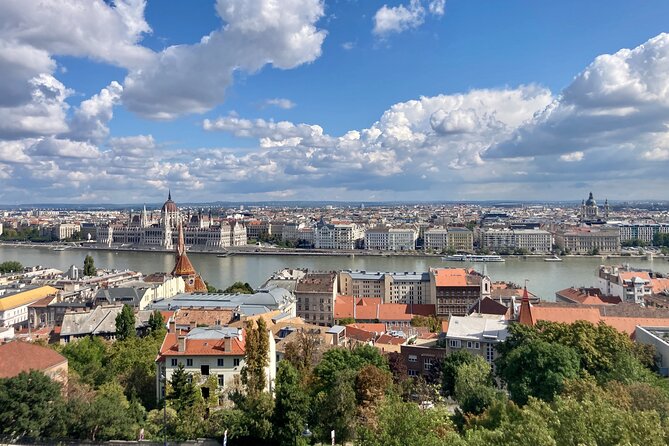
Most first-time itineraries start with the obvious central sights, but this one does it in a smart order. You begin with Andrássy Avenue, Budapest’s historic boulevard linking the city center toward Heroes’ Square.
Andrássy Avenue dates back to 1872 and has that “imperial capital” feel: Neo-Renaissance mansions, townhouses with detailed façades, and a corridor full of cafés, theaters, embassies, and luxury boutiques. It was recognized as a World Heritage Site in 2002, which helps explain why the street looks so carefully designed.
Then you land at Heroes’ Square, one of Budapest’s most iconic public spaces. It’s famous for the statue complex featuring the Seven chieftains of the Hungarians and other key national figures, plus the Memorial Stone of Heroes. You’ll also pass the Museum of Fine Arts and the Art Gallery area, so even from street level, the place has cultural weight.
A key reason this stop works on a short schedule: the square ties geography to national story. It’s not just a photo spot—it’s a launchpad for understanding how Budapest frames its identity.
Time tip: with around 20 minutes here, plan for quick photos and a couple of focused viewpoints, not a long stroll.
City Park Snapshot: Vajdahunyad Castle and the House of Music Hungary
Next comes Vajdahunyad Castle, a famous-looking structure in Budapest’s City Park. It was built in 1896 as part of the Millennial Exhibition marking 1000 years since the Hungarian Conquest of the Carpathian Basin in 895.
What makes this castle interesting is that it wasn’t meant to be just one style or one story. It was designed to resemble copies of landmark buildings from different parts of the Kingdom of Hungary. So, even though it’s in a park and not a full “royal residence” complex, it’s a visual summary of architectural heritage.
Then you’ll stop at the House of Music Hungary, an institution opened in January 2022. The building is iconic, and the exhibition focuses on music history in a way that’s meant to be accessible—especially if you like learning with exhibits rather than only reading plaques.
Even if you don’t go inside for a deep visit, these quick stops help you understand Budapest’s newer cultural side alongside its older monuments. The City Park area also tends to feel like a breather from street-level intensity.





Thermal Bath Stops Without the Full-Day Commitment
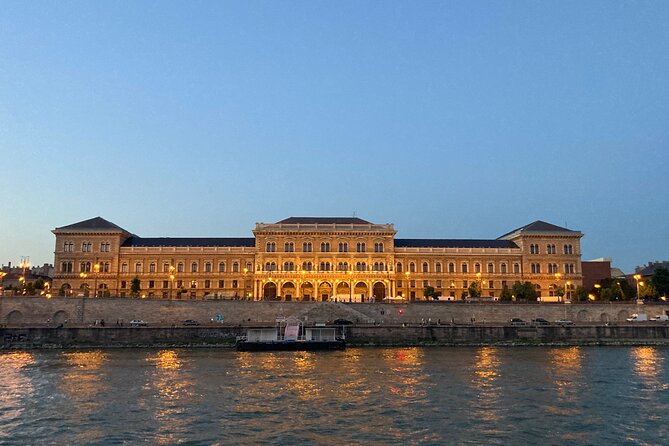
Budapest’s baths are a big part of why people keep coming back. This tour includes two bath stops, which is a great compromise when you don’t have all day to soak.
First, there’s Széchenyi Medicinal Bath, described as the largest medicinal bath in Europe. The water is supplied by two thermal springs with temperatures around 74°C (165°F) and 77°C (171°F). That temperature range matters because it’s part of why the baths feel so distinctive—this is not just a spa vibe, it’s tied to thermal water.
Later, you’ll visit St. Gellért Thermal Bath and Swimming Pool, part of the Hotel Gellért complex. The bath was built between 1912 and 1918 in Art Nouveau (Secession) style, which makes it an architectural stop as much as a bath stop.
One consideration: this experience lists certain stops as free in terms of entry, but some optional interior visits can require additional entrance fees. In practice, if baths are your top priority, you’ll likely want a separate half-day or full-day bath session after this tour.
Opera House, Basilicas, and the Power Centers in Pest
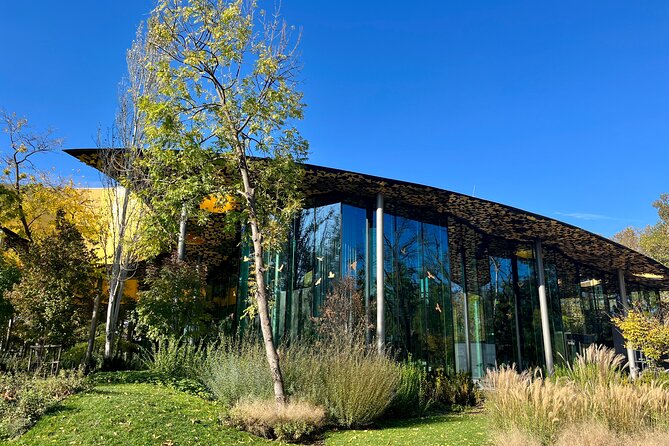
Budapest’s Pest side delivers the grand public architecture. On Andrássy Avenue, you’ll get a stop at the Hungarian State Opera House, a neo-Renaissance opera house set on the avenue.
Opera houses in cities like Budapest aren’t just pretty buildings. They signal how central the arts and public life are to the city’s self-image. Even a quick stop helps if you want Budapest to feel more than just bridges and views.
Next you’ll be near St. Stephen’s Basilica, named for Stephen, the first King of Hungary. Tradition places his right hand in a reliquary, and the basilica is also listed as the third-largest church building in present-day Hungary. If you want to go further than the exterior, note that admission is not included for this stop’s interiors.
Then you’ll pass through Liberty Square, a mix of business and residential buildings with significant landmarks such as the United States Embassy and the Hungarian National Bank headquarters nearby. Some buildings here use Art Nouveau style, which gives you another architectural layer beyond the major monuments.
From there, you reach Hungarian Parliament Building, located in Kossuth Square on the Pest side by the Danube. It’s the largest building in Hungary and a major tourist destination. A 15-minute stop won’t make you an expert, but it will absolutely give you the right vantage point and the right basics for what you’re looking at.
Danube Icons: Margit Bridge, Zero Kilometre Stone, and Chain Bridge
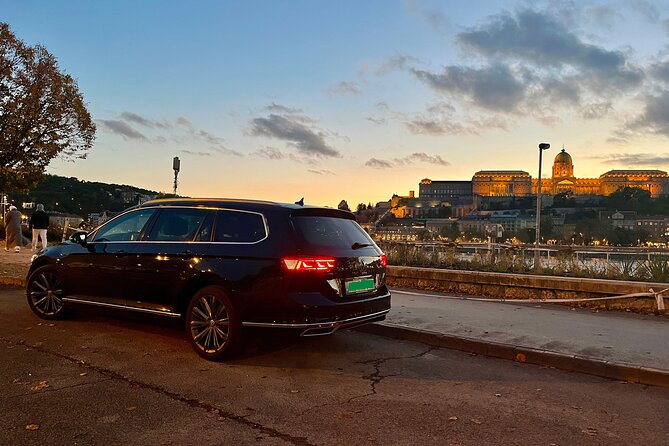
Budapest’s river landmarks connect the stories of Buda and Pest, and this route uses that idea well.
You’ll stop near Margit Bridge, the second oldest bridge in Budapest (opened 1876). It connects Pest and Buda and runs toward Margaret Island, so it’s not only about crossing—it’s about linking the city’s recreational and residential rhythms.
Then there’s the Zero Kilometre Stone, a 3-meter limestone marker with an inscription showing KM for kilometres. It’s the reference point for road distances measured to and from Budapest. It’s the kind of detail you’d never notice on your own, and that makes it a fun stop when the goal is to understand the city as a functioning place, not just a museum.
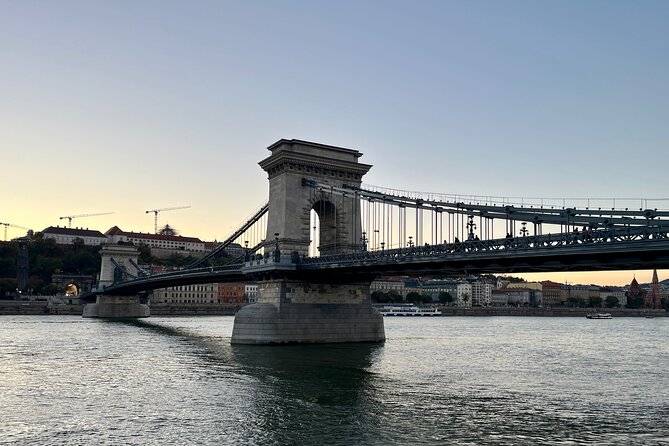
Finally, you’ll see Széchenyi Chain Bridge (often just called the Chain Bridge). It spans the Danube between Buda and Pest and was the first permanent bridge across the Danube in Hungary, opened in 1849. It was designed by English engineer William Tierney Clark, built by Scottish engineer Adam Clark.
If you care about the “how cities work” side of travel, this bridge stop is excellent. You can feel the city’s engineering confidence and how critical river crossings were to shaping Budapest’s growth.
Castle District Views: Matthias Church, Fisherman’s Bastion, and Citadel
Once you shift toward Buda, the experience leans hard into viewpoints, which is exactly what you want on a half-day tour.
You’ll stop at Matthias Church, also known as the Church of the Assumption of the Buda Castle. The current late-Gothic building dates to the second half of the 14th century and was extensively restored in the late 19th century. If you want to go inside, admission is not included, so consider whether it’s worth the extra ticket based on your priorities.
Then comes Fisherman’s Bastion, one of the most famous parts of Budapest’s Buda Castle District. It’s built between 1895 and 1902 on the base of older castle walls and is known for those lookout terraces and panoramic views of the Danube and Pest skyline. Admission is not included here as well.
You’ll also visit Citadel Lookout on Gellért Hill at the Citadella. This fortification was built in 1851 by Julius Jacob von Haynau, associated with the Austrian Empire. Even if you don’t care about military history, the payoff is straightforward: wide views from a hilltop position that show Budapest’s shape clearly.
These stops take time in shorter bursts—around 15 to 20 minutes each—but they’re timed well. You get the “wow” moments without turning your half day into an all-day endurance test.
How Much Walking and Ticket Pressure to Expect
This tour balances driving and short stop time, but it still has real limits.
Most stops include brief photo time and quick context. That’s great when you want highlights and explanation in one compact schedule. It also means you won’t linger long enough for deep museum-style visits.
Also, interiors can cost extra. The information you’re given flags optional tickets for spots like St. Stephen’s Basilica, Matthias Church, and the upper level of Fisherman’s Bastion. So if you’re the type who always goes inside, build that into your plan early rather than at the curb.
One more practical point: a car-based route can reduce walking fatigue, but it doesn’t eliminate stairs and uneven ground at viewpoints. For the Castle District and lookouts, you’ll still want to watch your footing.
Flexibility: How Guides Help You Get Your Priorities Right
The best part of private guiding is not the vehicle—it’s the ability to shape the day around what you actually care about.
Some guides on this route have a reputation for being responsive and friendly in Q&A, with strong English and a knack for turning historical facts into something you can picture. Names that come up include Gergely and Gregory, with tours described as clear, question-friendly, and practical.
Because your group is private, you can usually ask for slight adjustments—like spending a bit more time on the view that matters most to you, or shifting emphasis based on what you saw earlier in the day.
In one example, a group added additional sights like the Jewish Quarter and Great Hall Market, plus food stops, on top of the core monuments. That’s not guaranteed, but it’s a good sign: your guide should be open to thoughtful re-prioritizing.
Who Should Book This (and Who Should Add Another Day)
This tour is ideal if:
- You’re on a tight schedule and want a quick orientation across Pest and Buda
- You prefer comfortable transport over navigating on your own
- You want a guided “story” around the major sights, not just selfies
- You’re a first-timer who wants the iconic angles—Chain Bridge, Parliament, Heroes’ Square, Castle District views
You might consider a different plan if:
- You want long museum time or guided interior visits at many religious sites
- Your day is mostly about slow wandering and deep neighborhood exploring
- You’re expecting a full spa session at the baths (this includes bath stops, but not a bath day by default)
Most travelers can participate, but the success of the tour still depends on being okay with brief stops and some outdoor viewpoint walking.
Final Verdict: Book This If You Want a Smart First Pass
If you want the best use of four hours, I’d book this. It’s efficient without feeling like chaos, and the combination of driving plus quick guided context is exactly how you turn a short stop into real understanding.
Start with this tour early in your trip if you can. You’ll come away with a mental map and enough background to enjoy the next day’s wandering. If you already know you’ll want deeper time at places like Fisherman’s Bastion, St. Stephen’s Basilica, or one of the baths, treat this as your orientation—then follow up with targeted time where you’ll actually go inside.
FAQ
How long is the Budapest city tour?
It’s about 4 hours.
Is this tour private?
Yes. It’s a private tour/activity, so only your group participates.
What is the price per person?
The price is $141.56 per person.
Does the tour include pickup?
Yes. Pickup is offered from any hotel or other accommodation in Budapest.
What language is the tour in?
The tour is offered in English.
Is bottled water and air-conditioned transportation included?
Yes. Bottled water and an air-conditioned vehicle are included.
Do I need to pay extra for any sights?
Some optional interior visits require additional entrance fees. St. Stephen’s Basilica, Matthias Church, and the upper floor of Fisherman’s Bastion are specifically noted as not included.
Are there different start times available?
Yes, a wide range of start times is available to fit your schedule.
Is free cancellation available?
Yes, you can cancel for a full refund up to 24 hours in advance of the experience’s start time.