REVIEW · BUDAPEST
Past and Present of Budapest Jewish District Tour
Book on Viator →Operated by Triptobudapest.hu - Free Budapest Walking Tours · Bookable on Viator
One neighborhood, two centuries of change. This Past and Present of Budapest Jewish District tour strings big historical moments onto real street corners, from the Jewish community’s Belle Epoque and Golden Age to the devastation of World War II.
I really like the way the guide uses landmarks as a living timeline, so you start to understand the city’s layout and power shifts without needing a museum day. I also love the specific stories that get folded into the walk, including the idea of Gaudiopolis and the role of Schutzpass documents in helping Jews survive. One drawback to plan for: the tour keeps things exterior-focused and does not enter the synagogues, so you’ll be seeing courtyard and cemetery views, plus the buildings outside.
In This Review
- Quick hits before you go
- Price and what you’re really paying for
- Start at Erzsébet tér, where the route makes sense
- Erzsébet tér to Deák Ferenc Square: Belle Époque, exclusion, and Gaudiopolis
- Great / Central Synagogue (Nagy Zsinagóga) from outside: movements, Zionism, and where to look
- Rumbach Street Synagogue and the murals: architecture plus street-level storytelling
- Gozsdu Udvar and the last ghetto wall: where the past shows up in commerce and culture
- Kazinczy Street Synagogue area: Orthodox community, kosher food, and ritual life
- Szimpla Kert finale: murals, pop-ups, and last orientation
- Guides on the route: what style to expect
- Is the no-synagogue-entrance format a dealbreaker?
- Who this tour suits best
- Book it or skip it: my practical take
- FAQ
- FAQ
- How long is the Budapest Jewish District tour?
- Where do I meet for the tour?
- Where does the tour end?
- Is the tour in English?
- Does the tour include entrance into synagogues?
- What does the tour cover?
- What’s included in the price?
- Are tips included?
- How big is the group?
- Is it near public transportation and are service animals allowed?
Quick hits before you go
- Exterior-first synagogue route: You see the main synagogues and key religious landmarks without going inside.
- A clear historical arc in 1h45: Belle Époque to destruction, with the neighborhood’s physical changes explained as you walk.
- Street art and murals included: Rumbach Street, plus the broader urban art scene around District VII.
- Real survival details, not vague tragedy: Schutzpass and the community’s changing position in Budapest are part of the story.
- Great finish for orientation: You end near Szimpla Kert, a useful place to ask follow-up questions and plan your next stop.
- Small-group feel: Max 25 people, so it’s not a stampede through the Jewish Quarter.
Price and what you’re really paying for
At $3.63 per person, this tour is priced in a way that screams value. The practical question isn’t how much it costs, it’s what it buys you: a focused 1 hour 45 minute walk with a fully licensed local guide, in English, designed to make you understand District VII fast.
The tour includes the booking fee, but that booking fee is described as administrative and does not go to the guide’s earnings. That’s why the experience uses a donation-based approach at the end. In other words, you’re paying a small amount to secure your spot, and you decide how to tip or donate based on how the guide works for your group.
If you want a lesson, a route, and context, this fits. If you want a ticketed, inside-building tour with lots of entry fees, you’ll need to plan separate visits to the synagogues on your own time.
You can also read our reviews of more tours and experiences in Budapest.



Start at Erzsébet tér, where the route makes sense
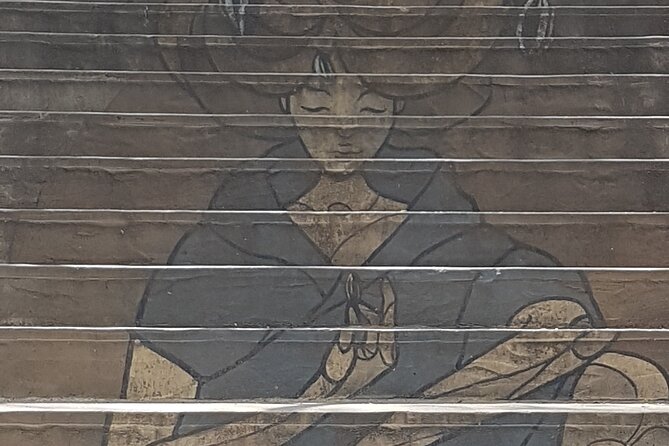
You meet at Erzsébet tér, at the Ferris Wheel of Budapest. This is a smart choice because it’s easy to find and it sits right in the middle of walking access. You also get a clear sense of scale early: Budapest’s city rhythm and the neighborhood boundaries become obvious once you start moving.
The guide does a sketch of the route and the major sights. That’s not just warm-up. It helps you read what you’re about to see. When you understand where you’re going, you stop treating every building like a random postcard and start connecting them as chapters.
From the start, the tour is framed as a past-and-present story. It moves from the Golden Age of Jewish life through the turning points that led to catastrophe. You’re not just touring architecture. You’re walking a geography of community, exclusion, survival, and memory.
Erzsébet tér to Deák Ferenc Square: Belle Époque, exclusion, and Gaudiopolis
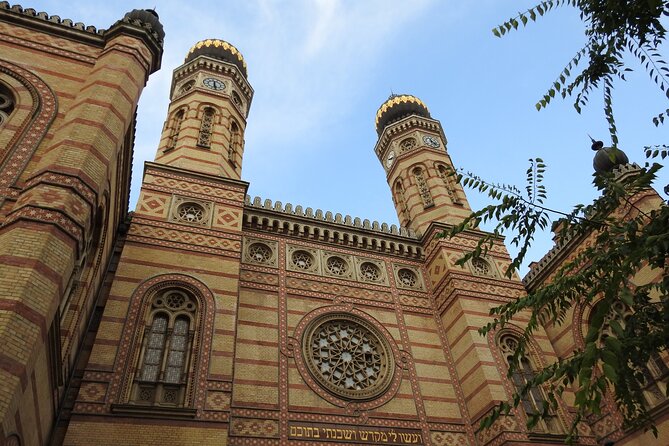
The first stop is Erzsébet tér. You meet your guide here, then head down the line with the historical timeline in mind. This is where the tour promises its big focus: Jewish Hungary from the Belle Epoque or Golden Age to destruction. You’ll talk about how the community shaped Budapest, and how Budapest later forced brutal limits on where Jewish people could live, trade, and move.
Then you reach Deák Ferenc Square and get two standout threads. First is the story around Gaudiopolis, the city of joy in Latin. It’s a name that points to cultural energy and community life, not just hardship. Second is Schutzpass, the protection documents that helped save thousands of Jewish lives. You’re learning survival history while also learning how systems worked on the ground.
This stop also includes a physical clue to exclusion: you’ll see the former medieval city wall ruins that helped restrict Jewish people’s activities within city limits. That matters because it explains the neighborhood’s boundaries in a way a map alone can’t.
A small practical note: this is the stage where you’ll likely be doing the most standing and listening. Wear comfortable shoes, and keep water handy if you’re visiting in warm months.
Great / Central Synagogue (Nagy Zsinagóga) from outside: movements, Zionism, and where to look
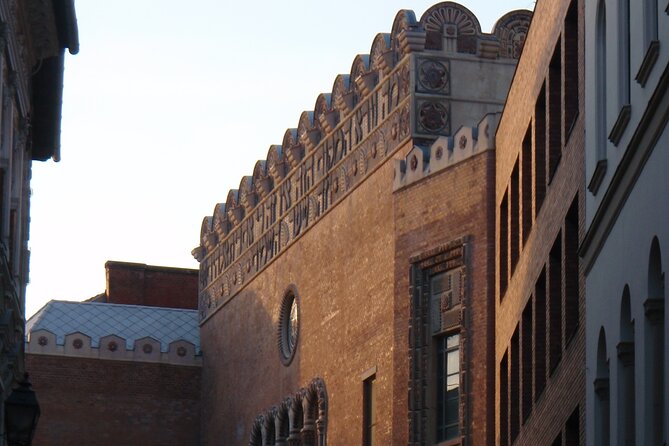
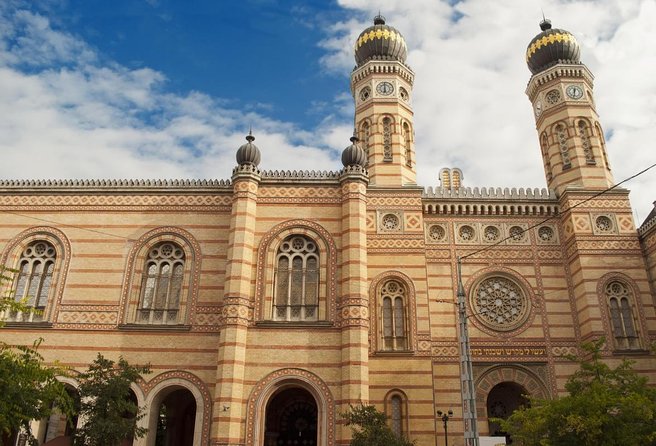
Next comes Great / Central Synagogue, Nagy Zsinagóga. This is one of the main reasons many people pick this walk, because it’s the largest synagogue in Europe. The tour explains the Neologue and Orthodox movements, plus Zionism, as part of how Jewish identity and politics took shape in Budapest.
But here’s the key planning detail: the tour does not enter the synagogue. You see the Memorial Courtyard and the cemetery from outside. If you want interior views, you’ll need a separate visit with an entrance ticket.
Even without going in, there’s a lot you can do with your eyes. I like this approach for first-timers because you get context for what you’ll see later if you return. Instead of rushing into rooms, you learn why this building matters, and what people meant by the different religious streams you’re hearing about.
Also, pay attention to the memorial space itself. When the guide connects it back to the timeline you’ve been following since Erzsébet tér, the courtyard becomes more than a scene. It becomes a turning point you can physically locate in your mind.
Rumbach Street Synagogue and the murals: architecture plus street-level storytelling
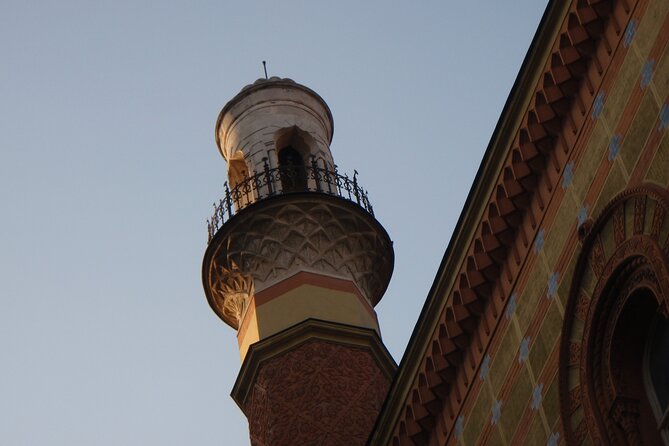
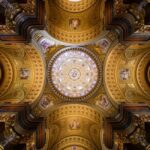
The walk continues to Rumbach Street Synagogue. Here the emphasis shifts slightly: you learn about the restored synagogue, and you also get time to look at the surrounding visual culture, including murals and urban street art.
Importantly, this is again an exterior stop. You don’t go inside, but you do get a sense of how the neighborhood looks now, after restoration, repurposing, and cultural layering. That balance matters. If all you saw were memorials and tragic history, you’d miss the fact that Jewish life and Hungarian street life have continued in complicated ways.
This is also a good stop for photos and slow walking. It’s one of those places where you’ll want to take a moment and simply look. The combination of religious architecture and street art makes the neighborhood feel like it’s still alive, not frozen in a single era.




Gozsdu Udvar and the last ghetto wall: where the past shows up in commerce and culture

At Gozsdu Udvar you pass Gozsdu Passage and learn how it ties into the neighborhood’s past and present. The guide explains how the passage became a space for entertainment, gastronomy, culture, and markets. That might sound like a fun detour, but it’s actually part of the story: a place that once carried restrictive realities now carries public daily life.
Then the tour adds a heavy physical detail: you’ll see the last piece of the ghetto wall. This is exactly the kind of moment that can hit hard on a walking tour, because there’s no museum barrier between you and the evidence. The guide’s job here is to keep the timeline grounded, so the wall doesn’t become just a photo op.
If you’re trying to understand District VII as a living neighborhood, this stop helps you do that. You learn how history persists while the city keeps moving.
Kazinczy Street Synagogue area: Orthodox community, kosher food, and ritual life
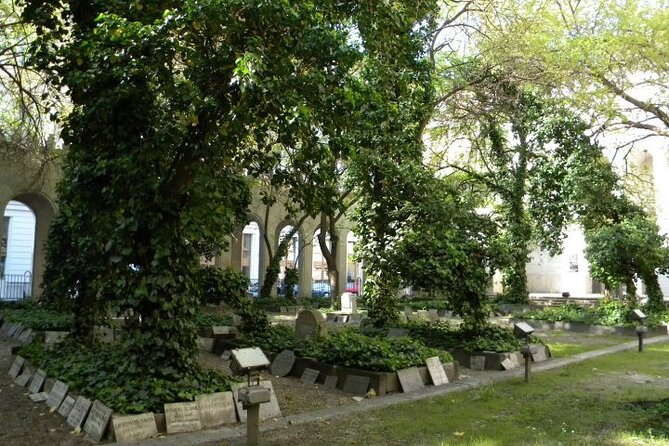
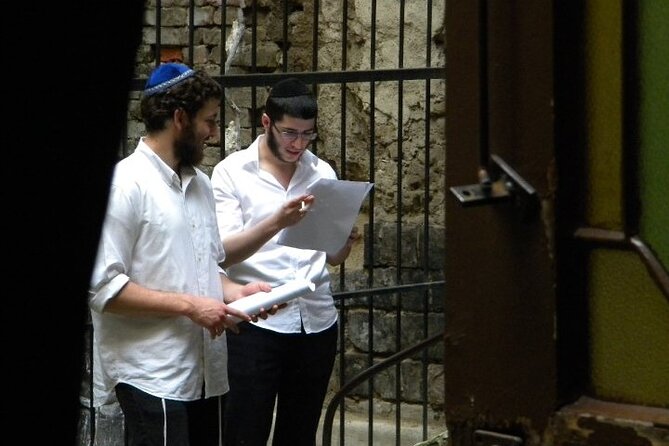
The next stop is just outside the Kazinczy Street Synagogue, connected to the Orthodox community of about 50 to 60 families. You’ll hear about community scale and practice, rather than treating Jewish history as one single story.
The guide also connects the dots to daily life topics like kosher food and a Jewish ritual bath. Even without an entrance visit, these explanations help you picture how people lived, not just what buildings looked like.
Another practical reason to like this portion of the walk: it gives you vocabulary for later reading. Once you know what to listen for when you see references to Orthodox practice, mikveh ritual life, or kosher kitchens, you’ll get more from whatever you do next in Budapest.
Szimpla Kert finale: murals, pop-ups, and last orientation
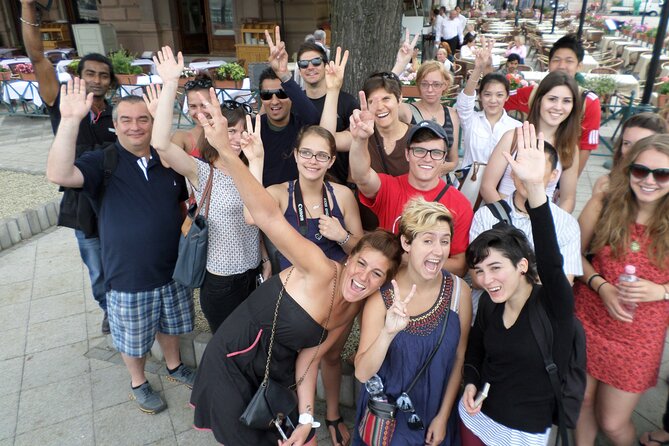
The tour wraps at Szimpla Kert, a ruin bar at Kazinczy u. 14. There’s no entry fee to be there for the walk’s end. It’s a good place to finish because it’s easy to transition from guided learning to independent wandering.
You’ll also see more urban street art and murals on the way, plus you get a final orientation point. This is where the guide’s Q&A style helps. If you want to go further, you’ll usually have a clearer sense of what to target next, whether that’s another walking route, a synagogue visit on a separate day, or a museum stop.
Some guests like that the tour doesn’t end abruptly. Instead, you get a mental map of the neighborhood and a sensible final location to regroup.
Guides on the route: what style to expect
Depending on the day, you might walk with guides such as Eszter, Gary, Dora, Edith, Jude, Edi, Judith, or David. The common thread is clear: guides tend to be friendly, organized, and ready for questions.
You’ll likely notice a teaching approach that includes both structure and conversation. People mention guides answering lots of questions and keeping a comfortable pace even for seniors. One theme that comes up is the balance between facts and human meaning, especially when the story reaches the Holocaust years.
One caution: if you’re sensitive to strong accents or fast speech, plan for the fact that English delivery can vary. There’s at least one mention of Hungarian accent making the narration hard to follow. If that matters to you, arrive early, position yourself so you can hear clearly, and don’t be shy about asking the guide to repeat something.
Is the no-synagogue-entrance format a dealbreaker?
It might be, depending on what you want from Budapest’s Jewish Quarter.
This tour explicitly does not enter the synagogues. The largest synagogue stop includes the memorial courtyard and cemetery from outside. Other synagogue stops are also outside views. That means:
- You get architecture, context, and memorial placement cues.
- You do not get interior rooms, guided viewing inside, or ticketed synagogue access.
If you’re the type who wants to stand in the space and see the interior details, you should plan separate synagogue visits with tickets. If you’re the type who wants an organized first orientation and a history timeline that connects the neighborhood together, this format is a good match.
Also, many people find it heavier than a typical light walking tour. That’s not a warning label so much as a heads-up: the story includes tragedy and the realities of Nazi occupation. If you’re okay with serious history on your feet, you’ll likely find the pacing worth it.
Who this tour suits best
This is a strong pick if you want:
- A fast orientation to District VII in about 1h45
- A route that connects street-level sights to a timeline
- An English explanation that can answer questions
- A tour that’s small enough to feel like a group, max 25 people
It’s especially useful for first-timers, since it helps you decide what to do next without guessing. It also helps if you’re trying to understand not just Holocaust history, but the full arc from flourishing community life to destruction and memory.
You might want a different format if you:
- Really care about going inside the synagogues during the same visit
- Expect lots of personal anecdotes or photo-style storytelling rather than a structured historical walkthrough
Book it or skip it: my practical take
If your goal is to understand Budapest’s Jewish Quarter without wasting time, I’d book this. The walk gives you a coherent timeline, it points out the major landmarks, and it ends in a sensible place for continued exploring. The price is low enough that you’re not taking a big financial risk on a first pass, and the donation model lets you reward the guide based on the experience you actually get.
I’d just go in with the right expectations. This is an exterior-focused history walk, and it’s not trying to replace synagogue entrance visits. If you want interior access, plan that separately. If you want the neighborhood decoded street by street, you’ll get a lot for your time.
FAQ
FAQ
How long is the Budapest Jewish District tour?
It runs about 1 hour 45 minutes.
Where do I meet for the tour?
You meet at the Ferris Wheel of Budapest on Erzsébet tér, 1051 Hungary.
Where does the tour end?
The tour ends at Szimpla Kert, Kazinczy u. 14, 1075 Hungary.
Is the tour in English?
Yes, it is offered in English.
Does the tour include entrance into synagogues?
No. The tour does not enter the synagogues. You’ll see areas like the Memorial Courtyard and cemetery from outside, and you’ll view other synagogues externally.
What does the tour cover?
It covers the past and present of the Jewish district, including major synagogue landmarks, different Jewish movements, and historical events from the Belle Époque or Golden Age through destruction.
What’s included in the price?
The booking fee is included, and the booking fee is described as directed toward administration and not toward guide earnings.
Are tips included?
No. Tips or donations are not included, and guides depend on donations at the end of the tour.
How big is the group?
The tour has a maximum of 25 travelers.
Is it near public transportation and are service animals allowed?
Yes, it is near public transportation, and service animals are allowed.