REVIEW · BUDAPEST
Budapest Dohany, Heroes’, Rumbach synagogues & Jewish Ghetto Tour
Book on Viator →Operated by Hidden Treasure Tours · Bookable on Viator
Budapest’s Jewish Quarter is a living timeline. This guided walk ties together Dohány Street’s Great Synagogue with Holocaust memorial sites and the Rumbach Street synagogue, giving you both architecture and context in one tight loop. I love how the tour turns major landmarks into a story you can follow, instead of a checklist.
You’ll also get real emotional anchors along the way, especially at the Raoul Wallenberg Holocaust Memorial Park with the Emmanuel Tree of Life Memorial and the ghetto cemetery. It’s the kind of stop where the guide’s explanations matter, because you’re not just looking at plaques—you’re learning what they’re pointing to.
One thing to keep in mind: the pace can feel lecture-heavy, with several short street stops between longer interior visits. If you want mostly wandering time (and fewer explanations), this may feel more structured than you expect.
Key things that make this tour worth your time
- Multi-site entry included for the Great/Central Synagogue, Raoul Wallenberg Holocaust Memorial Park, and Rumbach Street Synagogue
- Two standout synagogue styles: Neologue Budapest at the Great Synagogue, then Otto Wagner’s Moorish Rumbach design
- Holocaust context you can actually place with the Emmanuel Tree memorial and a visit to the ghetto cemetery
- Street-level connections on Király Street and Gozsdu Udvar, linking past Jewish commerce to today’s scene
- Memorials in small doses: quick stops for Carl Lutz and a cultural touch at Spinoza Színház
- A clear end point at Rumbach Street Synagogue, so you finish with one last big architectural win
In This Review
- Start at Dohány Street: Entering the Great Synagogue
- Raoul Wallenberg Holocaust Memorial Park and the Emmanuel Tree of Life
- Rumbach Synagogue: Otto Wagner’s Moorish masterpiece
- Királ y Street and Gozsdu Udvar: Connecting ghetto history to daily life
- Carl Lutz, Spinoza Színház, and the power of names
- Dob Street and Kazinczy Street: Orthodox life and Secession architecture
- Price and pacing: Is $63.52 worth it?
- Should you book this Budapest Jewish Quarter and ghetto tour?
- FAQ
- What’s the total duration of the Budapest Jewish Quarter tour?
- Where does the tour start and where does it end?
- Is entry to all synagogues included?
- What dress code should I follow?
- What language is the tour offered in?
- What happens if a synagogue closes temporarily on the day?
Start at Dohány Street: Entering the Great Synagogue
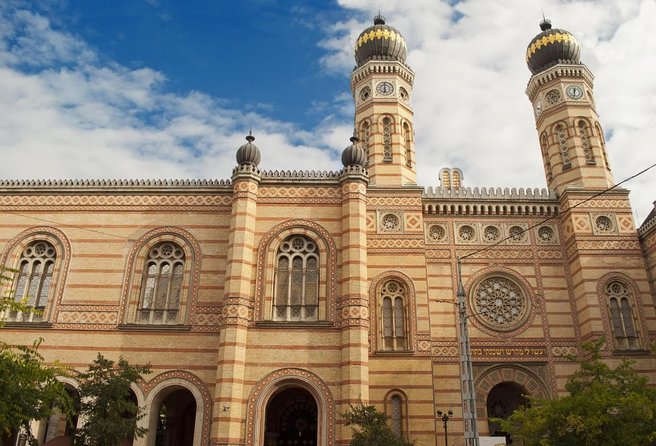
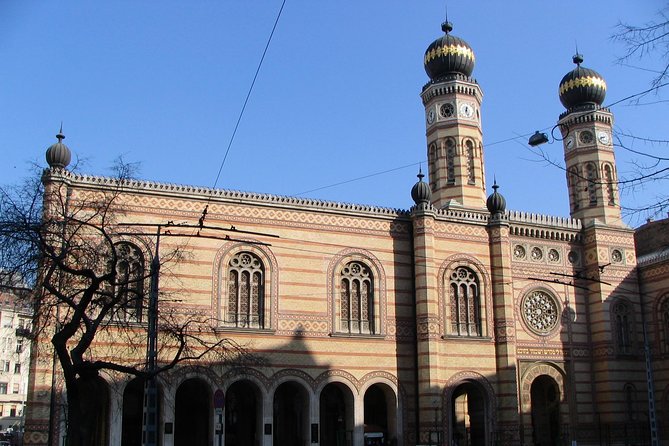
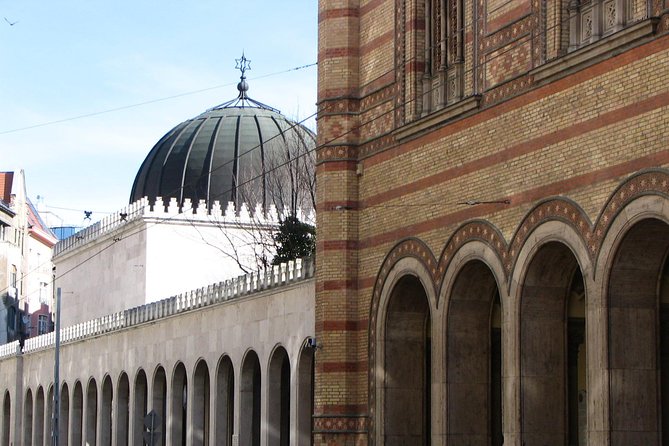
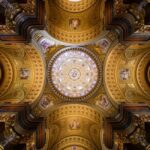
This tour begins at Dohány u. 2–4, at the Great / Central Synagogue, often called the largest Jewish temple of Europe. The timing here is smart: you’re going inside early, while everyone’s still fresh, and you’re guided through what you’re seeing instead of just admiring it from the doorway.
You’ll learn about the Hungarian Neologue Jewish community and how Hungarian Jewry developed over time. That background matters in a place like this, because the building isn’t only religious—it’s also a public statement in stone. The Great Synagogue’s architecture is from the 1850s, and you’ll have time (about 30 minutes) to take it in properly.
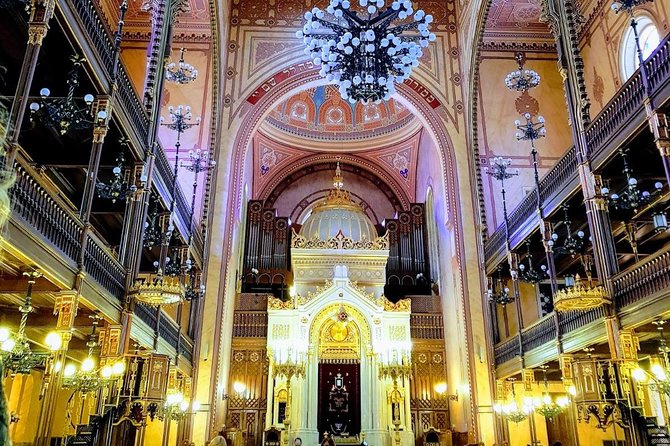
One detail I think is especially good for first-timers: you’ll hear about the organ and the fact that Franz Liszt played it. Even if you’re not a music nerd, that kind of crossover—composer plus synagogue—helps you understand the wider cultural life around Jewish institutions in Budapest.
Practical note: the tour has a dress code. Shoulders must be covered, and clothing should reach the knee (or be covered before entry). Cover is available for purchase on the spot, and men can get head cover at entry. If you’re traveling in warmer weather, bring something light that still covers shoulders and knees, or plan to use the provided covers.
Raoul Wallenberg Holocaust Memorial Park and the Emmanuel Tree of Life
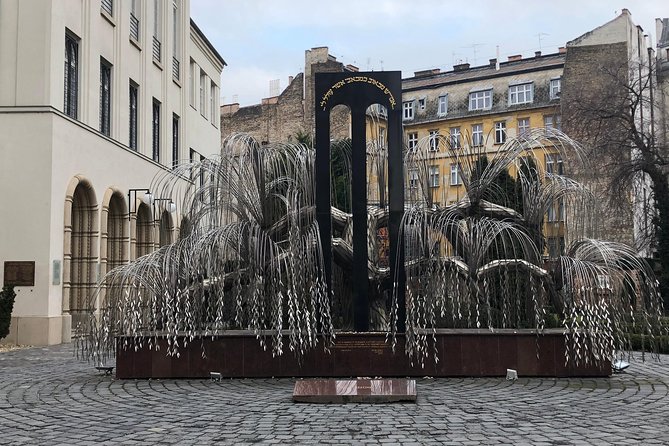
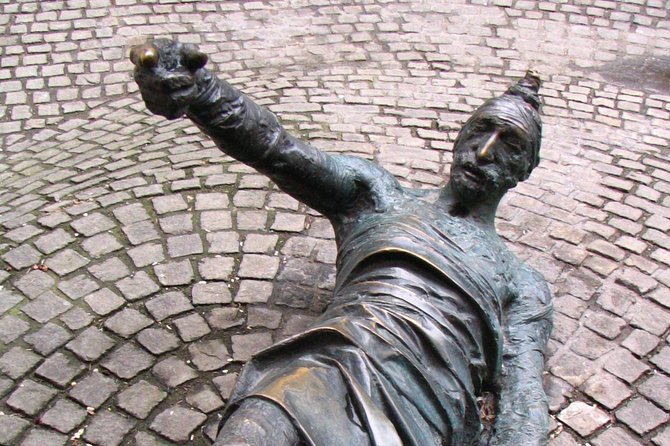
From there, the tour shifts tone in a good way: it doesn’t rush the heavy part, and it gives you names and meaning. At the Raoul Wallenberg Holocaust Memorial Park, you’ll learn about the Hungarian Holocaust and the idea of the Righteous Gentiles—people who saved tens of thousands of Hungarian Jews while risking their own lives.
The stop includes the Emmanuel Tree of Life Memorial. Even though this is a short visit (around 20 minutes), it’s set up so the symbolism doesn’t float by. You’re guided to understand why memorials like this exist and how they fit into the broader story you’re hearing.
Then you’ll visit the Holocaust Cemetery created on the territory of the Budapest ghetto, the resting place of more than 2,000 victims. This is the moment where you should slow your brain down. Let the guide’s explanation land, then take a quiet second to look around before you move on.
A small but important travel tip: bring a calm mindset. You’re going to be learning and absorbing, not sightseeing for photos. If you take pictures, do it respectfully and only when it feels appropriate. The tour is designed around remembrance, not spectacle.
You can also read our reviews of more tours and experiences in Budapest.



Rumbach Synagogue: Otto Wagner’s Moorish masterpiece
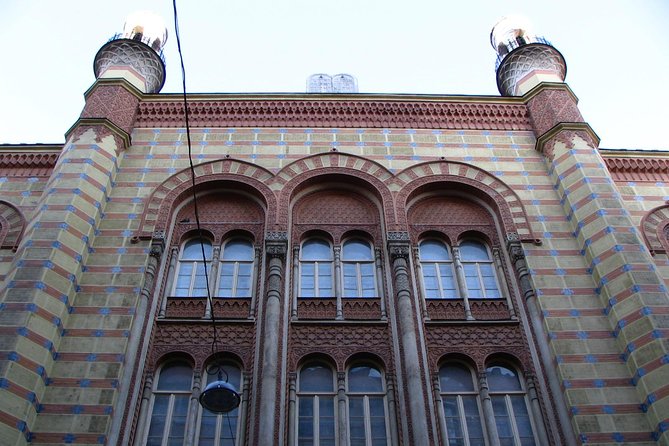
Next comes one of the best reasons to take this specific tour: Rumbach Street Synagogue, designed by Viennese architect Otto Wagner in 1872. The building is described as Moorish, and from your vantage points outside and inside, you’ll see why people remember it. It looks like Budapest kept a secret for a long time—and then finally let you in.
You’ll have about 45 minutes here, and the tour emphasizes that the synagogue has recently reopened after many years of renovations. That matters, because you’re not only viewing an old structure—you’re seeing a restored interior and learning how the architecture fits into the Jewish district.
What I like most about this stop is the contrast. The Great Synagogue gives you one expression of Jewish life in Hungary; Rumbach gives you a totally different architectural language. Together, they help you understand how community identity, style, and history show up in real buildings—not abstract concepts.
Again, dress code applies. If you used cover earlier at Dohány Street, you may not need it again depending on what you’re wearing, but it’s wise to be prepared.
And yes, this is the tour’s finish line. Ending here can feel satisfying because you wrap up with the kind of place you naturally want to keep looking at even after the group moves on.
Királ y Street and Gozsdu Udvar: Connecting ghetto history to daily life
Between the bigger interiors, you get a welcome reality check: street life. Király Street is where the tour brings you back to what used to be the high street of Pest in the 18th and early 19th centuries. It became a commercial and trade center and was a cradle of Jewish life in Pest. Today, it’s back as a busy commercial and cultural stretch.
On this stop you’ll walk (briefly) on Király Street and pick up the feel of the neighborhood. The tour also gives you quick context so you can see today’s storefronts and pedestrian flow as part of a much older rhythm.
Then you’ll head to Gozsdu Udvar, described as the most colorful spot in the Jewish district. The tour’s explanation gives you a timeline, not just scenery: in the past, the place housed kosher salami and other food stores, plus apartments. Today it’s a hub for entertainment and cultural life, with local Jewish artists, artisan and antique products, and options to eat or drink with friends.
This is where you can line up what you want to do after the tour. If you feel energized rather than exhausted, Gozsdu Udvar is an easy place to keep the day going. If you feel the opposite, that’s also fine—this is a lot of history in a short amount of time, and you’ll have earned downtime.
Carl Lutz, Spinoza Színház, and the power of names
After the longer synagogue stops, the tour includes several short stops that are easy to miss if you’re not paying attention. That’s exactly why they work: you get reminders that the Jewish story in Budapest isn’t only about buildings. It’s also about people, survival, and ideas.
First is the Carl Lutz Memorial, a brief stop where you’ll learn about this Righteous Gentile who risked his own life to save thousands of Hungarian Jews during the Holocaust. The tour keeps it short (about 5 minutes), but the point is clear: survival has names, and those names deserve recognition.
Then you’ll pass by Spinoza Színház—5 minutes is enough time to get the meaning and move on. The theatre is named after the Jewish Dutch philosopher of Portuguese Sephardi origin, who was an early representative of the Enlightenment in the 17th century. That explanation gives you a nice contrast to the memorial stops. Not every pause on this walk has to be heavy; some of them can remind you that Jewish life also shaped philosophy, learning, and public thought.
If you’re traveling with someone who prefers structure, these quick stops are reassuring. You won’t lose the group rhythm, and you still get specific content.
Dob Street and Kazinczy Street: Orthodox life and Secession architecture
As the walk continues, you shift from “big landmarks” to “the living neighborhood.” Dob Street runs parallel to Király Street and served as the central street of the Jewish district of Pest—and it also ran in the center of the Budapest ghetto. Today, the tour frames it as a revival of Jewish life and Hungarian Jewish orthodoxy.
This stop is about getting your bearings. When you’re surrounded by modern streets, it helps to have someone point out what used to be central, what changed, and what’s still recognizable.
Then you reach Kazinczy Street Synagogue area, known today as Budapest’s cultural street. The tour notes ruin pubs, but it also points out the Hungarian Orthodox Jewish Center, where you can find a synagogue, a mikveh, kosher restaurants and cafes, schools, a butchery, and kosher food stores.
Architecturally, you’ll also see early 20th century Art Nouveau in Budapest, called Secession. That’s a nice payoff after the 19th-century synagogue buildings: you get one more layer of how style and identity evolve in the same district.
One important detail: entry to the Kazinczy Street synagogue is not included. So expect this part more as an exterior/area visit than a full interior stop. If you’re hoping for maximum synagogue time, focus your expectations on the included visits at Dohány Street and Rumbach.
And yes—there’s a reference to one of the best-known places in Budapest for kosher flodni, the Hungarian Jewish cake. Even if you don’t stop for dessert during the tour, keep it in mind for later.




Price and pacing: Is $63.52 worth it?
At $63.52 per person for about 2 hours 20 minutes, this tour hits a sweet spot for short-attention travelers and first-timers. You’re not paying just for walking past buildings. You’re paying for guided context plus ticketed access at multiple major sites.
Here’s what the structure means for you:
- The tour includes admission tickets for the Great Synagogue, the Holocaust Memorial Park, and the Rumbach Synagogue.
- Several additional stops are free, which keeps the overall cost from ballooning.
- The walking time is relatively manageable for a history-heavy day, but it’s still a city walk with several short transfers between points.
Group size is capped at 35, which helps keep the guide close enough to answer questions. Most travelers can participate, and the tour is near public transportation, which is helpful if you want to arrive early or grab a quick bite before meeting.
Weather matters. The tour is described as requiring good weather, so if you’re in Budapest during a rainy stretch, plan to keep an eye on day-of conditions and have a flexible mindset.
One pacing note from the format: you’ll likely spend more time listening than drifting. That’s not a problem if you want context. If you’d rather “see first, learn later,” consider pairing this with a self-guided wander afterward so you can process at your own speed.
Should you book this Budapest Jewish Quarter and ghetto tour?
I’d book it if you want a guided tour that mixes major synagogue interiors with Holocaust memorial context and then connects all of it to today’s streets. This is a strong choice for architecture lovers, history travelers, and anyone who appreciates explanations tied to real places.
You should think twice if you prefer a lighter, more casual stroll. With multiple stops and some lecture-style pacing, it’s built for learning, not for hanging out and shopping the whole time.
If you go, wear something that fits the dress code right away—why waste time adjusting near the entrances? And build a little buffer after the tour. Finish at Rumbach, then use the nearby atmosphere to decompress and maybe pick up that kosher flodni idea if you still have energy.
FAQ
What’s the total duration of the Budapest Jewish Quarter tour?
It runs for about 2 hours 20 minutes.
Where does the tour start and where does it end?
The meeting point is Budapest, Dohány u. 2-4, 1075 Hungary, and the program ends at Rumbach Street Synagogue, Budapest, Rumbach Sebestyén u. 13, 1074 Hungary.
Is entry to all synagogues included?
Entry is included for the Great / Central Synagogue, Raoul Wallenberg Holocaust Memorial Park, and Rumbach Street Synagogue. Entry to the Kazinczy Street synagogue is not included.
What dress code should I follow?
Shoulders must be covered and clothing should reach the knee (or be covered before entering). Covers are available for purchase on the spot, and men can get head cover upon entry.
What language is the tour offered in?
The tour is offered in English.
What happens if a synagogue closes temporarily on the day?
Synagogues may close temporarily unannounced. If one site closes and affects the program, the operator offers an alternative visiting time, but refunds are not offered because it’s a package. If all synagogues close unannounced, you’ll be offered alternative hours/dates or a full refund.