REVIEW · BUDAPEST
Transylvania Tour from Budapest to Bucharest: 4 days
Book on Viator →Operated by One Excellence Tours · Bookable on Viator
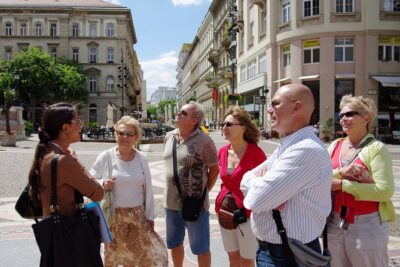
Four days can feel like a sprint, but this route moves smart. It strings together Transylvania’s standout stops—from the border region near Arad to legend-heavy Bran Castle—without backtracking, all in one guided flow. You get a tight group and hands-on commentary, so you’re not just looking at buildings, you’re learning how and why they matter.
I especially like the small-group setup (advertised as capped at 6, with a maximum group size up to 8), because you actually get answers, not just announcements. I also like that breakfast and 3–4-star lodging are built into the plan, so you’re not juggling meal-hunting and late-night check-ins after castle days.
The one drawback to plan around is that entrance fees and most food/drinks aren’t included, and Peles Castle timing can change depending on closure days. If you’re chasing a specific castle interior, it pays to check the calendar for your dates.
In This Review
- Key things I’d put on your decision list
- The route makes sense: no backtracking, one smooth line
- Price and what you really get for $1,685.76
- Meeting day in Budapest and how the timing flows
- Day 1: Arad and Timisoara—start with architecture, end with Ottoman and Austro-Hungarian mixes
- Filarmonica Arad and a fast but meaningful city walk
- Timisoara Historical Center: European Capital of Culture 2019
- Day 2: Corvin Castle to Alba Iulia, then Sibiu—gothic drama and a 1918 turning point
- Corvin Castle (Castelul Corvinilor): the gothic walls you’ll remember
- Alba Iulia (Cetatea Alba Iulia): the unification treaty site
- Sibiu Old Town: European Capital of Culture 2007
- Day 3: Sighisoara and Brasov—Dracula lore, then the Black Church
- Sighisoara’s historical center: a fairy-tale town with a date attached
- Brasov Historical Center: Black Church and city gates
- Day 4: Bran Castle and Peles Castle—two castles, two moods
- Bran Castle: Dracula’s castle, with interior time
- Peles Castle near Sinaia: royal Romania, with schedule caveats
- End in Bucharest
- Guides make or break it—and this one is consistently praised
- Where the trip feels most authentic: small towns as the backbone
- Should you book this Budapest to Bucharest Transylvania tour?
- FAQ
- How many people are in the group?
- What’s included in the price?
- Are entrance fees included for castles?
- What time does the tour start in Budapest?
- Does the tour provide hotel pickup?
- What happens if Peles Castle is closed?
Key things I’d put on your decision list
- Budapest to Bucharest only: no repeating roads, just one steady line through Transylvania.
- Tiny group energy: small caps (6–8 people) make it easier to move, ask questions, and stay on schedule.
- Guides who handle the details: help buying tickets and moving quickly in and out of castles/churches (names spotted from past trips include Marius, Alex, Andrei, and Emmanuel).
- Town centers as bases: the lodging is selected near old-town areas, which cuts down on wasted time.
- Culture stops with names you’ll remember: Timisoara (European Capital of Culture 2019) and Sibiu (European Capital of Culture 2007).
- Two very different royal-era vibes: Dracula legend at Bran, then royal Romania elegance at Peles (when open).
The route makes sense: no backtracking, one smooth line
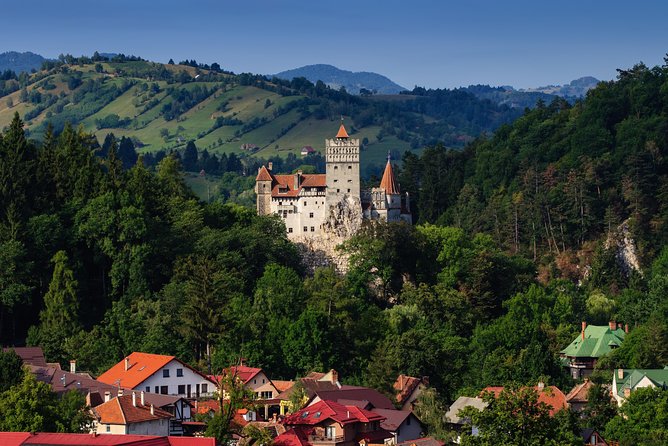
This is a point-to-point Transylvania trip: it starts in Budapest and ends in Bucharest. That matters more than it sounds. When you don’t backtrack, you lose fewer hours to travel logistics and you keep the trip feeling like a story with momentum.
Expect a steady rhythm of guided walking tours (often around 30–60 minutes per stop) plus longer sightseeing at the major castles. The pacing works best if you’re the type who likes “see it, understand it, then move on” rather than lingering all day in one town.
Also, it’s built for a moderate fitness level. That usually means comfortable shoes and the ability to handle stair-heavy places like medieval streets and castle interiors, even if your overall stamina is average.
You can also read our reviews of more tours and experiences in Budapest.



Price and what you really get for $1,685.76
At $1,685.76 per person, you’re paying for more than transportation. You’re buying a guided multi-day route that includes:
- a professional guide
- live commentary during the travel days
- 3–4-star accommodations and breakfast (as described in the tour overview)
- guided time in multiple historic towns and castle stops
What’s not included:
- entrance fees
- food and drinks (unless a specific item is mentioned for your date)
- tickets for major sights like Corvin Castle and Bran Castle (listed as not included)
- Peles Castle (also listed as not included)
So the value equation looks like this: if you’d otherwise rent a car, spend time planning each stop, and manage tickets yourself, this tour saves effort and adds context. If you’re the independent type who already has a tight itinerary and loves self-guided wandering, the price may feel steep—but the small group and included lodging do a lot of heavy lifting here.
One more practical detail: the tour uses a mobile ticket, and your guide helps with purchasing entrance tickets, which reduces friction when lines and ticket desks are a factor.
Meeting day in Budapest and how the timing flows
You start at 9:00 am in Budapest, and the tour ends in Bucharest. Departure points and daily timing are set by the guide, so you’re not stuck guessing where to be next.
The tour info includes hotel/hostel pickup and drop-off in one place, but another note says it does not provide pick-up or drop-off service. Because that’s conflicting on paper, I’d treat it as: plan to meet at the designated meeting point in Budapest, and confirm directly what your arrival logistics look like for your exact booking. That small check can prevent last-minute stress.
Once you’re rolling, the days are structured with morning castle/town energy and afternoon travel to the next base.
Day 1: Arad and Timisoara—start with architecture, end with Ottoman and Austro-Hungarian mixes
Filarmonica Arad and a fast but meaningful city walk
On Day 1 you cross the border at Arad and start with a short walking tour around major landmarks. You’ll pass the City Hall Palace, the Palace of Culture, and the Red Church, described with neo-gothic and secessionist styling. The route also includes a large domed Roman Catholic church and a neo-classical State Theatre.
What I like about this stop is that it’s not only sightseeing. The guide’s job here is to help you read the building styles like clues. Even if you only have 30 minutes, you get a sense of how cultures shaped architecture in this part of Romania.
If you have time, you can grab lunch in a local spot. This is a good day to aim for simple, filling food, because later you’re shifting cities.


Timisoara Historical Center: European Capital of Culture 2019
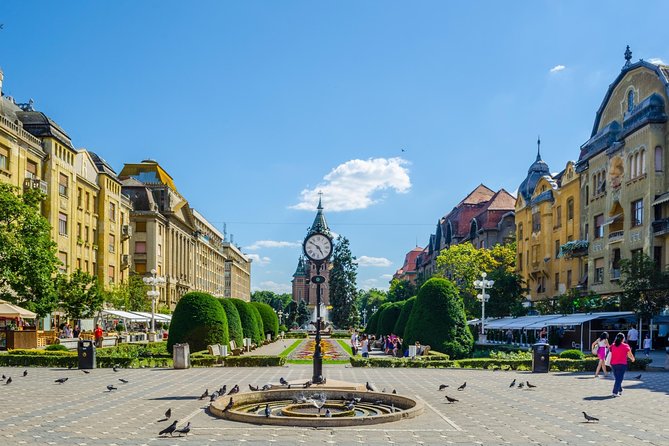
In the afternoon you reach Timisoara, which was named European Capital of Culture (2019). The standout idea is that the city shows both Turkish influence and large Austro-Hungarian impacts—so you see layers rather than one single style.
You’ll get a guided walk in the historical center for about 30 minutes. It’s enough to orient you and start noticing street and building details that you might miss if you arrive on your own without context.
Day 2: Corvin Castle to Alba Iulia, then Sibiu—gothic drama and a 1918 turning point
Corvin Castle (Castelul Corvinilor): the gothic walls you’ll remember
Day 2 starts with Corvin Castle, often described as gothic and explored for about an hour with your guide. Entrance tickets are not included, but your guide assists with purchasing.
The big value here is that Corvin isn’t only about looks. With a guide, you get history tied to the castle walls and what you’re actually seeing. The castle walls become the lesson, not just a backdrop for photos.
Practical note: if you’re tired from driving the day before, this is where comfortable pacing matters. Aim to keep your eyes up and follow the explanation. The time you spend will feel more “worth it” than random wandering.
Alba Iulia (Cetatea Alba Iulia): the unification treaty site
Next comes Alba Iulia, tied to a major modern milestone: the unification treaty signed in 1918. You’ll stroll the Old Town area with guided context for about an hour, with admission listed as free for that stop.
This is a quieter kind of historical stop, which I like after the drama of a gothic castle. It helps balance the trip: medieval architecture plus the shift into modern national identity.
Sibiu Old Town: European Capital of Culture 2007
In the afternoon you reach Sibiu, a medium-size city that was European Capital of Culture (2007). You’ll do a guided walk in the Old Town for about 30 minutes.
Even in a short time, you can get a feel for why people return to Sibiu. The scale is manageable, and the old core is the kind of place where street layouts, squares, and building fronts help you understand the city at walking speed.
Day 3: Sighisoara and Brasov—Dracula lore, then the Black Church
Sighisoara’s historical center: a fairy-tale town with a date attached
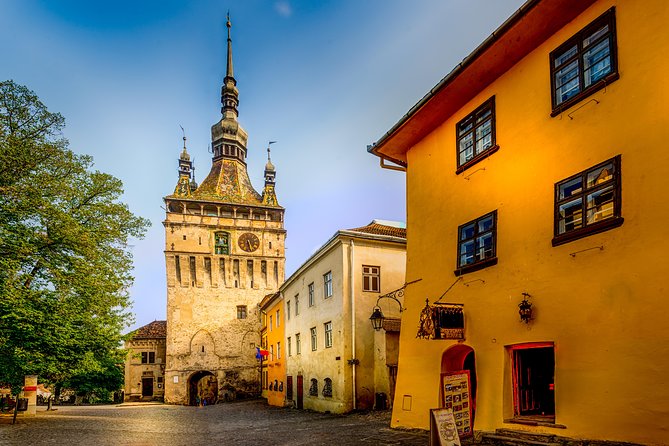
Day 3 begins in Sighisoara, with a guided visit in the historic center for about an hour. It’s presented as a fairytale town linked to Vlad Dracula’s birth in 1431.
I like this stop because the “Dracula” label can feel like a gimmick elsewhere, but here the guide context helps you connect the legend to the town’s actual medieval character. You’re not just chasing a spooky story—you’re seeing the kind of place where that story could take root.
Brasov Historical Center: Black Church and city gates
After Sighisoara, you go to Brasov, another favorite Romanian destination. You get a guided walking tour in the old town, focused on the Black Church and the main gates of the city.
This is where the trip starts to feel complete: you’ve seen Transylvania through castle legends, borderland architecture, and cultural milestones—now you close the loop with a town that reads like a living medieval map.
If you want photos with context, this is a strong day for it. City gates and landmark churches benefit hugely from a guide explaining what you’re looking at.
Day 4: Bran Castle and Peles Castle—two castles, two moods
Bran Castle: Dracula’s castle, with interior time
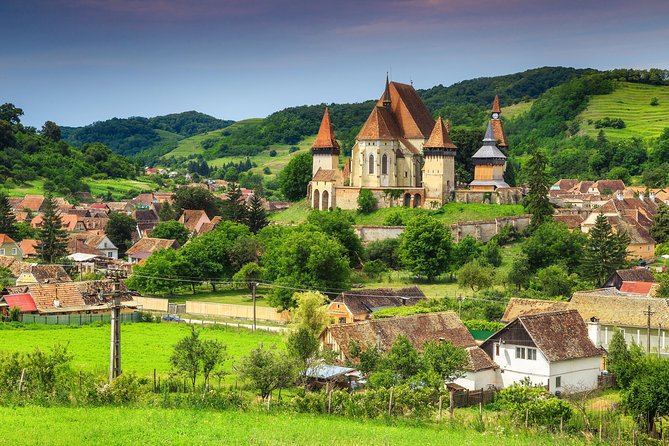
On the first part of Day 4 you go to Bran Castle, also known as Dracula’s Castle. The stop is about two hours, and entrance is not included.
Unlike many fast stop-and-snap schedules, this includes time inside the 14th-century castle. That matters, because you can’t really get the story from just the exterior.
If Dracula lore is part of your reason for coming, this is the day. If you’re more architecture- and atmosphere-driven, don’t skip it anyway—inside views typically reward you more than you expect.
Peles Castle near Sinaia: royal Romania, with schedule caveats
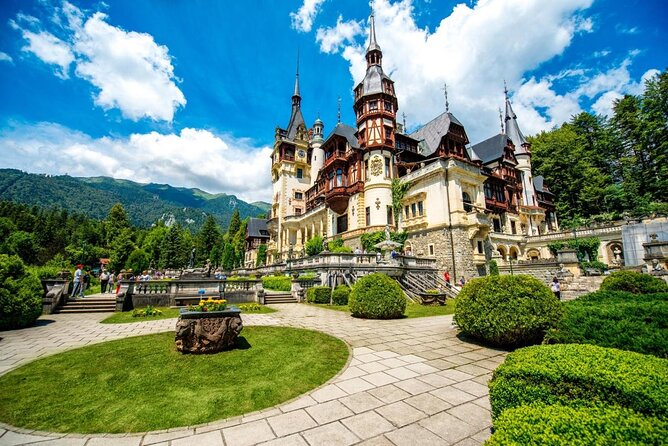
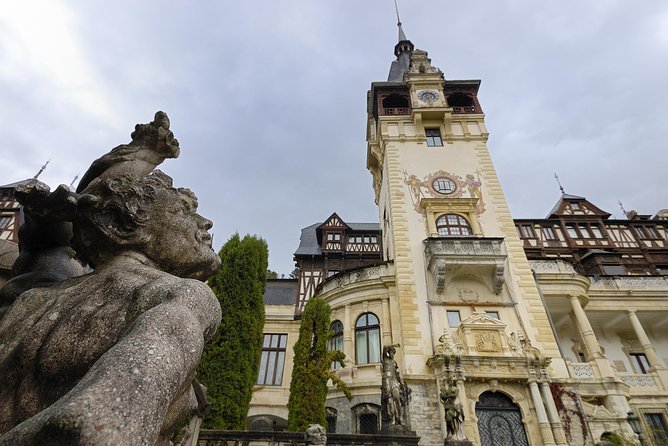
In the afternoon you head to Sinaia for Peles Castle. It’s a 19th-century royal palace built by Romania’s royal family, with preservation described as keeping it much the way it looked over a century ago.
Here’s the key planning detail: Peles Castle is closed on Mondays year-round and on Tuesdays from 1 August 2024 to 1 May 2025. If your date falls in that closure window, the tour says you may see it from the outside, and you’ll spend more time at Bran Castle and Brasov. Castle policy can also change timing.
So if Peles interior is your top priority, check your travel date and be ready for a possible exterior view.
End in Bucharest
After the castle time, the tour reaches Bucharest and ends the service. Drop-off is described as being made at a location of your choice, which is useful if you already have hotel plans and don’t want to end at some far-off central point.
Guides make or break it—and this one is consistently praised
One theme from past experiences with this route is how much the guide shapes the day. Guides such as Marius, Alex, Andrei, and Emmanuel are repeatedly highlighted for staying on schedule, answering questions well, and moving efficiently through castle and church entrances.
That “get us in and out fast” angle is real value. Castle visits can burn time if you’re figuring things out at the ticket desk or wandering without a clear order. With a guide, you spend more time seeing and less time managing logistics.
One fun perk that showed up in past trips: a guided pop quiz at the end, plus guide-style recommendations like where to find craft beer in the evenings. Even if you don’t care about quizzes, it signals that your guide is paying attention to engagement, not just facts.
Where the trip feels most authentic: small towns as the backbone
This tour leans into smaller cities and historic centers instead of only big-ticket tourist zones. Arad, Sibiu, Sighisoara, and Brasov each have a distinct feel, and the “no backtracking” structure keeps them connected.
That’s also why you’ll get better memories than just a checklist of castles:
- You learn architecture styles early in the trip (Arad).
- You see how culture layers build over time (Timisoara).
- You connect medieval structures to national milestones (Alba Iulia).
- You link legend to place (Sighisoara and Bran).
- You contrast Dracula-era mood with royal-era polish (Peles).
You get variety without the chaos of building the route yourself.
Should you book this Budapest to Bucharest Transylvania tour?
Book it if you want:
- a guided route through Transylvania that doesn’t require car planning
- small-group attention (expect a cap around 6–8 people)
- included breakfast and 3–4-star hotels
- help with ticket buying and staying on pace inside major sights
Skip it or reconsider if:
- you already know you’ll spend most of your time doing self-guided wandering and you don’t want to follow a schedule
- you’re hunting for the most cost-minimal option, since entrance fees and most meals are on you
- Peles Castle interior is a must on your specific travel day, and your date lands on a listed closure day (you might only see the outside)
If you like having your time structured—and you want the route explained while you walk—I think this tour is a smart way to see Transylvania without turning your trip into a project.
FAQ
How many people are in the group?
The tour is described as a small-group experience with a maximum of 8 travelers. The overview also mentions a cap of only 6 travelers, so it’s worth checking the exact group size for your departure.
What’s included in the price?
Included items are a professional guide, live commentary on board, and breakfast plus 3–4-star accommodation (as stated in the tour overview). Entrance fees and food/drinks are not included unless specifically noted for your date.
Are entrance fees included for castles?
No. Entrance fees are listed as not included for several major stops, including Corvin Castle and Bran Castle, and Peles Castle.
What time does the tour start in Budapest?
The start time is 9:00 am in Budapest.
Does the tour provide hotel pickup?
The information includes pickup/drop-off in one section, but another note says the operator does not provide pick-up or drop off service. Plan to reach the designated departure point in Budapest, and confirm details for your specific booking.
What happens if Peles Castle is closed?
Peles Castle is closed on Mondays year-round and on Tuesdays from 1 August 2024 to 1 May 2025. If your dates fall in that period, you may see Peles Castle from the outside and spend more time at Bran Castle and Brasov.