REVIEW · BUDAPEST
A Journey through Jewish Budapest – Walking Tour
Book on Viator →Operated by Insight Cities · Bookable on Viator
Jewish Budapest hits harder when it’s walked. This 3-hour tour connects major Jewish landmarks with the neighborhood story around them, from the former Pest ghetto area to the Danube memorial. I especially like how you start at the Dohány Street Synagogue complex and then keep moving through synagogues that show different Jewish traditions and community life.
Second big win: you’re in a small group (limited to about six, with a stated maximum of eight), so the guide can keep things personal and answer questions. One thing to plan for is that synagogue tickets are not included, and you’ll need shoulders and knees covered at the Dohány and Kazinczy stops.
In This Review
- Key Points Worth Knowing Before You Go
- Why This Jewish Budapest Walk Makes Sense
- Start at Kamara Café: Easy Meeting, Clear First Moment
- Stop 1: Great and Central Synagogue (Nagy Zsinagóga) Complex
- Stop 2: Kazinczy Street Synagogue and the Ghetto Wall Memorial
- Stop 3: Rumbach Street Synagogue and the Status Quo Ante Story
- Stop 4: Shoes on the Danube Bank Memorial (The Walk’s Emotional Finish)
- What Makes the Guides Matter (And You’ll Notice It Fast)
- Dress Code and Tickets: The Two Things That Can Affect Your Day
- Price and Value: Is $126.16 Worth It?
- Who Should Book This Tour (And Who Might Skip It)
- Should You Book This Jewish Budapest Walking Tour?
- FAQ
- How long is the tour?
- What does it cost?
- Where do I meet the guide?
- Is pickup available?
- Are synagogue tickets included?
- Is Shoes on the Danube Bank included in the cost?
- Is the tour small-group?
- What time does it run, and can I choose morning or afternoon?
- What should I wear when visiting synagogues?
- Can I cancel for a full refund?
Key Points Worth Knowing Before You Go
- A historian guide (and scholar support) helps connect buildings to real community life, not just dates.
- Three synagogue stops let you compare architectural styles and Jewish traditions in one steady route.
- Ghetto Wall Memorial and the Mikve stop ground the story in daily ritual and the space where confinement happened.
- Rumbach Street Synagogue visits depend on public opening hours, so timing can matter.
- Shoes on the Danube Bank is free, but it’s also the emotional closer of the walk.
- Small-group pacing keeps the walk from feeling like a race through history.
Why This Jewish Budapest Walk Makes Sense
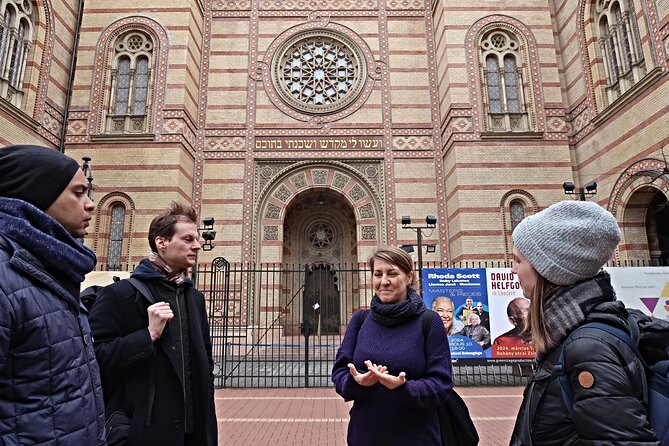
Budapest has layers. This tour is built to help you see them in order, on foot, while you still remember what you just heard.
You’ll spend your time in the areas where Jewish life shaped streets and institutions—especially around what’s now the VII and VIII districts—then you’ll end at the Danube memorial that marks a brutal WWII chapter. The route feels like moving through time: sacred spaces and community buildings first, then the memorial that forces you to sit with what was taken away.
You can also read our reviews of more walking tours in Budapest



Start at Kamara Café: Easy Meeting, Clear First Moment
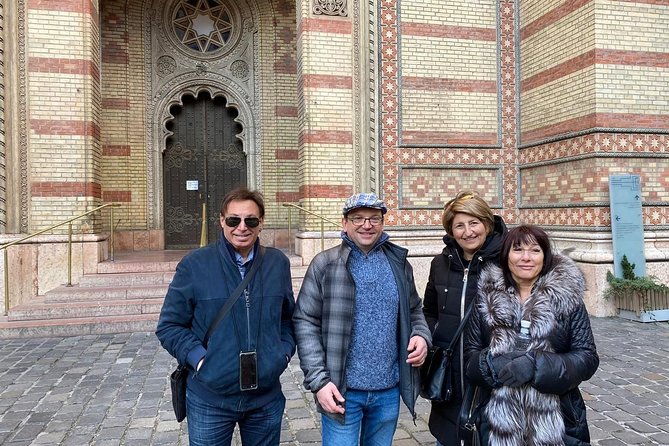
The meeting point is Kamara Café at Dohány u. 1b, right by the Great Synagogue area. That’s helpful because it means you’re not trying to decipher a maze of transit stops at the start of a serious tour.
Pickup is offered at Kamara Café (Dohány u. 1a), described as being opposite the Great Synagogue. After booking, you receive your guide’s photo, phone number, and bio, which makes it easier to spot the right person without hanging around like a confused extra in a movie.
Tip: Wear comfortable shoes. This is a walking route with multiple stops, and the last one is outside by the water.
Stop 1: Great and Central Synagogue (Nagy Zsinagóga) Complex
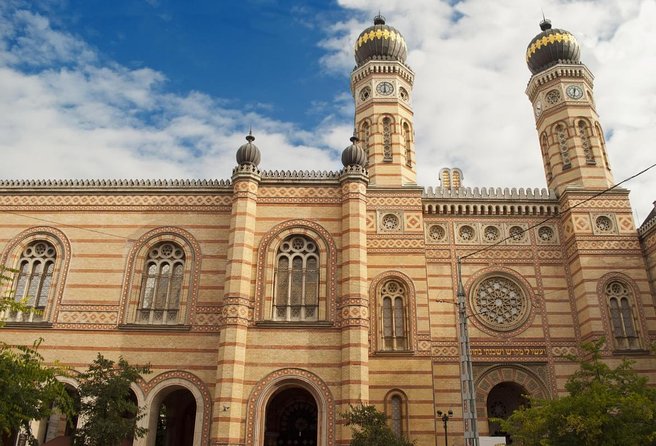
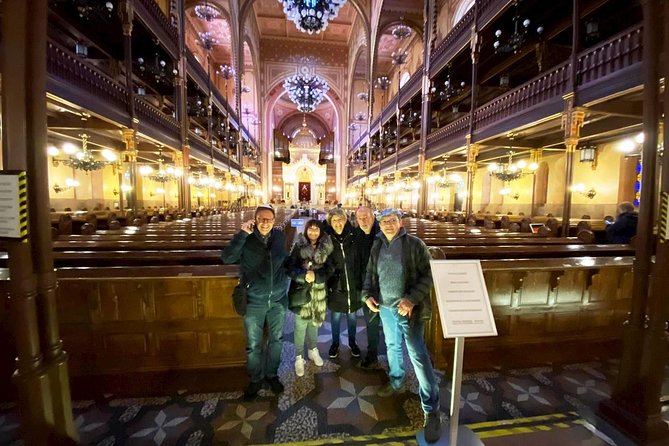
Your first major stop is the Dohány Street Synagogue, described as the largest temple in Europe. You’ll get the kind of orientation that helps the building click: lavish Moorish Revival style outside, then the complex itself with several key pieces.
Inside this stop, the tour includes:
- the Temple of Heroes
- the Jewish Museum
- a Memorial Park
- and assistance from a Jewish Studies Scholar to add scholarly context
The tour time at this stop is about 30 minutes, and it’s noted that admission tickets are not included here. That matters because it can change how much you personally want to spend inside the museum spaces during the time window.
Why this first stop works: you’re given a big-picture anchor. Before you head toward smaller synagogues and more specific neighborhood stories, you start with the centerpiece institution—and the cultural and historical weight that comes with it.
Stop 2: Kazinczy Street Synagogue and the Ghetto Wall Memorial
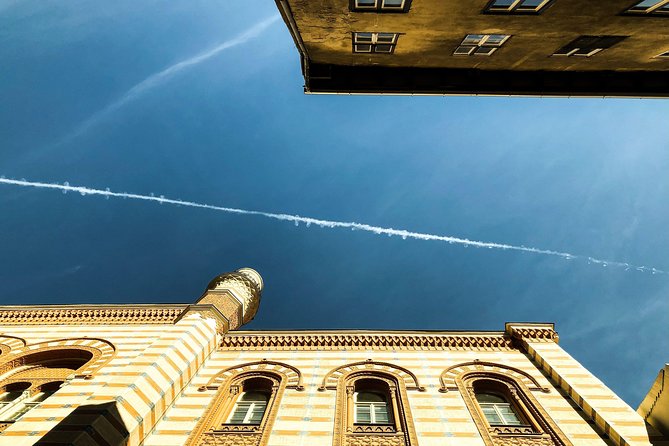
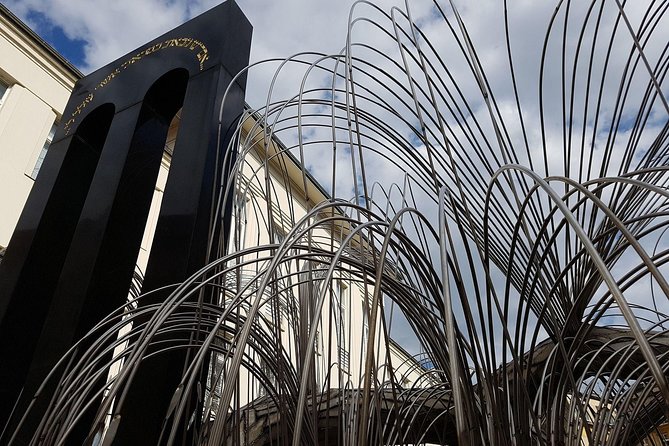
Next you walk to the Kazinczy Street area, with a stop at the Ghetto Wall Memorial. This memorial was erected in 2014, and it helps you understand that the ghetto wasn’t just an idea—it was a built, fenced-in reality that shaped movement and daily life.
From there, the tour moves through:
- a luxurious Mikve (Jewish ritual bath)
- then toward the Art Nouveau orthodox synagogue on Kazinczy Street
When the synagogue is open to the public, you visit the interior. The time here is about 35 minutes, and again, admission tickets are not included.
One practical consideration: this is also a stop where you must have your shoulders and knees covered. If you show up in shorts and a tank top, you might have to improvise fast (or wait).
Stop 3: Rumbach Street Synagogue and the Status Quo Ante Story
Rumbach Street Synagogue is another highlight, with a specific focus: the history of the Status Quo Ante stream of Judaism. That phrase might sound like jargon, but a good guide makes it make sense—this is where you start seeing that Jewish community life wasn’t one-size-fits-all.
You’ll observe the synagogue as you learn, then you visit the interior when it’s open to the public. This stop runs about 25 minutes, with tickets not included.
What I like about the way this stop is handled: it’s not just architecture and sadness. It’s also about internal community identity—how different groups organized themselves, practiced beliefs, and kept institutions running in changing times.






Stop 4: Shoes on the Danube Bank Memorial (The Walk’s Emotional Finish)
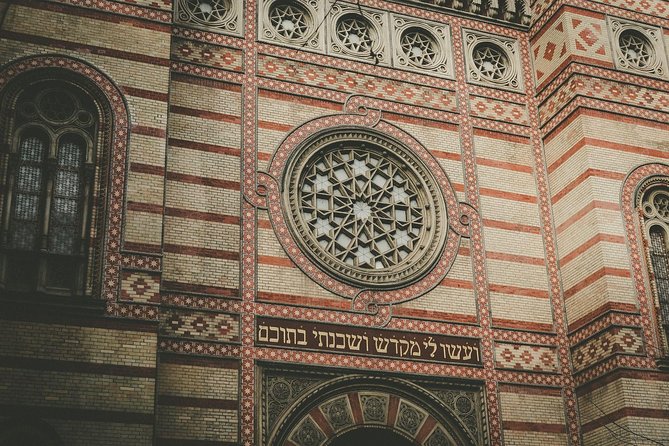
The tour ends at Shoes on the Danube Bank, where there’s a memorial dedicated to Jews massacred during WWII. It explains that people were ordered to take off their shoes, then were shot at the edge of the water so their bodies fell into the river and were carried away.
The idea is stark: the memorial represents shoes left behind on the bank. The tour time here is about 20 minutes, and admission is free.
This stop can feel physically cold even in mild weather, because you’re standing near the water outdoors. If you’re the kind of traveler who likes to take a moment before moving on, plan to slow down here rather than trying to “power through” for the next photo.
What Makes the Guides Matter (And You’ll Notice It Fast)
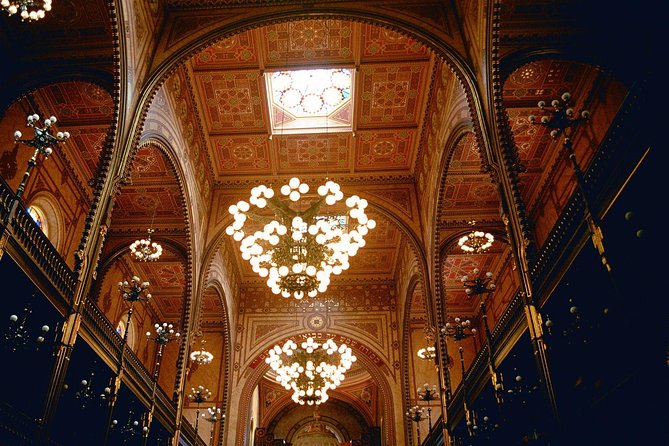
The biggest strength of this tour isn’t just the places. It’s the people explaining them.
In past guided runs connected to this experience, guides like Orsolya, Agi, Endre, and Veronika have been praised for turning stories into something you can actually picture—plus adding context for how Jewish life intersected with broader Hungarian history.
I like that this tour is led by a historian guide, and the structure supports that academic approach. The flow from major landmarks to smaller, more specific synagogue stories gives you a timeline feeling without turning the walk into a lecture you can’t follow.
Also, I appreciate the practical side. One guide reportedly wove in culinary context and even recommended a local treat like flodni cake. Since food isn’t included, you’ll want to take those suggestions as optional—but they’re a nice way to extend the experience after the tour.
Dress Code and Tickets: The Two Things That Can Affect Your Day
Here’s what you need to know so you don’t lose time.
1) Synagogue dress expectations
Visitors to the Dohány and Kazinczy synagogues are requested to have shoulders and knees covered. If you forget, you may be turned away or asked to adjust. Bring something simple like a light scarf or layer you can pull on.
2) Tickets are not included for key synagogues
Tickets for the Dohány Synagogue complex, Kazinczy Street Synagogue, and Rumbach Street Synagogue are listed as not included. Plan for that extra cost if you want full access rather than just exterior viewing. Shoes on the Danube Bank is free.
Practical tip: carry a small bag you can keep hands-free at entrances, and assume security checks can add a few minutes.
Price and Value: Is $126.16 Worth It?
At $126.16 per person for about 3 hours, this is not a “cheap” walking tour. But it does include a historian guide, and you’re paying for multiple high-impact stops that have admissions attached (even if the tickets themselves aren’t included here).
So the value depends on your priorities:
- If you want a guided route through major synagogues and memorial context, you’re paying for the structure and expertise.
- If you prefer to wander alone and only see exterior views, the ticket exclusions reduce the payoff.
The small-group size also helps the math. When the group stays tight, you don’t get stuck listening from the back or waiting while people line up. And with small-group pacing, you actually finish with coherent understanding rather than scattered facts.
One more hint: this tour is commonly booked about 49 days in advance, so plan ahead if your dates are fixed. Popular slots can go first.
Who Should Book This Tour (And Who Might Skip It)
Book it if you want:
- a focused walk that covers key Jewish heritage sites in a single morning/afternoon
- direct guidance from a historian guide and scholarly context at major stops
- a route that ends with the Danube memorial rather than skipping the hardest stop
It may not be the best fit if:
- you want food included or a relaxed “wander” format (this tour doesn’t include food and drinks)
- you hate changing plans at the last minute due to opening hours (some synagogue interiors are only visited when open to the public)
Should You Book This Jewish Budapest Walking Tour?
Yes—if you’re going to Budapest’s Jewish quarter anyway, this is a strong way to connect the dots with a guide, not just photos. I’d especially recommend it to first-timers who want the story in a logical sequence: major landmark complex first, then ghetto-era memorial context and ritual spaces, then an ending that carries real meaning.
Do it if you’re willing to plan for the dress code and the fact that synagogue admissions are separate. If those two points don’t bother you, you’ll leave with a much clearer picture of Jewish Budapest—and a better sense of why these buildings and memorials matter.
FAQ
How long is the tour?
The Jewish Budapest walking tour is approximately 3 hours.
What does it cost?
It’s priced at $126.16 per person.
Where do I meet the guide?
You meet at Kamara Café, Dohány u. 1b, 1074 Budapest, near the Great Synagogue area.
Is pickup available?
Yes. Pickup is offered at Kamara Café (Dohány u. 1a), right opposite the Great Synagogue.
Are synagogue tickets included?
No. Tickets for the Dohány Synagogue, Rumbach Street Synagogue, and Kazinczy Street Synagogue are not included.
Is Shoes on the Danube Bank included in the cost?
Yes, the stop at Shoes on the Danube Bank is noted as free.
Is the tour small-group?
Yes. It’s described as limited to six people for a more personalized experience, with a stated maximum of 8 travelers.
What time does it run, and can I choose morning or afternoon?
The start time listed is 10:00 am, and the tour offers a choice of morning or afternoon departure.
What should I wear when visiting synagogues?
You’re requested to have your shoulders and knees covered for visits to the Dohány and Kazinczy synagogues.
Can I cancel for a full refund?
Yes. You can cancel up to 24 hours in advance for a full refund. If you cancel less than 24 hours before the start time, the amount you paid will not be refunded.