REVIEW · BUDAPEST
Accessible Budapest Tour
Book on Viator →Operated by Tourist Angel · Bookable on Viator
A good accessible tour feels like someone finally planned for real life. This one focuses on a wheelchair-friendly route in Budapest, with a licensed guide steering you to stops that are easier to reach than if you go solo. I like the flexible pickup/minibus options and the clear attention to what’s step-free, elevator-accessible, or limited. One drawback to consider: not every major church or castle area is fully wheelchair accessible, and timing can make or break how much you fit in.
What makes this experience especially useful is that it’s built around the idea that mobility needs are different. You’ll move through central Budapest using public transport when possible, or an accessible minibus if you request it, and the guide adjusts the day so you can still enjoy the big sights without fighting the stairs. The itinerary mixes top-name landmarks with short, high-reward stops—perfect when your energy is precious.
In This Review
- Key highlights for wheelchair-friendly sightseeing
- A wheelchair-friendly route that avoids the usual stuck-in-steps problem
- Price and what you actually get for $142.97
- Pickups, minibus options, and how to plan your day
- Stop-by-stop: St. Stephen’s Basilica to Buda Castle terraces
- Stop 1: St. Stephen’s Basilica (Szent István Bazilika)
- Stop 1 (connection): Central Pest to Buda Castle via an accessible public bus
- Stop 2: Buda Castle panoramic terrace
- Castle viewpoints, Matthias Church limits, and the bridge renovation note
- Stop 3: Fountain of King Matthias
- Stop 4: Sándor Palace (Palace of the President)
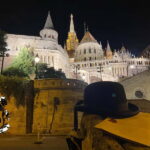
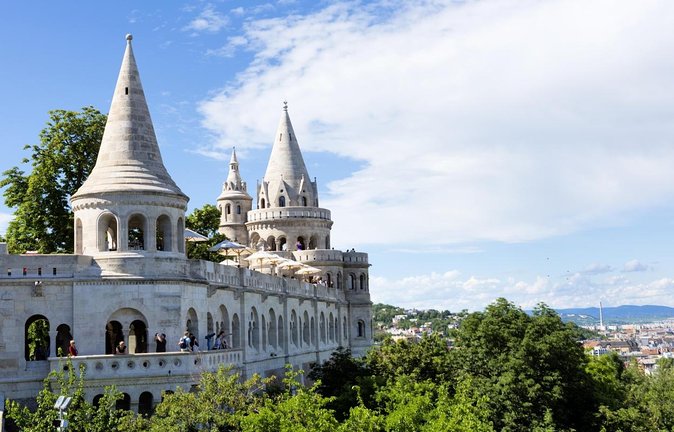
- Stop 5: Fisherman’s Bastion
- Stop 6: Matthias Church (outside focus for wheelchair users)
- Bridge note: renovation timing can affect routes
- Andrassy Avenue to Heroes’ Square: big sights with short, manageable time
- Andrassy Avenue on an accessible bus
- Stop 7: Heroes’ Square
- Millennium Monument and Vajdahunyad Castle: monuments plus the lake-side feel
- Stop 8: Millennium Monument
- Stop 9: Vajdahunyad Castle
- Stop 10: Anonymus Szobor
- Accessibility reality check: where the tour is strong and where it needs planning
- Who should book this accessible Budapest tour?
- Should you book it? Best matches and who should look elsewhere
- FAQ
- Is hotel pickup included?
- How long is the tour?
- Is the tour wheelchair-friendly?
- What’s included for tickets?
- Are there dress requirements?
- Are service animals allowed?
Key highlights for wheelchair-friendly sightseeing
- Route planning around steps and levels so you spend less time stuck and more time seeing
- St. Stephen’s Basilica access via elevator (tower area is excluded)
- Panoramic Buda Castle terrace time with admission included/free as listed
- Accessible public bus use to cross between areas (including along Andrassy Avenue)
- Service animals welcome and dress rules are clearly noted for church visits
- Matthias Church interior not wheelchair accessible, so you’ll want to plan around that limitation
A wheelchair-friendly route that avoids the usual stuck-in-steps problem
Budapest can be stunning, and it can also be frustrating if you’re using a wheelchair or have limited mobility. Streets can be steep, sidewalks can change texture, and some historic sites simply weren’t built with modern access in mind. This tour is designed to reduce those headaches by focusing on areas you can realistically reach during a half-day to full-day outing.
The biggest win is the guide-led approach. This isn’t just a checklist of famous places—it’s a plan that tries to avoid places with stairs and levels where you’ll have trouble getting in, moving around, or waiting comfortably. I like that the tour description is upfront about limits rather than pretending everything is fully accessible.
You also get a private setup. It’s only your group, not a big crowd funneling you through tight spots at random times. That matters because pacing is part of accessibility. If you need more time between stops, the day is meant to flex.
You can also read our reviews of more tours and experiences in Budapest.

Price and what you actually get for $142.97
At $142.97 per person for roughly 4 to 6 hours, you’re paying for more than transportation and a driver. You’re buying planning, interpretation, and help navigating accessibility realities.
Here’s what adds real value:
- A professional licensed guide (and for the best result, that means better route choices and smoother transitions)
- Entry to St. Stephen’s Basilica included (with one important exception for Sunday morning religious services)
- Hotel pickup and drop-off offered (with options using public transport or a car/minibus depending on the setup you choose)
- A route that includes several free-to-view areas such as viewpoints and monument sites, rather than only paid-ticket attractions
- The chance to request an accessible minibus, which can be a game-changer if public transport is tough on your body or schedule
One practical caution about value: the itinerary includes Castle of Buda viewpoints, but it doesn’t promise that every castle interior experience is included. If you’re expecting every castle building and museum to be covered, you may be disappointed. The tour focuses on the Royal Palace panoramic terrace, which is listed as free for admission and is often the best payoff anyway.
Pickups, minibus options, and how to plan your day
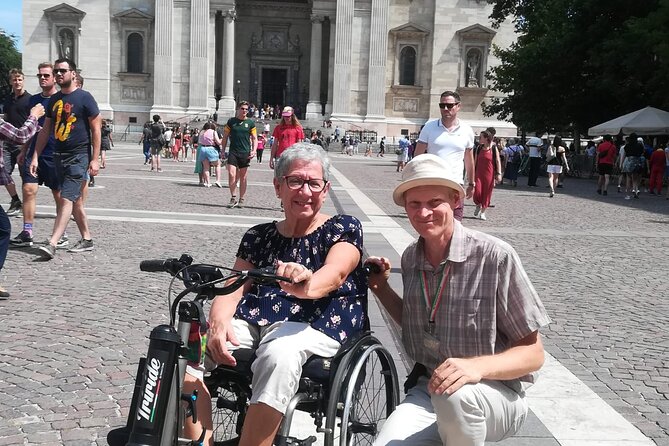
You meet at Szent István tér 4, 1051. If you need pickup, the guide meets you at your hotel reception desk or right in front of your accommodation. After the tour, drop-off can happen back at your hotel or at a selected point in the city.
This kind of pickup support is practical for accessibility. It reduces the stress of finding the exact meeting spot, getting across uneven sidewalks, or figuring out transport when you’re already tired.
Transport details are also worth noting:
- The tour can use public transport (your guide handles the parts that make the route workable)
- You can request an accessible minibus if that’s easier for you
- The tour is listed as private, mobile-ticket friendly, and offered in English
- It operates in all weather conditions, so you’ll want a plan for rain and cold days
One more small but important item: in church areas you’re required to cover legs and shoulders. That’s not a vibe check—it’s a real rule. Bring something light you can layer quickly.
Stop-by-stop: St. Stephen’s Basilica to Buda Castle terraces
The day is built like a smart on-ramp into Budapest’s highlights. You start with the kind of place most people want to see—and you get help getting inside in an accessible way.
Stop 1: St. Stephen’s Basilica (Szent István Bazilika)
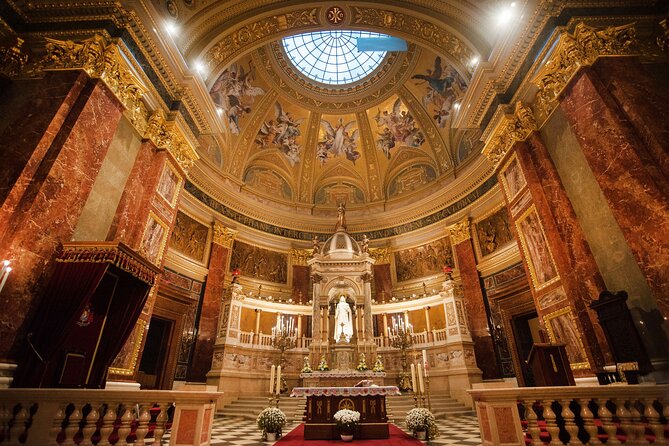
This is one of Budapest’s biggest church landmarks, tied to the memory of Hungary’s first king, Stephen, who died in 1038. Inside, you’ll see statues and frescoes, plus the well-known relic: the mummified right hand of King Stephen.
Here’s the accessibility detail that matters: there is an accessible elevator for wheelchair users to get inside the church, but it does not cover the tower area, including the treasury and the panoramic terrace. In other words, you can still enjoy the main church space, but don’t count on reaching the top viewpoints in the basilica complex.
The tour includes 45 minutes and notes that admission is included, open every day except Sunday morning religious service. If your trip date falls on a Sunday morning, that schedule piece could change what you can access.

Stop 1 (connection): Central Pest to Buda Castle via an accessible public bus
After the basilica, you reach the central traffic junction where you can enter Old Town of Pest and the Inner City. Then you take an accessible public bus toward the Castle of Buda.
This is a good example of why having a guide helps. Even if you’re comfortable riding transit, the guide can help you stay oriented and keep the day efficient.
Stop 2: Buda Castle panoramic terrace
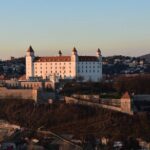
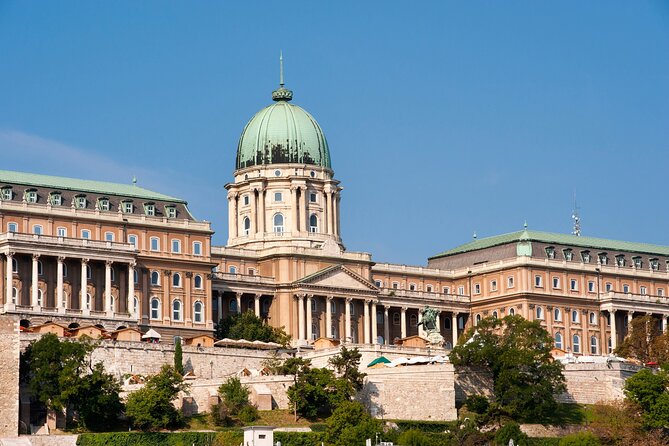
Once you’re across the Danube, you’re in Castle of Buda territory. The focus here is the Royal Palace panoramic terrace, where you get wide city views.
The tour calls this 45 minutes, and admission is listed as free for this stop. For mobility travelers, that matters because viewpoints can be the best “bang for your effort.” You can enjoy the views without committing to extra climbs or long interior lines.
Castle viewpoints, Matthias Church limits, and the bridge renovation note
Budapest has a way of teasing you with more stairs and more levels than you expected. This itinerary tries to keep you on the workable side, but there are real limitations you should understand up front.
Stop 3: Fountain of King Matthias
This is short and sweet: a 19th-century fountain you’ll see for about 10 minutes. It’s a pleasant pause after heavier sights, and it helps break up the day into manageable blocks.
Stop 4: Sándor Palace (Palace of the President)
Then you move from Castle area toward the presidential palace, where you may see guards in historical uniforms. The visit is about 10 minutes, and the palace stop is listed as not included for admission—so you’re mostly taking in exterior sights and the surrounding atmosphere.
Stop 5: Fisherman’s Bastion
This is one of the classic Budapest views. Expect a 15-minute admiration window over the Danube and toward the Parliament building.
The tour lists admission as not included. In practice, you’ll want to confirm whether you’re paying anything at the exact time you arrive, especially if you’re hoping to enter particular sections rather than simply view from accessible areas.
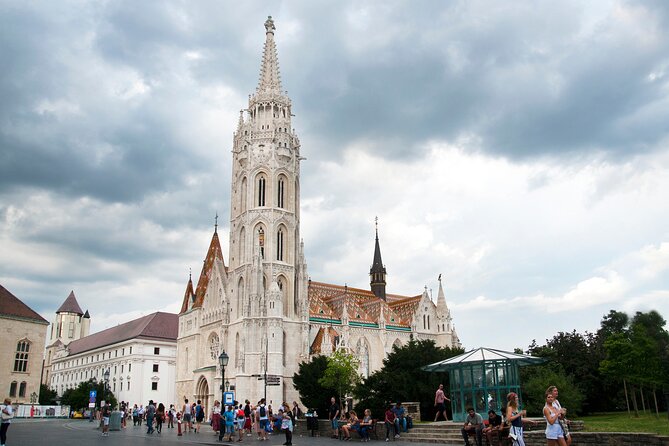
Stop 6: Matthias Church (outside focus for wheelchair users)
Here’s the key limitation: the tour notes that the church is not accessible inside for wheelchair users. You’ll get about 10 minutes to walk around the exterior area.
If you want the interior, the description suggests it’s an optional visit for walkers upon request. That means wheelchair users and limited-mobility visitors can still enjoy the surroundings, but planning needs to account for separate access rules.
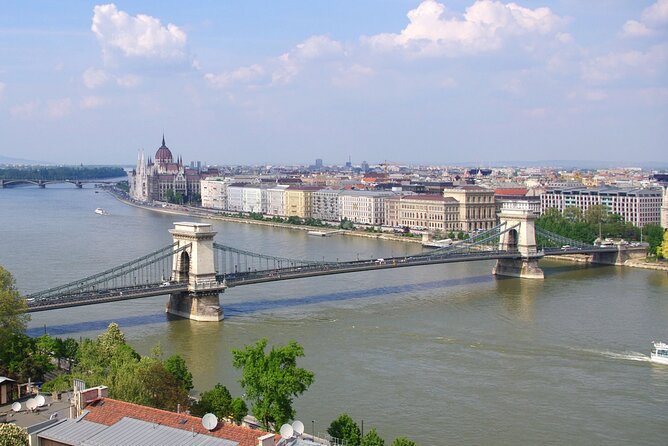
Bridge note: renovation timing can affect routes
The itinerary also notes that an iconic bridge was under renovation from 2021 to 2022. Even if that’s not your travel year, this is still useful to know because bridge work can lead to route changes or detours. The guide is the person to ask on the day if your exact route differs from what you expected.
Andrassy Avenue to Heroes’ Square: big sights with short, manageable time
Budapest’s “wow” factor doesn’t only happen at churches and castles. The city’s grand avenues and monument squares can feel just as important—especially when they’re paired with good timing.
Andrassy Avenue on an accessible bus
The tour includes a stop to admire Andrássy Avenue, described as about 2 miles long. It’s a historic thoroughfare, and instead of forcing you to trek the whole route, you take an accessible public bus along the avenue to reach Heroes’ Square.
This is a thoughtful way to experience the avenue without turning your day into a long uphill grind.
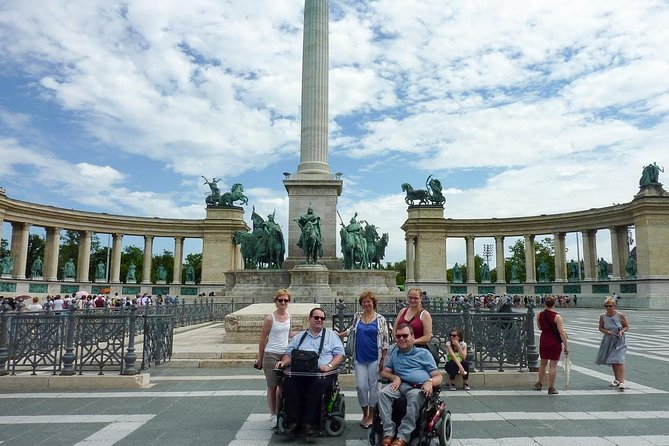
Stop 7: Heroes’ Square
Heroes’ Square is huge and unmistakable. You’ll walk through it for about 10 minutes. Admission is free.
In the middle is the Millennium Monument, and along the sides you’ll see the Arts Hall and the Fine Arts Museum. Even if you don’t go inside, this is a great place to reset, roll slowly, and take photos without needing tickets.
Millennium Monument and Vajdahunyad Castle: monuments plus the lake-side feel
After Heroes’ Square, the itinerary shifts to specific monument details and then into Budapest City Park territory.
Stop 8: Millennium Monument
You’ll spend about 10 minutes at the Millennium Monument, commemorating 1000 years of Hungarian history. The description also points out the grave of the unknown heroes, plus statues in surrounding colonnades.
This stop is free and quick, which is helpful if you’re managing fatigue. Big symbolism, small time requirement—exactly what you want in a mobility-focused tour.
Stop 9: Vajdahunyad Castle
Next you move into City Park, described as the oldest public park in the world. You’ll cross a bridge to an island on the lake where you’ll see the romantic Vajdahunyad Castle.
You get about 15 minutes here, with admission listed as free. The courtyard features copies of buildings representing different periods and styles of Hungarian architecture. For a wheelchair user, a key advantage is that the castle experience can often be enjoyed through views and courtyard wandering rather than deep-ticket commitments.
Stop 10: Anonymus Szobor
Finally, you reach the courtyard area and find the statue of Anonymus, described as the first history writer of Hungary who lived in the 12th century. The visit is about 10 minutes, free.
This is a good closing note because it’s specific and human. After big crowds of monuments, you end with a calmer detail.
Accessibility reality check: where the tour is strong and where it needs planning
This tour has a clear “accessibility bias,” and that’s a big reason it earns strong satisfaction. It pays attention to elevators, reachable viewpoints, and practical transport choices. You’re not left to guess your way through.
Still, you should go in knowing the boundaries:
- St. Stephen’s Basilica: wheelchair users can reach the main church via an accessible elevator, but the tower area is excluded.
- Matthias Church: the church is not accessible inside for wheelchair users. Expect exterior viewing unless you coordinate optional parts for walkers.
- Several iconic areas are listed as not included for admission, which doesn’t mean they are inaccessible—it means costs may apply depending on what you choose to enter at the exact time.
Also, timekeeping matters. One downside that can affect wheelchair experiences is when the schedule runs tight, because you can’t just sprint to compensate. If you have appointments, oxygen breaks, or caregiver needs, tell the guide at the start. A well-run accessible tour is flexible because accessibility is not a clock-only problem.
Who should book this accessible Budapest tour?
This is a smart match if:
- You use a wheelchair or have mobility issues and want a guide to manage routes and pacing
- You want the highlights—basilica, Buda Castle views, Fisherman’s Bastion, Heroes’ Square—without guessing what’s reachable
- You’d rather ride accessible public transport with guidance than design your own multi-leg plan
It might not be ideal if:
- You’re expecting fully wheelchair-accessible interiors at every stop. Some churches have clear access limits here.
- You want long, ticketed castle museum time. This itinerary emphasizes terraces and viewpoints, not deep museum immersion.
Should you book it? Best matches and who should look elsewhere
I’d lean toward booking if you’re looking for a guided, accessibility-aware route with real structure. The combination of hotel pickup, accessible transport options, and the included Basilica entry (with the Sunday exception) makes the tour feel built for people who need less friction.
If your priority is specific interiors—like Matthias Church interior access or the basilica tower experience—then you’ll need to confirm options with the guide before you arrive. Based on the access notes, those parts may not be available for wheelchair users, even if the views and exterior areas still deliver.
FAQ
Is hotel pickup included?
Yes. The guide offers hotel pickup and drop-off. Pickup is arranged through your hotel reception desk or right in front of your accommodation, and after the tour drop-off can be to your hotel or another selected point in the city.
How long is the tour?
The duration is listed as about 4 to 6 hours.
Is the tour wheelchair-friendly?
It’s designed for wheelchair users and people with mobility issues. The itinerary includes accessibility details like an elevator at St. Stephen’s Basilica, but it also notes limitations such as Matthias Church not being accessible inside for wheelchair users.
What’s included for tickets?
Entry to St. Stephen’s Basilica is included (except Sunday morning religious service). Admission is listed as free for the Buda Castle panoramic terrace, and free for several other stops. Some major sites are listed as not included for admission, so costs may apply depending on what you choose to enter.
Are there dress requirements?
Yes. Church areas require covering legs and shoulders.
Are service animals allowed?
Yes. Service animals are allowed on this tour.