REVIEW · BUDAPEST
Budapest: Castle District Walking Tour
Book on GetYourGuide →Operated by Triptobudapest.hu - Free Budapest Walking Tours · Bookable on GetYourGuide
Castle Hill feels like Budapest’s outdoor classroom. This guided walk ties together the Royal Palace area, key churches, and the Danube views with stories you can actually picture. You’ll meet your guide at Batthyány tér and spend about two hours working your way through the Castle District on foot.
What I liked most: the way the guide turns landmarks into real context, including WWII destruction and the role of the underground defense system. I also love the built-in photo-and-view rhythm, with terraces that line up perfectly for looking across to Pest.
One thing to keep in mind: this is a hilly route with an uphill walk and lots of steps. If you prefer flat city strolling, you may find the climb a bit tiring.
In This Review
- Key things to know before you go
- Batthyány tér start: the quick way to begin without stress
- The Castle District route: how the walking tour actually saves time
- Royal Palace area: the “why rebuilt so many times” story
- Matthias Church stop: symbolism and the city’s everyday life angle
- Fisherman’s Bastion: panorama time plus the Walt Disney connection
- Maria Magdalena Church Tower and the “why this area looks the way it does”
- Medieval Jewish Prayer House and baroque residential buildings
- Underground Castle Hill caves: the defense labyrinth you can picture
- Statues, huszár fighters, and the cross-details puzzle
- Gül Baba and the Ottoman Turkish pilgrimage connection
- Finishing with the Pest-side Danube view and your last questions
- Price and value: why $2.27 can still make sense
- Who this tour suits best
- Should you book the Budapest Castle District walking tour?
- FAQ
- Where is the meeting point for the Budapest Castle District walking tour?
- How long does the walking tour last?
- Is the tour in English?
- What major sights are included?
- How much walking or climbing is involved?
- Is this tour wheelchair accessible?
- Is there an age limit?
- How many people are in a group?
- Do I need to tip the guide?
- Is it suitable for Hungarian residents?
Key things to know before you go
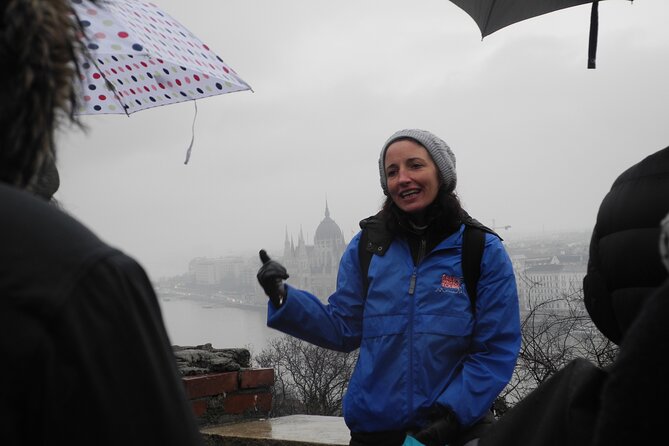
- Meet at Batthyány tér metro exit: look for the guide holding a royal blue flag.
- Two hours, max 30 people: small enough for questions, not so crowded you feel rushed.
- Big sights plus weird details: crosses with one/two/three strips, huszár fighters, and public mini-monuments.
- Underground Castle Hill gets attention: caves and labyrinth defense stories are part of the walk.
- Multiple faiths and eras show up: Jewish Prayer House, Gül Baba, Ottoman ties, and German/Hungarian/Jewish everyday life.
- You’ll end back at the start point: easy to pivot to lunch or your next stop.
Batthyány tér start: the quick way to begin without stress

The tour starts at Batthyány tér metro exit, near St. Anna Church, and the key is simple: find the guide holding a royal blue flag. If you arrive a few minutes early, you’ll have time to orient yourself and grab water. There are public toilets and a food market around the meeting area too, which is handy if you’re coming straight from the metro with no time to think.
Your guide expects an international crowd and will guide the whole experience in English. I like this setup because it means you’re not stuck figuring out what matters. Instead, you’re walking with someone who can answer the questions that always pop up on Castle Hill, like why certain symbols look the way they do or what’s going on behind the major viewpoints.
Plan on shoes you can trust. This isn’t a sit-and-watch stop. Even with rest breaks, you’re doing a real uphill day part, including a stated 10-minute climb.
You can also read our reviews of more walking tours in Budapest



The Castle District route: how the walking tour actually saves time
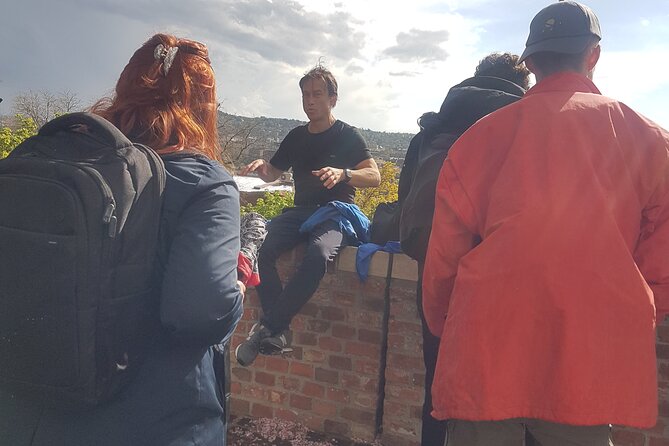
This is designed as an efficient introduction to the Castle District. You’re not aimlessly bouncing between ticket lines and photo platforms. The walk focuses on a cluster of major sites—Buda Castle, Matthias Church, and Fisherman’s Bastion—plus several nearby landmarks that fill in the bigger picture.
Along the way, you’ll pass lookout terraces and urban public art mini-monuments, and you’ll hear explanations that connect the buildings to the wars, occupations, and rebuilding cycles the area experienced over roughly 800 years. That’s a long timeline, but the tour keeps it human by tying stories to what you’re seeing in front of you.
A nice bonus is that the guide doesn’t just narrate. You’ll get chances to ask questions, and the tour includes a playful moment with tricky knowledge checks about the major Castle Hill landmarks. It’s a light way to keep your attention, and it helps you remember what you just learned.
Royal Palace area: the “why rebuilt so many times” story
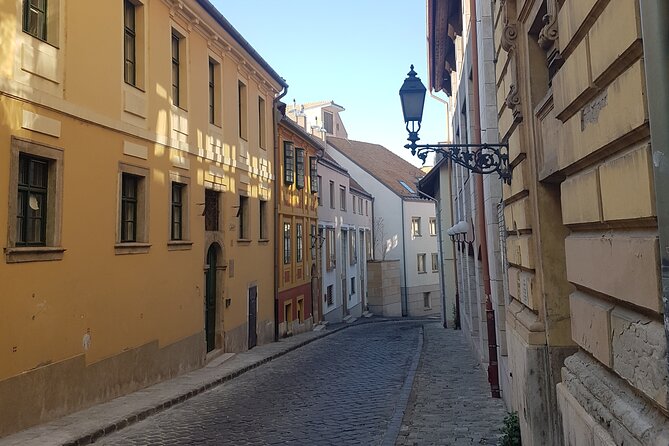
One of the strengths of this walk is how it treats the palace and palace-adjacent spaces as more than pretty walls. You’ll get time at the massive building that once served as the residence of Hungarian kings, including the fact that it was rebuilt many times because of war damage. That detail matters because it explains what you’re looking at—why the place feels layered rather than frozen in one era.
The guide also points out the area’s civic meaning, including locations associated with the president and prime minister’s offices. Even if you don’t go inside buildings, knowing where official power sits in the Castle District helps you read the geography instead of just collecting photos.
If you like history told through visuals—what’s in front of you driving the story—this stop style works well. If you want slow, museum-style pacing, you might feel the walk moves briskly. But for most people, that’s the point: you’re getting a coherent orientation in a short window.
Matthias Church stop: symbolism and the city’s everyday life angle
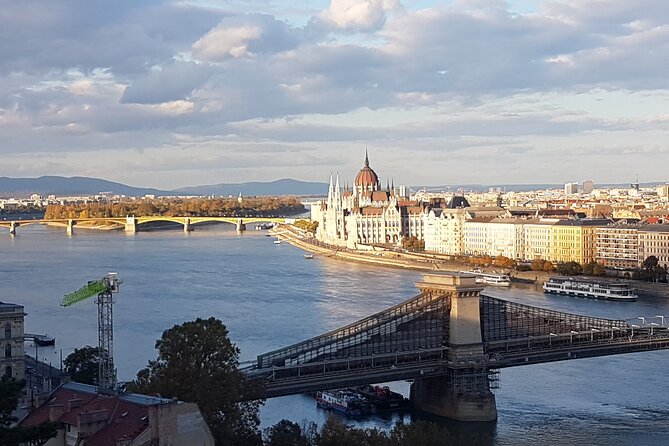
Matthias Church is one of the anchor stops, and the tour uses it to connect big themes: faith, identity, and how different communities shaped daily life in the district. The guide talks about everyday life of the German, Jewish, and Hungarian populations in the area, which adds texture beyond the usual “this is old” explanations.
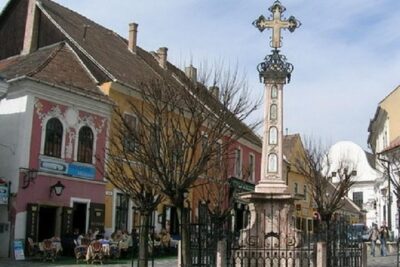
This is also where the tour’s symbol-spotting flavor comes in. You’ll learn about the difference between a cross with one, two, or three strips—exactly the kind of detail you would probably miss if you were wandering alone. If you enjoy noticing what you can’t automatically interpret, you’ll appreciate that the guide hands you a decoding key.
The downside is minor but real: you need to keep moving. There isn’t time to linger for long introspective pauses. You’ll get moments to look, but the tour is built around flow.
Fisherman’s Bastion: panorama time plus the Walt Disney connection
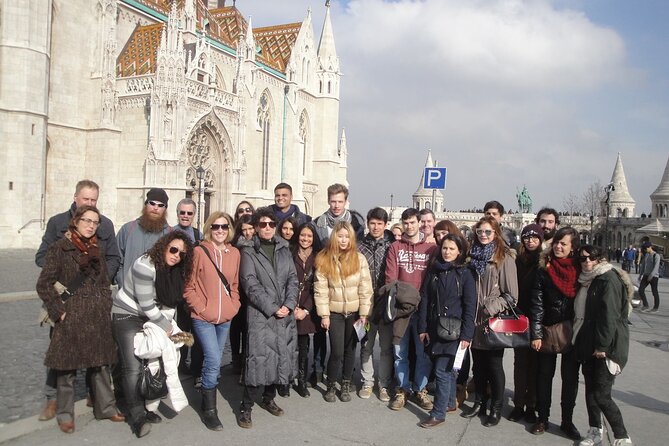
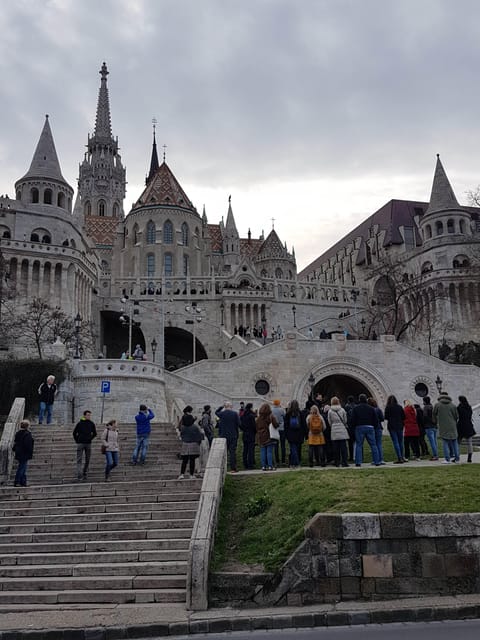
Fisherman’s Bastion is a highlight for a reason: it gives you one of those Castle Hill views that feels custom-made for postcards. The tour leans into that with terrace moments where you can soak in the panorama over the Pest side of the Danube.
Then comes the fun brain-stretch: the guide covers the connection between Walt Disney and Fisherman’s Bastion. I can’t promise it will be the topic you expect, but that kind of cultural link makes the whole stop more memorable than a straightforward description.
You’ll also get practical guidance on enjoying a free view from Castle Hill. That’s valuable because Budapest can be pricey if you bounce between viewpoints. Having a free option you understand—where to stand, what to look for—can save you time and money while still giving you great results.






Maria Magdalena Church Tower and the “why this area looks the way it does”
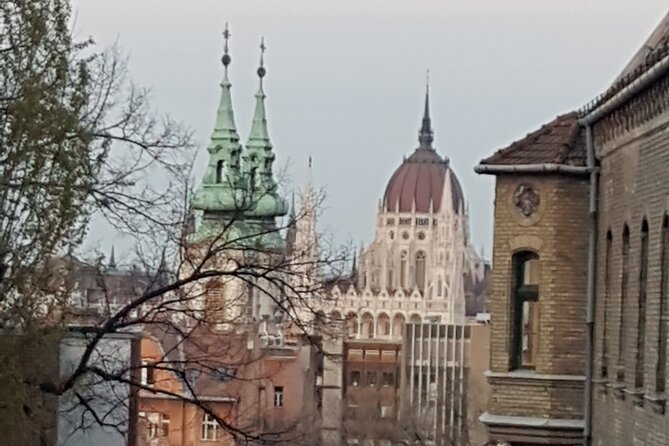
The tour also includes Maria Magdalena Church Tower. This stop helps break up the rhythm between the grand, dramatic landmarks and the more local-looking streetscapes around the Castle District.
What I like here is how the guide uses architecture as evidence. You’re not just hearing dates; you’re hearing why certain places were shaped by conflict, rebuilding, and shifting power. The tour connects what you see in the built environment to what happened over centuries, including wars and occupations.
This section is a good reminder that Castle Hill is not only a photo spot. It’s lived-in space, and it also reflects cultural layering—something the tour reinforces again when it later covers the Jewish and Ottoman-linked sites.
Medieval Jewish Prayer House and baroque residential buildings
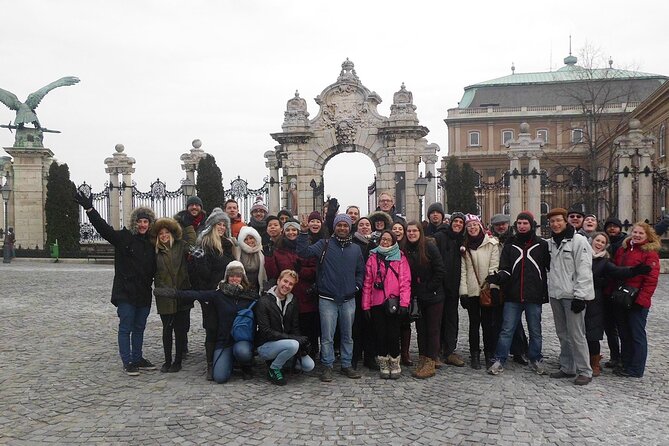
One of the most rewarding moments on this walk is the stop at the Medieval Jewish Prayer House, plus the surrounding baroque residential buildings around it. If your Budapest plan is heavy on the grand sights, this is the part that brings the human story forward.
The guide ties the prayer house into the broader narrative of the district’s communities, including what daily life looked like for German, Jewish, and Hungarian residents. That framing makes the architecture feel less like decoration and more like a record of how people actually lived.
You’ll also learn about major WWII destruction here, including where the Nazi stronghold was. That subject is heavy, and you’ll want to be mentally prepared. The value is that you don’t just hear about battles in an abstract way—you get those stories placed directly into the Castle Hill geography.
Underground Castle Hill caves: the defense labyrinth you can picture
Castle Hill isn’t only above ground. The tour includes the underground cave system and stories about the labyrinths and their role in defense over the centuries. Even if you don’t see every literal passage, you’ll learn the concept in a way that makes the terrain feel strategic instead of random.
I like tours that explain why an area was built the way it was, and this one does that with the underground layer. It gives you a fresh way to interpret what you’re walking past—especially in a place where normal sightseeing can turn into a “wow, stairs” experience without any deeper meaning.
There’s no promise of this being an action-adventure segment. Think of it as story-driven orientation: you’re learning how the underground defenses fit into the bigger Castle Hill plan.
Statues, huszár fighters, and the cross-details puzzle
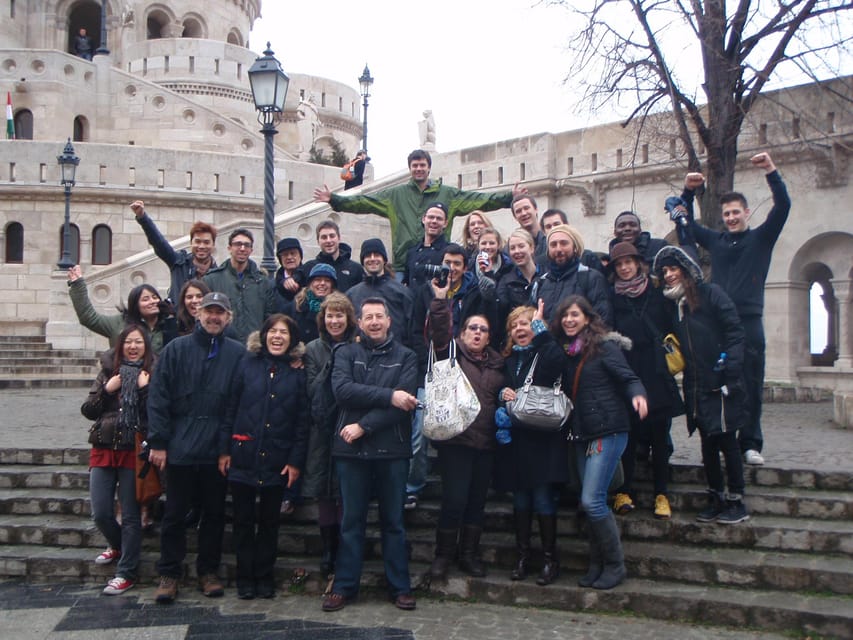
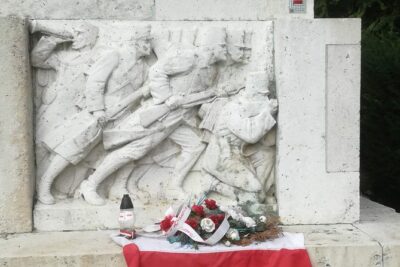
A fun section of the walk focuses on playful details that still feel tied to the local identity. You’ll hear about the funniest public statues in Budapest and the huszár light cavalry fighters called huszár. You might not expect the Castle District to be funny, but that blend of humor and history is what keeps the tour from feeling like a lecture.
You’ll also get symbol and trivia-style explanations, like the cross-strip detail mentioned earlier. These bits do two useful things for you: they keep the tour lively, and they give you easy landmarks to remember later when you’re planning the rest of your trip.
This isn’t random trivia. It’s part of learning how to read Budapest’s cues, where small details often carry bigger meaning. If you like tours that make you look again at what you thought you already understood, you’ll probably have a good time here.
Gül Baba and the Ottoman Turkish pilgrimage connection
Another part of the tour highlights Gül Baba, an Ottoman Turkish monk and soldier, and the Muslim site of pilgrimage connected to him. The guide also talks about where the rich Hungarians live, giving you a clearer sense of how social geography works within the Castle District.
This is valuable because it prevents the walk from becoming a single-thread story. Instead, you get multiple influences—Jewish, Hungarian, German, and Ottoman—in the same hillside area.
One caution: if you’re sensitive to topics of war and occupation, take your pacing seriously. The tour covers WWII destruction and where the Nazi stronghold was, and it also discusses occupations across the long timeline of the district. You’re not stuck in that mood all day, but you should know the tone includes serious historical content.
Finishing with the Pest-side Danube view and your last questions
The walk winds down with terrace panorama time, including the chance to soak in the view across the river toward Pest. This is a practical moment, too. If you’re mapping out the rest of your Budapest days, the river view helps you understand distance and direction.
Before you finish back at the meeting point (Batthyány tér), the guide includes practical information and extra time to answer remaining questions. That matters because Castle Hill always creates follow-up thoughts: where to eat, what else to see, and how to continue exploring without getting lost.
The tour ends back where it started, so you’re not stuck routing yourself out uphill again. That makes it a smart first or mid-trip activity, especially if you’re trying to build confidence for independent sightseeing afterward.
Price and value: why $2.27 can still make sense
Let’s talk money honestly. The listed price is extremely low at $2.27 per person, but you should treat it as a starting price for the tour, not as the full cost of what you’re getting.
There’s also a booking fee that goes to GetYourGuide for administration and marketing. On top of that, tipping is encouraged, and the guidance given is that most people tip about €10 per person (some more). Your guide works hard for tips, and that tip is part of how the experience is sustained.
So is it good value? For me, the value comes from time savings and guided interpretation. In about two hours you cover major landmarks—plus underground defense stories, WWII notes, cross-symbol details, and community history—without needing to research each stop yourself. Even if the walking is a bit more active than a casual city stroll, the story density is high for the time.
If you’re on a tight budget, I’d still book it, but budget for the tip. That’s the small extra expense that turns a bargain-priced walking tour into an actually satisfying, well-supported experience.
Who this tour suits best
This works well if you want a guided orientation that helps you read the Castle District instead of just orbiting it. It’s especially good for:
- First-time visitors who want the big sights plus the “why”
- People who like asking questions and getting answers on the spot
- Anyone who enjoys views but doesn’t want to spend half the day figuring out where to stand
It may not be the best fit if you:
- Struggle with stairs or uphill walking (there’s a 10-minute uphill segment)
- Need wheelchair access (it’s not suitable for wheelchair users)
- Are planning for adults over 95 years (not suitable)
If you’re traveling as a group, note the limit: groups of 8 or more aren’t allowed to book this tour, whether booked together or separately.
Should you book the Budapest Castle District walking tour?
I’d book it if you want two hours that give you direction. You’ll see the major Castle Hill landmarks—Buda Castle, Matthias Church, Fisherman’s Bastion, and more—then you’ll understand what they mean through stories about communities, symbols, WWII damage, and even underground defenses.
Skip it if you dislike hilly walking or you need fully accessible routes. Bring comfortable shoes, water, and weather-ready clothing, and you’ll be in great shape for a tour that’s equal parts history lessons and practical Castle District orientation.
If your main goal is photos only, you could do parts on your own. But if your goal is meaning plus efficient sightseeing, this is a strong pick.
FAQ
Where is the meeting point for the Budapest Castle District walking tour?
You meet at the Batthyány tér metro exit, about 15 meters from St. Anna Church. Look for the tour guide holding a blue flag.
How long does the walking tour last?
The tour lasts about 2 hours.
Is the tour in English?
Yes. The live tour guide provides the tour in English.
What major sights are included?
The tour includes stops around Buda Castle, Matthias Church, Fisherman’s Bastion, and Maria Magdalena Church Tower, plus other important buildings and areas around Castle District.
How much walking or climbing is involved?
You should be prepared for moderate physical fitness and a 10-minute uphill walk. The route involves hills and steps on Castle Hill.
Is this tour wheelchair accessible?
No. It is not suitable for wheelchair users.
Is there an age limit?
Yes. It is not suitable for people over 95 years.
How many people are in a group?
The tour has a maximum of 30 travelers.
Do I need to tip the guide?
Tipping is encouraged. The guidance given is that most guests tip around €10 per person, with some tipping more.
Is it suitable for Hungarian residents?
It’s specifically designed for international travelers visiting Budapest and may not be suitable for Hungarian residents.