REVIEW · BUDAPEST
Budapest Hammer & Sickle Communist Times Tour
Book on Viator →Operated by Absolute Tours · Bookable on Viator
Budapest’s communist story starts fast.
This tour turns major Cold War events into a real walking timeline, from WWII and the 1956 Revolution to the fall of the Iron Curtain, with a strong stop at the Shoes on the Danube Bank Holocaust memorial. I especially love the interactive Retro museum part, where everyday life under communism gets explained through objects and scenarios, not just dates. I also like how you move past key 1956 sites in the same afternoon, so the history feels connected instead of chopped up. One drawback to consider: there are no audio headsets, so if you struggle to hear in crowds or on noisy streets, you’ll need to rely on your ears and stand where you can see your guide.
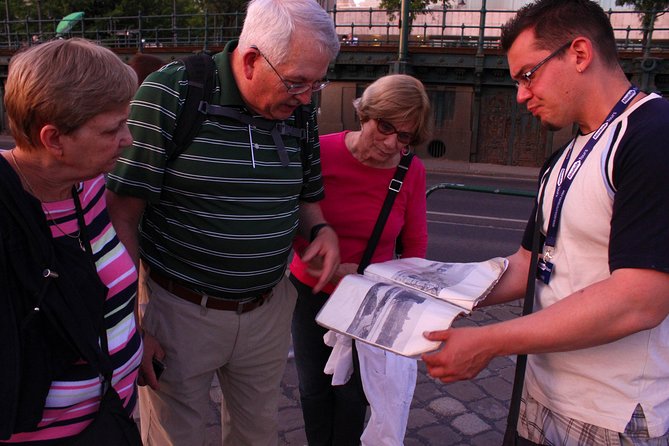
The route is short, paced, and built for first-time visitors who want context without drowning in textbooks. You’ll also get that human angle: the guides (like Anna, Celeste, Greg, Andrea, and Tomas in past groups) explain the official story while adding personal details—family routines, travel headaches, and the everyday workarounds that made life function under big control.
Finally, it’s not a set-and-forget tour. It goes in all weather, the group is small (max 10), and it’s best for curious adults and teens—not recommended under age 14.
In This Review
- Key Takeaways Before You Go
- Turning 3:00 pm Into a Time Machine Through Pest
- Meeting at Deák Ferenc tér, Ending Near Liberty Square
- Szent Istvan Bazilika: How Communism Pressured Religion
- Szabadság tér Soviet Memorial: Ending WWII and Seizing Power
- Front of Parliament: The First Days of the 1956 Revolution
- In memoriam 1956 October 25: When the Crowd Was Fired On
- Monument to Imre Nagy and the Oct. 23 Remembrance Day Thread
- Budapest Retro Interactive Museum: Daily Life Under Big Brother
- Shoes on the Danube Bank: WWII Remembrance Built Into the Walk
- The Guides: When Neutral Storytelling Feels Personal
- Price and Logistics: What $79.65 Buys You in Real Value
- Who This Tour Fits Best (and Who Might Want Something Else)
- Should You Book the Budapest Hammer & Sickle Communist Times Tour?
- FAQ
- How long is the Budapest Hammer & Sickle Communist Times Tour?
- What language is the tour offered in?
- How much does the tour cost?
- Is the Retro Interactive Museum entry included?
- Are there admissions fees at the stops?
- Is there an audio headset for this tour?
- Where do I meet the guide?
- Where does the tour end?
- What’s included with the guide besides the tour itself?
- Is free cancellation available?
Key Takeaways Before You Go
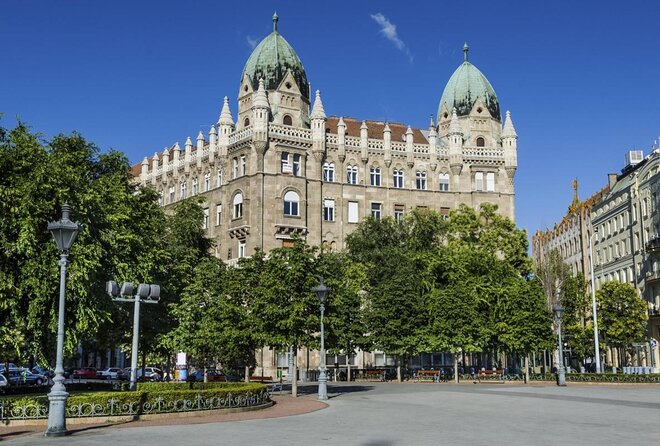
A 2.5-hour walk that strings together WWII, 1956, and the Iron Curtain without feeling like a lecture.
Budapest Retro Interactive Museum gets hands-on with daily life details like family routines, travel limits, and how passports worked.
Multiple 1956 remembrance stops include places tied to speeches, marches, and the Soviet crackdown.
No audio equipment means you should bring your best listening posture and expect normal city noise.
Small group size (up to 10) makes questions easier—many guides are known for answering thoroughly.
Admission costs are mixed: some stops are free, while others require tickets you’re told about ahead of time.
Turning 3:00 pm Into a Time Machine Through Pest
This runs in the afternoon starting at 3:00 pm, with an experience time of about 2 hours 30 minutes. That timing is handy: you can sleep in, do a morning “must-see” like the Danube viewpoints, then use this tour to understand why Budapest looks the way it does today. The pacing is built around short stops and a walking flow, so you’re not stuck in one place for long.
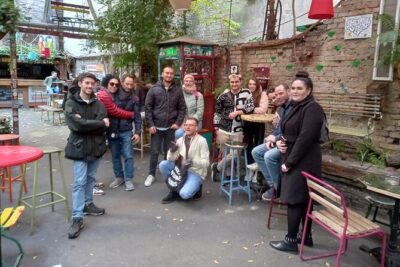
Because it’s a small group (maximum 10), you’ll get that closer-to-personal feel. Several guides highlighted in past tours—like George, Lazlo, Bogata, and Rebeca—are described as passionate and easy to talk with. In practice, that matters: if you’re trying to connect the dots between government decisions and daily life, you’ll want to ask questions, and small groups make that possible.
Dress for real weather. The tour goes in all conditions, so bring layers and shoes you can trust on sidewalks. If it’s rainy, plan for wet streets and quicker walks between stops rather than long indoor waits.
You can also read our reviews of more tours and experiences in Budapest.


Meeting at Deák Ferenc tér, Ending Near Liberty Square
You meet at the Lutheran Church at Deák Ferenc Square, Deák Ferenc tér 4 (easy to reach with public transport). The end point is near Szabadság tér 1, right in the downtown area close to Liberty Square.
This ending location is more useful than you might think. Liberty Square is a central hub, so after the tour you can keep exploring without a long detour. If you like to finish a tour with a coffee and a “what did I just learn” moment, this is a good spot to do it.
One practical detail: there’s no pickup or drop-off. You’ll need to get to the meeting point on your own, then navigate out from the end area afterward.
Szent Istvan Bazilika: How Communism Pressured Religion
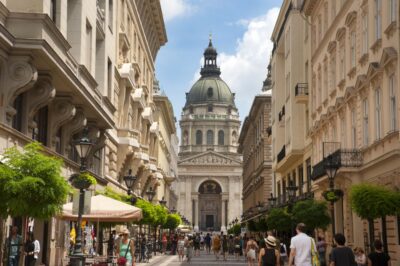
One of the first stops is Szent István Basilica, where you’ll hear how communism affected religious life and how different churches operated. The time here is brief (about 15 minutes), but it helps set the tone: this isn’t just about revolts and tanks, it’s also about how everyday beliefs and institutions were squeezed.
Admission is not included for this stop, so you’ll want to be ready for any ticketing needs on-site. If you’re the type who hates sudden entry fees during a guided plan, that’s the main thing to watch here.
Still, the payoff is that you’ll stop thinking of communism as only a political system. You start seeing it as something that tried to manage cultural and spiritual life too.
Szabadság tér Soviet Memorial: Ending WWII and Seizing Power
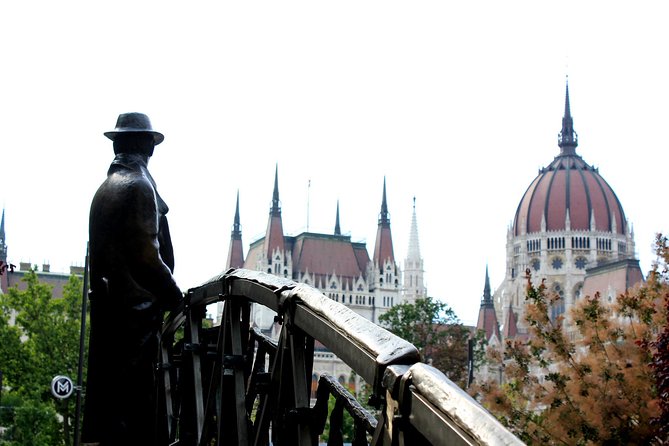
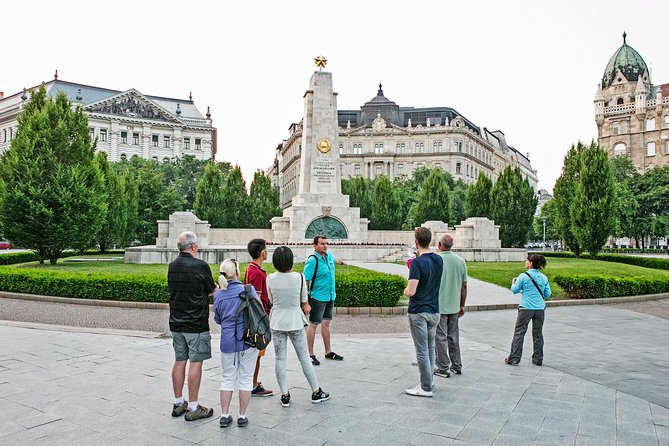
Next up is Szabadság tér, a 15-minute stop at the Soviet Memorial. This is one of the clearer “cause and effect” moments. You’ll connect the end of WWII, the beginning of occupation, and the way the Communist Party seized power over Hungary.
This stop is free, and that helps you keep the tour value strong. More importantly, it’s a good orientation point: the city landmarks around here make it easy to understand that propaganda and memory are built into the streets.
I like that the guide focuses on story flow—how control shifted from one phase of history into the next—so when you later hit the 1956 sites, it doesn’t feel random.
Front of Parliament: The First Days of the 1956 Revolution
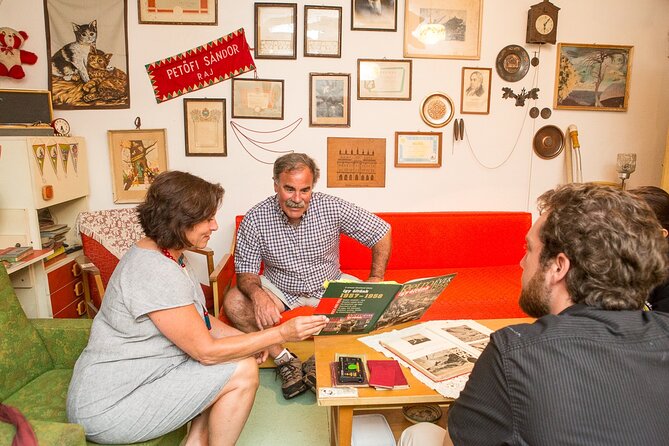
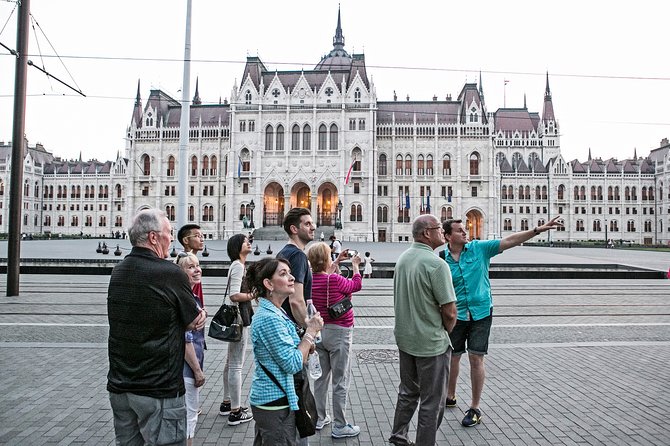
Then you move to the Hungarian Parliament Building area. The square in front of Parliament played a role in the early days of the 1956 Revolution, and you’ll learn what led to the outbreak and how party leadership handled the events.
This is about 20 minutes, and admission is not included for the Parliament stop. Even if you’re only seeing the exterior area and the surrounding square, it helps you visualize why this spot mattered. Parliament isn’t just a pretty building here—it becomes part of the timeline.
There’s also a major figure tied directly into the story: Imre Nagy. You’ll hear about him because he’s a central character in what happens next, including the Soviet clash and his fate.

In memoriam 1956 October 25: When the Crowd Was Fired On
One of the most emotionally heavy stops is In memoriam 1956. October 25. Memorial and Exhibition. On October 25, 1956—described as the second day of the revolution—military authorities and Soviet tanks fired into the gathering crowd. The exhibition uses archive footage and recollections, which is a powerful combination because it mixes record with memory.
This stop is free and lasts about 15 minutes. In a tour like this, that’s exactly the right length. You get the moment, but you don’t end up staring at facts too long to process them.
If you’re sensitive to heavy history, give yourself a second to step back after the exhibition. It hits harder when you’ve already been walking through the earlier context.
Monument to Imre Nagy and the Oct. 23 Remembrance Day Thread
You’ll also visit the Monument to Imre Nagy, tied to Remembrance Day on October 23. This statue isn’t just symbolism. You’ll learn that Nagy was executed after his role in the revolution, and that his reburial was an important moment in the change of regime.
It’s another 15-minute stop and also free. I like it because it closes a loop: you start with the reasons people protested, you follow the crackdown, and then you land on how later Hungary chose to remember and correct the record.
Budapest Retro Interactive Museum: Daily Life Under Big Brother
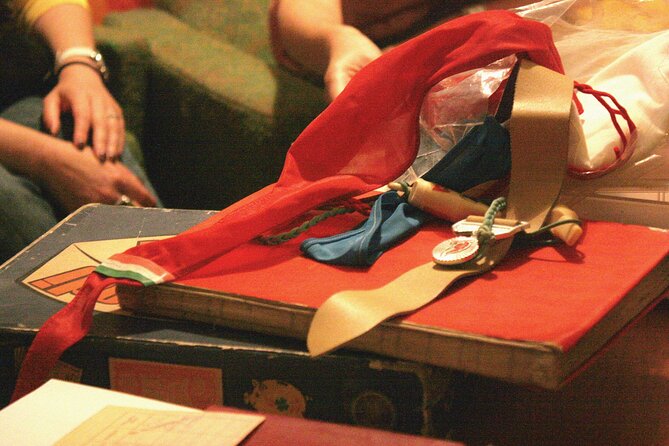
This is the part where the tour earns its keep. The plan includes entry to Budapest Retro Interactive Museum, focused on what life was like behind the Iron Curtain.
Instead of only talking politics, you’ll get specifics about everyday routines: how children were brought up, how families lived, how people traveled, and—yes—how long it could take to get a passport. You also hear about black markets and banana lines, which are the kind of details that make history feel real because they sound like stories you could almost overhear from a neighbor.
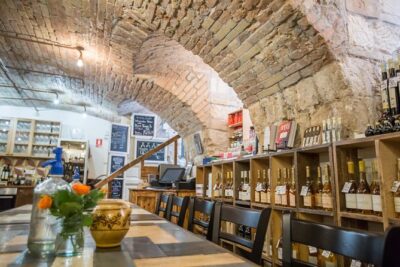
Many guides are praised for making this interactive museum feel like a time capsule. Past groups have noted mock-ups of a living space where everyday items—like games, books, and childhood scrapbooks—show how culture continued in small ways even under pressure. Rebeca and George, in particular, were described as starting the explanation with items and artifacts, then using those props to build the bigger picture.
A practical note: since there are no audio headsets, the museum experience depends on your guide speaking clearly and you standing where you can hear. If you have trouble with audio in enclosed rooms, don’t drift to the back—stay attentive.
Shoes on the Danube Bank: WWII Remembrance Built Into the Walk
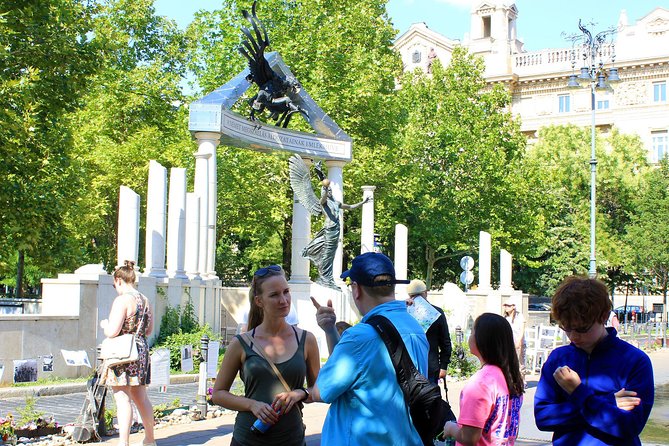
Your tour also includes a WWII overview and a visit to Shoes on the Danube Bank Holocaust memorial. This stop matters because it shifts the story from politics and revolution into the human cost of war and persecution.
What I appreciate here is that it isn’t tacked on as an add-on photo spot. It’s tied into the larger narrative of WWII and what followed. After you’ve listened to the Cold War storyline, it gives you a sobering reminder that these eras weren’t just chess moves—they were lived through by real people.
If you prefer reflection time, plan a minute or two here to stand quietly. A memorial like this works best when you let it land.
The Guides: When Neutral Storytelling Feels Personal
The tour’s quality rises and falls on the guide, and the strongest feedback is consistent: guides are engaging, prepared, and often able to answer questions without hesitation.
Anna is singled out for being extremely knowledgeable and engaging, with a clear approach that stays thoughtful and neutral while still adding personal and family stories from the era. Celeste is praised for educating about life under Communist rule with a solid timeline leading up to it. Greg is mentioned for giving an early historical summary that makes the rest of the walk easier to understand.
Other names that came up strongly include:
- Balint Alkonri, described as doing an excellent job
- Andrea, praised for impressing visitors with deep coverage
- Tomas, praised for mixing dark realities with signs of joy and hope, plus a practical, enthusiastic delivery
- Rebeca, noted for starting in a basement setting and making occupation-era life feel tangible
- Bogata, described as personable and knowledgeable
- George and Lazlo, described as passionate, easy to understand, and strong at explaining how history links to modern Budapest
That variety is a clue. You’re not just getting facts. You’re getting a way of seeing. Guides do a lot of the heavy lifting by connecting the street corners and museum objects to themes: control, resistance, survival, and memory.
Price and Logistics: What $79.65 Buys You in Real Value
At $79.65 per person, the price isn’t “cheap,” but it’s also not trying to be a luxury production. You’re paying for a tight combination of guided context plus museum entry and meaningful city stops.
What supports the value:
- A guided walking route through key historical landmarks
- Entry included for the Retro Interactive Museum
- Guided coffee or tea or soft drink during the experience
- A small maximum group size (max 10), which helps with interaction
What can affect the perceived value:
- Some stops require admissions you’re told about ahead of time (like the Basilica and Parliament areas), while others are free memorial stops
- No audio equipment means you’re more dependent on your guide’s voice and the group’s ability to stay close
For best value, I’d book this early in your Budapest stay. It gives you a baseline for understanding later sights and conversations. If you’re already deep in research, it still helps, because you’ll see how the city itself carries the story.
Who This Tour Fits Best (and Who Might Want Something Else)
I think this is a great fit if you:
- Want a clear overview of modern Hungarian history (WWI-II, WWII, 1956, and the end of the Soviet era)
- Like learning how systems changed daily life, not just who won battles
- Appreciate interactive exhibits and artifact-based storytelling
It’s also a good choice for your first couple days in Budapest because you end near downtown and can keep exploring afterward.
I’d be cautious if:
- You’re under 14, since the tour isn’t recommended for younger kids
- You strongly prefer tours with audio headsets, since this one provides no audio equipment
- You expect long indoor museum time. Most parts are short stops and outdoor-to-indoor transitions, even though the museum is included
Should You Book the Budapest Hammer & Sickle Communist Times Tour?
If you want Budapest with context—why Hungary changed, why people resisted, and what control looked like in daily life—this is a strong bet. The Retro Interactive Museum and the set of 1956-related stops give you a story arc that feels complete for a 2.5-hour afternoon.
Book it if you enjoy guided explanation and you don’t mind doing some walking in real weather. Skip it if you get frustrated by no audio gear or you prefer super long museum time.
FAQ
How long is the Budapest Hammer & Sickle Communist Times Tour?
The tour lasts about 2 hours 30 minutes.
What language is the tour offered in?
The tour is offered in English.
How much does the tour cost?
The price is $79.65 per person.
Is the Retro Interactive Museum entry included?
Yes, entry to the Budapest Retro Interactive Museum is included.
Are there admissions fees at the stops?
Some stops require admission tickets not included, including Szent István Basilica and the Hungarian Parliament Building area. Other stops are listed as free, including the Soviet Memorial at Szabadság tér and the In memoriam 1956 October 25 Memorial and Exhibition.
Is there an audio headset for this tour?
No. The tour does not have audio equipment or headphones available.
Where do I meet the guide?
You meet at the Lutheran Church of Ferenc Deák Square, Deák Ferenc tér 4, 1052 Budapest.
Where does the tour end?
The tour ends near Szabadság tér 1, 1054 Budapest, close to Liberty Square.
What’s included with the guide besides the tour itself?
The tour includes coffee or tea or a soft drink, plus the English-speaking guide.
Is free cancellation available?
Yes, you can cancel for a full refund if you cancel up to 24 hours in advance of the experience’s start time.