REVIEW · BUDAPEST
Budapest: Memento Park and Icons of Communism Guided Tour
Book on GetYourGuide →Operated by Licensed guide & driver · Bookable on GetYourGuide
Communism in Budapest, in big stone form.
If you want more than textbook dates, this guided visit to Memento Park brings the era to life through the statues and plaques left behind after Hungary’s communist system fell. I love that it mixes on-the-ground walking in an open-air museum with clear street-level storytelling, so you can actually picture how the messaging worked.
Two things I especially liked: the chance to stand close to the icons of the period, like Marx, Engels, and Lenin, and the way the guide explains how propaganda and intimidation shaped everyday life. The tour also gives you practical help with photos, including guidance on how to get a shot with the monuments.
One drawback to plan for: this is emotionally heavy material and the setting can feel cold and stark, so if you prefer lighter sightseeing, you may want to pair it with a softer day afterward.
In This Review
- Key things to know before you go
- Batthyány tér: the simple start point that gets you moving fast
- Memento Park: propaganda turned into an open-air lesson
- Stalin’s Grandstand and the Boots of Stalin (the moment the story clicks)
- Marx, Engels, Lenin, and the propaganda machine behind the monuments
- Secret police, intimidation, and what fear changes
- The walk in context: what your time in the park feels like
- Victor’s style: why the storytelling makes the statues mean something
- Return ride: quick extra sights on the way back
- Price and value: what $63 really buys you
- Who this tour fits best (and who might want a different day)
- Should you book Budapest: Memento Park and Icons of Communism?
- FAQ
- Where do I meet for the tour?
- How do I get to Batthyány Square?
- How long is the experience?
- What do I see at Memento Park?
- Is transportation included?
- Is the guide English-speaking?
- Can I skip the ticket line?
- Do I get time for photos?
- Is food included?
Key things to know before you go
- Small group (up to 7 people) for more questions and a less rushed pace
- Pick-up and drop-off at Batthyány tér near the Danube, with easy transit access
- Skip the ticket line so you get more time in the open-air park
- Close-up views of major works tied to communist rule, including the Boots of Stalin
- English licensed guide with photo help so you’re not stuck figuring it out alone
- A return drive that can include extra city sights depending on your guide’s route
Batthyány tér: the simple start point that gets you moving fast
You meet at Batthyány Square by the Danube. It’s right by the St. Anne Church with two towers, which makes it easy to spot the group before you head out.
Getting there is straightforward. Use Metro line 2 or take Trams 19 or 41 to the area. If you like having a quick landmark, this is one of those meetings where you can orient yourself in minutes and stop overthinking it.
Then you’re off in a private car. It’s about 10 miles (16 km) to the park, so you’ll trade city walking for comfortable transit for this part of the day. That matters because once you reach Memento Park, you’ll want your energy for the walking and looking.
You can also read our reviews of more guided tours in Budapest



Memento Park: propaganda turned into an open-air lesson
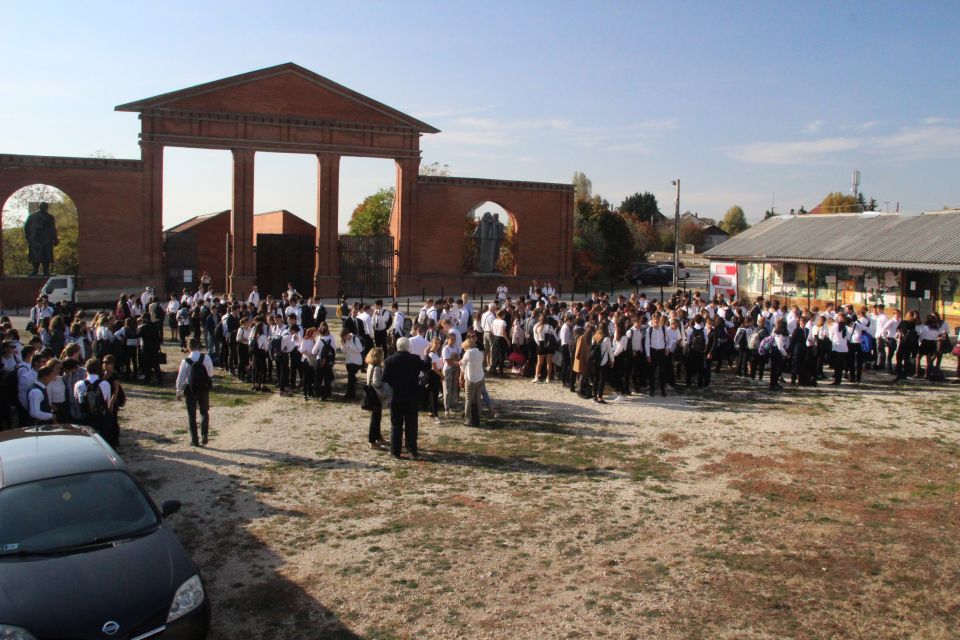
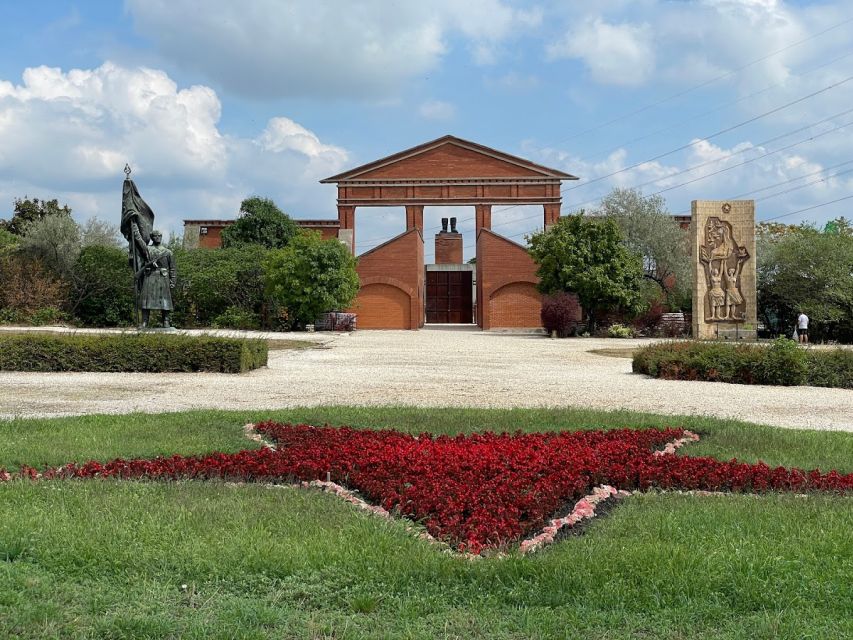
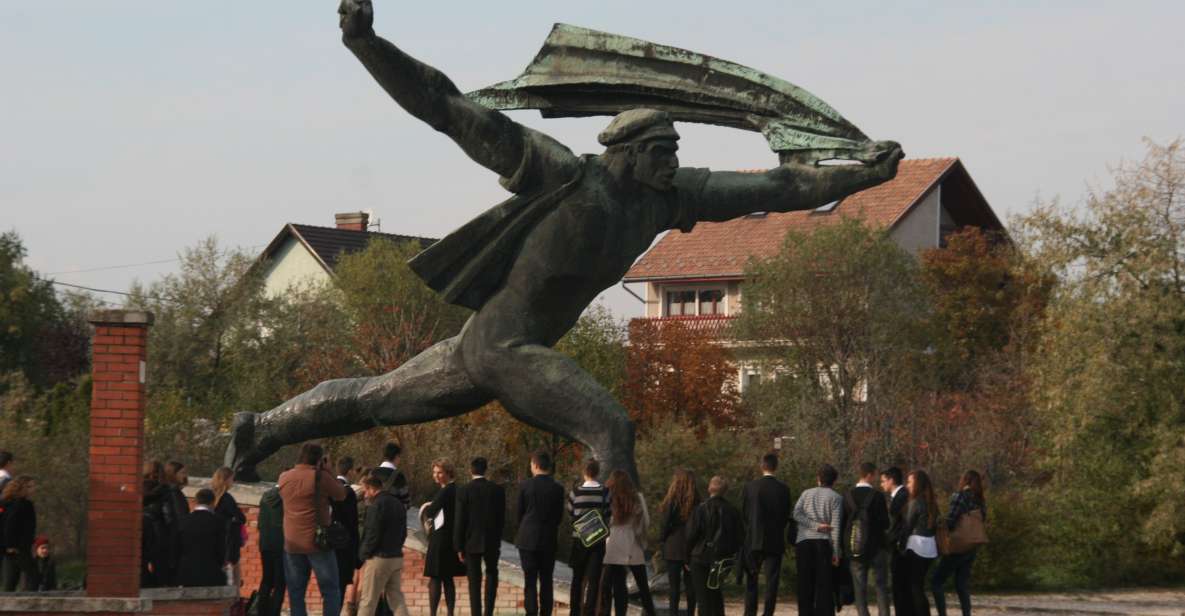
Memento Park is an open-air museum built around the statues and plaques from Hungary’s communist period. The park focuses on the 41 major monuments placed there after the system changed, so you see how the state tried to turn ideology into something you could point at.
As you walk, the guided format helps you connect the visuals to the bigger story. You don’t just see big names on concrete. You learn why the ideology found space in Hungary after World War II, and how political power reshaped rule of law when communists took hold.
This tour is also built around the idea that theories have real-world consequences. The guide talks about how Marx’s ideas were used and interpreted, and how that turned into a nightmare for millions. Even if you know some of the history, the lived-feeling details make it land harder.
Stalin’s Grandstand and the Boots of Stalin (the moment the story clicks)
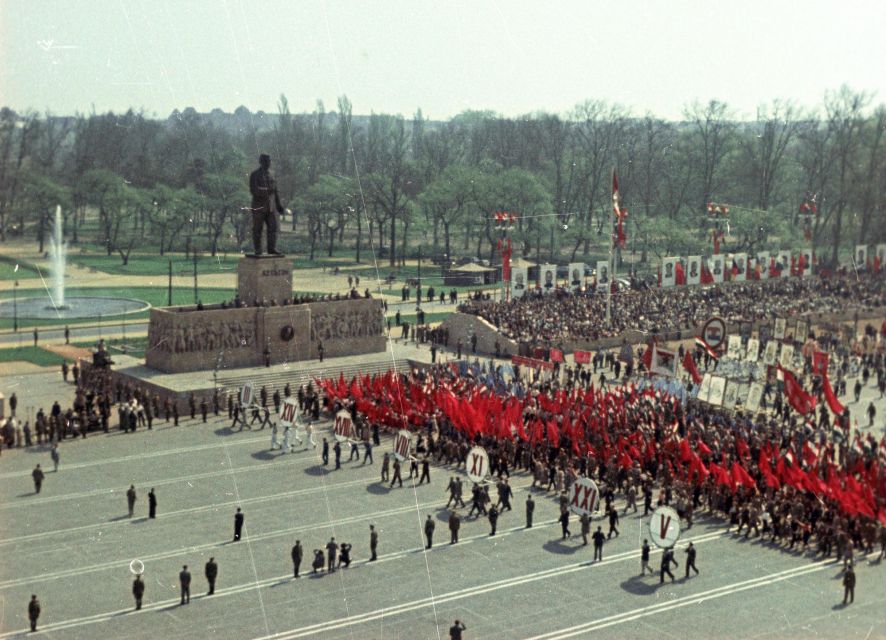
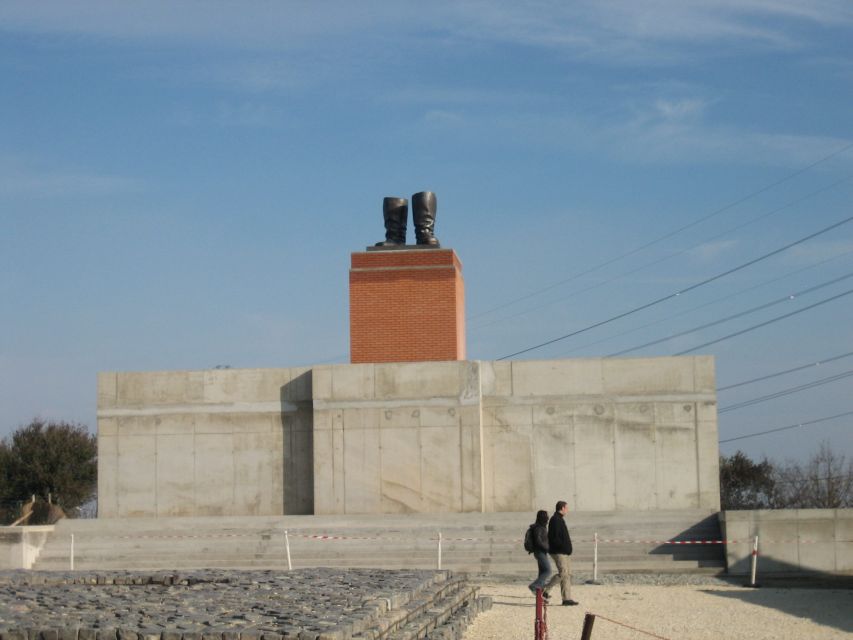
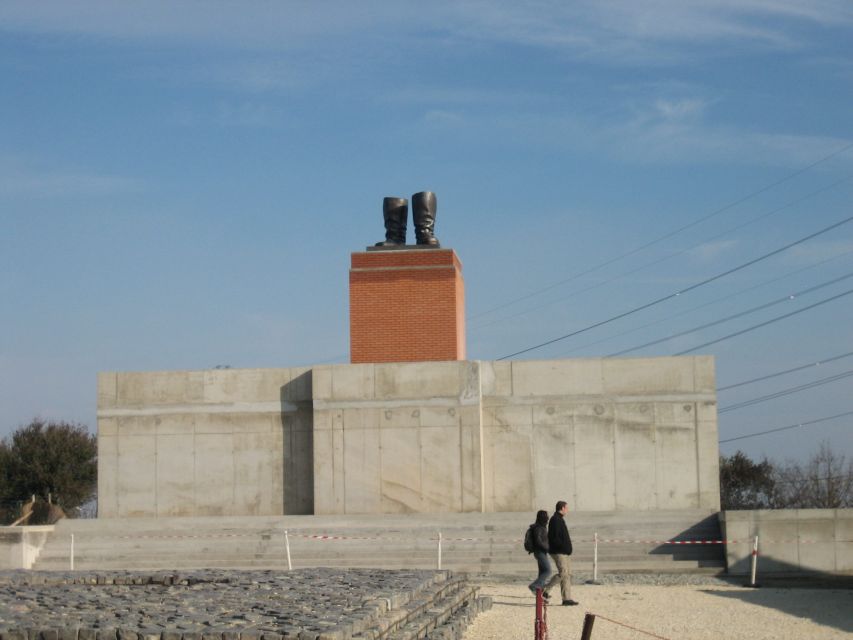
At the site connected to Stalin’s Grandstand, you get a visual anchor for a very specific point: what the dictatorship looked like from the outside, and how it ended.
The guide helps you imagine the crowd that later revolted and pulled down the huge dictator statue. In the present day, what you’re left with is the Boots of Stalin, a symbol tied to people’s longing for freedom.
This section is one of the most important parts of the tour because the guide connects emotions to objects you can actually see. Standing near those remnants makes the history feel less like a lecture and more like a scene you’re walking through.
Photo-wise, this is also where your camera will earn its keep. The park is set up so you can take pictures in front of the monuments, and your guide is happy to help you set up a shot where you’re included too.
Marx, Engels, Lenin, and the propaganda machine behind the monuments
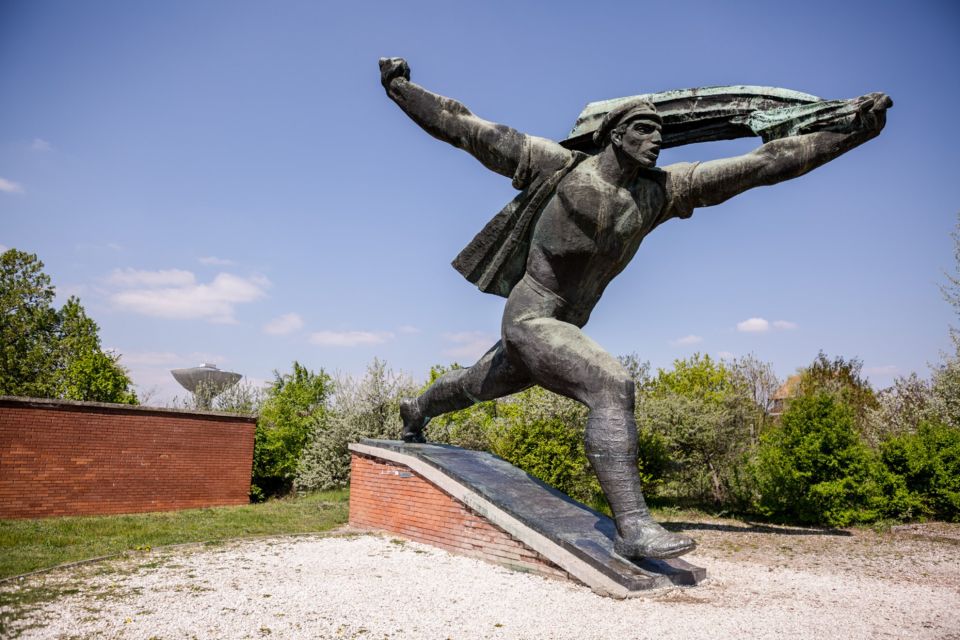
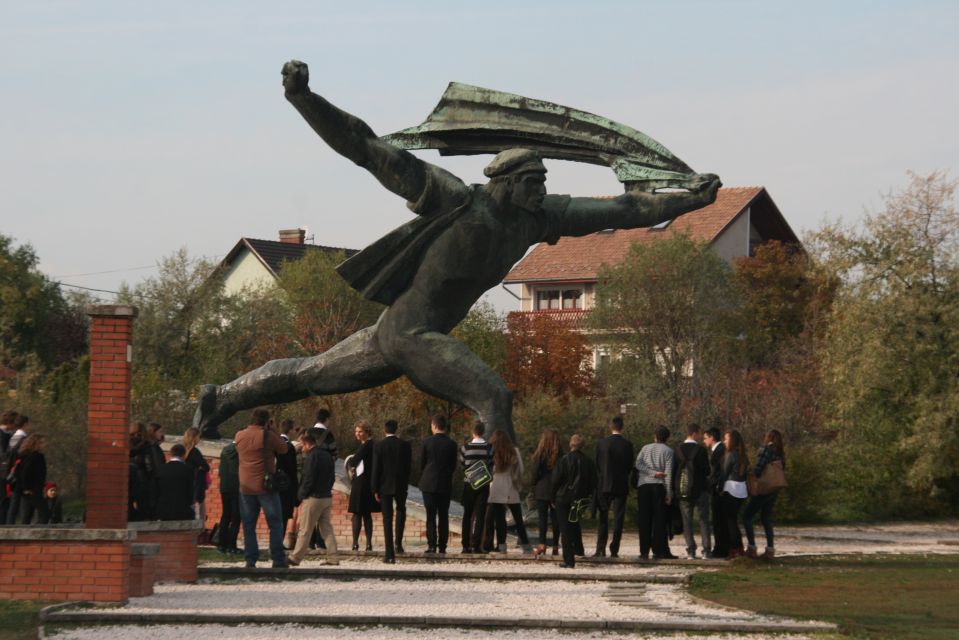
The park’s lineup includes major figures tied to communist thought, like Marx, Engels, and Lenin. You’ll hear how the ideology was translated into symbols people were meant to accept as normal.
The tour doesn’t treat propaganda as just posters and slogans. Instead, you learn how it worked in practice, including how the state used public display to shape what people believed and how they behaved.
You’ll also hear why the communist system lasted in Hungary for around 40 years. That length matters, because it tells you the story isn’t just one dramatic event. It’s years of messaging, control, and pressure.
In a way, this is why a guided tour adds value here. Without a guide, it’s easy to see statues as just old artifacts. With the guide, you understand what the symbols were meant to do to your thinking.
Secret police, intimidation, and what fear changes
One of the strongest parts of the tour is the focus on how Soviet rule influenced Hungary through systems of control. The guide explains how the secret police recruited new members, and how ordinary people could be intimidated.
That theme follows you through the walking. When you’re surrounded by these gigantic monuments, the guide helps you understand what it meant to live under a dictatorship that tried to make itself permanent.
This is the section where the tour feels most serious. The park includes reminders of political brutality, not just academic discussion. If you’re sensitive to heavy topics, it’s worth knowing that this tour is designed to make you feel the environment of the communist dictatorship by standing among the propaganda displays.






The walk in context: what your time in the park feels like
Your visit inside Memento Park includes a guided tour plus free time and sightseeing. The guided portion is where the facts and interpretations get stitched together, with stops that highlight key monuments and the ideas behind them.
Then you get time to look at the details on your own. This is useful because some of what makes the park memorable is in small visual cues, not only in the biggest statues.
Because it’s an open-air setting, plan for weather. Wear shoes that handle uneven ground. If the day is sunny, you’ll likely enjoy the walk more. If it’s cold, bring layers and be ready for that stiff, exposed museum feeling.
Victor’s style: why the storytelling makes the statues mean something
Many people leave this tour talking about the guide, and the name that shows up again and again is Victor. What stands out is how he explains hard topics in a way that feels clear and human.
You get more than background facts. Victor brings humor and warmth without turning the subject into a joke. That balance matters, because the material can otherwise become either too clinical or too grim.
A practical bonus: Victor is the kind of guide who will help you with photos. He can take pictures of you in front of the monuments, and you won’t have to chase your camera setup while trying to hear the story.
Even the ride details get praised. The private car is described as clean and comfortable, which helps you settle in before the heavier parts of the visit.
Return ride: quick extra sights on the way back
After the museum portion, you head back to Budapest by car. The tour includes transport back to the city, returning you to Batthyány tér.
On the ride back, you may get additional city views as part of the route. For example, the kind of add-on mentioned includes spots like Gellért Hill and the Poets’ Circle, depending on how your guide structures the return.
These aren’t guaranteed in the way the park visit is, but the idea is clear: you’re not just dropped off and forgotten. You’re brought back with some extra Budapest context if time and routing allow it.
Price and value: what $63 really buys you
At $63 per person for about 3 hours, this isn’t just an entry ticket. You’re paying for three things that are hard to replicate easily on your own: transportation, skip-the-line entry, and a live English-speaking licensed guide.
The transport is a real value add. Getting to an out-of-the-way museum area can be a headache if you’re trying to manage it all yourself, especially if your goal is to maximize museum time rather than puzzle out schedules.
The guide is also where the money shows. Memento Park is built around symbolism. Without interpretation, it’s just monuments. With a guide, the meaning becomes specific: ideology after World War II, propaganda in stone, and the mechanisms of fear.
And you get a small comfort item too: a bottle of water. It’s simple, but it keeps the experience from feeling like you’re scrambling halfway through.
Who this tour fits best (and who might want a different day)
You’ll likely enjoy this tour if you want context, not just sights. It’s a strong fit for history-minded travelers, students, and anyone who likes understanding how political systems shape daily life.
If you’re visiting Budapest for architecture, food markets, and riverside views, this is a change of pace. That’s not bad, but it can feel heavy. For best results, I’d pair it with something uplifting later—maybe a Danube walk or a warm meal—to balance the emotional tone.
Should you book Budapest: Memento Park and Icons of Communism?
I think you should book it if you want a guided experience that makes the statues understandable and meaningful. The small group size, the skip-the-line entry, and the fact that the guide actively helps with photos all improve the day-to-day experience, not just the history.
Skip booking only if you strongly dislike difficult subjects or if you want light sightseeing with minimal walking. Memento Park is meant to confront, and the tour is designed to do that clearly.
If you do book, go in with a simple mindset: treat it like a lesson you can stand in. The point isn’t to enjoy the monuments. It’s to understand what they were made to do—and how people pushed back.
FAQ
Where do I meet for the tour?
You meet at Batthyány Square, right next to the St. Anne Church with two towers.
How do I get to Batthyány Square?
You can reach it using Metro line 2 or Trams 19 or 41.
How long is the experience?
The tour duration is 3 hours.
What do I see at Memento Park?
You’ll visit the open-air museum with 41 statues and icons from Hungary’s communist period, including figures like Marx, Engels, and Lenin.
Is transportation included?
Yes. The tour includes pickup and drop-off, with transport by private car to and from Memento Park.
Is the guide English-speaking?
Yes. You get a live English-speaking licensed guide.
Can I skip the ticket line?
Yes, the tour includes skip-the-ticket-line entry.
Do I get time for photos?
Yes. You can take photos of the monuments, and your guide can also help take pictures of you.
Is food included?
No. Food is not included (a bottle of water is provided).