REVIEW · BUDAPEST
Café Wandering: An Excursion through Budapest’s Belle Epoque
Book on GetYourGuide →Operated by insightcities.com · Bookable on GetYourGuide
One street, four eras, endless café details. I love that this tour turns Budapest’s elegant buildings into stories about the people who used them daily. It’s not just photo stops; it’s art history you can see and feel, moving from room interiors to city architecture in a smooth 3-hour loop.
Two things I especially like are the time spent inside Café Gerbeaud and the careful way the guide connects café culture to the Habsburg-era imagination. The only drawback to plan for is simple: your ticket covers the guided walk, but any coffees, cakes, and refreshments you order at the cafés are extra.
In This Review
- Key highlights to look forward to
- Belle Époque Budapest: Why Cafés Are More Than Coffee
- Meeting at Vörösmarty tér and Getting the Right Pace
- Café Gerbeaud: Imperial Budapest in One Stop
- Central Café and Restaurant 1887: Habsburg Prestige, Up Close
- Café Astoria and Museum Café: Lavish Rooms and Design Motifs
- Urania Café on Rákóczi Street: Cafés With an Intellectual Side
- Művész Coffee House and New York Palace Café: Artist Identity to Final Grandeur
- Kazinczy Street Synagogue: Art Nouveau Ending, Big Visual Impact
- Price and Value: Is $123 for 3 Hours Worth It?
- Who This Tour Suits Best
- Should You Book Café Wandering?
- FAQ
- How long is the Café Wandering tour?
- Where does the tour start?
- Is the tour guided in English?
- How large is the group?
- Are drinks and cakes included in the price?
- What is the cancellation policy?
Key highlights to look forward to
- Gerbeaud in full Belle Époque mode: famous interiors and over a century of café life
- A tram ride along the Danube corridor that keeps the pace easy and sight-focused
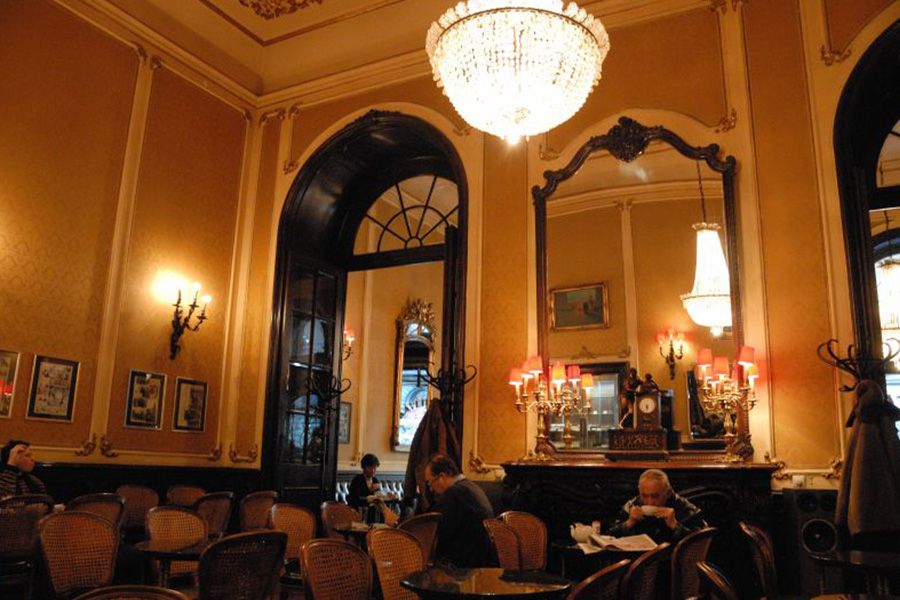
- Café Astoria and Museum Café interiors with lavish walls and design choices worth pausing for
- Urania Café on Rákóczi Street, tied to the city’s oldest film theater and intellectual lectures
- End at the Kazinczy Street Synagogue, an art nouveau Orthodox landmark to close on a high note
- Small group (up to 8) with an English-speaking guide who teaches like a professor
Belle Époque Budapest: Why Cafés Are More Than Coffee
Budapest’s café culture is one of those things that sounds romantic until you actually see it in the buildings. These cafés weren’t just places to grab a drink. They were social stages—where writers, artists, and thinkers gathered, and where architecture communicated status as clearly as any suit or carriage.
This tour makes that connection fast. You’re walking through Budapest’s 19th and early 20th century landmarks while a guide, trained as an art historian, explains how design, public life, and art movements shaped everyday conversations. It’s the kind of experience that helps you understand why café interiors matter: they’re not wallpaper; they’re a map of taste, politics, and cultural confidence.
If you like walking tours that teach you how to read a place—rather than just naming it—you’ll get a lot out of this one. And if you prefer long museum hours, you can still enjoy it; the pacing is tight, but the focus is sharp.
You can also read our reviews of more tours and experiences in Budapest.


Meeting at Vörösmarty tér and Getting the Right Pace
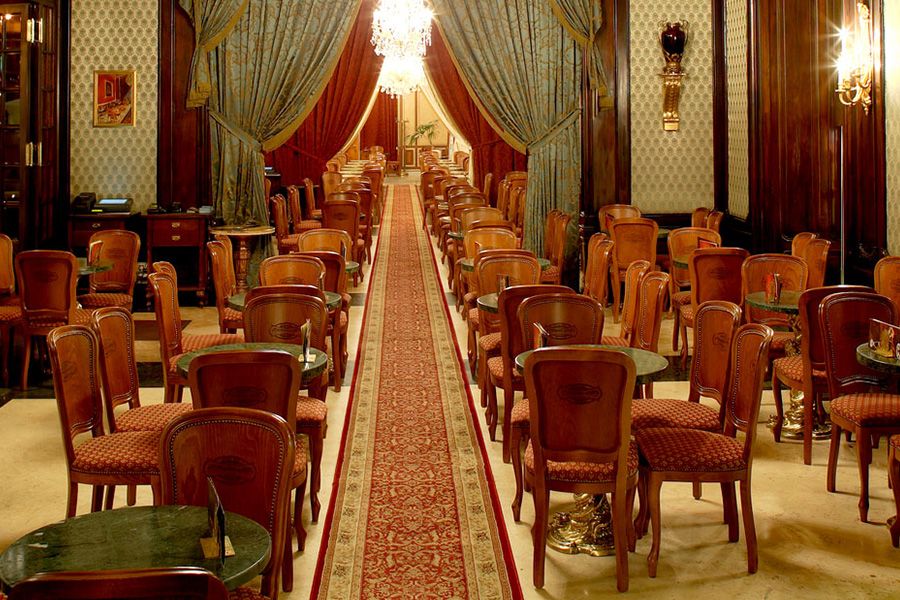
You start at Café Gerbeaud at Vörösmarty tér 7-8, 1051. From there, the walk is designed to fit into a compact 3-hour schedule, with time for you to look closely and for the guide to connect the dots.
The group stays small (limited to 8 participants), which is a practical advantage. You’re less likely to get lost in a crowd, and it’s easier to hear details—especially when the guide is speaking like a teacher.
The tour is led in English, and the guide team includes people with academic and professional backgrounds such as professors, doctoral students, historians, journalists, and published authors. In other words, you should expect explanations that go beyond surface-level facts.
Wear comfortable shoes. You’ll be moving between cafés and taking at least one tram segment (the route includes a tram ride along the Danube), so you’ll want steady footing more than anything fancy.
Café Gerbeaud: Imperial Budapest in One Stop
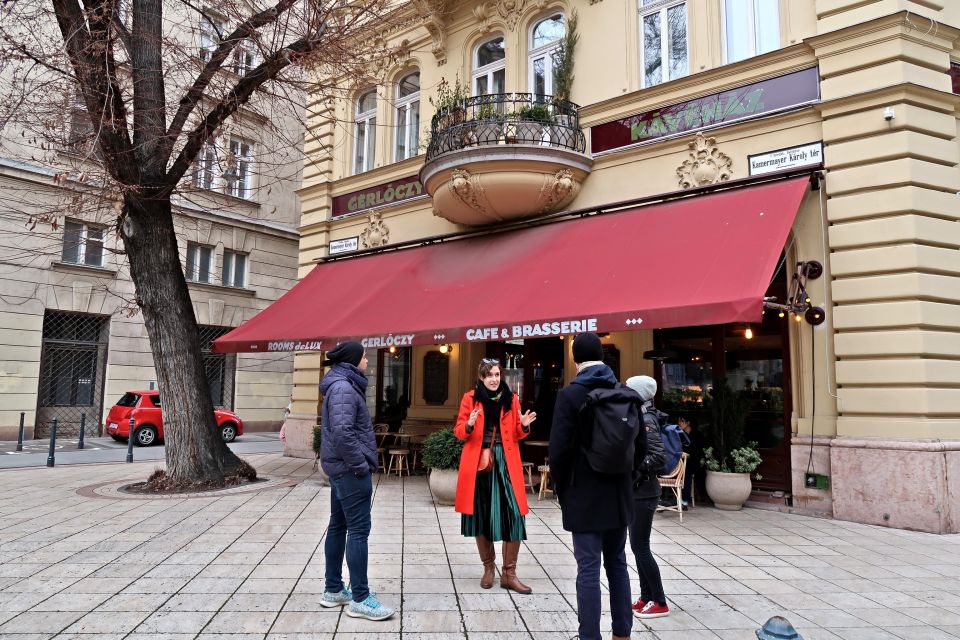
The first stop sets the tone, because Café Gerbeaud is the place you’d pick if you wanted to show off what Imperial Budapest felt like. The guide frames it as more than a landmark: it’s a long-running social hub, tied to late 19th century café life for both visitors and locals.
Inside, the key experience is the interior itself. You’re there to notice the design choices that made these rooms feel prestigious—details you’ll likely miss if you just step in quickly for a coffee. The guide’s job is to translate those visual cues into meaning, so you can understand what you’re seeing instead of guessing.
This first stop also gives you a mental baseline. After Gerbeaud, you’ll compare: what changes from café to café, what stays consistent, and how style evolves through time. That comparison is where the tour starts to feel rewarding.
One practical note: if you want to order something here, factor that into your budget. Refreshments are not included in the tour price.
Central Café and Restaurant 1887: Habsburg Prestige, Up Close
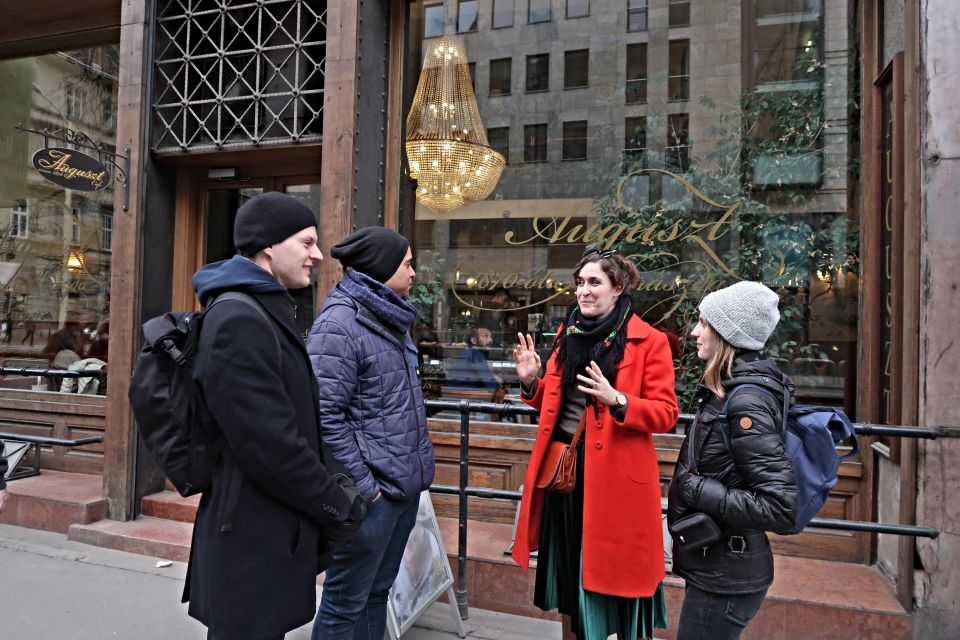
After Gerbeaud, you take a tram along the Danube to reach Central Café and Restaurant 1887. That transit moment matters more than you might think. It breaks the walking into manageable segments and keeps the tour tied to Budapest’s geography instead of feeling like a string of doorways.
At Central Café, the atmosphere is described as dignified—an epitome of café house culture during a period when the Habsburg Empire’s economic and cultural power shaped public taste. The point isn’t just to see an old café. It’s to understand why these places became central to daily life for a certain class of people.
Here, the experience is still about the senses. The tour emphasizes how decor, meals, desserts, and drinks contribute to a sense of a bygone culture. Even if you don’t order much, you’ll learn what to look for: room layout, visual grandeur, and how service and food fit the overall theater of the café.
If you’re the type who likes learning how cities actually functioned, this stop is a strong payoff. It helps you picture café life as something integrated—architecture and food as part of the same message.
Café Astoria and Museum Café: Lavish Rooms and Design Motifs
Next you move into Café Astoria, known for classic European coffee-house grandeur. This is the sort of interior where it’s easy to fall into photo-mode, but the guide pushes you to look for what design is doing. You’ll come away understanding how café interiors communicated confidence and sophistication during Budapest’s Belle Époque peak.
From there, you’ll also see Museum Café, highlighted for lavish, more than century-old walls. This is where your eyes should slow down. The tour calls attention to Asian motifs and elements used by designers, which gives you a concrete lesson in how global influences found their way into local tastes.
That matters because it changes how you interpret the room. Instead of seeing a decorated surface, you’re learning that designers were making choices—sometimes borrowing symbols, sometimes blending ideas—while still aiming for prestige. You’ll likely start noticing similar patterns in other buildings around the city after this.
You don’t have to be an expert in art design to enjoy it. The guide makes the connections clear, so your takeaway is more than a list of styles.



Urania Café on Rákóczi Street: Cafés With an Intellectual Side
After the earlier grand interiors, the route continues with Urania Café on Rákóczi Street. The distinctive hook here is that Urania Café is linked with the oldest film theater in the city.
That connection gives the café a second identity: not only a place for conversation, but also a place tied to public lectures and audiences. The tour specifically notes that the venue is known for lectures given by prominent intellectuals before large audiences.
In practice, this stop helps you see café culture as part of Budapest’s wider idea of public life. It’s not isolated from the arts and media. It’s connected—architecture, cinema, public speaking, and literature all feeding the same social ecosystem.
If you enjoy understanding how culture spreads—through theater rooms, talk events, and reading circles—this is a very satisfying moment. It also breaks up the pace so you’re not just jumping from ornate room to ornate room.
Művész Coffee House and New York Palace Café: Artist Identity to Final Grandeur
Midway through the walk, you’ll reach Művész Coffee House, also known as the Artist Café. The focus here is the cultural identity of the space—how the café environment supports creative life and artistic conversation.
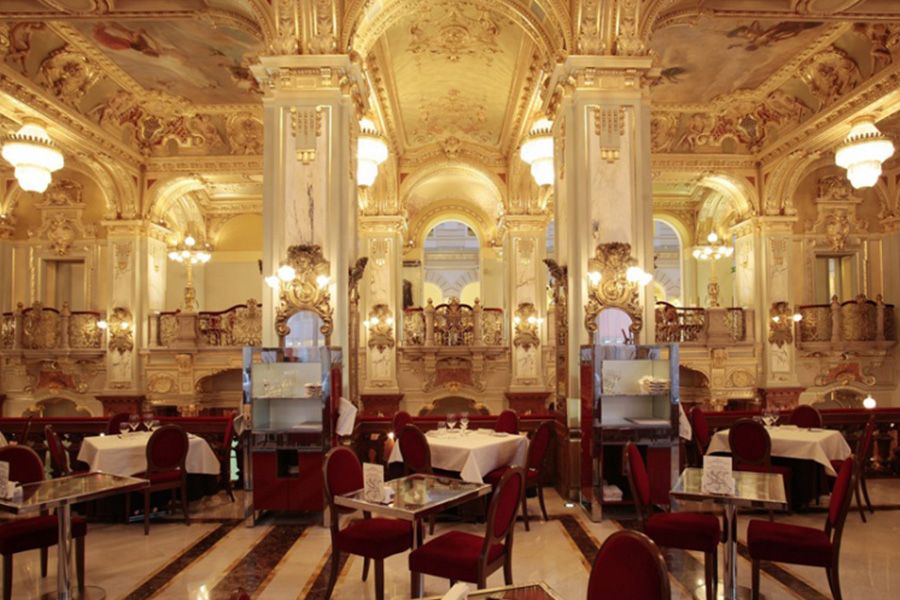
Then the tour takes you to New York Palace Café, with a guided tour included there. This is one of those stops where the building’s theatrical quality becomes part of the lesson. You’re not just tasting history through architecture; you’re experiencing how designers shaped mood so a café could function like a stage.
The tour’s structure makes this pair work. You start with an emblem of imperial café life at Gerbeaud, then move through other iconic rooms where taste, decor, and symbolism show up in different ways. By the time you reach Művész and New York Palace, you’re ready to notice how café culture can shift from social hub to arts-forward identity.
As always, if you want snacks or coffee, check your budget first. The guidance is that refreshments are not included—so your final spend depends on what you decide to order.
Kazinczy Street Synagogue: Art Nouveau Ending, Big Visual Impact
The tour concludes at the Kazinczy Street Synagogue, described as a fascinating art nouveau Orthodox landmark. Ending here is a smart choice because it widens your lens. You started with café interiors; now you see another kind of architectural expression shaped by the same time period’s style and ambition.
This stop also helps you understand the value of walking in a city like Budapest. When buildings sit close together, their differences become education. You can compare how religious architecture, public architecture, and café architecture communicate identity.
Take a few extra minutes here, even if the group moves on quickly. The building is the kind where your attention pays off: look at the overall look first, then let your eyes go back for the finer detail the guide highlights.
Price and Value: Is $123 for 3 Hours Worth It?
At $123 per person for a 3-hour guided experience, you’re paying for three things: a trained art historian guide, an organized route through multiple landmark interiors, and a small group size that keeps listening possible.
The tour does not include refreshments, so the true cost depends on whether you treat the café stops like a tasting experience or like sightseeing with occasional sips. Still, even without ordering much, you get value from the expert context. The guide’s job is to translate the visible details into meaning—what design choices imply, what café culture represented, and how the architecture reflects Budapest’s changing identity.
If you like DIY walks, you can technically replicate the route on your own. But this kind of tour is built for interpretation: it helps you understand what you’re looking at and why it mattered. That is the value you can’t easily buy from a map or a quick stop-in.
Also, remember the small group cap of 8 participants. For many people, that alone is worth it—more time to hear the guide and less time craning your neck to see.
Who This Tour Suits Best
This is a great match if you’re the type who enjoys:
- Architecture walkthroughs with explanations you can apply outside the tour
- Café culture as cultural history, not just a place for dessert
- A route that mixes interior viewing with short transit (including a tram segment)
It also suits couples, solo travelers, and small groups who want to cover major Belle Époque sites without losing an entire day. If you hate paying extra once inside cafés, plan to limit what you order. Otherwise, budget for at least one treat.
If you’re traveling with kids, you can try it, but the tour is clearly structured around listening and interpretation, so it may be more satisfying for older teens and adults.
Should You Book Café Wandering?
Yes, I’d book it if you want a high-signal way to understand Budapest’s Belle Époque through cafés and architecture. The combination of multiple interior stops, a guide with strong academic or editorial backgrounds, and a finish at the Kazinczy Street Synagogue makes it feel like a coherent story rather than a checklist.
I’d skip it or choose another style of tour if you’re mainly in Budapest for fast sightseeing and you don’t care about learning what buildings mean. This tour is for people who enjoy details—especially the kind of details that the guide helps you notice.
If you do book, go in with comfortable shoes, an open mind for design symbolism, and a realistic expectation that the final cost can rise a bit if you take advantage of the cafés.
FAQ
How long is the Café Wandering tour?
The tour lasts 3 hours.
Where does the tour start?
You meet at Café Gerbeaud, Budapest Vörösmarty tér 7-8 1051.
Is the tour guided in English?
Yes. The live tour guide speaks English.
How large is the group?
The group is small, limited to 8 participants.
Are drinks and cakes included in the price?
No. The cost of refreshments, cakes, and coffees selected at the cafés visited is not included.
What is the cancellation policy?
You can cancel up to 24 hours in advance for a full refund.