REVIEW · BUDAPEST
Communist Budapest Walking Tour
Book on Viator →Operated by Insight Cities · Bookable on Viator
A city can argue with itself in plain sight. This Communist Budapest walking tour turns iconic streets and monuments into a clear story of the Cold War, starting near the Parliament area and ending by the House of Terror. I like how the small-group format keeps the pace human, and how the guide uses real place names like Bem József Square, Freedom Square, and Dozsa György Street to make the era feel specific, not vague.
What I especially like is that the walk is practical and timed well: most stops are outside sights with no admission hassle, and you still get real historical grounding from a local historian. The one thing to consider is that it’s not a sit-and-snap-a-few-photos sightseeing loop. This is history-first, so if you want mostly casual views and minimal talking, the tone may feel heavier than you expected.
In This Review
- Key Highlights You’ll Actually Notice
- Walking Budapest’s Communist-Era Map (Not Just Random Stops)
- Start at the Hungarian Parliament Area and Jump Into 1956
- Freedom Square: Soviet War Memorial, US Embassy, and the Cold War Story
- Ronald Reagan Statue: A Small Landmark With Big Meaning
- Bem József Square and the 1956 Uprising Spark
- Puskás Ferenc Stadium Area: Socialist Realist Propaganda in Stone
- The House of Terror Exterior Finish: Berlin Wall Slab, No Ticket Included
- What You Get for $126.50: Value in Time, Expertise, and Flow
- Morning or Afternoon? Pick the Slot That Fits Your Energy
- Who This Tour Suits Best (And Who Might Want Something Lighter)
- Quick Tips to Make the Walk Feel Easy
- Should You Book the Communist Budapest Walking Tour?
- FAQ
- FAQ
- How long is the Communist Budapest walking tour?
- How much does it cost per person?
- Is the tour guided, or is it self-paced?
- What language is the tour offered in?
- How many people are in the group?
- Where does the tour start and end?
- Is the House of Terror Museum included?
- Do I need tram or metro tickets?
- Is the tour mostly outside and walkable?
Key Highlights You’ll Actually Notice
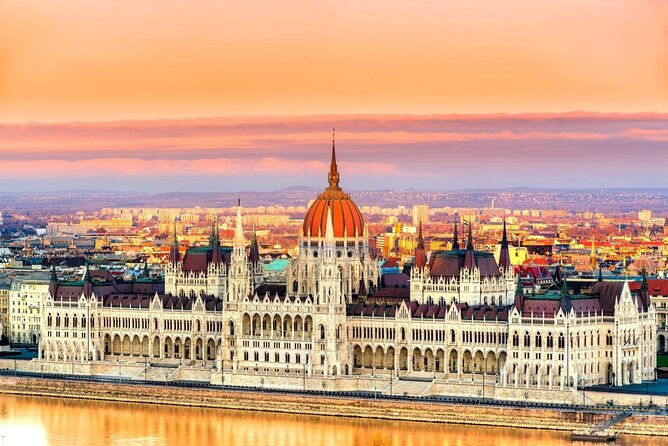
- Historian-led walk focused on how Communist rule shaped visible spaces across Budapest
- 1956 Revolution landmarks around Kossuth Square and Bem József Square, tied to what came next
- Freedom Square Soviet War Memorial context, plus the Cold War story in between
- House of Terror exterior ending near the building that served as the communist secret services’ headquarters
- Socialist realist propaganda details at the old People’s Stadium area (now Puskas Soccer Stadium)
Walking Budapest’s Communist-Era Map (Not Just Random Stops)
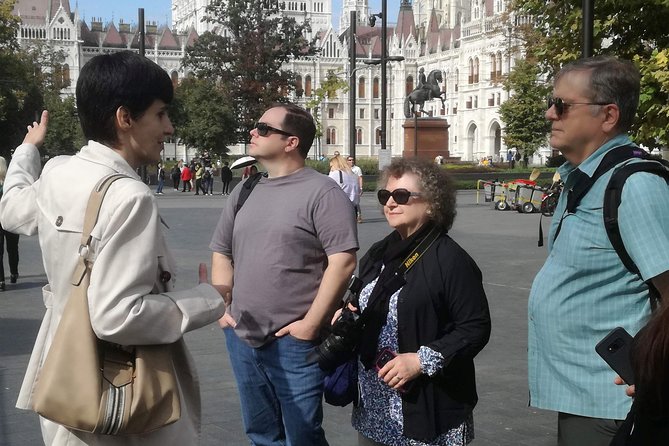
This tour works because it treats the city like evidence. You start where political power is physically staged and you finish where fear and control were institutionalized. Along the way, you get a guided thread that connects 1956 to what followed, and then to how the Cold War played out on the streets of Budapest.
The best part is that you don’t just hear facts—you see the shape of ideology in real stone, plaques, statues, and street layouts. When a guide points out why a specific monument is placed where it is, you start noticing details you’d normally miss: what’s centered, what’s meant to be intimidating, and what’s meant to reassure the public.
The group stays small enough that questions land where they should. In the reviews, I kept seeing the same theme: the guides didn’t just recite. People asked questions, and the answers came with context and a willingness to talk—whether you came in knowing much or knowing little. If you’re the type who likes to understand how a country thinks, this format is a good fit.
You can also read our reviews of more walking tours in Budapest


Start at the Hungarian Parliament Area and Jump Into 1956
You’ll meet near Frankel Leó út 2-4, and the tour begins with an easy, very Budapest-style transition using the subway to reach the Kossuth Square area. From there, the guide sets the stage around the Hungarian Parliament Building and the monuments linked to the 1956 revolution.
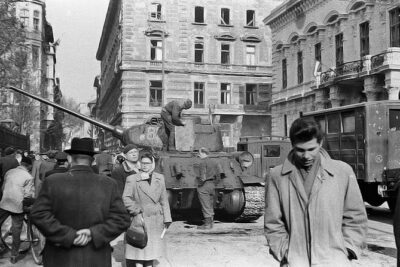
This is where the tour earns its name, because 1956 isn’t presented as a single day. It’s framed as a turning point that helps explain why later decades looked the way they did. You’ll walk through the symbolic geography—where political messages want to be seen—and then you’ll move onward toward Freedom Square.
One practical note: since you’re covering multiple areas in a few hours, comfortable shoes matter. The review feedback strongly leaned toward wearing good walking shoes and keeping water handy. That’s not glamorous advice, but it’s what makes the pacing enjoyable.
Freedom Square: Soviet War Memorial, US Embassy, and the Cold War Story
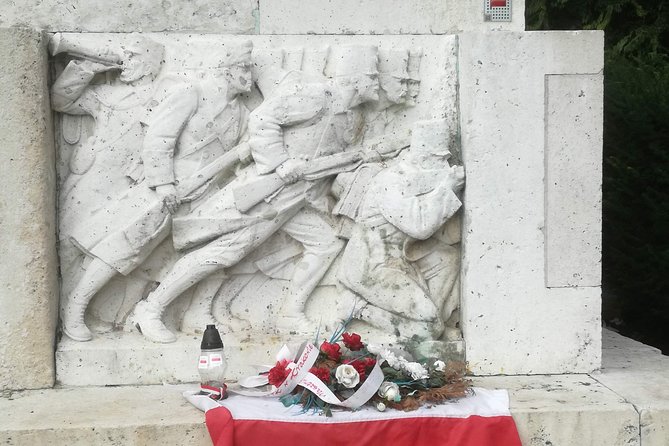
From the Parliament region, the walk heads toward Liberty Square and Freedom Square. This is the Cold War section of the tour, and it’s where the guide turns Budapest into a visual map of opposing influence.
You’ll learn about how the area reflects the relationship between Communist power and Western presence. The route is set up so you can see major reference points close enough to compare in your mind: a US Embassy presence in the mix, a monument tied to the Soviet Army, and the appearance of a Ronald Reagan statue connected to the theme of weakening the Iron Curtain.
There’s also a mention of an atomic shelter connected to the era’s anxieties—one of those details that sounds niche until you realize it shows how everyday planning was shaped by the nuclear fear hanging over the region.
If you’re the kind of visitor who enjoys political context, this section is the backbone of the tour. If you mainly want quick sightseeing, it may feel like the guide is slowing down for explanation—but that’s exactly what you’re paying for.
Ronald Reagan Statue: A Small Landmark With Big Meaning
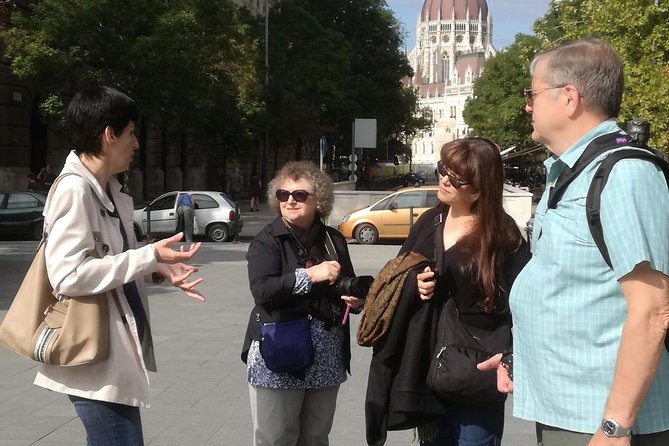
You’ll spend time around the Ronald Reagan statue, and the point isn’t just to locate another photo spot. The guide ties it to what the Hungarian sense of obligation looks like in public art.
This part works well even if your knowledge of Cold War history is light. The guide frames the statue as a cultural indicator: who gets honored, why they get honored, and how those messages change after political regimes shift.
One reason this tour feels valuable is that it keeps returning to how ideology shows up in everyday urban life. A statue is never just a statue here. It’s a public statement designed for decades.
Bem József Square and the 1956 Uprising Spark
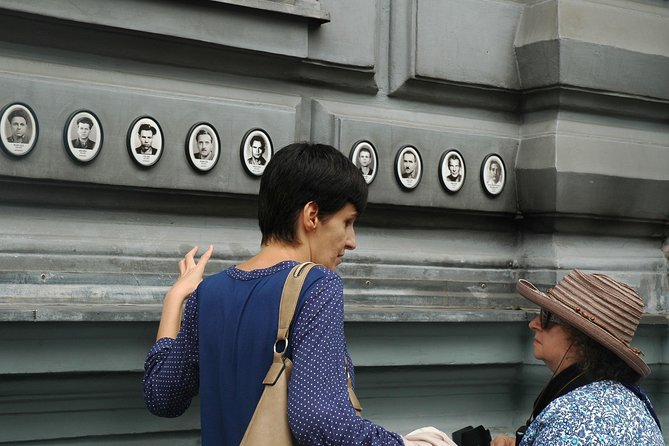
Next up is the area around Kossuth Lajos Square and especially Bem József Square, where the early big demonstration of the 1956 uprising began.
This is one of those moments when the tour stops feeling abstract. You’re looking at a real place tied to a specific historical start point, and the guide helps you understand why that matters in the larger timeline. It also sets up the contrast between what the uprising represented and what the later era emphasized.
There’s a small, fun detail that’s worth paying attention to: the square includes a coffeehouse that has retained its original interior from the 1960s. It’s not a required stop, but it’s a useful reminder that Communist-era influence can linger in everyday spaces even after politics changes.
If you like mixing history with small street-level observations, you’ll probably enjoy this segment a lot.



Puskás Ferenc Stadium Area: Socialist Realist Propaganda in Stone
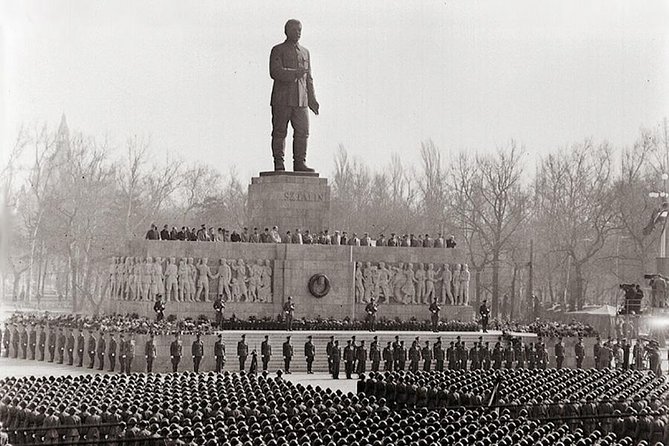
The tour then heads toward what was once the People’s Stadium, now known as Puskas Soccer Stadium. This stop is about more than sports architecture. It’s about looking at socialist realist statues that remain standing, and seeing propaganda as a design language.
You’ll notice the heavy-handed messaging in how sculpture and public space combine. It’s the kind of design that’s meant to persuade through scale and certainty. Even if you’re not into art history, the guide makes it clear what the regime wanted people to feel.
This stop is also a nice pacing change. The earlier parts are deeply political and symbolic; this one gives you something visual and direct. It’s easier to process ideology when it’s facing you in a physical form.
The House of Terror Exterior Finish: Berlin Wall Slab, No Ticket Included
At the end, you finish outside the House of Terror Museum on Andrássy út 60. This is one of Budapest’s most serious landmarks tied to the former communist secret services, and it’s handled with care on the tour.
Important detail: the tour does not include the museum exhibit itself. Instead, you get the outside context—specifically the imposing building and a slab of the Berlin Wall placed in front of it. That exterior encounter is purposeful: it gives you the emotional and historical setup before you decide if you want to go inside on your own time.
This ending works because it reframes everything you’ve seen earlier. When you’ve spent a few hours learning how political power shaped public space, arriving at a place linked to repression hits harder. You’re not just sightseeing at the finish line—you’re landing the story.
What You Get for $126.50: Value in Time, Expertise, and Flow
At $126.50 per person for about 3 hours, this tour sits in the mid-to-upper range of Budapest guided walks. The value comes from three areas:
- You’re buying an expert historian’s explanations, not just a route. The reviews repeatedly highlight how guides answered questions with depth and how they encouraged real discussion.
- Most stops are free to see. You spend time at key sites without being stuck at ticket windows for the majority of the walk.
- The group stays small, capped at a maximum of eight in the tour’s structure, with the experience described as small-group (often up to six). That matters because it keeps the pace smoother and lets the guide adjust to what you’re curious about.
There’s also the practical element: you get a mobile ticket, and your guide can help you handle tram and metro tickets if you don’t already have a Budapest visitor pass. That’s one less admin thing on your travel day.
Morning or Afternoon? Pick the Slot That Fits Your Energy
The tour offers a choice of morning or afternoon departure. For this kind of subject-heavy walk, I’d choose based on your focus level.
If you’re a morning person with a clear head for details about 1956 and the Cold War, a morning start usually works best. If you like to ease into your day with fewer plans and then get a guided anchor once you’re ready, an afternoon slot can feel more relaxed.
Either way, plan for walking and for the fact that the guide will talk a lot. Bring your patience for context and your curiosity for how a city communicates politically.
Who This Tour Suits Best (And Who Might Want Something Lighter)
This is a strong match if you want:
- Historical context tied to specific places (Freedom Square, Kossuth-area monuments, Bem József Square)
- A guide who’s willing to talk and answer questions in depth
- A walk that ends somewhere serious and meaningful, not just somewhere convenient
It may feel less ideal if you mainly want:
- A low-effort photo stroll
- Minimal explanations
- A tour that avoids heavy themes
One review summed it up with a practical warning: this isn’t for people who only want sightseeing. If you came for facts and meaning, you’ll probably love the way the guide brings it together.
Quick Tips to Make the Walk Feel Easy
A few small things can make a big difference:
- Wear good walking shoes. This is a history talk with real ground to cover.
- Bring water. A 3-hour walk in Budapest can sneak up on you.
- Come with at least one question in mind about 1956 or the Cold War. The guides seem to enjoy discussion, and you’ll get more out of the time.
Also, if you’re trying to connect this to other plans, remember the tour ends at the House of Terror exterior. That can be a helpful location for continuing your day in the same general area.
Should You Book the Communist Budapest Walking Tour?
Book it if you want a focused, guided explanation of how Communist rule and the Cold War were built into Budapest’s public spaces. The combination of 1956 landmarks, a Freedom Square Cold War segment, and a finish by the House of Terror exterior makes this more than a sightseeing walk.
Skip it if you’re after mostly light sightseeing with minimal talking. This one leans into history and interpretation, and that’s exactly why it gets such strong ratings.
FAQ
FAQ
How long is the Communist Budapest walking tour?
The tour lasts about 3 hours.
How much does it cost per person?
The price is $126.50 per person.
Is the tour guided, or is it self-paced?
It’s a guided walk with a historian.
What language is the tour offered in?
It’s offered in English.
How many people are in the group?
It’s described as a small-group experience, limited to six people, and it also notes a maximum of eight travelers.
Where does the tour start and end?
It starts at Budapest, Frankel Leó út 2-4, 1027 Hungary, and ends outside the House of Terror Museum at Budapest, Andrássy út 60, 1062 Hungary.
Is the House of Terror Museum included?
You’ll view the House of Terror from the outside as the endpoint. The exhibit inside is not included.
Do I need tram or metro tickets?
The guide can help you purchase Budapest Tram and Metro tickets if you don’t already have a visitor pass.
Is the tour mostly outside and walkable?
Yes, it’s a walking tour and is described as near public transportation, with most travelers able to participate.