REVIEW · BUDAPEST
8-hour private Budapest city tour by car / minivan
Book on Viator →Operated by Private Sightseeing Tours in Budapest and in Hungary · Bookable on Viator
A car ride, a city lesson, and great views. This private 8-hour tour covers big-distance stops by sedan or minivan, with pickup anywhere in Budapest so you’re not burning vacation time figuring out transport. I also like the built-in flexibility to step out for photos and optional walking while your guide tailors the pace and explains the story behind the landmarks. The main drawback: it’s a packed day, so some stops are brief and several interiors (and the Széchenyi Baths) cost extra.
What makes this tour especially practical is how it blends classic postcard Budapest with context you can actually use. Guides like Gergő/Gergely and Gabriel (names seen in local guide feedback) are known for connecting architecture to Hungary’s shifting political eras—so you don’t just see buildings, you understand why they matter. One more consideration: because it’s private and time-boxed, you’ll want to choose your must-enter sites up front so you don’t feel rushed inside.
In This Review
- Key things to know before you go
- How the private 8-hour car format saves your legs (and your time)
- Andrássy Avenue to Heroes’ Square: the grand boulevard opener
- Széchenyi Baths stop: thermal water with a quick decision
- City Park hits: Vajdahunyad Castle and the House of Music
- St. Stephen’s Basilica and the State Opera: iconic exteriors, paid interiors
- Liberty Square and Parliament: where the political story becomes visible
- Chain Bridge and Shoes on the Danube: big views and a heavy reminder
- Zero Kilometre Stone: the quick, weird Budapest detail
- Matthias Church, Fisherman’s Bastion, and Buda Castle: the Buda-side “wow” cluster
- Citadel Lookout on Gellért Hill: closing with a classic panorama
- Price and value: what $505.73 gets your group
- Should you book this private Budapest highlights tour?
- FAQ
- How long is the private Budapest city tour?
- Is this tour private?
- Does the tour include hotel pickup in Budapest?
- Are entrance fees included for major sites and the baths?
- Is lunch included?
- Is free cancellation available?
Key things to know before you go
- Door-to-door pickup anywhere in Budapest helps you start and end stress-free.
- Private guide + private car means you can pause, reroute, or linger based on your interests.
- Quick, efficient pacing: mostly short stops with light walking instead of long trudges.
- Top highlights across both Pest and Buda with classic viewpoints at the right moments.
- Not all major sights include entry, so plan a small extra budget for interiors.
- Széchenyi Baths are short here (admission not included), so it’s more “try it” than “soak all day.”
How the private 8-hour car format saves your legs (and your time)
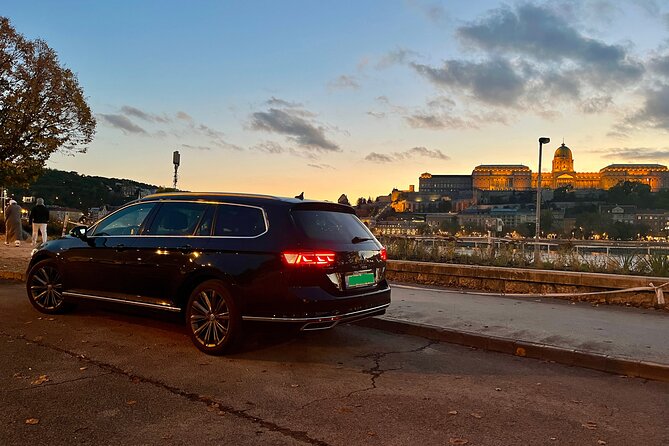
This is set up for a one-day “see the essentials” mission—without turning it into a marathon. You ride in a private sedan or minivan, and the tour is designed to cover distances by car while keeping walking light. That matters in Budapest because the city is split by the Danube and the Buda side has hills—stairs and steep streets can slow you down fast if you’re doing it on foot.
The group size is up to 3, which is great if you’re traveling with family or two friends. If you’re solo, it still works, but the pricing is per group, so you’ll feel it more in your budget. The tour can start from your hotel or other accommodation, and it ends back with a drop-off at your hotel—again, cutting out that “where do we meet the next day?” hassle.
Also, this is popular. The average booking window is about 101 days, so if your dates are fixed, don’t wait for a last-minute deal.
You can also read our reviews of more city tours in Budapest



Andrássy Avenue to Heroes’ Square: the grand boulevard opener
Your day often starts on Andrássy Avenue, a boulevard dating back to 1872 that links the city center to Heroes’ Square. It’s famous for its Neo-Renaissance mansions and townhouses, and it was recognized as a World Heritage Site in 2002. This is the kind of place where architecture is part of the “living history” lesson—what you’re seeing wasn’t built by accident.
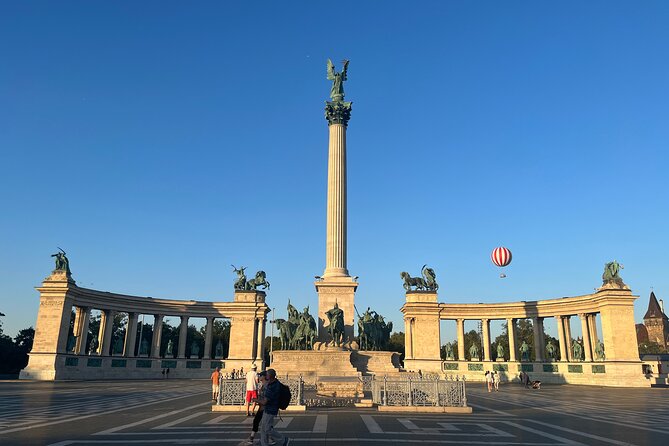
Then you head to Heroes’ Square, one of Budapest’s major civic spaces. The main draw is the statue complex: the Seven chieftains of the Hungarians plus other national leaders, with the Memorial Stone of Heroes nearby. The square has also hosted major political events, including the reburial of Imre Nagy in 1989—one of those moments where you’ll understand the monument after your guide sets the scene.
Practical tip: these stops are usually time-friendly for photos and quick orientation. If you want museum-level depth later, save it for a separate day—this part is built to help you “get your bearings fast.”
Széchenyi Baths stop: thermal water with a quick decision
You’ll likely stop at Széchenyi Baths and Pool, and yes, it’s one of the city’s big ticket sights. Széchenyi is described as the largest medicinal bath in Europe, fed by two thermal springs with water around 74°C and 77°C.
Here’s the reality check: the time allotted is short (about 10 minutes), and bath admission isn’t included. That means this stop is best if your goal is to experience the place, not to do a full spa session. You might use the time for a quick look at the setting and then decide whether you want to extend with paid entry later.
If you’re someone who expects a long soak, you may be disappointed by the schedule. If you’re curious and want a taste, it’s a smart “Budapest essentials” add-on.
City Park hits: Vajdahunyad Castle and the House of Music
After the monumental squares, the tour often shifts toward the softer side of Budapest: parks and landmark buildings.
Vajdahunyad Castle sits in City Park. It was built in 1896 for the Millennial Exhibition celebrating 1000 years since the Hungarian Conquest in 895. The design is a “showcase of the kingdom,” built as copies of landmarks from different parts of the Kingdom of Hungary. It’s one of those sights that looks like it has always been there, but it’s actually tied to a specific moment of national celebration.
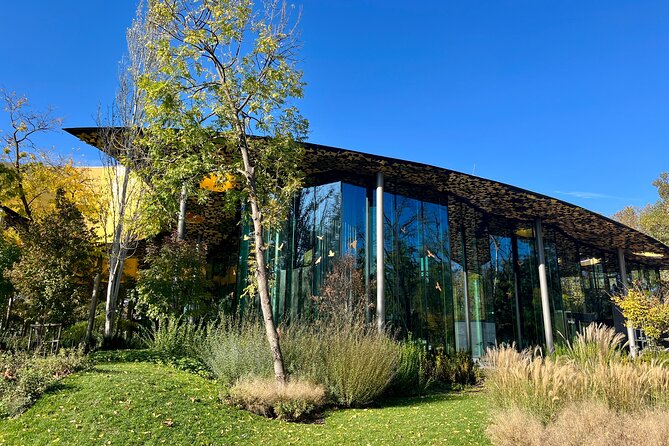
Next comes House of Music Hungary, an institution for musical initiation plus an exhibition on the history of music. The iconic building opened in January 2022, and it was selected from 170 international projects in an architectural competition. Admission here is listed as free, and the stop is short—about 15 minutes—so think of it as a chance to catch the building and decide if you want to return.
Who this section suits: anyone who wants a break from heavy political and religious landmarks but still wants meaningful cultural context.
St. Stephen’s Basilica and the State Opera: iconic exteriors, paid interiors
Budapest has a real habit of putting top-tier architecture right on busy streets. Two of the most recognizable stops fit this theme.
The Hungarian State Opera House sits on Andrássy Avenue and is described as a Neo-Renaissance opera house. The stop is brief and entrance isn’t included, so it’s usually more about seeing the exterior and understanding where it sits in the city’s cultural life.
Then you’ll visit St. Stephen’s Basilica (Szent Istvan Bazilika). This Roman Catholic basilica is named for Stephen, the first King of Hungary, whose right hand is housed in the reliquary. It’s also described as the third largest church building in present-day Hungary. Admission isn’t included, and the time on the stop is about 30 minutes.
Decision point for you: if churches are part of your travel style, plan to pay for the interior here. If you mainly want the architecture and the big exterior moment, you can treat it as an outside-and-photo stop and spend your paid time somewhere else.
You can also read our reviews of more private tours in Budapest





Liberty Square and Parliament: where the political story becomes visible
From here, the route often moves into the civic heart.
Liberty Square (Lipótváros) is a mix of business and residential buildings, and it’s positioned near major institutions. You’ll find the US Embassy in Hungary and the historicist-style headquarters of the Hungarian National Bank on the west side of the square. Some buildings in the area are Art Nouveau too, which gives you variety without changing locations too much.
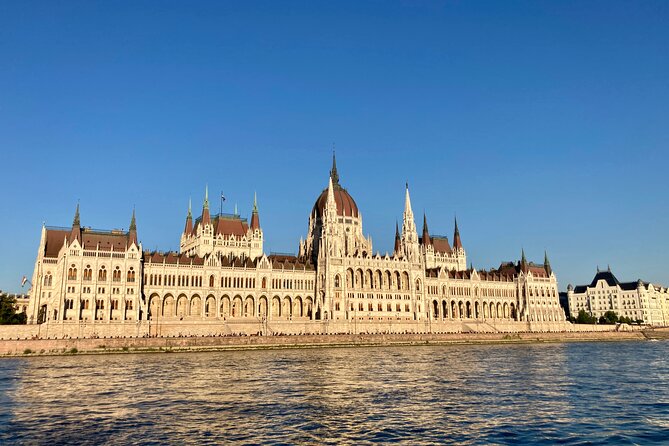
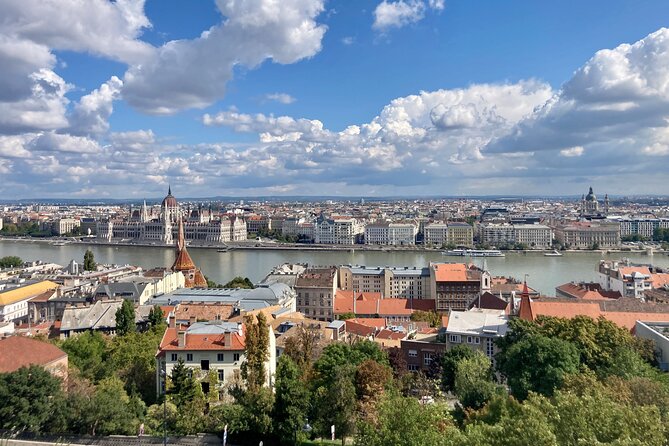
Next is the Hungarian Parliament Building on Kossuth Square on the Pest side by the Danube. It’s the seat of the National Assembly of Hungary and is described as the largest building in Hungary. Entrance isn’t included, and the stop is about 20 minutes.
Why a guided stop works here: Parliament can feel like a “big photo” unless someone explains its role in modern Hungary. A good guide ties it to what you’re seeing in the city—then you’ll recognize the building later when you’re walking around on your own.
Chain Bridge and Shoes on the Danube: big views and a heavy reminder
No Budapest highlights day stays complete without crossing the Danube, and this route does it in classic style.
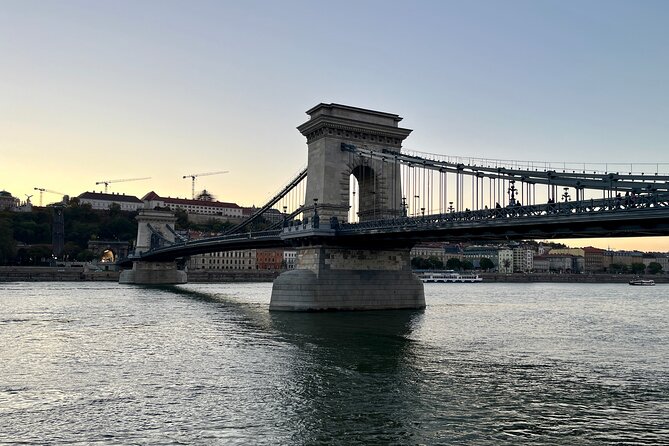
The Széchenyi Chain Bridge spans the Danube between Buda and Pest, designed by English engineer William Tierney Clark and built by Scottish engineer Adam Clark. It was the first permanent bridge across the Danube in Hungary and opened in 1849. It’s a prime spot for skyline photos because it connects the two halves of the city visually.
Then there’s the memorial: Shoes on the Danube Bank. This memorial was conceived by film director Can Togay with sculptor Gyula Pauer. It honors Jews killed by fascist Arrow Cross militiamen in Budapest during World War II. It’s free to visit and it takes only about 20 minutes, but it has an emotional weight that doesn’t feel like a “quick stop.”
How to handle it: give it your full attention. Don’t rush past it just to get to the next view. This is exactly the kind of place where a guide’s context helps you understand why the memorial looks the way it does.
The tour may also pass the Margit Bridge, described as the second oldest bridge in Budapest (1876), linking Pest and Buda and connecting to Margaret Island.
Zero Kilometre Stone: the quick, weird Budapest detail
Between the bigger sights, you may pass the Zero Kilometre Stone, a 3 m limestone marker that functions like a city reference point. Its base includes an inscription with “KM” for kilometres, and it marks the starting point for measuring road distances to Budapest.
It’s not a must-see for everyone, but it’s a fun example of how Budapest mixes grand monuments with practical, sometimes oddly specific details.
Matthias Church, Fisherman’s Bastion, and Buda Castle: the Buda-side “wow” cluster
This is the part of the day where Budapest turns into the reason people fall in love with the city.
Matthias Church sits in the Buda Castle District and is more commonly known as the Church of the Assumption of the Virgin of Buda Castle. The current building is described as florid late Gothic from the second half of the 14th century, then extensively restored in the late 19th century. Entrance isn’t included, and the stop is about 30 minutes.
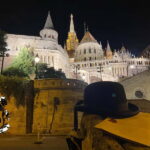
Next comes Fisherman’s Bastion. It’s one of Budapest’s most famous viewpoints, known for the panorama from its terraces. The main façade is about 140 meters long, and it was built between 1895 and 1902 on the base of the Buda Castle walls. Entrance isn’t included, but the upper-floor option can cost extra.
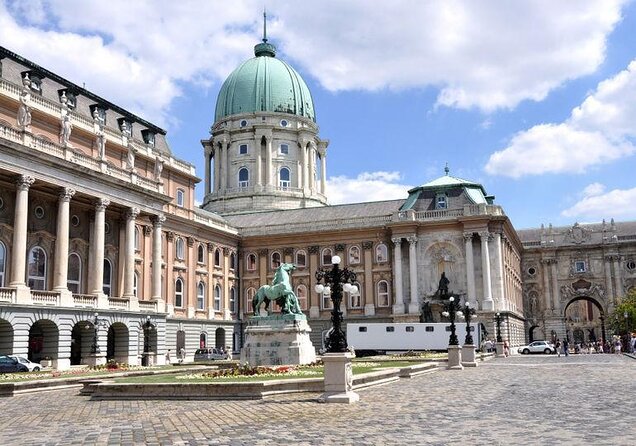
Then you reach Buda Castle itself—the historical castle and palace complex of the Hungarian kings. It was first completed in 1265, while the Baroque palace you see occupying most of the site was built between 1749 and 1769. The whole castle area is part of the Budapest World Heritage Site, declared in 1987. Admission is listed as free for the stop.
How to make this section work: use your guide to choose which interior options are worth paying for. With so many landmarks tightly packed, it’s easy to spend money everywhere and still feel rushed. If your goal is views and structure, you can spend paid time selectively and keep the rest as exterior walks.
Practical note: even with a “light walking” plan, Buda’s streets can involve uneven steps and short climbs. Comfortable shoes matter.
Citadel Lookout on Gellért Hill: closing with a classic panorama
To wrap up, you may head to Citadel Lookout at the Citadella, a fortification on top of Gellért Hill. It was built in 1851 by Julius Jacob von Haynau, identified as a commander of the Austrian Empire. Admission is free, and the stop lasts about 30 minutes.
This is a smart ending because it gives you a final wide-angle sense of the city layout—Danube bend, bridge lines, the castle district above the river, and the urban fabric spreading outward.
If your timing fits, this is also a good place to slow down for photos and take in the “map in your head” effect. Once you’ve seen the main monuments and crossed the river, the view becomes a lot easier to interpret.
Price and value: what $505.73 gets your group
The price is $505.73 per group (up to 3) for about 8 hours, including private transportation, professional guide service, parking fees and taxes, and door-to-door pickup within Budapest.
Is it pricey? Yes—if you’re comparing to a cheap group bus. But you’re paying for three things that add real value in Budapest:
- Time savings from door-to-door pickup and private car routing.
- A guide who can connect the dots between monuments and Hungary’s political/cultural shifts.
- Flexibility to step out, take photos, and adjust your pace without negotiating crowds or transit schedules.
Where people sometimes feel the cost later: the tour doesn’t include all major entrances. St. Stephen’s Basilica, Matthias Church, the Hungarian Parliament, and the upper floor option at Fisherman’s Bastion are listed as not included. Széchenyi Baths admission is also not included. Lunch isn’t included either.
So if you want maximum “in” time, budget extra for entrances and a paid meal stop. If you’re content with exteriors, quick museum-style glimpses, and guided interpretation, the included value holds up well.
Should you book this private Budapest highlights tour?
I think this is an easy yes if:
- You have one full day and want both Pest and Buda highlights.
- You prefer light walking and want a private car plan to manage hills and river crossings.
- You like history context tied to what you’re standing in front of.
- You’re traveling with up to 3 people, so the per-group cost feels fair.
I’d hesitate if:
- You want to spend long hours inside churches, the opera, Parliament, or a full spa day at Széchenyi Baths.
- You’re the type who wants a slow, repeated wandering day where every stop becomes a 2–3 hour detour.
- You’re very strict about spending only what’s included—because several key interiors and the baths have extra fees.
FAQ
How long is the private Budapest city tour?
The tour is about 8 hours.
Is this tour private?
Yes. It’s a private tour, and only your group participates. The group size is up to 3.
Does the tour include hotel pickup in Budapest?
Yes. Pickup is offered from any hotel or other accommodation type in Budapest, and the tour provides door-to-door service.
Are entrance fees included for major sites and the baths?
No. Entrance fees are not included. The tour notes that optional interior visits may require additional entrance fees, and Széchenyi Baths admission is also not included.
Is lunch included?
No. Lunch is not included, though there is time and the option for an optional lunch break. Meals are paid for on-site.
Is free cancellation available?
Yes. You can cancel up to 24 hours in advance for a full refund, based on the experience’s local start time.
If you tell me your travel dates and whether you’re keen on paying for interiors (or you’d rather keep costs down), I can suggest a smart “what to enter vs. what to view from outside” plan for this exact day.