REVIEW · BUDAPEST
Budapest Private Tuk Tuk Half-Day Tour
Book on Viator →Operated by Budapest TukTuk · Bookable on Viator
Budapest in 4 hours can feel like a miracle. This private tuk-tuk tour gives you an organized sweep across major landmarks without the slog of long walks or crowded buses. I love that it’s truly private with an English-speaking guide who can tailor the pace, and I love the angle you get from rolling between Buda’s viewpoints and Pest’s grand avenues. One drawback: it’s weather dependent and the route is mostly outside seeing, so if you want lots of paid entry time, you’ll need to plan that separately.
Expect a fun, efficient orientation to the city’s layout: Castle Hill and the Danube views on one side, then Andrássy Avenue and classic Pest landmarks on the other. The tuk-tuk is designed for short city hops, and the guide usually builds the story as you go, pointing out what to look for and where to return later.
If you’re sensitive to jarring rides, keep in mind that tuk-tuks are still road travel. A couple of people noted sound or comfort issues, so it’s worth thinking about whether you want extra time on the more quiet, flat stretches of the route.
In This Review
- Key things I’d zero in on
- Price and value: what you’re really paying for
- How the tuk-tuk tour actually feels (and why it works)
- Pickup, timing, and flexibility without chaos
- Buda side: viewpoints, fortresses, and Castle Hill views
- Gellért Hill: Citadella and the Freedom Statue
- Castle Hill: the medieval core above the Danube
- Shoes on the Danube Bank: a sobering stop done right
- Pest side: grand avenues and classic landmarks
- St. Stephen’s Basilica: the big church focal point
- Andrássy Avenue and the Opera House
- Heroes’ Square: Hungary’s symbolic center
- Parliament Building: seen from the outside, on schedule
- Jewish Quarter and market area: culture at street level
- Dohány Street Synagogue (Great Synagogue)
- Károlyi Garden and nearby squares
- Great Market Hall: a local food-and-goods stop
- Bridges and “party quarter” edges: moving between worlds
- Optional Danube sightseeing cruise: worth it if you want a second view
- Guides and the photo advantage (the part you feel immediately)
- When you should watch your expectations
- Who this tour fits best (and who might skip it)
- So, should you book Budapest Private Tuk Tuk Half-Day Tour?
- FAQ
- How long is the Budapest private tuk-tuk tour?
- What is the price per person?
- Does the tour include pickup and drop-off?
- What languages are available?
- Are entry tickets included for major attractions?
- Does the tour include a Danube cruise?
- Can the departure time change?
- What if the weather is bad?
- Is this a private tour?
- How many people fit in one tuk-tuk?
- Are service animals allowed?
Key things I’d zero in on
- Private pacing you control: you’re not stuck in a fixed group rhythm.
- Buda + Pest coverage: you get both sides of the Danube in a half day.
- Photo-stop friendly: major monuments and viewpoints are handled with short, practical stops.
- English-speaking guide: you can ask questions and adjust what matters most to you.
- Outside sightseeing focus: many big sites are seen from the street or terrace level.
- A guide can make it funny and memorable: several guides (like Zoltar and Greg) are praised for stories and great photo help.
Price and value: what you’re really paying for
At $178.98 per person for about 4 hours, this isn’t a budget group tour. But it does target value in a way that makes sense in Budapest: you’re paying for a private guide, door-to-central pickup/drop-off, and transport that can reach spots big buses can’t.
For first-timers, the math can be simple. When you do this early, you’re buying time. You’ll know where the fun stuff is, which viewpoints you’ll want again, and which neighborhoods you might skip because you already “got it” from the route. Several guests specifically did it on their first full day and treated it like a route-planning shortcut.
For couples and small groups, it can be an especially good deal because one tuk-tuk is comfortable for 2–3 people. If your group is larger, the company may use multiple tuk-tuks, keeping it private rather than turning you into a bus tour herd.
You can also read our reviews of more private tours in Budapest



How the tuk-tuk tour actually feels (and why it works)
This style of tour is built for seeing, not rushing through paid lines. The guide drives between landmarks, then gives you short windows to look around, snap photos, and absorb what you’re looking at. Because it’s private, the guide can stretch or tighten the walking between stops depending on your energy, weather, and interests.
You’ll also get a layer of interpretation that you can’t easily replicate on your own. The route connects key civic and cultural sites, and the guide’s job is to help you connect the dots: why this avenue matters, what that hill meant, and how the city’s identity split and rejoined across the Danube.
Practical note: the listing says the tour time might shift, with a maximum change of 1.5 hours. That’s normal for a street-based transport plan, so don’t schedule anything right after with a hard deadline.
Pickup, timing, and flexibility without chaos
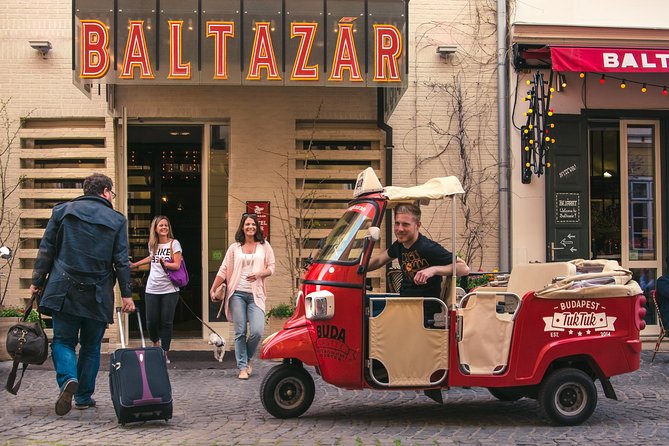
The tour includes free pickup and drop-off in the wider downtown area, and you choose your preferred departure time when booking. Confirmation arrives at booking time, and you’re asked to indicate your pickup time and location in the request notes.
What you should care about: pickup saves you the “where do we meet?” headache, and private transport makes it easier to start your day efficiently. That matters most when your group is tired from travel or you’ve got only one half-day to explore.
Also, this tour is offered in English, and it’s meant for groups where you can participate comfortably. If you’re visiting with seniors or someone who walks slowly, the private format helps because the guide can pace breaks.
One caveat I’d consider: if you’re booking for very specific photo moments, be flexible. Street views are great in daylight, but weather can change quickly, and the experience is explicitly subject to favorable conditions.
Buda side: viewpoints, fortresses, and Castle Hill views
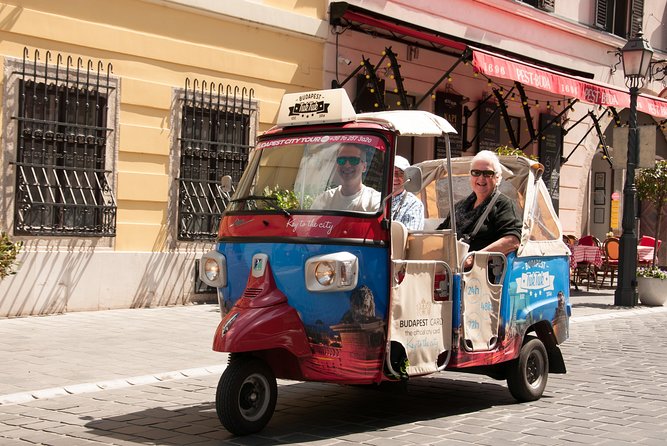
The Buda portion is where the tuk-tuk shines, because you’re chasing angles. Budapest’s best “postcard” views tend to sit up high, and the city’s hills are not where you want to do a long uphill hike if you’re short on time.
Gellért Hill: Citadella and the Freedom Statue
Your route builds toward Gellért Hill, with stops such as Citadella and the Liberty Statue. Even if you only spend brief time here, you’re getting what this hill is famous for: panoramic sightlines over the Danube and across to Pest.
Citadella is a classic fortification point. The Freedom Statue is a memorial tied to Hungary’s independence, freedom, and prosperity. These are the kind of places where your guide’s context helps a lot, because monuments read differently once you know what they’re commemorating.
Then there’s a quieter angle: the Garden of Philosophy, with a view and a small sculpture theme where figures representing different faith traditions appear together. It’s a short stop, but the “less busy, more reflective” energy is exactly what you want after louder city-center drives.
You can also read our reviews of more tours and experiences in Budapest


Castle Hill: the medieval core above the Danube
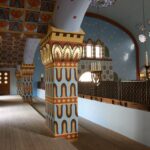
As the tour moves into the Castle Hill area, you’re in the part of Budapest that feels like it belongs on a postcard, because it’s a limestone plateau packed with medieval monuments. You’ll hear plenty about how this area and its surrounding caves connect to the thermal spring geography under Budapest.
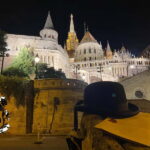
You also get the star terrace: Fisherman’s Bastion. It’s designed in neo-Gothic and neo-Romanesque style and sits near Matthias Church. The terraces are where the iconic photos happen, especially when you’re lucky enough to have clear views.
Matthias Church is another stop where you may only do an exterior look. The tour notes that some entry tickets are not included, so plan on seeing the church area from the outside unless you choose paid add-ons later.
Shoes on the Danube Bank: a sobering stop done right
One of the most powerful points on the route is Shoes on the Danube Bank, a memorial created to honor Jews killed during World War II by Arrow Cross militiamen. It’s the kind of stop where the guide’s framing matters, because the plainness of the memorial is part of why it hits so hard.
This is not a long stop, but it’s worth giving it a few minutes of quiet attention instead of treating it as just another photo stop. In a short tour day, this is one of the places where a guide can help you be respectful and present.
Pest side: grand avenues and classic landmarks
Once you cross into Pest and start hitting the broad, formal landmarks, you get the “city center” character of Budapest. This side is where the architecture and civic identity feel most obvious at street level.
St. Stephen’s Basilica: the big church focal point
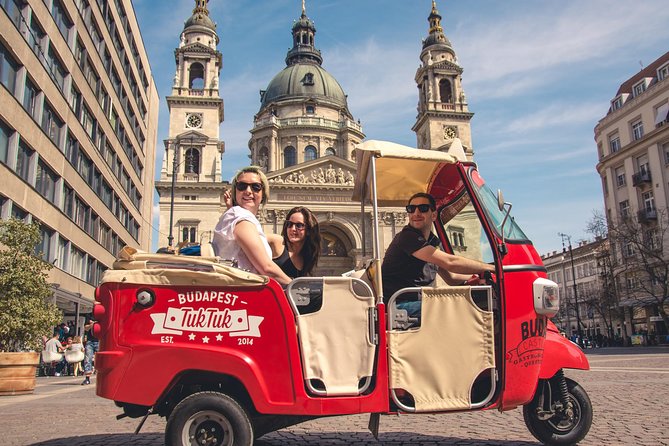
You’ll reach St. Stephen’s Basilica, a major Roman Catholic basilica named for Stephen, the first King of Hungary. The supposed right hand reliquary is part of the building’s significance, and the guide can point out what to look for when you’re standing outside.
This is a stop where a tuk-tuk tour works because you’re doing quick scanning: facade lines, dome profile, and the plaza energy. If you later decide you want the inside, you can add that on another day.
Andrássy Avenue and the Opera House
Along Andrássy Avenue you’ll see the grand neo-Renaissance feel that made the boulevard a World Heritage Site. The tour connects that avenue to landmarks like the Hungarian State Opera House, originally known as the Hungarian Royal Opera House, designed by architect Miklós Ybl.
Even if you don’t go inside, it helps to stand there and recognize the grandeur. A guide can also explain the context without turning it into a lecture, which is one reason this kind of private tour gets high marks. If you want to revisit later for a performance, you’ll know exactly where to go.
Heroes’ Square: Hungary’s symbolic center
Heroes’ Square is one of those places where everything feels official. You’ll see the statue complex with the Seven chieftains of the Magyars and other national leaders, plus the Memorial Stone of Heroes. The tour notes it’s often confused with a Tomb of the Unknown Soldier, so it’s useful to know what’s what before you start reading the sculptures yourself.
This stop is typically short, but the square is big. Use the time to orient your bearings; then, if you want, you can return later for more photos and slower reading.
Parliament Building: seen from the outside, on schedule
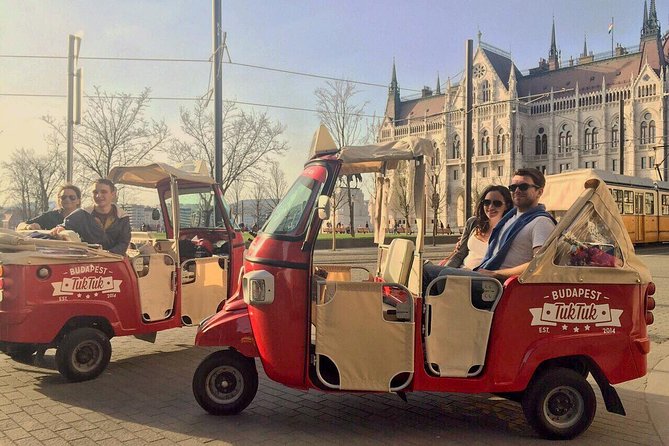
You’ll also pass the Hungarian Parliament Building. The tour notes no internal visit is included, and you won’t get inside this half-day experience. Still, it’s a powerful visual stop, especially when timed for good light and clear sightlines from the street.
Because this is a half-day tour, the guide is likely to balance Parliament with the rest so you don’t end up with too much time sitting in one spot.
Jewish Quarter and market area: culture at street level
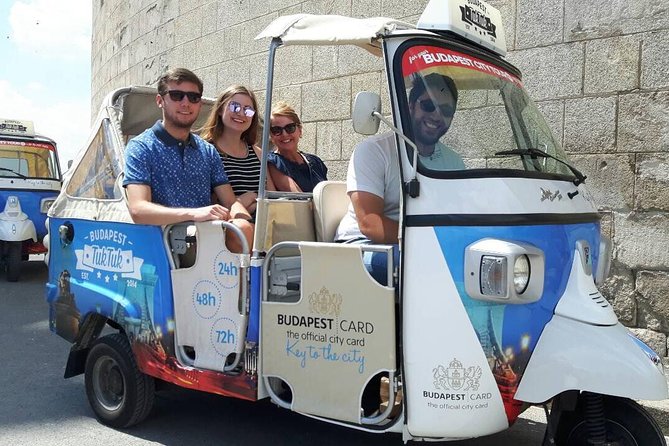
One of the best uses of tuk-tuk time is getting to key parts of a neighborhood without spending your whole day walking between them.
Dohány Street Synagogue (Great Synagogue)
You’ll visit the area around the Dohány Street Synagogue, also called the Great Synagogue. It’s described as the largest synagogue in Europe, seating about 3,000, and a Neolog Judaism center. You’ll mainly take it in as an exterior landmark on this tour, but it’s the kind of stop that makes Budapest feel layered.
A quick tip: if you’re the type who likes architecture details, take a minute to notice how the building “signals” its importance even from outside.
Károlyi Garden and nearby squares
You’ll also get the neighborhood rhythm around places like Károlyi Garden and squares such as Kálvin tér. These stops aren’t about big monument wow-factors. They’re about atmosphere: city life, transitions between districts, and the feeling of Budapest as a living place, not just a museum.
Kálvin tér, for example, is named after John Calvin and is near the large Reformed church, so the guide can connect the religious and civic naming traditions.
Great Market Hall: a local food-and-goods stop
A standout stop on the route is the Great Market Hall (Nagyvásárcsarnok), the largest and oldest indoor market in Budapest. Even if you’re not shopping, the building itself is a reason to stop: you’ll see the layout and the kind of vendors and produce that make it a hub.
This is also one of the best places to snack or buy small gifts because you can do it quickly without changing your whole plan.
Bridges and “party quarter” edges: moving between worlds
Budapest’s bridges are more than crossings. They’re how the city stitches Buda and Pest together visually.
You’ll cross or pass the Liberty Bridge (Franz Joseph Bridge in the past) and likely get a Danube perspective that helps the whole tour click into place. Bridges give you a sense of where landmarks line up, so you can understand why those hilltop viewpoints matter.
The route also touches the party quarter area near the historic Jewish Quarter boundary. It’s described as relatively low traffic but full of pedestrians, which fits the idea of seeing city life in motion while still staying on a route designed to avoid slow travel.
Optional Danube sightseeing cruise: worth it if you want a second view
The tour includes a Danube sightseeing cruise option if selected. If you can swing it, adding water-level views is a smart way to round out what a land-based tuk-tuk can’t fully provide.
The Danube is where Budapest photographs best, and seeing it from the river helps you connect the landmarks you just toured to their positions along the water.
Guides and the photo advantage (the part you feel immediately)
The private guide is the real engine of this experience. In the reviews, certain guides come up again and again for making the ride feel like a story, not a checklist.
For example, Zoltar is often praised for passion about Hungary, fast humor, and pop-culture stories tied to what you’re seeing. Greg is repeatedly praised for keeping things light while still adding history and fun facts. Norbert also gets credit for personalized pacing, and Paul is noted for offering lots of historical context, current-event info, and photo help.
That photo help matters. Budapest landmarks can be easy to miss angles for, and you’ll get more usable shots when someone knows where to stand and when to turn the tuk-tuk.
Also, some guests mention blankets in colder or windy weather. If you’re coming in winter, pack accordingly, but assume you might be offered extra warmth.
When you should watch your expectations
A private tuk-tuk tour is fast. That’s the point. But you still need to accept the tradeoffs.
1) Entry tickets aren’t included (with the exception of certain free admission noted for specific stops). So you should expect to see many big sights from outside or from terraces rather than inside with a timed entry.
2) Stops are short. Even the best tour in the world can’t give you museum-level time in a half day.
3) Comfort can vary. If you’re sensitive to road vibration or have sound concerns, ask for guidance ahead of time, and consider earplugs.
None of that makes it bad. It just tells you how to use it well.
Who this tour fits best (and who might skip it)
You’ll get the most out of this if:
- You’re visiting for the first time and need orientation fast.
- Your schedule is tight, and you want both Buda and Pest highlights in one go.
- Your group includes people who don’t want long walking days.
- You want a fun, photo-friendly day with a guide who can adapt.
You might consider skipping (or pairing a different tour) if:
- You already know Budapest well and mainly want deep interior access to churches, museums, and Parliament.
- You want long, unhurried time at fewer sites rather than a broad overview.
- Your top priority is guided entry into major buildings.
So, should you book Budapest Private Tuk Tuk Half-Day Tour?
My take: book it if you want a smart first-day plan. The route is built for the biggest “wow” moments, the tuk-tuk keeps transit time short, and the private format makes it easier to manage your pace. It’s also a great way to reduce stress when you’re trying to figure out where things are.
Skip or adjust expectations if your idea of a half-day is lots of ticketed interior time. This tour is best for outside seeing, viewpoints, and landmark context. Pair it with another day of walking and museum entries, and you’ll get the full Budapest experience without feeling like you tried to do everything on one battery.
If you do book, do one practical thing: tell the guide what matters most to you when you meet. That’s when a private tour becomes more than transport. It becomes a customized Budapest plan.
FAQ
How long is the Budapest private tuk-tuk tour?
It runs for about 4 hours (approx.).
What is the price per person?
The price is $178.98 per person.
Does the tour include pickup and drop-off?
Yes. There’s free pickup in the wider downtown area and free drop-off back to the meeting point area.
What languages are available?
The guide offers the tour in English.
Are entry tickets included for major attractions?
Entry tickets are generally not included. The tour notes that some stops have free admission, but internal visits are not part of this half-day plan.
Does the tour include a Danube cruise?
A Danube sightseeing cruise is included only if you select that option.
Can the departure time change?
Yes. The advertised time may change, with a maximum change of 1.5 hours.
What if the weather is bad?
The experience requires good weather. If it’s canceled due to poor weather, you’ll be offered an alternative date or a full refund.
Is this a private tour?
Yes. It’s a private tour for your group only.
How many people fit in one tuk-tuk?
One tuk-tuk is comfortable for 2–3 people. If your group has an odd number, you should specify whether you’d like one traveler seated in another tuk-tuk.
Are service animals allowed?
Yes, service animals are allowed.