REVIEW · BUDAPEST
Private Budapest TukTuk Tour: Custom Route, Hotel Pickup
Book on Viator →Operated by Budapest TukTuk · Bookable on Viator
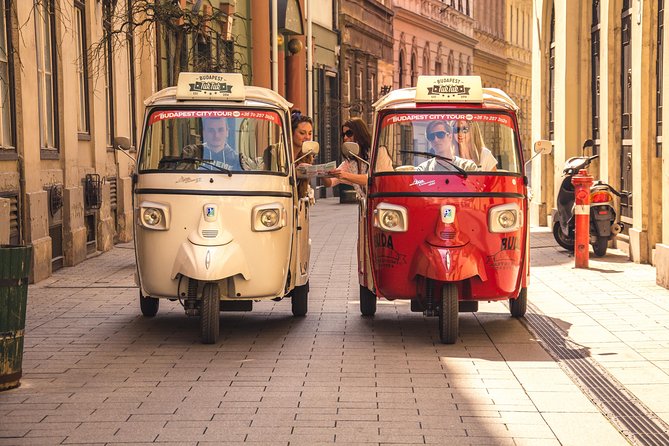
Budapest on a TukTuk feels personal from minute one. I love the close-up photo stops and the way the route fits what you care about. I also love that a great guide can turn big landmarks into stories you’ll remember, like how Andrássy Avenue became a UNESCO World Heritage Site in 2002.
The one real drawback is that it’s an open-air ride, so winter wind and sudden rain can make you feel it. The good news: you’ll plan short stops and you can dress for the weather, plus the tour runs with multiple departure times to help you dodge the worst conditions.
I also appreciate the practical side. You get free pickup and drop-off in wider downtown Budapest, and the whole loop is designed to give you both Buda and Pest highlights without feeling stuck in a slow bus line. If you add the optional Danube sightseeing cruise, you can tack on extra river views after the TukTuk legs.
In This Review
- Key highlights worth steering your day around
- Why a TukTuk beats the big-bus first day in Budapest
- Pickup, timing, and what 2.5 hours really feels like
- Andrássy Avenue and the State Opera House: Budapest’s grand entrance
- Heroes’ Square, the Jewish Quarter, and the Great Market Hall
- Bridges and baths: Danube views without the walking marathon
- Gellért Hill to the Castle District: how the TukTuk changes your angles
- Fisherman’s Bastion and Matthias Church: where to pause, not rush
- Parliament from the outside and how to plan your next day
- Danube cruise option: when it’s worth adding
- Price and logistics: is $99.89 per person good value?
- Who this tour suits best (and who should think twice)
- Should you book this Budapest Private TukTuk Tour?
- FAQ
- How long is the Private Budapest TukTuk Tour?
- Is hotel pickup included?
- Do I need to buy entry tickets for attractions like the bathhouses and synagogues?
- Does the tour include a visit inside the Hungarian Parliament Building?
- Is the tour offered in English?
- How many people fit in one TukTuk?
- What if the weather is bad?
Key highlights worth steering your day around
- Private, custom route energy: You’re not trapped with strangers’ pace or interests.
- TukTuk access where cars can’t go: You get closer angles around the Castle Hill area.
- Photo-friendly stopping points: Quick pulls for skyline shots and landmark facades.
- Buda and Pest in 2.5 hours: A tight “first bearings” loop for limited time.
- A guide who brings places to life: Guides like Ben, Norbert, Paul, and Dave are known for keeping the drive fun and the info useful.
- Optional add-on Danube cruise: If you want more water views, you can pair it with the tour.
Why a TukTuk beats the big-bus first day in Budapest
A TukTuk tour is a smart way to start in Budapest because the city is built for viewpoints. Instead of spending half your time walking between far-off stops, you ride to the exact edges of neighborhoods where the scenery hits.
The bigger vehicles can’t always reach the same corners, and that matters in Budapest. One of the biggest perks is getting to the Castle District area with easier access and closer parking, which saves your legs for the sights that actually require a stroll.
You also get a “local driver” feel without being stuck in a single street for the whole day. In my book, that flexibility is the difference between seeing monuments and learning how the city is laid out.
You can also read our reviews of more private tours in Budapest



Pickup, timing, and what 2.5 hours really feels like
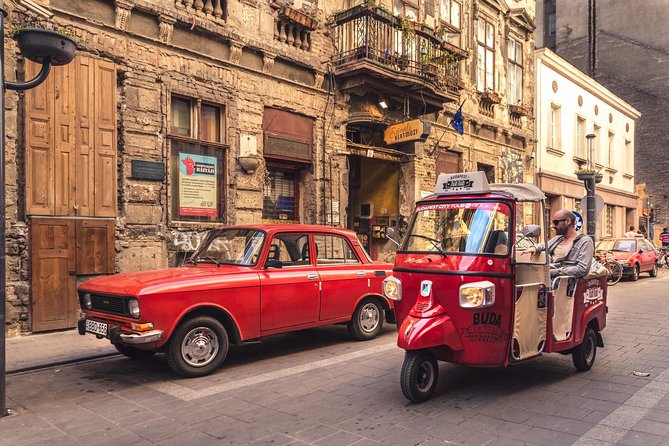
This is a 2 hours 30 minutes experience, and it usually works best as a first-day orientation. You cover a lot of ground quickly, but you’re not rushing every second. The tour includes stops designed for photos and brief look-arounds, so you can still absorb the place.
Departure times are offered at multiple points in the day, and you can pick what best fits your schedule. Just know the advertised start can shift by up to 1 hour, so keep your next plan flexible.
Pickup and drop-off are included in the wider downtown area, which is a big quality-of-life upgrade. If you’re staying centrally (or near the main downtown zones), you avoid the “how do we get there” stress and you start touring right away.
Andrássy Avenue and the State Opera House: Budapest’s grand entrance
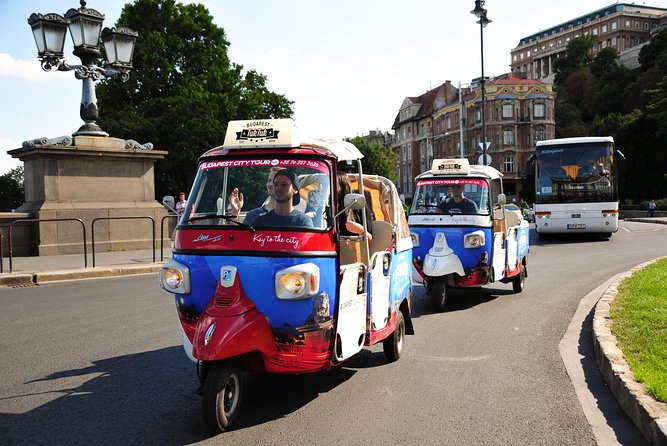
Your ride often begins along Andrássy Avenue, the wide boulevard linking Erzsébet Square with Városliget. This is one of the city’s signature streets, dating back to the 1870s, with Neo-renaissance buildings and a UNESCO listing since 2002.
A TukTuk makes this stretch feel extra cinematic because you’re moving slowly enough to take it in. You’ll also get a sense of where the grandest architecture sits and how it shapes the city’s flow between neighborhoods.
The Hungarian State Opera House is the next big stop mood-wise. Even from outside, you’ll get a clear look at the neo-renaissance styling and the architect story connected to Miklós Ybl. If you like architecture, this is an easy place to pause and let your guide explain what you’re seeing.
Heroes’ Square, the Jewish Quarter, and the Great Market Hall
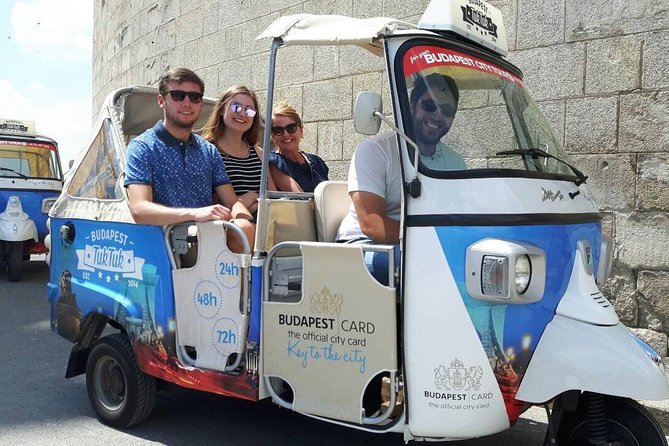
Then you hit Heroes’ Square, one of Budapest’s main landmark squares. At the center is the statue complex tied to Hungarian national leadership, including the Seven chieftains of the Magyars, plus the Memorial Stone of Heroes (often miscalled the Tomb of the Unknown Soldier). It’s the kind of place where your guide’s framing helps you “read” the symbols instead of just snapping a picture.
From there, the tour shifts into the Jewish Quarter edge, where low vehicle traffic still gives you a street-level feel for the area. The star here is the Dohány Street Synagogue (also known as the Great Synagogue), Europe’s largest synagogue by seating capacity at about 3,000 people. It’s also a major Neolog Judaism center, which helps explain why it’s both historic and lived-in.
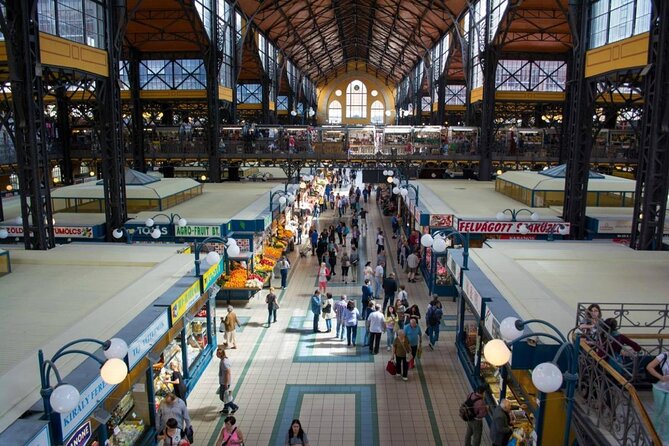
Next comes the Great Market Hall. This is a long-time Budapest shopping-and-eating anchor, and seeing it as part of a tour loop is useful because you can decide on the spot if you want to return later for food. Even if you don’t go inside on this outing, the building itself is a reminder that Budapest isn’t only about grand monuments.
Practical note: entry tickets are not included for some stops, so if you want to go in, you’ll likely plan for that separately. The tour still gives you excellent exterior viewing and orientation.
Bridges and baths: Danube views without the walking marathon
Budapest’s river is not just scenery. It’s the city’s organizing system. That’s why you’ll spend time at key crossings like Liberty Bridge and later get a look from the Castle-side bridges.
Liberty Bridge connects Buda and Pest and is the third southernmost public road bridge in Budapest. It originally carried the name Franz Joseph Bridge, a detail your guide can use to connect political eras to physical infrastructure.
You also get time for thermal-bath context, even if you don’t buy bath tickets on the spot. The tour includes a stop at Széchenyi Medicinal Bath, described as the largest medicinal bath in Europe. From outside, it’s already dramatic, and it’s a great “yes, we’re in the bath city” moment early enough that you’ll want to plan your own soak later.
On the Buda side, you’ll also pass St. Gellért Thermal Bath and Swimming Pool at Hotel Gellért. Admission isn’t included, but the quick stop helps you map where these famous complexes sit on the hill and how they connect to the city’s viewpoints.
Then comes more hilltop perspective. You stop briefly near Citadella on Gellért Hill, and you’ll also see the Statue of Elizabeth Queen of Hungary (Freedom Statue) with its independence and sacrifice theme. If you’d rather skip the Citadella angle, there’s an optional Garden of Philosophy stop instead, aimed at a panorama and photo moment with fewer tourists.






Gellért Hill to the Castle District: how the TukTuk changes your angles
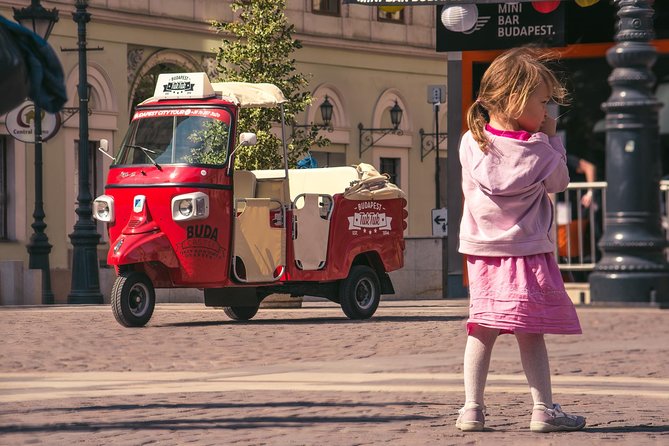
This is where the TukTuk earns its keep. When you’re climbing toward Castle Hill, you want positioning more than speed. The TukTuk’s job is to put you at the right edges so you can look over the Danube and down into the city.
The tour includes Castle Garden and then moves into Castle District. Castle Hill is a UNESCO-listed area, and it also sits above a long network of caves formed by thermal springs. Even if you don’t tour caves, your guide’s explanation helps you understand why this hill matters beyond looks.
You’ll also get to Fisherman’s Bastion (Halászbástya). It’s a terrace area in neo-Gothic and neo-Romanesque style near Matthias Church, designed and built in the late 1800s. The views are the main event here, so you’ll want a moment to slow down, find a clean line for photos, and let the guide point out what you’re looking at across the river.
Fisherman’s Bastion and Matthias Church: where to pause, not rush
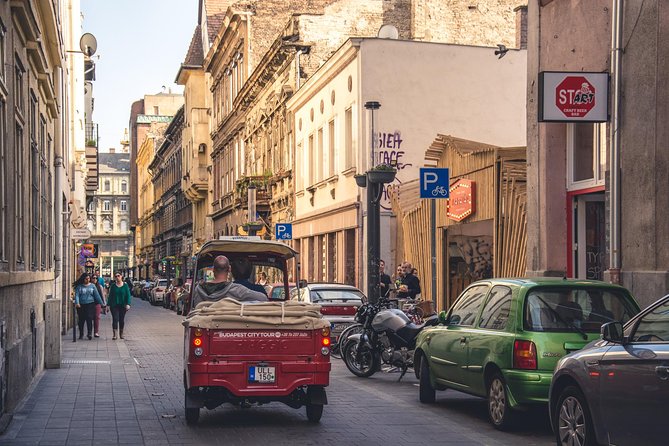
You’ll have a short stop for Matthias Church next, right by Fisherman’s Bastion. It’s a Roman Catholic church in the heart of the Castle District, and tradition traces its origins to the early 1000s. The tour time is set for a quick orientation, and if you want interior time you’ll need to plan separately since entry isn’t included.
This is one of those stops where rushing is a mistake. The architecture, the terrace lines, and the view layers all reward a short pause. If you’re doing this as a first overview, treat it like a storyboard: get the main angles now, then choose what to return to later.
Also, don’t underestimate the value of having a guide time your photo moments. In places like this, one good “stand here” instruction can save you from a dozen awkward half-shots.
Parliament from the outside and how to plan your next day
Your tour finishes with major landmarks that help you stitch together the map. Margaret Bridge appears as a connector between Buda and Pest and links the banks to Margaret Island, making it a useful visual anchor for understanding how the city splits and reconnects.
Then you see the Hungarian Parliament Building from the outside. It’s the seat of the National Assembly and a top Budapest landmark, and it’s a popular tourist destination. The tour does not include the Parliament’s interior, so if the inside matters to you, you’ll likely want a separate booking timed for when you’re ready.
This outside-focused finish is actually a good match for a short overall tour. You get the spectacle and the orientation without burning hours waiting around for entry slots.
Danube cruise option: when it’s worth adding
If you select the optional Danube sightseeing cruise, it’s a clean way to extend your day. The city looks different from the water, and bridges like the ones you saw on TukTuk turn into a highlight reel.
I’d add the cruise if you like skyline photos, and you want a calmer follow-up to open-air driving. If you’re already planning a river cruise separately, you can skip this add-on and use the TukTuk time for neighborhoods and viewpoints that are harder to reach.
Price and logistics: is $99.89 per person good value?
At $99.89 per person for roughly 2.5 hours, this isn’t a cheap “sit and watch” tour. The value comes from three things you can actually feel in the experience:
First, you’re getting a private guide and vehicle, which changes how you move through a city. In practice, that means you can get the photo angle you want and the story you care about without the tug-of-war that happens on group tours.
Second, you’re paying for time saved. Budapest is spread out across Buda and Pest, and the TukTuk route is built to reduce backtracking. That matters a lot when you have one or two days total.
Third, you’re buying flexibility. You can pick departure times, and the route can be adjusted to match what you’ve already seen. If you’re the kind of traveler who hates wasting daylight, this format makes sense.
One more practical detail: one TukTuk is comfortable for 2–3 people. If your group has an odd number of travelers, you’ll want to specify if someone needs to ride in another TukTuk, since the tour stays private.
Who this tour suits best (and who should think twice)
This is ideal for first-time visitors who want the main sights plus enough local context to plan the rest of their trip. It also works well if you have limited time and you want Buda and Pest in one smooth sweep.
It’s also a great choice if you hate being stuck on one bus route. The TukTuk lets you hop between landmark zones, and it’s especially useful around Castle Hill where closer access is a real advantage.
Think twice if you’re traveling with extremely young kids who can’t handle open-air movement, or if you expect long indoor time at multiple ticketed stops. Most entries aren’t included, so you’ll likely want a separate plan for baths, synagogue interiors, or Matthias Church interior visits.
Should you book this Budapest Private TukTuk Tour?
Yes, if you want a fast, fun, photo-friendly orientation that covers both sides of the river with a guide who can explain what you’re seeing. The private format and the ability to reach closer viewing points make it a strong value for the money, especially on a first day.
Skip it only if your top priority is deep museum time or you prefer to ride at your own pace without a guide. In that case, you might be better off with a self-guided route plus one paid guided walk.
If you go, dress for the weather, plan for optional ticketed stops if you want interiors, and use the ride as your map. Budapest rewards a good “where to next” plan, and this tour does that part well.
FAQ
How long is the Private Budapest TukTuk Tour?
It runs for about 2 hours 30 minutes.
Is hotel pickup included?
Yes. The tour includes free pickup and drop-off in the wider downtown Budapest area.
Do I need to buy entry tickets for attractions like the bathhouses and synagogues?
Entry tickets are not included for the listed stops (for example, the baths and other ticketed sights). You may need to purchase those separately if you want to go in.
Does the tour include a visit inside the Hungarian Parliament Building?
No. You can see the Parliament Building, but the interior visit is not included.
Is the tour offered in English?
Yes, the guide offers the tour in English.
How many people fit in one TukTuk?
One TukTuk is comfortable for 2–3 people. If your group has an odd number of travelers, you may be seated in another TukTuk.
What if the weather is bad?
The experience requires favorable weather. If it’s canceled due to poor weather, you’ll be offered an alternative date or a full refund.