REVIEW · BUDAPEST
A Journey through Jewish Budapest – Walking Tour
Book on GetYourGuide →Operated by insightcities.com · Bookable on GetYourGuide
Budapest’s Jewish story fits in three hours. This walking tour is built for understanding everyday Jewish life before WWII, using major landmarks like Dohány Synagogue and the Shoes on the Danube memorial to keep the story grounded.
I love the way the route mixes architecture with real people and clear context, especially around the Dohány complex and the ghetto-era memorial sites. I also like the human pace of the experience, since guides from insightcities.com have been praised for being engaging and careful about moving through the group without rushing anyone.
One key consideration: entry to the Dohány Synagogue is not included, and you’ll need to follow the dress code (shoulders and knees covered) to get in smoothly.
In This Review
- Key highlights you’ll feel fast
- Why this tour works: Jewish Budapest before WWII, on foot
- Start at Kamara Café on Dohany utca
- Herzl’s birthplace square sets the tone immediately
- Dohány Street Synagogue: Moorish Revival on the inside, memory on the outside
- What to watch for (and plan for)
- Temple of Heroes and the Jewish Museum: why the complex is the lesson
- Ghetto Wall Memorial (2014): the city’s scars in plain sight
- Mikve and Kazinczy Street: showing Jewish life beyond the biggest icon
- Status Quo Ante and Rumbach Street: how different streams shaped community life
- Shoes on the Danube Bank: reflection that changes the pace
- Price and value: what you’re really paying for
- Who this tour is best for (and who might skip it)
- Should you book this Jewish Budapest walking tour?
- FAQ
- How long is the Jewish Budapest walking tour?
- Is the tour offered in English?
- Where do we meet for the tour?
- What is included in the price?
- Are Dohány Synagogue tickets included?
- What dress code is required for the Dohány Synagogue?
- Is the tour private or small group?
Key highlights you’ll feel fast
- A historian guide (often professors or doctoral-level scholars) who connects buildings to lived experience
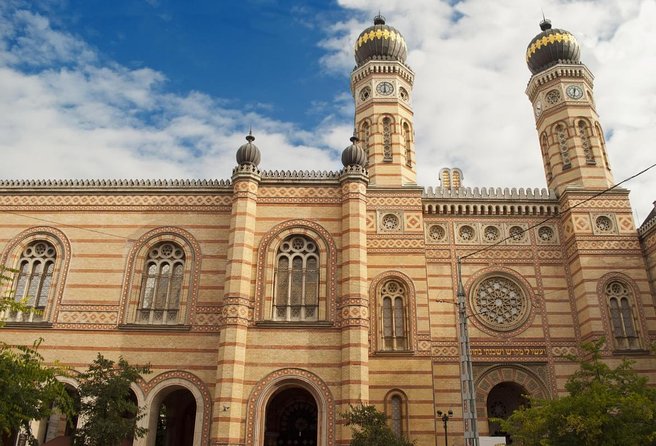
- Dohány Street Synagogue complex with Moorish Revival style plus stops inside the Temple of Heroes, Jewish Museum, and Memorial Park
- Ghetto Wall Memorial (erected in 2014) to anchor the story in the physical city
- Kazinczy Street and Rumbach Street synagogues shown through exterior views, including the Orthodox streetscape
- Shoes on the Danube Bank for reflection at the end, not just a quick photo stop
Why this tour works: Jewish Budapest before WWII, on foot
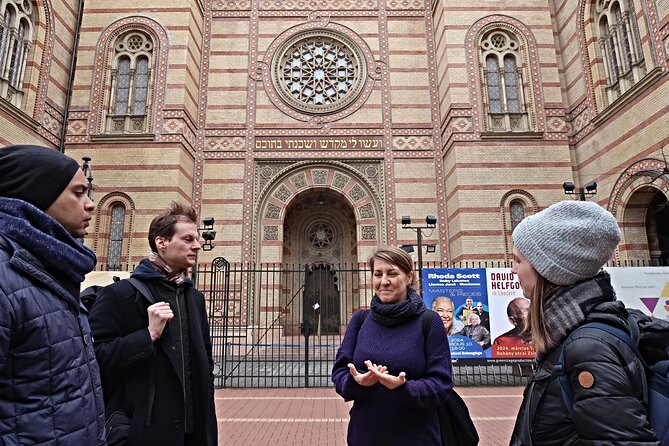
This isn’t the kind of tour that only lists what you’re seeing. You walk through central Budapest with the goal of understanding Jewish life before WWII—when, as you’re told on the walk, about a quarter of the population was Jewish.
That matters because it changes how you look at the sites. Instead of treating synagogues and memorials like separate museum objects, you start to see them as part of one long, complicated neighborhood story—religious life, community identity, and then the brutal rupture that followed.
You also get a smart balance: big landmarks on one end, then quieter memory work on the other. The result is that you leave with both place recognition and emotional context, which is usually where walking tours either succeed or fall flat.
You can also read our reviews of more walking tours in Budapest


Start at Kamara Café on Dohany utca
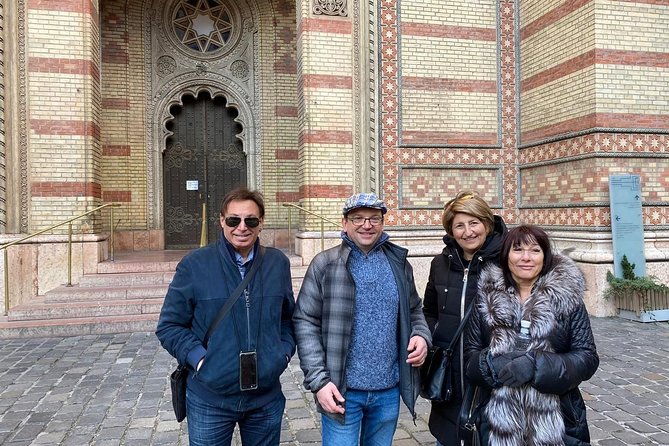
Your tour begins near Kamara Café, at Dohany utca 1/A. From there, you move along the streets toward the Dohány area, with guided context that helps you keep your bearings as the city begins to click.
There’s a subtle advantage to starting in this part of the district: the walk doesn’t just drop you in front of one building. It gives you time to connect the dots between streets, synagogue facades, and the memorial spaces that come later.
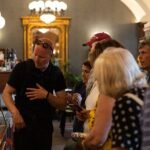
In past experiences with this provider, people have highlighted how personal the pacing can be, including moments when guides check that the group is comfortable before going on. That’s the kind of small detail that makes a 3-hour walk feel smoother instead of like a sprint.
Herzl’s birthplace square sets the tone immediately
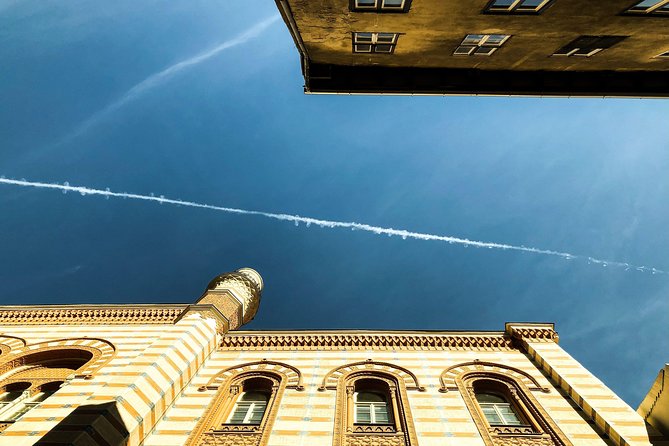
One of the first stops is the square where Theodor Herzl, often called the father of modern Zionism, was born. It’s a high-impact opening because it frames Jewish history in Budapest not as a distant subject, but as a place where major ideas were born into real streets.
This is also a good moment to notice how the tour connects movement to meaning. You’re not stuck in one location for the whole experience. You’re constantly walking, and each new street corner is used to explain why Jewish identity in the city was not one single story.
It’s an especially strong start if you’re coming from other parts of Europe where Jewish history is often presented as ghettos and exile. Here, the beginning emphasizes life and community before the catastrophe—without pretending that catastrophe was ever far away.
Dohány Street Synagogue: Moorish Revival on the inside, memory on the outside
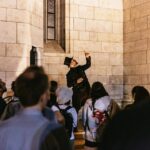
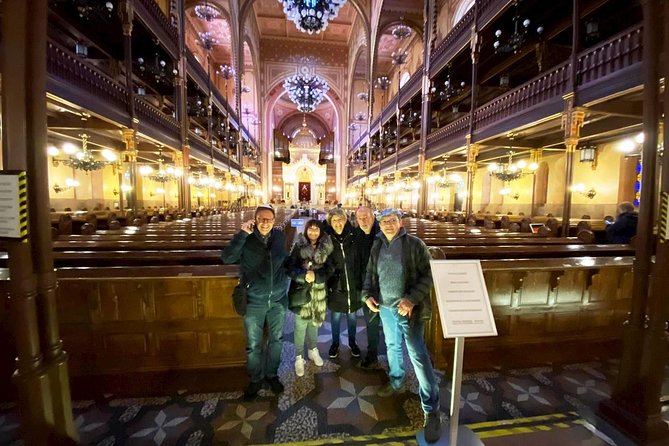
The centerpiece is the Dohány Street Synagogue, one of the most important Jewish houses of worship in Europe. On this part of the walk, you get guided help as you take in the building’s lavish Moorish Revival style and hear what that style meant in the context of its time and community.
This is where the tour earns its keep. The experience doesn’t treat the synagogue as only a gorgeous shell for photos. You’re also directed into the complex, where you can see and learn about the Temple of Heroes, the Jewish Museum, and a Memorial Park area within the grounds.
What to watch for (and plan for)
- You’ll want to dress correctly before you arrive, because shoulders and knees must be covered for entry.
- The synagogue ticket is not included. The listing price notes an individual ticket cost of 14500 Ft, so build that into your budget.
- Some groups may spend more time here than you expect, because the guide’s job is to connect art, religion, and historical events into one story.
If you care about architecture but also need the human meaning behind it, this is the stop that usually clicks the fastest.






Temple of Heroes and the Jewish Museum: why the complex is the lesson
Staying inside the Dohány complex is valuable because the buildings and spaces are arranged to tell you different parts of the story in sequence. You’re not just walking by exhibits—you’re moving from areas of worship into memory-focused and museum-adjacent spaces.
The Temple of Heroes stop is one of those moments that can shift the tone of the entire tour. Even if you’re not a “history-only” person, you’ll likely find that the guide makes this area feel less like a label and more like a tribute with specific meaning.
And then the Jewish Museum component helps you anchor what you hear earlier in concrete documentation and interpretation. It’s a strong pairing with the later memorials on the route, because by the time you reach the ghetto wall and Shoes on the Danube, the story has already taken root.
Ghetto Wall Memorial (2014): the city’s scars in plain sight
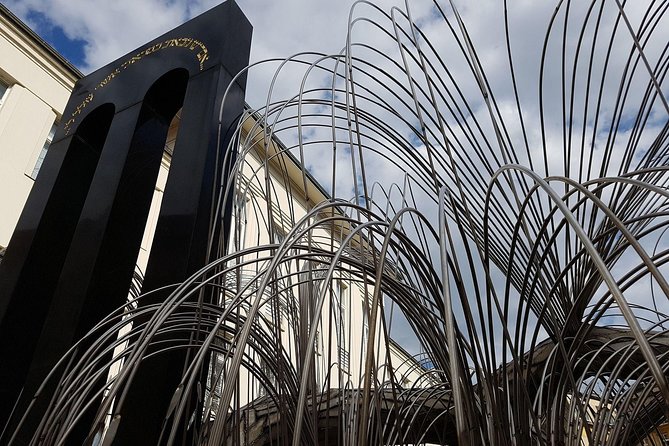
After the Dohány area, the walk heads toward the Ghetto Wall Memorial, which was erected in 2014. This is one of those stops where you don’t need extra imagination. The location forces a clear connection between the past and the city’s present layout.
The best part is how it functions as a bridge. You move from community-centered religious space into a memorial space tied to confinement and violence. That transition is uncomfortable, but it’s also the point: it shows you why these landmarks aren’t just decorative heritage.
Keep your pace slow here. You don’t need to linger for hours, but you’ll get more from the stop if you let the meaning land before continuing.
Mikve and Kazinczy Street: showing Jewish life beyond the biggest icon
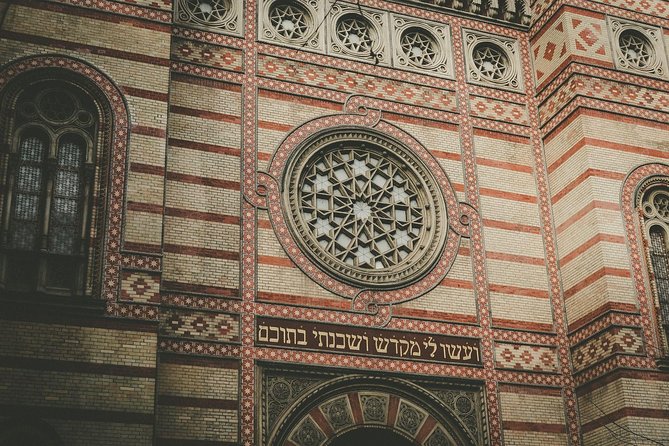
Next, the tour includes a pass by a mikve, a Jewish ritual bath. Even though you’re not spending the entire time inside it, the mention matters because it broadens the story. Jewish life in a city isn’t only synagogues; it includes daily spiritual practice and community rhythms.
Then you move toward Kazinczy Street, where you’ll see the exteriors of an Art Nouveau Orthodox synagogue. Exterior-only viewing can sound like a downgrade on paper, but it’s often an advantage on a walking tour. It helps you keep the synagogues in context as neighbors in the city, not isolated attractions.
If your travel style is to understand how a neighborhood actually looks and functions, you’ll appreciate this shift from “one big building” to “a living street with history layered over it.”
Status Quo Ante and Rumbach Street: how different streams shaped community life
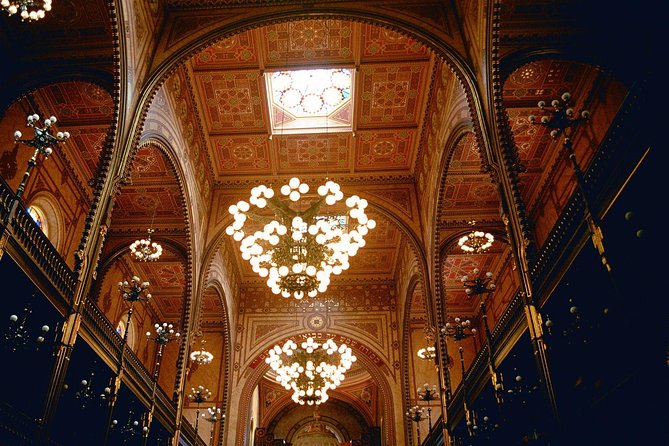
One of the more interesting parts of the walk is how it references the Status Quo Ante stream of Judaism. The tour uses this topic as a way to explain that Jewish communities weren’t always uniform in practice or power structures.
You’ll observe the facade of the Rumbach Street Synagogue during this portion. Even if you’re focused on visual details, you’ll likely find the guide’s explanation makes the facade feel like more than stonework. It becomes a clue about identity, authority, and how communities negotiated tradition.
A small practical note: because this portion emphasizes exterior architecture, you’ll get the most out of it if you’re willing to look closely. Stand where the guide directs you, watch the lines of the facade, and let the explanation do its job.
Shoes on the Danube Bank: reflection that changes the pace
The tour ends at Shoes on the Danube Bank, where you’ll have time to reflect on the Jewish lives lost there. This memorial is powerful because it’s specific and immediate. You aren’t just hearing about the Holocaust as a broad historical event; you’re standing at a place designed to slow you down and make the story personal.
What I like about ending here is that it acts like a reset button for your emotions. After visiting synagogues, museum spaces, and neighborhood streets, the memorial makes everything tighten into one hard focus.
In one highlighted experience from the guide Endres, the group’s moment of respect included cleansing several “stumbling stones” when requested. That detail is a reminder that guides may be attentive to how visitors want to show care in these spaces, not just how fast they move for photos.
If you come into the tour ready to absorb serious content, plan to leave with extra time after the walk for a meal or calm stroll. You’ll likely feel it in your body, not just your mind.
Price and value: what you’re really paying for
The tour price is $123 per person for a 3-hour walking experience with a historian guide. That cost can feel high if you’re thinking only in terms of walking and sightseeing. But value shows up in how the guide frames the route: connecting multiple community spaces and memorial sites into one understandable thread.
There’s also a clear budgeting point: Dohány Synagogue tickets are not included, with an individual ticket listed at 14500 Ft. So your real cost is closer to the tour price plus the entrance ticket(s). If you’re traveling with a group, the experience may feel even better value because the guide’s attention can be more direct, and this tour can be offered as private or small groups.
In other words, you’re paying for expert storytelling and structured pacing over a compact time window. If you’re the type who wants context that sticks—especially around Jewish Budapest before WWII—this is one of the more practical ways to get there without piecing it together yourself from multiple sources.
Who this tour is best for (and who might skip it)
This tour is a strong match if you:
- want a historian-led walk through Jewish Budapest landmarks, not just photos
- care about how communities looked and practiced before WWII
- like tours that mix architecture with memory-based stops
- would rather ask questions in real time than read your way through afterward
It may be less ideal if you:
- hate walking and want minimal time on your feet
- prefer visits that include only full interior access everywhere (some parts here are exterior-focused)
- don’t want to deal with synagogue entry rules like covered shoulders and knees
Should you book this Jewish Budapest walking tour?
If your goal is to understand how Jewish life in Budapest shaped the city before WWII—and then to face the memorial history with care—this is worth booking. The structure is sensible: major sites first, then neighborhood context, then reflection at Shoes on the Danube.
The best sign is the consistency in what people praise: guides who teach with commitment, tours that feel personalized (at least in small groups), and an overall thoughtful approach. Add the fact that the Dohány complex includes not only the synagogue but also areas like the Temple of Heroes and Jewish Museum, and you’ve got a plan that feels efficient without feeling rushed.
Book it if you’re ready to learn and also ready to pause.
FAQ
How long is the Jewish Budapest walking tour?
It lasts 3 hours.
Is the tour offered in English?
Yes, the tour guide speaks English.
Where do we meet for the tour?
The meeting point is Kamara Café, Dohany utca 1/A.
What is included in the price?
The tour includes the 3-hour walking tour and a historian guide.
Are Dohány Synagogue tickets included?
No. Dohány Synagogue tickets cost extra (listed as 14500 Ft for an individual ticket).
What dress code is required for the Dohány Synagogue?
Visitors are requested to have shoulders and knees covered.
Is the tour private or small group?
Yes. It can be offered as private or in small groups.
###