REVIEW · BUDAPEST
Art Nouveau Treasures of Budapest – Exclusive Private Tour
Book on Viator →Operated by Fungarian · Bookable on Viator
Budapest wears Art Nouveau like jewelry. This exclusive private tour is built around the details people miss on their own: an art historian guide with context, plus real access to Miksa Róth stained glass inside a century-old private apartment. I also like how the walk is paced with quick, meaningful stops instead of a marathon, so you can actually see the Secession design choices behind the pretty facades.
One thing to watch: the first stop at the Central Market Hall is time-limited and the admission ticket is not included, so you’ll want to arrive ready to enter (or buy) quickly and then refocus on the architecture.
In This Review
- Key points you’ll care about
- Why this Art Nouveau tour fits Budapest so well
- Meeting at Central Market Hall, then walking to the Danube views
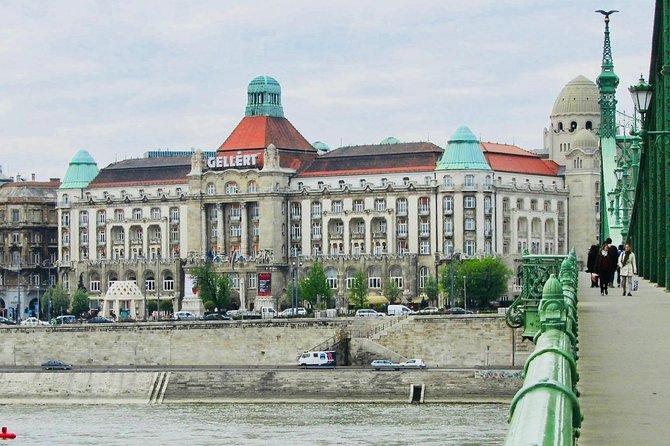
- The Gellért Thermal Bath stop: Art Nouveau vibes you can actually feel
- Hold utca and Ödön Lechner: the tile-and-motif lesson
- Gutenberg Square and Miksa Róth’s lead-glass details
- The private apartment finale: the Miksa Róth stained glass payoff
- Price and logistics: is $261.67 per group good value?
- Who should book this tour (and who might skip it)
- How the guide approach changes what you notice
- Should you book this tour?
- FAQ
- How long is the Art Nouveau Treasures of Budapest private tour?
- What does the tour cost?
- Is the tour private?
- Are admission tickets included?
- Do I need to use public transportation?
- Is pickup available, and where does the tour start and end?
Key points you’ll care about
- An expert art historian helps you read the buildings, not just admire them.
- A private apartment stained-glass moment with Miksa Róth’s work adds a rare indoor payoff.
- St. Gellért Thermal Bath includes time inside a Secession-style landmark (and admission is listed as free).
- Ödön Lechner’s tile language shows up clearly, with folk motifs and colorful decoration on Hold utca.
- Short walking + smart connections: it’s mostly on foot, using public transit where needed (no private vehicle).
Why this Art Nouveau tour fits Budapest so well
If you love architecture, Budapest can feel like a book written in decorative handwriting. You’ll notice the curves, ironwork, floral motifs, and tile patterns—but without guidance, it’s easy to admire the surface and miss the story behind it.
This tour is designed for the way you actually travel. It’s a private group experience (up to 5) with a guide who can slow down when you want to look closer, and speed up when you’re ready to move on. The timing is short enough to keep you alert for the indoor surprise at the end.
And you don’t just see facades from across the street. You get a mix of exterior “read the building” moments and one interior stop where stained glass is the focus. That blend matters. It turns Art Nouveau from an aesthetic you recognize into a style you can describe.
You can also read our reviews of more private tours in Budapest



Meeting at Central Market Hall, then walking to the Danube views

The tour starts at the Central Market Hall area, right at a practical hub in District IX. Central Market Hall is a great place to begin because it’s active, busy, and visually loud—so Art Nouveau details feel especially satisfying once you shift your attention to design.
That said, the Market Hall stop is capped at about 20 minutes and admission isn’t included. In practice, that means you should treat it as a quick architectural orientation rather than a full market visit. If you want to shop or snack, this is probably not the best slot on your day unless your priorities are flexible.
From there, you head across a beautiful bridge toward Gellért Hill. Along the way, your route includes scenic river-and-palace sightlines (including a stone bridge viewpoint tied to the Hungarian Royal Palace). It’s a reminder that Budapest’s best angles often come during transit, not just at destinations.
The Gellért Thermal Bath stop: Art Nouveau vibes you can actually feel
St. Gellért Thermal Bath and the swimming pool area are where style meets everyday life. The building and atmosphere have that grand, turn-of-the-century confidence, strongly associated with Secession design.
This stop includes about 20 minutes, and the listing marks the admission ticket as free for the tour time. That’s valuable because it lets you spend your budget on the guide and access you couldn’t get solo, instead of nickel-and-diming entry fees mid-walk.
What you’ll get most from this portion is contrast. You’re not touring a quiet gallery. You’re stepping into a working bath landmark that’s been iconic for a long time, and you can see how decorative style belongs in real public spaces—not only in museums.
One practical note: thermal baths are practical places, not costume sets. Wear what works for damp floors and take your time. If you’re hoping for long photo sessions, be realistic about the short visit window.
Hold utca and Ödön Lechner: the tile-and-motif lesson
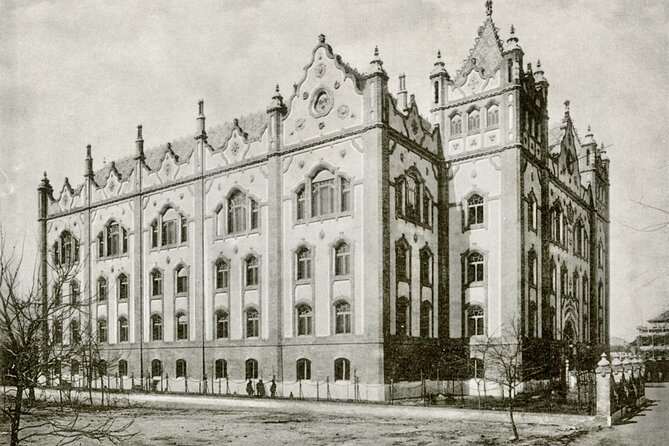
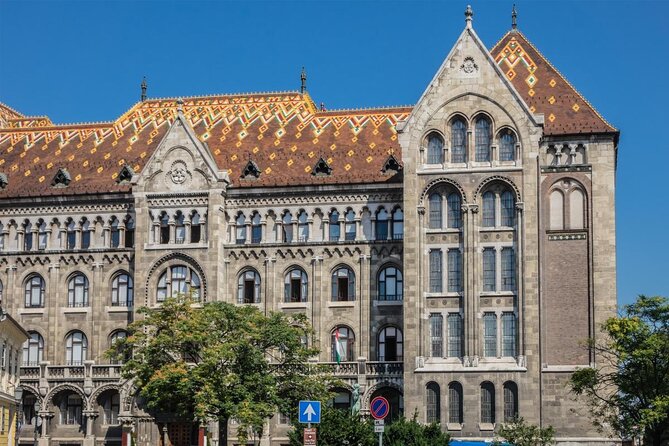
Next comes one of Budapest’s key Secession design lessons: the buildings connected to the Postal Savings Bank on Hold utca, with design credited to Ödön Lechner (1901).
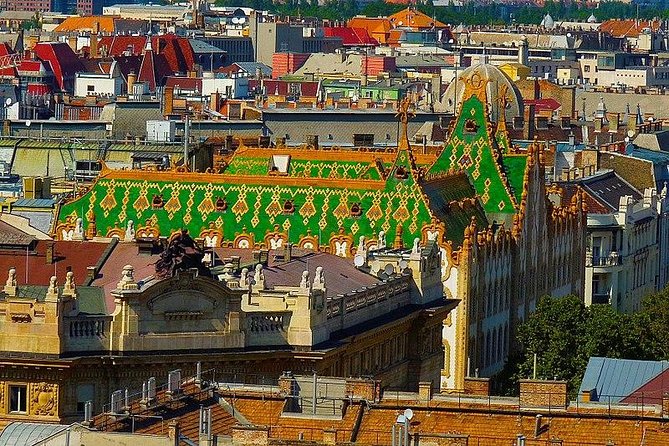
This is where you’ll start understanding what Art Nouveau and Secessionist design are doing beyond “looking fancy.” Lechner’s approach mixes bright tilework with folk-inspired motifs, so decoration functions like a visual language. When your guide points out specific patterns and materials, the style becomes easier to recognize on your own afterward.
The time is short (about 20 minutes) and several of the stops in this area focus on similar Lechner-related Secession design. You’ll likely see more than one façade or entry detail in the general area, and that repetition is useful: it helps you compare how the same design vocabulary shows up across different building faces.
Admission is listed as free for these stops, which is a big part of the value equation. You’re paying for the interpretation and timing, not for a stack of paid entries.
If you’re the type who likes to pause for ten minutes to study a detail, this is still a workable section because the guide can keep you focused on the right things to look at—colors, motifs, and the way elements are arranged.
Gutenberg Square and Miksa Róth’s lead-glass details
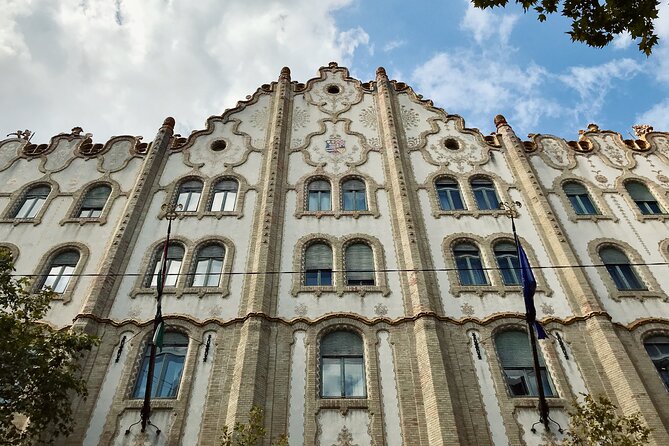
Then you shift gears to Gutenberg Square in the 8th district. This is where the tour leans into design craft rather than street-level history.
Here you’ll have a short stop (around 15 minutes) at a historic Art Deco building. The highlight is a “lead-glass” feature associated with Miksa Róth, the stained-glass artist central to this tour’s finale.
This part is quick, but it’s meaningful. It trains your eye to see how light is treated as part of design, not just as a bonus. With the art historian’s framing, the lead-glass isn’t merely decorative—it’s an architectural decision tied to how people moved through and experienced space.
If you’re the kind of person who loves craftsmanship—glasswork, pattern, and the way materials age—this stop will likely feel satisfying even in a short time window.






The private apartment finale: the Miksa Róth stained glass payoff
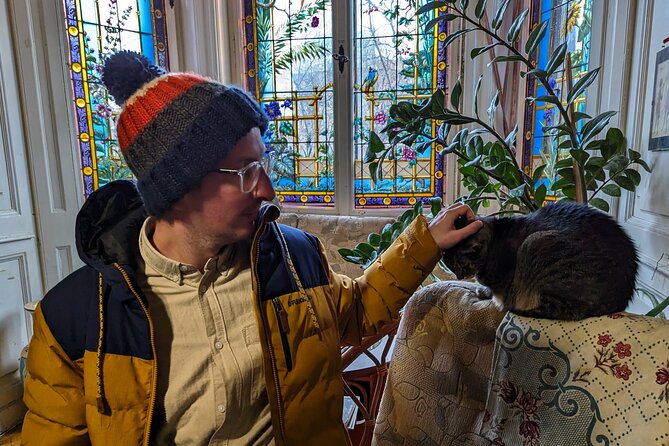
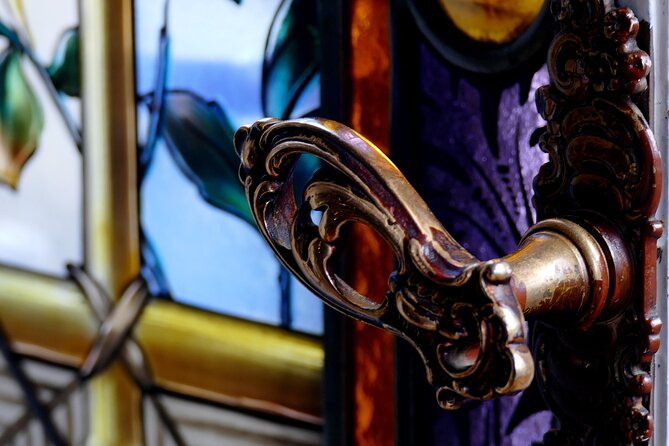
The tour finishes in a century-old private apartment where you can observe a stained-glass window by Miksa Róth. This is the signature moment for anyone who wants more than exterior photos.
Why it’s special: stained glass by Róth is not everywhere. Even when it exists in public buildings, access can be limited. Having a guide bring you to a specific work you can actually see up close turns the entire tour into something more personal and more “Budapest in a real way,” instead of a standard checklist.
The time here isn’t explicitly long in the details, but the payoff is clear: the focus is on the window itself, not a general lobby tour or a broad museum hall. You’re there for one concentrated visual experience.
Also, since this is a private apartment finish, you’ll want to follow any instructions from your guide about where to stand and how to observe the work. It’s a respectful, intimate setting—and part of the point.
Price and logistics: is $261.67 per group good value?
The price is $261.67 per group for up to 5 people, with a tour length of about 2 hours 30 minutes to 3 hours. For a private tour with both a local guide and an art historian guide, that’s competitive—especially in a city where many architecture tours are either exterior-only or rely on museum admissions.
Here’s how I’d judge value, practically:
- You’re paying for interpretation (art historian + guide), not only for walking.
- Several stops list free admission (Gellért and the Lechner-related buildings).
- The most “rare-access” moment is the private apartment stained-glass viewing—hard to replicate on your own.
One caution: the tour is designed on foot and uses public transportation where needed. It also mentions pickup options, but it does not include private transportation. So if you’re hoping for door-to-door car service for the whole route, this isn’t that kind of tour. It’s a city-walk experience with smart meeting points.
Who should book this tour (and who might skip it)
This is an excellent fit if you:
- love Art Nouveau and Secession design and want names, dates, and design logic tied to what you’re seeing.
- prefer a small group setting where your guide can slow down for details.
- care about indoor access, especially stained glass work associated with Miksa Róth.
It might be less ideal if you:
- want a long food-and-café break included in the schedule. The tour focuses on architecture stops, not meals.
- plan to pack in shopping at Central Market Hall. The start stop is short, and entry isn’t included.
Based on the guide style reflected in the guidance you’ll receive, the experience works best when you’re open to being taught. If you only want quick photo stops, you might find yourself wishing for more “free time.” But if you like learning while you walk, this is a strong use of a half-day.
How the guide approach changes what you notice
The most consistent theme here is the quality of the explanation. You’ll get both a local guide and a professional art historian guide, which means you’re not left with vague compliments about beauty.
In the guidance style from Miklós (the guide tied to this program), the focus lands on clear, talk-to-you communication, with a personal tone that makes the details stick. That matters because Art Nouveau can look like decoration until someone shows you the pattern: how motifs relate to place, what artists were trying to do, and how styles overlap across Budapest’s neighborhoods.
When the guide is passionate and articulate, you stop seeing buildings as static objects. You start noticing how design shapes movement: entrances, stairways, window placement, and light.
That’s the hidden benefit of a private architecture tour. You don’t just “see” the style—you learn to read it.
Should you book this tour?
Yes—if you want an efficient, high-impact Art Nouveau and Secession tour with real access to Miksa Róth stained glass and guided interpretation from an art historian. The mix of quick exterior moments, a thermal bath stop marked as free for admission time, and the private apartment finale creates a better arc than most architecture walks.
Skip it only if you’re mostly after casual wandering with no real interest in the design story. This tour is for people who like to learn what they’re looking at.
FAQ
How long is the Art Nouveau Treasures of Budapest private tour?
It runs for about 2 hours 30 minutes to 3 hours.
What does the tour cost?
The price is $261.67 per group (up to 5 people).
Is the tour private?
Yes. This is a private tour/activity, and only your group participates.
Are admission tickets included?
Some stops are listed with admission free (such as the Gellért Thermal Bath and the Secession/Lechner-related buildings). Central Market Hall admission is not included for its stop.
Do I need to use public transportation?
Yes. The tour is designed to be done on foot with public transportation. Private transportation isn’t included.
Is pickup available, and where does the tour start and end?
Pickup is offered from your hotel or another agreed central point. The tour starts at Central Market Hall (Budapest, 1093 Hungary) and ends in a private apartment near Rákóczi tér (Budapest).