REVIEW · BUDAPEST
Buda Castle Walking Tour: A Kingdom of Many Nations
Book on Viator →Operated by Insight Cities · Bookable on Viator
Budapest’s Castle Hill tells its story in layers. This small-group Buda Castle District walking tour focuses on the buildings you can’t really appreciate at full speed, with time spent on the UNESCO-protected hilltop quarter, the royal complex, and the best Danube viewpoints.
I especially loved how the guide pulls together the big timeline—King Béla IV to Matthias Corvinus to the Turkish pashas to the Hapsburgs—so the architecture makes sense. I also like the pacing and size: with a maximum of six people, you actually get to ask questions and move at a human tempo. One thing to consider: key stops like Matthias Church and Fisherman’s Bastion have entrance fees that aren’t included, so plan a little extra budget for tickets.
In This Review
- The best parts of the Buda Castle District walk
- Why this Castle Hill tour works (and how it’s different)
- Start on Castle Hill: the palace presence and Matthias’s colored roof
- The royal palace story: rebuilt power, shifting eras, and the WWII reset
- Sándor Palace: the president’s official residence—and a 200-year style change
- Matthias Church: the roof you recognize, plus the interior that seals the deal
- Fisherman’s Bastion: neo-Gothic fun with seven towers and big views
- Vienna Gate: the tour’s final sightline toward Aquincum (Old Buda context)
- Practical value: how I’d budget time and money
- Who this tour suits best
- What the guides bring (and why reviews keep pointing to this)
- Should you book the Buda Castle District walking tour?
- FAQ
- How long is the Buda Castle Walking Tour?
- How much does the tour cost?
- What are the main stops on the tour?
- Are tickets for Matthias Church and Fisherman’s Bastion included?
- Where do you meet the guide?
- Is hotel pickup included?
- What’s the group size?
- Is free cancellation available?
The best parts of the Buda Castle District walk
- Small group (max 6) for a calmer, more conversational experience
- Castle Hill’s UNESCO lanes: cobbles, narrow streets, and changing facades
- Matthias Church roof + interior time (ticketed, but worth budgeting for)
- Fisherman’s Bastion panoramas across the Danube and toward Pest
- A clear historical “why” behind the palace, Sándor Palace, and Vienna Gate views
- End in a spot that helps you keep exploring—Vienna Gate gives you sightlines back toward Obuda
Why this Castle Hill tour works (and how it’s different)
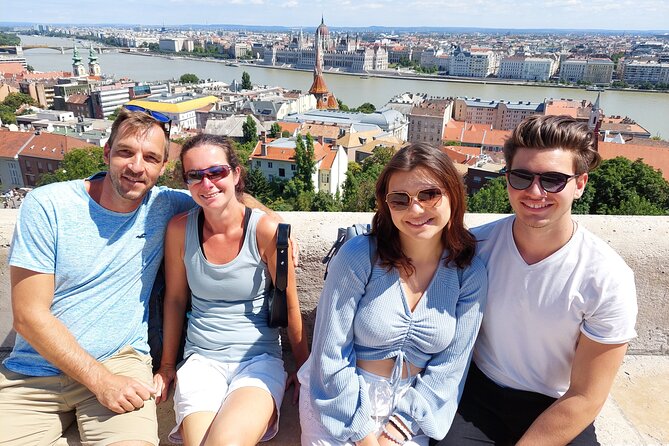
Castle Hill looks like one big postcard, but it’s really a working stage set for centuries of power plays. This tour is built for that reality. You don’t just point at the big sites. You walk the hilltop’s logic—where rulers built, burned, rebuilt, and re-styled the same ground over and over.
You’ll also notice the tour’s balance. Yes, Matthias Church and Fisherman’s Bastion bring the wow factor. But you spend real time on the palace complex and on the “in-between” buildings like Sándor Palace, which is easy to overlook if you’re only chasing the most famous photos.
The small-group format matters more here than in some cities. Castle Hill is spread out, with stairs and turns, and it can get crowded. Staying under eight total travelers (with many departures even smaller) makes it easier to keep moving without feeling rushed.
You can also read our reviews of more walking tours in Budapest



Start on Castle Hill: the palace presence and Matthias’s colored roof
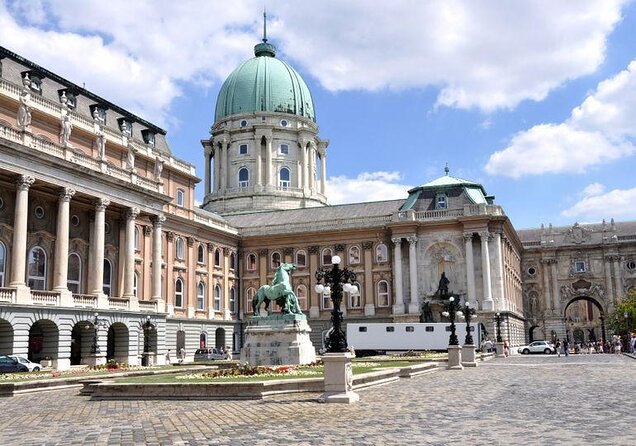
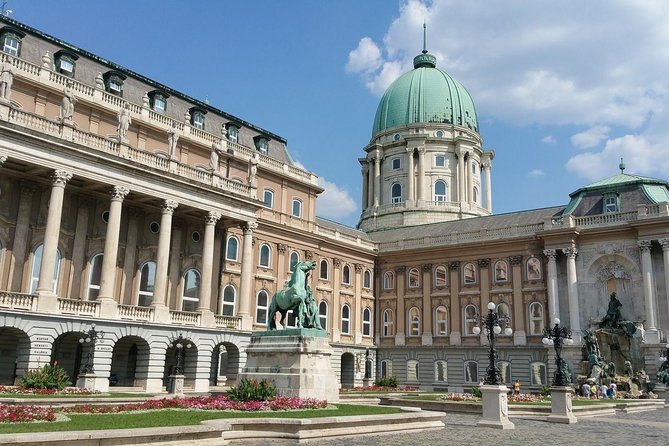
You begin on Castle Hill with the two visual anchors that frame the whole district: the massive royal palace complex at the southern end and the colored roof of Matthias Church in the middle. Even from outside, it’s an instant lesson in how mixed the city’s styles are—baroque and Gothic facades side by side, plus that signature roofline that makes the church easy to find.
This first stretch sets you up for everything that follows. You get oriented on where you are on the hill, what’s actually worth lingering over, and how the palace and church relate to the rest of Castle Hill’s layout. You also get a sense of how the district feels: older streets, a fortress-town vibe, and plenty of corners where you can catch that slow Budapest rhythm.
If you love architecture, this is a great moment to slow down. Matthias’s roof is not just pretty. It’s a clue that this place has been repeatedly redesigned—and that you’ll be hearing those redesign stories all tour long.
The royal palace story: rebuilt power, shifting eras, and the WWII reset
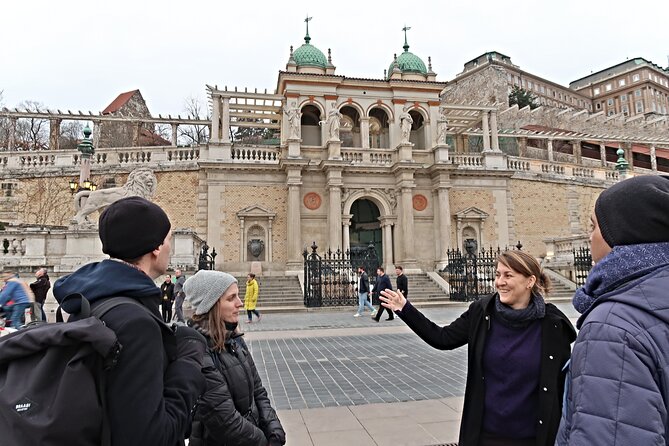
The palace complex is the backbone of the tour. You start with the palace as the ancient seat of royal power, then you learn how the building has been through almost everything: it was rebuilt, extended, changed, burned down, and rebuilt again.
Here’s the timeline that helps it click:
- Around 1250, after a devastating Mongol invasion, King Béla IV erected a fortress on this spot.
- In the Renaissance, King Matthias turned the court into one of Europe’s best-known centers of power and culture by the late 15th century.
- Then came long Ottoman rule by Turkish pashas—over 150 years.
- After that, Hapsburg emperors took over.
- The palace’s current “eclectic” look is largely the result of rebuilding after World War II.
That sequence is the payoff. Once you understand what era is tied to what form and flourish, you stop seeing a random pile of stone and start reading it like a timeline.
One practical note: during this section you’re mostly gathering context and understanding shapes from the outside. If you’re hoping for deep, inside-palace access, you’ll want to focus on what’s included: you’re getting the story and orientation, then using your extra ticket budget where it matters most (Matthias and Fisherman’s Bastion).
Sándor Palace: the president’s official residence—and a 200-year style change
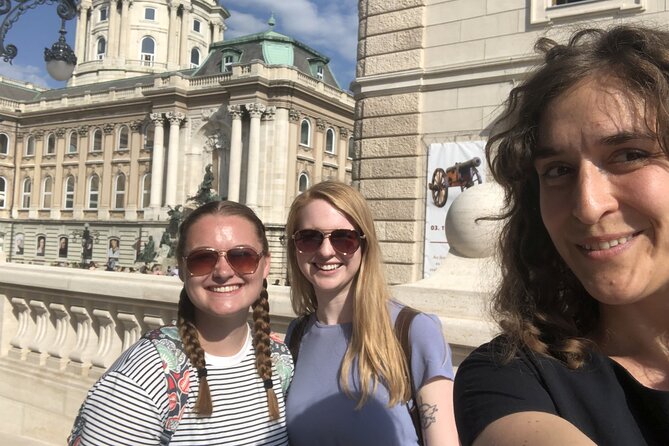
Between the royal past and the big church viewpoints, you make a quick stop at Sándor Palace. This is the official residence of the President of Hungary, and it has served in this role (and as the President’s office) since 2003.
The original palace dates to 1806, built in a Neoclassical style and commissioned by Count Vincent Sándor, an aristocrat and philosopher within the Austro-Hungarian world.
Why this stop is valuable: it reminds you that Castle Hill isn’t just museum scenery. It’s a living political and ceremonial space today. Even when the visit is brief, it gives you a “then and now” thread that makes the rest of the tour feel less like history class and more like understanding how Budapest functions.
Matthias Church: the roof you recognize, plus the interior that seals the deal
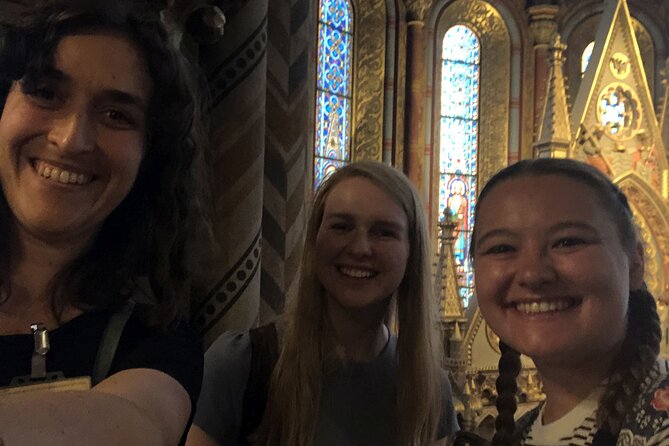
Matthias Church is the emotional highlight for many people, and it’s easy to see why. Outside, the decorated roof is famous. Inside, you’ll find an impressive finish—your time here is specifically set for both the exterior character and the interior impact.
The church you see today is a neo-Gothic reconstruction from the late 19th century. That means it’s not medieval in a pure sense; it’s a restoration-era interpretation. But it still delivers. You get a carefully executed design feel, with ornament and detail that make it worth planning for the ticket.
This is also where a small-group format pays off. With fewer people, the guide can keep you oriented on what to look for while you’re inside, instead of herding you along like a line-cook.
Budget reality: this stop is not included in the standard tour price, so add the entrance fee to your overall day cost.






Fisherman’s Bastion: neo-Gothic fun with seven towers and big views
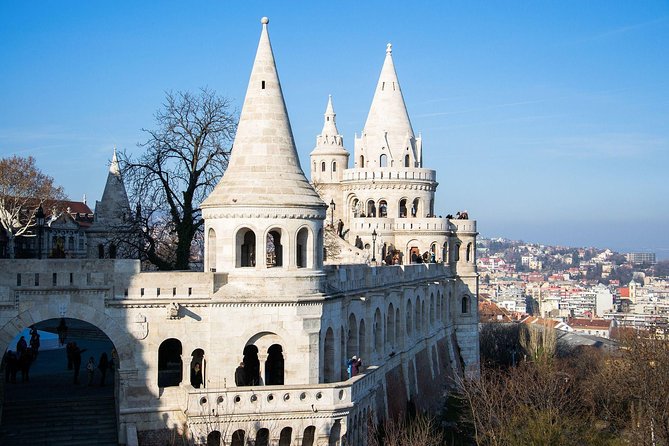
After Matthias, you head to Fisherman’s Bastion, another famous name that can feel like a contrived viewpoint… until you learn what you’re looking at.
Fisherman’s Bastion is an architectural fantasy built between 1895 and 1902, in neo-Gothic and neo-Romanesque styles. The seven towers aren’t random decoration: they represent the seven Magyar tribes that settled in the Carpathian Basin at the end of the 9th century.
And then there are the views. From the terraces, you get one of the best panoramas in Budapest: the Danube, Margaret Island, Pest, and Gellért Hill spread out in front of you. It’s a wide-angle moment that makes the effort of walking up the hill feel immediately worth it.
Ticket reality again: Fisherman’s Bastion entrance is not included. Still, if you’re spending a few days in Budapest, I think it’s smart to pay for the view instead of trying to recreate it from random streets below.
Vienna Gate: the tour’s final sightline toward Aquincum (Old Buda context)
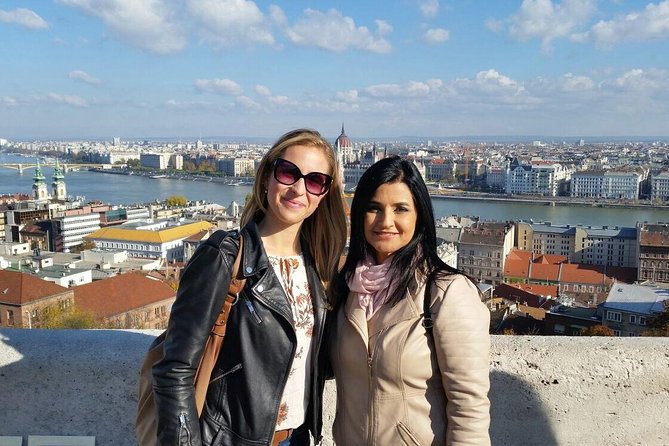
You finish at Vienna Gate, which works as a natural “wrap your head around the geography” stop. From here, you can see toward Obuda (Old Buda), where the Romans founded the city called Aquincum.
That Roman reference matters because it gives you perspective. Budapest isn’t only a medieval kingdom story. It’s been a settlement zone for a very long time, and Castle Hill is part of that long arc. Even if you don’t go to Aquincum on this day, you’ll at least understand why certain neighborhoods look the way they do and how the river corridor shaped settlement.
Practical value: how I’d budget time and money
Let’s talk value with your wallet in mind.
The tour costs $126.15 per person for about 3 hours with a professional guide. What you’re paying for is the guided sense-making: the timeline of power changes, the “why this building looks like this” explanations, and the calm pace of a small group.
What you’re not paying for are some entrance fees: Buda Castle areas, Matthias Church, and Fisherman’s Bastion tickets aren’t included. That’s the biggest cost variable. If you’re trying to keep Budapest cheap, this tour won’t be the best fit. If you’re visiting once and you want to learn and see the major sites properly, it can be a good use of paid time.
Timing also matters. Departures are morning or afternoon depending on the day. If you’re the type who likes early starts for better light, pick the departure that fits your schedule. Just know that Castle Hill can be crowded and weather can change quickly—having a guide help you choose when to slow down is useful.
Who this tour suits best
This is a strong match if you:
- Want a compact 3-hour plan that covers the essentials on Castle Hill
- Prefer small-group walking over big bus-style tours
- Like history that ties directly to what you see outside your eyes
- Want a mix of “grand monuments” (Matthias, Fisherman’s Bastion) and “less obvious” spots (Sándor Palace, Vienna Gate viewpoints)
It’s less ideal if you:
- Only care about interiors and are hoping for lots of time inside multiple ticketed sites
- Want a strict budget day with no add-on entrances
What the guides bring (and why reviews keep pointing to this)
A lot of the satisfaction here seems to come from the guides’ ability to shape the tour around your interests. I like that the group is small enough for that flexibility to actually matter.
You may meet guides such as Peter, Judith, Gergely, Kata, Veronica, Marianna, Katie, Runa, or Henk. Names aside, the pattern is clear: these guides tend to connect Budapest history to the details you’re seeing on the ground, including small location stories (and yes, pacing). If you’re the sort of traveler who asks questions, this tour structure gives you room to do it without slowing down a massive group.
Should you book the Buda Castle District walking tour?
Yes, if you want Castle Hill to feel like a place with a story, not just a list of landmarks. I’d book it when you have limited time in Budapest and you want a guided walk that explains why the palace complex has the look it does, why Matthias Church is so central, and why Fisherman’s Bastion is both a themed structure and a major viewpoint.
Skip it or pair it with extra self-guided time if you’re aiming for a low-cost day or you want lots of long museum-style stops inside ticketed areas beyond Matthias and Fisherman’s Bastion.
If you want my simple rule: pay for the guide on a hill that can swallow half a day, then budget for the tickets at the two big view-and-church anchors. That’s where this tour delivers most.
FAQ
How long is the Buda Castle Walking Tour?
The tour lasts about 3 hours.
How much does the tour cost?
It’s listed at $126.15 per person.
What are the main stops on the tour?
You’ll see Castle Hill’s palace area, Sándor Palace, Matthias Church, Fisherman’s Bastion, and end at Vienna Gate.
Are tickets for Matthias Church and Fisherman’s Bastion included?
No. Matthias Church and Fisherman’s Bastion tickets are not included, and Buda Castle ticket costs also aren’t included.
Where do you meet the guide?
The start location is Budapest, Országház u. 31, 1014 Hungary.
Is hotel pickup included?
No. There is no hotel pickup or drop-off.
What’s the group size?
It’s a small-group tour with a maximum of six people per booking (with a maximum of eight travelers for the activity).
Is free cancellation available?
Yes, you can cancel for a full refund up to 24 hours in advance.