REVIEW · BUDAPEST
Budapest Art Nouveau Walking Tour
Book on Viator →Operated by Insight Cities · Bookable on Viator
Budapest’s Art Nouveau isn’t stuck in old photos. It’s still written into the street level of this city, and this walking tour helps you read it with clear, historical context and real buildings. I like how the route balances major landmarks with smaller street details, like an Art Nouveau flower shop, and I also like that you get a historian guide instead of a generic “follow me” experience.
Two things I really enjoyed are the focus on Ödön Lechner and the way the tour connects style to materials and design choices (especially the tile work linked to Zsolnay porcelain). You’ll also spend real time at stops long enough to notice facade details, not just snap and rush. The main drawback to plan around: the Orthodox Kazinczy Street Synagogue interior is not included, and your ability to go inside depends on the day (it’s excluded on Saturdays).
In This Review
- Key things you’ll notice on this Budapest Art Nouveau walking tour
- Budapest Art Nouveau, decoded in a small-group walk
- Price and ticket value: what $126.16 buys you
- Getting oriented: where the tour starts and ends
- Stop 1: Gresham Palace facades and the interior that changed roles
- Stop 2: Postatakarek Bank and why Lechner looks different
- Stop 3: Thonet House, tiles, and the Zsolnay ceramics connection
- Stop 4: Kazinczy Street Synagogue—Art Nouveau details plus day-of-week reality
- How the pacing works: walking, short stops, and the public transport bit
- What you learn from a historian guide (and why it changes the tour)
- Who this Art Nouveau tour is best for
- Should you book this Budapest Art Nouveau walking tour?
- FAQ
- How long is the Budapest Art Nouveau walking tour?
- What language is the tour offered in?
- How big is the group?
- Where do we meet and where do we end?
- Are entrance tickets included?
- Can I visit the synagogue interior?
- Do I need tickets for public transport?
- Is food included?
- What’s the cancellation policy for a full refund?
Key things you’ll notice on this Budapest Art Nouveau walking tour
- Small-group size keeps the pace manageable and makes it easier to ask questions.
- Historian guide means you’re learning how the movement shaped Budapest, not just what to photograph.
- Lechner-focused design stories give you a clearer sense of why certain buildings look the way they do.
- Tile and ceramic details show up repeatedly, including the Zsolnay connection to Hungarian Art Nouveau.
- A practical route mixes walking with some public transport use when needed.
- Synagogue stop has rules (interior access varies by day; ticket costs aren’t included).
Budapest Art Nouveau, decoded in a small-group walk
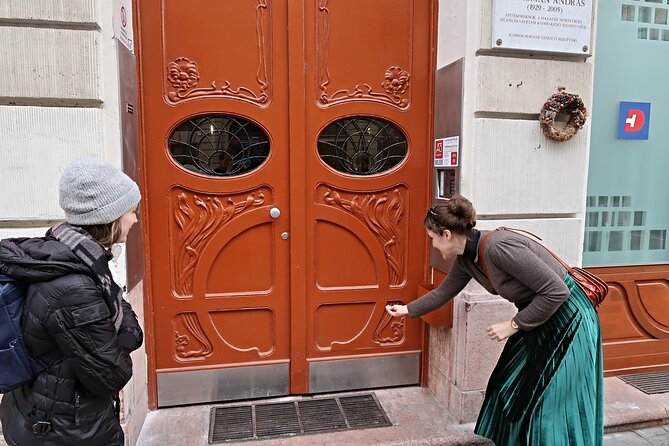
Budapest has a knack for showing off its past without asking you to be an architecture nerd. This tour is built for regular travelers who want meaning, not a lecture. In about three hours, you get the big-picture story of Art Nouveau in Hungary and a set of stops where you can actually see the style’s signature moves.
What I like best is that the tour doesn’t treat buildings as isolated objects. It explains the style’s history and the design elements that made it spread through Budapest, then points you toward the specific visual cues to look for as you walk. That makes your photos better too, because you’ll know what you’re aiming at.
You’re also not stuck in one neighborhood bubble. You’ll start at Madal Café and end at the Orthodox Kazinczy Street Synagogue, with a route that keeps you moving but stays readable.
You can also read our reviews of more walking tours in Budapest



Price and ticket value: what $126.16 buys you
At $126.16 per person, this isn’t a “grab-and-go” city stroll. You’re paying for a historian guide and a curated route that hits multiple Art Nouveau landmarks in a tight time window.
Here’s where the value really shows up: the first three major stops include admission tickets free. That matters because it lowers the extra costs you might expect on a sightseeing tour. The only major paid-style add-on risk is the synagogue interior, where entry is not included and can involve additional cost if it’s open on your tour day.
So you’re basically paying for:
- Expert guidance across several key buildings
- Time at each stop (around 20 minutes at the first three, then about 25 minutes to finish at the synagogue)
- A route that’s structured enough to reduce wasted wandering
If you’re traveling on a tight budget, you’ll want to be clear-eyed about the synagogue portion. If you’re okay with that and you care about architecture and design, this price feels more like “you’re buying interpretation” than “you’re buying transportation.”
Getting oriented: where the tour starts and ends
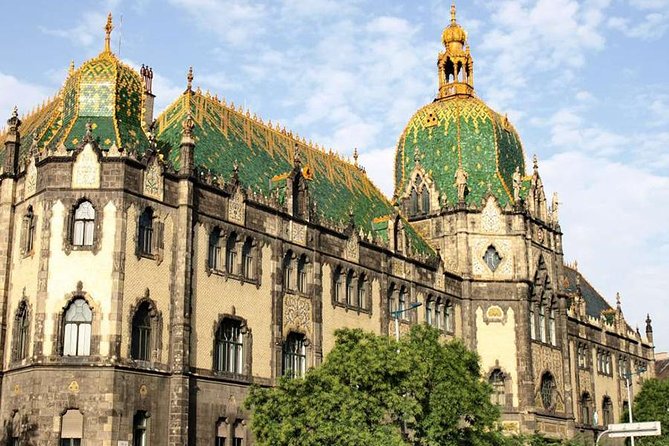
You’ll meet at Madal Cafe Budapest, Alkotmány u. 4, 1054. From there, the tour ends at Budapest Orthodox Synagogue, Kazinczy u. 29–31, 1075.
This matters because the end point is a destination in itself. If you plan your next step thoughtfully, you can keep exploring nearby after the tour without backtracking across town.
One practical tip: Madal Café is in a busy area, so show up a few minutes early. The meeting spot being lively is a real-life problem—plan for it and you’ll avoid that awkward “we’re both looking at the same door” moment.
Stop 1: Gresham Palace facades and the interior that changed roles
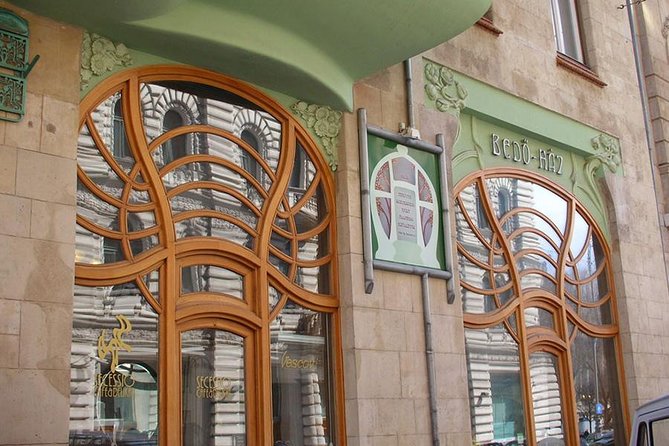
The tour kicks off at Gresham Palace, and you’ll spend about 20 minutes here. You’re going for two layers: the exterior facade details and the interior design elements.
You’ll also get the building’s story in plain terms—how it once served as office space and then luxury apartments, and today it operates as one of Budapest’s most luxurious hotels. Even if you’re not checking into hotels, that “how the function shifted” piece helps you understand why the building’s design feels both grand and practical.
Admission is free for this stop, so you’re not getting squeezed by additional ticketing. The best move is to treat this as your baseline. Use it to get your eye tuned to Art Nouveau traits the rest of the tour will keep referencing—line work, surface decoration, and the feeling that the building is designed down to the details, not just at a glance.
Stop 2: Postatakarek Bank and why Lechner looks different
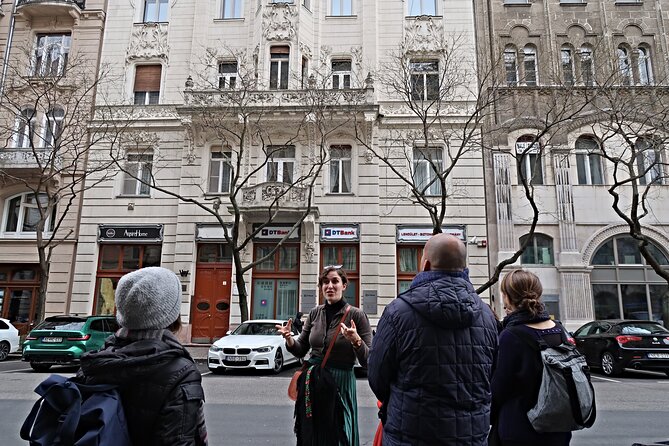
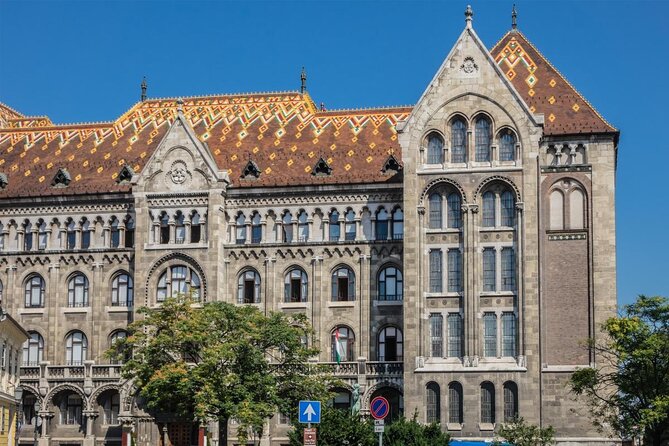
Next up is Postatakarek Bank, also about 20 minutes. This is one of the tour’s headline moments because it’s tied to Ödön Lechner, Hungary’s best-known Art Nouveau architect—and yes, the nickname that comes up is the Gaudí of Hungary.
This stop focuses on what makes the design feel theatrical: the bank is described as flamboyant, and you’ll discuss interior design elements of the entrance hall. That’s a smart choice for the tour format, because entrance halls are where you often see the most intentional craftsmanship. You don’t need to be inside forever—you just need context for what you’re looking at.
Like the first stop, admission here is free. That makes Postatakarek Bank an easy “yes” if you’re deciding whether a guided stop is worth it. You get a guided explanation of what the architect was trying to do and then you see it for yourself.






Stop 3: Thonet House, tiles, and the Zsolnay ceramics connection
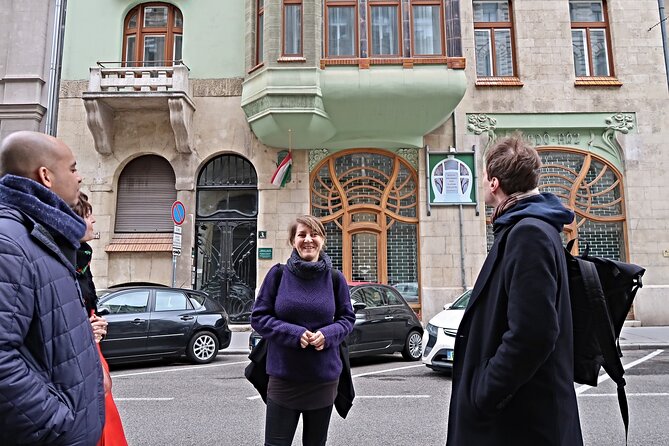
At Thonet House, you’ll also have about 20 minutes. This part of the tour is where materials become the story.
You’ll look at tile use on the facades, and the tour connects that to something Hungarian Art Nouveau became famous for: the way ceramics and tilework shaped the look of the buildings. The key name here is Zsolnay porcelain and ceramics factory in Pécs, with the tour framing Zsolnay’s innovations as part of why the decorative surfaces look the way they do.
This is a stop that helps you slow down. Tiles can look like decoration from far away, but with a guide pointing out the design thinking, you start noticing repetition, rhythm, and the way the facade becomes a kind of pattern language.
Admission is free again at this stop, so you’re getting a lot of architectural education without extra fees. If you remember one thing from the tour, make it this: Hungarian Art Nouveau isn’t only about curves in ironwork. It’s also about what’s on the surface, and tiles turn that style into something you can spot from the sidewalk.
Stop 4: Kazinczy Street Synagogue—Art Nouveau details plus day-of-week reality
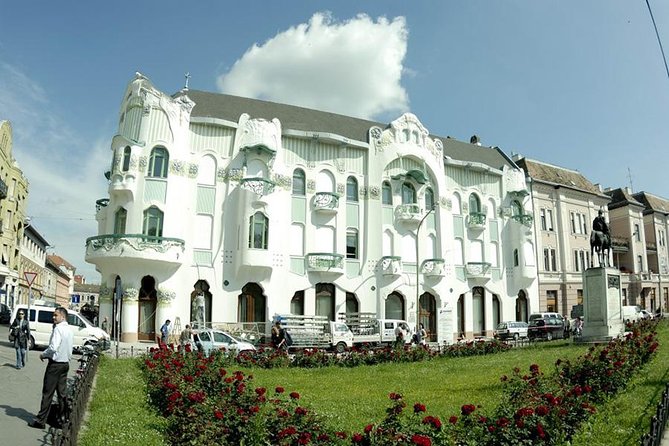
The tour concludes at the Orthodox Kazinczy Street Synagogue, where you’ll have about 25 minutes. It’s decorated in Art Nouveau style, so it fits the theme cleanly.
Here’s the key practical point: synagogue interior visits are except on Saturdays, and the synagogue interior admission is not included. The tour information also notes there may be an additional cost if the site is open on the day of your tour.
So what should you do with this info? Plan like this:
- If your tour falls on a non-Saturday day, you can expect the possibility of an interior visit.
- If you’re on a Saturday, you should be okay with seeing the outside and focusing on the architectural details you can access.
Either way, you’ll finish with a memorable “end chapter” building. A synagogue isn’t just another decorative stop; it gives the tour a different angle on Art Nouveau—how ornament and design language can show up in religious spaces too.
How the pacing works: walking, short stops, and the public transport bit
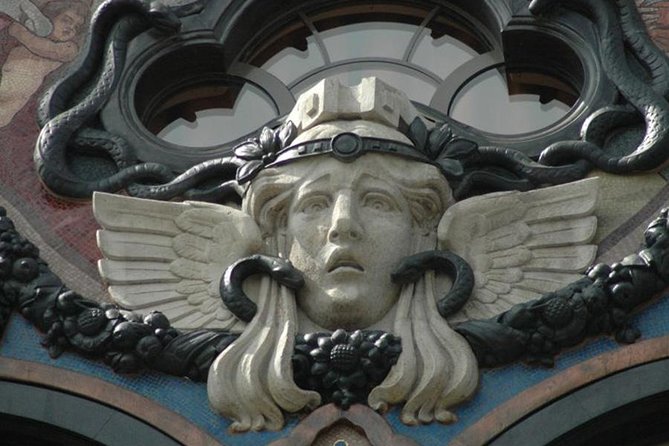
This is a walking tour with a moderate amount of walking. Comfortable shoes are a must, but it isn’t the kind of marathon where you’re sprinting between viewpoints.
The route uses a little public transport, with passes paid at your own expense. You don’t need to overthink it, but you should expect that not every transfer is on foot. That’s often what makes a short tour like this actually work: it lets you cover multiple landmarks without turning the day into pure transit.
The ideal mindset is to go with the flow. Let the guide keep the spacing between stops so you can see details rather than just collect locations.
What you learn from a historian guide (and why it changes the tour)
This tour’s strongest asset is the historian guide. The difference shows up immediately: you’re not only hearing what the buildings are, you’re learning how the movement shaped Budapest and what design elements signal the style.
The guide also tends to adapt to the group’s interests. If you want a bit more explanation about what you’re seeing, you’ll get it. If you’re more curious about where the style fits into Budapest’s larger story, the guide can point you that direction too.
That adaptability is especially useful in a small group. When the pace is human-sized and the group is limited, you can ask one more question without feeling like you’re holding up a train.
Who this Art Nouveau tour is best for
This is a great fit if you:
- Love architecture and want the “why” behind the “what”
- Want a curated route that saves time and helps you notice details
- Prefer a small-group feel over a large bus crowd
- Are traveling in English and want a guide who explains clearly
It’s also a good choice if you’re the kind of traveler who likes building-by-building context. Each stop is short enough to stay energetic, but long enough to actually look.
You might want to reconsider if:
- You don’t enjoy walking and prefer long seated attractions
- You’re mainly interested in museums rather than exterior facade and architectural details
- You strongly need the synagogue interior included on your day—because Saturday rules and ticketing matter here
Should you book this Budapest Art Nouveau walking tour?
Yes, if Art Nouveau is on your list and you want help spotting what makes Budapest special. The value is strong because the first three stops are free for admission, and the guide format is built around interpretation—so you leave with a clearer eye for details like tilework and the specific influence of Ödön Lechner.
If synagogue interior access is a must for your schedule, check the day you’re booking and be ready for the possibility that you’ll only see the exterior.
FAQ
How long is the Budapest Art Nouveau walking tour?
It runs for about 3 hours.
What language is the tour offered in?
The tour is offered in English.
How big is the group?
It’s kept small, with a maximum of six on the small-group option and an overall cap of eight travelers.
Where do we meet and where do we end?
You meet at Madal Cafe Budapest, Alkotmány u. 4, 1054 Hungary, and the tour ends at the Budapest Orthodox Synagogue, Kazinczy u. 29–31, 1075 Hungary.
Are entrance tickets included?
Admission is free for Gresham Palace, Postatakarek Bank, and Thonet House. The Orthodox Kazinczy Street Synagogue interior is not included.
Can I visit the synagogue interior?
Except on Saturdays, the tour includes a visit to the synagogue’s interior. On Saturdays, interior access is not included.
Do I need tickets for public transport?
Sometimes the tour uses public transport, and passes are at your own expense.
Is food included?
Food and drinks are not included.
What’s the cancellation policy for a full refund?
You can cancel up to 24 hours in advance for a full refund. If you cancel less than 24 hours before the start time, the amount you paid is not refunded.