Roman ruins meet everyday Budapest life. This private Aquincum tour threads together four stops tied to Legio II Adiutrix, so you’re not just staring at stones. I love the sense of place (Roman military town shaping modern streets) and the short, focused attention at each site—especially the Hercules Villa with its mosaic floors. The main drawback to plan for is walking; expect a fair amount even though the schedule is tight.
What makes it especially easy to commit to is the structure: a private group of up to 15, an English-speaking guide, and a route designed to keep you moving (with travel time built in). You also get a small welcome snack, plus a mobile ticket for the experience. One more practical note: the Aquincum Museum entrance is not included, so you’ll budget an extra €8 per person for that part.
In This Review
- Key Points You’ll Actually Care About
- Why Aquincum Feels Like the Real Budapest Story
- Roman Military Amphitheatre: A Fast Start That Sets the Tone
- Flórián téri Park and the Legio II Adiutrix Camp Grounds
- Hercules Villa: Mosaics and Meaning Between Apartment Buildings
- Aquincum Museum and the Archaeological Park: Where You’ll Spend Most Time
- Price and Real Value: What $78.27 Gets You
- Logistics That Make or Break a Tour
- How Much Walking Is Too Much?
- Who This Tour Is Best For (and Who Might Skip It)
- Final Call: Should You Book?
- FAQ
- How long is the Budapest Roman Aquincum private tour?
- Is this tour private?
- What language is the tour offered in?
- Where do we meet, and where does the tour end?
- Are tickets included?
- How much is the Aquincum Museum entrance fee?
- Is the tour accessible by public transportation?
- What if the weather is bad?
Key Points You’ll Actually Care About
- Private group up to 15: quieter, flexible pacing, and less time stuck waiting for stragglers.
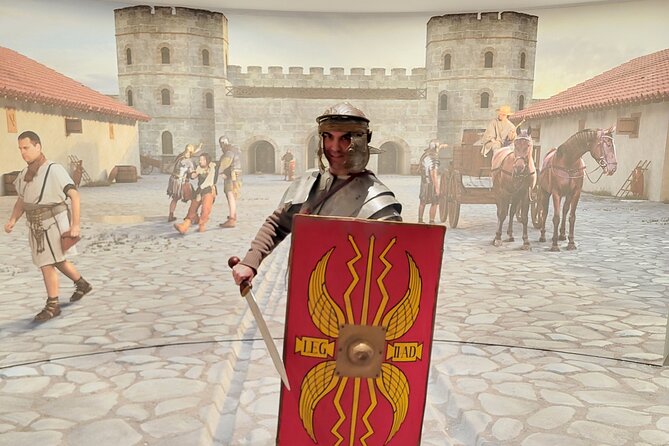
- Aquincum focus: Roman military amphitheatre, camp grounds, and villas in one connected story.
- Hercules Villa visit includes admission: great value because it’s part of the paid route.
- Aquincum Museum is the time sink: plan for the longest stop, and bring cash/card for the €8 entrance.
- English tour with Tiberius: the guide name comes up again and again in standout reviews.
- Moderate walking: comfortable shoes matter more than fancy gear.
Why Aquincum Feels Like the Real Budapest Story
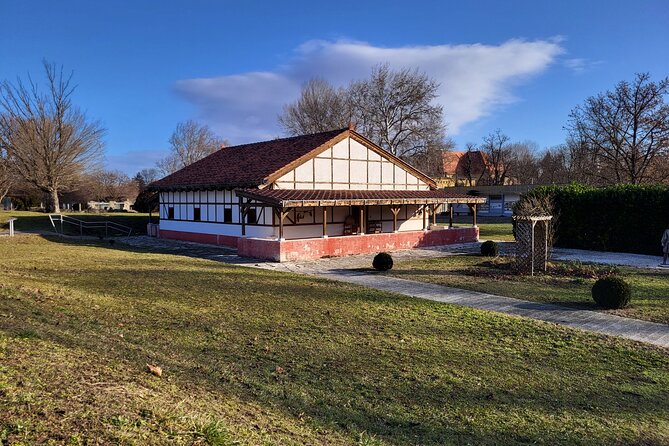
Budapest is often sold as Danube views and grand architecture. This tour adds another layer: the Roman world you can still walk through. Aquincum wasn’t a distant museum concept—it was a real military town, with buildings that shaped how people lived day to day. The route is designed to show you the logic behind the layout: where power sat, where soldiers and families moved, and where wealth left physical fingerprints.
The biggest win for me is that this is not a checklist tour. Yes, you see the amphitheatre and you see villa remains—but the value is in how the guide ties each place to the people who used it. It’s the difference between pointing at a ruin and understanding why it exists where it does.
You can also read our reviews of more private tours in Budapest



Roman Military Amphitheatre: A Fast Start That Sets the Tone
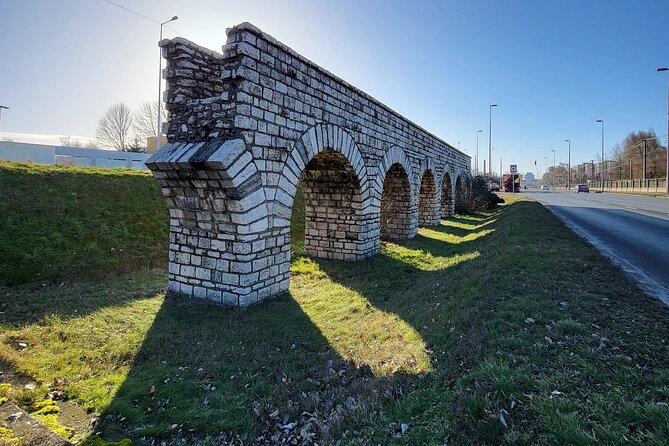
Your first stop is the Roman military amphitheatre. You’ll meet at this Roman site and spend about 30 minutes there. The time is brief, and that’s a good thing. Early on, it gives you a mental anchor: Aquincum wasn’t just temples and villas. It also had spaces built for public life tied to the military.
The guide’s take here matters. You’re told it’s unique within the Roman world, and even if you’re not a hardcore Roman-history person, it helps you frame the next stops. I like tours that don’t overstay early. You get oriented, you get the main idea, and then you move while your curiosity is still fresh.
What to watch for: because the first stop is short, don’t treat it like a photo break. Look for the features the guide points out, then let that understanding carry to Flórián téri Park.
Flórián téri Park and the Legio II Adiutrix Camp Grounds
Next you head to Flórián téri Park, where you uncover hidden layers inside the area of the former legionary camp of Legio II Adiutrix. This stop runs about 1 hour, and it’s not just a walk in a park. It’s a walk over ground with a job.
This is where the tour starts to feel like it belongs in Budapest, not in a textbook. Socialist-era and modern urban space sit close to older traces, and you get a sense of how city life stacks on top of earlier eras. The guide helps you connect what you’re seeing now to the military purpose of the site back then.
Why this stop is worth your time: it helps you stop thinking in isolated monuments. Instead, you start to see a functioning settlement—where movement, housing, and daily routines were shaped by the camp.
Practical note: since it’s an outdoor park-based visit, dress for the weather. You’ll be glad you did, because Aquincum is the kind of place where you’ll want to look longer once something clicks.
Hercules Villa: Mosaics and Meaning Between Apartment Buildings
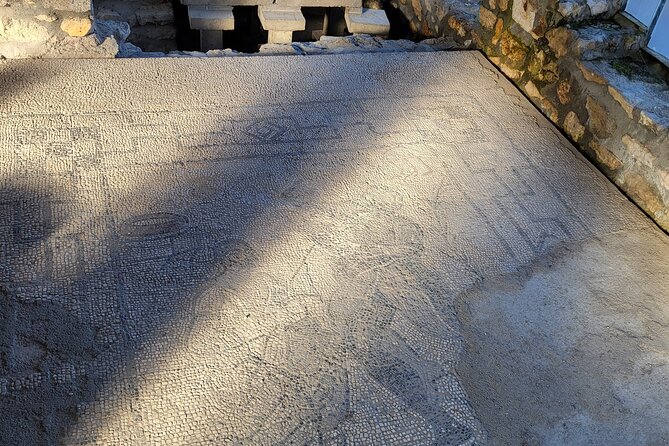
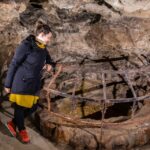
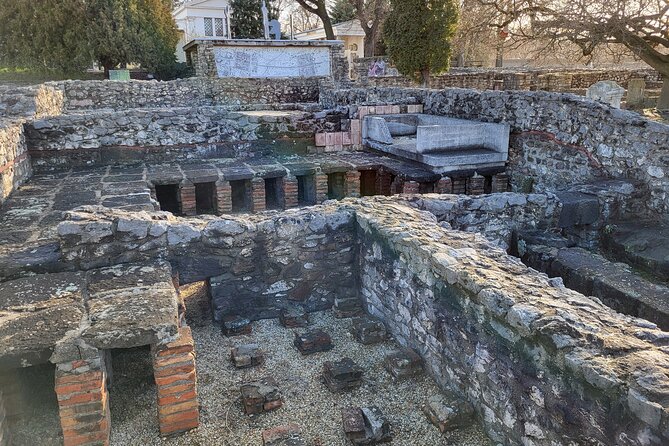
The Hercules Villa is one of the most visually intriguing parts of the route. It’s a Roman-era villa tucked between socialist-era apartment buildings. The contrast is the point: the Roman world didn’t disappear and vanish. Portions of it stayed, even as the city grew around it.
Admission is included here, and your time is about 30 minutes. That’s a sweet spot: long enough to understand what you’re seeing, short enough that you don’t get museum-fatigue. The most specific payoff is that you’ll have several mosaic floors to discover.
Mosaics are always a treat, but what I like in this stop is the way the guide frames what mosaics meant. In a military town like Aquincum, seeing wealth and decoration helps you understand that the Roman population wasn’t only soldiers in uniform. People with money—and preferences—lived here too, and the buildings reflect that.
If you love seeing evidence, not just ideas: this stop delivers tangible visuals in a very small amount of time.
One consideration: because the villa sits in a tight urban pocket, it’s less about sweeping ruins and more about reading details in context. If that’s your style, you’ll enjoy it.
Aquincum Museum and the Archaeological Park: Where You’ll Spend Most Time
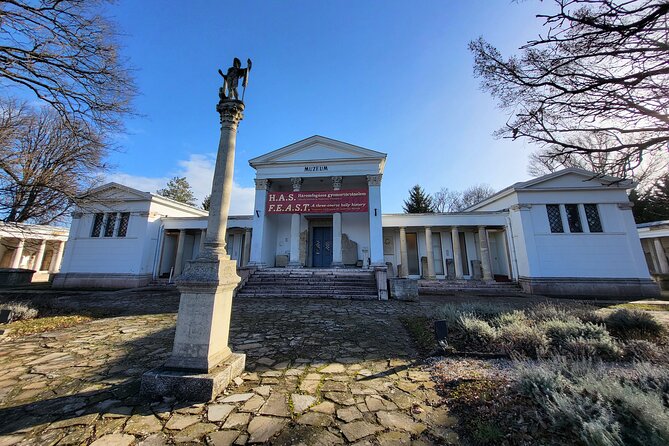
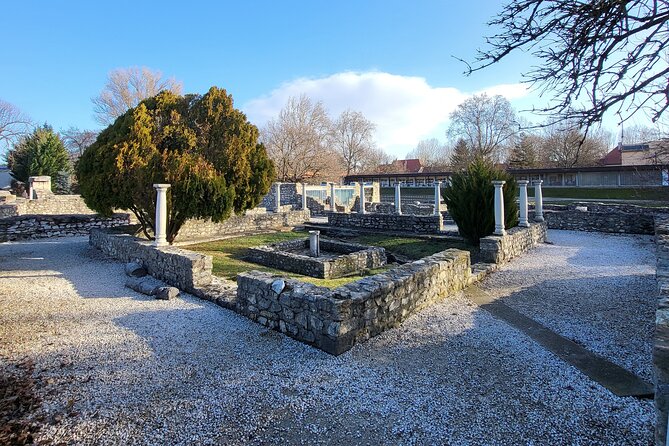
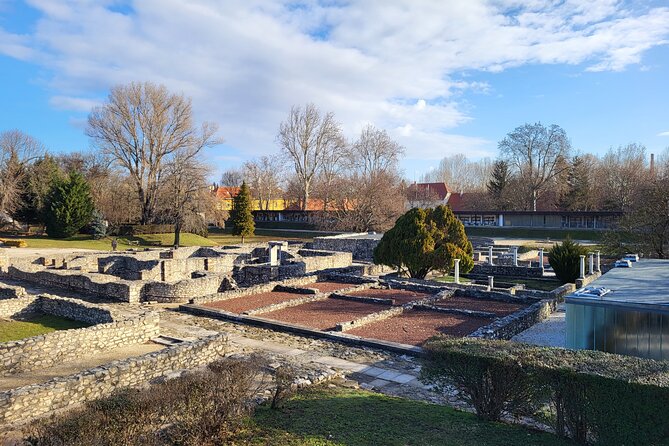
After the villa, you spend most of your visit at the Aquincum Museum, including both exhibits and the archaeological park (ruins). This is the longest stop—about 1 hour 30 minutes—and admission is not included. You’ll need to pay the museum entrance fee of €8.00 per person.
This portion is valuable because it’s where your earlier stops become clearer. The amphitheatre and villa gave you the shapes of the story. The museum-exhibit side helps fill in context: what the objects and ruins suggest about life in Aquincum. Then the archaeological park puts you back outside, linking the artifacts to the physical layout.
How to approach the museum part: don’t try to read everything cover to cover. Focus on the objects and displays the guide connects to what you’ve already seen. That’s how you get the full effect of a guided route instead of a quick self-guided walk.
Where you might feel the time: one hour 30 minutes is enough to really look, but not so long that you’ll feel stuck. Wear comfortable shoes and plan to slow down a bit here.





Price and Real Value: What $78.27 Gets You
The tour price is $78.27 per group, for groups up to 15 people. That’s how you should judge value here: it’s not $78.27 per person in a traditional small-group sense. For a private experience with multiple sites, that pricing structure can be a strong deal—especially if you’re traveling with family or friends.
One tradeoff to be aware of: the Aquincum Museum entrance is extra at €8 per person. The good news is that other entrances are handled differently across the route. The Roman military amphitheatre stop and Flórián téri Park are listed as free admission. Hercules Villa has admission included. So the main optional expense is the museum itself.
My practical take on cost: if you already planned to visit the museum on your own, paying the museum entrance anyway, a guided route here saves time and adds context. You’re paying for the connections between places—why these buildings existed and what that implies about daily life in the military town.
Logistics That Make or Break a Tour
This is a private tour/activity, so only your group participates. That matters more than it sounds. It lets the guide keep things aligned with your pace and questions instead of racing to catch fixed departure times.
You’ll get a mobile ticket, and the tour is offered in English. The meeting point is Budapest, Szőlő u. 2, 1034 Hungary, and the tour ends at Batthyány tér (Metro station across from Parliament), which is an easy place to rejoin public transportation.
The experience time runs about 3 to 5 hours, and travel time is included in that total. That’s helpful because you can plan the rest of your day without playing guesswork. It’s also listed as good for moderate physical fitness—so it’s not an extreme walking tour, but it is not a sit-and-sightsee-only outing either.
Also, a small welcome snack is included. It’s a small thing, but it helps on days when you don’t want to stop for food during the middle of a cultural route.
How Much Walking Is Too Much?
Based on what I’ve learned from the experience style and the schedule, you should assume you’ll cover a noticeable distance. There’s no long ride-and-drop format here. Even when time at each site is limited (30 minutes at the amphitheatre, 1 hour at the park, 30 minutes at the villa), you’re still moving between places and spending time standing and looking.
So I strongly recommend wearing comfortable walking shoes and choosing clothes that handle weather. It’s the kind of tour where you’ll want to linger when something clicks—then you don’t want your feet reminding you to hurry.
Good news: the schedule isn’t built to exhaust you. It’s built to keep you engaged, with the museum stop acting like the main anchor.
Who This Tour Is Best For (and Who Might Skip It)
This Roman Aquincum private tour is a great match if you like history that explains how people lived. I also think it’s ideal if you’ve visited a site before but felt like you were just seeing shapes. Here, the guide’s job is to give you the story behind why the buildings look the way they do.
You’ll likely enjoy it if you:
- Want Roman context tied to a living city
- Like mosaics and physical details
- Prefer a guided explanation over a self-guided museum-and-ruins scramble
You might consider skipping if you:
- Hate walking between stops
- Want only fully indoor, low-activity sightseeing
- Don’t want to pay the Aquincum Museum entrance fee on top
Final Call: Should You Book?
Book it if you’re the type of traveler who enjoys understanding the stories behind the stones. The tour’s structure keeps you from wandering aimlessly: you hit the amphitheatre, move through the former camp grounds, see the Hercules Villa mosaics, and then spend real time at the Aquincum Museum and archaeological park.
Skip it only if you know you won’t enjoy walking and detail-focused looking. Also, budget that €8 per person museum ticket. Once you do, the $78.27 per group price can feel like strong value for a private, English-guided route through a side of Budapest most people miss.
If you want Roman history that’s connected to streets and buildings—not just isolated ruins—this is one of the better bets in Budapest.
FAQ
How long is the Budapest Roman Aquincum private tour?
It runs about 3 to 5 hours, including travel time.
Is this tour private?
Yes. Only your group will participate.
What language is the tour offered in?
The tour is offered in English.
Where do we meet, and where does the tour end?
You start at Budapest, Szőlő u. 2, 1034 Hungary. You end at Batthyány tér, 1011 Hungary, at the Metro station across from Parliament.
Are tickets included?
Amphitheatrum admission is free, Flórián téri Park is free, and Hercules Villa admission is included. Aquincum Museum admission is not included.
How much is the Aquincum Museum entrance fee?
It is €8.00 per person.
Is the tour accessible by public transportation?
Yes, it’s near public transportation.
What if the weather is bad?
This experience requires good weather. If it’s canceled due to poor weather, you’ll be offered a different date or a full refund.