REVIEW · BUDAPEST
Budapest: City Center Walking Tour
Book on GetYourGuide →Operated by Tourist Angel · Bookable on GetYourGuide
Budapest gets real fast when you walk, not bus. This 2-hour city-center tour gives you an easy orientation of Pest, with expert stories tying 19th-century architecture to what came after. I particularly love the stop at St Stephen’s Basilica and the way the walk connects big landmarks to everyday streets. One thing to consider: it runs rain or shine, so you’ll want proper shoes and a light rain layer.
A big plus is how much the guides seem to care about you understanding the city, not just snapping photos. Guides like Lena and Bea (and others over different days) bring the route to life with clear explanations, quick answers, and even fun touches like singing for the group. The pace is manageable for most people, but it’s still a city walk, so bring patience if you prefer lots of long stops.
In This Review
- Key tour highlights at a glance
- Why walking Pest’s core beats the bus ride
- Marcius 15 Square and the Great Blessed Lady cathedral
- The Danube promenade views along Duna Corso (Danube drama, up close)
- Pesti Vigadó and Vorosmarty Square: art, elegance, and a café with stories
- Elizabeth Park and the Budapest Eye: a modern marker in a historic city
- St Stephen’s Basilica: the dome, the colonnade, and the impact
- Traditional pedestrian streets, Mr. Safe, and a lighter moment
- Liberty Square: where the history gets uncomfortable
- Kossuth Square and the Hungarian Parliament building
- The best follow-up: Shoes on the Danube Bank (and a river walk)
- Price and value: what $14 buys you in Budapest
- How to get the most out of your 2 hours
- Who this tour suits best
- Should you book this Budapest city center walking tour?
- FAQ
- How long is the Budapest City Center Walking Tour?
- What does the tour include?
- Is there an entrance fee included?
- What language is the guide?
- Will the tour run in bad weather?
- Where is the meeting point?
- Is the tour wheelchair accessible?
- Is this a large group tour?
- How much does it cost?
Key tour highlights at a glance
- Marcius 15 Square to Pest’s center: a clean intro route that sets your bearings quickly
- Duna Corso river promenade views: Danube, bridges, and the Castle of Buda in one sweeping look
- Iconic photo stops: St Stephen’s Basilica dome and colonnade, plus Parliament-area monuments
- People + stories: guides bring history down to human scale, from occupation to 1956
- Relaxed center walking: pedestrian streets and squares, not cramped sightseeing-bus chaos
- Optional add-on after the tour: the Shoes on the Danube Bank monument is an easy follow-up
Why walking Pest’s core beats the bus ride
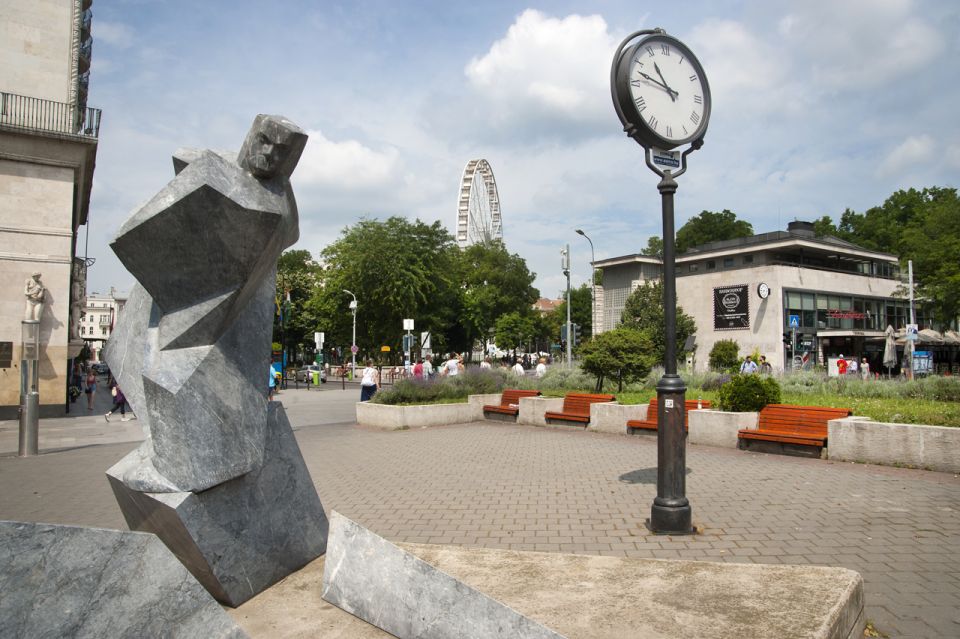
If you only do bus stops in Budapest, you miss the flow of the city. This tour is built around the idea that Budapest is best understood at human speed: you look up at buildings, glance across the Danube, and then move on before the “tourist checklist” feeling kicks in. The route focuses on Pest’s inner city, where you can still feel the day-to-day rhythm—cafés, parks, and broad squares with monuments that make you stop whether you planned to or not.
The best part is how the guide turns landmark-hunting into city-understanding. You’re not just told what you’re seeing; you’re given the meaning behind it. That’s why this tour works even if it’s your first day: it helps you read the city afterward, not just during the walk.
You can also read our reviews of more walking tours in Budapest



Marcius 15 Square and the Great Blessed Lady cathedral
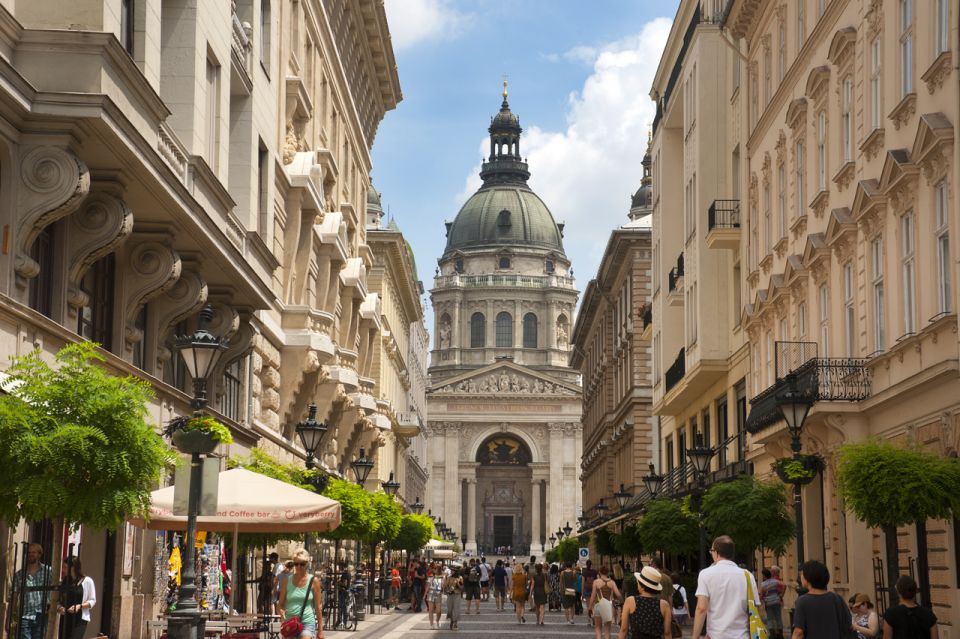
The tour starts in the area around Marcius 15 Square, which is a smart opening because it’s central and you immediately feel the “Pest is the civic face of the city” vibe. From there, you’ll admire the Gothic Medieval cathedral of the Great Blessed Lady. Even if you don’t go inside, the architecture is the kind that makes you slow down—pointed lines, classic European Gothic styling, and that sense of old-world seriousness.
This first section matters because it gives you context before the tour hits the more dramatic monuments. You’ll start noticing how Budapest’s buildings communicate power and identity—religious, civic, and national—sometimes all within a few blocks.
The Danube promenade views along Duna Corso (Danube drama, up close)
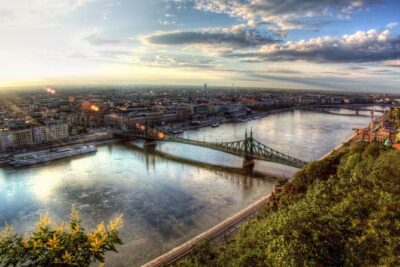
Next comes the Duna Corso river promenade, one of those stretches where you suddenly understand why the Danube is the city’s main stage. You’ll walk along the riverfront and take in the view over the water: Danube bridges, the skyline, and the Castle of Buda on the opposite side.
This isn’t just a photo moment. The promenade stop helps you learn the city’s geography—where things sit relative to each other—so later, when you’re choosing how to get somewhere, you’ll feel oriented instead of guessing. It also makes the monuments that come later hit harder, because you’ve already “placed” the city in your mind.
Pesti Vigadó and Vorosmarty Square: art, elegance, and a café with stories
As you move toward the next landmarks, you’ll pass Pesti Vigadó, described as the dance palace. You’ll also reach Vörösmarty Square, where you can spot the historical Gerbeaud Café.
Even without an entrance ticket, these stops are useful. Pesti Vigadó signals the cultural side of Budapest—performance and public life—while the café reminds you that this city’s beauty isn’t only monuments. It’s also how people pause. Think of it as a gentle break in the walking rhythm: you get a sense of old Budapest elegance and then keep moving.
Elizabeth Park and the Budapest Eye: a modern marker in a historic city
From the central streets you’ll reach Elizabeth Park, and then Budapest Eye, the largest Ferris wheel in Europe. This is one of those “modern Budapest” moments that helps the city feel real instead of frozen in postcards.
In a walking tour like this, the reason a stop like the Budapest Eye works is simple: it gives you something current to anchor your viewpoint. You’ll have just spent time with 19th-century style and historic civic spaces, and then you see a later layer of the city—proof that Budapest keeps changing, even while honoring its past.
You can also read our reviews of more city tours in Budapest






St Stephen’s Basilica: the dome, the colonnade, and the impact
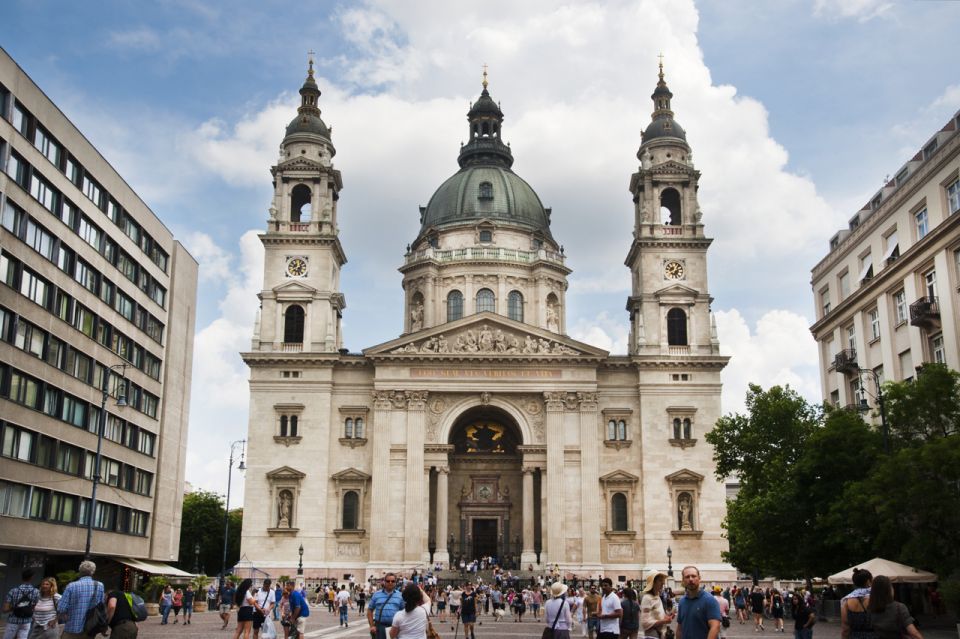
After a short walk, the tour hits its biggest centerpiece: St Stephen’s Basilica. The “monumental dome and colonnade” aren’t just impressive; they’re memorable. You’ll feel the scale immediately, and it’s the kind of landmark that makes you understand why churches in Europe often function as more than religious sites. They’re visual anchors for national identity.
What I like about this stop on a timed walking tour is that it’s not treated like a quick drive-by. You’re given enough time to look around, take photos, and connect the building to the stories the guide is building across the route. It’s the moment where the tour shifts from sightseeing to something closer to understanding.
Traditional pedestrian streets, Mr. Safe, and a lighter moment
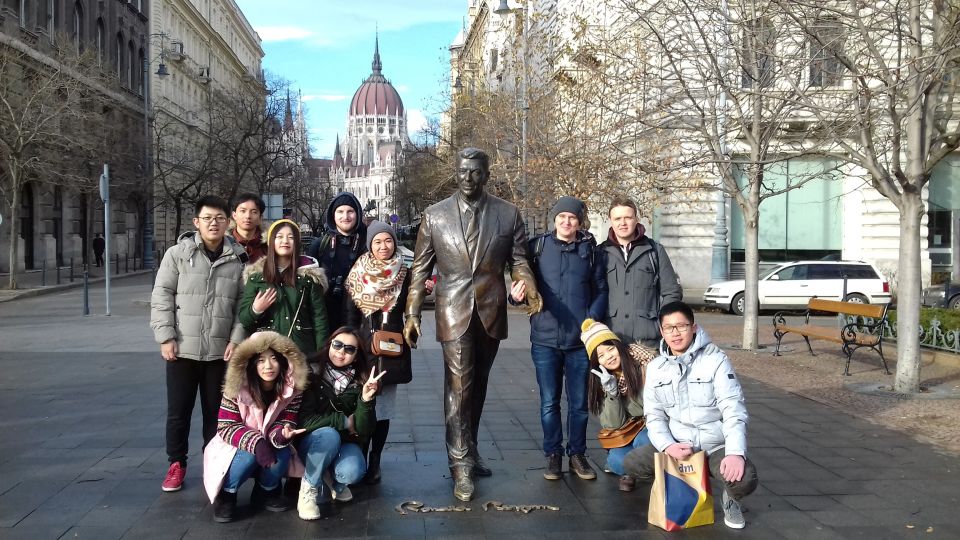
Once you’ve had your fill of grand architecture, the tour turns onto traditional pedestrian streets. This is smart for your legs and your attention span. It also keeps the day from becoming only solemn monuments.
You’ll even spot the cute statue of Mr. Safe, which is exactly the kind of small, friendly city detail that makes Budapest feel like a lived-in place instead of a museum. A tour that includes at least one lighter stop tends to stick with you longer, because it balances the heavy sections that come later.
Liberty Square: where the history gets uncomfortable
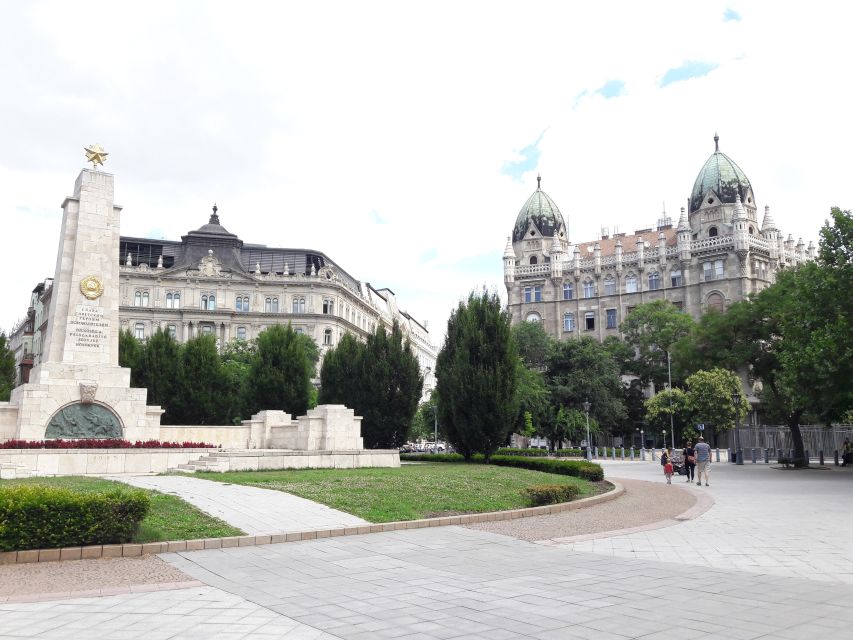
Then comes Liberty Square, and the tone changes. Here, you’ll learn about Budapest’s traumatic past—first as a center of Nazi occupation, then under Communist oppression. This is also where the tour becomes more than visual.
A guide is crucial in a place like this, because you need context to understand why the monuments matter. This is where the walk helps you avoid the common mistake of treating history as just a list of events. You learn how dictatorship and repression shaped daily life and public spaces—and why Budapest’s monuments aren’t just decoration.
If you’re sensitive to heavier topics, it helps to know this is part of the route. It’s not a long lecture; it’s integrated into where you are and what you’re seeing.
Kossuth Square and the Hungarian Parliament building
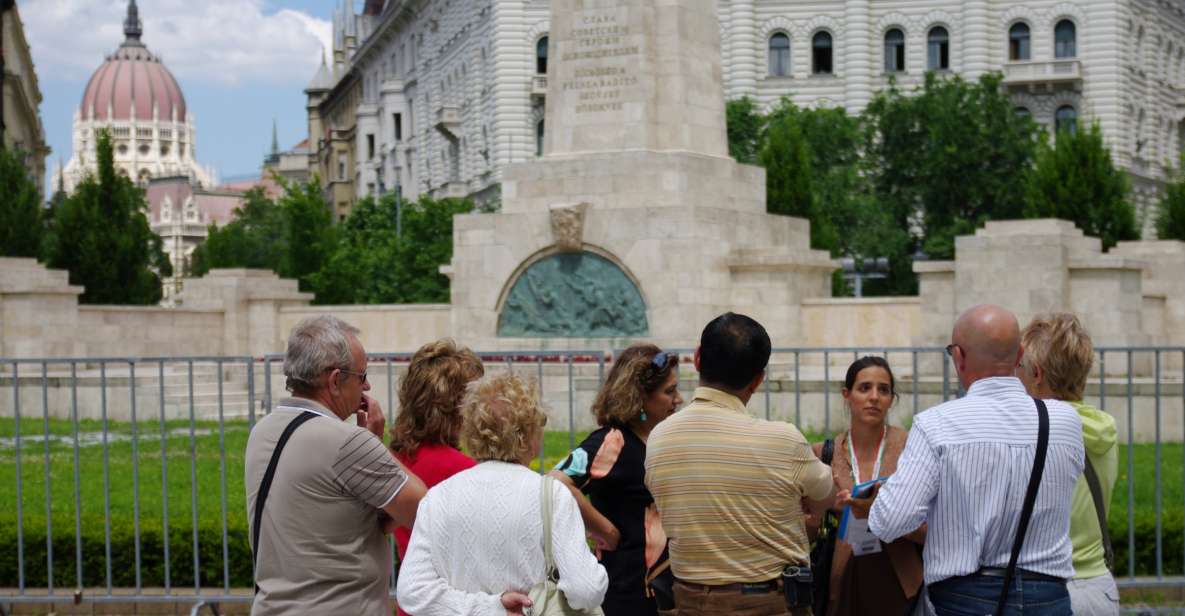
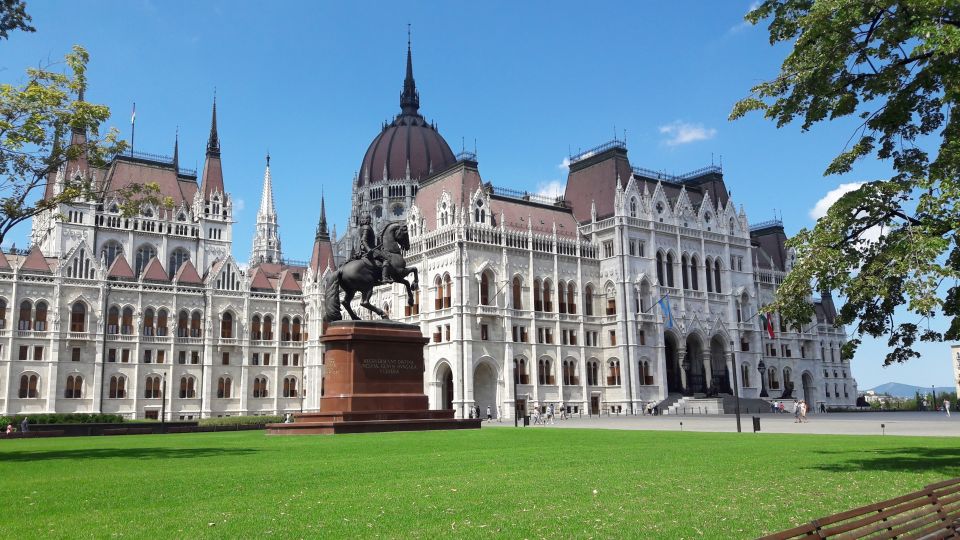
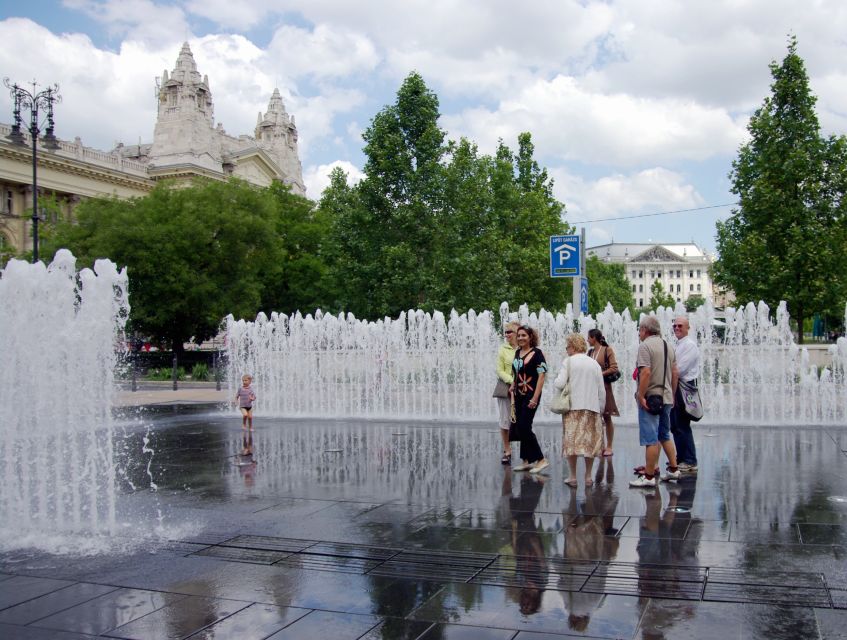
The walk finishes at Kossuth Square, with views and sights around the Hungarian Parliament building. This is the kind of location you can’t rush. Even if you’ve seen photos, seeing it in person gives scale and drama a new meaning.
The guide ties this area to stories about dictatorship and the 1956 revolution. This matters because the Parliament building isn’t just a pretty landmark. It’s a symbol tied to political struggles that deeply shaped the country. With a good guide, you leave with a “why this place looks the way it does” understanding instead of a vague sense of grandeur.
The best follow-up: Shoes on the Danube Bank (and a river walk)
After the tour, you can add a poignant stop: Shoes on the Danube Bank monument. It’s an easy extension from the riverfront area, and it lands well because you’ve already walked portions of the Danube and learned how the city connects across the water.
Even if you don’t do the monument, staying by the river for a slow stroll is a great way to digest what you learned. Budapest’s riverbanks can feel calm after the square-and-monument intensity.
Price and value: what $14 buys you in Budapest
$14 per person for a 2-hour guided walk is good value if you want structure. You’re paying for two things that are hard to DIY: (1) a sensible route through central Pest, and (2) a guide who can connect buildings to history without making it feel like a classroom.
You’re not paying for entry tickets here, so the cost stays low. That’s ideal if you’re traveling with a budget or you just want an overview before deciding what to visit in depth. In many European cities, a guided introduction alone can cost more; at this price, the guide time is the real draw.
Also, small-group touring tends to keep the experience human. You can ask questions without the constant “wait your turn” feeling. (The tour is listed as wheelchair accessible as well, which is another sign the provider is thinking beyond just speed.)
How to get the most out of your 2 hours
This is a short tour, so your strategy matters.
- Wear comfortable shoes. Budapest sidewalks are charming, but you’re moving for the full 2 hours.
- Bring a light rain layer. It runs rain or shine, and you’ll still want to see everything.
- Keep your phone ready, but don’t spend the whole time filming. The guide’s stories are part of the value.
- Ask questions when you get them. Several guides are known for answering everything from history details to practical advice about the city.
- If you’re traveling with mixed ages, this kind of walk works well because the pacing can stay lively without turning into a race.
One extra fun detail: some guides have included songs or humor as part of the storytelling. That’s not something you should plan around, but it’s a sign of how engaged the guides tend to be.
Who this tour suits best
This walking tour is perfect if you want:
- A fast orientation to Pest’s inner city
- A guided explanation of major monuments, including the heavier 20th-century history
- Photo stops without feeling trapped on a bus
- A manageable length for a first-time or semi-short day in Budapest
It’s especially appealing for first-timers who want to understand where things sit relative to the Danube and the broader city layout. If you already know your way around, you might still find it useful for the narration—especially the Liberty Square and Parliament-area context.
Should you book this Budapest city center walking tour?
Yes—if you want a smart first pass through Pest with a guide who can explain what you’re seeing and why it matters. At $14 for a guided 2-hour overview, it’s a low-risk way to learn the city’s geography and history before you pick bigger-ticket activities.
Skip it or switch to a different option if you hate walking in the rain or you only want lighter, purely scenic sightseeing. This route isn’t all sunshine. It includes real moments of 20th-century history, and the guide handles it in the context of the places themselves.
FAQ
How long is the Budapest City Center Walking Tour?
The tour runs for 2 hours.
What does the tour include?
It includes a live tour guide.
Is there an entrance fee included?
No. Entrance fees are not included.
What language is the guide?
The live tour guide provides the tour in English.
Will the tour run in bad weather?
Yes. The tour takes place rain or shine.
Where is the meeting point?
The meeting point may vary depending on the option you book.
Is the tour wheelchair accessible?
Yes. It is listed as wheelchair accessible.
Is this a large group tour?
It’s listed as a small group available.
How much does it cost?
The price is $14 per person.