REVIEW · BUDAPEST
Budapest Historic Downtown Bicycle Tour in small groups
Book on Viator →Operated by BIKE & RELAX - Bike Tours and Bike Rental · Bookable on Viator
Budapest makes more sense with a bike. This small-group downtown ride knits together big-name sights with live guide storytelling, so you get the why, not just the what. I especially like how the pace stays friendly while you still cover real ground.
Two things I really like: you get a helmet and bottled water, plus free luggage storage so you’re not juggling bags all morning or afternoon. And the route hits the city’s key “layers” (Jewish Quarter, royal/imperial downtown, and the Danube memorial zone) without eating your whole day on transit or queues.
One consideration: it’s not recommended for beginners, and even with bike lanes, you’ll deal with Budapest traffic dynamics for parts of the ride. Also, you’ll admire major interiors from the outside—great for time, but you won’t be going in.
In This Review
- Key things to know before you ride
- Getting your bearings fast in Budapest’s real downtown
- Price value: what your $41.13 buys you
- Where the tour shines: guide-led history and safe pacing
- The ride segments: Jewish Quarter to Heroes’ Square
- Bike & Relax: short start, real momentum
- Rumbach Street Synagogue area: art deco + street art energy
- Liszt Academy: architecture for music, not just photos
- Andrássy Avenue corridor: the “Broadway of Budapest”
- House of Terror (outside): Gestapo past and communist prison memory
- Heroes’ Square: Central European history in a single glance
- City Park (Varosliget): from fake castle fun to modern concert halls
- Seasonal feel: ice rink in winter, boating in summer
- Varosliget itself: big city park energy
- Vajdahunyad Castle: why the fake castle works
- House of Music Hungary: modern architecture right at the park edge
- Museum of Ethnography: architecture that frames views
- Andrássy favorites: Opera, St. Stephen’s Basilica, and Szabadság tér
- Hungarian State Opera: UNESCO street ensemble energy
- St. Stephen’s Basilica: the right-hand detail
- Szabadság tér: the “Wall Street” vibe with heavy history underneath
- Parliament, Shoes on the Danube, and the bridge parade to Buda
- Hungarian Parliament Building (outside): operational monument + river views
- Shoes on the Danube Bank: memorial that doesn’t need words
- Chain Bridge pass: the oldest river link
- Rudas Baths and Gellert Baths: Turkish bath history on the river edge
- Liberty Bridge: youth meeting spot + long view
- What to do after the last pedal: Central Market and food planning
- Should you book this Budapest historic bike tour?
- FAQ
- How long is the Budapest Historic Downtown Bicycle Tour?
- What time does the tour start, and where do I meet?
- Is the tour in English?
- Are entrance fees included?
- What’s the group size and is it beginner-friendly?
- Is cancellation allowed if weather is bad?
Key things to know before you ride
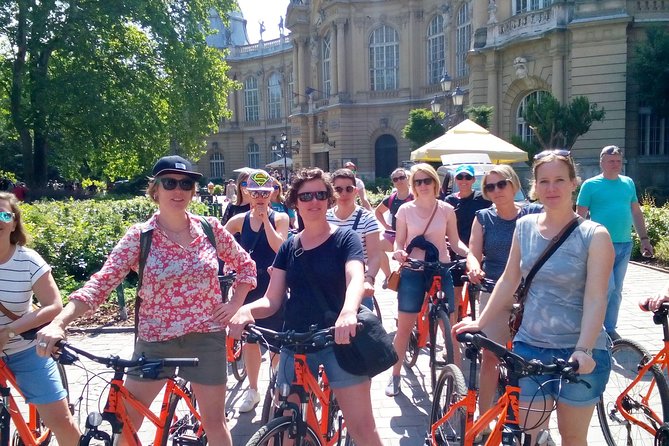
- Small groups (max 10) make it easier to stay together and move at a human pace
- No-entry sightseeing keeps the tour moving, but you’ll view big buildings externally
- Intelligent stop timing balances quick photo breaks with longer landmark moments
- City Park + Danube in one loop gives you architecture variety without extra transfers
- English live commentary makes history usable instead of random dates
- Helmet provided and safety-focused guiding help you feel settled early
Getting your bearings fast in Budapest’s real downtown
If this is your first time in Budapest, you’re doing the smart thing. A bike tour like this is built for orientation: you ride through the neighborhoods that shaped the city, then you land at the monuments people come to photograph for a reason.
Budapest has a “left-bank/right-bank” personality, and this route gives you both. You spend time on the downtown side with big civic and cultural landmarks, then you work your way toward the riverfront memorials and bridges before finishing back at the starting area. The result is a half-day framework you can build on later—restaurants, neighborhoods, and day trips all get easier once you understand how the pieces connect.
What makes this tour especially useful is the way it groups themes. You’re not just hopping from one famous building to the next. You pass through the historical corridors that shaped modern Budapest, including the Jewish Quarter and the central avenues that lead straight toward the Danube. After the ride, you’re not guessing where things are—you know.
You can also read our reviews of more historical tours in Budapest


Price value: what your $41.13 buys you
At about $41.13 per person for roughly 3 hours 30 minutes, you’re paying for three things that add up fast in a city like this: a guide’s time, a bike, and a guided route that’s designed to keep you from zigzagging around town.
The bike itself is included, and the tour also provides bottled water and free luggage storage during the ride. That’s practical value. In real travel terms, it means you can travel lighter and spend less mental energy figuring out where to stash bags or what to do with them while you sightsee.
Just as important: most major stops are view-only (no entry tickets included). That’s a trade-off, but it’s also part of the value. You’re not buying multiple building tickets to get a quick glimpse—you’re getting a guided scan of architectural highlights, monuments, and historical context at a pace that’s hard to beat on your own in the same time window.
Where the tour shines: guide-led history and safe pacing
This is the part that tends to make or break bike tours, and in Budapest you really feel it. The strongest element here is the guide-led commentary—clear, structured history that helps you connect landmarks to the people and events behind them.
You’ll also appreciate the “stay together” mentality. Multiple people mention that the guide kept the group safe and managed pacing well, including when riders weren’t as fast as others. That matters because you’re mixing cyclists, pedestrians, and occasional road friction in a busy city center.
A few other practical safety notes from the tour details:
- A helmet is provided (though not obligatory).
- The tour is not recommended for beginners, so you’ll want confidence in basic biking.
- There’s a 110 kg weight limit.
- It’s not recommended for visual impairment.
If you’re an okay cyclist and you’re willing to follow instructions, this is a ride that feels controlled rather than chaotic.
The ride segments: Jewish Quarter to Heroes’ Square
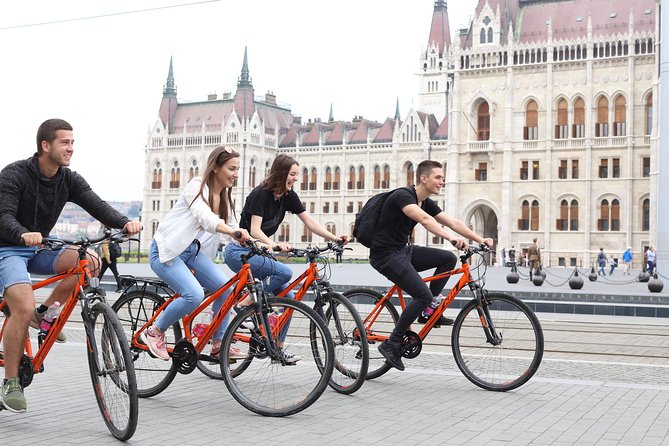
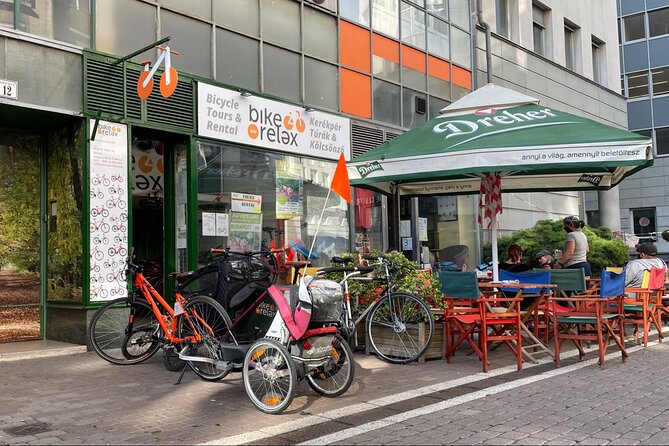
You start at Budapest, Madách Imre út 12, 1075 Hungary around 10:30 am, and the tour ends back at the same meeting point. From the start, it’s set up like a sightseeing loop, not a random “bike until you’re tired” outing.
Bike & Relax: short start, real momentum
This first stop is quick, but it sets you up. If you’ve never toured by bike before, this is where you get comfortable with how the guide moves the group and how often you’ll stop.





Rumbach Street Synagogue area: art deco + street art energy
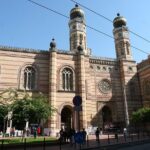
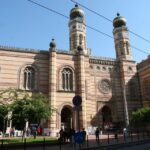
You’ll pause at the Rumbach Synagogue area, including the art deco feel and the street art texture of the neighborhood. Even without entering, the exterior tells a story—Budapest didn’t only build grand palaces. It also built bold religious and community landmarks in distinct styles, right in the heart of town.
Liszt Academy: architecture for music, not just photos
Next up is the Liszt Academy (music school). You get a close look at the architecture of the Music Academy next to the Jewish District. It’s one of those places where you can practically feel the function—classical music students study here, and there are performance spaces. If you like culture stops that don’t require tickets, this fits perfectly.
Andrássy Avenue corridor: the “Broadway of Budapest”
You’ll pass the famous central street connecting downtown toward Heroes’ Square—often called the Broadway of Budapest. You’ll also roll past areas like Liszt Square and the Ring Roads corridor. Along this stretch, the guide’s commentary makes the “big avenue” layout feel intentional rather than like a car-focused funnel.
House of Terror (outside): Gestapo past and communist prison memory
You’ll stop at the House of Terror Museum area, but you won’t enter. Still, it’s an important stop. The site is tied to the former GESTAPO headquarters and the communist-era prison function, now presented as a museum. In front, there’s a portion of the Berlin Wall displayed—enough to underline the theme without turning the tour into a long museum session.
If you prefer lighter sightseeing, this is the emotional gear-shift moment on the ride. It also makes Heroes’ Square land with more context.
Heroes’ Square: Central European history in a single glance
At Heroes’ Square, you’ll have time to take it in. The plaza was designed for the 1000-year anniversary of Hungary in 1896, and it works like a history sampler. You’ll get a big-picture explanation that runs from King Stephen to revolutionary Kossuth, which helps you see the monument complex as more than statues.
This stop is also one of the best places for photos, because the layout gives you multiple angles without you needing to squeeze into crowds inside.
City Park (Varosliget): from fake castle fun to modern concert halls
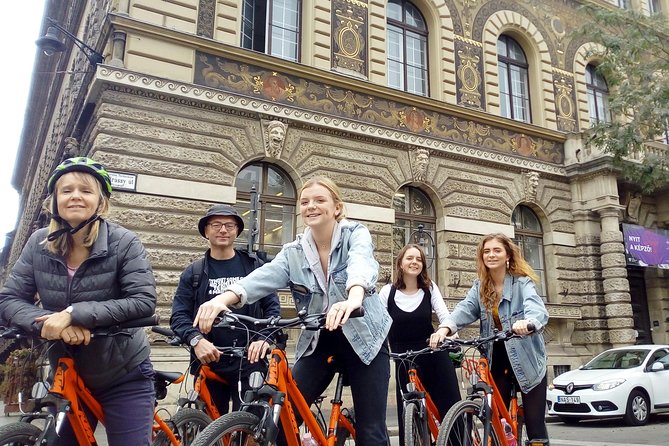
After the civic grandness of Heroes’ Square, the tour shifts into a greener, more recreational mood—City Park (Varosliget).
Seasonal feel: ice rink in winter, boating in summer
You’ll pass the City Park ice rink & boating area. The tour notes that in winter it’s one of Europe’s well-known ice rings, while in summer it becomes a lake-like boating scene. That means your ride feels seasonal without changing the core route.
Varosliget itself: big city park energy
Then you reach the park itself, described as about a square kilometer of green space in the center. Even with redesign work happening, it’s still a popular leisure and sport spot. For travelers, this is a useful reset: you get a change of pace after dense downtown streets.
Vajdahunyad Castle: why the fake castle works
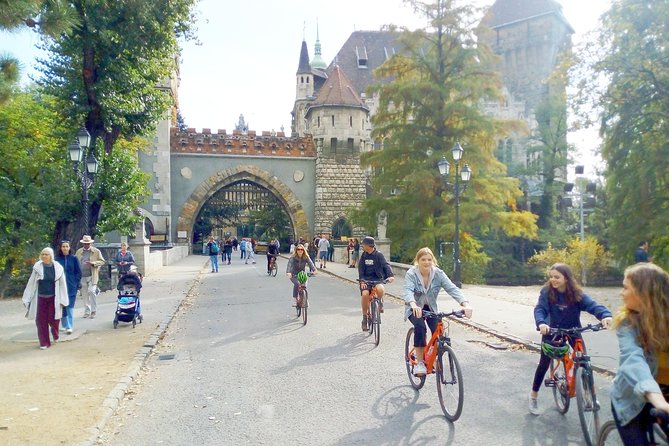
You’ll see Vajdahunyad Castle, described as a fake castle, and you’ll get the explanation for why that idea matters. It’s the kind of stop that’s more interesting when someone points out the intent behind the design rather than just calling it a copy. You’ll also spot a statue of Anonymous, which adds a layer beyond the postcard view.
House of Music Hungary: modern architecture right at the park edge
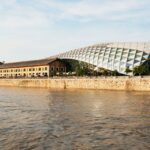
Next is the House of Music Hungary, a concert hall with modern architecture. It’s an exterior admire-only stop, but it’s still worth it because the shape and style contrast so strongly with the older downtown monuments you saw earlier.
Museum of Ethnography: architecture that frames views
You’ll also pass the Museum of Ethnography, known for its unique shape and spectacular views at the park edge. Again, you’re not going in, but you’re getting the payoff—good viewpoints and an architecture lesson that makes Budapest feel like a living canvas, not a museum city trapped in the past.
Andrássy favorites: Opera, St. Stephen’s Basilica, and Szabadság tér
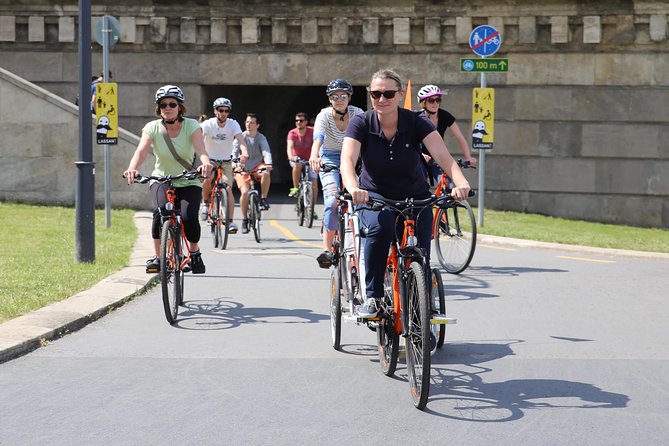
Back into the downtown rhythm, you’ll hit several landmarks that are big, iconic, and architecturally precise—even from the outside.
Hungarian State Opera: UNESCO street ensemble energy
You’ll stop near the Hungarian State Opera on Andrássy Street, designed by Michael Ybl. You won’t enter, but you’ll learn the architectural styles of the late 19th century—and also about the historical M1 subway connection. Andrássy Street’s ensemble is UNESCO protected, and the guide’s framing helps you understand why this corridor feels like an engineered masterpiece.
St. Stephen’s Basilica: the right-hand detail
Next is St. Stephen’s Basilica (Szent István Bazilika). You won’t go inside, but you’ll see a highlight shown through glass: the right hand of St. Stephen. This is one of those reminders that Budapest’s biggest churches are also powerfully curated memorial spaces.
Szabadság tér: the “Wall Street” vibe with heavy history underneath
At Szabadság tér, you’ll pick up a contrast: on one side the “Wall Street” feeling of Budapest, on the other place for bloody history and controversial memorials. The tour also flags remembrance for the Holocaust and World War II in Budapest. If you like history that’s honest and not sanitized, this stop gives it to you in a visible way.
Parliament, Shoes on the Danube, and the bridge parade to Buda
This is the section where Budapest becomes cinematic. The riverfront landmarks aren’t just pretty—they’re dense with meaning.
Hungarian Parliament Building (outside): operational monument + river views
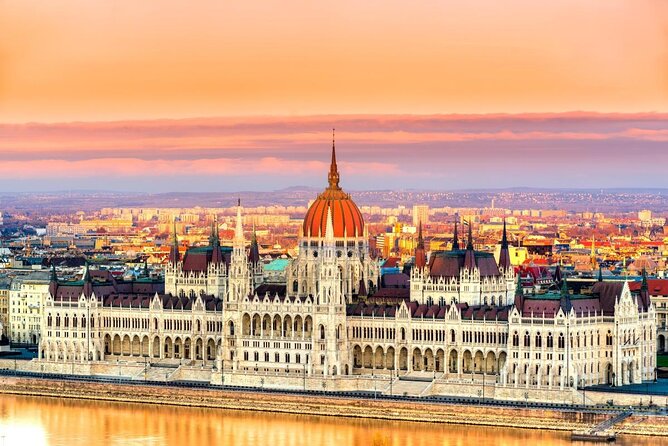
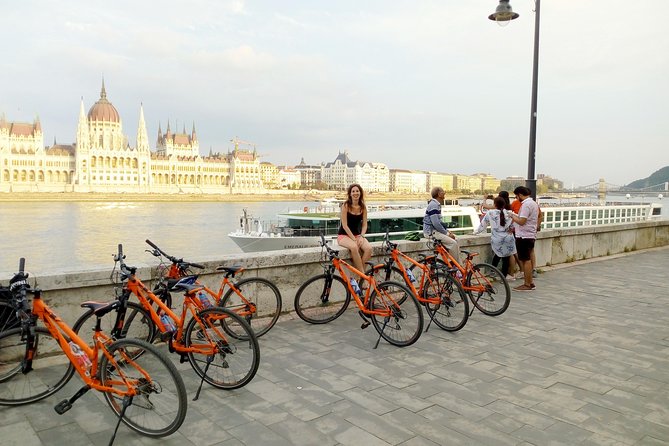
You’ll stop at the Hungarian Parliament Building. It’s described as both a historical monument and operational parliament. You won’t enter, but you’ll get an important “why it’s famous” moment: the building’s river-bank setting and the panorama across the Danube toward Buda.
Shoes on the Danube Bank: memorial that doesn’t need words
Then you’ll reach Shoes on the Danube Bank, near the Parliament. The tour points out you may not always get direct access depending on traffic, but it’s a pass-by stop designed to connect you to a stark memorial story. It’s one of the most thoughtful ways to experience the riverfront, because it slows your attention down.
Chain Bridge pass: the oldest river link
You’ll also pass the Chain Bridge, Budapest’s oldest bridge across the Danube. Even without a long stop, it anchors the river narrative and helps you map how the city is stitched together.
Rudas Baths and Gellert Baths: Turkish bath history on the river edge
On the Buda side, you pass Rudas Baths, noted as one of Budapest’s oldest Turkish baths. The tour says admission isn’t included, but it also reminds you to check opening schedules if you want to bath—plus there are man- and woman days for the hammam.
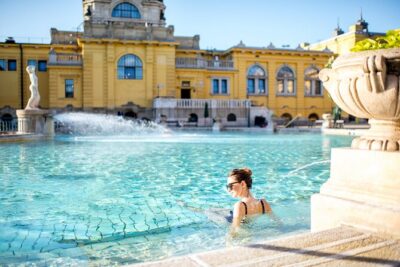
Later you’ll end up at the Gellert Baths area. The tour describes them as famous for their art-deco style and as dominating the river bank. Even as a visual pass-by, it helps you understand why Budapest’s thermal culture is such a cornerstone of daily life, not just a tourist add-on.
Liberty Bridge: youth meeting spot + long view
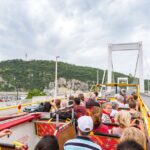
Finally, you’ll cross to the Liberty Bridge (Szabadság hid). Originally named after Austrian Emperor Franz Joseph, it later became Liberty Bridge after the monarchy ended. The vibe here is described as a meeting point for students and youth looking for an amazing view, which gives this segment a lighter tone before you head back.
What to do after the last pedal: Central Market and food planning
The tour doesn’t send you into a food program, but it gives you a strong next step. It notes that Central Market is a main tourist attraction and that you should plan to return to taste Hungarian food and soak up the atmosphere.
That’s a good strategy because you’ll finish the bike loop already having learned the city’s structure—so walking around the market afterwards feels less like wandering and more like exploring with purpose.
The tour also mentions you’ll pass the National Museum, which can help you decide if you want to go deeper into regional stories later.
Should you book this Budapest historic bike tour?
I’d book it if you want a fast, structured introduction to Budapest’s key neighborhoods and monuments, without wasting your time on extra tickets or long transit breaks. It’s also a great fit if you’re comfortable on a bike and want your morning to feel efficient but not rushed.
Skip it or think twice if:
- You’re a true biking beginner, since the tour is explicitly not recommended for beginners.
- You need full museum access, because major stops like the Opera, Basilica, and House of Terror are view-only.
- You want extra time for bathroom and food breaks; the tour packs a lot in and keeps stops short, which some people would prefer more linger-time for.
If you’re planning a first-day in Budapest, this is one of the best ways to get oriented and educated at the same time—and then let the rest of your trip become easier to choose.
FAQ
How long is the Budapest Historic Downtown Bicycle Tour?
It runs for about 3 hours 30 minutes.
What time does the tour start, and where do I meet?
The tour starts at 10:30 am at Budapest, Madách Imre út 12, 1075 Hungary. It ends back at the same meeting point.
Is the tour in English?
Yes, it’s offered with a live guide in English.
Are entrance fees included?
No. The tour does not include entry into buildings, so entrance tickets are not included.
What’s the group size and is it beginner-friendly?
It’s a small group with a maximum of 10 travelers. It’s not recommended for beginners, and it includes a helmet (provided, though not obligatory).
Is cancellation allowed if weather is bad?
The experience requires good weather. If it’s canceled due to poor weather, you’ll be offered a different date or a full refund.