REVIEW · BUDAPEST
Budapest: Hammer & Sickle Communism Walking Tour
Book on GetYourGuide →Operated by Absolute Tours · Bookable on GetYourGuide
Budapest carries its history in plain sight, and this walk shows you the parts most people skim. You’ll follow the communist-era story through Pest streets, a 1956 exhibition stop, and ending views of major political landmarks like Parliament and Liberty Square. It’s a compact tour that connects big events to daily moments—passports, school, work life, and the strange normal you had behind the Iron Curtain.
What I like most is the focus on how people lived, not just slogans. I also appreciate the guide-led format: feedback highlights that the best guides are well prepared and tell the story in a conversational way, with one mentioned name—George—getting specific praise for making Hungary’s communist years click.
One thing to consider is the pace: there’s about 2 hours of continuous walking, and the topic is not recommended for kids under 14 or for people with mobility impairments.
In This Review
- Key highlights to know before you go
- Enter at Deák Ferenc tér, then walk into the communist-era map
- How everyday life under communism becomes a story you can picture
- The 1956 Revolution exhibition stop: where the timeline gets human
- Liberty Square and the Soviet Memorial: history in a wide-open space
- Walking toward the Parliament area: political geography you can feel
- The Trabant-themed moment and a coffee break that actually helps
- Group size, guide style, and how long you’ll be on your feet
- Price: is $72 worth it for a 2.5-hour history walk?
- Who should book this Hammer & Sickle walk
- Should you book this tour?
- FAQ
- Where is the meeting point for the Budapest Hammer & Sickle tour?
- How long is the tour?
- Is the tour offered in English?
- What refreshments are included?
- How much walking is involved?
- Does the tour run in bad weather?
- Is this tour suitable for children?
- Is the tour suitable for people with mobility impairments?
- Is pickup available?
- Can I cancel for a refund?
Key highlights to know before you go
- Communism explained through daily life like passports, school routines, and work culture
- A stop tied to the 1956 Revolution, with a small exhibition that anchors the timeline
- Liberty Square’s Soviet Memorial, including the area described as the last Soviet monument
- Parliament Square area walking, so you see political geography on foot
- A strong guide makes it matter, and feedback often points to professional, well-prepared storytelling
Enter at Deák Ferenc tér, then walk into the communist-era map
Most city history tours start with a museum. This one starts in the center, at Deák Ferenc tér, in front of the Lutheran Church (pale yellow), meeting on the church steps. That’s smart. You’re already in a place where modern Budapest and older layers sit close together, so the tour can pivot from today’s street life to yesterday’s rules without feeling like a jump-cut.
The initial streets matter because the tour is about conditions, not just dates. As you move from the main hub toward smaller downtown lanes, you start to understand why regimes like this controlled daily life. The scale is right for the story: you’re not sitting in one spot, you’re walking through neighborhoods where people would have felt the system in real time.
You’ll be in an English tour, and the pace is designed around a 2.5-hour total length. That includes travel between stops, the narration, and the short moments where the guide points out what to notice.
You can also read our reviews of more walking tours in Budapest


How everyday life under communism becomes a story you can picture
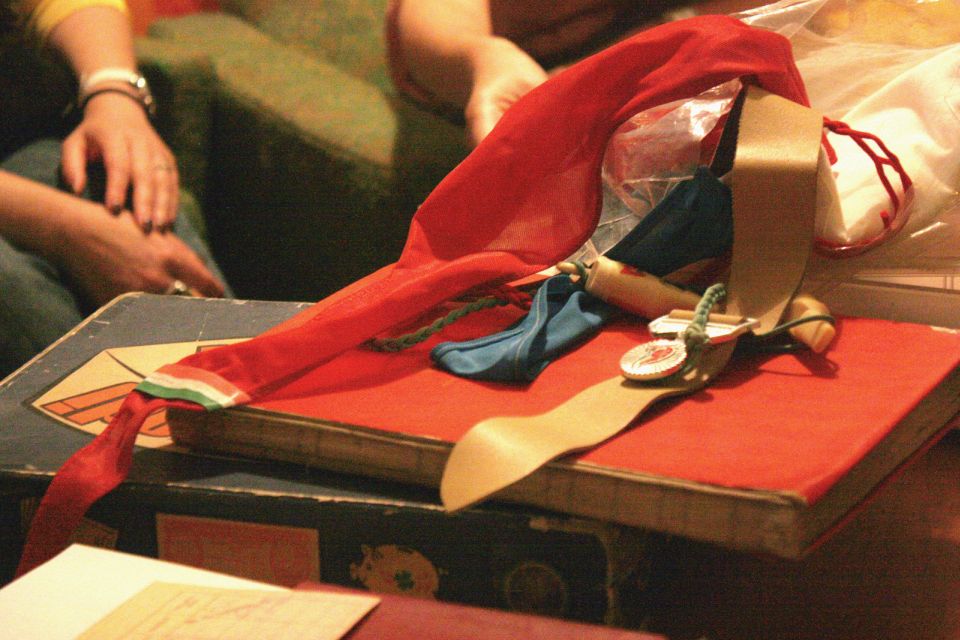
This tour’s core strength is that it doesn’t treat communism as a distant political concept. It turns it into routine. You’ll hear how people drove Trabant cars, drank spirits at work, and handled everyday logistics in a society shaped by control and shortages.
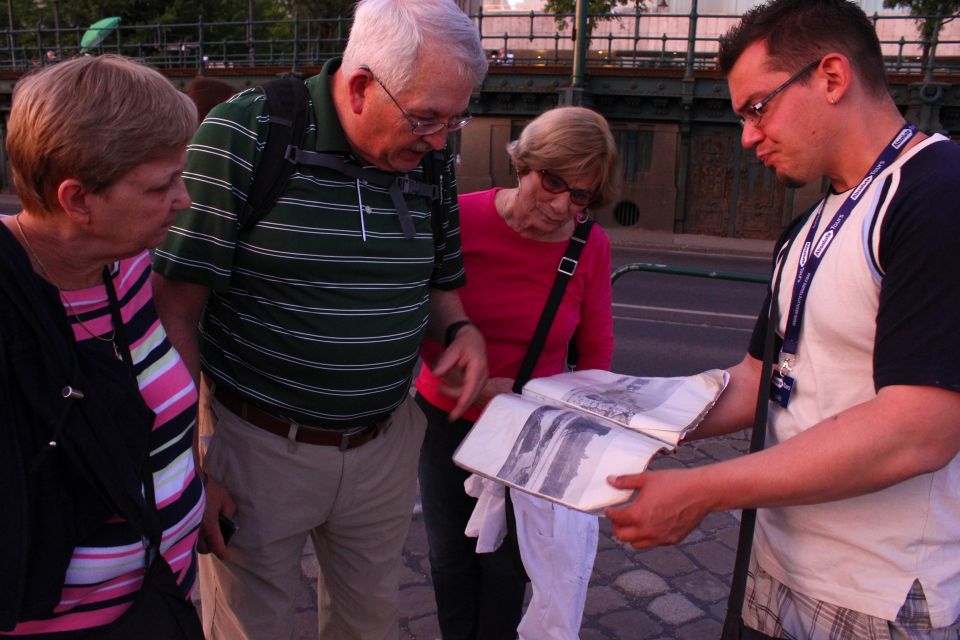
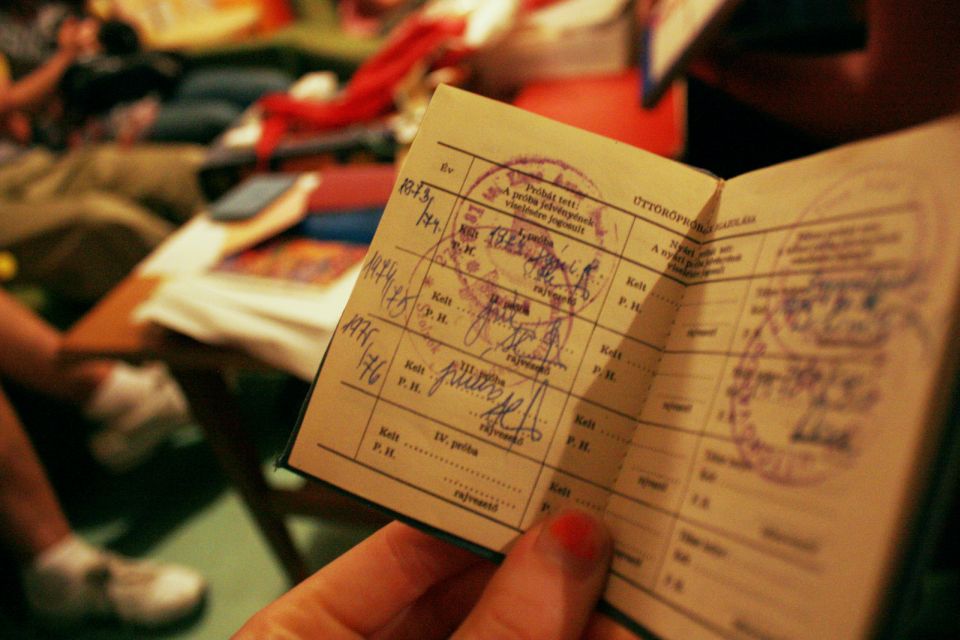
The guide’s job here is to connect the dots between policy and daily friction. That’s where the tour earns its keep. When you understand how to get a passport, how school life worked, and how people negotiated ordinary events, the communist era stops being abstract. It becomes a lived system—sometimes absurd, sometimes stressful, always influential.
You’ll also get stories around early resistance and protest, including how the fight back against an unethical regime started in real moments, not in textbook hindsight. One of the more useful elements is that these stories typically get told with a sense of cause and consequence: what changed, who paid, and why certain years became turning points.
A quick practical note: this is not a light stroll through propaganda art. It’s a walk with context, and the subject matter is described as not recommended for children under 14. If your group is mixed in age, I’d treat this as an adult history tour first, and a family activity only if everyone can handle the tone.
The 1956 Revolution exhibition stop: where the timeline gets human
One highlight is a visit to an exhibition about the 1956 Revolution. Even if you know the broad outline of 1956, this kind of stop helps because it gives the story a physical anchor—something you can look at while the guide lays out what happened and why it mattered.
For me, the value here is that the tour tries to show how events escalated. You’re not just told that protests happened. You get the sequence and the reason it became such a pressure point in Hungarian history. The guide ties those events to what people were experiencing day to day, which is the difference between memorizing dates and actually understanding why people acted when they did.
This is also the tour moment where you’ll likely slow down, listen carefully, and absorb. The tour is built around walking, but this stop is where the narrative has somewhere to land.
Liberty Square and the Soviet Memorial: history in a wide-open space
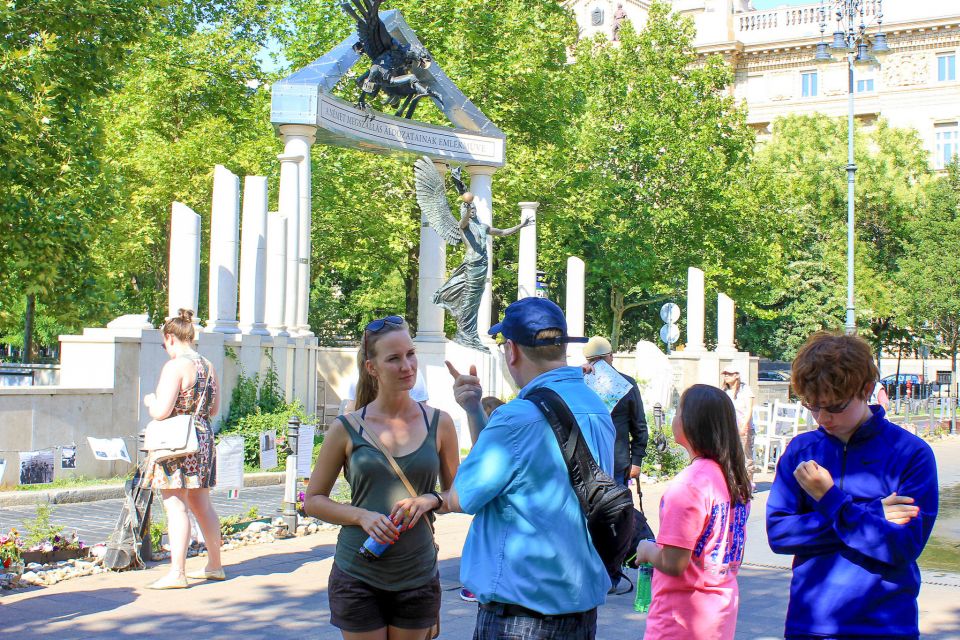
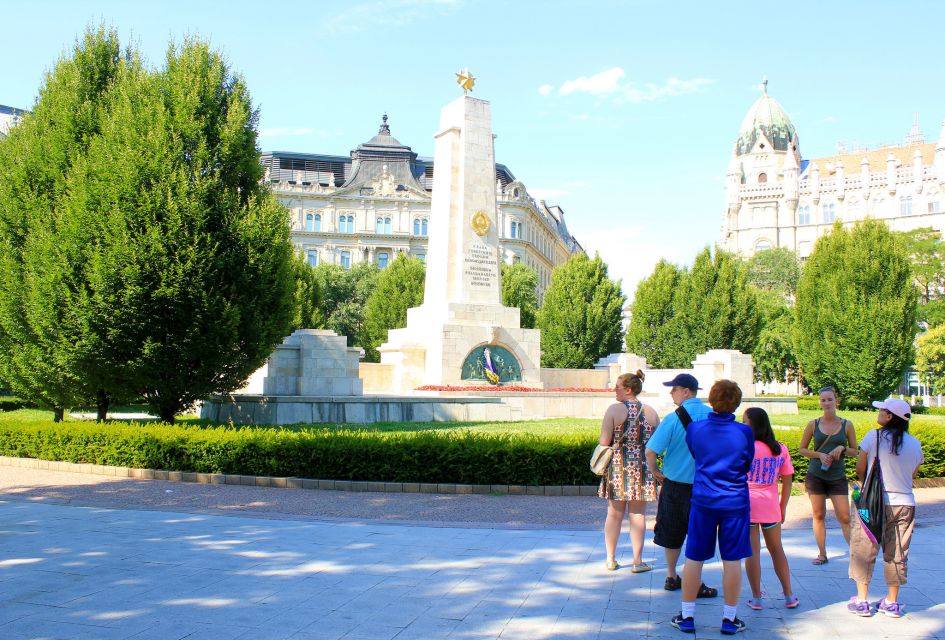
Then you head toward Liberty Square and the Soviet Memorial, described in the highlights as the last Soviet monument. That location matters because it’s exposed and public. You’re standing in a space where memory is visible and hard to avoid, which is exactly what you want for a topic like this.
The guide will help you read what you’re seeing. Memorials aren’t neutral objects. They’re designed to shape how the public thinks about power—who is honored, who is erased, and what the official story is. Standing at Liberty Square gives you a better sense of how communism could be both ideological and physical.
Also, this is where the tour changes texture. Earlier parts often feel like street-level life and personal stories. Here, you’re dealing with public symbolism. That shift is useful, because communism worked on more than one level: it controlled daily life, but it also controlled the narrative space.
Walking toward the Parliament area: political geography you can feel
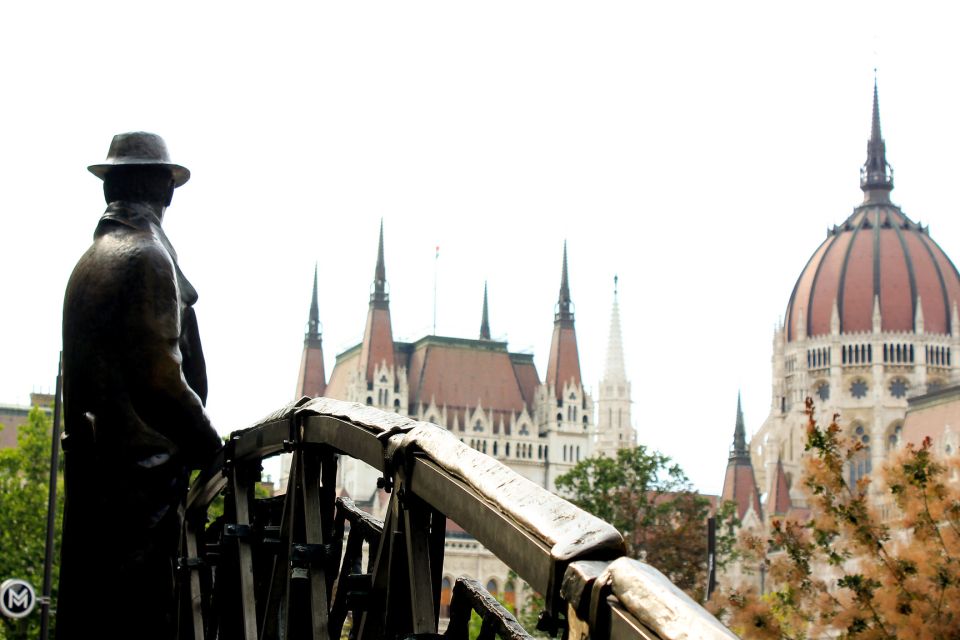
The tour also includes a walk to the Parliament area and nearby key squares. Even without going inside a building, walking here helps you understand the geography of power. Budapest is built in a way that makes politics look architectural—lines, sightlines, and how streets channel people toward central institutions.
This section works best if you let the guide turn the environment into a lesson. You’ll hear about historical events that put Hungary on the map, and the narration tends to connect those events to what was happening around these landmark spaces. It’s the kind of storytelling that helps you realize why certain areas mattered during different regimes.
There’s a subtle benefit here too: you’re not stuck staring at one monument all day. You’re moving, changing angles, and seeing how the city’s layout supports the story. That makes the experience stick.





The Trabant-themed moment and a coffee break that actually helps
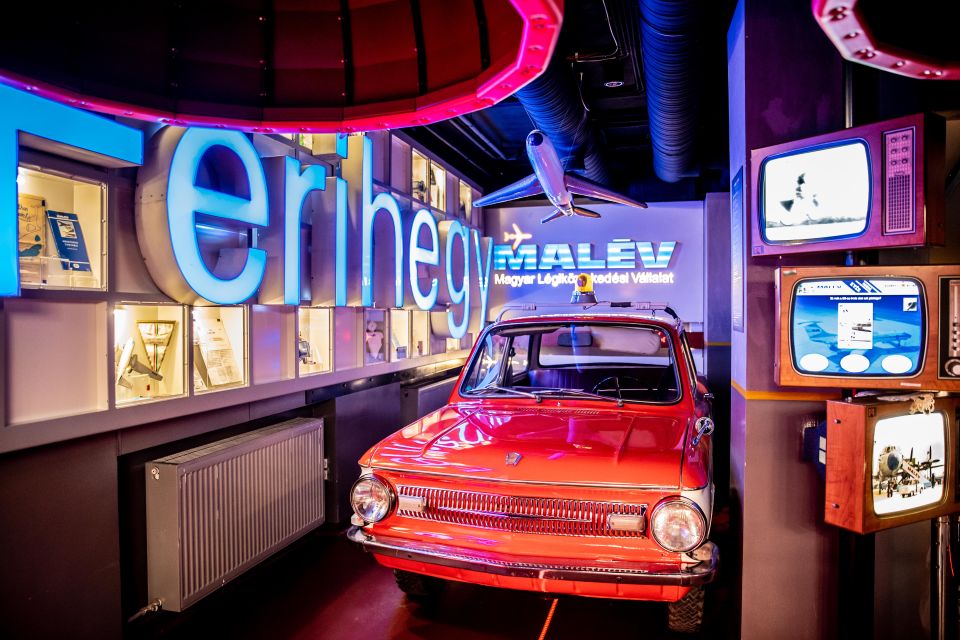
The tour includes refreshment (coffee, tea or soft drink). That doesn’t sound like much on paper, but for a 2.5-hour walk it can keep you comfortable enough to stay focused on the history.
One review specifically mentions coffee and a traditional Hungarian dessert at the Trabant 60. If your departure includes that kind of added stop, it’s a fun way to connect pop-culture details with real life under the system. A Trabant isn’t just a car; it’s a symbol of scarcity, everyday mobility, and the look and feel of the era.
Even if you only get the standard drink, the break helps you reset without breaking the flow. And since the tour is described as operating in all weather, having a small pause can matter.
Group size, guide style, and how long you’ll be on your feet
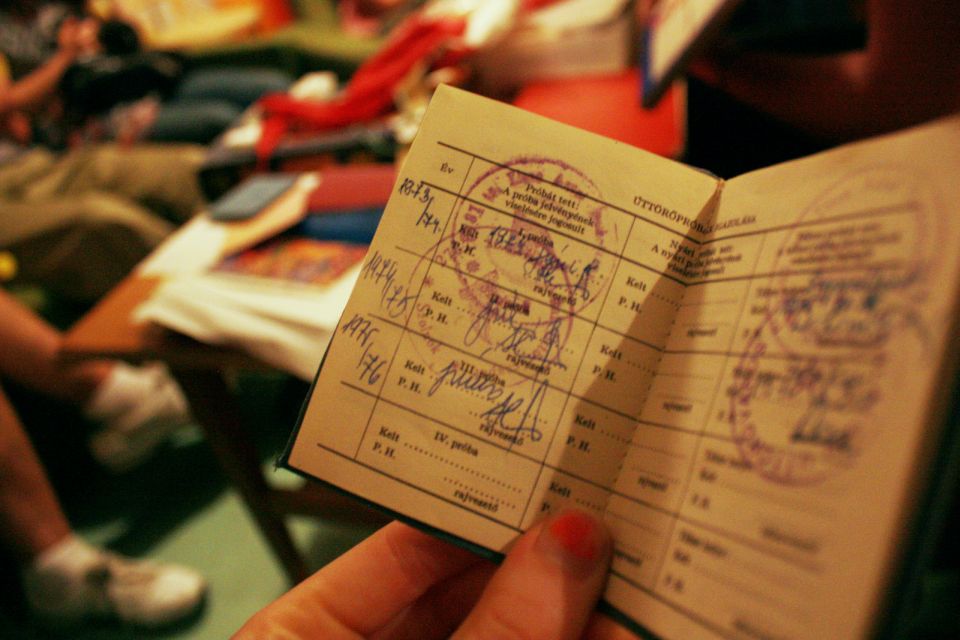
You’ll be with a live guide in English, with private or small groups available. A small group is often ideal for this kind of topic, because questions tend to come up naturally when people hear about passports, school life, or protest stories. The tour is also described as suitable for all weather, so your guide’s pacing likely adjusts to conditions.
Duration is listed as 2.5 hours, with 2 hours of continuous walking. That’s a big deal. If you like your history slow and seated, you might find the pace tiring. If you prefer movement—so your brain stays awake and your eyes keep collecting details—this tour fits your style.
Wear comfortable shoes and dress for the weather. Because it runs in all conditions, you’ll be happier if you plan for rain, cold, or heat the same way you would for any real walking day in Budapest.
Price: is $72 worth it for a 2.5-hour history walk?
At $72 per person, this tour isn’t a bargain-basement option. But it’s also not priced like a premium museum ticket. The value depends on what you want from the trip.
Here’s what you’re paying for:
- A licensed expert guide (the main product)
- A walk-based route that covers several landmark areas
- A 1956 exhibition stop
- A refreshment (coffee/tea/soft drink)
If you’re the type who likes context—how systems affected daily life—then the guide is doing real work, and the price can feel fair. If you already know the basics and want more interactive content or longer stops, you might feel the length doesn’t leave enough time to go deeper. That’s a fair expectation, and one review did call out value concerns.
My practical take: treat this as a good primer if you want your Hungary history straight and human. If you’re unsure, check that your personal interest leans toward 20th-century politics and social life, because that’s the engine of the tour.
Who should book this Hammer & Sickle walk
This tour is a strong match if you:
- Want a street-level understanding of Hungary’s communist era
- Like stories that connect politics to everyday details
- Enjoy walking tours where major landmarks frame the narrative
- Prefer a guided explanation over reading alone
It’s less ideal if:
- You don’t handle political history topics well
- You need a mostly seated experience
- You’re traveling with someone who needs mobility accommodations (not suitable for people with mobility impairments)
- You’re expecting a kid-friendly outing (not recommended under 14)
Also, if you’re the sort of traveler who plans your Budapest day around viewpoints and quick photo stops, this tour will feel more like a lesson than a sightseeing loop. That’s not bad—it’s just a different kind of sightseeing.
Should you book this tour?
I’d book it if you want to understand Budapest beyond the postcard buildings. The tour’s best feature is the way it turns communism into lived experience—work routines, passports, school life, protest momentum—then shows how that same era left marks in public spaces like Liberty Square and near Parliament.
I’d skip or swap to a different kind of tour if walking two hours continuously sounds like a deal-breaker, or if you only want a light overview. At $72, you’re paying for a guide-driven storytelling route. When the guide clicks, it’s exactly the kind of Budapest experience that makes the city feel more real, not just more famous.
FAQ
Where is the meeting point for the Budapest Hammer & Sickle tour?
Meet your guide at 1052 Budapest, Deak Ferenc ter 4. in front of the Lutheran Church (pale yellow), on the church steps.
How long is the tour?
The tour lasts 2.5 hours total.
Is the tour offered in English?
Yes. The tour is available with a live tour guide in English.
What refreshments are included?
The tour includes coffee, tea, or a soft drink.
How much walking is involved?
The tour involves 2 hours of continuous walking.
Does the tour run in bad weather?
Yes. The tour operates in all weather conditions.
Is this tour suitable for children?
It is not recommended for children under 14.
Is the tour suitable for people with mobility impairments?
No. It is not suitable for people with mobility impairments.
Is pickup available?
Pickup is optional. You can enter pickup details for your centrally located accommodation when booking, or you can meet the guide at Deak Ferenc Square.
Can I cancel for a refund?
Yes. There is free cancellation up to 24 hours in advance for a full refund.