REVIEW · BUDAPEST
Private Budapest Walking Tour with Cake & Coffee
Book on Viator →Operated by Budapest Urban Walks · Bookable on Viator
Budapest changes fast once you’re on foot. This private walk mixes big-name sights with street-level views, plus a coffee-and-cake pause that keeps the pace human. You also get hotel pickup and a guide who ties landmarks to how the city actually feels day to day.
Two things I like a lot: first, the hotel/port pickup makes the tour feel effortless from the start. Second, you don’t just “see” places—you get practical direction to keep exploring after the tour, including a map and extra recommendations. In past feedback tied to this tour, guides such as Adam and Ferenc come through as friendly partners on the walk, with strong context for both history and what’s happening now.
One thing to consider: two major interiors are not included in the stop list—St. Stephen’s Basilica and the Hungarian Parliament Building—so you may need to pay separately if you want inside time.
In This Review
- Key highlights worth your attention
- A private Budapest walk that helps you get your bearings fast
- Price and timing: what you’re really paying for
- First stop: Heroes’ Square and what the statues are trying to tell you
- Széchenyi Bath views: seeing the landmark without getting stuck
- Vajdahunyad Castle and City Park vibes
- Andrássy Avenue: the boulevard that ties the city together
- Hungarian State Opera House: a quick exterior moment with context
- St. Stephen’s Basilica: the inside option is extra
- Szabadság tér and the meaning behind public memorials
- Hungarian Parliament Building: seeing the symbol before you decide on inside
- Széchenyi Chain Bridge and the Danube connection
- Shoes on the Danube Bank: a quiet stop with heavy weight
- The guide factor: why names like Adam and Ferenc show up for a reason
- What I’d plan this tour for (and who will love it most)
- Should you book this private Budapest walking tour with cake and coffee?
- FAQ
- How long is the private Budapest walking tour?
- Where does the tour start?
- Is this tour private?
- What language is the tour offered in?
- What is included besides the walking?
- Do you receive tickets on your phone?
- Are admission tickets included at every stop?
- Does the tour run in bad weather?
- Is the tour suitable for children?
- Can I cancel and get a full refund?
Key highlights worth your attention
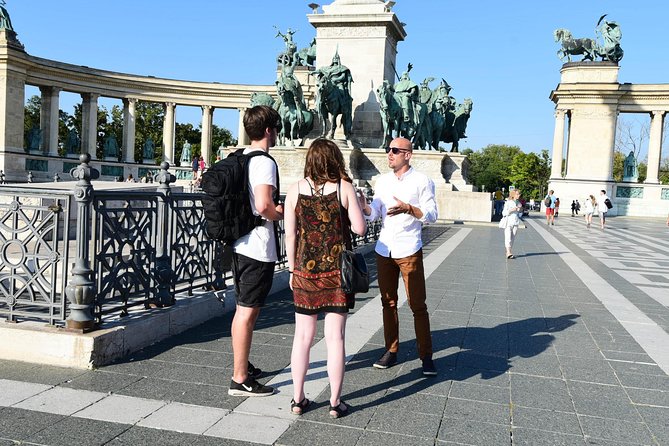
- Private pace, just your group: no sharing with strangers.
- Hotel/port pickup at your address: easy start, less transit hassle.
- Coffee and cake stop in a local café: a real break, not a quick snack.
- Iconic sights in one loop: Heroes’ Square to Parliament to the Chain Bridge.
- Some admissions are extra: Basilica and Parliament interiors aren’t included.
A private Budapest walk that helps you get your bearings fast
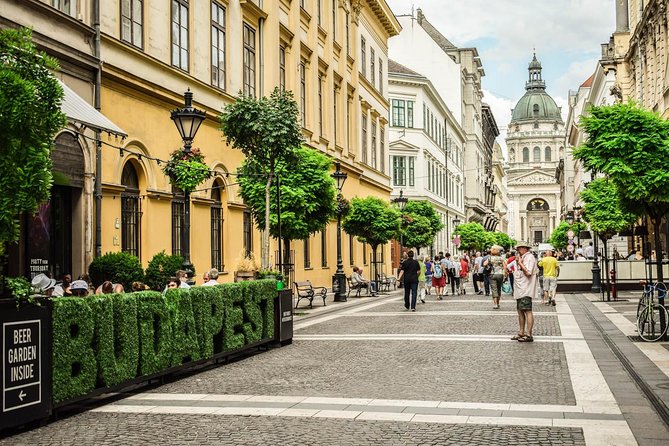
I love tours that do one job well: help you understand a city in a few hours without turning it into a checklist. This private Budapest walking experience is built for that. You get pulled along a route that hits the most recognizable symbols of Hungary while still leaving room for street life and everyday details.
The big win here is that you’re not trapped in long museum corridors. Most stops are outside or photo-ready, so you can actually look up, read the buildings, and notice the way the neighborhoods connect. And since it’s private, your guide can shift the pace if your group wants more photos, more walking, or a shorter pause.
The included coffee and cake break also matters more than it sounds. In a city like Budapest, where you’ll likely layer up and down with the weather, a scheduled stop keeps the tour from turning into a stiff slog. It’s a simple comfort that makes the rest of the route feel smoother.
You can also read our reviews of more walking tours in Budapest


Price and timing: what you’re really paying for
At $156.53 per person for about 3 hours 30 minutes, this is not a budget group tour. But it isn’t a random splurge either. You’re paying for three concrete value drivers:
- Private format: only your group participates.
- Pickup from your address: less time spent hunting meeting points.
- Guide-led route with planned breaks: not just walking from landmark to landmark.
A 3.5-hour route is long enough to feel like you learned the city’s layout, but short enough that you won’t burn out before dinner plans. You also get snacks and coffee or tea, which helps if you’re doing this as your first or second day and want energy for the rest of your sightseeing.
If you like to plan ahead, it’s also helpful to know the average booking window is around 9 days in advance. For popular dates, you’ll have a better shot if you lock it in before the last-minute scramble.
First stop: Heroes’ Square and what the statues are trying to tell you
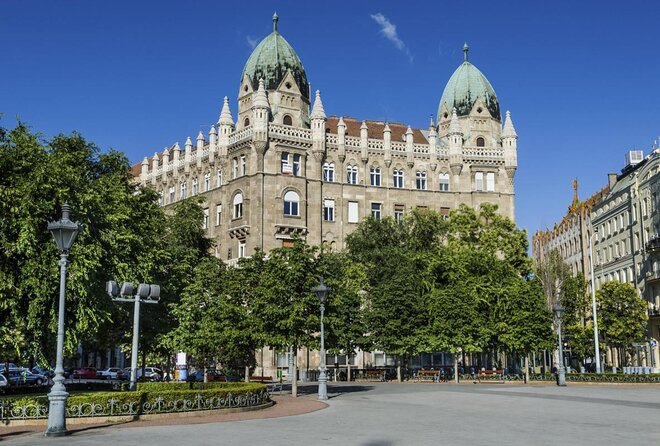
You start at Heroes’ Square (Hősök tere), one of Budapest’s main showpieces. The iconic statue complex is built around key figures from Hungary’s national story, along with the Memorial Stone of Heroes. It’s a place people photograph quickly, but a good guide makes it easier to understand what you’re looking at.
What I like about starting here: it’s a clean way to orient yourself. Even if you’re new to Budapest, you can take in the scale of the square and get a sense of how the city presents its national identity in public space.
A consideration: this stop is time-boxed (about 20 minutes). That’s enough to understand the symbolism and take a few photos, but it won’t replace a slower, longer visit if you’re obsessed with sculpture details.
Széchenyi Bath views: seeing the landmark without getting stuck
Next you head to the Széchenyi Medicinal Bath area, including the baths and pool setting. This is described as the largest medicinal bath in Europe, fed by thermal springs at 74°C (165°F) and 77°C (171°F). Even if you don’t go inside, the place has that unmistakable “Budapest landmark” energy—big, classic, and designed for people-watching.
Why this works in a walking tour: you get the famous bath as a visual anchor without forcing you to spend your whole day in a ticket line. The stop is about 20 minutes, which keeps the momentum for the next stretches.
One thing to consider: this is a quick look, not a full spa session. If you want a soak, you’ll need separate time later. Still, as a “see it, understand it, move on” stop, it’s a strong choice.
Vajdahunyad Castle and City Park vibes
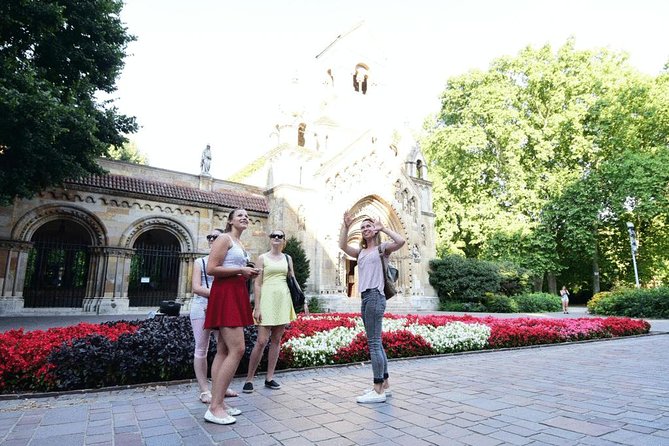
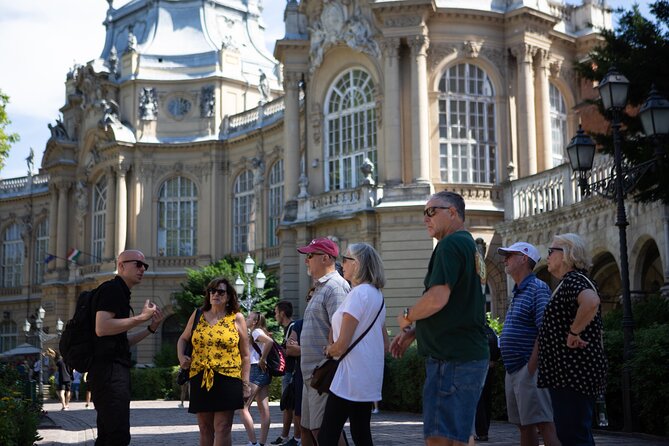
From there you reach Vajdahunyad Castle in City Park. It’s a castle-like structure built for the Millennial Exhibition celebrating 1,000 years of Hungary since the Hungarian Conquest in 895. The timing of the construction (1896) gives the place a layered meaning: part historical inspiration, part national celebration.
I like how this stop adds variety. You’re not only circling formal government buildings; you’re also getting a fairy-tale silhouette that feels like a stage set for Budapest’s storytelling.
A consideration: it’s another 20-minute window. If you’re the type who wants to read every inscription or slow-walk every angle, you might want to come back later with extra time.
You can also read our reviews of more private tours in Budapest





Andrássy Avenue: the boulevard that ties the city together
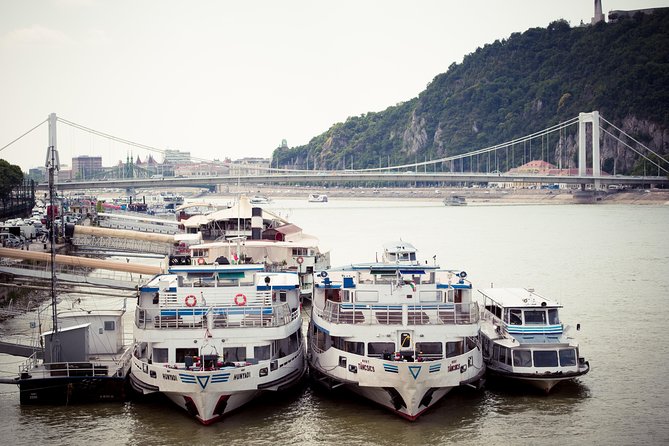
Then it’s onto Andrássy Avenue (Andrássy út), a boulevard dating back to 1872. It connects Erzsébet Square with Városliget, and the architectural style is a major part of what makes it famous. It was recognized as a World Heritage Site in 2002.
This stretch is short on the tour schedule (about 10 minutes), but it’s long on impact. Even without going inside, you get the feeling of a grand avenue built for civic life and cultural presence.
A practical tip for how to experience it: use this segment as your “look left, then look right” moment. Don’t just stare down the street. Let the building facades sink in, and you’ll understand why this avenue became iconic.
Hungarian State Opera House: a quick exterior moment with context
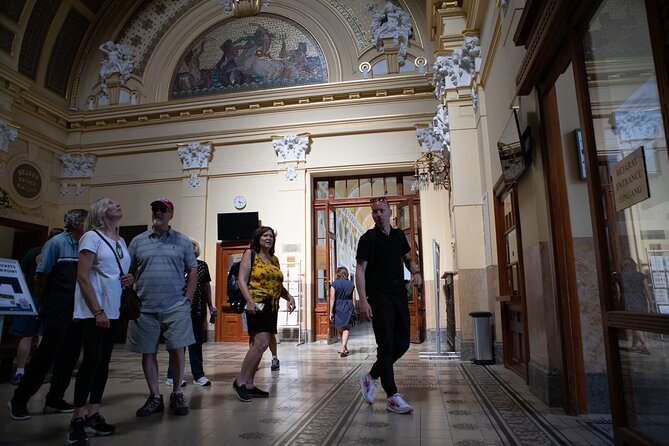
Along Andrássy Avenue you also stop by the Hungarian State Opera House (Magyar Állami Operaház). The building is described as neo-Renaissance, designed by Miklós Ybl. It’s also known as the Hungarian Royal Opera House.
In a walking tour, opera houses can sometimes feel like a quick photo and that’s it. The value here is the framing: the guide helps you connect the architecture to the cultural role the building plays in the city. Even if you never catch a performance, seeing it with context makes it feel more alive.
Time is limited here too (about 10 minutes). If opera is your thing, you’ll likely want a separate visit when you have more time and can plan around show schedules.
St. Stephen’s Basilica: the inside option is extra
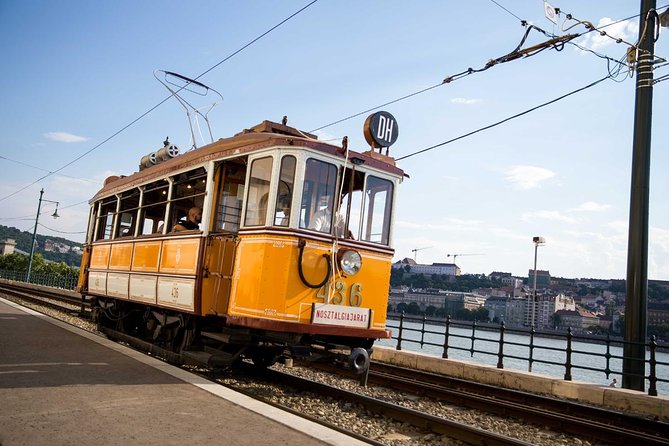
Next up is St. Stephen’s Basilica (Szent Istvan Bazilika). This is the Roman Catholic basilica named for Stephen, the first King of Hungary, whose right hand is housed in the reliquary (as described). It’s a stop that blends religious significance and iconic city identity.
The tour includes this stop for about 15 minutes, and the listing notes that admission is not included. That means you can still see the basilica as part of the walk, but if you want to go inside, you should expect an extra ticket cost and plan that time.
A good approach: treat this stop as a decision moment. If your group wants more inside time, plan it now. If you’re prioritizing the Danube and Parliament views, enjoy the exterior and keep moving.
Szabadság tér and the meaning behind public memorials
Then you reach Szabadság tér (Liberty Square). This square is known for two controversial memorials: one commemorating Hungarian Jewish victims of the Holocaust, and another honoring Soviet soldiers connected to the liberation of Budapest from Nazis in 1945 (as described). The U.S. Embassy and the Hungarian National Bank headquarters also sit on the square’s west side.
This is the kind of place where a guide’s tone matters. You’re not meant to rush past it like a landmark photo. It’s better to slow down for a minute and let the context land.
The tour gives this area about 25 minutes, which is decent for a meaningful stop without cutting too much into the later big sights.
Hungarian Parliament Building: seeing the symbol before you decide on inside
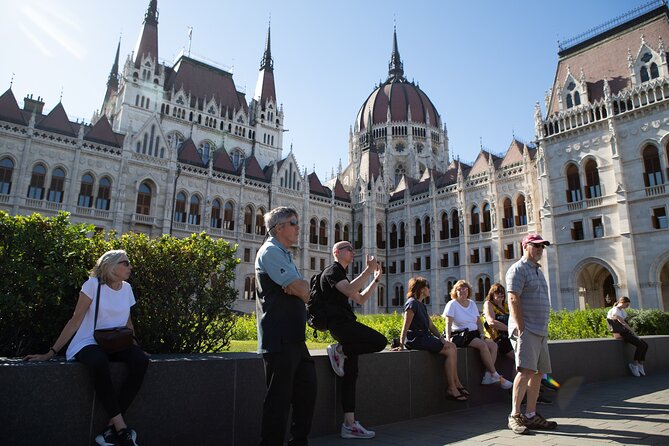
Next is the Hungarian Parliament Building (Országház). It’s the seat of Hungary’s National Assembly and one of Budapest’s top attractions. The stop is around 15 minutes, and admission is not included.
Here’s how I’d think about it: the exterior is already dramatic, and you’ll get plenty of value from standing in the right vantage points with explanations from your guide. If you want inside access, this is one of those “factor it into your day” moments because it can add time and separate planning.
If your group is short on time, you can still have a very satisfying experience just by understanding the building’s role and symbolism while you photograph the facade.
Széchenyi Chain Bridge and the Danube connection
You then head to Széchenyi Chain Bridge (Széchenyi lánchíd), which spans the Danube between Buda and Pest. This bridge isn’t only about engineering—it’s the visual link that defines how you experience Budapest’s river views.
The stop is about 15 minutes. That’s enough to walk a few steps for perspective, take a couple photos, and understand why people treat this crossing as a must-do.
A consideration: depending on crowds and time of day, you might not get the best photo angles on a whim. If photos matter, stand where your guide suggests, then try a second angle after people flow past.
Shoes on the Danube Bank: a quiet stop with heavy weight
Finally, you reach Shoes on the Danube Bank, a memorial to the Jews massacred by fascist Hungarian militia belonging to the Arrow Cross Party during World War II (as described). The memorial is brief but serious, and it hits hardest when you slow your pace for a moment.
The stop is about 10 minutes. That’s short, but it’s often the right length for a memorial like this during a walking tour—long enough to notice and understand what you’re seeing, without turning it into a repeat of the same thoughts for hours.
If you’re sensitive to heavy topics, it’s still a worthwhile part of the route. The guide framing helps you process it rather than skim past it.
The guide factor: why names like Adam and Ferenc show up for a reason
One pattern that stands out in feedback tied to this tour: guides like Adam and Ferenc tend to bring more than facts. They connect the physical landmarks to how Budapest is lived in today. Ferenc is specifically noted as personable and able to discuss both history and current events, while Adam is praised for explaining key landmarks and history with clarity.
Even if your guide style is different from what you expect, you’ll still benefit from having a person there to answer your sudden questions: Why is this square shaped like this? What’s the deal with this memorial? How do Buda and Pest actually connect in everyday life?
You’ll also get a map and more recommendations, which is practical value. You leave knowing where to go next instead of randomly picking a street and hoping.
What I’d plan this tour for (and who will love it most)
This private walk is a strong fit if you:
- Want an efficient first look at major Budapest landmarks
- Prefer walking over big bus rides
- Like structured routes but still want breaks for coffee, photos, and questions
- Enjoy history when it’s explained in plain language and tied to what you see in front of you
If you’re traveling with mixed interests—someone who wants icons, someone who wants culture, someone who wants food and downtime—this format can work because it gives you variety without requiring a full-day museum plan.
One note: since some interiors (Basilica and Parliament) cost extra, make sure your group is okay with a mix of exterior viewing plus optional ticket decisions.
Should you book this private Budapest walking tour with cake and coffee?
I’d book it if you want a simple, well-paced way to connect Budapest’s most famous sights into a single coherent story—without wasting time in transit. The combination of hotel pickup, coffee and cake, and a planned route from Heroes’ Square through the Danube is exactly what makes first-day sightseeing easier.
Skip or reconsider if your main goal is inside access for major buildings. The tour includes major exteriors and understanding, but St. Stephen’s Basilica and the Parliament Building interiors are not included, so you’ll need separate plans and ticket time.
If you’re aiming for a smart “get your bearings” day that still feels like you’re walking with a local friend, this one is a solid call.
FAQ
How long is the private Budapest walking tour?
The tour lasts about 3 hours 30 minutes.
Where does the tour start?
It starts with pickup from your requested address.
Is this tour private?
Yes. It’s a private tour/activity, meaning only your group participates.
What language is the tour offered in?
The tour is offered in English.
What is included besides the walking?
You get hotel/port pickup, coffee and cake at a local café, snacks, and coffee and/or tea, plus a map and further recommendations.
Do you receive tickets on your phone?
Yes. A mobile ticket is included.
Are admission tickets included at every stop?
Not all of them. St. Stephen’s Basilica and the Hungarian Parliament Building list admission as not included. Other stops in the route are marked as free admission.
Does the tour run in bad weather?
Yes. It operates in all weather conditions, and you should dress appropriately.
Is the tour suitable for children?
Children must be accompanied by an adult.
Can I cancel and get a full refund?
Yes. You can cancel for a full refund up to 24 hours before the experience’s start time.