REVIEW · BUDAPEST
Capital Budapest – Half Day Private Tour (4hr)
Book on Viator →Operated by Fungarian · Bookable on Viator
Budapest, stacked into one smart half-day route. You’ll ride the M1 metro, cross between Buda and Pest, and hit the city’s biggest photo stops without losing hours to wandering.
I like two things a lot: the private group up to 4 size (plus hotel pickup), and the way the tour balances famous monuments with street-level squares locals actually use every day. You end with an included drink at Kamara Café, which gives you a natural pause point to plan your next moves.
One thing to consider: several landmark stops have admission not included (including Fisherman’s Bastion and Matthias Church, plus Parliament, St. Stephen’s Basilica, and the Great Synagogue), and most stops are brief (often 10–15 minutes). If you want long museum time, this won’t replace a full-day visit.
In This Review
- Key highlights worth your time
- How the Route Stitches Buda and Pest Into One 4-Hour Story
- Liberty Bridge and St Gellért Square: Danube Views Without the Time Sink
- Clark Square, the Castle District Turns, and Dísz tér
- Fisherman’s Bastion and Matthias Church: Panoramas Worth the Standing Still
- Vienna Gate to Széll Kálmán tér: Medieval Port to Modern Transit
- Heroes’ Square, M1 Metro, and Parliament Building Exteriors
- St Stephen’s Basilica and Deák Ferenc tér: A Pause in the Middle of the Big Sights
- Great Synagogue and Kamara Café: Ending With a Local-Feeling Moment
- Price and Value: What $489.24 Gets for Up to Four
- What to Watch For Before Your Tour Day
- Who This Tour Suits Best
- Should You Book This Half-Day Private Tour?
- FAQ
- How long is the Capital Budapest Half Day Private Tour?
- What’s the group size for this tour?
- Is hotel pickup available?
- What does the price include?
- Are admission tickets included for all sights?
- Which language is the tour offered in?
- Where does the tour start and end?
- What are the tour’s operating hours?
Key highlights worth your time
- Metro Line M1 ride: Budapest’s oldest metro line on the European mainland, and one of the oldest underground railways in the world.
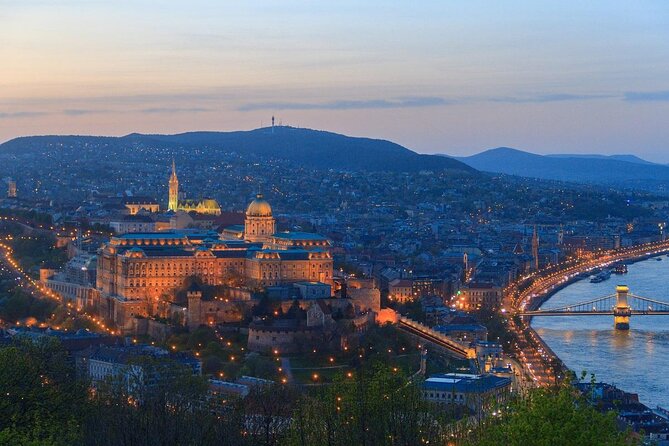
- Liberty Bridge orientation: a fast way to connect Buda and Pest and understand the Danube’s layout.
- Fisherman’s Bastion viewpoints: seven towers linked to the seven chieftains of Hungary’s founding era, with skyline views over the Danube.
- Heroes’ Square photo moment: iconic statues plus the Memorial Stone of Heroes, often mistaken for the Tomb of the Unknown Soldier.
- Hungarian Parliament exterior: neo-Gothic landmark opened in 1902, right on Kossuth Square by the Danube.
- Great Synagogue scale: the Dohány Street Synagogue, Europe’s largest synagogue, seating about 3,000.
How the Route Stitches Buda and Pest Into One 4-Hour Story
This is the kind of half-day tour that works best when you want structure. You don’t try to do everything in one go, but you do get a clear mental map: Danube crossings, the Castle District, then the grand civic sights on the Pest side.
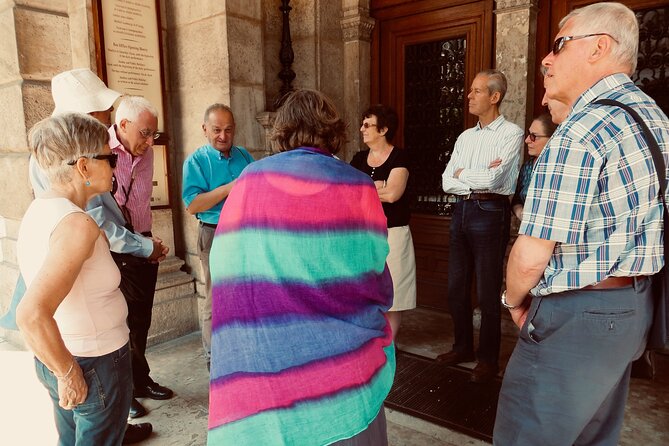
Your guide picks you up at your hotel in Budapest or at a central meeting point. The tour runs about 4 hours, and it’s private—only your group of up to four goes along, so the pace and stops can feel personal instead of rushed with strangers.
Because the itinerary uses public transport and includes a transport pass, you spend less time figuring out routes and more time getting the views. You’ll also use Metro Line M1, which matters: it’s not just transit, it’s part of the experience in itself.
You can also read our reviews of more private tours in Budapest



Liberty Bridge and St Gellért Square: Danube Views Without the Time Sink
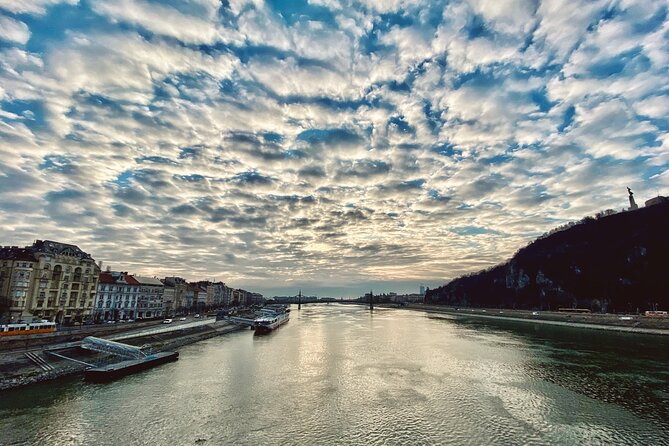
You’ll start with Liberty Bridge (Szabadság hid), the third southernmost public road bridge in Budapest. It’s a key Danube crossing that connects Buda and Pest, and it has a history name change too—it was originally called the Franz Joseph Bridge. Even if you’ve seen pictures, standing near it helps you understand how the river shapes the city.
From there, the tour moves to St Gellért Square, named for Bishop St. Gellért, also known as the Martyr for Hungarian Christendom. Squares like this are more than waiting rooms—they’re where the city’s stories show up in place names and monuments. This stop is short, but it gives you an immediate sense of atmosphere in Buda.
Clark Square, the Castle District Turns, and Dísz tér
Next comes Clark Square, one of those intersections that feels like a living hub. Major routes meet here, and it connects to the Chain Bridge area, the tunnel leading beneath Castle Hill, streets heading up toward the funicular, and more. The flower-laden roundabout in the middle is a visual landmark, but the real point is that you’re standing where a lot of Budapest movement converges.
Then you start heading toward the Castle area along winding roads. The timing is tight, but this is where your photos get better fast—Buda’s streets curve upward, and the view lines open toward the Danube.
In the Castle District, you’ll pass through Dísz tér, a southern end square lined with one- and two-storey old residential buildings. What’s interesting here is the layers: in the Middle Ages, the area had simple Gothic houses, and remains show up in foundations and walls. It’s a small space, but it helps you read the architecture like a map.
Fisherman’s Bastion and Matthias Church: Panoramas Worth the Standing Still
Fisherman’s Bastion (Halászbástya) is one of Budapest’s classic skyline viewpoints, and it’s built to make you pause. The Neo-Romanesque lookout terraces give you a wide panorama over the Danube and across the city, and the front façade—parallel to the Danube—anchors the view.
Look closely at the iconic stone towers: there are seven, symbolizing the seven chieftains of the Hungarians who founded Hungary in 895. That symbolism is part of why the place feels more than decorative.
Right nearby is Matthias Church (Mátyás-templom). Tradition says it was originally built in Romanesque style in 1015, but the note that no archaeological remains exist is a useful detail—you’re standing at a layered site where stories and structures don’t always match exactly. Like Fisherman’s Bastion, admission isn’t included, so if you want to go inside, factor that into your planning.
The stop length is about 10 minutes, so this is more about getting the viewpoint and orienting yourself than doing a deep architectural study.
Vienna Gate to Széll Kálmán tér: Medieval Port to Modern Transit
Between the Castle sights and the Pest-side landmarks, you’ll pass by the Vienna Gate (Bécsi kapu) area. The point of this name is practical: it was the port connecting the Castle with the highway to Vienna. It’s one of those details that turns a viewpoint walk into a route through time.
Then the tour drops you at Széll Kálmán tér, which is a major transport interchange and often considered the centre of Buda because of traffic and surrounding stores, including Mammut. The square also has a name history: it was known as Moszkva tér, or Moscow Square, between 1951 and 2011. That kind of naming shift reflects politics and identity changes you can feel just by watching what people use the space for today.
This is a smart moment in the itinerary: it resets you from Castle District walking to city-scale movement, and it puts you in the right mental lane for what comes next—big monuments, big squares.



Heroes’ Square, M1 Metro, and Parliament Building Exteriors
Heroes’ Square is next, and it’s built for strong impressions. The statue complex features the Seven chieftains of the Magyars and other important Hungarian national leaders, and it includes the Memorial Stone of Heroes (commonly mistaken for the Tomb of the Unknown Soldier). This is one of the easiest places in Budapest to understand national symbolism just by looking.
Admission here is free, and you’ll have about 15 minutes. That’s enough to take photos, read the main shapes, and not feel like you’re sprinting.
After that, the tour uses Metro Line M1—the Millennium Underground Railway. The itinerary notes are worth remembering: it’s the oldest metro line of the Budapest Metro, the first underground on the European mainland, and the world’s third oldest underground after the London Underground and Liverpool’s Mersey Railway. In other words, this ride isn’t just a convenience. It’s a piece of European transit history.
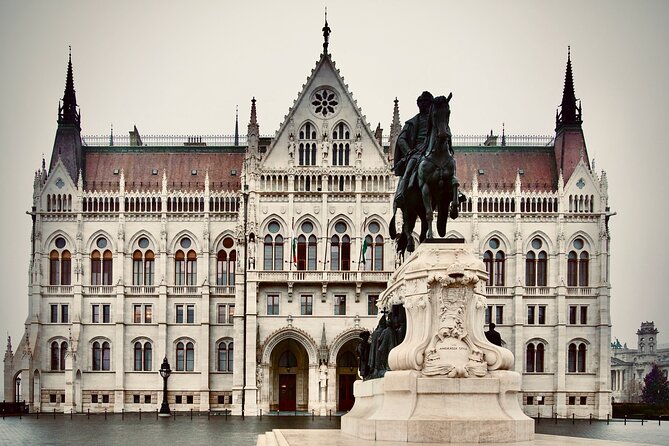
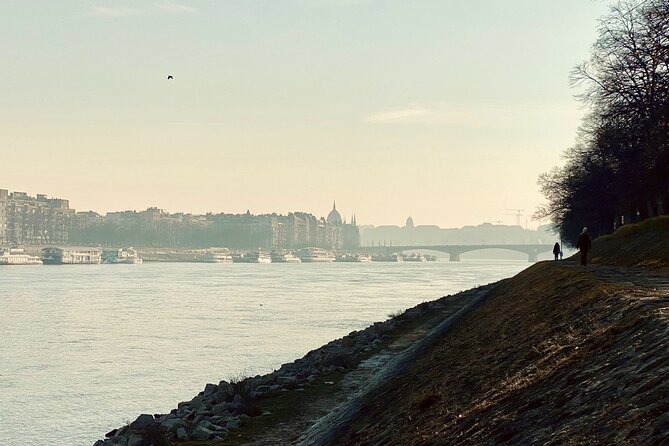
Once you reach the Hungarian Parliament Building, you get the exterior view at Kossuth Square on the Pest side by the Danube. The building is neo-Gothic, designed by Hungarian architect Imre Steindl, and opened in 1902. It has been Hungary’s largest building since completion, and it’s still the seat of the National Assembly.
If you’re into architecture, it’s helpful to know the context of the square too. The area was renamed in 1927 for Lajos Kossuth, and the surroundings mix institutions like the US Embassy in Hungary and other prominent historic-style buildings. Admission isn’t included, so this stop is best for exterior appreciation and photos.
St Stephen’s Basilica and Deák Ferenc tér: A Pause in the Middle of the Big Sights
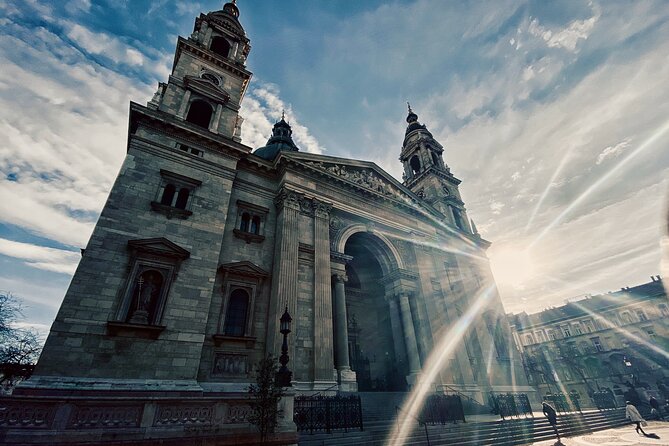
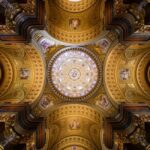
Next is St. Stephen’s Basilica (Szent Istvan Bazilika). You’re looking at a Roman Catholic basilica named for Stephen, the first King of Hungary. The tour info notes that his supposed right hand is housed in a reliquary. Even if you don’t go inside, the basilica’s scale makes a point: Budapest can do grandeur in a very direct way.
Admission isn’t included here either, and you’ll have around 15 minutes. The note that it was the sixth largest church building in Hungary before 1920 gives you another useful lens for understanding why it became such an anchor landmark.
After the basilica, the itinerary moves near Deák Ferenc tér, with a short stop at the park by the square. This spot is popular with younger crowds, and it’s known for late-evening gatherings. The tour’s short timing means you’ll likely catch it at a calmer point, but it’s still a nice human-scale contrast to the big civic monuments.
Great Synagogue and Kamara Café: Ending With a Local-Feeling Moment
To round out the tour, you’ll visit the Great / Central Synagogue (Nagy Zsinagoga), also known as the Dohány Street Synagogue. This building is a major landmark in Erzsébetváros. It’s Europe’s largest synagogue by scale, with seating for about 3,000, and it functions as a centre of Neolog Judaism.
Admission isn’t included, so expect this stop to focus more on exterior and orientation unless you add ticket time (if you want it). Still, the synagogue’s size makes it hard to forget, and it adds an important different side of Budapest beyond castles and state buildings.
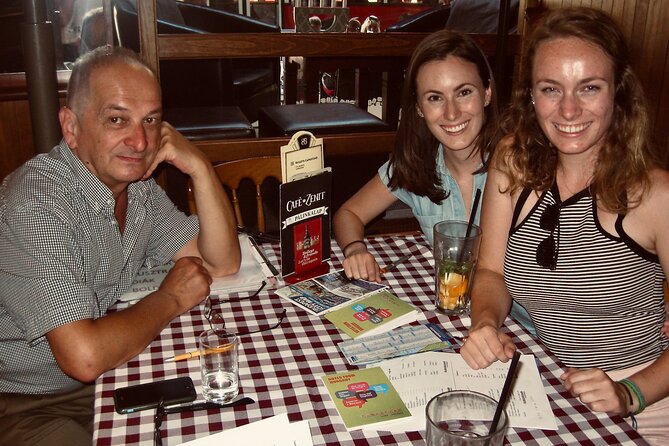
Then you finish at Kamara Café with about 30 minutes on the terrace. The tour includes one hot or cold beverage here. I like this ending method because it turns the day’s walking into something quieter: you can take stock, practise Hungarian in tiny, friendly bursts, and plan the rest of your stay with a clear idea of what you still want to see.
Price and Value: What $489.24 Gets for Up to Four
At $489.24 per group (up to 4), the headline price looks high—until you convert it to value. This is private guiding for about 4 hours, with hotel pickup, a public transport pass, and small extras that keep the tour smooth: a city map plus a notebook and pen, and that included café drink.
The big value is that you’re not paying for a generic checklist. You’re paying for someone to stitch together the logic of the city—where to stand, what to notice, and how to move efficiently between Buda and Pest. The use of the M1 metro and the guided stops at places like Clark Square and Dísz tér are exactly where a good guide helps your feet match your eyes.
One caution about value: several major sites have admission not included. So if your goal is to go inside multiple landmarks, your total day cost may rise. If your goal is mostly exterior views and viewpoints, the package feels more complete.
If you’re travelling with another couple or a small family, this can be a strong deal versus separate taxi time or piecemeal private guiding. A private format also matters for timing. You can ask for photo pauses, shorter detours, or just a slower walk when the stairs in the Castle District feel like they’re multiplying.
What to Watch For Before Your Tour Day
A few practical points will help you get the best outcome from this style of half-day route:
- Ticketed stops add cost. Fisherman’s Bastion, Matthias Church, Parliament, St Stephen’s Basilica, and the Great Synagogue are listed as admission not included in the tour notes. If you plan to go inside, check ahead and budget time and money.
- Stops are brief. Expect a fast pace—10 minutes here, 15 there. That’s the tradeoff for packing in so many must-sees. Wear comfortable shoes and plan to enjoy quick, high-impact moments.
- Weather can matter. The tour notes indicate it requires good weather, and if cancelled for poor weather you’d be offered another date or a full refund. Budapest can be beautiful but slippery in bad conditions, especially around hills.
- Confirm your start time clearly. The meeting is flexible with hotel pickup or a central point, and it’s a good idea to make sure the exact pickup time is confirmed before you set out.
Who This Tour Suits Best
This tour fits you if you want a fast, guided orientation to Budapest. It’s especially good for first-timers who want the big names—Fisherman’s Bastion, Heroes’ Square, Parliament, St Stephen’s Basilica, and the Great Synagogue—plus local-feeling squares like Clark Square and Deák Ferenc tér.
It’s also a solid pick for couples and small groups of up to four who want privacy and don’t want to spend half a day on transit planning. If you love architecture and city layout, you’ll enjoy how the route gives you a clear visual storyline from medieval Castle District streets to modern squares and grand civic buildings.
It may not suit you if your priority is deep interior visits, long museum time, or a slow, lingering pace. With only about 4 hours, the tour is designed for highlights, not detailed study.
Should You Book This Half-Day Private Tour?
If you want Budapest’s greatest hits with enough context to understand what you’re looking at, I think this is a smart book. The biggest win is the way it uses transit—especially Metro Line M1—and stitches Buda and Pest together so you leave with a working map in your head, not just a set of photos.
I’d skip it if you’re only interested in indoor tickets and long stays at a few locations. For that, you’d want a longer itinerary. But for a half-day plan that’s structured, guided, and efficient, this one is easy to recommend.
FAQ
How long is the Capital Budapest Half Day Private Tour?
The tour lasts about 4 hours.
What’s the group size for this tour?
It’s a private tour/activity, and only your group participates. The price is per group for up to 4 people.
Is hotel pickup available?
Yes. You can meet your guide at your hotel in Budapest or at a central point you agree upon.
What does the price include?
The tour includes a public transport pass, a city map, one hot or cold beverage, and a notebook with pen.
Are admission tickets included for all sights?
No. Some stops are listed as free (such as Liberty Bridge and Heroes’ Square), but several others are marked as admission not included, including Fisherman’s Bastion, Matthias Church, the Hungarian Parliament Building, St. Stephen’s Basilica, and the Great Synagogue.
Which language is the tour offered in?
The tour is offered in English.
Where does the tour start and end?
It starts at Budapest, Dohány u. 4, 1074 Hungary. It ends at Károly körút (Astoria M), Budapest, 1072 Hungary, and the end point can be in the greater downtown area depending on the personalized itinerary.
What are the tour’s operating hours?
The tour runs Monday through Sunday from 8:00 AM to 6:00 PM.