REVIEW · BUDAPEST
Complete Budapest – Full Day Private Tour with Lunch (8hr)
Book on Viator →Operated by Fungarian · Bookable on Viator
Budapest hits differently when you’re not rushing. I like the private, local-guided pace and the way this day pairs famous landmarks with real neighborhood texture, including District VII. You’ll get a smooth start with pickup and an on-foot/public-transit flow, plus lunch and snacks built in. One thing to consider: it’s an 8-hour day that assumes moderate fitness for walking around multiple areas.
I also like that the guide style is practical and human. Guides such as Miklós and Daniel have a reputation for clear English, good energy, and stories that make architecture and history feel less like a textbook.
If you’re the kind of traveler who wants big sights plus honest context, this is a strong fit. If you prefer very slow afternoons or want to avoid long sight stops, you might find the schedule a bit full.
In This Review
- The best parts you’ll actually feel
- A private day that mixes walking with smart transport
- Central Market Hall: where you snack first and shop with confidence
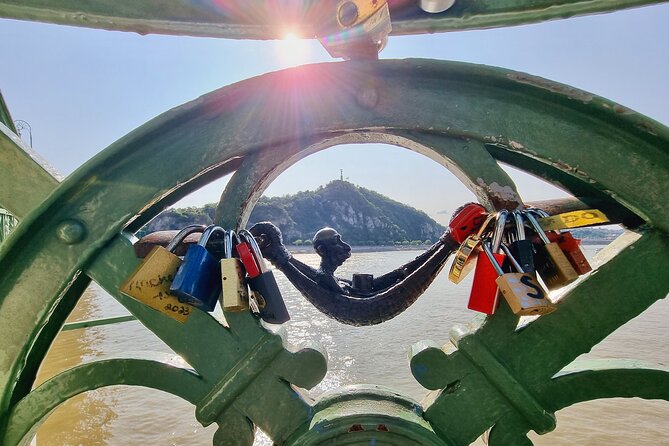
- The Chain Bridge shortcut: iconic views without overkill
- Buda Castle Hill: Matthias Church, Fishermen’s Bastion, and the postcard angle
- Parliament Building: a statue-and-symbols kind of moment
- Postal Savings Bank: Secession color you can’t fake
- St. Stephen’s Basilica: a quick, meaningful pause
- Andrássy Avenue: a World Heritage boulevard with history in the buildings
- Heroes’ Square and City Park: national symbols and a classic leisure scene
- The Jewish Quarter in District VII: ghetto streets, synagogues, and what’s changing
- Ruin bar stop: District VII’s nightlife personality, with the day already explained
- Price and value: what you’re really paying for
- Who should book this Budapest private day
- Quick practical tips before you go
- Should you book Complete Budapest with a full-day private guide?
- FAQ
- How long is the tour?
- Is this tour private?
- Do I get hotel pickup and drop-off?
- What’s included with the price?
- Is there a mobile ticket?
- Are admissions included for the stops?
- Is tipping included?
- What fitness level is required?
- Can service animals join?
The best parts you’ll actually feel
- Central Market Hall as your food-and-souvenir launch: pastries and Hungarian specialties early, with craft items priced better than tourist shops.
- Buda Castle district viewpoints: Matthias Coronation Church area and Fishermen’s Bastion across to Pest.
- Art nouveau / Secession wow factor: the Postal Savings Bank on Hold utca is pure visual delight.
- Parliament Building from the outside: a focused walk on statues and what makes it unique.
- District VII with context, not just photos: old ghetto area streets, synagogues, ghetto wall, and the story of what happened and what’s changing today.
- Ruin bar finale: your day ends where the city’s nightlife has a distinctive edge.
A private day that mixes walking with smart transport
This is a private tour, so it’s designed for your group’s pace rather than forcing you into a single-file march. You meet your guide at your Budapest hotel (or a nearby meeting point if you prefer) and then spend the day moving on foot and via public transportation.
That combo matters. Budapest is spread in layers—Buda’s higher ground, Pest’s wide boulevards—and moving efficiently keeps the day from feeling like constant logistics. You’re still outdoors and walking, but the structure helps you cover a lot without wasting hours.
It also keeps the experience more “you’re here” and less “you’re herded.” Even with a tight schedule, you’re not stuck waiting on strangers or losing your spot to slow walkers in the next group. The tour is set for a full day—about 8 hours—so plan for a real day of sightseeing, not a quick highlights tour.
You can also read our reviews of more private tours in Budapest



Central Market Hall: where you snack first and shop with confidence
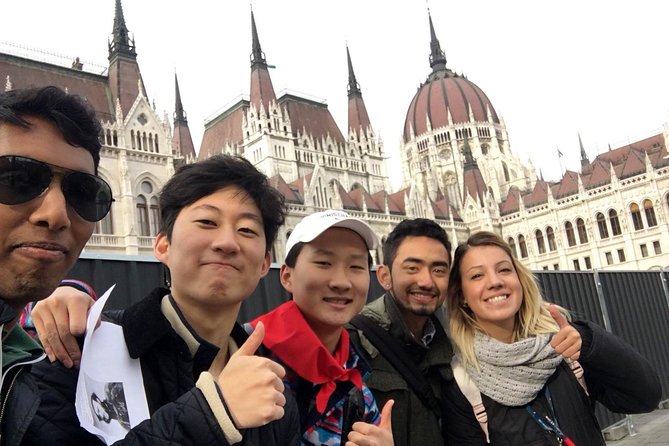
You start at the Great Market Hall (Nagyvásárcsarnok), Budapest’s biggest classic indoor market. Two floors means both food and shopping energy in one place, so it works as a warm-up and a mini cultural lesson.
What I like about this stop is that it gives you permission to do two things most travelers skip until later: eat and look for gifts. The market covers Hungarian specialties you may not find elsewhere, and the top floor has thousands of craft items that are often better value than souvenir lanes closer to the main tourist circuit.
If you’re hungry, this is a great time to try pastries or local snacks. If you’re gift-shopping, this is a better moment than mid-afternoon when you’re tired and ready to pay more just to be done.
Plan to spend about 45 minutes here. It’s not a “power shopping spree,” and that’s good—this is about getting oriented and tasting the city early.
The Chain Bridge shortcut: iconic views without overkill
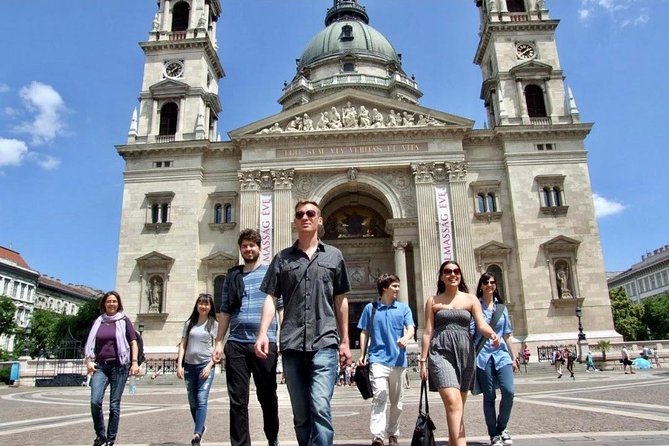
Next comes a quick stop at Széchenyi Lanchid, the Széchenyi Chain Bridge over the Danube. It’s one of those landmarks you’ve seen in photos, but you still feel the scale in person.
Your time here is short—around 15 minutes—so you don’t get stuck lingering while you’re still full of energy. This is a classic “get the geography” moment: the bridge connects Buda and Pest, and after you’ve walked around a bit later, you’ll understand why it matters so much.
No tickets required on this one. The value is in the timing: it helps you mentally map Budapest before you head into the castle area.
Buda Castle Hill: Matthias Church, Fishermen’s Bastion, and the postcard angle
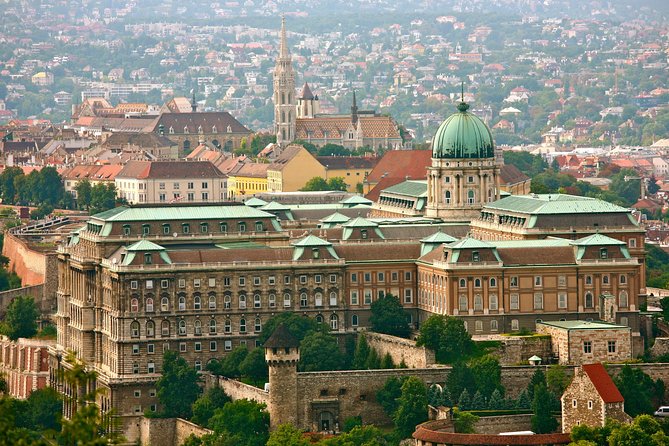
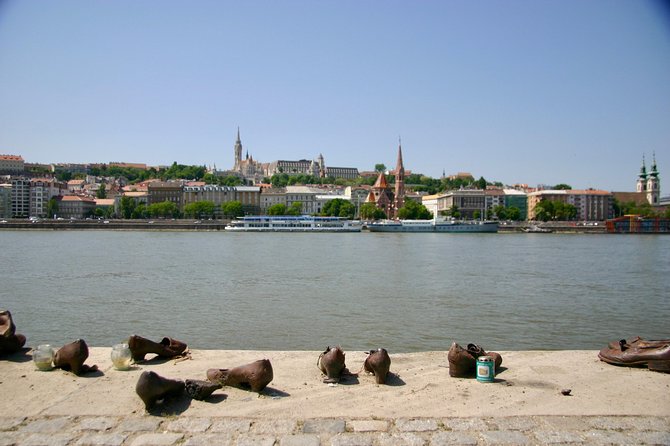
Then you walk into the Buda Castle district, perched on a limestone plateau high above the Danube. This is the part of Budapest where you start to see why people fall hard for the city’s views.
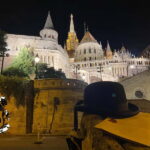
You’ll spend about 1.5 hours in the area, with time to take in the Matthias Coronation Church and the famous Fishermen’s Bastion. The bastion is the payoff point for views across the river to Pest, the kind of view that makes you stop talking and just look.
This stop is also useful even if you’re not a “museum person.” Castle Hill works as an outdoor history lesson: medieval monuments, the layout of the district, and the sense of place created by the height and stone.
One small practical note: because the district is elevated and the day keeps moving, it’s a good idea to wear shoes you trust for walking. The tour is described for moderate fitness, and Castle Hill is where that shows up most.
Parliament Building: a statue-and-symbols kind of moment
From the castle heights, you shift back toward the political heart of the city for a focused look at the Hungarian Parliament Building (Országház). Here, you’re not going inside; you’re walking around the outside and discussing what makes the building unique—especially the statues and symbolism.
The stop is about 25 minutes, and that’s exactly right. This isn’t a place you need to linger for an hour to appreciate it. With a guide’s framing, you’ll notice details you would otherwise miss.
This is also a good contrast stop. After the religious and medieval feel of Castle Hill, Parliament brings you into the national story of modern Hungary. It helps the day feel connected, not random.
You can also read our reviews of more tours and experiences in Budapest





Postal Savings Bank: Secession color you can’t fake
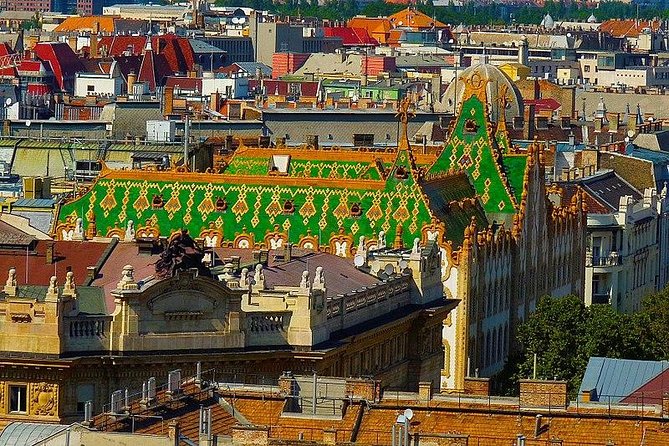
Next is one of my favorite kinds of city stops: a building that’s basically a work of art. The Postal Savings Bank (designed by Ödön Lechner, 1901) on Hold utca is an art nouveau / Secession extravaganza.
You’ll get around 15 minutes to see it, which is enough time to take in the tilework and folk motifs without turning it into a long detour. The practical value here is that Budapest’s architectural styles can look similar at first glance. A guided stop at a specific landmark helps you train your eye: you start recognizing the style rather than only admiring the beauty.
If you like design, this stop alone is worth the price of admission to the experience style—even though the stop is listed as free.
St. Stephen’s Basilica: a quick, meaningful pause
Then you head to St. Stephen’s Basilica (Szent Istvan Bazilika). This stop is about 20 minutes, and it’s paced like a reset—just long enough to take in the sacred atmosphere without losing the rhythm of the day.
The basilica is named for Stephen, the first King of Hungary, and the tour highlights that his supposed right hand is housed in a reliquary. Even if you’re not big on relic stories, it’s a useful anchor for understanding why religious figures matter in Hungary’s national identity.
This is also a good spot for a breath. After castle area walking and before you hit major boulevard sights, the basilica pause gives the day shape.
Andrássy Avenue: a World Heritage boulevard with history in the buildings
A 45-minute walk along Andrássy Avenue is where Budapest’s grand city side shows up. It dates to 1872 and is recognized as a UNESCO World Heritage Site. The guide points out the standout Neo-renaissance façades and helps connect what you see to history.
What makes this more than a photo stop is that you’re not just staring at pretty buildings. You’re learning why certain places mattered—some linked to important historical roles and famous occupants, and some with darker secrets. Even if you don’t love heavy stories, this framing helps you notice details that a quick glance misses.
Andrássy Avenue is also one of Budapest’s main shopping streets, with cafés, restaurants, theatres, embassies, and luxury boutiques. The tour doesn’t turn into a shopping hour, but you’ll walk through the area like someone who actually lives nearby.
Heroes’ Square and City Park: national symbols and a classic leisure scene
From there you roll into the open space of Heroes’ Square, with about 20 minutes. The centerpiece is the statue complex, including the Seven chieftains of the Magyars plus other national leaders, along with the Memorial Stone of Heroes. You’ll also see buildings around the square that add to the dramatic, ceremonial feel.
It’s easy to think of Heroes’ Square as just a big monument. With a guide, it becomes a visual map of national identity—why these names and figures were chosen and how the square is meant to be read.
Then you go to City Park (Városliget) for about 20 minutes. This is where Budapest shows its everyday side too. You’ll look at the skating rink/boating lake area and Vajdahunyad Castle, which often steals the show in photos.
This combination works because it gives you two kinds of space: formal and symbolic at Heroes’ Square, then leisure and local routine in City Park.
The Jewish Quarter in District VII: ghetto streets, synagogues, and what’s changing
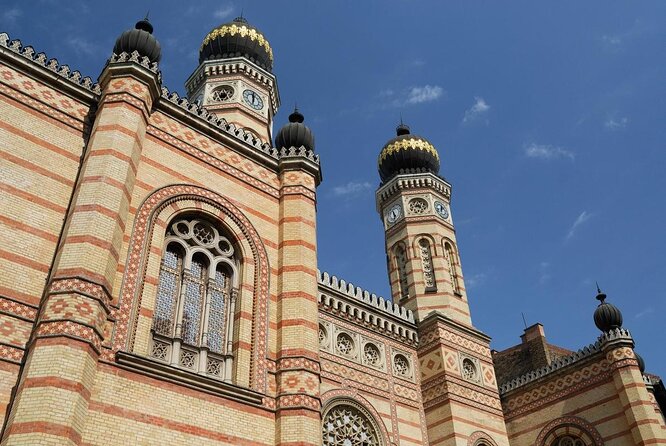
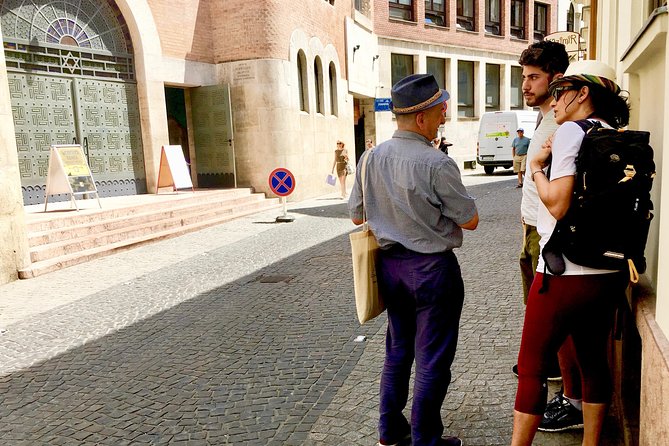
Now the day turns toward District VII, the Jewish Quarter. This is a 45-minute walk through streets connected to religious and community life since the 19th century, including the old ghetto area.
The guide frames what you see with the fate of Hungarian Jewry during war years, plus landmarks like synagogogues and references to the old ghetto wall. Importantly, the walk also includes mention of people who helped Jews escape, and it doesn’t stop at the past—it discusses the present-day situation in Hungary today.
This is the kind of stop where you’ll get more out of it if you let it land. You’re not just looking for sights; you’re building understanding. That’s one of the highest-value parts of the day because it changes how you view the city once you leave.
Ruin bar stop: District VII’s nightlife personality, with the day already explained
The tour ends with a stop at a distinctive ruin bar in District VII. These bars have a reputation for atmosphere—imperfect buildings, creative repurposing, and a social energy that feels more like a local hangout than a scripted event.
Because you’ve already spent time learning the neighborhood’s layers, the ruin bar finale makes sense. You’re not just checking a box for nightlife—you’re seeing another side of the same area.
Beverages are included on the tour, which is a nice touch. It makes the ending feel complete rather than an awkward moment where you wonder what to order. If you want to keep the evening going after the official stop, this is a great launching point.
Price and value: what you’re really paying for
At $257.15 per person for an about 8-hour private day, the price isn’t the lowest option—but it also isn’t random.
Here’s where the value comes from:
- Private format: only your group, not shared pacing.
- Hotel pickup and drop-off: you lose less time, and you start the day less stressed.
- Lunch, snacks, and beverages included: you’re not hunting for meals between stops.
- Many major sights listed as ticket-free on the route: Central Market Hall and several landmark exterior walks are marked as Admission Ticket Free, which helps you avoid surprise costs.
- Guided context: you’re not just “seeing” places. You’re getting the stories that turn landmarks into understanding.
The only “cost” in the equation is your own energy. This is a full day, and Castle Hill plus multiple city areas means you’ll walk more than on a short tour. If you can handle a moderate amount of walking, you’ll get your money’s worth in time saved and in what you learn.
Who should book this Budapest private day
This is a great match if you:
- Want a first-time Budapest day that still feels personal.
- Care about architecture, landmarks, and why they matter.
- Prefer a guide who explains clearly and adds personality (including humor and local language flavor, in the style of Miklós and Daniel).
- Enjoy food moments that feel local, like starting at Central Market Hall.
It’s probably not the best fit if you:
- Want minimal walking or mostly indoors time.
- Are looking for a purely leisure day with no history focus.
- Hate structured pacing and prefer to wander completely on your own.
Quick practical tips before you go
- Dress for a full day outdoors. Bring a light layer even if mornings are mild.
- Wear comfortable shoes for walking across multiple districts.
- If you’re thinking about shopping, the market is your best early window.
- For the Jewish Quarter section, plan to take your time mentally. It’s meaningful and worth your attention.
Should you book Complete Budapest with a full-day private guide?
Yes, if you want the most efficient way to get “Budapest basics” while still getting real neighborhood texture. The mix of Buda Castle views, Parliament exterior context, Secession art at the Postal Savings Bank, and the serious District VII walk is a smart balance of beauty and meaning.
If you’re budgeting, think of this as buying a full day of guidance plus included meals. For a first trip, it’s one of the cleaner value options in the private-tour world because so many stops are free and the structure prevents wasted time.
FAQ
How long is the tour?
It’s about 8 hours.
Is this tour private?
Yes. Only your group participates.
Do I get hotel pickup and drop-off?
Yes, pickup and drop-off are included.
What’s included with the price?
The tour includes beverages, lunch, snacks, and hotel/port pickup and drop-off.
Is there a mobile ticket?
Yes, the tour includes a mobile ticket.
Are admissions included for the stops?
The stops listed on the route are marked as Admission Ticket Free.
Is tipping included?
No. Gratuity is left for individual discretion.
What fitness level is required?
The tour is described as suitable for travelers with a moderate physical fitness level.
Can service animals join?
Yes, service animals are allowed.