REVIEW · BUDAPEST
Downtown Pest Walking Tour
Book on GetYourGuide →Operated by insightcities.com · Bookable on GetYourGuide
Budapest’s east-bank story is written in stone. This downtown Pest walking tour is built for understanding how the city’s 19th-century boom shaped power, money, faith, and architecture.
I particularly love the way you move from grand government spaces into everyday city landmarks without the tour feeling like a checklist. I also like that you get a historian guide and not just a script, with stops that make you think about what these places meant at the time—especially around Parliament and the Holocaust memorial. One thing to consider: it’s a focused 3 hours of walking and it covers heavy WWII remembrance, so bring the right mindset and comfortable shoes.
In This Review
- Key highlights at a glance
- Entering Pest’s “new Hungary” through Kossuth Square
- The Hungarian Parliament at Kossuth Square: power you can read
- The Holocaust Memorial by the Danube: history on the exact spot
- Freedom Square and the Stock Exchange Palace: where money became a stage
- Cardinal Mindszenty to St. Stephen’s Basilica: religion under pressure
- The second-largest synagogue: Jewish Budapest and the wealthy bourgeois
- Andrássy Boulevard and the Opera House: nobility-designed city planning
- Heroes Square: the 1000-year celebration ending on a scale that lands
- Price and value for a $123, 3-hour historian-guided walk
- Who should book this tour (and who should skip it)
- Should you book the Downtown Pest Walking Tour?
- FAQ
- How long is the Downtown Pest Walking Tour?
- Where is the meeting point?
- What is the tour price?
- What language is the guide?
- Is this tour private or in a group?
- What major sights does the tour include?
- What’s included in the price?
- Can I cancel or pay later?
Key highlights at a glance
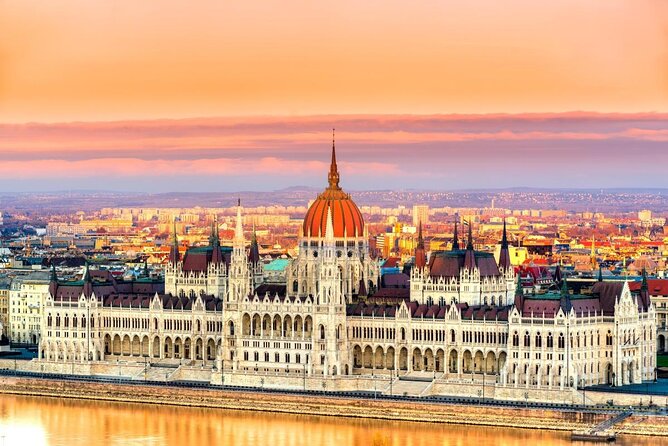
- Kossuth Square and the Hungarian Parliament: see why the 1896 building was Hungary’s biggest and most expensive at the time
- Holocaust Monument by the Danube: learn what happened on this exact riverside spot in the last months of WWII
- Freedom Square and the Stock Exchange Palace: understand how Budapest marketed itself as a financial powerhouse
- Art Nouveau Pest streets: spot the details that made Budapest famous beyond its grand monuments
- Andrássy Boulevard to Heroes Square: walk through a planned aristocratic avenue and end at the 1000-year celebration hub
Entering Pest’s “new Hungary” through Kossuth Square
This tour is a smart way to start your Budapest trip because it puts you in the mindset of a country building itself. You begin in the downtown Pest area, aimed at the second half of the 19th century, when Pest rose into the political, financial, and religious center of the newborn Hungarian nation.
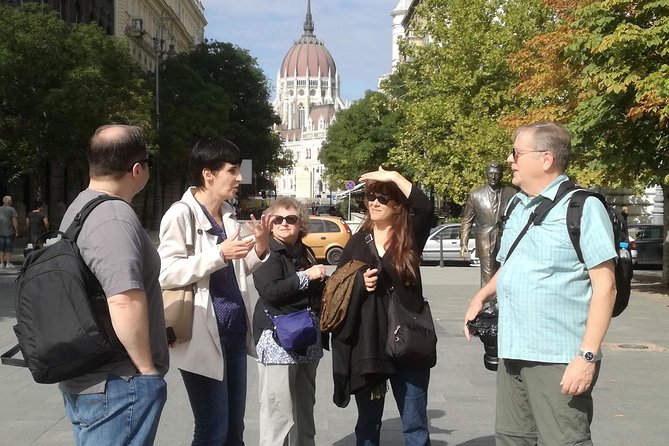
You’ll meet at Szamos Café, Kossuth Lajos tér 10, then head out to the sights around Kossuth Square, where everything feels big even before you start walking. It’s here that you get your first real clue to what the tour is trying to do: connect people, buildings, and historical shifts—fast, but not rushed.
If you like tours that explain the why behind the wow, you’ll appreciate the historian approach. And if you’ve ever stood in front of an impressive building and wondered what all the symbolism is about, this one is built to answer that.
You can also read our reviews of more walking tours in Budapest


The Hungarian Parliament at Kossuth Square: power you can read
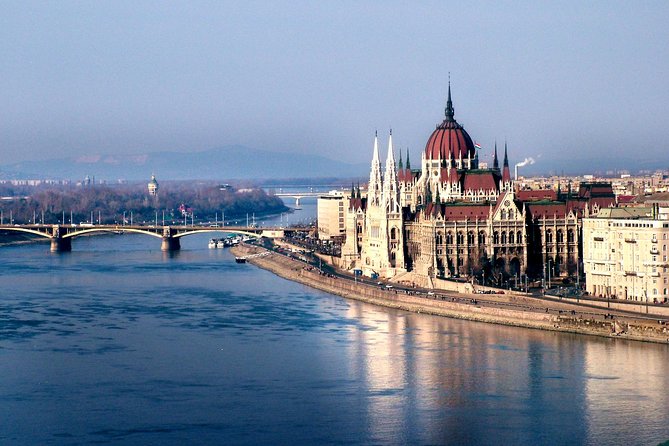
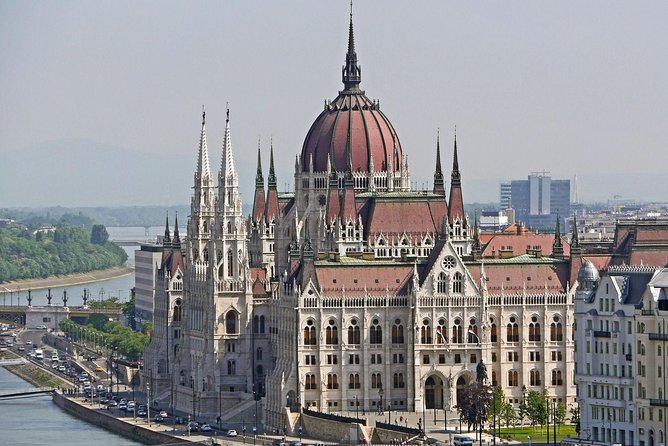
The first major stop is the Hungarian Parliament right by Kossuth Square. At its inauguration in 1896, it was the largest and most costly structure ever built in Hungary, and that reputation isn’t just marketing—it shows in the scale and presence.
From the outside, it’s massive and imposing. Inside, the story shifts: it’s described as dazzling, with artworks representing nearly every famous Hungarian painter and sculptor of the time. That matters because it turns the Parliament from a mere political building into a national showcase—Hungary presenting its identity through art.
You’ll also get the surrounding monuments and buildings around the square to help you connect the Parliament to the wider civic space. Even if you’ve seen a lot of parliaments in Europe, this one lands differently because of the specific 1896 context: this is when the city is declaring ambition in stone.
Practical tip: plan to slow down for this stop. The best value here comes when you let the guide connect the dots, not when you just take photos and keep moving.
The Holocaust Memorial by the Danube: history on the exact spot
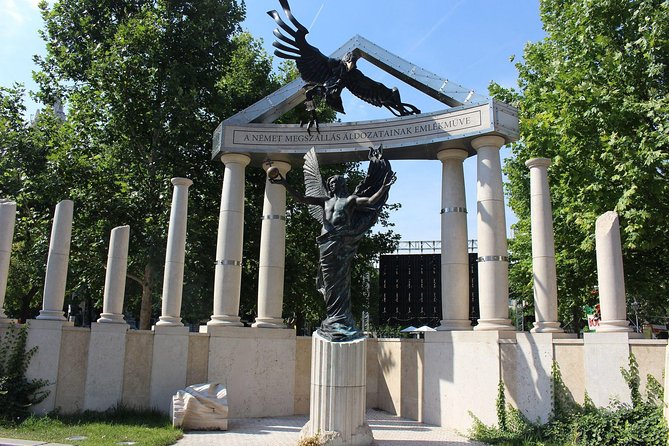
Right behind Parliament, near the river, you’ll visit the Holocaust Monument. The purpose is clear and heavy: it pays tribute to thousands of Jewish citizens of Budapest who were tragically killed on that same spot in the last months of World War II.
This stop can feel emotionally loud because it’s not abstract. You’re standing in the urban core—right where you’ve just been looking at political and national power—and the memorial reminds you that real people suffered in the middle of that same city story.
I like that the tour places this memorial early, instead of saving it for the end. It sets the tone: you’re not just seeing architecture; you’re learning how history, injustice, and memory are layered into the city’s present-day layout.
Consideration: if WWII topics hit hard for you, give yourself permission to take a breath here. You don’t need to force yourself to rush past it.
Freedom Square and the Stock Exchange Palace: where money became a stage
Next comes Freedom Square, originally built as the financial center of the city. Many people call it Budapest’s most beautiful square, and I get why: the scale and setting help it feel ceremonial, but the point is practical too.
Freedom Square isn’t just about nice views—it’s where Budapest projected wealth and stability. The stop includes the massive Stock Exchange Palace plus opulent buildings that still house banks, so you can see continuity in how the city organizes economic life.
This is a great moment to look at details instead of only the big shapes. When you understand the square as the city’s financial engine, the architecture starts to read like branding. You’re watching Budapest compete for status, using architecture as credibility.
And if you like tours that connect architecture to social class, this is your payoff. Financial power wasn’t separate from identity. It helped shape who lived here, what got built, and how the city was represented.
Cardinal Mindszenty to St. Stephen’s Basilica: religion under pressure
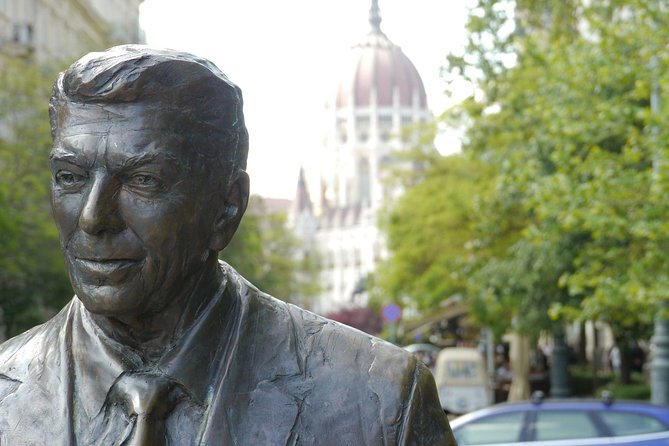
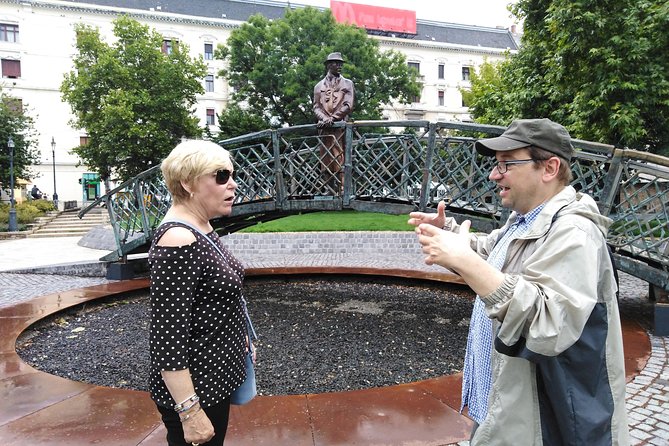
From Freedom Square, the tour moves toward St. Stephen’s Basilica, with key religious and political context along the way. One standout stop is the statue of Cardinal Mindszenty, head of the Catholic church in Hungary.
Mindszenty lived hidden for 15 years in the U.S. embassy while on the run from the communists. The statue is a reminder that religion and politics were not separate tracks in Hungary’s modern turbulence. Even if you’re not deeply religious, that story makes the statue feel more like a lived drama than a monument.
As you keep walking, you pass through areas with Art Nouveau buildings that Budapest is famous for. This is one of those times when a guide makes a difference: you start noticing patterns and ornament that you might otherwise overlook if you’re only hunting for the tallest building.
Then you arrive at St. Stephen’s Basilica, where the city’s religious center becomes tangible. The moment works because the tour just gave you a political-and-faith link, so the basilica isn’t just a landmark—it’s part of the national story the buildings are telling.




The second-largest synagogue: Jewish Budapest and the wealthy bourgeois
A bit farther along, you’ll come to the second-largest synagogue in the world. The stop is framed as a monument to the vital role Budapest’s Jewish population and its wealthy bourgeois played in the city’s development.
That matters because it challenges the common tourist habit of treating religious buildings as isolated. Here, the synagogue is tied to urban growth, money, and influence—how communities shaped the city’s rise during the same era that produced the grand civic buildings you’ve already seen.
If you pay attention to the guide’s framing, the synagogue becomes a lens on participation. It helps you understand that Pest’s transformation wasn’t only led by the government or nobility. It was built through multiple groups investing in, shaping, and funding a modern city.
Practical tip: if you want the best understanding, slow down when you’re told about the social roles behind the landmark. The building’s scale will impress you either way, but the meaning is what makes it stick.
Andrássy Boulevard and the Opera House: nobility-designed city planning
Now you get into one of Budapest’s most iconic stretches: Andrássy Boulevard. The tour doesn’t just mention it; you travel along and under this grand esplanade, designed for the country’s nobility.
This part of the walk helps you see city design as a social tool. The idea wasn’t only to make a nice promenade. It was to create a space that fit the status and lifestyle of those at the top—an avenue that shaped how people moved, where they walked, and what the city communicated visually.
You’ll also stop briefly at the Opera House. Even in a short stop, it helps anchor the boulevard in culture and spectacle—another way Pest marketed itself as a serious European capital rather than a growing provincial city.
Why this part matters: when you look at Andrasśy Boulevard after seeing Parliament and Freedom Square, you start to feel the full pattern. Power sits in one place, money in another, faith in another. Then you get the planned movement of aristocratic life that connects it all.
Heroes Square: the 1000-year celebration ending on a scale that lands
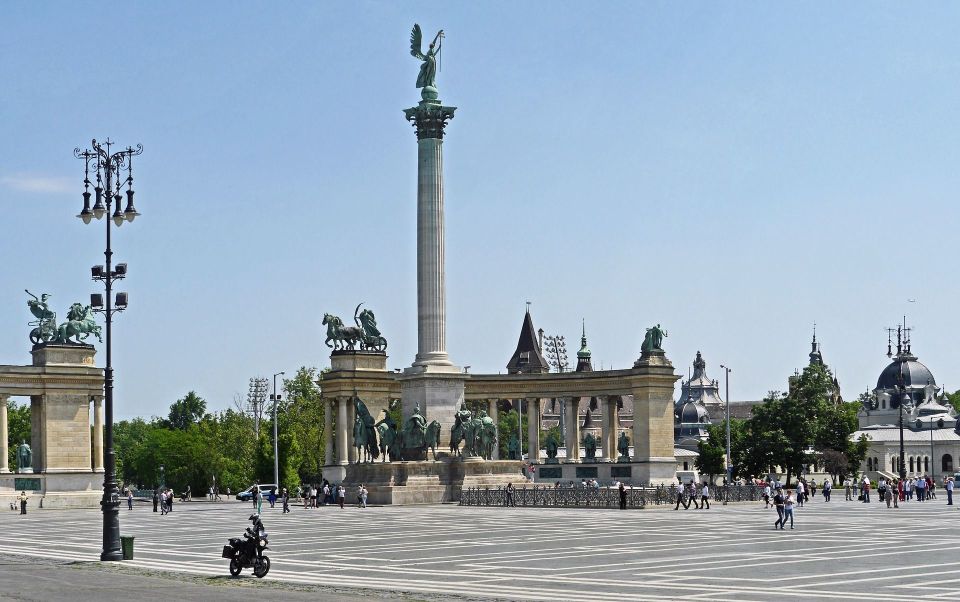
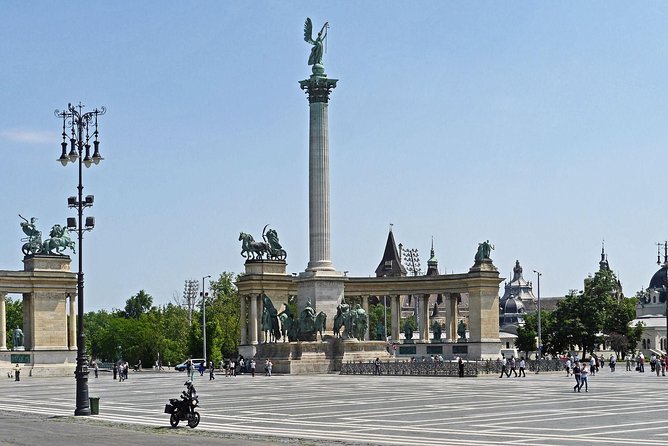
The tour finishes at Heroes Square, where in 1896 Hungarians celebrated the 1,000-year anniversary of the founding of their kingdom. This is the kind of end point that puts scale in your brain.
By the time you reach Heroes Square, you’ve already walked through the story of a nation reinventing itself through major civic spaces—Parliament, financial power, religious identity, and cultural prestige. Heroes Square feels like the capstone because it’s built for national memory and public pride.
It also works as an emotional reset. After Holocaust remembrance and heavier religious-political stories, you end with a monument space designed for celebration and historical narrative.
If you’ve got energy left for photos, this is where it’s worth it. The setting makes even quick shots look cinematic because the city reveals itself all at once.
Price and value for a $123, 3-hour historian-guided walk
At $123 per person for a 3-hour walking tour, this isn’t the cheapest way to see Pest. But the price starts to make sense when you focus on what you’re paying for: a historian guide and a tight route that links key sites into one storyline.
You’re not just getting access to landmarks. You’re getting interpretation—how 1896-era ambition, national identity, economic growth, and social roles show up in the city’s layout. That’s the difference between collecting photos and understanding a place.
The guide experience also looks strong based on past feedback. When András is the guide, he’s praised for taking his time, answering questions, and staying objective in the way he handles history. Zsofia is also noted for knowledgeable storytelling skills, and multiple people say the time moves quickly because the pace feels right rather than rushed.
So if you want value, come with two goals:
- Learn the meaning behind the big buildings
- Ask questions when something feels connected but unclear
If you already know Hungarian history and just want fast sightseeing, you might feel you could DIY it. But if you’re aiming to understand why Pest grew where it did, this tour is a focused way to get there in one sitting.
Who should book this tour (and who should skip it)
This is a great match if you want an organized walk through central Pest that connects major landmarks to a clearer story. It’s especially good for first-timers who feel overwhelmed by Budapest’s “which building is which?” problem.
It also suits people who enjoy architecture but want context beyond dates and names. Passing Art Nouveau streets, moving through financial-center spaces, and ending at Heroes Square all make more sense with a guide explaining the connections.
You might want to skip or choose something lighter if you hate emotional subject matter. The Holocaust memorial stop is part of the route, and it’s respectful but still heavy. Also, if your walking tolerance is low, a 3-hour downtown route may be tough.
Should you book the Downtown Pest Walking Tour?
Yes, with the right expectations. Book it if you want a 3-hour downtown Pest route that explains the city’s 19th-century transformation using the biggest markers—Parliament, Freedom Square, Art Nouveau streets, religious landmarks, Andrássy Boulevard, and Heroes Square.
Skip it if your main goal is just casual sightseeing with minimal walking and minimal historical context. There are plenty of ways to see these landmarks on your own. This one earns its fee by turning them into a coherent story.
If you care about understanding how power and identity got built into the streets, you’ll likely leave with a clearer picture of Pest—and you’ll notice details you would otherwise miss.
FAQ
How long is the Downtown Pest Walking Tour?
The tour lasts 3 hours.
Where is the meeting point?
You meet at Szamos Café, Budapest Kossuth Lajos tér 10.
What is the tour price?
The price is $123 per person.
What language is the guide?
The tour is offered in English.
Is this tour private or in a group?
It’s available as private or small groups.
What major sights does the tour include?
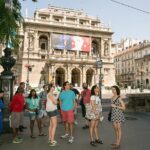
You’ll visit places including the Hungarian Parliament, the Holocaust Monument, Freedom Square and the Stock Exchange Palace, St. Stephen’s Basilica, the second-largest synagogue, Andrassy Boulevard (including walking along and under it), a stop at the Opera House, and the end point at Heroes Square.
What’s included in the price?
It includes a 3-hour guided walk through downtown Pest with a historian guide.
Can I cancel or pay later?
Yes. The tour offers free cancellation up to 24 hours in advance for a full refund, and it also offers reserve now & pay later.